
Table of Contents
Samsung Refrigerator Troubleshooting
Samsung refrigerators are some of the most feature-packed fridges on the market in 2026, but even the best appliances run into problems eventually. The difference between a $30 DIY fix and a $400 technician call is often just knowing where to look first.
This guide covers the eight most common Samsung refrigerator problems reported by owners in 2026, along with clear, step-by-step fixes you can try at home. Each section tells you exactly what’s likely causing the issue, what to check, how to fix it yourself, and when the problem genuinely needs a professional.
Whether your Samsung fridge isn’t cooling, your ice maker has stopped working, your control panel has gone blank, or it’s making noises that didn’t exist six months ago, you’ll find a practical answer here. Let’s get into it.
Problem 1: Fridge Not Cooling but Freezer Works Fine
This is one of the most common Samsung refrigerator complaints, and it sounds alarming, but it’s usually fixable at home. If your freezer is icy cold while the fresh food section feels warm, the root cause is almost always airflow, not the compressor.
Symptoms
- Food in the fridge section is spoiling faster than usual
- The fridge compartment feels warm or at room temperature
- The freezer appears to be working normally
- The ice maker has stopped producing ice
A. Frosted or Blocked Evaporator Coils
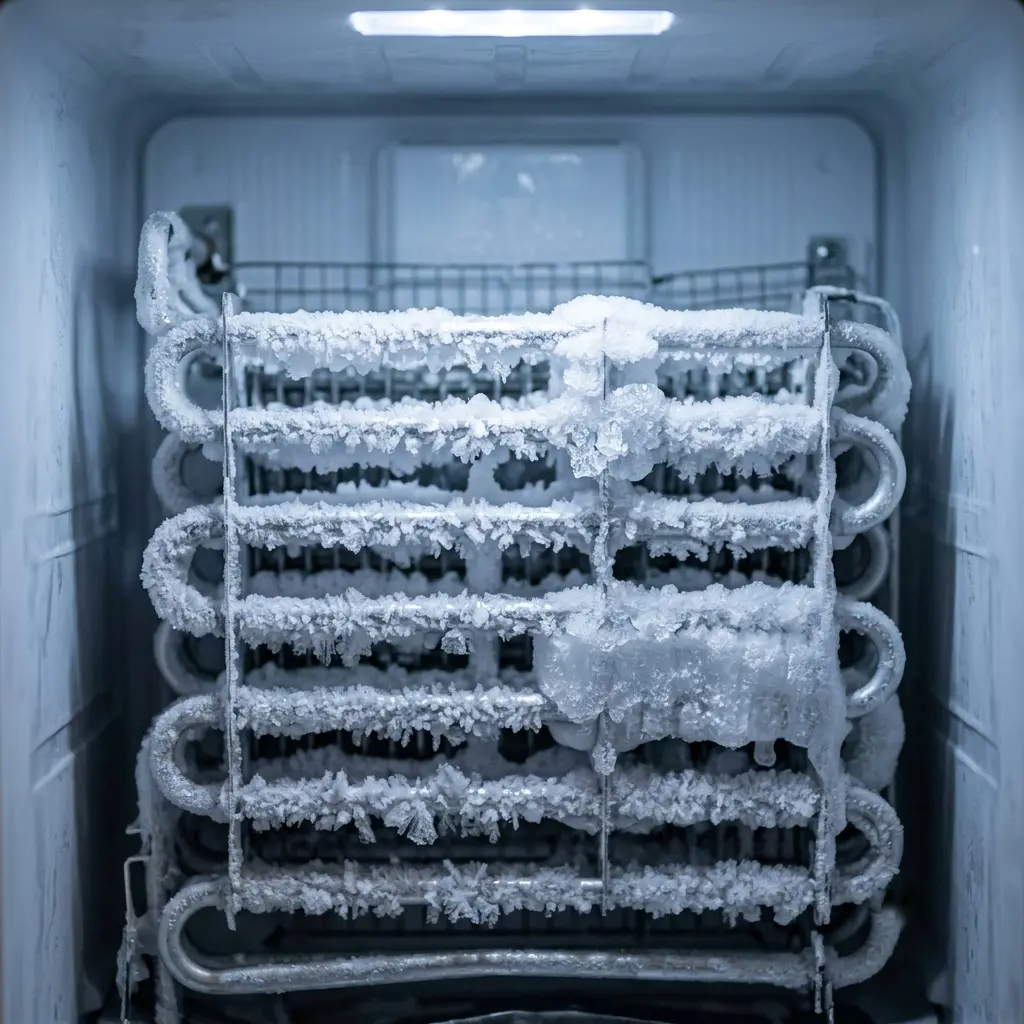
Behind the back panel of your freezer section sit the evaporator coils. If the automatic defrost system fails, these coils ice over completely and block all airflow into the fridge compartment. This is the single most common cause of this specific symptom pattern.
To test this, open the freezer, remove the back panel (usually held by two to four screws), and check if the coils are covered in a thick layer of frost or ice. If they are, you have a defrost system fault.
- Quick fix: Unplug the fridge and leave both doors open for 24 to 48 hours to fully defrost. This confirms the diagnosis and temporarily restores cooling.
- Permanent fix: The defrost heater, defrost thermostat, or defrost timer will need testing and likely replacement. These parts are inexpensive and available online.
💡 Tip: After defrosting, if the problem returns within two to three weeks, the defrost heater has almost certainly failed and needs replacement, not just another manual defrost.
B. Faulty Evaporator Fan
The evaporator fan pulls air across the cold coils and pushes it into the fridge compartment. If this fan stops working, due to ice buildup on the blades or motor failure, the fridge warms up even though the freezer stays cold.
- Open the freezer back panel and listen for the fan running
- If the fan is silent when the fridge is operating, the motor has likely failed
- If the fan blades are iced over, defrost first and test again before replacing
👉 [AMAZON LINK: Samsung Refrigerator Evaporator Fan Motor Replacement Part]
C. Dirty Condenser Coils
Condenser coils release heat from the refrigerant. When they’re coated in dust and debris, which happens gradually over months, the fridge has to work much harder to cool, and eventually loses efficiency in the less-insulated fresh food section first.
- Unplug the fridge and locate the condenser coils, usually at the back or underneath
- Use a vacuum with a brush attachment or a dedicated coil cleaning brush to remove dust
- Plug back in and monitor the temperature for 24 hours
⚠️ When to Call a Pro: If the fridge still won’t cool after defrosting and cleaning the coils, the issue may be a failed defrost control board or a refrigerant leak, both of which require a certified technician.
Problem 2: Water Leaking Inside the Fridge
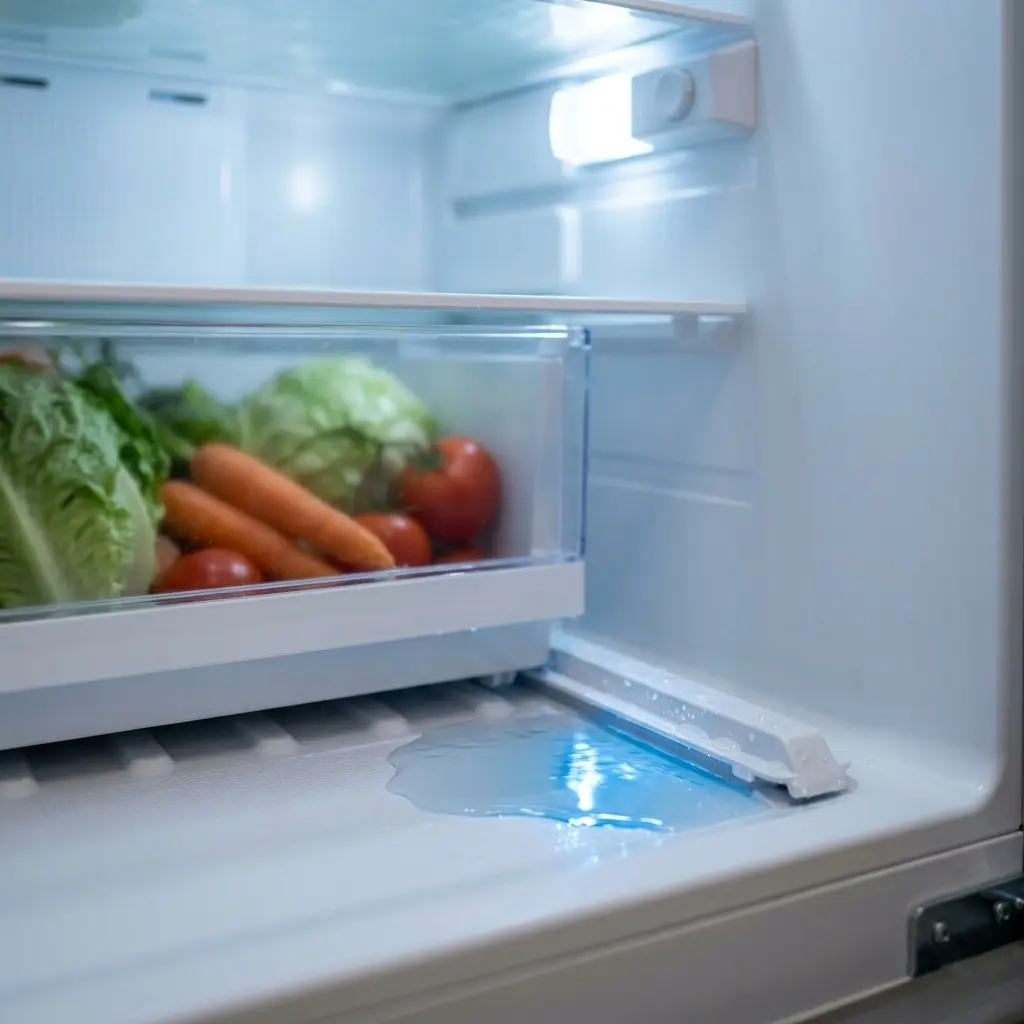
Finding a puddle inside your Samsung refrigerator, or water pooling under the crisper drawers, is one of those problems that feels serious but is almost always a simple fix.
Symptoms
- Water is pooling at the bottom of the fridge compartment
- Ice buildup visible on the freezer floor or walls
- Puddles appearing under the fridge on the kitchen floor
A. Clogged Defrost Drain
This is the most common cause by far. During the automatic defrost cycle, water drips down from the evaporator coils and flows through a small drain hole into a pan underneath the fridge, where it evaporates. When food particles or an ice block clog this drain, water has nowhere to go and pools inside the fridge instead.
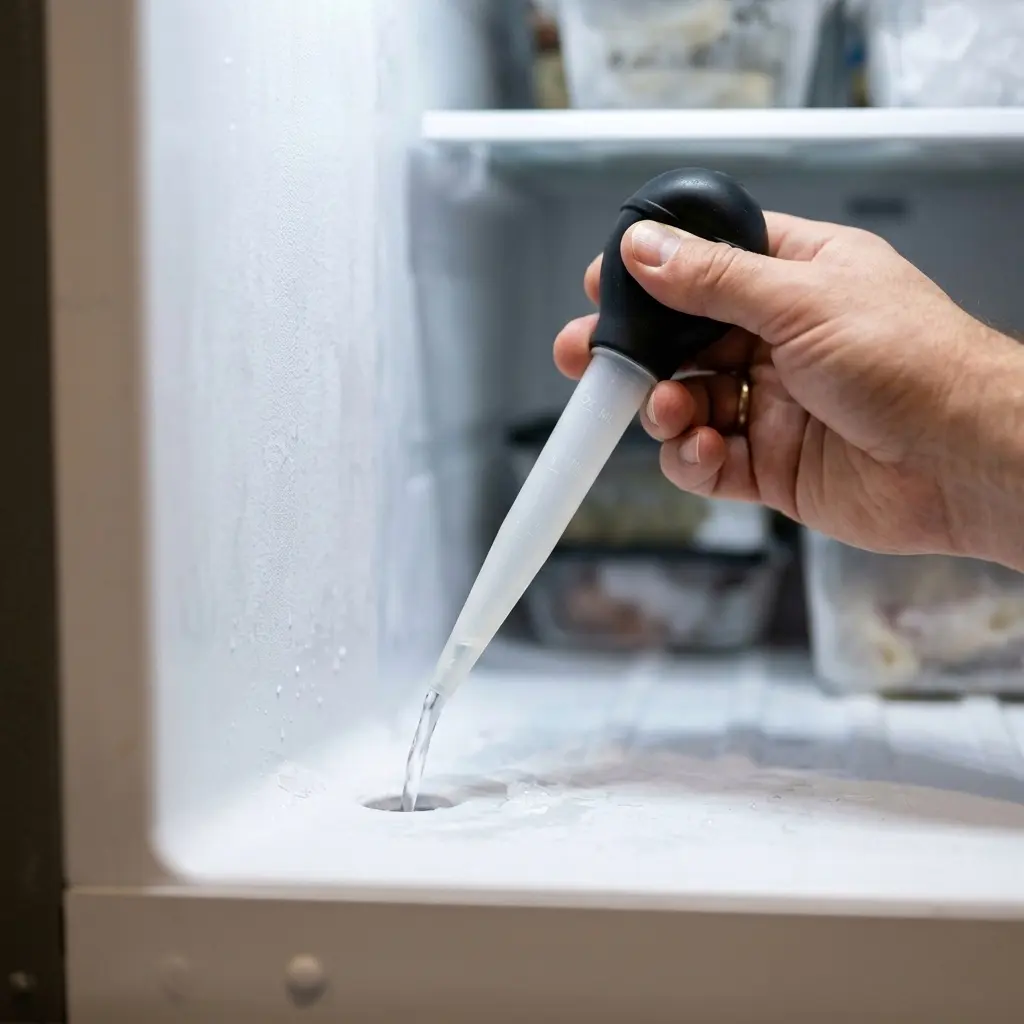
- Locate the defrost drain hole, it’s at the back of the freezer floor or behind the back panel
- Pour a small amount of warm water into the drain hole to flush it clear
- Use a thin pipe cleaner or turkey baster to dislodge any debris
- Check the drain pan underneath the fridge and clean it out if it’s full or dirty
💡 Prevention: Pour a small amount of hot water mixed with a little baking soda down the drain every six months to prevent future blockages.
B. Cracked or Disconnected Water Supply Line
If your Samsung fridge has a water dispenser or ice maker, there’s a water supply line running to it. Over time, especially if the fridge has been moved, this line can crack, kink, or disconnect at a fitting, causing a slow drip that appears as a leak inside or underneath the appliance.
- Pull the fridge away from the wall and inspect the water line running from the wall connection to the fridge
- Check both ends of the line for cracks, kinks, or loose fittings
- Replace a damaged line; they’re inexpensive and straightforward to swap
Problem 3: Loud Buzzing, Humming, or Clicking Noises
Some fridge sounds are perfectly normal. Others are the early warning signs of a component that’s about to fail. Here’s how to tell the difference.
Normal Sounds, Nothing to Worry About
- Gurgling or bubbling: refrigerant flowing through the system, completely normal
- Occasional clicking: the thermostat or ice maker cycling, normal
- Brief hum when the compressor starts: normal compressor operation
A. Loud Continuous Humming or Buzzing
A loud, persistent hum that’s noticeably louder than usual is almost always related to dirty condenser coils forcing the compressor to overwork or a failing condenser fan motor. Clean the coils first. If the noise continues, check that the condenser fan (near the compressor at the back or bottom) is spinning freely without obstruction.
⚠️ When to Call a Pro: If the buzzing comes with the fridge warming up or cycling on and off frequently, the compressor itself may be struggling. This requires a professional diagnosis.
B. Clicking or Ticking Sound
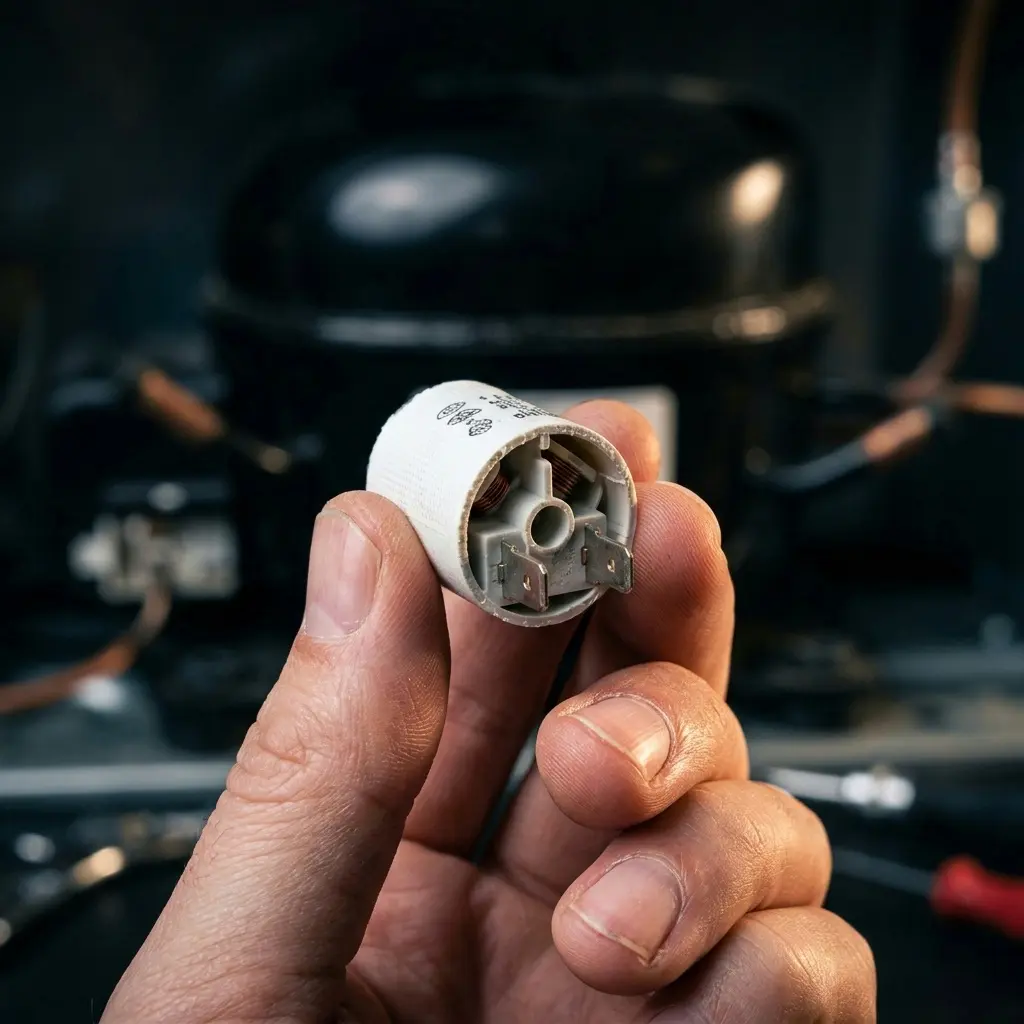
A rapid clicking sound, especially when the fridge tries to start, is a classic sign of a failed start relay. The start relay is a small component that helps the compressor motor start up. When it fails, the compressor clicks repeatedly but never fully starts.
- Unplug the fridge and locate the start relay on the side of the compressor
- Remove it and shake it; if it rattles, it has failed and needs replacement
- Start relays are inexpensive and easy to swap without a technician
C. Rattling or Vibrating
Rattling is usually a positioning issue rather than a mechanical one. Check that the fridge is level using a spirit level and adjust the feet if needed. Also, check that nothing on top of or behind the fridge is vibrating against it during operation.
Problem 4: Ice Maker Not Making Ice
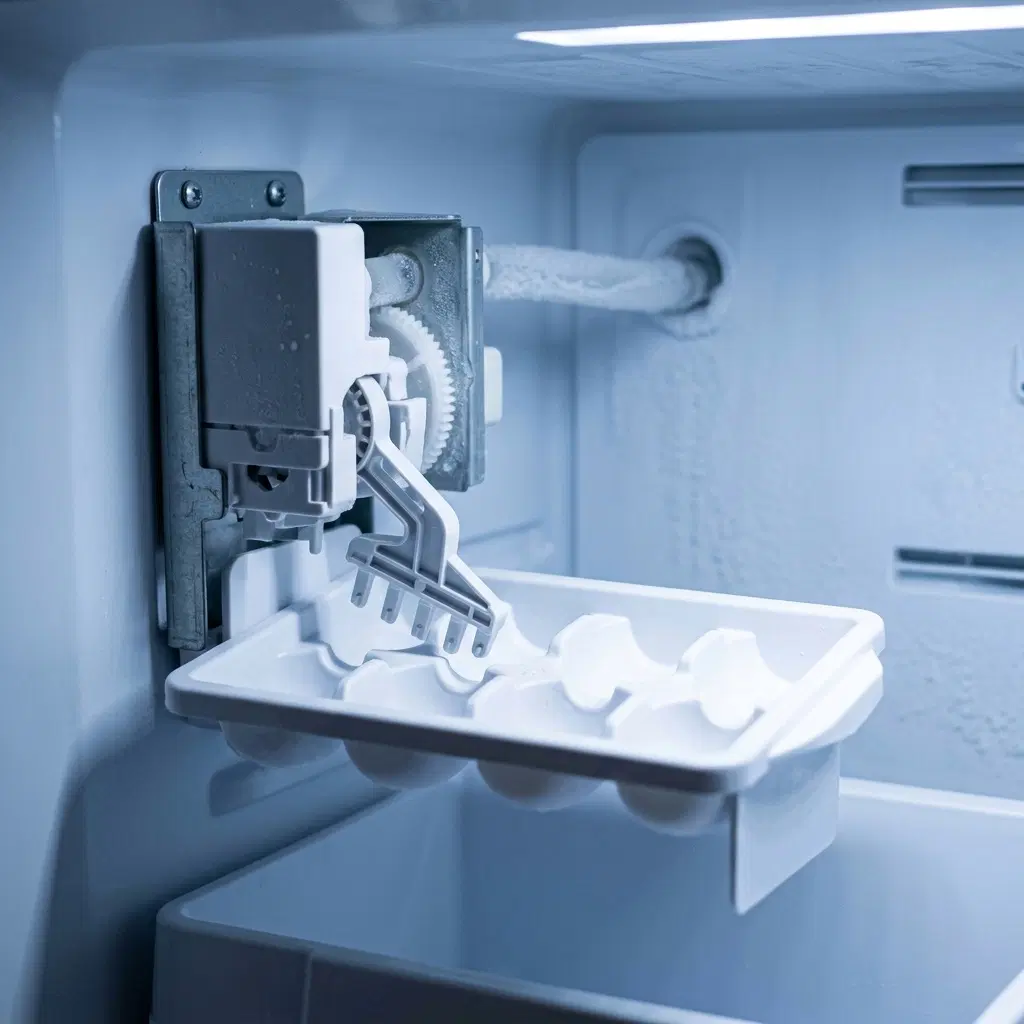
A Samsung ice maker that’s stopped producing ice is frustrating, but the cause is usually one of three things, and two of them are easy to fix yourself.
Symptoms
- No ice is being produced at all
- Very small, hollow, or misshapen ice cubes
- The ice maker arm is stuck in the off position
A. Frozen Water Supply Line
The water line feeding the ice maker can freeze solid if the freezer temperature drops too low or if there’s a slow drip that freezes at the inlet. This is the most common cause of sudden ice maker failure in Samsung fridges.
- Turn off the ice maker using the arm or button
- Set the freezer temperature to a slightly warmer setting (try -15°C instead of -18°C) for 24 hours
- Use a hairdryer on a low setting to gently warm the back of the freezer where the water line enters, keep it moving and don’t hold it in one spot
- Once thawed, reset the ice maker and return the temperature to normal
B. Low Water Pressure
Samsung ice makers require a minimum water pressure, usually around 20 psi, to fill the ice mold correctly. Below that threshold, the mold fills partially or not at all, producing hollow or misshapen cubes.
- Check that the water supply valve behind the fridge is fully open
- Test your home water pressure; a simple gauge that screws onto any tap
- If pressure is consistently low, a pressure booster may be needed
C. Faulty Ice Maker Assembly
If the water line is clear and pressure is adequate, but the ice maker still won’t produce ice, the assembly itself may have failed. Before replacing the entire unit, test it using Samsung’s built-in diagnostic mode; hold the test button on the ice maker for three seconds to initiate a test cycle and listen for the motor running.
Read More: [Samsung Ice Maker Not Working, Complete Fix Guide 2026]
Problem 5: Touchscreen or Control Panel Not Responding
A blank or frozen Samsung refrigerator display is unnerving, especially on models where the control panel manages everything from temperature to ice maker settings. The good news is that the fix is usually a simple reset.
Symptoms
- The touchscreen is completely blank or backlit but unresponsive
- Error codes visible, common ones include 22E, 34E, or 40E
- Some functions work while others are unresponsive
Read More: Samsung Refrigerator Control Panel Reset & 2026 AI Guide To save the control Panel
A. Perform a Hard Reset First
Before assuming a component has failed, always try a hard reset. Unplug the fridge from the wall socket and leave it unplugged for a full five minutes. This clears the control board’s memory and resolves the majority of touchscreen and display issues caused by software glitches.
💡 Samsung Tip: On models with a dedicated reset button (usually located inside the fridge near the top), press and hold for eight seconds after plugging back in. This performs a deeper software reset than simply unplugging.
B. Check the Door Switch
The interior light and some control panel functions are tied to the door switch. If the switch is stuck or faulty, it can cause erratic panel behaviour. Open the door and manually press and release the door switch; you should hear a click and see the interior light respond. If it doesn’t, the switch needs replacing.
C. Control Board Replacement
If the hard reset doesn’t work and the panel remains unresponsive, the main control board has likely failed. This is a more involved repair but is still within DIY range for confident owners. The board is typically located at the back of the fridge behind a panel, and Samsung boards are available through appliance parts suppliers.
⚠️ When to Call a Pro: Error codes 22E and 34E specifically indicate sensor and fan faults that require component-level diagnosis. If these persist after a reset, a technician should inspect the fridge before you replace the control board.
Problem 6: Freezer Not Freezing Properly
If your Samsung freezer is running, but items aren’t freezing solid, or the temperature is fluctuating, the two most common culprits are the door seal and the defrost heater.
A. Damaged or Worn Door Gasket
The rubber gasket around the freezer door creates an airtight seal that keeps cold air in. As gaskets age, they crack, warp, or lose elasticity, allowing warm air to seep in constantly. Even a small gap makes the freezer work much harder and struggle to reach target temperatures.
- Close the freezer door on a piece of paper. If you can pull it out easily, the seal is weak
- Inspect the gasket visually for cracks, tears, or sections that don’t sit flush
- Try wiping the gasket with a warm, damp cloth, sometimes a dirty gasket just needs cleaning to seal properly again
- If the gasket is visibly damaged, replacement is the only fix
B. Faulty Defrost Heater
The defrost heater melts ice from the evaporator coils on a regular schedule. When it fails, ice accumulates on the coils until airflow is completely blocked, and the freezer can no longer reach its target temperature. Test the heater for electrical continuity using a multimeter. No continuity means the heater has failed and needs replacement.
Problem 7: Fridge Freezing Food in the Fresh Food Section
The opposite problem, food in the fridge compartment turning to ice, is equally frustrating, and it usually points to a temperature control issue rather than a cooling system fault.
A. Temperature Set Too Low
Start with the obvious: check your fridge temperature setting. The ideal fresh food compartment temperature is 3°C (37°F). If it’s been set below 1°C, the fridge will freeze items near the back or bottom vents where airflow is strongest. Adjust the setting and wait 24 hours before evaluating.
B. Blocked or Misaligned Air Vents
The cold air vents inside the fridge section push chilled air in from the freezer. If food items are pushed directly against these vents, they’ll freeze. Make sure there’s always a few centimetres of clearance around the vent openings and never store liquids or fresh produce directly in front of them.
C. Faulty Thermistor or Temperature Sensor
If the temperature is set correctly and vents are clear, but food is still freezing, the thermistor (temperature sensor) may be sending incorrect readings to the control board, causing the fridge to cool far beyond the set point. Test the thermistor with a multimeter for correct resistance values at room temperature. Replacement thermistors are inexpensive and straightforward to install.
Problem 8: Bad Smell That Won’t Go Away
You’ve cleaned the shelves, wiped down the walls, and thrown out anything past its date, but the smell is still there. This usually means the source isn’t where you’ve been looking.
A. Dirty or Full Drain Pan
The drain pan underneath the fridge collects water from the defrost drain. In normal operation, this water evaporates, but if the pan cracks, overflows, or develops mold, it produces a persistent musty odor that seems to come from everywhere. Pull the fridge out, locate the drain pan at the bottom rear, remove it, and clean it thoroughly with warm soapy water and a little white vinegar.
B. Mold Inside the Door Gasket
The folds of the rubber door gasket trap moisture and food particles, creating an ideal environment for mold. Wipe inside every fold of the gasket with a cloth dampened in a solution of one part white vinegar to one part water. For stubborn mold, a small amount of baking soda paste works well.
C. Blocked Defrost Drain With Food Debris
Food particles that have washed down into the defrost drain can rot inside the drain tube over time, producing a genuinely unpleasant smell that no amount of shelf cleaning will resolve. Flush the drain hole with warm water mixed with a tablespoon of baking soda to clear and neutralize it.
💡 Ongoing Prevention: Keep an open box of baking soda in the fridge and replace it every three months. It absorbs residual odors continuously and is far more effective than any scented product.
Quick Troubleshooting Reference Table
Use this at a glance before diving into the detailed sections above.
| Problem | Most Common Cause | Quick Fix | DIY or Pro? |
| Fridge not cooling, freezer fine | Evaporator fan or frosted coils | Defrost manually, check fan | DIY first |
| Water leaking inside | Clogged defrost drain | Flush drain with warm water | DIY |
| Loud buzzing or humming | Dirty condenser coils | Clean coils, check compressor | DIY / Pro |
| Ice maker not working | Frozen water line or low pressure | Thaw line, check water valve | DIY first |
| Touchscreen not responding | Control board glitch | Unplug 5 min, hard reset | DIY / Pro |
| Freezer not freezing | Damaged door seal or defrost heater | Check the gasket; test the heater | DIY / Pro |
| Fridge freezing food | Thermostat fault or blocked vents | Adjust temp, clear vents | DIY |
| Bad smell after cleaning | Clogged drain pan or hidden mold | Clean drain pan; use baking soda | DIY |
Pros and Cons of DIY Samsung Fridge Repairs
Pros of Fixing It Yourself
- Most common Samsung fridge problems can be resolved without a technician and without voiding the warranty
- Replacement parts, such as start relays, thermistors, door gaskets, and fan motors, are widely available and affordable in 2026
- A hard reset resolves a surprising number of electronic and touchscreen issues in minutes
- Cleaning-related fixes (coils, drain, gasket) cost nothing and have an immediate impact
- Understanding the fault yourself means you can have an informed conversation with a technician if you do need to call one
Cons and Limitations
- Refrigerant leaks and compressor failure require certified technicians and specialist equipment; these cannot be DIY repaired
- An incorrect diagnosis can lead to purchasing the wrong part and wasting money
- Some Samsung models have complex disassembly requirements; always check a model-specific video guide before opening panels
- Repairs on fridges still under warranty should be done through Samsung’s service network to preserve coverage
- Electrical faults in the control board carry a risk of shock if the fridge is not fully unplugged before working
When to Stop DIY and Call a Professional
Most of the problems in this guide are fixable at home. But there are situations where calling a certified Samsung technician is the right and only safe option.
- Compressor failure: the compressor runs hot, makes a loud knocking noise, or the fridge cycles on and off without ever cooling properly
- Refrigerant leak: you notice an oily residue around fittings, the fridge suddenly loses all cooling ability, or you hear a hissing sound
- Electrical burning smell: any smell of burning plastic or wiring requires immediate unplugging and professional inspection
- Error codes that return repeatedly after a reset, especially codes in the 40-series on Samsung displays
- Any fault on a fridge still under Samsung’s warranty, always use Samsung’s authorized service to protect your coverage
📞 Samsung Support: In 2026, Samsung will offer live SmartThings diagnostics through the SmartThings app for connected fridge models. Run a remote diagnostic before booking a service visit; it can pinpoint the exact fault code and save you a call-out fee.
FAQ: 5 Common Questions Answered
1. Why does my Samsung fridge keep turning on and off repeatedly?
This symptom, known as short-cycling, is usually caused by dirty condenser coils, a failing start relay, or a faulty temperature sensor. The compressor is trying to start, failing, cooling down, and trying again. Start by cleaning the condenser coils thoroughly. If the problem persists, unplug the fridge and shake the start relay; a rattling sound confirms it needs replacement. If both of those check out and the short-cycling continues, the compressor or its capacitor may be failing, and a technician is needed.
2. Why is my Samsung fridge beeping randomly?
Random beeping from a Samsung refrigerator almost always means one of three things: the door hasn’t been fully closed and the door alarm is triggering, there’s been a power interruption that the fridge is alerting you to, or the control board has a software glitch. First, check that both the fridge and freezer doors are fully closed and latched. If beeping continues with closed doors, unplug for five minutes and restart. For persistent beeping with error codes visible on the display, refer to your model’s manual for the specific code meaning.
3. Why is my Samsung fridge fan running constantly without stopping?
A condenser or evaporator fan that runs non-stop is usually working overtime to compensate for another problem, failing, dirty condenser coils that are reducing efficiency, blocked internal vents restricting airflow, or a temperature sensor giving incorrect readings that tell the system the fridge is warmer than it is. Clean the coils first. Then check that no food items are blocking the internal vents. If the fan continues to run constantly after both checks, the temperature thermistor likely needs replacing.
4. How do I reset my Samsung refrigerator?
For a standard reset, unplug the fridge from the wall and leave it unplugged for five full minutes, then plug it back in. For a panel reset on touch display models, press and hold the Energy Saver and Power Freeze buttons simultaneously for eight seconds. This resets the display and control panel without unplugging. For models connected to the SmartThings app, you can initiate a remote reset directly from the app. Always allow 24 hours after a reset for temperatures to fully stabilize before evaluating whether the fix has worked.
5. How long should a Samsung refrigerator last in 2026?
Fridge, With regular maintenance, a Samsung refrigerator should provide reliable service for 10 to 15 years. The Digital Inverter Compressor found in most Samsung models from 2020 onward carries a 10-year warranty, which is a strong indicator of the brand’s expected lifespan for the core cooling component. The factors that most commonly shorten a Samsung fridge’s life are neglected condenser coil cleaning, persistent door seal leaks that go unaddressed, and overloading the fridge, which restricts airflow and forces the compressor to overwork.
,👉 [INTERNAL LINK: How Long Do Samsung Refrigerators Last, Lifespan and Maintenance Guide 2026]
Conclusion: Most Samsung Fridge Problems Are Fixable at Home
Samsung refrigerators are reliable, well-engineered appliances, but they’re not immune to the wear and faults that come with years of daily use. The encouraging truth is that the vast majority of the problems owners encounter in 2026 have straightforward, affordable fixes that don’t require a technician.
A dirty condenser coil, a clogged defrost drain, a frozen water line, and a worn door gasket—these are the root causes behind most Samsung fridge complaints. Clean, inspect, reset, and test before spending money on a service call. In most cases, you’ll solve the problem in an afternoon.
When the problem turns out to be a compressor failure, a refrigerant leak, or a complex electrical fault, that’s the time to call Samsung support or a certified appliance technician, and knowing the difference will save you from wasting money on unnecessary parts or service visits.
Want to go deeper? Explore our related guides below for Samsung model comparisons, ice maker troubleshooting, and full maintenance routines to keep your fridge running at its best.