
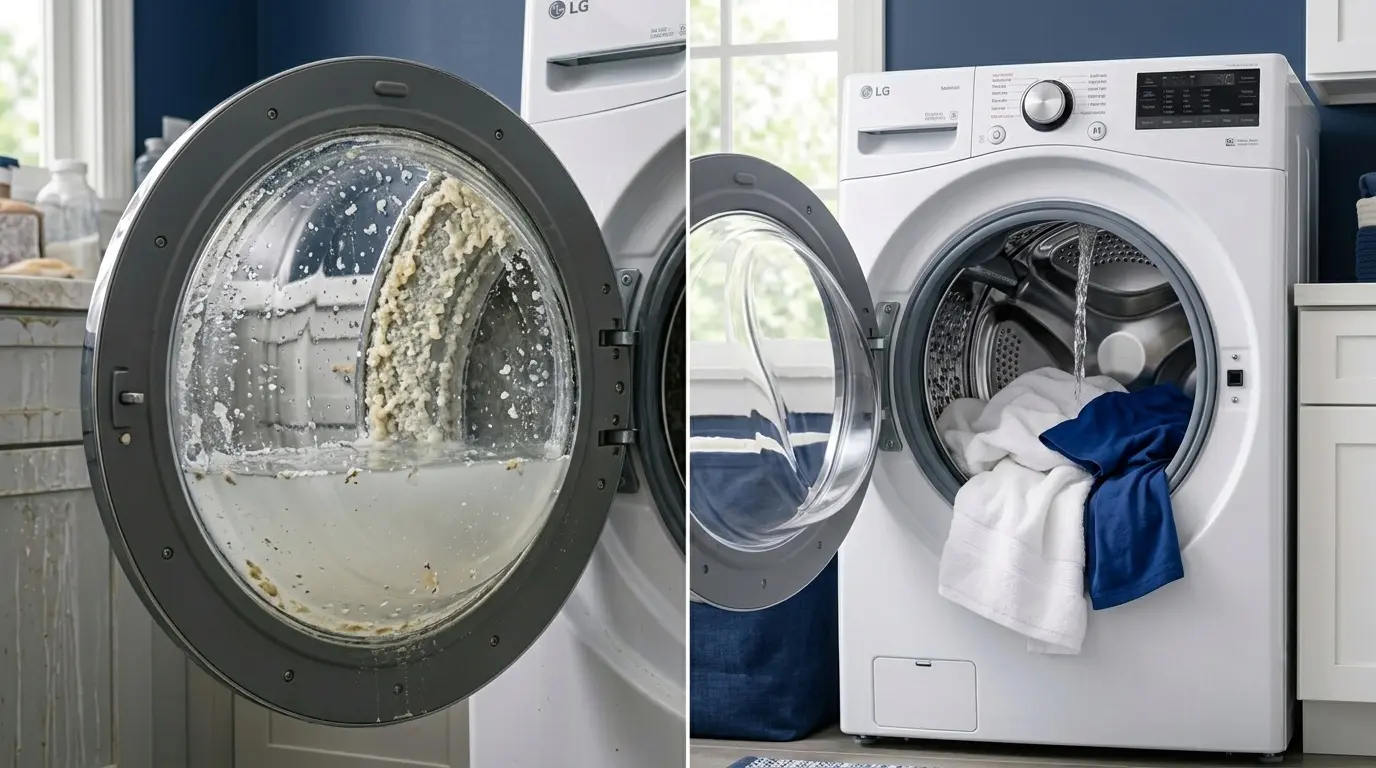
Two identical LG washing machines, installed in two different homes, can have completely different lifespans, not because one was used more carefully, but because one home has hard water and the other doesn’t. Water hardness is the single most overlooked factor in washing machine shopping, and it quietly determines everything from which wash cycles actually work to how many years you get out of the machine before internal components start failing.
Table of Contents
Why Water Hardness Changes Which Washing Machine You Should Buy
Water hardness refers to the mineral content, mainly calcium and magnesium, dissolved in your water supply. It’s measured in grains per gallon (GPG) or parts per million (ppm), and it varies dramatically by region, sometimes even between two neighborhoods on the same municipal system if one draws from a different well or reservoir source.
Here’s the part most buying guides skip entirely: a washing machine that performs beautifully in a soft-water region can genuinely underperform and wear out faster in a hard-water home, even with identical usage. Hard water changes how detergent behaves, how efficiently heating elements transfer heat, and how quickly internal components accumulate scale. This isn’t a minor footnote, it’s a real reason to choose a different model or feature set depending on which side of that line your home falls on.
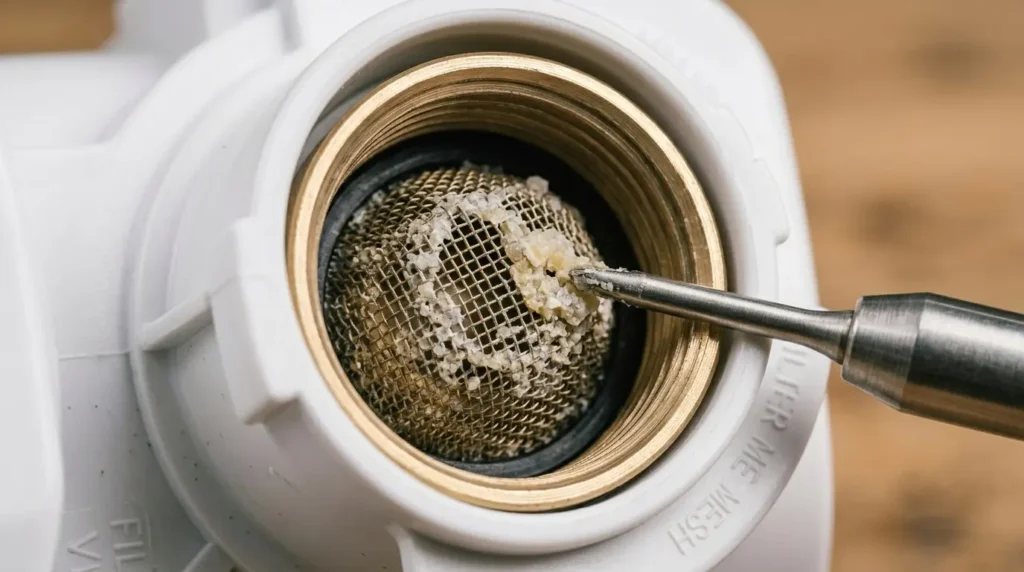
| 💡 Insider Knowledge: When a technician gets called for weak or inconsistent water flow into an LG washer drum, the first question is always “how hard is your water?” Scale buildup on the inlet valve screen is a common cause frequently misdiagnosed as a failing valve. |
How to Actually Find Out Your Water Hardness Before Shopping
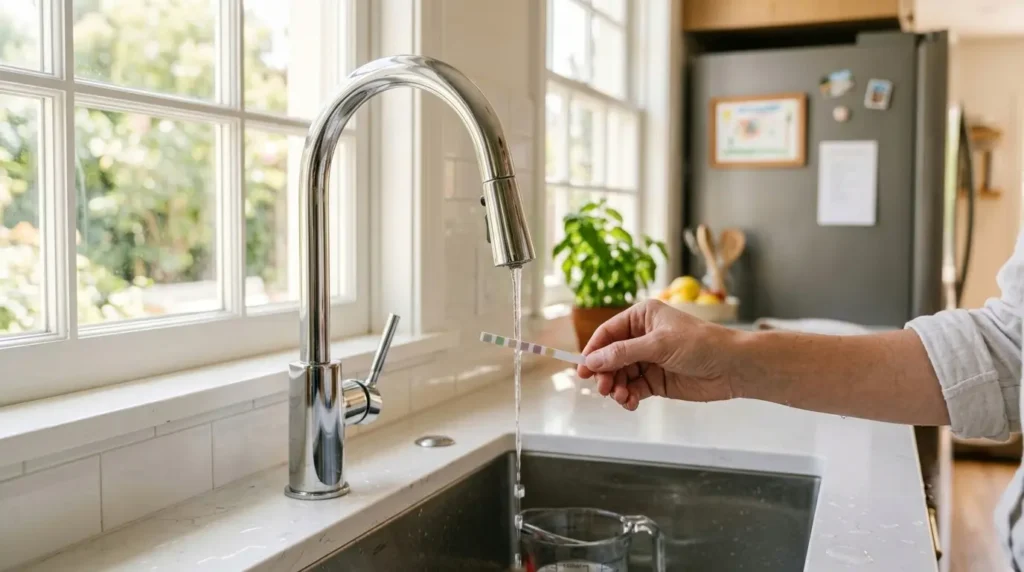
You cannot make a smart decision here without knowing your actual number, and most people skip this step entirely. There are three reliable ways to find out:
Municipal water report
If you’re on a city water supply, your local water utility publishes an annual water quality report that lists hardness in mg/L or ppm. This is the most accurate free source available.
Home test kits
Simple drop-count or test-strip kits sold at hardware stores give a reasonably accurate GPG reading in under five minutes, and they’re worth doing even if you have a municipal report, since internal plumbing and any existing softener setup can shift the number by the time water reaches your washer.
Well water testing
If you’re on a private well, you don’t have a municipal report to fall back on, and well water hardness varies far more than city water; testing is genuinely necessary here, not optional, since well hardness can swing from soft to extremely hard within a few miles.
As a general reference: under 60 mg/L is considered soft, 60-120 mg/L is moderate, 120-180 mg/L is hard, and above 180 mg/L is very hard. Most buying decisions in this guide start mattering once you’re in the hard or very hard range.
LG Features That Matter More (or Less) Depending on Your Water
Not every LG feature is equally valuable regardless of water type; some earn their price specifically in hard water homes and are close to unnecessary in soft water homes.
TurboWash and steam cycles
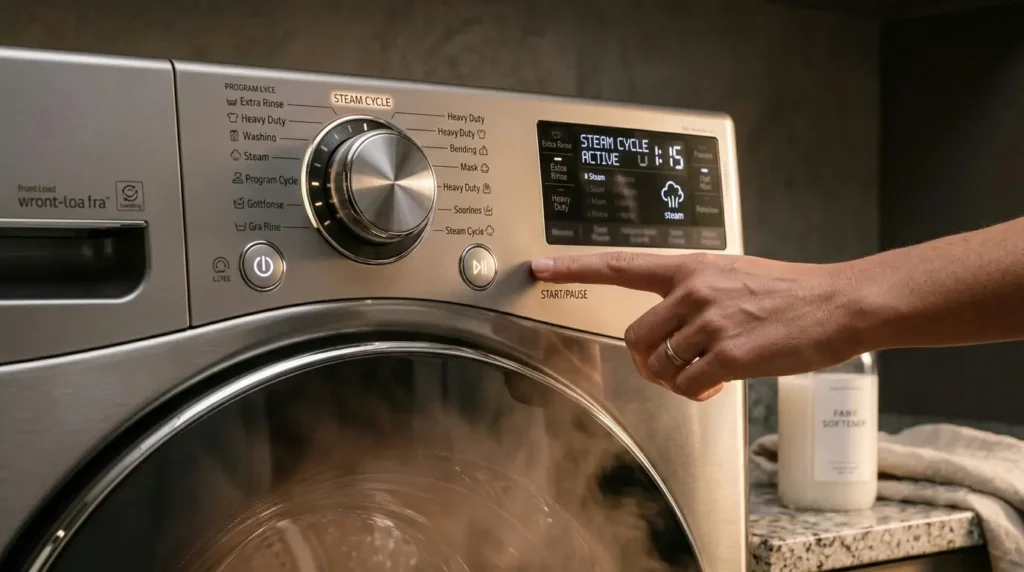
In hard water, steam cycles and high-agitation wash technology like TurboWash help combat the film and dulling effect hard minerals leave on fabric, since steam improves detergent dissolution. In soft-water homes, this feature is more of a time-saving convenience than a water-quality necessity.
Direct-drive motor systems
LG’s Direct Drive motors are less exposed to scale-related wear than belt-driven systems with more moving mechanical linkage, which matters more in hard water regions where mineral buildup accelerates wear on any component water regularly passes near.
Auto-dosing detergent dispensers
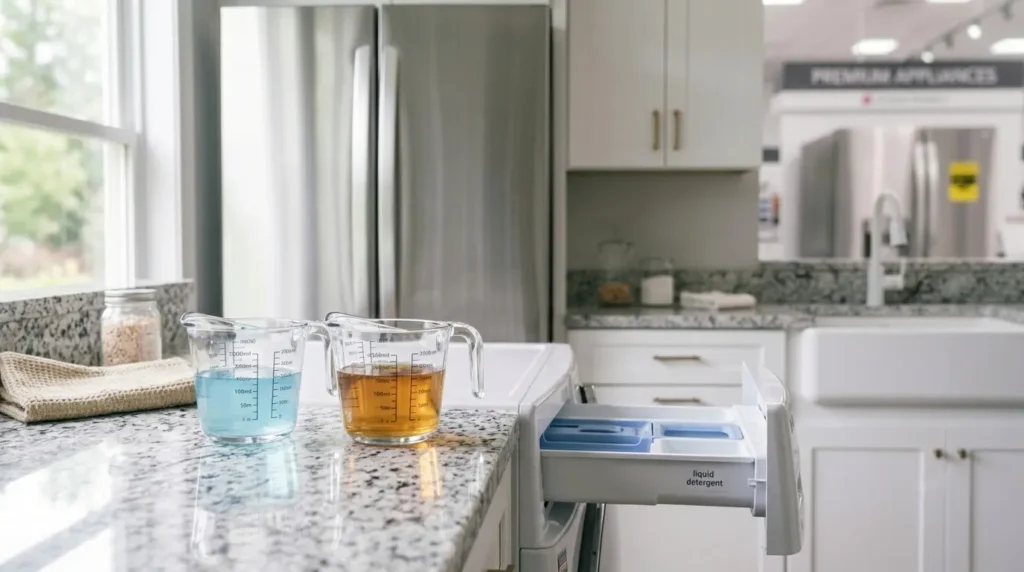
These genuinely matter more in hard water homes because hard water requires more detergent to achieve the same cleaning result; manual dosing in hard water areas leads to chronic under-dosing, which shows up as dull, stiff-feeling laundry. Auto-dispensing models compensate for this more consistently than a human eyeballing a cap.
Heating element / hot wash capability
Hotter washes dissolve detergent more completely in hard water, so models with a stronger dedicated hot-wash cycle carry more practical value in hard water regions than in soft water regions, where cold-wash cycles already perform adequately.
LG Models Best Suited for Hard-Water Homes
| Model / Series | Key Hard-Water-Relevant Feature | Why It Helps |
| LG WM4000/WM4500 Series | TurboWash + auto-dispense | Improves detergent dissolution and dosing accuracy |
| LG Signature Series | Direct Drive + steam | Reduces mechanical scale exposure; steam aids fabric care |
| LG WT7900 Top Load | Deep-fill option + agitation | Higher water volume helps flush mineral residue |
| LG WM3900 Series | Allergiene cycle (extended hot wash) | Extended hot cycle improves detergent breakdown |
Note that “best for hard water” doesn’t mean these models eliminate scale buildup entirely; no washing machine does. It means these feature combinations reduce the practical downsides (dull laundry, detergent residue, faster component wear) more effectively than base-tier models without them.
LG Models Fine for Soft-to-Moderate Water Homes
If your water tests under 120 mg/L, you genuinely don’t need to pay a premium for hard-water-specific features, and technicians will tell you honestly that it’s often a wasted budget. LG’s mid-tier front-load and top-load models, without TurboWash or auto-dispense, perform perfectly well in soft-to-moderate water since the core wash mechanics aren’t fighting mineral interference in the first place.
| 💡 Insider Knowledge: Some soft-water homeowners mistake efficient, correctly-dosed washing for a “too gentle” machine and needlessly upgrade to hard-water-oriented features that don’t change anything for them. |
What Hard Water Does to a Washing Machine Long-Term
The mechanism matters more than the vague “hard water is bad for appliances” warning most people have heard. Calcium and magnesium minerals precipitate out of water as it heats, forming scale deposits inside the heating element, the water inlet valve, and along internal hose pathways. Over years, this scale reduces heating efficiency (meaning “hot” cycles run cooler than intended), restricts water flow through inlet valves, and can accelerate wear on rubber gaskets and seals as mineral deposits create abrasive surfaces.
This is a genuinely durable, evergreen mechanism; it’s the same reason kettles and water heaters scale up in hard water regions, just happening inside a washing machine instead. The practical consequence for buying decisions: a machine in a hard-water home without any mitigating features or maintenance will typically show reduced heating performance and inlet flow issues years earlier than the identical model in a soft-water home.
| 💡 Insider Knowledge: The deciding factor in repair vs. replace after hard-water scale damage usually isn’t the scale itself, it’s whether the heating element is sealed into the drum assembly or independently accessible. Sealed elements often make replacement more economical than repair. |
Detergent and Cycle Adjustments Based on Water Type
Regardless of which LG model you choose, water hardness should change how you use it, not just which one you buy. In hard water, technicians generally recommend increasing detergent slightly above the package’s minimum line and favoring liquid detergent over powder, since powder detergent can leave more visible mineral-detergent residue in hard water than liquid formulations do. Running an empty hot cycle with a washing-machine-safe descaling product every few months in hard-water areas also meaningfully extends component life, particularly for the heating element and inlet valve.
In soft water, the opposite adjustment applies, using less detergent than hard-water instructions suggest is usually correct since oversudsing in soft water is a more common complaint than under-cleaning, and it can leave its own filmy residue that gets mistaken for a machine fault.
👉 [Best HE Detergents for LG and Samsung Washing Machines 2026]
👉 [How to descale an LG washing machine step by step]
👉 [LG Washer Leaves Black Marks on Clothes: 5 Fast DIY Fixes]
FAQ
1. Does water hardness actually affect which LG washing machine I should buy, or is this overstated?
It genuinely affects real-world performance and longevity; hard water changes detergent dissolution, heating efficiency, and component wear rate, so it’s a legitimate factor to weigh, not marketing exaggeration.
2. Is a water softener a substitute for buying a hard-water-friendly LG model?
A whole-home softener addresses the root cause more completely than any washer feature can, but if a softener isn’t installed, choosing a model with TurboWash, auto-dispense, or a stronger hot-wash cycle meaningfully reduces the practical downsides.
3. How do I know if scale buildup is already affecting my current LG washer?
Common signs include weaker-than-normal water flow into the drum, hot cycles that no longer feel genuinely hot, and detergent or mineral film visible on dark clothing after washing.
4. Does hard water void an LG washing machine’s warranty?
Water hardness itself doesn’t void a warranty, but scale-related component failure is often classified as normal wear rather than a manufacturing defect, so warranty coverage for hard-water-caused issues varies and is worth confirming with LG directly for your specific model.
5. Should I use more detergent in hard water, and will that damage the machine?
Using moderately more detergent (staying within the manufacturer’s maximum line) is appropriate in hard water and won’t damage the machine, but consistently overdosing beyond the recommended maximum can contribute to residue buildup in hoses and dispenser trays over time.
6. Do top load and front load LG machines handle hard water differently?
Front-load machines generally use less water per cycle, which can mean slightly more concentrated mineral exposure per wash compared to some top-load models, though both are affected by hardness and benefit from the same mitigation steps.
7. How often should I descale an LG washing machine in a hard water area?
Every 1-3 months is a reasonable interval in hard water areas depending on hardness severity, compared to twice a year or less in soft-to-moderate water areas.
Conclusion
Choosing an LG washing machine without checking your water hardness first is like buying hiking boots without checking the terrain; the machine might still work, but you’re leaving performance and years of lifespan on the table. Test your water, match the feature set to what your water actually needs, and adjust your detergent and maintenance habits accordingly, and you’ll get a washer that keeps performing the way it did on day one for years longer than the same model would in the wrong household without those adjustments.