
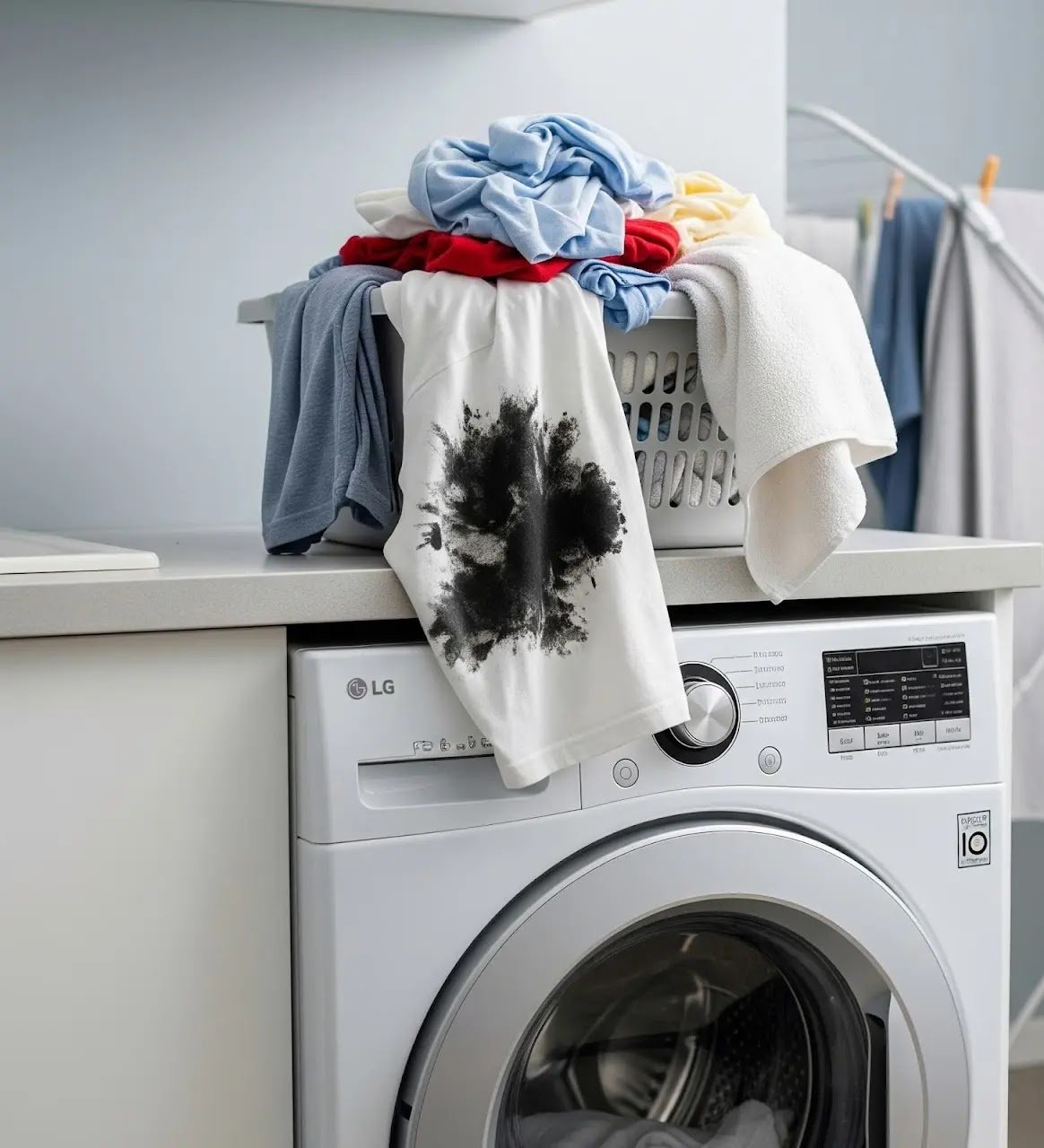
LG Washer Leaves Black Marks on Clothes: Fresh laundry coming out with black marks is frustrating, especially when it happens right after you’ve done everything “right.” If your LG washing machine is leaving dark streaks, oily smudges, or greasy spots on clothes, this guide walks through identifying exactly what’s causing it
Table of Contents
Why Does My LG Washer Leaves Black Marks on Clothes?
Black marks usually come from a mix of residue, mold, grease, or mechanical wear inside the washer. LG washers are reliable, but they still need regular care. Common causes include:
- Detergent and fabric softener residue: excess detergent or softener leaves a film that accumulates and rubs off as dark streaks
- Mold and mildew around the door gasket: front-load washers trap moisture in the rubber seal, producing black mold that transfers to clothes
- Dirty or clogged drum: built-up lint, dirt, and grease inside the drum or paddles can abrade fabrics
- Oil or grease leaks from internal parts: worn bearings, seals, or motor components can leak grease that stains garments
- Overloading: crowding the drum increases friction and prevents proper rinsing, causing residue to stick to clothing
Tip: Inspect the gasket, drum, and detergent drawer first; they’re the most common and easiest to fix.
The Smell & Smear Test: Identify the Culprit First
Before you start scrubbing, perform this simple test to identify exactly what’s staining your clothes.
The Smell Test: Sniff the black mark. If it smells earthy or musty, it’s mold/mildew from your gasket. If it has a metallic or chemical odor, it’s likely industrial grease from a failing bearing.
The Smear Test: Try to rub the mark with a wet cloth. If it flakes off in tiny gray pieces, it’s scud, a detergent buildup. If it smears like butter and leaves a deeper stain on the fabric, it’s mechanical oil.
This two-part test matters because it tells you which section below to focus on first; mold and scud are both fixable in an afternoon with cleaning alone, while mechanical oil is a different situation entirely that cleaning won’t solve.
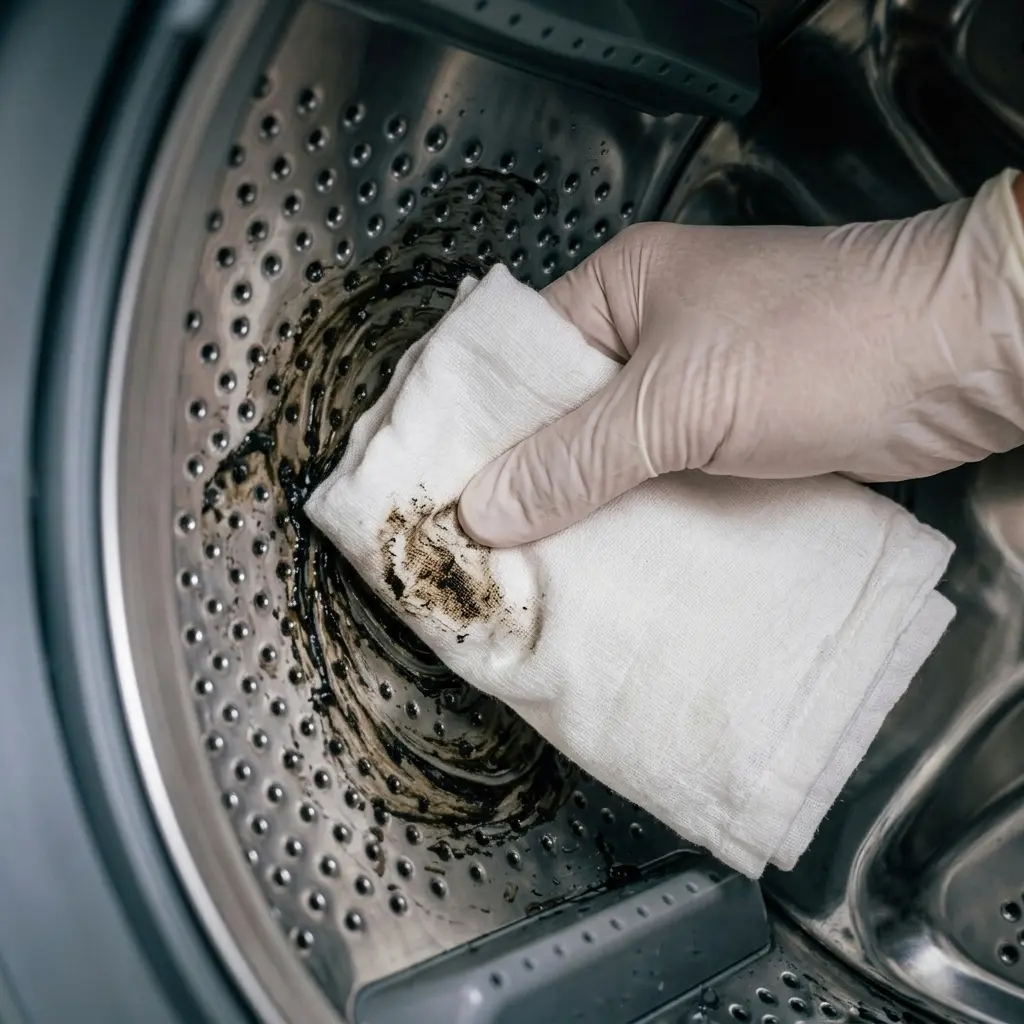
Run a tub clean cycle.
Use the Tub Clean or Drum Clean cycle to remove soap scum, mold, and residue.
- Empty the washer completely
- Add a commercial washer cleaner or a mix of 1 cup white vinegar plus ½ cup baking soda directly into the drum
- Run the hottest tub-clean or sanitize cycle available
- After the cycle, wipe the drum and door seal with a clean cloth
👉 [How to Descale an LG Washing Machine With Citric Acid] is worth checking separately if hard water scale is a factor alongside the residue, since descaling addresses a different buildup than a standard tub clean.
Clean the Door Gasket and Detergent Drawer
Mold in the rubber seal and a dirty detergent drawer are major culprits behind recurring black marks, even after a tub clean.
- Pull back the gasket and inspect for black spots
- Use a soft brush and a 1:1 mix of warm water and white vinegar to scrub mold away
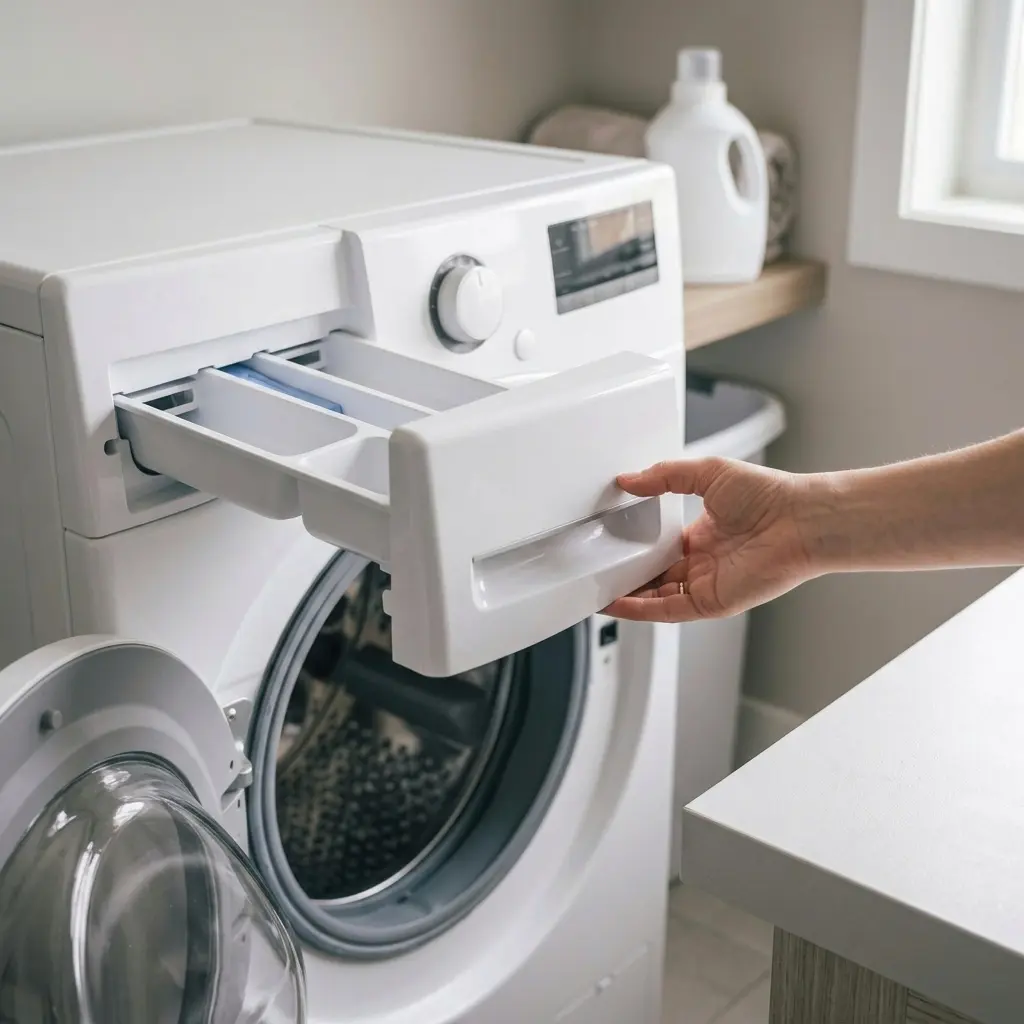
- Remove the detergent drawer, if removable, soak it in hot water, scrub, and dry before reinserting
Leaving the door slightly open between washes is one of the simplest habits that reduces how often mold reappears here, since trapped moisture in a sealed gasket is exactly what allows mold to establish itself in the first place.
Manual Scrud Removal Behind the Drum Paddles
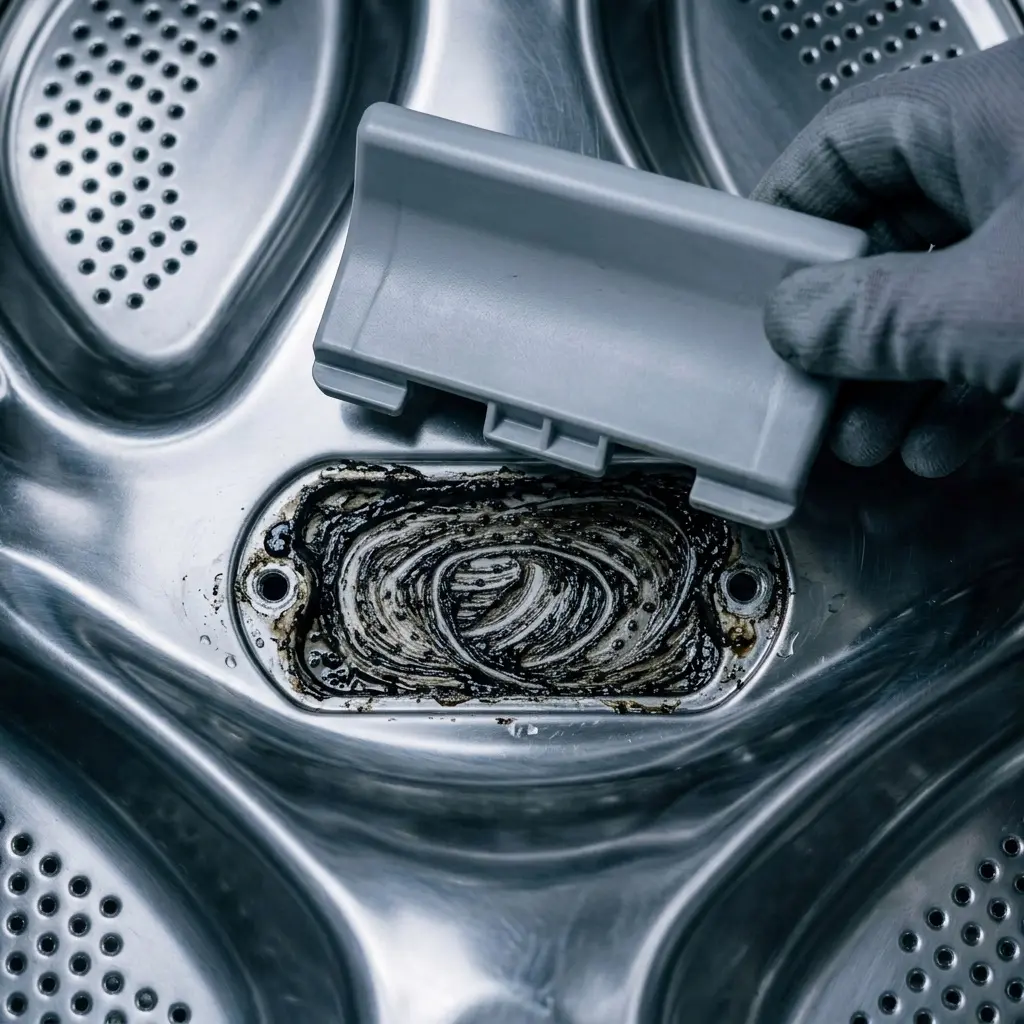
A Tub Clean cycle often isn’t enough for heavy buildup. Scrud, a waxy buildup of fabric softener and skin oils, hides behind the drum paddles, where a standard cycle’s water flow never fully reaches.
Before you start: unplug the washer at the wall outlet before removing any interior panels. Some paddle screws sit in tight recesses with sharp plastic edges around the mounting points, so work carefully and avoid reaching in with excessive force if a screw feels stuck.
If your LG model allows it, unscrew the plastic lifters (paddles) inside the drum. You’ll likely find a thick layer of black slime underneath them. Manually scrubbing these areas with an old toothbrush and hot water is genuinely the only way to stop “flake” marks permanently; a tub clean cycle alone will never reach this specific area no matter how many times you run it.
Grease and Oil Leaks: When It’s Not a Cleaning Problem
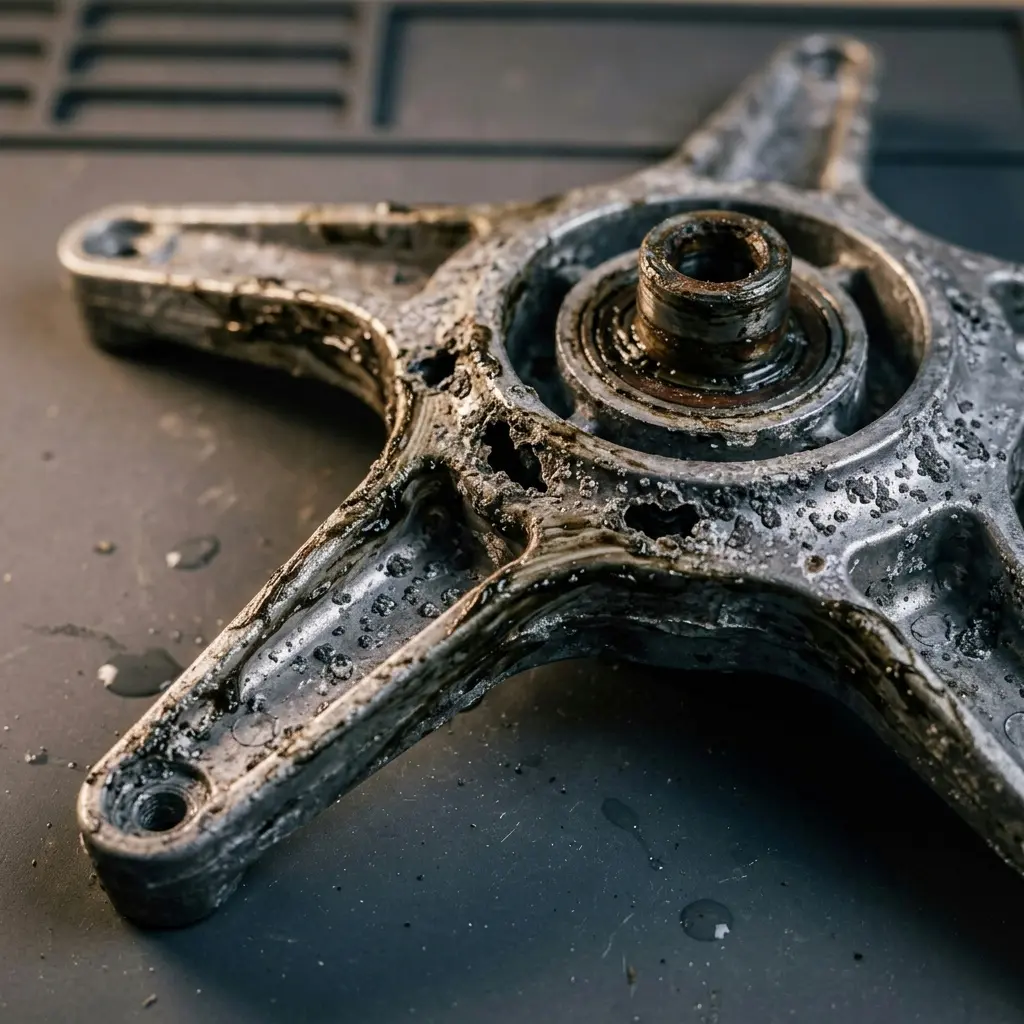
If the black marks on your clothes look like thick, oily smears and are accompanied by a loud roaring noise during the spin cycle, you’re likely dealing with spider arm corrosion rather than anything cleaning will fix.
In many LG front-loaders, the aluminum “spider arm” that holds the drum can corrode over time, often accelerated by detergent buildup sitting against it for extended periods. When this part begins to disintegrate, or the rear bearing seal fails, internal mechanical grease leaks directly into your laundry water.
This is often a serious mechanical failure, not a maintenance issue. Replacing the bearings and spider arm typically involves a meaningful labor and parts cost; treat any specific dollar figure you see quoted as a rough regional estimate rather than a fixed number, since it varies significantly by market and model. If you see these oily streaks, stop using the machine and get it inspected before running further loads, since continuing to run it risks the corrosion progressing to full mechanical failure.
What to check:
- Run an empty high-spin cycle and inspect the drum and rear panel for visible grease afterward
- Smudges that resist cleaning even after a thorough tub clean and gasket scrub often mean worn bearings or motor seals, not remaining residue
- Contact an authorized technician for parts inspection; don’t ignore persistent oily stains hoping they’ll resolve on their own
👉 [LG Washing Machine Hums But Won’t Spin: Complete Diagnostic] covers this noise pattern in more depth if it’s showing up alongside the oily marks.
Comparing the Four Mark Types
| Mark Type | Smell | Smear Test Result | Cleaning-Fixable? |
| Mold/mildew | Earthy, musty | Doesn’t flake or smear, wipes as a dark stain | Yes, gasket scrub |
| Detergent scrub | Faint or none | Flakes off in tiny gray pieces | Yes, tub clean + paddle removal |
| Mechanical grease | Metallic, chemical | Smears like butter, deep stain | No, technician required |
| General residue/overload | Faint detergent smell | Light film, wipes off easily | Yes, dosage and load-size fix |
Getting Detergent Right Going Forward
Always use HE detergent for front-load and HE machines. Too much detergent leaves residue that becomes black marks over time, and this is one of the most common causes behind marks that keep returning even after a clean.
👉 [Best LG Washing Machine Detergents for Hard Water] is worth checking if you’re also dealing with hard water on top of residue buildup, since mineral interference and detergent residue often compound each other.
Alongside dosage, keep loads at a sensible size so items can tumble and rinse thoroughly; a good rule of thumb is leaving about a hand’s width of space at the top of the drum. Crowding reduces both agitation and rinse effectiveness, which leaves more residue sitting against fabric than a properly sized load would.
When to Call a Technician
Call a professional if you find:
- Persistent oily or greasy stains that don’t wash out even after a full cleaning cycle
- Visible oil or grease inside the drum or on the rear panel
- Loud noises, excessive vibration, or fluid leaks, signs of worn bearings or seals
For mechanical issues, contact LG support or a certified appliance technician. Attempting complex bearing or spider arm repairs without experience can cause further damage and, in some cases, void remaining warranty coverage.
FAQ
1. Can black marks be removed from clothes once they’re already there?
Yes, many black marks from mold or detergent residue can be removed by re-washing with a stain remover and using an extra rinse. Oily grease stains are harder to remove and sometimes require professional cleaning or discarding the item if deeply stained.
2. How often should I run a tub clean cycle?
Run a tub clean cycle monthly if you use the washer frequently, or every 1–2 months for lighter use; this helps prevent the buildup that eventually causes black marks in the first place.
3. Is it safe to use vinegar and baking soda to clean my washer?
Yes, white vinegar and baking soda in a tub clean cycle are a safe, effective method for removing residue and mild mold. For heavier buildup, a commercial washer cleaner tends to work faster.
4. Why do black marks keep coming back even after I clean the drum?
This usually means the buildup is behind the drum paddles rather than on the visible drum surface; a standard tub clean cycle’s water flow doesn’t reach that area, so the paddles need to be manually removed and scrubbed to fully resolve recurring marks.
5. Are black marks more common on certain LG washer types?
Front-load models are more prone to gasket mold specifically since the door seal traps moisture in a way top-load machines don’t; top-load LG washers can still develop scrud or detergent residue, just less commonly gasket-related mold.
6. Can I keep using the washer if I suspect a bearing or spider arm issue?
It’s best to stop and get it inspected rather than continuing to run loads, since ongoing use on a corroding spider arm or failing bearing can allow the damage to progress further before a technician has a chance to assess it.
7. Does switching detergent brands fix recurring residue marks?
Sometimes, but dosage is usually the bigger factor than brand; switching brands without correcting the amount used often just shifts the residue problem rather than solving it.
Final Word
Most black marks trace back to one of four things: mold, detergent scrub, mechanical grease, or plain overloading, and the smell-and-smear test above tells you which one you’re dealing with before you clean anything. Work through the tub clean, gasket, and paddle steps in order, and if oily streaks show up alongside unusual noise, stop and get it looked at rather than continuing to run loads through it.