
As an Amazon Associate, TechElectronicLive.com earns from qualifying purchases.
LG washing machines reviews in 2026 point to a clear split. The front-loaders suit buyers who want fabric care, steam and allergen cycles, and smart features, while the WT7305CW suits buyers who prefer simple top-load access with no door seal. This guide compares four confirmed models from 4.5 to 5.0 cu. ft.
Shopping for an LG washer in 2026 means choosing between a handful of similar-looking front-loaders and a smaller set of top-loaders, each with its own trade-offs. This guide narrows the field to four confirmed models. It explains who each one suits, where each falls short, and what to check before buying.
Specifications come from LG’s US product documentation. Reliability context comes from Consumer Reports brand-level findings.
Capacity, washer type, and room layout matter more than any single feature name. A 4.5 cu. ft. front-loader and a 4.8 cu. ft. agitator top-loader solves different problems. The right choice depends on the household’s fabrics, floor space, and tolerance for routine upkeep. The sections below cover the quick picks, front versus top load, capacity, each model, a pre-purchase checklist, and six frequently asked questions.
Table of Contents
LG washing machines reviews: quick-pick table
| Model | Type | Key spec | Best for | Main downside |
| WM4000HBA | Front load | 4.5 cu. ft., TurboWash 360, Wi-Fi | Standard households wanting steam and smart features | Smallest drum in this lineup |
| WM4200HBA / WM4200HWA | Front load | 5.0 cu. ft., TurboWash 360, Wi-Fi | Larger households and bulky bedding | Low door means bending to load. |
| WT7305CW | Top load, 4-way agitator | 4.8 cu. ft., TurboWash3D, Wi-Fi | Buyers who want easy loading and no door seal | The agitator takes drum space. |
Front load vs. top load
Front-loaders such as the WM4000HBA and WM4200 pair use a horizontal drum. They are generally the safer choice for frequent delicates, and they carry steam and allergen-focused cycles. They also ask for more routine care around the door seal and filter, covered in the downsides FAQ below.
The WT7305CW uses a vertical drum with a 4-way agitator. Loading is easier on the back, and there is no door seal to maintain. The trade-off is less drum space than the cubic-foot figure suggests and a tougher wash action on fragile fabrics.
For a deeper side-by-side, see [LG top load vs. front load].
Capacity guide
- 4.5 cu. ft. (WM4000HBA): Suits everyday family laundry. King-size bedding will fit with less room to spare.
- 4.8 cu. ft. (WT7305CW): Slightly larger on paper, but the agitator occupies part of the drum, so usable space differs from a front-loader of the same number.
- 5.0 cu. ft. (WM4200 pair): The most room here, and the better fit for comforters, bulky towels and larger households.
WM4000HBA
The WM4000HBA is the 4.5 cu. ft. front-loader in this lineup. The WM4000 series includes AI DD, TurboWash 360, steam, Allergiene, Sanitary and ColdWash options, the SenseClean system, and a TrueBalance anti-vibration system. The series is ENERGY STAR certified and backed by a 10-year direct drive motor warranty. It also features Wi-Fi connectivity and a closet-depth design.
It suits households that want a front-load feature set without stepping up to the largest drum. Buyers who value steam and allergen cycles will find them here.
The main structural downside is capacity. At 4.5 cu. ft. it has the least room of the washer types here, so very bulky items such as king-size comforters leave less margin than on the 5.0 cu. ft. models.
Owners report: Pros are quiet running, strong cleaning, a bedding-size drum and easy setup. Cons include a first-use chemical or plastic smell that typically fades after a few washes, leaks in some tight or stacked installs (the seal care in the FAQ applies), and, for a minority, first-year failures and slow service scheduling.

- TurboWash 360 Technology
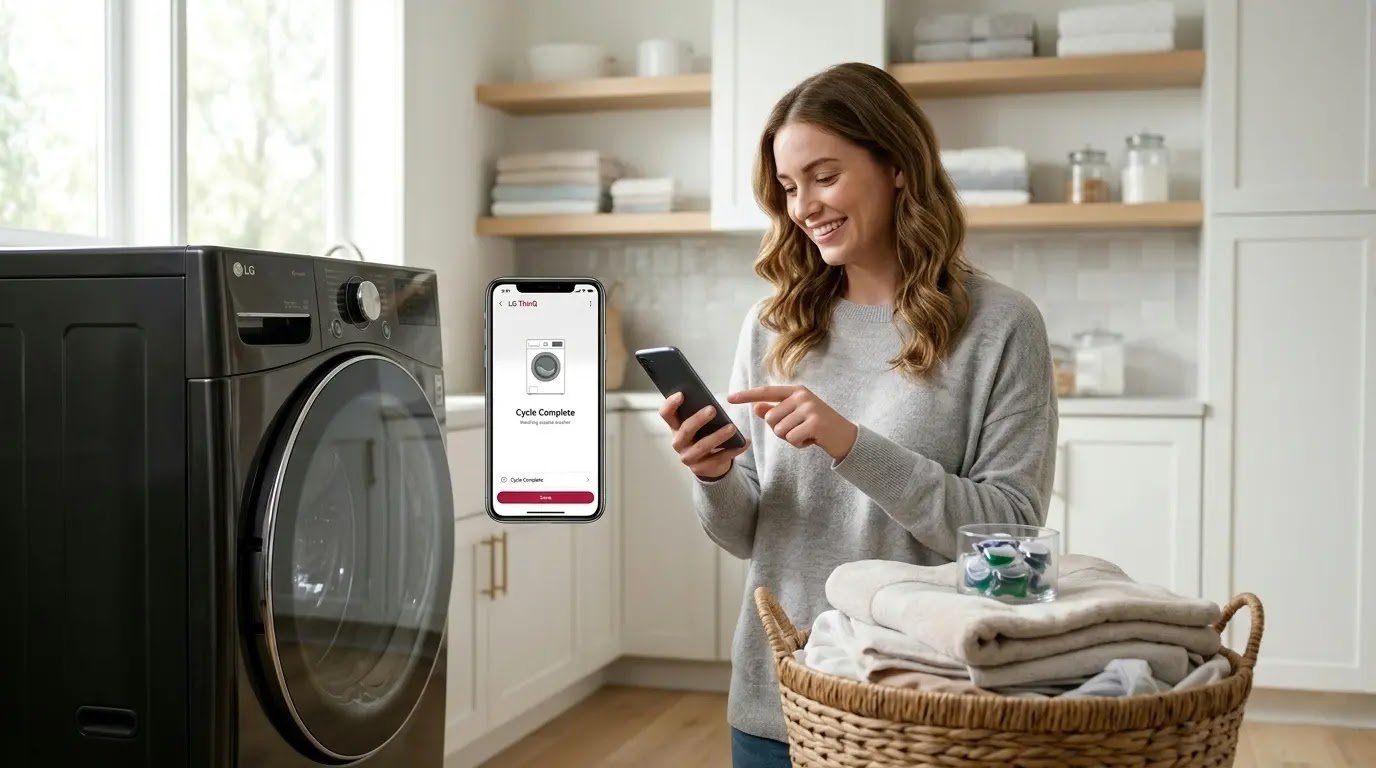
- ThinQ App Controls Laundry Remotely
- Allergiene Cycle Remove 95% Of Pet Dander And Dust.
WM4200HBA and WM4200HWA
These two models share the 5.0 cu. ft. front-load platform, and the WM4200HWA is the white version. Both are Wi-Fi enabled with TurboWash 360 and built-in intelligence. The WM4200HWA also includes Steam Wash and an Allergene cycle.
The extra half cubic foot over the WM4000HBA matters mainly for bedding and bulky loads. It suits larger households and anyone who washes comforters at home.
The structural downside is the front-load door, which sits low. Loading and unloading means bending, and the larger cabinet needs a larger laundry space. Measure carefully before choosing it over the 4.5 cu. ft. model.
Owners report: the same pattern as the WM4000HBA. Pluses are quiet, running, strong cleaning, and bedding-size loads. Minuses are a first-use smell, occasional leaks in tight installs, and, for a few, slow service scheduling.

WT7305CW
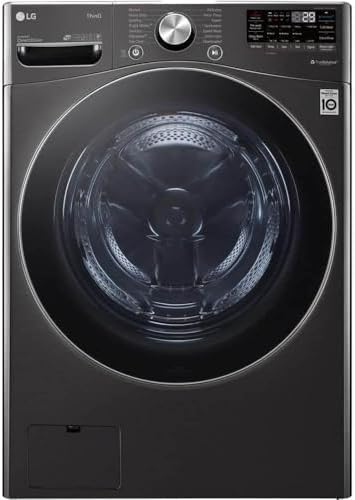
The WT7305CW is the agitator top-loader in this guide. The WT7305CW has a 4.8 cu. ft. capacity, a 4-way agitator, TurboWash3D, and Smart Pairing, which lets the washer tell a compatible dryer to select a matching cycle. It is ENERGY STAR qualified and Wi-Fi enabled.
It suits buyers who want straightforward top-load access, prefer to skip the door seal, and wash mostly sturdy everyday fabrics. The lid opening also keeps the loading height comfortable for many people.
The structural downside is the agitator itself. It occupies the center of the drum, so large flat items such as sheets need careful loading. Its wash action is generally tougher on delicates than a front-loader’s.

- 6X Boosted Clean: Tide liquid laundry detergent is 4X cleaner and 2X fresher. This liquid detergent is formulated with 4…
- Tough stain removal: Tide's laundry soap works on 100% of common stains, for every load every time. Don't settle for "al…
- Grease Cleaning Power: Tide laundry detergent has 10X the grease fighting ingredients versus leading bargain laundry det…
Owners report: Pros include large capacity, quiet running, and strong cleaning on typical loads. Cons include thinner water coverage on the Normal cycle, which can leave detergent or residue on bulky items unless the cycle or water level is adjusted, and occasional leaks.

Pre-purchase checklist
- Measure width, depth, and height, plus door swing for front-loaders or lid clearance for top-loaders.
- Confirm the delivery path, including doorways and stairs.
- Check the floor. A firm, level floor helps keep any washer stable and quieter.
- Use a grounded outlet and consider a surge protector, since power-related damage isn’t covered under warranty.
- Use HE detergent in these high-efficiency washers.
- Confirm Wi-Fi reaches the laundry room if app control matters.
- Match capacity to the heaviest regular load, usually bedding.
- Read the full warranty terms before ordering.

Frequently asked questions
Are LG washing machines reliable?
At the brand level, yes, by the strongest independent measure available. LG earned the highest brand score across the three main washer categories in the 2026 ratings, which combine survey data with lab results. That describes the brand, not any single model, and individual units can still fail. Check the specific model’s rating before buying, and choose a retailer with a clear return policy.
How long do LG washers last?
A decade or more is the usual expectation with routine care. A typical LG washer lasts 10 to 15 years, and appliance service providers describe a similar range for maintained units. Top-loaders are often described as lasting a few years longer than front-loaders. Household size, load habits, and upkeep move the number either way. [How long do LG washers last?]

Front load or top load: which LG is better?
Front-loaders such as the WM4000HBA and WM4200 pair suit buyers who prioritize fabric care, water efficiency, and steam or allergen cycles. The WT7305CW suits buyers who prefer easy loading and no door seal to maintain. If the household washes mostly towels, jeans, and everyday clothes, either type works. For frequent delicacies, lean toward a front-loader.
What does the 10-year LG warranty cover?
The warranty covers internal and functional parts and labor for one year. The direct drive motor (stator and rotor) then carries coverage through year ten, but for parts only. The owner pays any applicable labor. Other components follow their own terms in the warranty document, so keep the receipt and read the terms before buying.
Are LG washers noisy or quiet?
Quiet running comes largely from the direct drive motor, which removes the belt and pulley and uses fewer moving parts. The WM4000 series also adds an anti-vibration system. Real-world noise still depends on the floor, leveling, and load balance, so the same model can sound different on wood than on concrete. Quiet is a design goal rather than a guarantee, so weigh placement near bedrooms.
What are the real downsides of LG washers?
Three trade-offs stand out. Front-loaders need routine care: wipe the door seal regularly, check the drain pump filter at least monthly, and run Tub Clean monthly with a store-bought tub cleaner. Agitator top-loaders are generally rougher on delicates and give up some drum space. Feature-rich models add Wi-Fi settings some buyers never use. [LG washer mold and gasket cleaning]
Bottom line
LG’s lineup splits clearly. The front-loaders, the WM4000HBA and the WM4200 pair, offer steam- and allergen-focused cycles, direct drive motors, and smart features in a fabric-friendly design. The price is for routine door seal and filter care. The WT7305CW trades those extras for top-load convenience, an agitator, and no door seal. That suits buyers who value simple loading over delicate-fabric care.
Brand-level reliability findings are favorable, but they describe LG overall, so confirm the details of the specific model. Capacity, washer type, and tolerance for upkeep should decide the choice, not feature names. The four models here span 4.5 to 5.0 cu. ft., so the heaviest regular load usually settles the size question.
Next step: measure the laundry space, including door swing or lid clearance, then match that footprint to the model whose capacity fits the household’s biggest loads.