
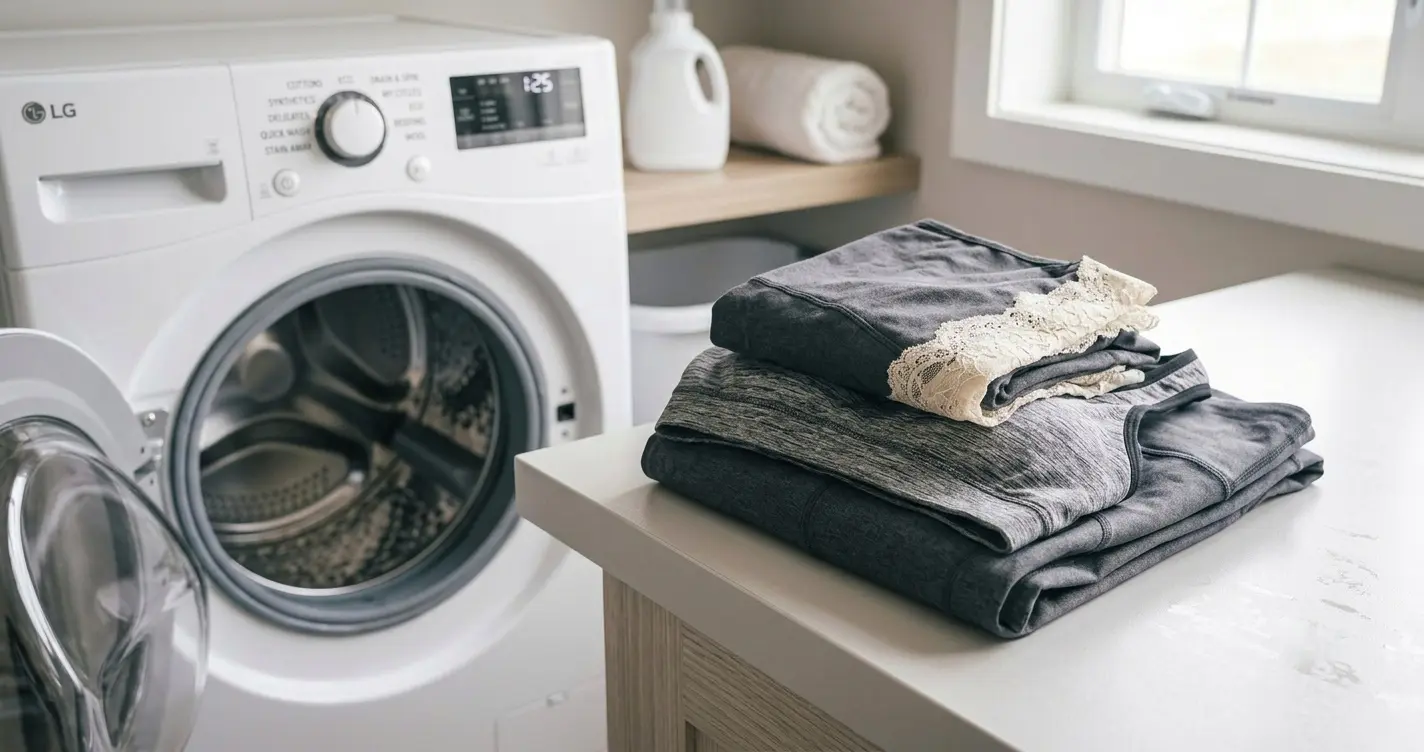
LG Cycle Settings for Activewear and Delicates: Ruining a $60 pair of leggings on the wrong cycle is one of the most avoidable laundry mistakes I see, and it almost always comes down to picking a cycle name without understanding what’s actually happening underneath it.
Table of Contents
Why Activewear and Delicates Need Different Settings Than Regular Loads
Activewear fabrics, spandex, nylon-elastane blends, and moisture-wicking polyester behave nothing like cotton in a wash cycle. Heat and aggressive agitation break down the elastic fibers that give leggings and sports bras their stretch, and that damage is invisible at first. You won’t see it until the garment starts sagging or losing shape after eight or ten washes, by which point most people blame the fabric quality rather than the wash settings that caused it.
Delicates carry a different but related risk: lace, silk-blend athletic tops, and fine-knit base layers can snag, stretch, or pill under standard spin speeds and full agitation cycles designed for durable cottons. The LG washer’s job on these loads isn’t to clean as aggressively as possible; it’s to clean thoroughly while minimizing mechanical stress, and that’s a settings problem, not a hardware one.
| What technicians actually check first: when a customer complains their activewear “wore out fast,” the first thing I ask isn’t about the washer at all; it’s which cycle they’ve been using. Nine times out of ten, it’s normal or heavy-duty on autopilot and never touched. The washer isn’t malfunctioning; it’s just running the wrong program for the fabric every single time. |
Finding the Right Cycle on Your LG Control Panel (By Model Type)
LG has used several distinct control panel layouts over the years, and where “Delicates” or “Activewear” sits on the dial or touchscreen varies more than most people expect.
On older dial-based LG washers (common on entry-level front-load and top-load models), you’ll typically find a physical selector ring with cycle names printed around it; Delicates is usually positioned between Normal and Hand Wash, and there’s often no dedicated “Activewear” cycle at all on these older units. In that case, Delicates or a manually adjusted Normal cycle is your closest option.
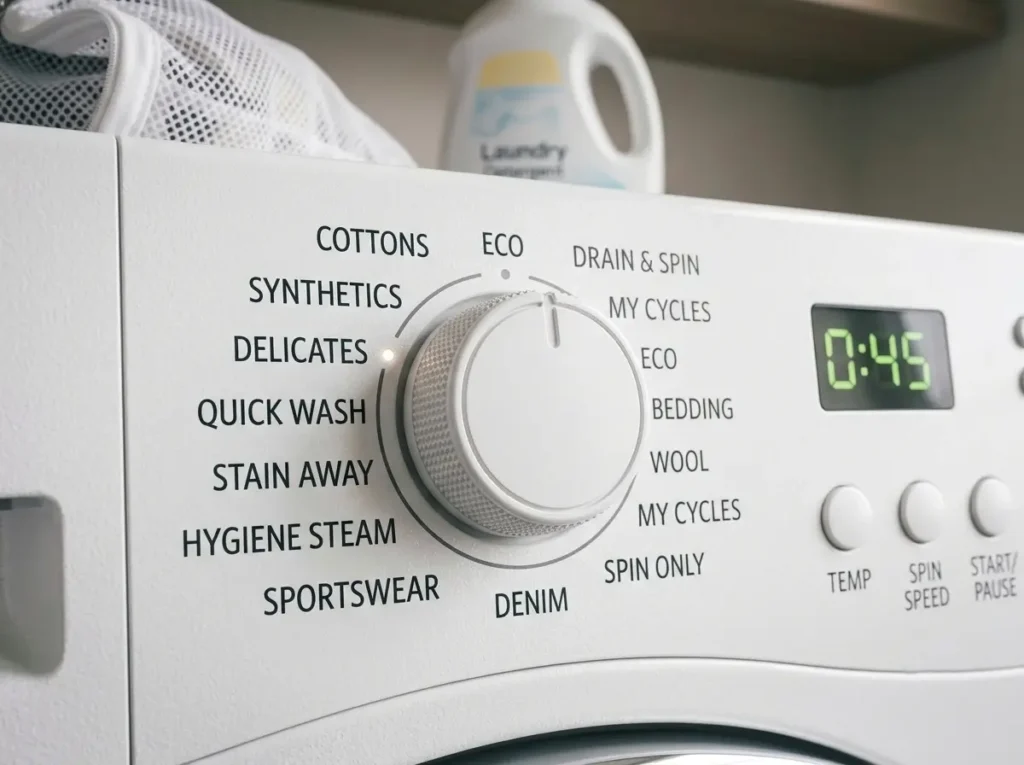
On mid-range LG models with a digital display and button-select interface (common on WM3xxx and WM4xxx series washers), cycles are selected by pressing a labeled button or scrolling through an LED list, and “Sportswear” or “Activewear” often appears as its own dedicated cycle, distinct from “Delicates,” which is tuned differently (lower spin, gentler agitation, but not necessarily the specialized rinse profile that activewear cycles use to fully clear sweat and odor-causing residue).
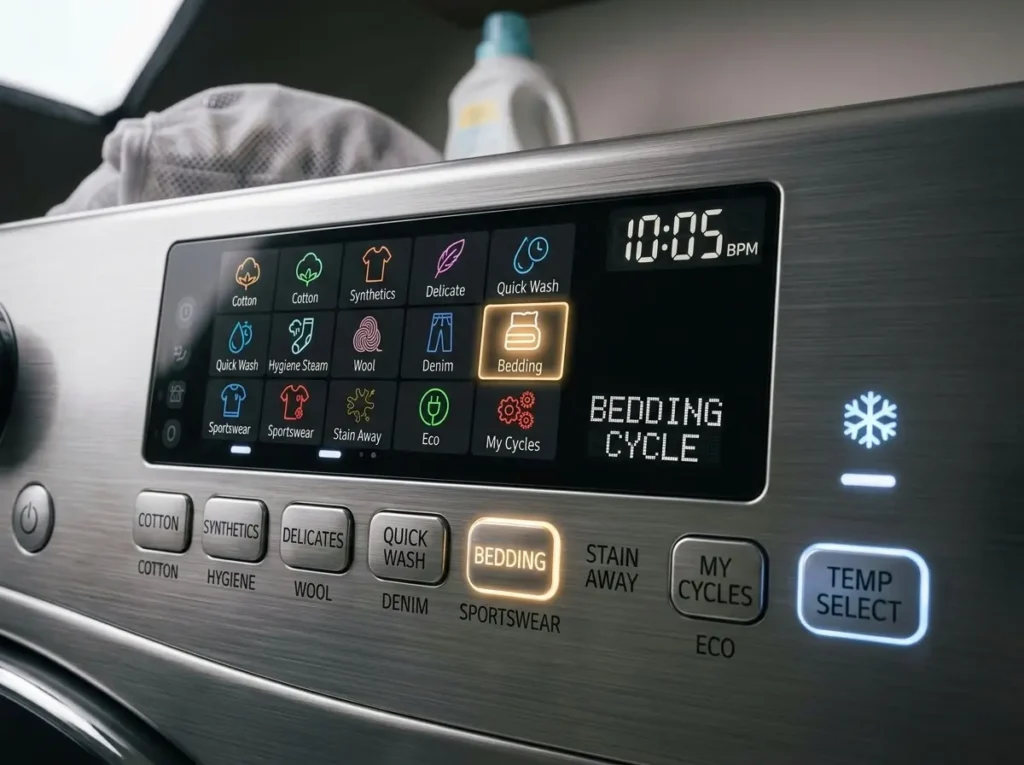
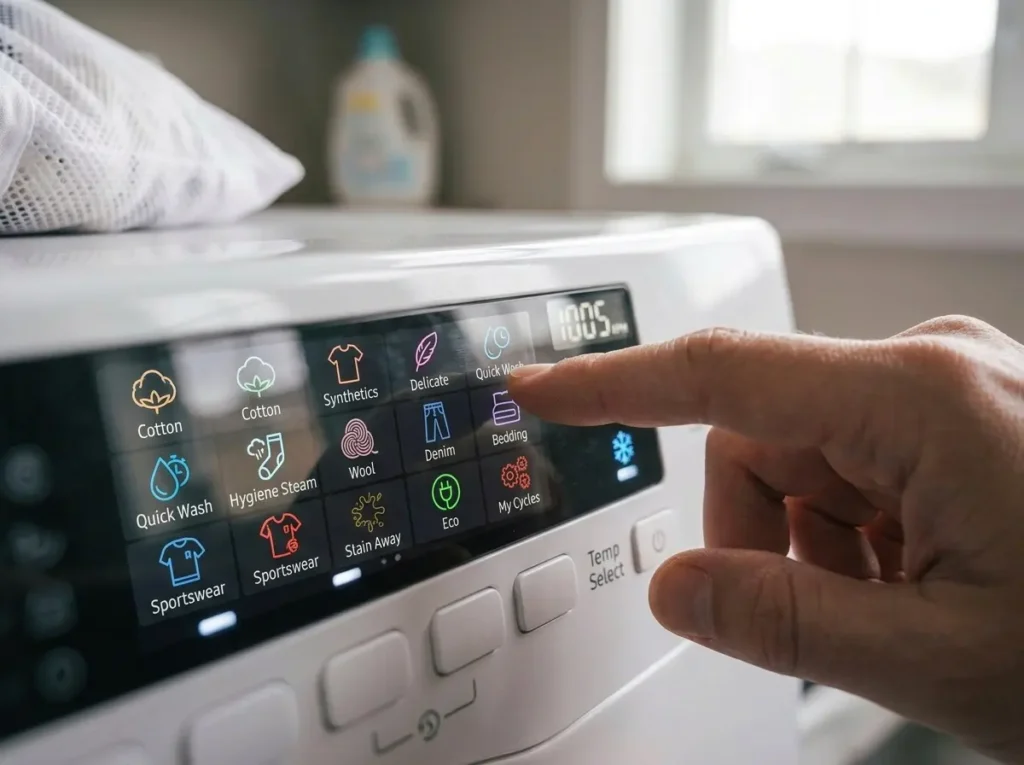
On newer LG models with full touchscreen interfaces and ThinQ app connectivity, cycles are grouped into categories you tap through, and Activewear frequently sits under a “Specialty” or “Sports & Outdoor” category rather than being listed alphabetically with the rest, which is exactly why so many owners never find it and default back to Normal.
| Insider tip: If your model has both “Delicates” and “Activewear” as separate cycles, don’t assume Delicates is the safer choice for gym clothes. Activewear cycles are specifically tuned with a cooler wash temperature and an extended rinse to fully remove antiperspirant and sweat buildup that regular detergent doesn’t fully rinse out on a standard delicates cycle; using delicates instead can leave odor-causing residue behind even though the fabric itself comes out unstretched. |
Temperature: The Setting Most People Get Wrong
Cold water is the correct default for both activewear and most delicates, and this is the single most common setting mistake I see corrected on service calls.
Warm or hot water accelerates the breakdown of spandex and elastane fibers, the stretchy component woven into nearly all activewear, by softening the polymer bonds that give the fabric its recoil. A single hot wash won’t ruin a garment, but repeated warm washes over months are exactly why leggings that used to snap back now just… don’t.
On most LG models, cold defaults to a genuinely unheated fill, while “Cool” or “Tap Cold” (terminology varies by region and model) may pull in whatever temperature your incoming water line delivers, which can run warmer in summer months in some households. If your washer has a true “cold” setting distinct from “tap cold,” use the true cold option for activewear whenever it’s available; it’s a more consistent, lower temperature.
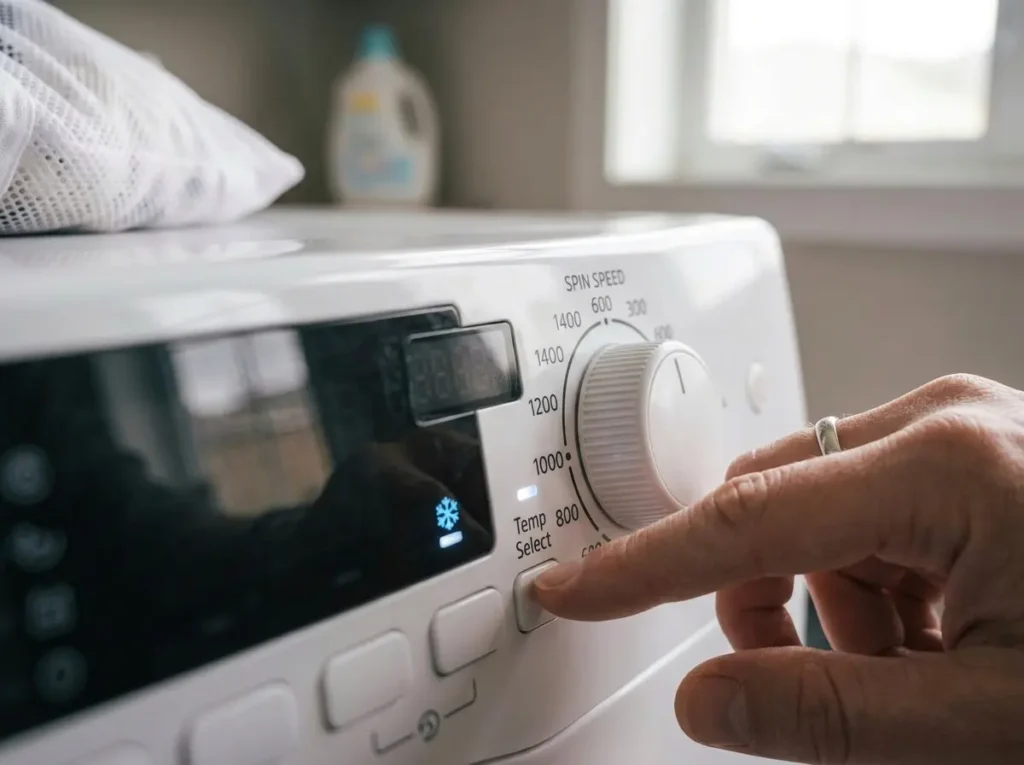
For delicates involving natural fibers (silk-blend tops and wool-blend base layers), cold is still generally the safer default, though a small number of specialty detergents are formulated for slightly warmer washes to lift oils more effectively. If you’re using one of those, follow the detergent’s temperature guidance rather than defaulting to cold automatically; this is one of the few cases where slightly warmer water genuinely helps rather than harms.
Spin Speed and Why Lower Isn’t Always Gentler
Spin speed controls how fast the drum spins during the water-extraction phase at the end of the cycle, and it’s a setting people either ignore entirely or assume “lower is always safer,” which isn’t quite right.
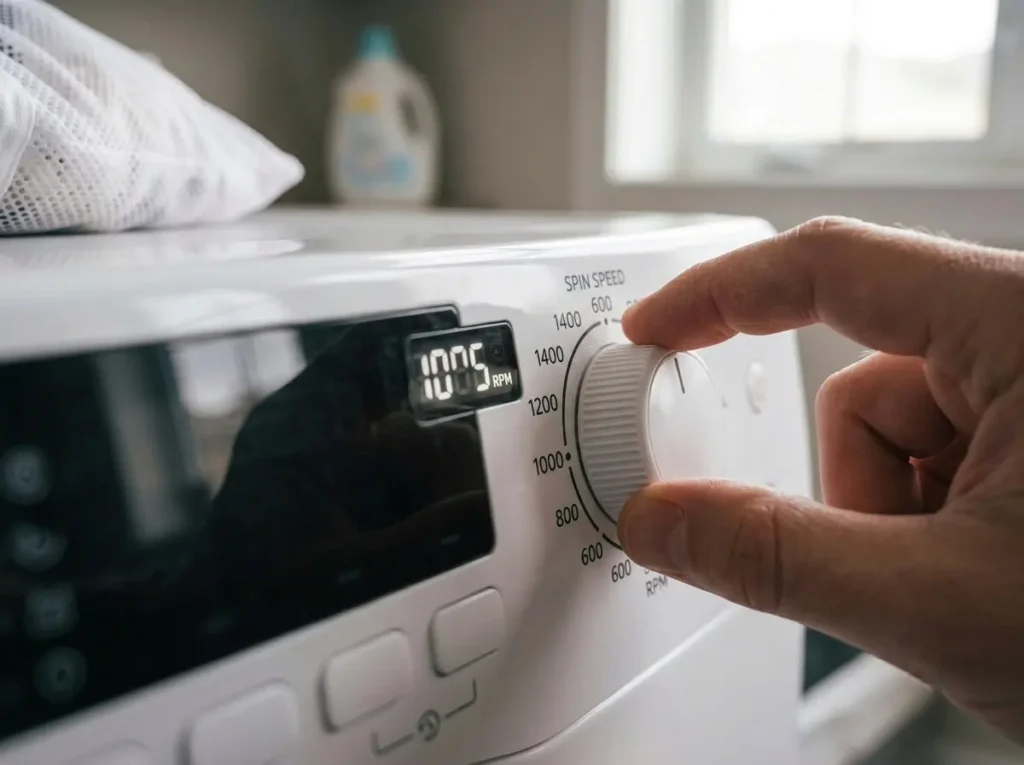
Very low spin speeds (400 RPM or below on most LG models) reduce mechanical stress on delicate fibers, which is genuinely gentler for lace, silk blends, and anything prone to snagging. But activewear specifically benefits from a moderate spin, typically in the 600–800 RPM range depending on the model, because moisture-wicking synthetic fabrics dry faster and resist mildew odor better when more water is extracted before they hit the dryer or drying rack. Leaving activewear soaking wet after a very low spin cycle actually increases the chance of that lingering “gym bag” smell, because damp synthetic fibers are a better breeding ground for odor-causing bacteria than fibers that came out of the wash reasonably dry.
The practical rule I give customers: use your washer’s dedicated Activewear or Sportswear spin default if the cycle sets one automatically. LG tunes these presets specifically to balance fiber protection against adequate water extraction. Only manually override spin speed downward for genuinely delicate items like lace or silk, where fiber protection matters more than extraction efficiency.

- Smart Zipper Protection: The side elastic cover prevents accidental bag opening during washing and drying cycles, avoidi…
- Professional Set:These set includes multiple sizes, allowing you to sort clothes precisely by size, color and material. …
- Durable Material:These laundry bags are made of quality wear-resistant fabric with a sturdy structure. They effectively …
Soil Level, Extra Rinse, and Other Options Worth Using
Beyond the main cycle selection, a handful of secondary settings make a real difference for these fabric types.
Soil Level: Set this to Light or Normal, never Heavy, for activewear and delicates. Heavy soil level extends agitation time significantly to break down ground-in dirt, which is useful for work clothes and towels but adds unnecessary mechanical stress to fabrics that don’t need aggressive cleaning to begin with.
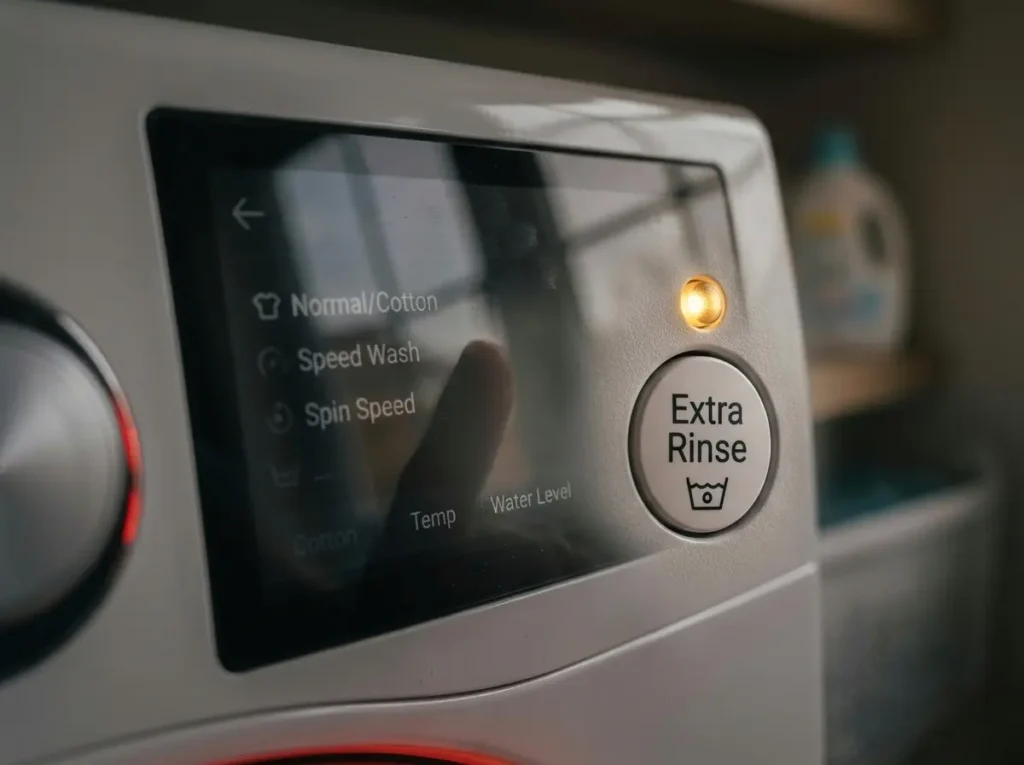
Extra Rinse: This option is worth enabling specifically for activewear, even though it adds cycle time. Sweat and antiperspirant residue bind to synthetic fibers more stubbornly than dirt binds to cotton, and a single rinse cycle often isn’t enough to fully clear it, which is part of why gym clothes can smell “off” again within an hour of light activity even right after washing.
Load Size / Auto-Sensing: If your LG model has an Auto-Sensing feature, let it run for delicates and activewear loads rather than manually overriding to a large load size. Auto-sensing adjusts the water level to the actual load, and an artificially large water level setting on a small delicates load can cause excess tumbling and fabric movement inside the drum, more stress, not less.
Steam options (on models that have them): Skip steam-enhanced cycles for activewear and delicates unless the specific garment care label supports it. Steam settings on LG washers are primarily tuned for wrinkle reduction and deeper cleaning on cottons and blends, and the added heat isn’t ideal for elastane-heavy fabrics.
Common Settings Mistakes That Damage Activewear
A few patterns show up constantly on service calls and reviews, and nearly all of them are settings issues rather than anything wrong with the machine.
- Running everything on normal by default. This is by far the most common mistake. Normal cycles are tuned for mixed cotton loads with moderate agitation and warm-leaning temperature defaults, which is more aggressive than activewear needs.
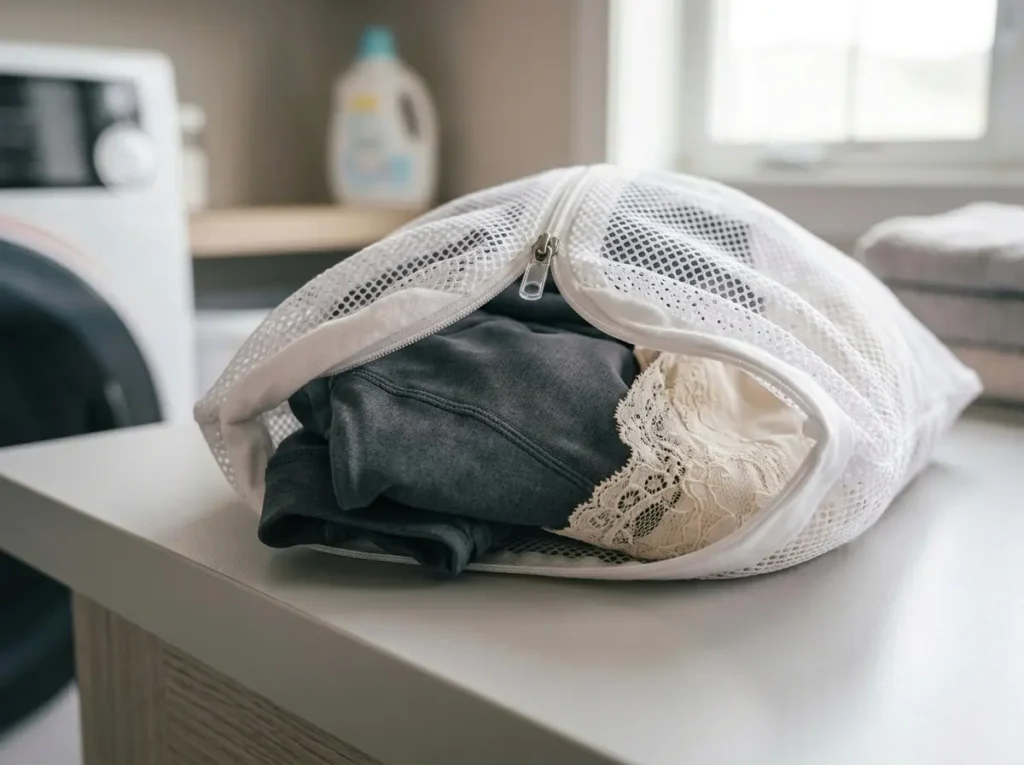
- Overloading the drum “because it’s a small load.” Cramming delicates in with a regular wash to save time increases fabric-on-fabric friction regardless of what cycle is selected.
- Using liquid fabric softener on activewear. This isn’t strictly a cycle setting, but it’s worth mentioning here because it’s directly tied to cycle selection screens on some LG models that prompt for softener use. Fabric softener coats moisture-wicking fibers and reduces their wicking performance over time, regardless of temperature or spin settings.
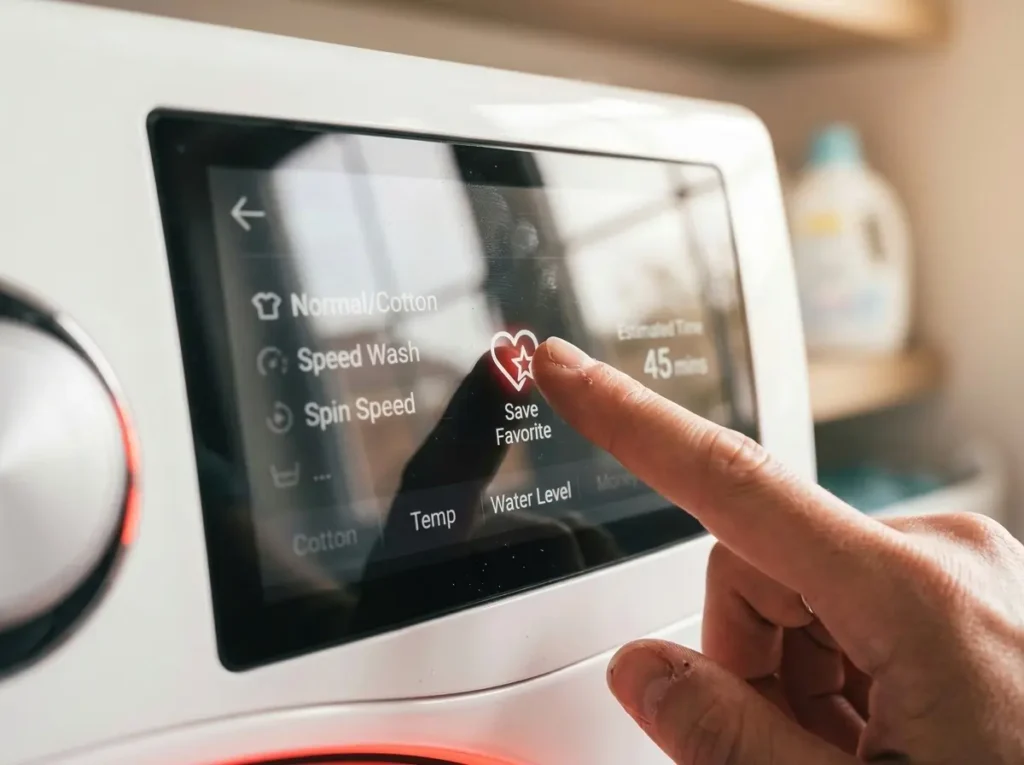
- Ignoring the “My Cycle” or custom favorite save option. Several LG models let you save a customized combination of cycle, temperature, spin, and soil level as a one-touch favorite. Almost nobody uses this, and it’s the single easiest way to stop re-selecting the wrong combination out of habit every laundry day.
If you’re seeing repeated cycle failures or the washer stopping mid-cycle rather than just fabric wear over time, that’s a different problem, worth checking against your display before assuming it’s a settings issue.
Comparison Table: Recommended LG Cycle Settings by Fabric Type
| Fabric Type | Cycle | Temperature | Spin Speed |
| Activewear/synthetic sportswear | Activewear/Sportswear (or Normal, low-modified) | Cold | Medium (600–800 RPM) |
| Silk-blend or lace delicates | Delicates or Hand Wash | Cold | Low (≤400 RPM) |
| Wool-blend base layers | Delicates or Wool cycle (if available) | Cold | Low (≤400 RPM) |
| Everyday cotton blends | Normal | Cold–Warm | Medium–High |
FAQ
1. Can I wash activewear and regular delicates together on the same cycle?
It’s not ideal; activewear generally benefits from a moderate spin for proper water extraction, while true delicates need a lower spin. If you must combine them, use the lower spin setting and accept that activewear may come out slightly damper.
2. Does my LG washer have a dedicated Activewear cycle, or do I need to build one manually?
It depends on the model; mid-range and higher LG washers with digital or touchscreen controls generally include a dedicated Activewear or Sportswear cycle, while older dial-based models typically don’t, and you’ll need to manually select Delicates with adjusted temperature and spin instead.
3. Why does my activewear still smell after washing on the Delicates cycle?
Delicate cycles are tuned for fiber protection, not for the extended rinse that clears sweat and antiperspirant residue from synthetic fibers; using the dedicated Activewear cycle with Extra Rinse enabled addresses this directly.
4. Is it safe to use fabric softener on my LG’s Delicates setting?
Softener isn’t recommended for moisture-wicking activewear regardless of cycle, since it coats synthetic fibers and reduces their wicking performance, though it’s generally fine for non-performance delicates like silk blends.
5. Should I use the Extra Rinse option every time I wash activewear?
For heavily sweated-in gym clothes, yes, it’s one of the more useful add-on settings for this fabric category. For lightly worn items, a standard single rinse is usually sufficient.
6. My LG washer’s spin speed options look different from my old machine’s. Why?
LG has changed control panel layouts and RPM ranges across model generations, so the numeric options and default presets vary; check your model’s specific manual or control panel type rather than assuming settings transfer exactly from an older machine.
7. If my washer keeps stopping mid-cycle on activewear, is that a settings problem?
Not usually; that pattern points toward a different underlying issue rather than fabric-care settings, and it’s worth checking against the dedicated error code and troubleshooting guide rather than adjusting cycle settings further.

- DEEP CLEAN IN 1 WASH: Upgrade to Tide PODS for effortless, powerful results in one step. Tide PODS laundry detergent cle…
- 3-IN-1 LAUNDRY SOAP: Tide PODS are pre-measured, concentrated laundry detergent pacs with built-in stain removers, odor …
- FIGHTS ODORS: Tide PODS laundry soap cleans deep and fights odors, with the Original Tide fresh scent to keep your house…
Getting It Right, Load After Load
The difference between activewear that lasts two years and activewear that’s sagging after two months usually isn’t the detergent or the fabric brand; it’s whether the washer was ever told to treat it differently than a load of towels. Take the ten seconds to select the right cycle and temperature, save it as a favorite if your model allows it, and you’ll stop relitigating this decision every laundry day.