
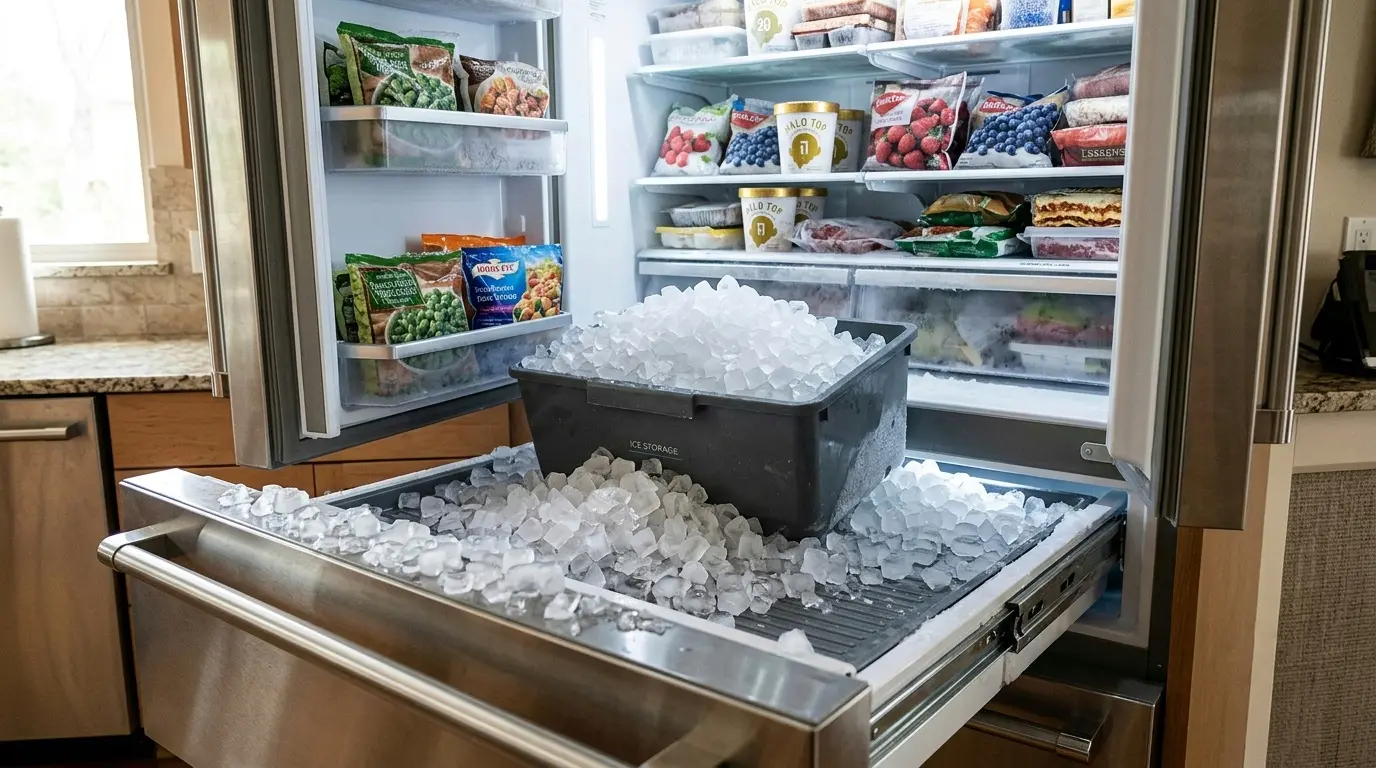
I’ve walked into more than one kitchen where the freezer drawer wouldn’t close because ice had piled up past the bin and frozen solid against the drawer track, and in almost every case, the homeowner assumed the ice maker itself was “broken” when the real cause was somewhere else entirely. An LG ice maker that won’t stop producing or that dumps ice past the bin is a symptom with several distinct root causes, and telling them apart before you touch anything saves you from chasing the wrong part. LG Refrigerator Ice Maker Overflowing/Making Too Much Ice: Know the reason and how to fix it.
Table of Contents
Why “Too Much Ice” Isn’t Always a Broken Ice Maker
LG ice makers, whether the standard twist-tray design in older French-door models or the Space Plus/dual ice-maker systems on newer units, all rely on a shutoff signal to know when to stop. That signal usually comes from either a mechanical shutoff arm or an infrared/optical sensor pair mounted at the front of the bin. When ice keeps coming after the bin is full, the ice maker itself is very often working exactly as designed, and it’s the shutoff signal that’s failing to reach it.
This distinction matters because owners frequently replace the entire ice maker assembly when the actual fault is a $10-$20 sensor or a bent shutoff arm. Common affected models include the LFXS26973S, LMXS28626S, and LSXS26366S, all of which use variations of this bin-full detection system.
Overflow at the Bin: The Shutoff Arm and Sensor
On models with a physical shutoff arm, a small metal or plastic bar sits above the ice bin and gets pushed up by accumulated ice, signaling the ice maker to stop. If this arm gets frozen in the “down” position (which happens more often than people expect after a brief power outage causes partial melting and refreezing), the ice maker never receives the stop signal and keeps producing indefinitely.
On the optical-sensor models more common in recent LG units, two small infrared eyes on either side of the bin opening detect when ice has piled high enough to break the beam. A layer of frost or condensation buildup on these sensor eyes, something I check within the first two minutes of almost every “ice maker won’t stop” service call, can fool the sensor into thinking the bin is empty even when it’s overflowing, because a frosted lens scatters the beam rather than blocking it cleanly. Wiping the sensor eyes with a dry cloth resolves a surprising number of these calls without replacing anything.
Ice Maker That Won’t Stop Cycling
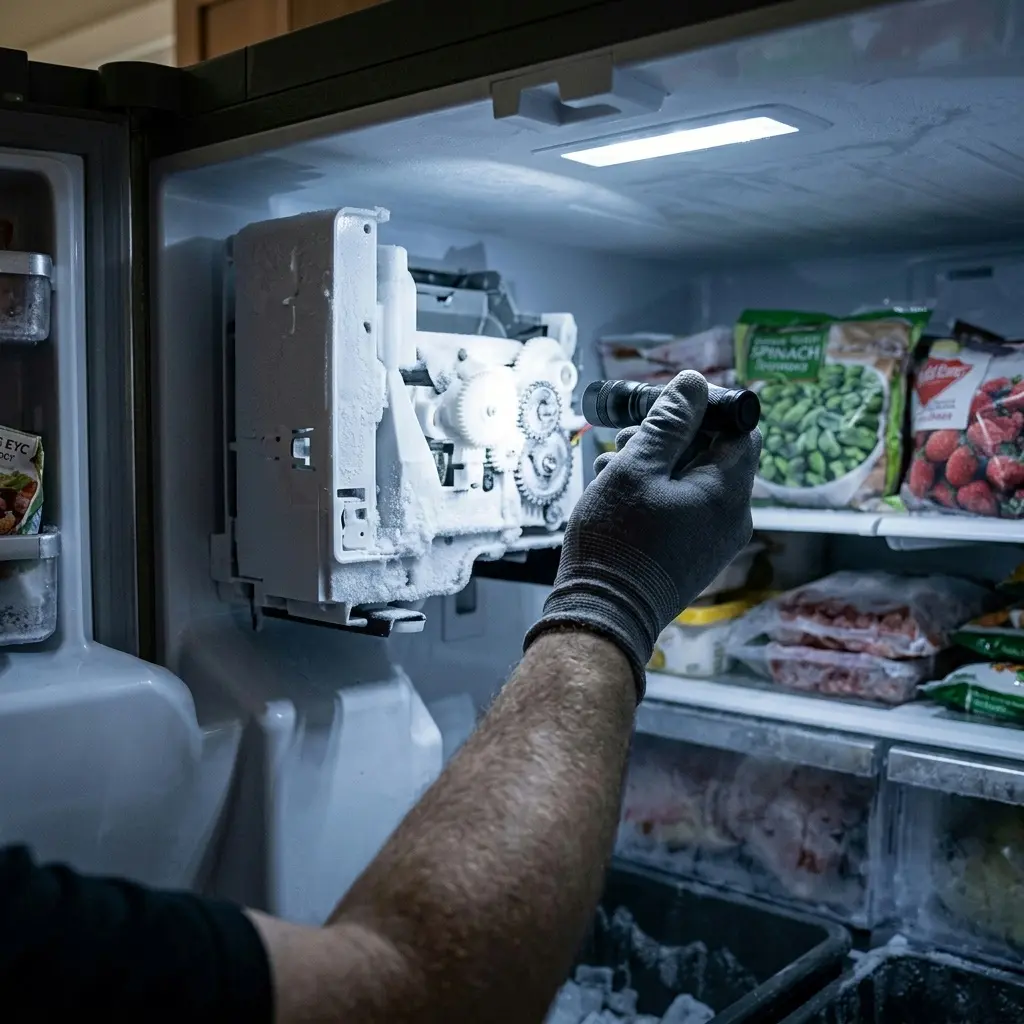
A separate pattern from bin overflow is an ice maker that keeps running its harvest cycle continuously, dumping ice even when the bin is only partially full and hasn’t triggered any shutoff signal at all. This points toward the ice maker’s control module or thermostat rather than the sensor system; the module isn’t receiving confirmation that a harvest cycle completed, so it keeps initiating new cycles back-to-back.
The tell-tale sign here is timing: Normal LG ice makers run a harvest cycle roughly every 90 minutes to a few hours, depending on model and freezer temperature, producing a batch each time. If you’re hearing the harvest motor cycle far more frequently than that, with ice dumping in rapid succession rather than in normal batches, the fault is in the control timing rather than the bin-full detection. 👉 [LG Refrigerator Error Codes: 7 codes explained that help].
Overflow Linked to Door Seal or Temperature Problems
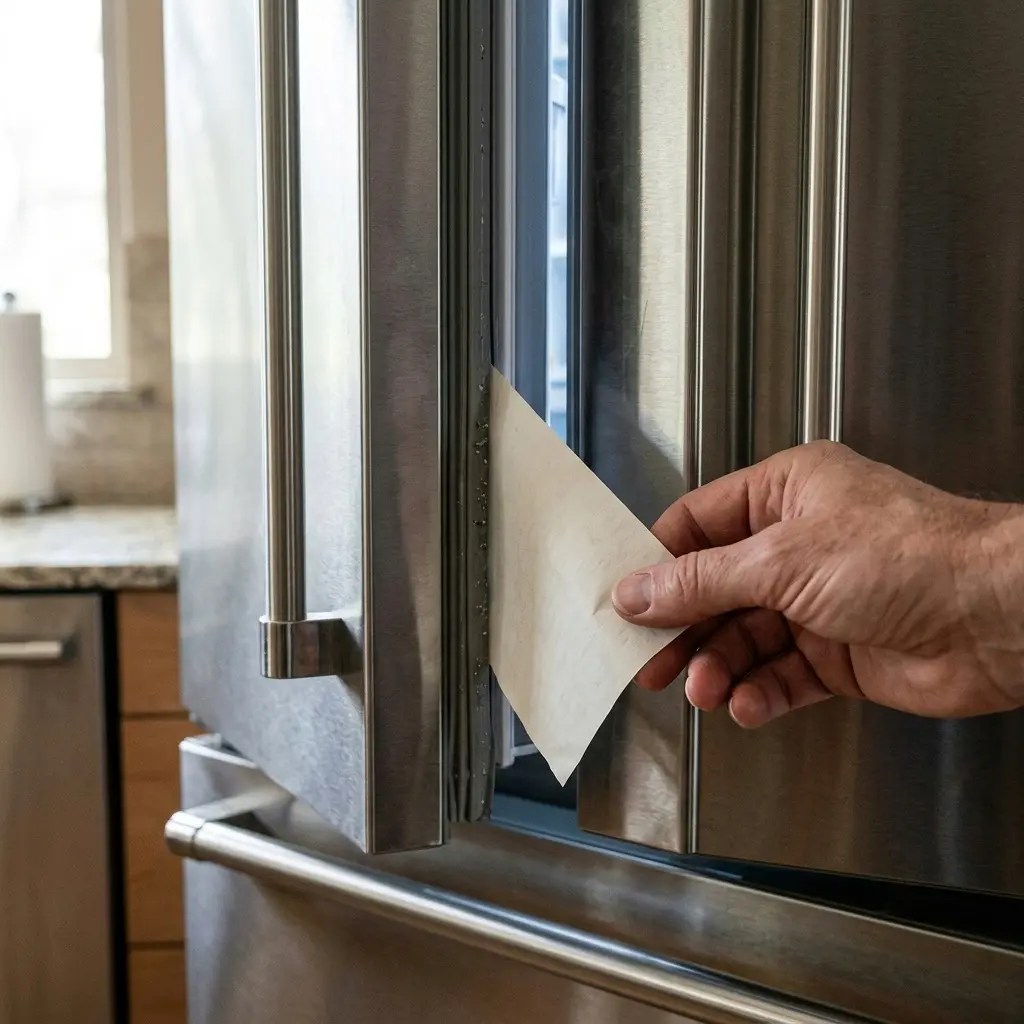
A commonly misdiagnosed cause: a freezer running slightly colder than intended, often from a door seal that isn’t sealing fully, can cause the ice maker’s internal thermostat to behave differently than expected, sometimes triggering more frequent harvest cycles as the unit works to maintain temperature against the seal leak. Owners troubleshoot the ice maker for days without realizing the actual root issue is warm air intrusion through a compromised gasket.
A quick way to check this without any tools: close the freezer door on a piece of paper at several points around the perimeter and pull it out. If it slides out with little resistance at any point, the seal isn’t making full contact there, and that’s worth addressing before assuming the ice maker itself has failed.
Overflow After a Filter Change or Water Pressure Shift
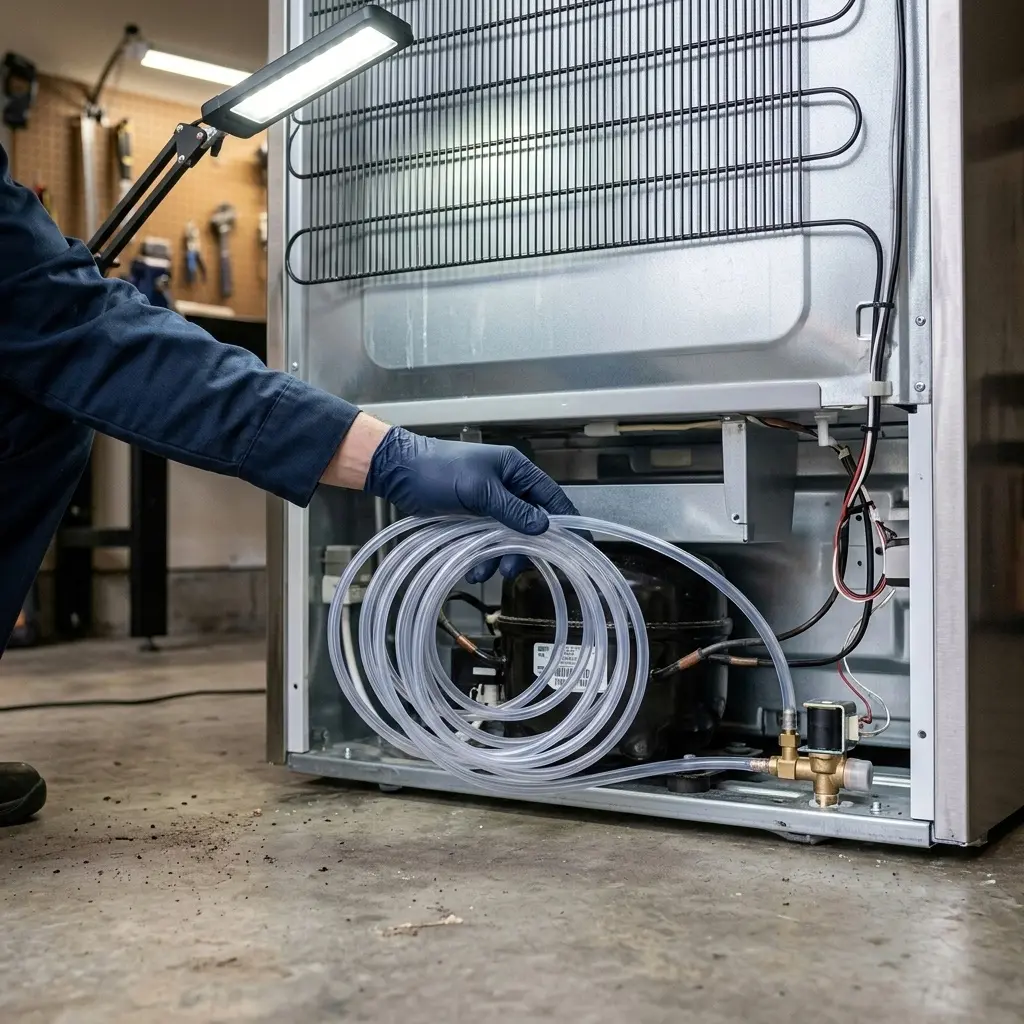
If the overproduction started right after a water filter replacement or a change in household water pressure (such as after plumbing work), the ice maker’s fill valve may be staying open longer than it should, producing oversized or excessive ice batches rather than the correctly portioned amount. A fill valve calibrated for typical household pressure can behave unpredictably when pressure suddenly increases, sometimes overfilling the ice mold on each cycle and producing larger, more frequent batches that fill the bin faster than the shutoff mechanism can keep pace with.
This is worth ruling out specifically if the overflow behavior is new rather than long-standing, since it points to a water-side cause rather than a mechanical ice maker fault.
Ice Clumping That Looks Like Overflow (But Isn’t)
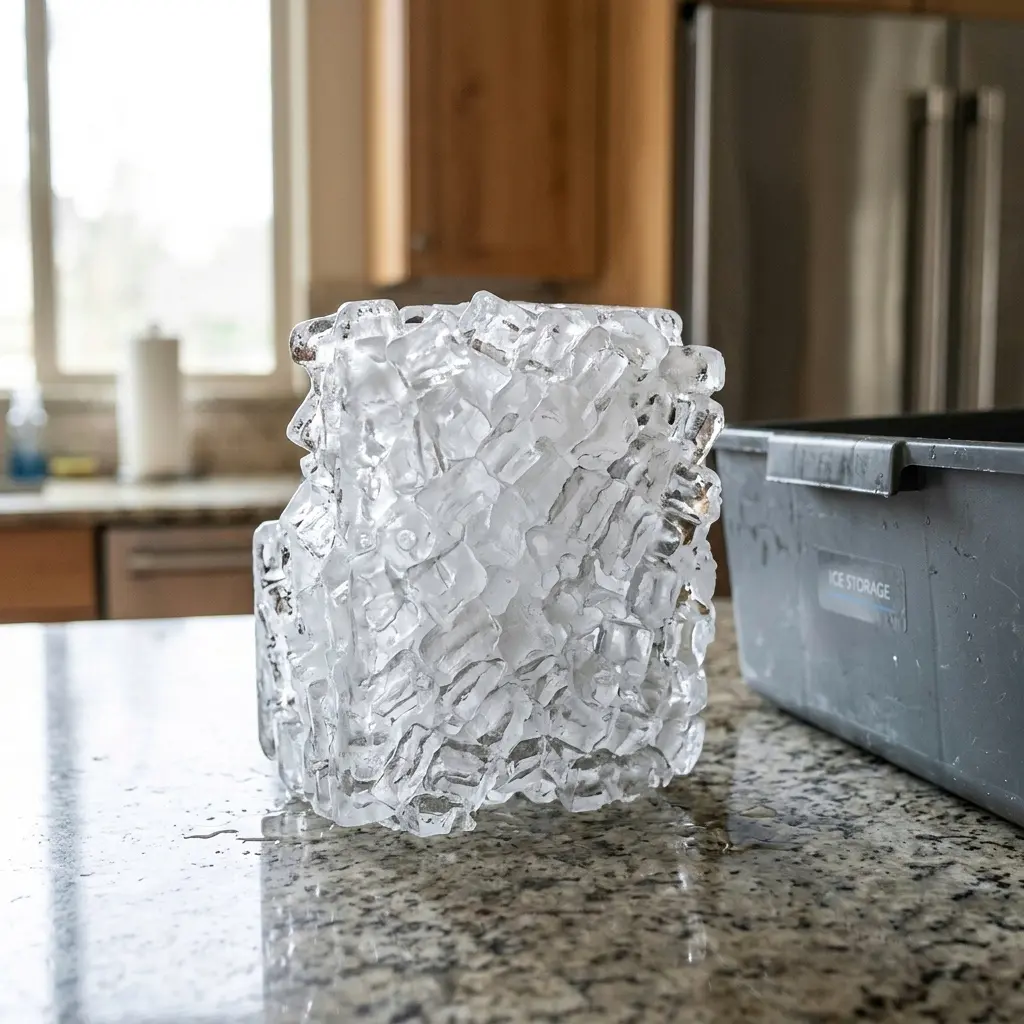
Here’s a distinction most articles skip entirely: ice that has clumped into a solid mass inside the bin isn’t the same problem as an ice maker producing too much ice, even though both look identical from the outside: a bin packed full and jammed against the dispenser chute. Clumping happens when ice partially melts and refreezes into a fused block, usually from temperature fluctuation (a door left open too long, a power blip, or a freezer running warmer than it should intermittently), rather than from actual overproduction.
The way to tell them apart: if you empty the bin and the ice maker refills it to a normal, loose level within a day, the original issue was clumping, not overflow, and no ice maker repair is needed at all just addressing whatever caused the temperature swing.
When to Stop and Call a Technician
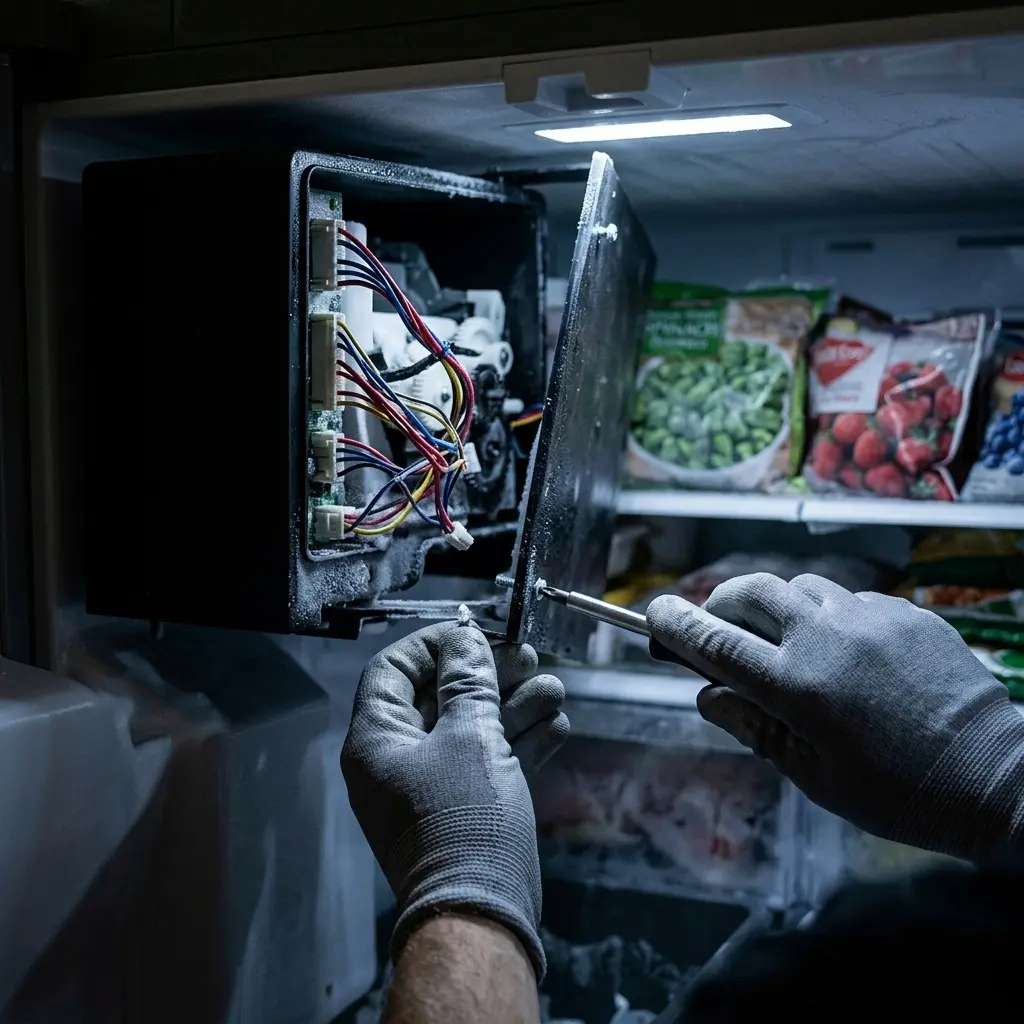
Most ice maker overflow causes a frosted sensor, a stuck shutoff arm, or a door seal issue, which are safe to inspect visually without opening anything electrical. However, if diagnosing the control module requires accessing wiring behind the ice maker housing and you’re not comfortable working with low-voltage connectors with the unit unplugged, that’s a reasonable point to bring in a technician rather than risk damaging the wiring harness. Any sign of water leaking into electrical housings near the ice maker module is also a stop-and-call situation, since water and live wiring inside a control housing is a genuine shock risk even at appliance voltage.
Overflow Cause Quick-Reference Table
| Symptom Pattern | Likely Cause | Quick Check |
| Ice piles up, and the bin never signals full. | Frosted optical sensor or stuck shutoff arm | Wipe sensor eyes, and check arm movement. |
| Rapid harvest cycles, ice dumps every few minutes | Control module timing fault | Time the interval between harvest cycles. |
| Overflow started after the filter change. | Fill valve overfilling per cycle | Compare ice batch size before/after filter swap. |
| The freezer runs slightly warm, and the ice maker is overactive. | Door seal not sealing fully | Paper test around door perimeter |
| Bin full of one fused block, not loose ice | Clumping from temperature swing, not overproduction | Empty bin, monitor refill pattern over 24 hours |
FAQ: LG Refrigerator Ice Maker Overflowing
1. Why is my LG ice maker making ice constantly even when the bin is full?
This almost always means the bin-full detection isn’t reaching the ice maker, either a frosted optical sensor or a shutoff arm stuck in the down position, both of which are simple visual checks before assuming a bigger fault.
2. Is it normal for an LG ice maker to make more ice in summer?
Some increase is normal since warmer ambient kitchen temperatures and more frequent door openings raise ice demand naturally, but a dramatic, sudden jump in production is worth investigating rather than assuming it’s seasonal.
3. Can a dirty water filter cause the ice maker to overflow?
A clogged filter is more likely to reduce ice production than increase it; a recently replaced filter causes overfilling points more toward fill valve calibration or water pressure than filter cleanliness.
4. Why does my ice maker overflow only after a power outage?
A brief outage can cause partial ice melt that then refreezes around the shutoff arm or sensor area, physically jamming the detection mechanism even after power returns.
5. Should I turn off the ice maker if it’s overflowing?
Turning it off temporarily is a reasonable way to stop the immediate mess while you investigate the cause and won’t damage anything, since the ice maker’s off switch simply halts the harvest cycle.
6. Does ice maker overflow mean my freezer temperature is set wrong?
Not necessarily on its own, but if overflow is paired with softer-than-normal ice or a freezer that feels warmer than usual, temperature and door seal issues are worth checking before assuming a mechanical ice maker fault.
7. How much ice should a normal LG ice maker produce per day?
Output varies by model, but most single ice makers in LG French-door units produce roughly 4-8 batches per day under normal conditions; a machine running more cycles than that dramatically, especially back-to-back, suggests a control timing issue rather than typical operation.
Final Word
An overflowing LG ice maker is rarely about the ice maker “breaking” outright; it’s almost always a signal, sensor, seal, or water-pressure issue that happens to show up as ice everywhere. Check the shutoff detection first, since that’s the fastest and most common fix, and then work through seal and water-side causes before considering the ice maker assembly itself.