

Stand next to your LG refrigerator for thirty seconds, and you can usually tell me what’s wrong before I even open the doors; noise location and pitch narrow things down faster than almost any other symptom in this appliance. A buzzing LG refrigerator isn’t one problem; it’s a symptom that points to five or six very different parts, and mixing them up is the single most common reason homeowners replace the wrong component.
Table of Contents
Why “Buzzing” Isn’t One Sound
Most people use “buzzing” and “humming” interchangeably, but a technician’s ear splits them further: a steady low hum, a sharp electrical buzz, a rattling buzz with vibration, and an intermittent buzz that starts and stops. Each of these four categories points toward a different part of the refrigerator, and the location, back, bottom, inside the freezer wall, or only during dispensing, narrows it down even more.
This matters because LG refrigerators, like most modern French-door and side-by-side models such as the LFXS26973S or LRFXS2503S, run several independent motors and valves simultaneously: the compressor, one or two evaporator fans, a condenser fan, and the water inlet valve.
Buzzing from the Back of the Fridge
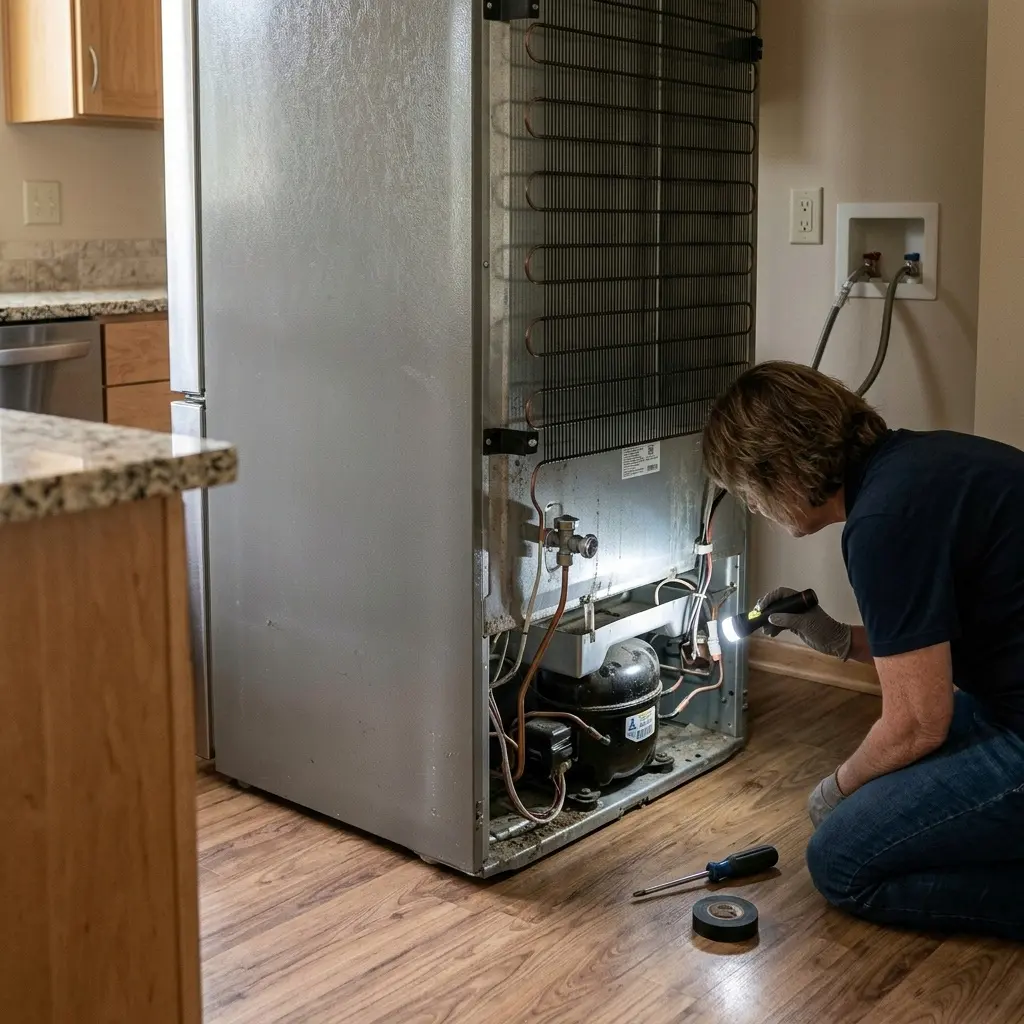
If the sound is loudest when you put your ear near the back panel or the compressor compartment at the bottom rear, you’re most likely hearing either the compressor itself or the condenser fan motor. A healthy compressor produces a low, steady hum that’s barely noticeable from a few feet away, a buzzing or grinding sound from this area, especially one that gets louder over several weeks, usually means the compressor mounts have degraded or the compressor’s internal components are wearing down.
A condenser fan buzz sounds different: more of a rattling whir, often with a slight pitch wobble, because the fan blade is hitting dust buildup or a bent fin on the condenser coil rather than spinning freely. I’ve pulled refrigerators away from the wall on service calls and found the condenser coil packed solid with pet hair and dust, enough to throw the fan blade off-balance and produce a buzz that owners swore was “definitely the compressor.” Quick check: unplug the unit, pull it out, and look at the coil and fan before assuming anything mechanical has failed 👉 [How to Clean a Refrigerator Condenser Coil].
Humming from Underneath or the Bottom Grille
A hum specifically from the bottom grille area, distinct from the compressor compartment further back, often points to the fridge not sitting level. LG units have adjustable leveling legs at the front, and a refrigerator that rocks even slightly on an uneven floor can transmit vibration through the cabinet that reads to your ear as a hum rather than a mechanical fault.
The insider check here: place a level on top of the fridge, front-to-back and side-to-side. Even a fridge that “looks” level by eye is frequently off by enough to cause resonant vibration against a hardwood or tile floor, and adjusting the front legs a half-turn at a time often eliminates a hum that owners assume is coming from inside the machine

Buzzing That Comes Only When the Water/Ice Dispenser Runs
If the buzzing only happens the moment you press the water or ice lever and stops the second you release it, this is your water inlet valve engaging, and a buzz here (versus silent operation) usually signals the valve’s water pressure or the coil itself, not a general refrigerator fault. This is worth mentioning specifically because owners often report this as “the whole fridge is buzzing” when it’s isolated to a single component that only activates on demand.
A valve that buzzes loudly but delivers water normally is different from one that buzzes and delivers weak or no water; the second case points toward a pressure or blockage issue rather than the valve itself 👉 [LG Refrigerator Water Dispenser Not Working or Slow, Real Fix].
A Rattling Buzz Behind the Freezer Wall
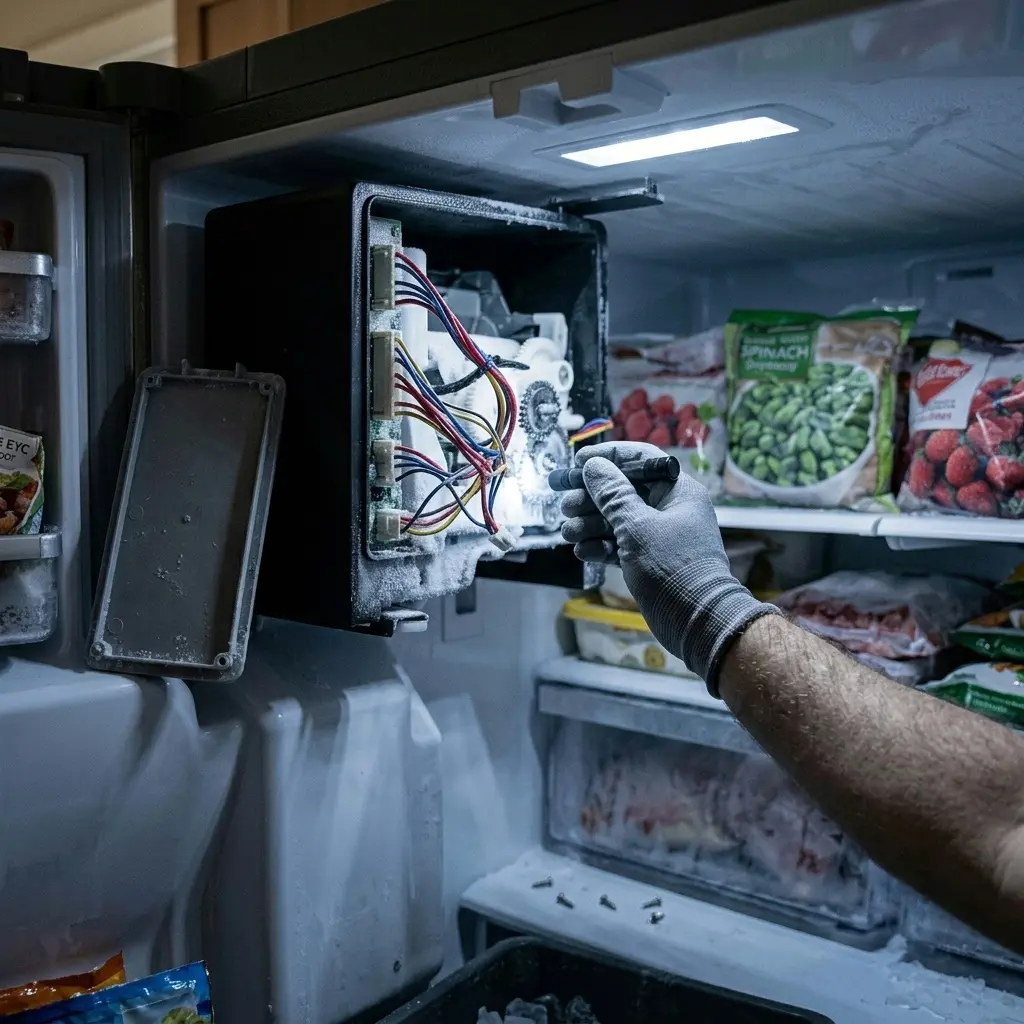
This one catches almost everyone off guard: a buzzing or rattling sound that seems to come from inside the freezer compartment, behind the back wall panel, is very commonly the evaporator fan. This fan sits directly behind the freezer’s rear wall and can develop a buzz for two very different reasons: a failing fan motor bearing, or ice buildup on the fan blade itself from a defrost system that isn’t cycling properly.
The distinguishing insider check: open the freezer door. If the buzzing gets noticeably louder or changes pitch the instant the door opens (because the fan is designed to stop when the door opens, and a delayed or irregular stop indicates a fan or door-switch issue), that’s a strong sign of a mechanical fan problem rather than ice buildup, which tends to produce a more consistent buzz regardless of door position
Buzzing That Changes Pitch or Comes in Cycles
A buzz that isn’t constant, one that ramps up, holds, then fades, repeating every so many minutes, is usually tied to the compressor’s normal start-up and defrost cycling rather than a fault at all. Modern LG compressors, particularly linear/inverter compressor models, vary their speed based on cooling demand, and a changing hum during this ramp-up is often completely normal operation rather than a symptom.
Where this becomes a genuine problem is if the cycling buzz is accompanied by a distinct clicking sound immediately before or after; that combination points toward the start relay or capacitor rather than the compressor motor itself, and is a different repair path entirely from a straightforward compressor issue
When a Buzzing Sound Means Stop and Call a Technician
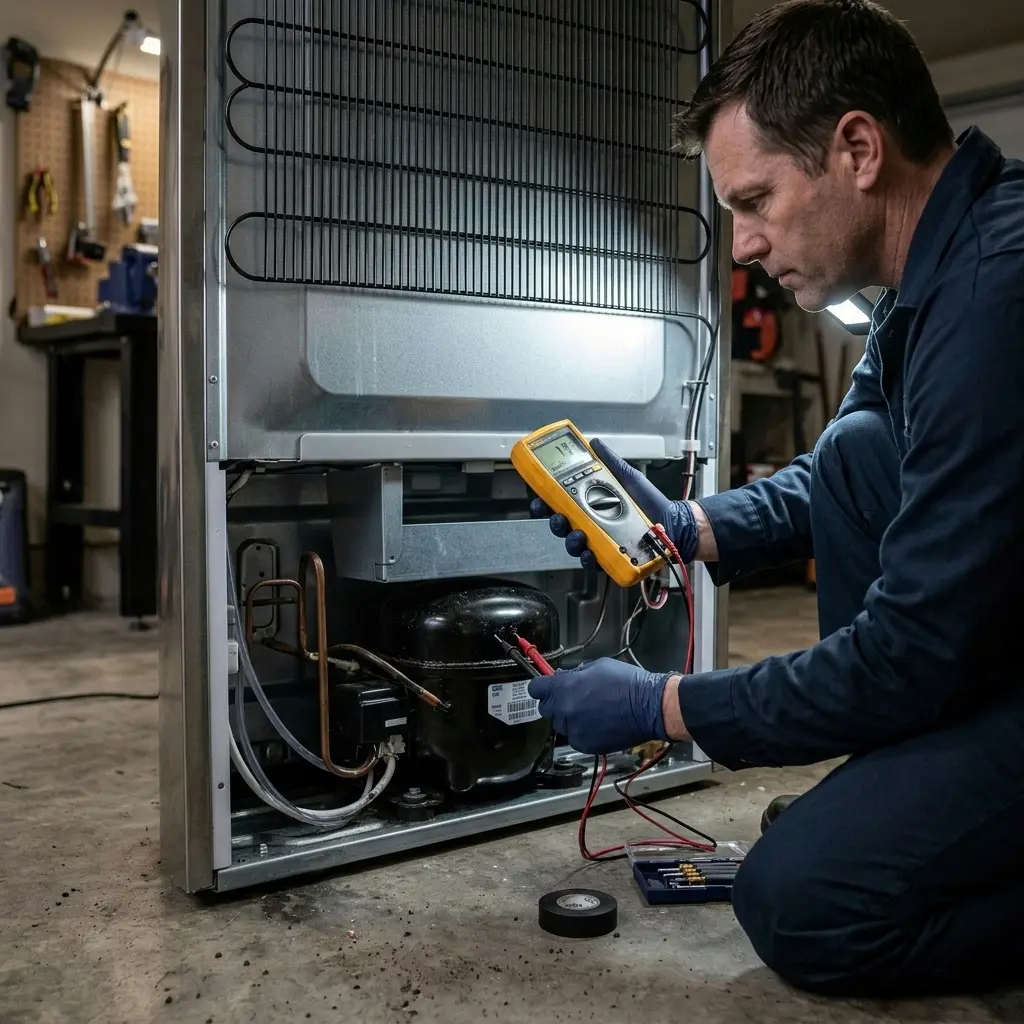
Most buzzing and humming issues are fan, valve, or leveling problems that a confident DIYer can diagnose safely with the unit unplugged. But there are a few signs where I’d tell you to stop investigating yourself and call a licensed technician: a burning smell accompanying the buzz, visible scorch marks or melted plastic near the compressor compartment, or a buzz combined with the refrigerator tripping a circuit breaker repeatedly. Any of these point toward an electrical fault that carries real shock or fire risk if handled without proper testing equipment and experience, and sealed system work (refrigerant lines, compressor replacement) on LG units also typically requires EPA-certified handling in most regions.
Noise Location Quick-Reference Table
| Sound Location | Likely Source | Typical Pattern |
| Back, low compartment | Compressor | Steady low hum, worsens over weeks if failing |
| Back, near coil | Condenser fan | Rattling whir, often dust or bent fin related |
| Bottom grille | Leveling/vibration | Hum tied to floor contact, changes if fridge is nudged |
| Only during dispensing | Water inlet valve | Buzz starts/stops exactly with lever press |
| Inside freezer, rear wall | Evaporator fan | Buzz changes when freezer door opens |
| Cyclical, every few minutes | Compressor cycling | Ramps and fades, often normal inverter behavior |
FAQ for LG Refrigerator Making Loud Buzzing/Humming Noise
1. Is it normal for an LG refrigerator to hum quietly all the time?
Yes, a low, steady hum from the compressor area during normal operation is expected, especially on inverter-compressor models that run continuously at variable speed rather than cycling fully on and off.
2. Why is my LG refrigerator buzzing louder at night?
Ambient household noise is lower at night, which makes normal compressor or fan sounds more noticeable rather than indicating the fridge is actually louder than during the day.
3. Can a buzzing noise mean my refrigerator is about to stop cooling?
It can, particularly if the buzz is coming from the compressor area and is accompanied by reduced cooling performance, though many buzzing causes (leveling, condenser fan dust, and dispenser valve) do not affect cooling at all.
4. Why does the buzzing stop when I open the freezer door?
This is typically normal; the evaporator fan is designed to shut off when the door opens as a safety and efficiency feature, so a buzz that pauses with the door open usually confirms the fan itself is the source.
5. Does a new LG refrigerator buzz more than an older model?
Newer inverter-compressor units can sound different from older fixed-speed compressors, sometimes with a more noticeable pitch change during ramp-up, which is a normal characteristic rather than a defect.
6. Should I unplug my refrigerator if I hear a new buzzing sound?
Not unless you notice a burning smell, visible damage, or repeated breaker trips, otherwise, it’s generally safe to keep the unit running while you investigate, since interrupting cooling unnecessarily risks food spoilage.
7. Can low refrigerant cause a buzzing sound?
Low refrigerant more commonly causes reduced cooling and longer compressor run times rather than buzzing directly, though a compressor working harder under low refrigerant conditions can produce a louder or more strained hum over time.
Final Word
Buzzing and humming sounds are one of the easiest LG refrigerator symptoms to misdiagnose precisely because they all sound similar until you know where to listen. Locate the sound first, check it against the pattern above, then follow the specific fix guide for that component rather than guessing at a part to replace.