

Ask ten Bosch washer owners how much detergent they use, and eight of them will tell you they “just fill it to about here,” pointing at a line on the cap that was never designed for their machine in the first place. Detergent dosing is the single most underrated maintenance habit in front-load washer ownership, and getting it wrong quietly costs owners money and machine performance for years without ever throwing an obvious warning sign.
This isn’t about which detergent brand is best and how to clean your washer; it’s specifically about correct detergent dosing for Bosch Washer HE Cycles and getting the amount right for every load so the machine keeps performing the way it was engineered to.
Table of Contents
Why HE Dosing Is Fundamentally Different From a Standard Washer
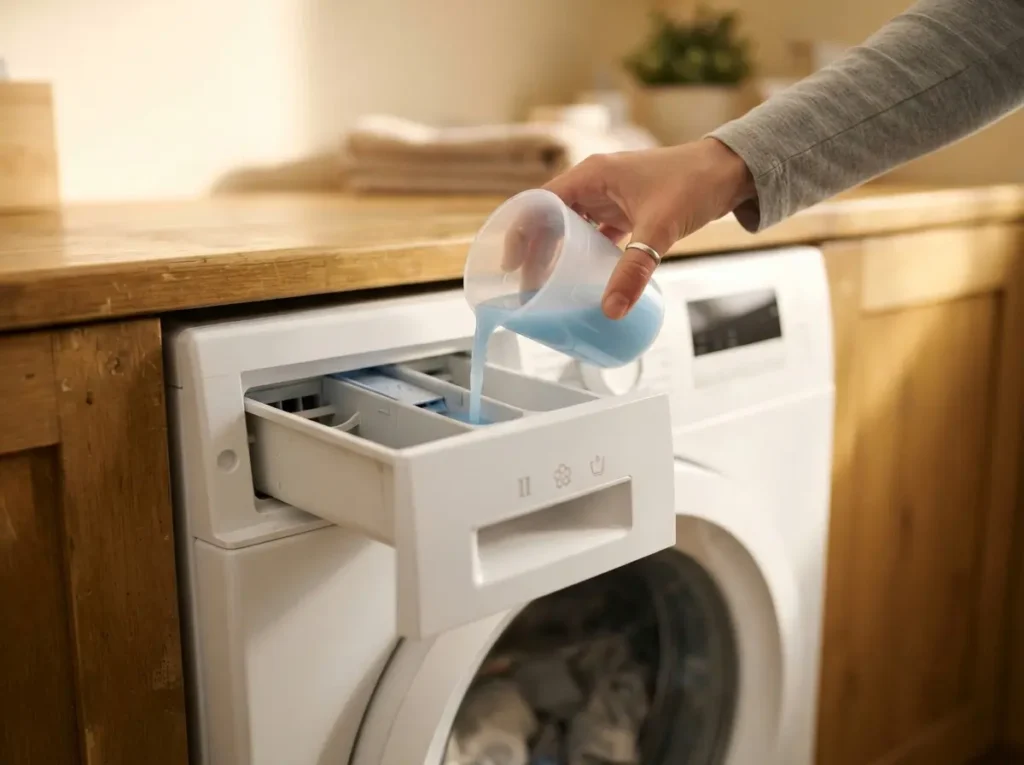
Bosch front-load washers use dramatically less water per cycle than a traditional top-load agitator machine, and that single fact changes almost everything about how much detergent belongs in the drum. HE (high efficiency) detergent is formulated to produce far less foam per unit of concentration precisely because there isn’t enough water volume in an HE cycle to fully rinse away foam the way an old-style, water-heavy top-loader could.
The practical result is that dosing lines and scoop sizes printed on most detergent bottles are frequently calibrated toward a general “average machine” rather than specifically toward Bosch’s water usage per cycle, which tends to run on the lower end even among HE-rated washers. That gap between “what the bottle suggests” and “what your specific Bosch model actually needs” is where most dosing mistakes quietly begin.
How Much Detergent Bosch Washer HE Cycles Actually Need
As a general guideline rather than a fixed number, most Bosch front-load cycles need meaningfully less liquid HE detergent than owners assume, often closer to two-thirds and even half of what the bottle’s default line suggests for a medium load, particularly on Bosch’s shorter and eco-focused cycle settings that use even less water than a standard cycle.
| Load Type | Typical HE Detergent Amount (Liquid) | Notes |
| Small/light load, lightly soiled | Roughly 1 tablespoon to a small measuring line below the bottle’s default marking | Eco and quick-wash cycles use less water, so less detergent is needed. |
| Medium load, normal soil | Roughly the bottle’s smallest printed HE line, rarely the full recommended fill | Standard cotton/mixed-fabric cycle |
| Large/full load, heavily soiled | Slightly above the small HE line, still generally under the bottle’s “full load” marking | Still less than most owners instinctively pour |
| Detergent pods | One pod per load regardless of size, per most pod manufacturers’ guidance | Pods are pre-measured, which removes most dosing guesswork entirely. |
These figures are general starting points rather than fixed rules. Always check your specific detergent’s own HE dosing markings first, since concentration varies by brand and formula, and adjust from there based on the results you’re actually seeing in your laundry.
Reading Your HE Detergent Dosing Line Correctly
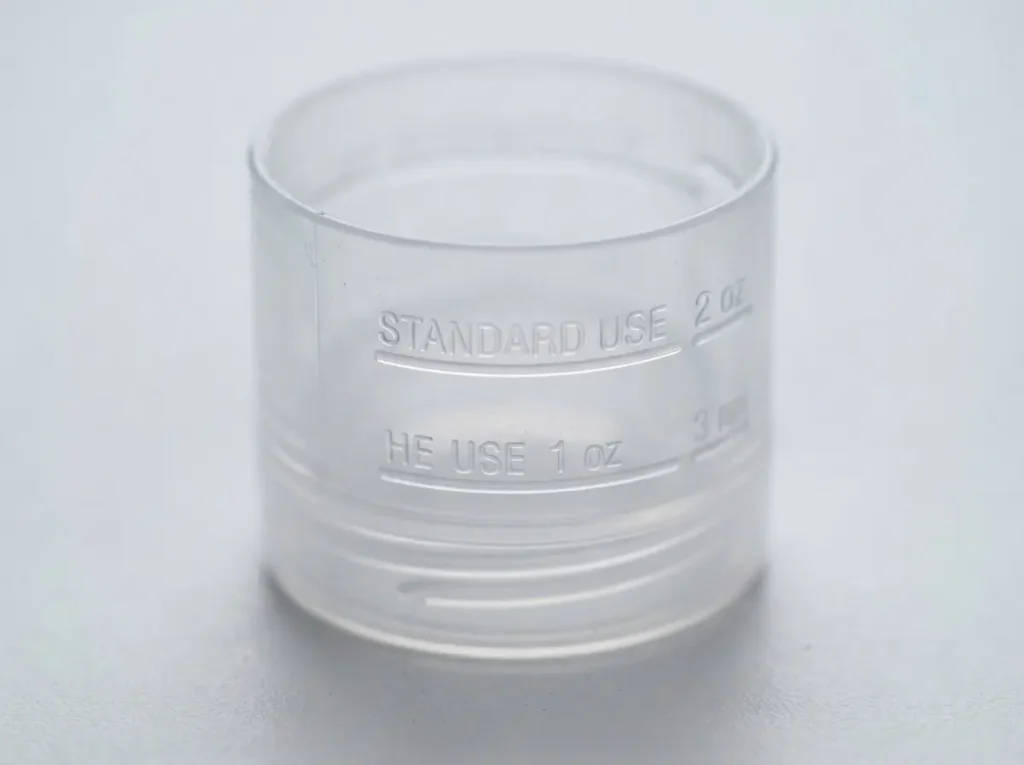
Most liquid HE detergents print two separate sets of markings on the cap and bottle, one for standard machines and a smaller, separate line specifically labeled for HE machines, often marked with a small “HE” symbol next to it. The mistake technicians see constantly is owners filling the larger, non-HE line out of habit and simply not noticing the smaller HE-specific marking exists at all.
Concentrated detergent formulas complicate this further, since a “2x” and “3x concentrated” bottle needs proportionally less volume than a standard-concentration bottle to deliver the same cleaning amount, meaning the correct dose for one detergent brand can look visually tiny compared to another brand’s recommended amount for what’s actually an equivalent cleaning strength. Checking your specific bottle’s concentration and HE marking each time you switch detergent brands, rather than assuming your old dosing habit carries over, prevents a surprising number of overdosing complaints.
Adjusting Detergent Dosing for Load Size, Soil Level, and Water Hardness
Load size is the most obvious adjustment factor, but soil level and water hardness both meaningfully change the correct dose in ways that are easy to overlook. A load of moderately soiled everyday clothing needs less detergent than a load of heavily soiled work clothes and activewear, and using the same fixed dose regardless of soil level is one of the more common small habits that leads to gradual residue buildup over time on lighter loads.

Water hardness is the less obvious variable. In hard water areas, minerals in the water interfere with detergent’s ability to fully dissolve and rinse away, which can mean a very slight increase in dosing is genuinely appropriate, but the more effective long-term fix in consistently hard water areas is addressing the water hardness itself rather than compensating entirely through more detergent, since simply adding more detergent to fight hard water tends to just shift the problem toward more residue rather than solving it. A water softener and in-line filter are worth considering for households in genuinely hard water regions.

What Overdosing Actually Does to a Bosch Washer Over Time
This is the part most owners never connect back to their detergent habits, because the consequences show up weeks and months later rather than immediately. Consistently overdosed detergent leaves behind a thin residue film inside the drum, along the door gasket folds, and inside the detergent dispenser housing, and that residue accumulates gradually rather than all at once.
An insider point: most owners never think to check: a chalky, slightly stiff residue on dark-colored clothing after washing, especially noticeable on black clothes under bright light, is one of the earliest and most reliable signs of consistent overdosing. Most owners assume it’s a rinse-cycle problem with the machine rather than recognizing it as a dosing habit that’s been slightly off for months. Beyond fabric residue, this same buildup is a direct contributor to two separate issues covered in their own articles: persistent musty odor from residue feeding mold growth in the gasket 👉 [how to remove musty smell from washer], and excess suds triggering an automatic error and extra rinse cycles 👉 [washer Sud/excess suds error explained].
Overdosing doesn’t damage the mechanical components of the washer directly in most cases, but it does shorten the practical interval between deep cleanings and makes the machine work harder, cycle after cycle, to rinse away something that shouldn’t have been in that quantity to begin with.

What Underdosing Costs You, Which Is Different From Overdosing
Underdosing gets far less attention than overdosing, but it has its own real cost: clothes that don’t come out as clean as they should, particularly on heavily soiled items, along with a subtler long-term issue where insufficient detergent fails to fully break down oils and body soil, which can itself contribute to a different kind of odor buildup over time, not from too much residue, but from soil that was never adequately lifted out of the fabric in the first place.
The instinct to underdose is usually well-intentioned, often coming from owners who read about overdosing risks and overcorrect too far in the other direction rather than actually matching the dose to their detergent’s specific HE line and their load’s soil level.
Building a Detergent Dosing Habit That Actually Sticks
The most reliable long-term fix isn’t remembering a specific number; it’s switching to a dosing method that removes the guesswork entirely. Using a dedicated small measuring cup with clear HE markings, rather than the detergent bottle’s own built-in cap, gives a consistent, repeatable reference point for every single load of OXO Good Grips Detergent Measuring Cup. Detergent pods offer an even simpler solution for anyone who consistently struggles with liquid dosing, since the measurement problem is solved entirely by the manufacturer before it ever reaches your machine. Tide Pods HE Turbo Laundry Detergent Pacs.
For households juggling multiple detergent brands and switching frequently based on sales and availability, keeping a small written note of each brand’s correct HE line taped inside the cabinet near the machine solves the “I don’t remember which line is right for this bottle” problem that leads to inconsistent dosing more often than people expect.
FAQ: Detergent Dosing for Bosch Washer HE Cycles
1. How do I know if my Bosch washer is set up for HE detergent specifically?
Nearly all current Bosch front-load washers require HE detergent by design due to their lower water usage per cycle; using standard detergent isn’t recommended regardless of the specific model.
2. Is powder and liquid HE detergent better for correct dosing?
Neither is inherently better for dosing accuracy; powder detergents typically come with their own measuring scoop, while liquid detergents rely on cap and bottle markings, so accuracy comes down to actually checking the HE-specific line rather than the detergent form itself.
3. Do detergent pods eliminate dosing mistakes entirely?
Largely yes for load-to-load consistency, since each pod delivers a fixed amount, though very large and heavily soiled loads may occasionally benefit from a second pod per most manufacturers’ own large-load guidance.
4. Does fabric softener need separate HE dosing consideration too?
Yes fabric softener follows a similar overdosing risk as detergent, and excess fabric softener residue is actually one of the more common individual contributors to gasket odor buildup over time.
5. How quickly will I notice a difference after correcting my dosing habit?
Most owners notice less visible residue on dark clothing within a few weeks of consistent correct dosing, though any existing residue already built up in the gasket and dispenser generally needs a separate cleaning pass to fully clear.
6. Should I dose differently for a sanitize and hot-water cycle versus a normal cycle?
Not dramatically, the water volume difference between most standard and sanitize cycles on a given Bosch model is usually modest, so the same HE dosing guidance generally applies unless your specific model’s cycle uses noticeably more and less water.
7. Is there a risk to using too little detergent long-term, beyond just dirtier clothes?
The main long-term risk is soil and oil residue accumulating in fabric over repeated underdosed washes, which can eventually make the same clothes feel less clean even immediately after washing, distinct from the mineral/detergent residue overdosing causes.
Final Thoughts
Detergent dosing is one of those maintenance habits that never announces itself as a mistake in the moment the load still runs, the clothes still come out, and it’s only weeks and months later, in the form of gasket odor, chalky residue, and a suds error, that the true cost shows up. Get the HE line right for your specific detergent, adjust it honestly for load size and soil level, and consider switching to a dedicated measuring cup and pods if liquid dosing has been a recurring guessing game. Get that one habit consistent, and a real share of the most common Bosch washer complaints simply stop happening in the first place.