
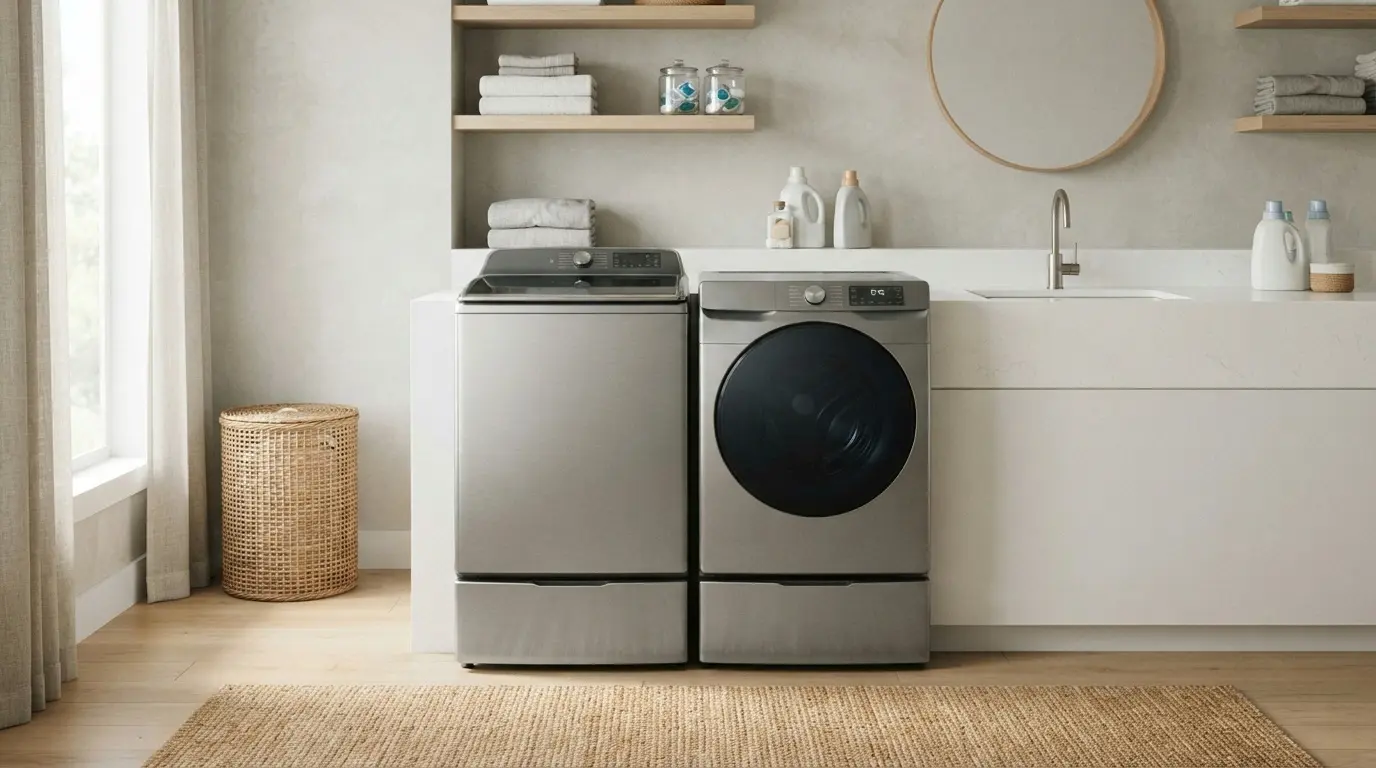
I’ve had more customers walk into a showroom asking, “Should I get the Whirlpool Cabrio and the Duet washer?” than almost any other single question in the Whirlpool lineup, and it’s a genuinely fair question; these are two of the most different washing philosophies. Whirlpool sells under one roof, built by the same company but solving the laundry problem in almost opposite ways.
This isn’t a top-load-vs-front-load explainer in the abstract. It’s a direct comparison of the actual Cabrio and Duet models Whirlpool currently sells and has sold in recent years, matched up spec for spec, so you can see exactly where one line pulls ahead of the other and where the differences matter a lot less than the marketing suggests.
Table of Contents
Whirlpool Cabrio and Duet: Two Different Machines Built for Two Different Jobs
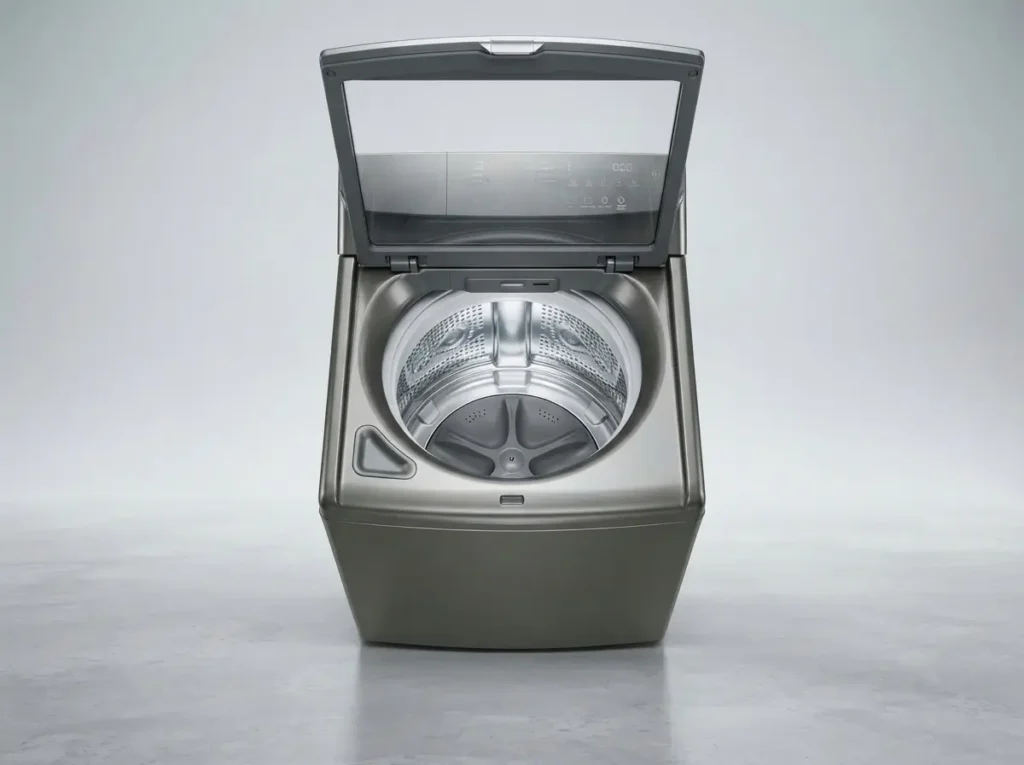
Cabrio is Whirlpool’s top-load line, and the defining thing about it isn’t just that you load it from the top, it’s that most current Cabrio models are agitator-free, using a low-profile wash plate at the bottom of the drum instead of a center post. That gives you more usable drum space than an old-style agitator top-loader while keeping the “drop the clothes in and close the lid” simplicity people specifically shop for when they don’t want to deal with a front-load door and boot seal.
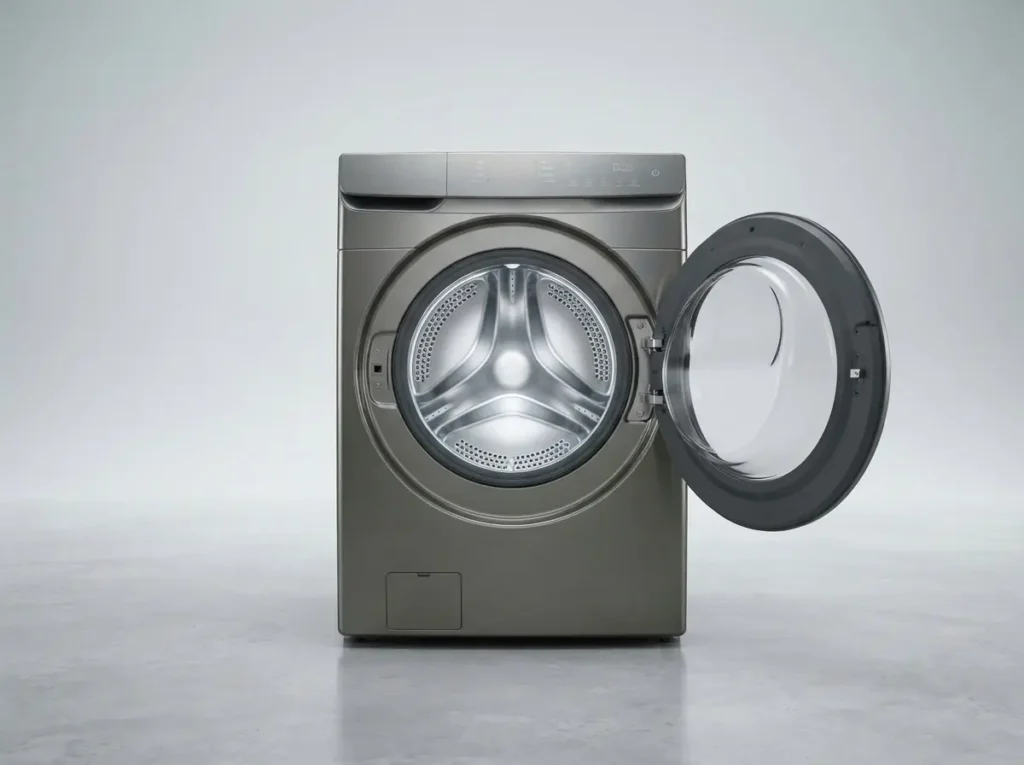
Duet is Whirlpool’s front-load line, historically the brand’s flagship efficiency and performance tier, using a horizontal-axis drum, a locking door, and a rubber door gasket. Some current Whirlpool front-load models still carry Duet branding in certain markets, while others have simply folded the technology into the general “Whirlpool front load” naming, but the underlying engineering lineage is the same Duet platform either way.
The comparison that matters here isn’t “which is the better washer” in the abstract; it’s which one’s specific trade-offs fit your household, and that’s what the rest of this breaks down model by model. If you’re trying to decide between front-load and top-load as categories more broadly rather than these two specific Whirlpool lines, that’s a different (and broader) buying-guide question covered separately 👉 [top-load vs front-load washer buying guide].
Capacity and Load Size, Model by Model
| Model | Line | Capacity | Notable Trait |
| Whirlpool Cabrio WTW5057LW | Cabrio | ~4.6 cu. ft. | Entry-tier Cabrio, budget-focused |
| Whirlpool Cabrio WTW7120HW | Cabrio | ~4.8 cu. ft. | Mid-tier, adds steam and more cycle options |
| Whirlpool Cabrio WTW8127LC | Cabrio | ~5.3 cu. ft. | Larger-capacity Cabrio, best for bigger households |
| Whirlpool Duet WFW9620HC | Duet-lineage front load | ~4.5 cu. ft. | Mid-tier front-load, load-and-go dispenser |
| Whirlpool Duet WFW6605MW | Duet-lineage front load | ~4.5 cu. ft. | More budget-focused front load |
| Whirlpool front load WFW862CHC | Front load (Duet successor naming) | ~5.0 cu. ft. | Larger-capacity front-load, steam-capable |
On paper, the largest Cabrio models edge out the largest Duet-lineage front loaders in rated capacity, but that number alone is misleading. Front-load drums pack more usable capacity per cubic foot in practice because there’s no wash plate and agitator hardware taking up space at the bottom of the drum, so a 4.5 cu. ft. The duet-line front loader often handles a bulky load, a comforter, and a stack of towels noticeably better than the raw number suggests compared to an equivalently rated Cabrio.
Wash Performance and Cycle Technology Compared
Whirlpool Cabrio’s wash action relies on the drum and wash plate working together to tumble and flip clothes rather than the twisting agitation of an old-style top loader. It’s gentler on fabric than a traditional agitator machine, but it’s also a fundamentally different motion than a front-load drum’s gravity-fed tumble, and it shows up most in how it handles bulky and unbalanced loads. Whirlpool Cabrio models are somewhat more prone to needing a mid-cycle pause to redistribute a lopsided load (like one heavy comforter) than Duet-line front loaders, because there’s no door lock holding everything in a fixed orientation the way a front-load drum does.
Duet-line front loaders use that horizontal tumble to physically fold and drop the fabric through a shallow pool of water repeatedly, which is generally more effective at working detergent through heavily soiled items and tends to need less water per load to achieve the same soil removal, since front-load washing doesn’t rely on fully submerging the load the way older top-load designs did.
| An insider point that a spec sheet won’t tell you: Whirlpool Cabrio’s steam-assist option on mid-and-upper models sounds like a front-load-matching upgrade, but in practice steam on a top-load Cabrio has a smaller real-world impact on stain removal than the same steam feature does on a Duet-line front loader, simply because the enclosed, sealed front-load drum retains heat and steam far more effectively than an open-lid top-load design ever can, so if stain-fighting performance specifically is your priority, that steam checkbox means noticeably more on the Duet side than the Cabrio side, even though both list it as a feature. |
Energy and Water Efficiency Side by Side
| Efficiency Factor | Cabrio (typical) | Duet-lineage Front Load (typical) |
| Water usage per load | Moderate, improved over old agitator models but still generally higher than front load | Lower, horizontal-axis design uses less water for equivalent soil removal. |
| Energy use per load | Moderate | Generally lower, partly due to less water needing to be heated |
| Spin speed / extraction | Good, generally a 700-800 RPM range on most models | Higher, often in a 1000-1200+ RPM range on mid-to-upper models |
| Dryer time impact | Slightly longer due to more residual moisture after spin | Shorter, since higher spin speeds extract more water before drying |
The higher spin speeds on Duet-line front loaders translate into a real, measurable difference in dryer time; clothes coming out of a Duet-line washer at 1100+ RPM carry noticeably less residual water than clothes out of a Cabrio spinning at 700-800 RPM, which quietly lowers your dryer’s energy use per load even though that’s not a number that shows up on the washer’s own energy label. Over a few years of regular laundry, that compounding dryer-side saving is a genuine part of the total efficiency picture that a lot of buyers never factor in when comparing the two lines.
Noise and Vibration in Real Homes
This is one of the most consistently underestimated differences between these two lines. Cabrio’s top-load design, without a locking door and drum, generally produces a duller, lower-pitched sound during agitation and spin, and vibration tends to transmit through the floor more noticeably on upper floors and older joist construction, especially during high-speed spin on an unbalanced load.
Duet-line front loaders, with their sealed drum and typically more robust suspension system, tend to run quieter during the wash portion of the cycle but can produce a higher-pitched whine and hum at peak spin speed that some users find more noticeable even if the actual decibel level is lower; perceived noise character matters here as much as the raw number.
For anyone doing laundry on a schedule where the washer runs while people are trying to sleep and work nearby, a laundry room location directly below and adjacent to a bedroom genuinely changes which of these two noise profiles is the bigger practical concern, more than the specification sheet numbers alone would suggest.
Reliability and Repair Patterns Between the Two Lines
Whirlpool Cabrio’s mechanical simplicity, no door lock, no gasket to fail, a more accessible top-load design for many repairs, generally means lower individual repair costs when something does go wrong, and independent technicians report being able to access and replace common failure points (the wash plate coupler, the lid lock switch) relatively quickly compared to digging into a sealed front-load tub assembly.
Duet-line front loaders carry more failure-prone components by design, the door boot gasket, the door lock mechanism, and a drain pump that’s more exposed to lint and debris buildup than a top-load design, meaning more potential points of failure over a machine’s lifespan, even though the core motor and drum bearing reliability is broadly comparable between the two lines.
Insider point: the coupler that connects the Cabrio’s motor to the wash plate is a known wear item that tends to fail somewhere in the 5-8 year range on higher-use households, and it’s a relatively inexpensive, DIY-accessible part, but a lot of owners mistake the symptom (drum spins but doesn’t agitate, and vice versa) for a much bigger motor problem and end up paying for a full diagnostic call when the actual fix is a $30-40 part.
Price Positioning and Total Cost of Ownership
Entry-tier Cabrio models generally sit at a lower upfront price point than entry-tier Duet-lineage front loaders, which is part of why Cabrio remains a popular “more machine for less money” choice for budget-conscious buyers who don’t need front-load-level efficiency.
Duet-line front loaders cost more upfront but tend to close some of that gap over several years of ownership through lower water and energy bills, particularly in regions with higher utility costs, though the gasket and door-lock repair exposure mentioned above can eat into those savings if a repair is needed outside of warranty.
Exact current pricing shifts by region and retailer, so treat any specific number as a starting reference point rather than a guarantee.
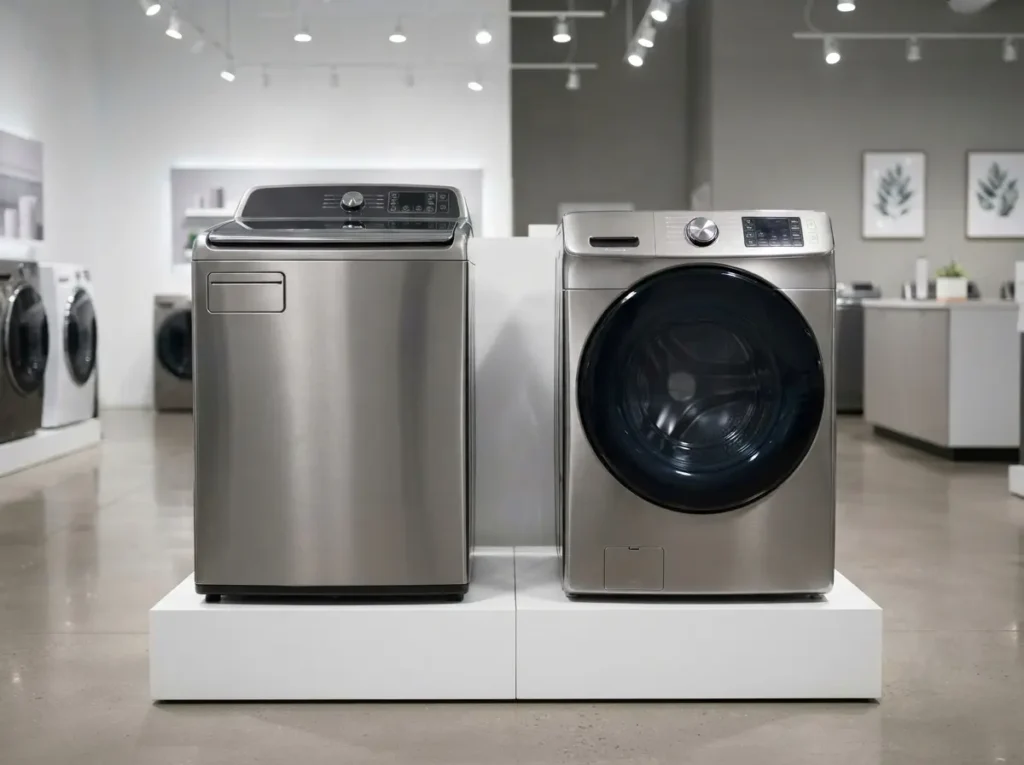
Which Specific Models to Match to Which Household
A single person and a couple in an apartment with a smaller, less frequent laundry load and a tight budget are generally well served by an entry Cabrio like the WTW5057LW, simple, inexpensive, and more than adequate for lighter use.
A larger family generating frequent, bulky loads (bedding, sports gear, towels for several kids) tends to benefit more from a Duet-lineage front loader like the WFW862CHC, where the higher spin extraction and better bulky-load handling actually earn back some of the higher purchase price in dryer time and water savings.
A household specifically dealing with hard water and heavy stain issues benefits more from the sealed, steam-retentive Duet-line drum than from Cabrio’s steam option, for the heat-retention reason discussed earlier in the wash performance section.
And for anyone whose main concern is simply not wanting to bend down to load and unload a front-load door, a real, common, and completely legitimate priority that a lot of spec-focused comparisons ignore entirely, that ergonomic factor alone often outweighs every efficiency number in this article, and Cabrio wins that consideration outright regardless of any other spec.

FAQ
1. Is the Whirlpool Duet washer still a current product line, and has it been discontinued?
The Duet name has become less prominent in newer marketing in some markets, with many current models simply labeled as Whirlpool front-load washers, but the underlying front-load engineering lineage traces directly back to the original Duet platform.
2. Which is more reliable long-term, Whirlpool Cabrio and Duet washer?
Neither line has a dramatically worse core reliability record; the difference is more about which specific components are prone to wear (Cabrio’s drive coupler vs. Duet’s door gasket and lock mechanism) than one line simply breaking down more often overall.
3. Does Cabrio’s lack of an agitator actually matter for wash quality?
Yes, meaningfully, the agitator-free wash plate design is gentler on fabric and provides more usable drum space than an old-style agitator top-loader, though it still doesn’t match a front-load. The duet-line machine’s ability to fully submerge and tumble heavily soiled items.
4. Why does the Duet line cost more than the Cabrio for a similar capacity?
The sealed drum, locking door, higher-speed motor and suspension system, and generally more advanced water/energy efficiency engineering all add manufacturing costs that top-load Cabrio’s simpler mechanical design avoids.
5. Which line handles bulky items like comforters better?
Duet-lineage front loaders generally handle bulky items better due to the tumbling wash action and lack of a center agitation mechanism taking up drum space, though very large comforters can still be tight in smaller-capacity Duet models.
6. Is the noise difference between the Whirlpool Cabrio vs. the Duet washer significant in a real home?
Yes, though the character differs, Cabrio tends toward duller, lower-pitched vibration-driven noise, while Duet-line machines tend toward a higher-pitched sound at peak spin that some people find more noticeable despite a lower measured decibel level.
7. Can I install a Cabrio and a Duet-line front loader stacked and side by side interchangeably?
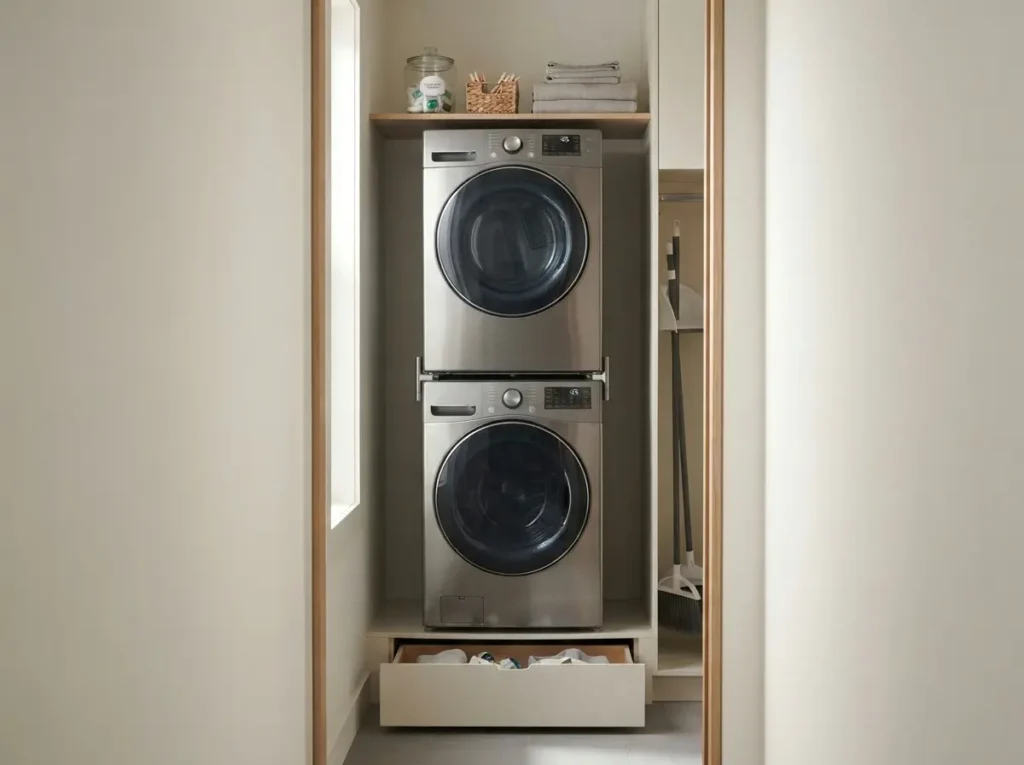
whirlpool Cabrio’s top-load design cannot be stacked with a dryer on top the way a front-load The duet-line washer can be used with a compatible stacking kit, which is a meaningful space consideration for smaller laundry closets choosing between the two lines.
Final Verdict
If I had to boil this down to the single question that actually decides it for most households: do you care more about not bending over to load laundry and about squeezing more efficiency and bulky-load performance out of every cycle? Cabrio wins decisively on ergonomics, simplicity, and lower repair costs when something does go wrong. Duet-line front loaders win on water/energy efficiency, bulky-load handling, and stain-fighting performance, at the cost of a pricier gasket and door-lock repair down the road.
Neither line is the “wrong” choice; they’re built to solve genuinely different problems, and the right pick comes down to which of those problems actually matters in your laundry room rather than which one wins more spec categories on paper. Compare current model availability and pricing directly before you commit, since configurations shift by region.