

Maytag refrigerator common problems include poor cooling, weak ice, frost or condensation, odd noises, slow water at the dispenser, and a compressor that cycles too often. The first five usually respond to a few checks: correct temperature settings, clear vents, clean coils, clean door seals, a level cabinet, an open water supply, and a fresh filter. A compressor that cycles too often needs a technician.
| As an Amazon Associate I earn from qualifying purchases. |
Table of Contents
Maytag refrigerator common problems: what they mean
- Not cooling: the fridge section stays warm even though the light and fans run. Common causes are blocked airflow, wrong settings, and dirty condenser coils. A stuck air damper or a stalled evaporator fan can leave the freezer cold and the fridge warm.
- Ice maker not making ice: the ice maker is off, short on water, or running in a freezer that is too warm.
- Frost or condensation: a little moisture is normal in humid weather. Excess moisture means warm, humid air is getting in.
- Noise: many sounds are part of normal operation. Others point to vibration or dirty coils.
- Dispenser trouble: slow or no water usually comes from a restricted supply or a clogged filter.
- Compressor short cycling: the compressor starts and stops far too often, with frequent clicking. Food may stay cold, but energy use rises.
Safety first
- Unplug the refrigerator before cleaning coils or reaching behind the unit.
- Do not open sealed-system parts or test electrical components. Those jobs belong to a technician.
Tools and parts needed
As an Amazon Associate, we earn from qualifying purchases.
- Level
- Cloth for cleaning door seals, plus mild soap and water
- Vacuum with a brush attachment or a condenser coil cleaning brush
- Container for catching dispensed water
- Owner’s manual (for coil access and model-specific details)
- Replacement water filter, if the old one is clogged (use the exact filter listed in your owner’s manual for your model)



Step-by-step fixes
The fridge is not cooling.
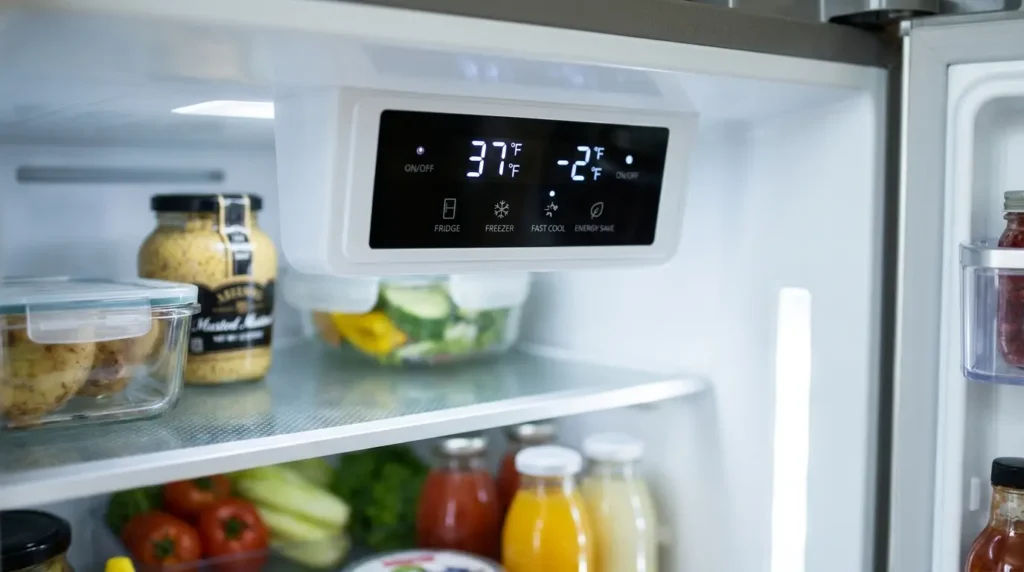
- Check the temperature settings. Set the fridge to 37°F and the freezer to 0°F. A warm room or a nearby heat source may call for a small adjustment from the factory settings. Expect the compartment to gradually get colder. If not: go to step 2.
- Clear the vents. Move food away from the vents that carry air from the freezer to the fridge. Keep items forward of the rear vent slots. Expect steadier cooling, and food near the vents stops freezing. If not: go to step 3.
- Reset the fridge. Unplug it for 5 to 10 minutes, then plug it back in. A shorter unplugging often won’t reset the controls. Expect: the unit restarts and begins cooling again. If not: go to step 4.
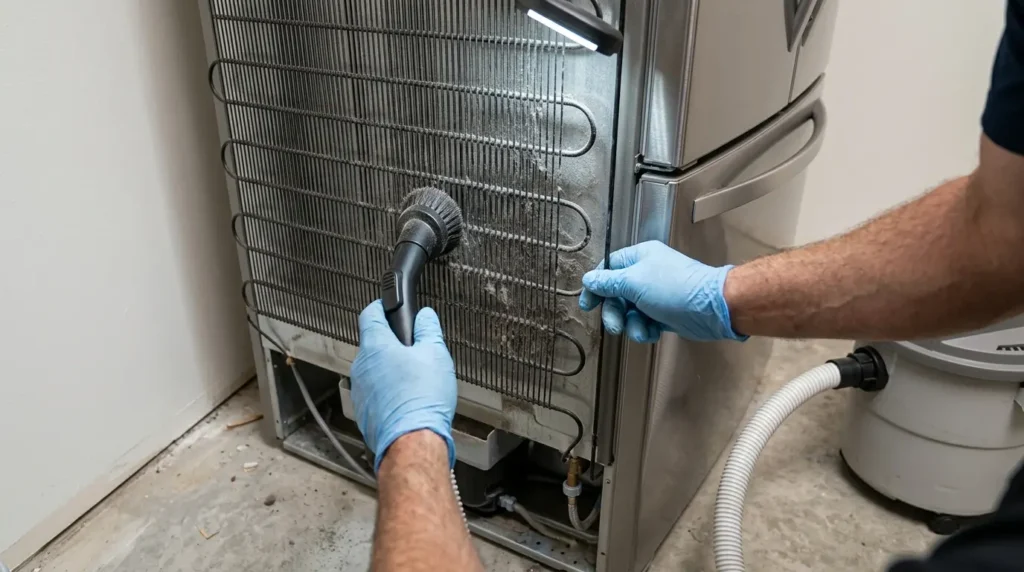
- Clean the condenser coils. With the fridge unplugged, follow the owner’s manual to reach the coils. Vacuum or brush away dust and grease. Clean the vent openings at the same time. Expect: better cooling and a quieter hum. If not: a stalled evaporator fan or a stuck damper is a known cause of a cold freezer with a warm fridge. Both are part replacements, so schedule a service visit.
The ice maker is not making ice.
- Confirm the ice maker is on. Turn the dial to “Ice Maker On,” or lower the lever over the ice bin. Expect: the ice maker resumes its cycle. If not: go to step 2.
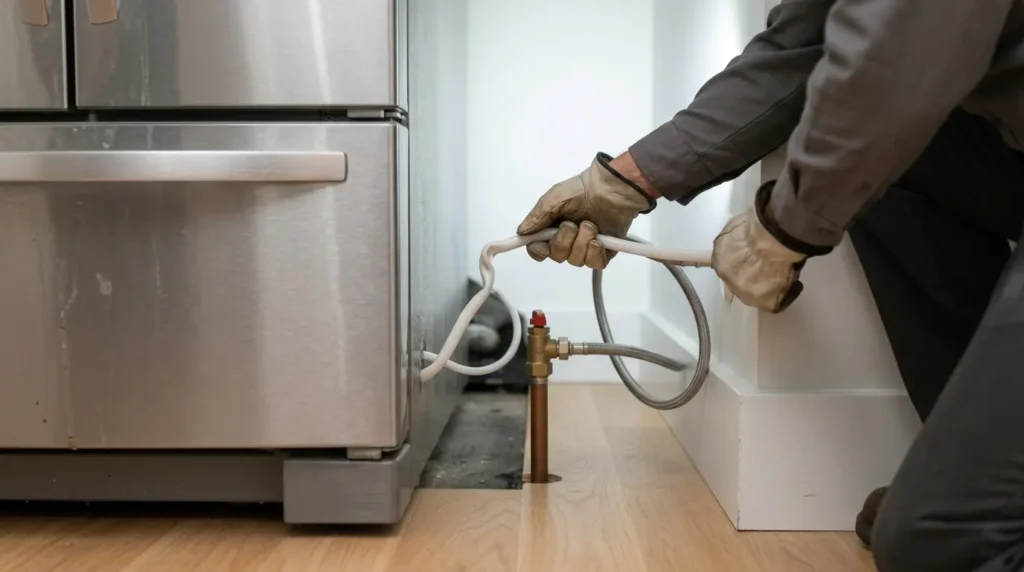
- Check the water supply. Straighten any kink in the water line behind the fridge. Make sure every shut-off valve is fully open. The main valve is usually under the sink, in a nearby cabinet or in the basement, and extra valves may sit along the tubing. Expect: water reaches the ice maker. If not: go to step 3.
- Confirm the freezer is at 0°F. A freezer running warmer than its target slows ice production. Expect: ice production picks up once the freezer holds temperature. If not: go to step 4.
- Check the filter. If water flow is weak, replace the clogged filter (see the dispenser steps below). Expect: better flow to the ice maker. If not: the fault is inside the ice maker or its parts, so schedule service.
Frost or condensation
- Limit door openings. Take out everything you need in one trip, keep food organized, and close the door promptly. Expect: less moisture over the following days. If not: go to step 2.
- Clean the door gaskets. Wipe them with a cloth, soap, and water. Check that nothing blocks the door from closing fully and that the seal touches the cabinet all the way around. Expect: a tighter seal and less moisture. If not: go to step 3.
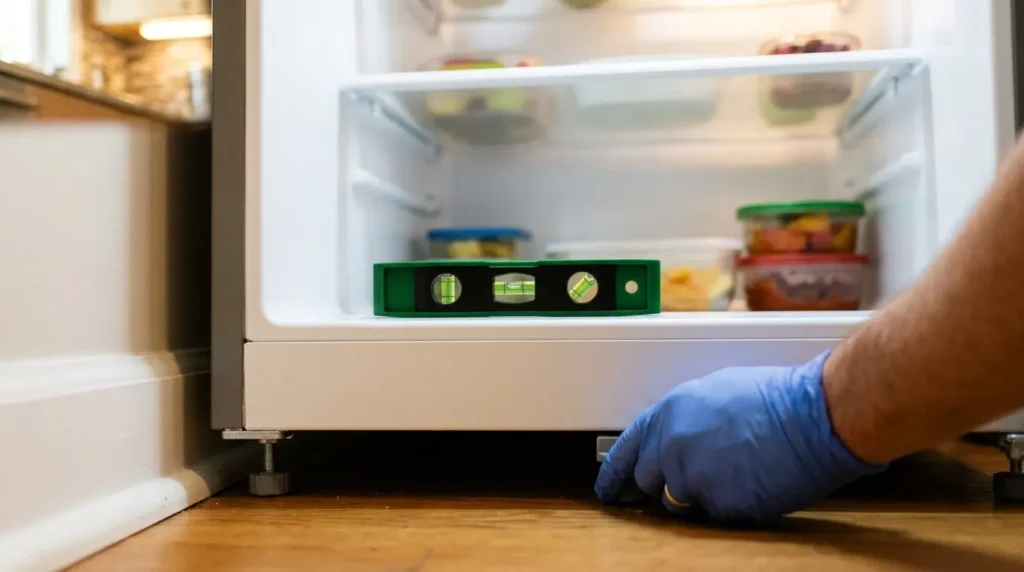
- Level the fridge. Use a level from front to back and side to side, and adjust the leveling legs. An unlevel cabinet lets doors close poorly and humid air in. Expect: doors close and seal properly. If not: see the technician section.
Noise
- Compare the sound to the normal list.
- Humming or whirring: the compressor and fans.
- Hissing or gurgling: refrigerant flow.
- Sizzling or dripping: the defrost cycle.
- Popping: cabinet walls cooling.
- Buzzing: the water valve filling the ice maker.
- A clunk: ice dropping into the bin.
Expect: these sounds need no repair. If not, go to step 2.
- Fix vibration. Adjust the leveling screws so the feet sit firmly on the floor. Expect the rattle or shake to stop. If not: go to step 3.
- Clean the coils for a loud hum. Greasy or dusty condenser coils can cause it. Clean them as in the cooling steps. Expect: a quieter hum. If not: see the technician section.
Dispenser or slow water
- Check the water supply. Straighten any kink in the line and fully open the shut-off valves. Expect: stronger flow. If not: go to step 2.
- Test the filter. Remove the filter and run the dispenser. If the flow improves, the filter was clogged or installed incorrectly, so replace it with the correct filter for your model. Expect: normal water flow. If not: a service visit is the next move.

Compressor short cycling
No owner fix applies. Frequent clicking and constant on-off cycling raise energy use. Call a technician and avoid any electrical testing.
When to call a technician
- The compressor short-cycles.
- Frost or condensation persists after the gasket check and leveling.
- A noise doesn’t match the normal-sounds list.
Prevention tips
- Keep vents clear and avoid overpacking.
- Vacuum the condenser coils regularly.
- Wipe the door gaskets clean.
- Open the doors as little as possible.
- Keep the cabinet level.
- Replace the water filter on the schedule in your owner’s manual.
Related errors and common problems
No error code is covered here. Two related problems have their own fixes in the owner’s manual. Food freezing in the fridge section often traces back to blocked vents. A fridge light that stays dark is a separate issue.
FAQs
Why is my Maytag fridge not cooling, but the freezer works?
When the freezer stays cold but the fridge section runs warm, airflow between the two is the usual suspect. Clear anything blocking the vents, confirm the temperature settings, and try a 5- to 10-minute unplug reset. A stuck air damper or a stalled evaporator fan can also stop cold air from reaching the fresh food side. Those are part replacements, so schedule service if the simple checks don’t help.
Why is my Maytag ice maker not making ice?
Check that the ice maker is on, the water line behind the fridge isn’t kinked, and every shut-off valve is fully open. A freezer running warmer than its 0°F target can slow ice production, and a clogged filter can limit the water reaching the ice maker. If all of that checks out and ice still doesn’t appear, the problem lies in a part that needs a service visit.
Why is my Maytag fridge noisy, and which sounds are normal?
Many sounds are normal. Humming or whirring comes from the compressor and fans, and hissing or gurgling from refrigerant flow. Sizzling or dripping comes from the defrost cycle, popping from the cabinet walls cooling, buzzing from the water valve filling the ice maker, and a clunk when ice drops into the bin. Vibration points to an unlevel cabinet, and a loud hum can come from dusty or greasy condenser coils. Anything else deserves a service visit.
Why is there frost or condensation inside?
A little moisture is normal, especially in humid weather. Excess moisture usually means warm, humid air is getting in. Take items out in one trip and close the door promptly. Wipe the door gaskets clean, make sure nothing keeps the door from closing fully, and level the cabinet so the doors seal. If moisture or frost keeps returning after those checks, schedule service.
How do I reset a Maytag refrigerator?
Unplug the refrigerator and leave it disconnected for 5 to 10 minutes, then plug it back in. A shorter unplugging often won’t reset the controls. Once power returns, the unit restarts and begins cooling again, though it takes time to return to temperature, so avoid judging the results right away. If cooling or ice problems caused the reset, recheck the temperature settings and vents afterward. If the fridge still misbehaves once it has had time to stabilize, check the owner’s manual for model-specific steps or schedule service.
When should I call a technician?
Call a technician when the compressor cycles on and off too often, often with frequent clicking. Call one too when frost or condensation persists after the gasket and leveling checks, or when a noise doesn’t match the normal sounds. Those problems involve internal parts or the cooling system, which are not safe or practical owner repairs, so unplug the unit and book a visit rather than attempting fixes.
Bottom line
Most Maytag refrigerator problems start with something simple. A fridge that runs warm usually needs clear vents, sensible temperature settings, and clean condenser coils. Weak ice or slow water often traces back to an off switch, a kinked line, a closed valve, or a clogged filter. Frost and condensation tend to ease once the door seals clean and the cabinet sits level. Many noises are normal, and the rest often come from vibration or dusty coils.
Work through the easy checks in order, and give the fridge time to respond after each change. Stop and schedule service if the compressor cycles on and off too often, if moisture keeps returning after the gasket and leveling checks, or if a sound doesn’t match the normal list. A few minutes of upkeep (clear vents, clean gaskets, vacuumed coils and a fresh filter) heads off most of these problems before they start.