
A customer once brought in a Maytag top-freezer that was, by every spec sheet measure, working exactly as designed, and she was furious about her wilted lettuce anyway. That’s the conversation that actually explains the difference between dual-cool vs. single-evaporator cooling better than any brochure: the spec sheet says cooling system, but what you’re really buying is a decision about where the moisture in your kitchen goes.
Maytag builds refrigerators on two fundamentally different cooling architectures, and the badge on the box, Dual Cool® Evaporators versus nothing mentioned at all, tells you almost everything about how dry your crisper drawers will feel a year from now. This comparison breaks down exactly how each system works, where the real-world performance gap shows up, what tends to fail first on each one, and which kind of household actually notices the difference enough to justify paying for it.
Table of Contents
What Dual Cool Actually Means Inside a Maytag Cabinet
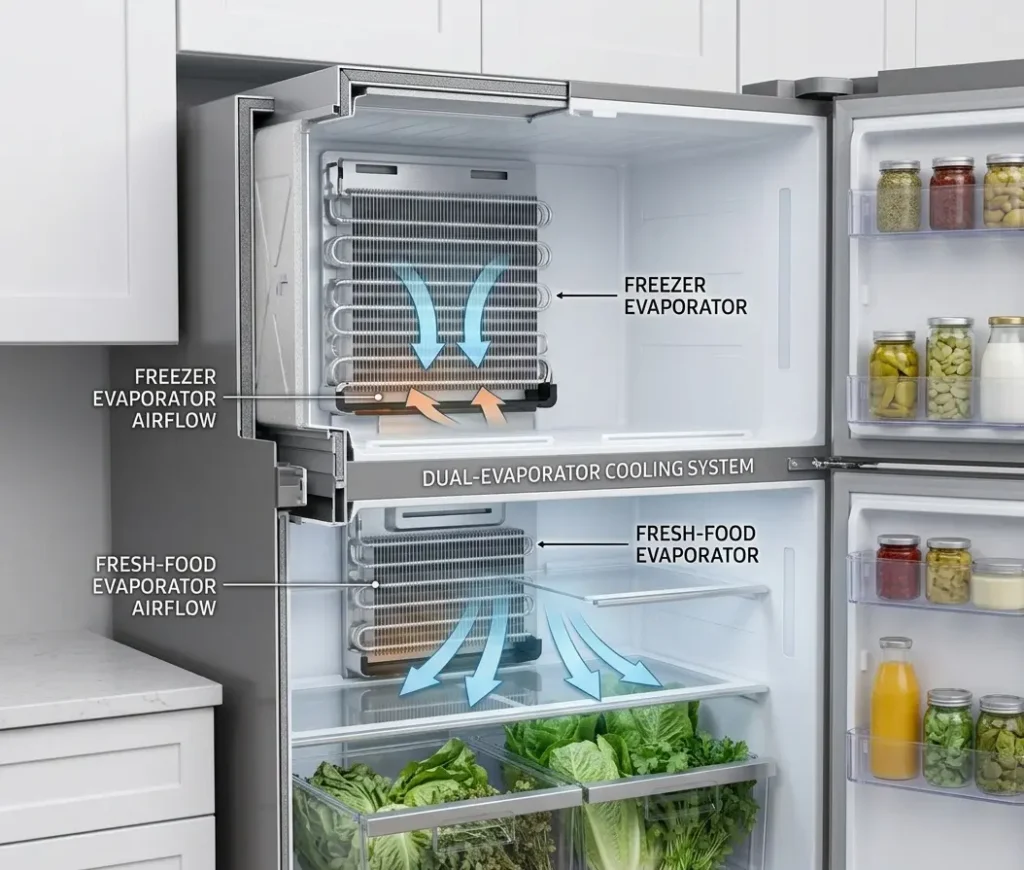
Maytag’s Dual Cool Evaporators design gives the refrigerator compartment and the freezer compartment their own dedicated evaporator coil, each with its own airflow path. The freezer evaporator is tuned to produce dry, cold air, the kind that resists frost buildup and keeps ice crystals off frozen food. The refrigerator-side evaporator is tuned to produce cool, more humid air, which is what actually slows produce from drying out.
That separation is the entire point of the system. In a shared design, one evaporator has to compromise between dry enough for the freezer and humid enough for the fridge, and it can’t fully satisfy both at once. Dual Cool sidesteps that compromise by running two coils instead of splitting the difference on one.
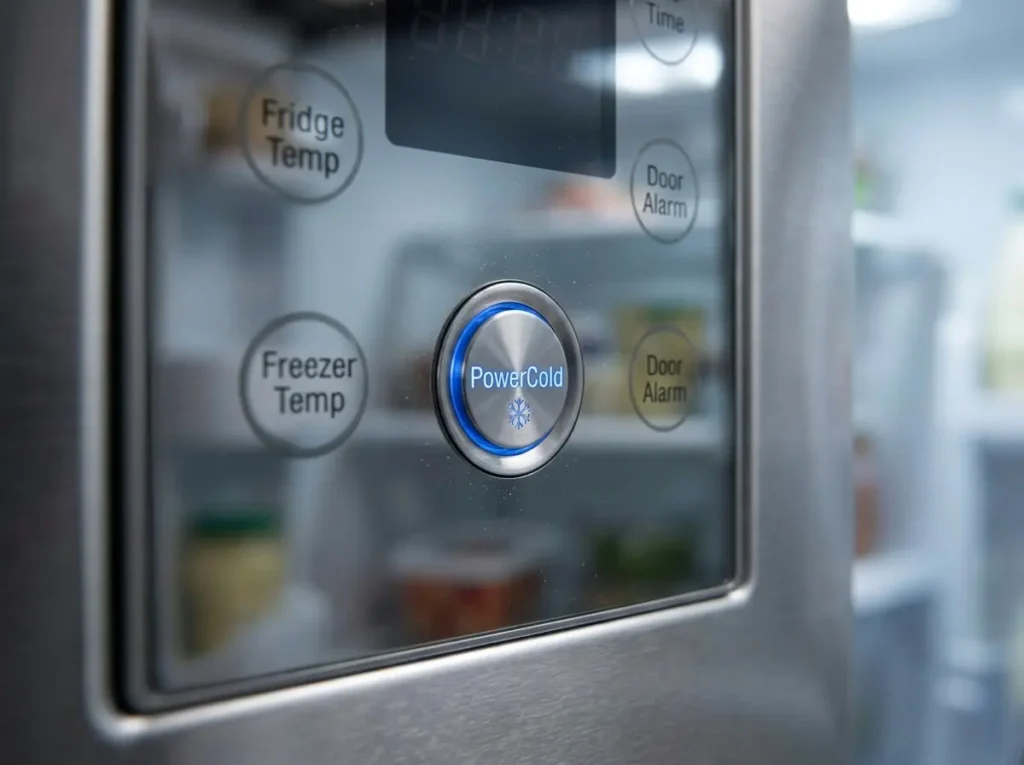
Most Dual Cool models pair this with a PowerCold® button, which temporarily ramps the compressor to recover temperature faster after a big grocery haul or an extended door-open moment. 👉 Maytag PowerCold button not working, troubleshooting guide It’s worth separating the two features mentally: Dual Cool is the airflow architecture; PowerCold is a compressor-speed boost layered on top of it. You’ll see PowerCold marketed on some single-evaporator models too, so its presence alone doesn’t tell you which cooling architecture you’re looking at.
What a Single-Evaporator System Is Doing Instead
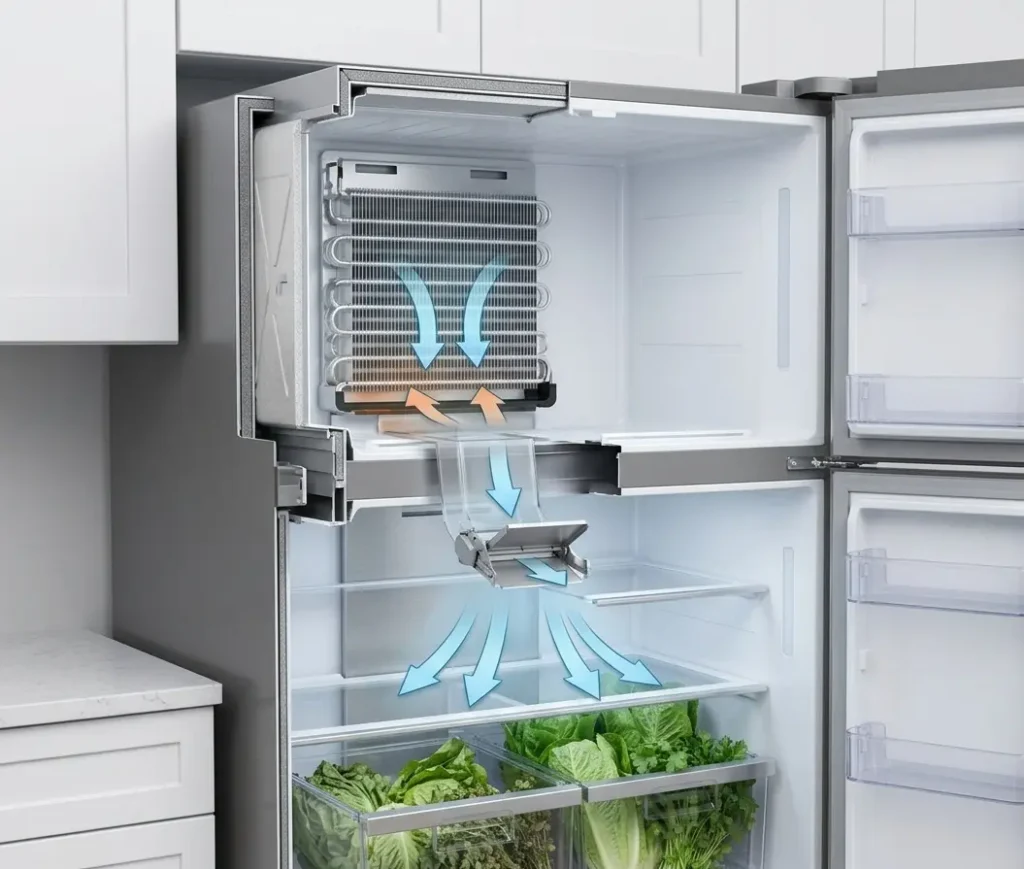
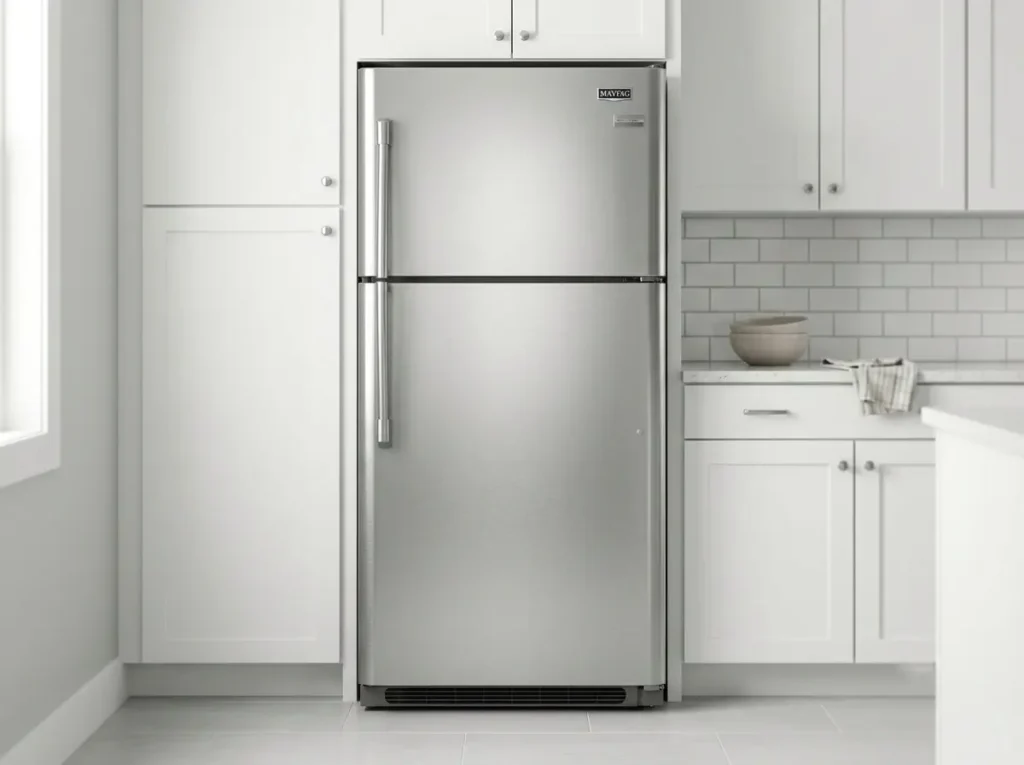
A single-evaporator Maytag refrigerator, the layout you’ll find on most MRT-series top-freezers and on a handful of French door models, runs one evaporator coil, almost always located behind the freezer wall. A fan pulls cold air off that coil, and a damper assembly meters part of it down into the fresh-food compartment through a duct.
This is a simpler, cheaper-to-build system with fewer moving parts, and it’s not a bad design; it’s just a different set of trade-offs. Because the air reaching your crisper drawers started out as freezer-cold, dry air, the fresh-food side runs noticeably drier than a dual-evaporator design. The damper and its control board are doing double duty here: they’re the only thing standing between freezer temperature and fridge temperature, which matters more than it sounds like once you get to the failure-point section below.
Interestingly, evaporator count and compressor type don’t always travel together. Independent lab testing on the Maytag MRFF4236RZ French Door Refrigerator found a single-evaporator, fixed-speed-compressor design that still landed close to a comparable dual-evaporator, inverter-compressor competitor on measured temperature uniformity, a reminder that the compressor type matters just as much as the evaporator count, and a similar-looking spec sheet can hide a very different build underneath.
Spec-by-Spec: Dual Cool vs. Single Evaporator
Here’s the head-to-head, stripped down to what actually differs mechanically between the two architectures, not marketing language.
Table 1, Cooling Architecture Comparison
| Factor | Dual Cool (Twin Evaporator) | Single Evaporator |
| Evaporator count | 2, one per compartment | 1, located in the freezer wall |
| Fresh-food humidity | Higher, independently controlled | Lower, dependent on damper airflow |
| Freezer air quality | Dry, tuned to reduce ice crystals | Dry, tuned to reduce ice crystals |
| Mechanical complexity | Higher, 2 coils, 2 fans on most models | Lower, 1 coil, 1 fan, 1 damper |
| Typical placement | Mid-to-upper French door & side-by-side tiers | Top-freezer models & entry French door tiers |
| Compressor pairing | Varies; check the model, not just the evaporator badge. | Often fixed-speed, but not always |
| Key failure point after 1–2 years | Individual evaporator fan or coil frost-up | Damper control assembly or shared evaporator fan |
Humidity and Produce Preservation, Where the Gap Is Real
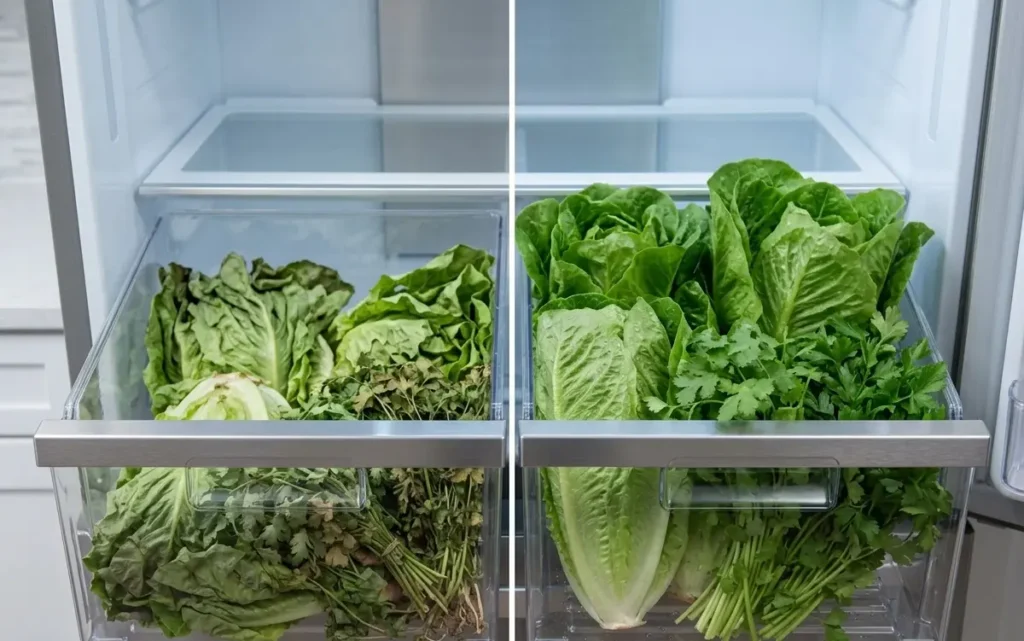
This is the difference that actually shows up on your kitchen counter. A single-evaporator fridge’s crisper drawers run in a measurably drier environment because the air feeding them originated as freezer-dry air before being ducted down and warmed slightly. Leafy greens, herbs, and celery, anything with a high surface-area-to-volume ratio, will visibly wilt within about a week in that environment, even inside a crisper drawer, since most crispers don’t seal tightly enough to fully isolate their own microclimate.
Dual Cool’s dedicated fridge-side evaporator produces air that’s cool without being freezer-dry, so the same produce holds texture and moisture noticeably longer, often close to double the shelf life for delicate greens, based on the pattern seen across side-by-side owner reports rather than any single controlled study. Root vegetables, dairy, and packaged goods are far less sensitive to this gap; it’s specifically the delicate, high-water-content produce where Dual Cool earns its keep.
Here’s the insider question a good appliance salesperson asks before recommending either system, and one almost no buyer thinks to bring up themselves: how many days do you typically hold fresh produce before it’s used? A household that shops every two to three days will barely notice the humidity gap. A household that does one big weekly grocery run absolutely will.
Freezer Performance: Frost, Ice Crystals, and Ice Cream Texture
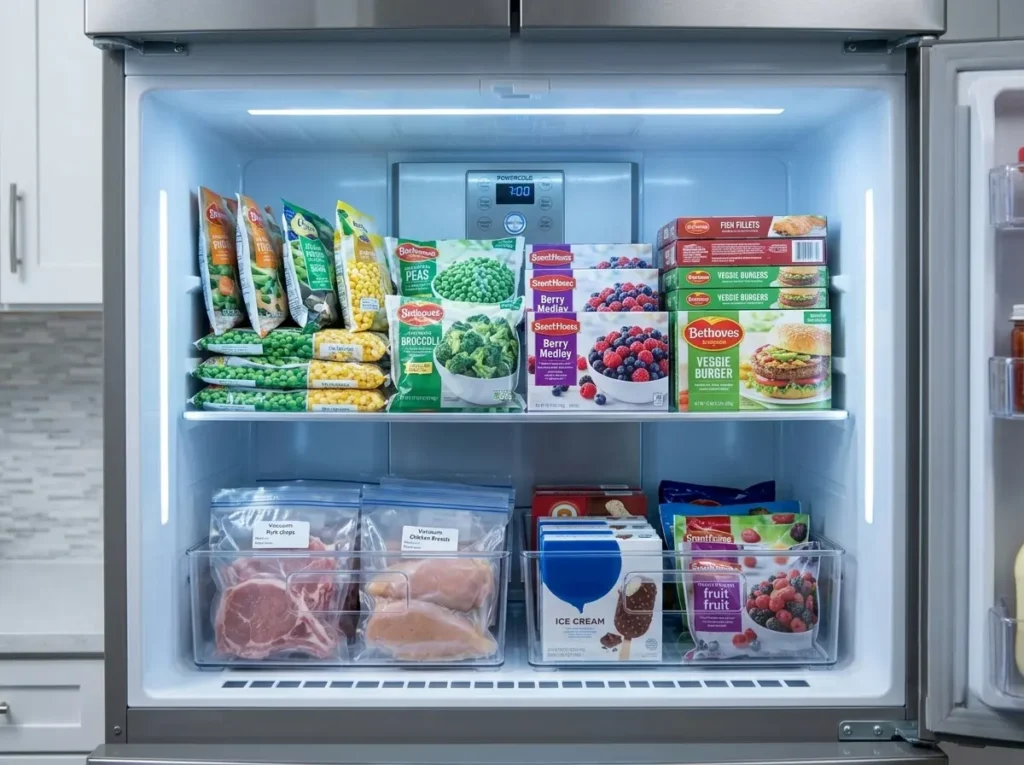
On the freezer side, the two architectures are far closer than most marketing copy implies. Both designs are specifically engineered to keep freezer air dry, because dry air is what prevents frost buildup on food and on the evaporator coil itself. Whether you have one evaporator or two, the freezer-facing one is doing the same basic job the same basic way.
Where you might notice a difference is recovery speed after loading a large batch of groceries or a bulk freezer order. Dual Cool’s dedicated freezer evaporator isn’t sharing capacity or airflow scheduling with the fridge side, so it tends to recover set temperature slightly faster. For most households this difference is marginal enough that it shouldn’t be a deciding factor on its own; it matters more for anyone doing serious bulk freezing (a hunting or gardening household putting up large batches at once, for example).
Temperature Uniformity, Noise, and Energy Draw in Daily Use
Temperature uniformity, how much the temperature swings shelf to shelf and drawer to drawer, is driven more by compressor type and airflow design than by evaporator count alone. A well-engineered single-evaporator fridge with a good damper and fan can post uniformity numbers close to a Dual Cool model; a poorly baffled Dual Cool model can still have hot spots near the door. Don’t assume the evaporator badge alone settles this; check reviews for the specific model.
Noise is a similarly close call day to day. Dual Cool systems run two fans instead of one, which in theory means two potential noise sources, but in practice both are engineered to run quietly at low fresh-food-compartment speeds, and most owners report no perceptible difference between the architectures in a normal kitchen. Energy draw follows the same pattern; evaporator count has a smaller effect on your utility bill than compressor type does. An inverter-compressor single-evaporator unit will often outperform a fixed-speed-compressor Dual Cool unit on energy cost, which is the kind of detail a spec sheet buried under Dual Cool branding won’t tell you. 👉 Inverter vs. fixed-speed compressor refrigerators: real energy cost difference
Which Maytag Models Actually Use Each System
Maytag doesn’t put the evaporator configuration on the front of the box, so the fastest way to check is the product description or spec sheet; look for the words Dual Cool or dual evaporator explicitly. Here’s how it typically breaks down across the current lineup pattern.
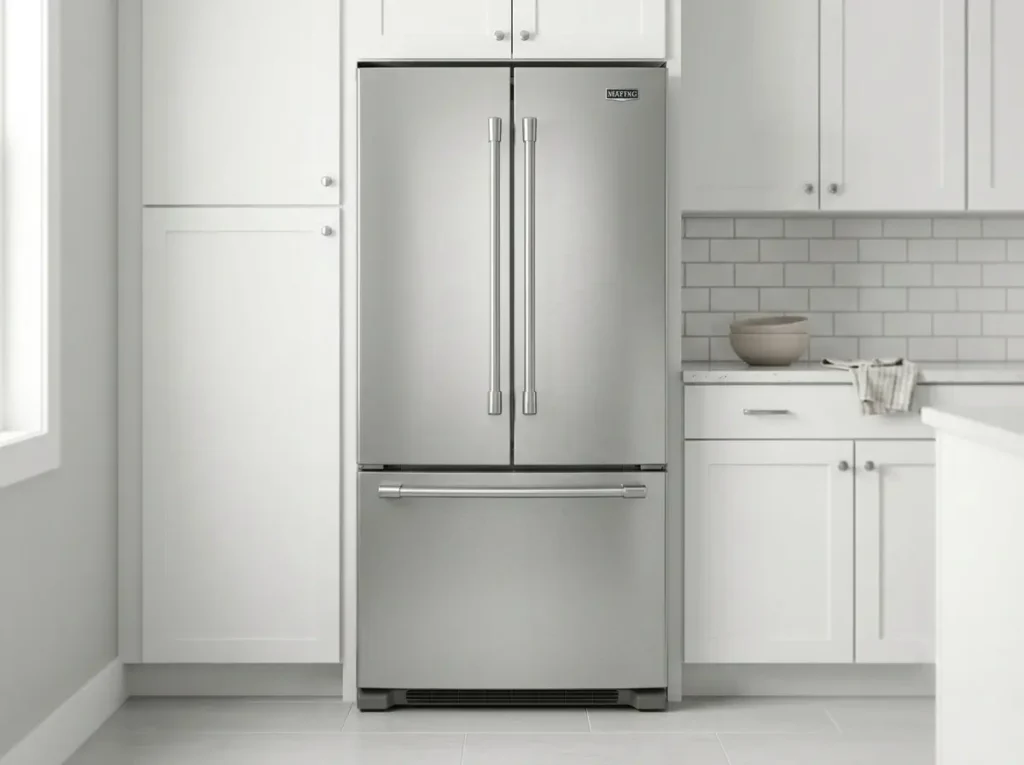
Table 2, Representative Models by Cooling System
| Model / Series | Type | Cooling System |
| Maytag MFT2776FEZ French Door Refrigerator | French Door | Dual Cool Evaporators + PowerCold |
| Maytag MFX2876DRH French Door Refrigerator | French Door | Dual Cool Evaporators |
| Maytag MFT2976AEM French Door Refrigerator | French Door | Dual Cool Evaporators + Cool Core |
| Maytag MRT311FFFE Top-Freezer Refrigerator | Top Freezer | Single evaporator, fixed-speed compressor |
| Maytag MRFF4236RZ | French Door | Single evaporator, fixed-speed compressor |
As a general pattern, most current French door and side-by-side Maytag refrigerators carry Dual Cool, while top-freezer models and a small number of entry-level French door units run a single evaporator. That’s a pattern, not a guarantee; always confirm on the specific model page before assuming. It’s also worth knowing that some Maytag single-evaporator top-freezers are close mechanical siblings to Whirlpool models built on the same platform; the Whirlpool WRT311FZDW shares most of its cooling architecture with the MRT-series Maytag, just with different interior trim. 👉 Maytag vs. Whirlpool shared-platform refrigerators: what’s actually different?
Failure Points After 1–2 Years: What Breaks and What It Costs
This is the section most spec-comparison sites skip entirely, and it’s where the two architectures diverge the most in real ownership cost. On single-evaporator models, the evaporator fan motor is the single most common cooling-system failure point; it’s doing the work of circulating air to both compartments, so it runs more continuously and wears faster. When it fails, the freezer often stays reasonably cold for a while (it’s closest to the coil) while the fridge compartment warms noticeably, which is a confusing symptom that sends a lot of owners chasing the wrong repair first.
The damper control assembly is the other common single-evaporator failure point; it’s a mechanical or electronic vent that can stick open, stick shut, or lose calibration, throwing off the fridge-to-freezer temperature balance even when everything else is healthy.
Dual Cool systems trade that single point of failure for two smaller, more independent ones. It’s less common for both evaporator fans to fail at once, but when one does, you lose cooling performance in only that compartment while the other keeps working normally, which is easier to diagnose and often easier to live with while waiting on a part.
Here’s a piece of insider knowledge most reviews leave out entirely: the 10-year limited parts warranty Maytag puts on the compressor sounds reassuring on both architectures, and it genuinely is for compressor failures, but the compressor is rarely what actually fails first on either system. Evaporator fans, dampers, and control boards typically fall outside that extended coverage window after the standard 1-year full warranty expires, so the part most likely to need replacing is the part least protected by the headline warranty number. 👉 Maytag 10-year compressor warranty, what it actually covers
Total Cost of Ownership: Purchase Price vs. Long-Term Running Cost
Dual Cool models generally sit in a mid-to-upper price bracket compared to single-evaporator models in a similar size class, reflecting the extra evaporator, fan, and associated wiring. Check current pricing at your retailer of choice since it shifts frequently and varies by finish and capacity. That upfront gap is the most visible cost difference, but it’s not the only one worth weighing.
On the running-cost side, energy consumption is driven more by compressor type than evaporator count, so don’t assume Dual Cool automatically costs more to run; an inverter-compressor Dual Cool unit and an inverter-compressor single-evaporator unit will often land close together on the yearly energy estimate. Where the real long-term cost difference shows up is in repairs and food waste: a single-evaporator household that regularly loses produce to a dry crisper is absorbing a small, recurring grocery cost that never appears on a repair invoice but adds up over a few years all the same.
Which System Actually Fits Your Household
A few real-world scenarios make the decision clearer than any spec sheet:
The weekly-shopper household with fresh produce on hand for 5+ days at a stretch gets the clearest, most tangible benefit from Dual Cool; this is exactly the use case the humidity gap was built to solve.
The small-apartment or single-person household that shops every couple of days and keeps a lighter crisper load usually won’t notice enough difference to justify paying up for Dual Cool, a well-reviewed single-evaporator model that is a genuinely sound choice here, not a compromise.
The budget-conscious buyer replacing an aging fridge on a tight timeline should weigh the single-evaporator’s simpler repair profile against Dual Cool’s better produce performance. If money is tight and you already have good produce-storage habits (produce bags, tighter drawer packing), the savings may matter more than the humidity gap.
The bulk-freezer household, hunters, gardeners, and big-batch cooks will appreciate Dual Cool’s slightly faster freezer recovery after large loads, though this is a secondary benefit compared to the fresh-food humidity difference.
FAQ
Does Dual Cool use more electricity than a single-evaporator Maytag refrigerator?
Not necessarily. Energy draw is influenced more by compressor type, inverter versus fixed-speed, than by evaporator count, so an efficient Dual Cool model and an efficient single-evaporator model can land close together on estimated yearly energy cost. Check the specific model’s energy guide rather than assuming based on the cooling architecture alone.
Can a single evaporator May the Maytag refrigerator be retrofitted with a second evaporator?
No. The evaporator configuration is built into the sealed refrigeration system and the interior duct layout at the factory, so it isn’t something a technician can add later. If fresh-food humidity is a priority, that decision needs to be made at purchase time.
Why does my single-evaporator Maytag’s freezer stays cold while the fridge warms up?
This is a classic symptom of evaporator fan or damper trouble on a single-evaporator system. Because one fan and one duct feed both compartments, a partial fan failure or a stuck damper can starve the fresh-food side of cold air while the freezer, sitting right next to the coil, stays closer to normal temperature for a while longer.
Is Dual Cool the same thing as PowerCold?
No, they’re different features that are often bundled on the same model. Dual Cool describes the twin-evaporator airflow architecture; PowerCold is a button-activated compressor speed boost that temporarily accelerates cooling after heavy door use or a big grocery load. Some single-evaporator models include PowerCold too.
Does Dual Cool actually make ice cream less icy?
Indirectly, yes, but the mechanism isn’t unique to Dual Cool. Both architectures specifically dry out freezer air to limit ice crystal formation; Dual Cool doesn’t dry the freezer air any more effectively than a well-functioning single-evaporator freezer does. Ice cream texture issues are more often tied to door-seal condition and how often the freezer door is opened than to evaporator count.
Which system is more reliable long-term, Dual Cool or a single evaporator?
Neither has a clear, decisive reliability edge over the other. Single-evaporator systems have fewer parts but put more continuous workload on that one fan and damper. Dual Cool systems have more parts overall but isolate a failure to one compartment. In practice, the compressor and control board quality on the specific model matter more than the evaporator count.
Is Dual Cool worth the extra cost for a small household?
For most small or single-person households that shop frequently and keep a light crisper load, the humidity benefit is real but marginal enough that a well-reviewed single-evaporator model is a perfectly reasonable choice. The upgrade earns its keep most clearly for households holding fresh produce for five or more days between shopping trips.
Final Verdict
Neither system is objectively better; they’re built for different shopping and cooking habits, and the honest answer to Dual Cool vs. single evaporator depends on how long produce actually sits in your crisper drawer before you use it. If you’re a weekly shopper who keeps fresh greens and herbs on hand for most of the week, Dual Cool’s independent fridge-side evaporator solves a real, visible problem and is worth the added upfront cost. If you shop every few days, keep a lighter produce load, or want the simpler repair profile of fewer moving parts, a well-built single-evaporator Maytag will serve you just as well without the premium.
Whichever architecture you land on, check the specific model’s spec sheet for Dual Cool or dual evaporator language before you buy, don’t assume based on refrigerator style alone, and budget mentally for the evaporator fan or damper as the more likely long-term repair, not the compressor the warranty headline draws your eye to.