

Most Frigidaire washers I’ve been called out to weren’t old. They were neglected for about three years, and that’s enough. A proper Frigidaire washer maintenance schedule takes roughly 15 minutes a month, and it’s the difference between a machine that runs 12 years and one that needs a service call before its warranty is even a distant memory.
Table of Contents
Why a schedule beats “clean it when it smells”
By the time you smell something, the biofilm behind it has been growing for weeks. Front-loaders like Frigidaire’s FFFW-series stay damp by design: the door seals and the gasket hold water, and modern low-water cycles never fully flush the tub. That leftover moisture plus detergent residue is the food supply for bacteria and mildew.
A schedule works because each task removes something that would otherwise compound. The residue you wipe away this week can’t harden into scale next quarter, and a lint trap emptied today can’t become a pump problem in two years. Waiting for symptoms means the damage is already underway, and it’s how a washer ends up producing the exact problem described in [Washer Cleaner Not Working? The Biofilm Secret (2026)].
After every load: the 30-second habits
These are small, and they do more than everything else combined.
- Leave the door ajar. On a front-loader, a shut door traps humidity. Propping it open (a hand-width is plenty) lets the tub and gasket dry between loads. Top-loaders, such as the FFTW series, just need the lid raised.
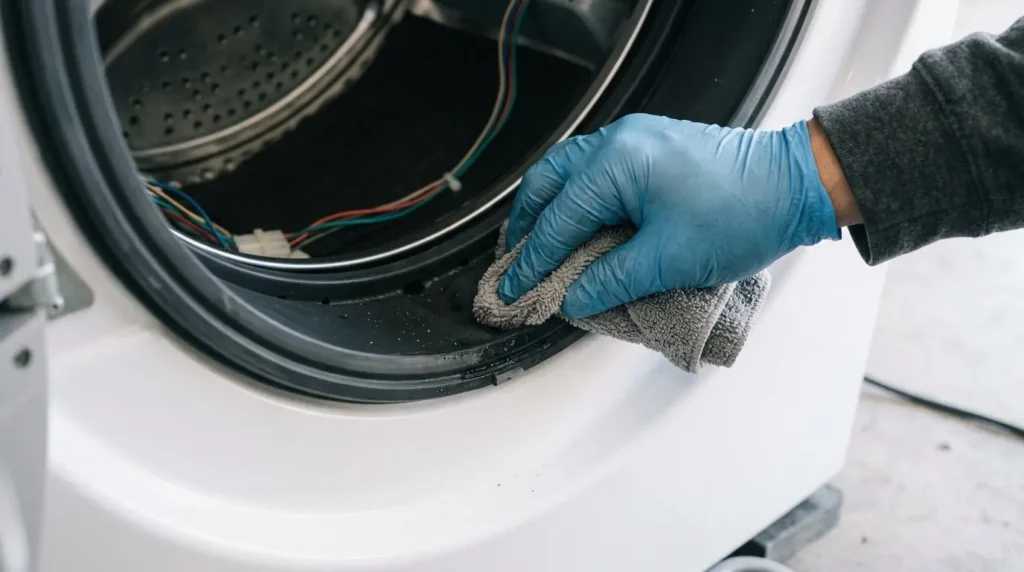
- Wipe the gasket. Run a dry cloth around the rubber door seal, especially the bottom fold where water pools. This takes about 20 seconds.
- Remove wet laundry promptly. Damp clothes left in the drum for hours feed the same odor cycle you’re trying to prevent.
- Use the right detergent amount. Frigidaire’s HE machines are built for low-sudsing HE detergent, and far less of it than most people pour. Oversudsing is the single biggest source of residue I see. If you’d like a benchmark, most loads need about one to two tablespoons of concentrated HE detergent, though your manual and detergent label take precedence.
Monthly: the tub clean and gasket check
Once a month, run a dedicated washer-cleaning cycle. Many Frigidaire models have a “Clean Washer” or “Tub Clean” cycle that runs longer and hotter than normal and is designed for exactly this, so check your control panel or manual. Use it with a proper washer cleaner rather than a random household product. Frigidaire has historically recommended Affresh tablets for their machines, and they’re formulated to break down detergent residue and body oils without harming the seals.
Run the cycle with the drum empty, and leave the door open afterward to dry. If your model lacks a dedicated cycle, use the hottest, longest normal setting.
While the cycle is finishing, do the gasket check. Peel back the rubber seal and look into the lower fold. You’re looking for gray or black film, trapped hair, or small items like coins and hairpins that slipped through. Wipe it out with a cloth or a soft-bristled brush that can reach the tight crease.
| INSIDER TIP #1: THE OVERDUE SIGN MOST OWNERS NEVER CHECK Peel back the bottom of the gasket and look at the drain side of the fold. If you see a slick, dark film there or gray streaking on dark clothes after washing, maintenance is overdue by months, not weeks. Owners tend to check the front of the seal because it’s visible. The underside is where the biofilm starts. |
Every 3 months: dispenser and drain pump filter
The detergent dispenser
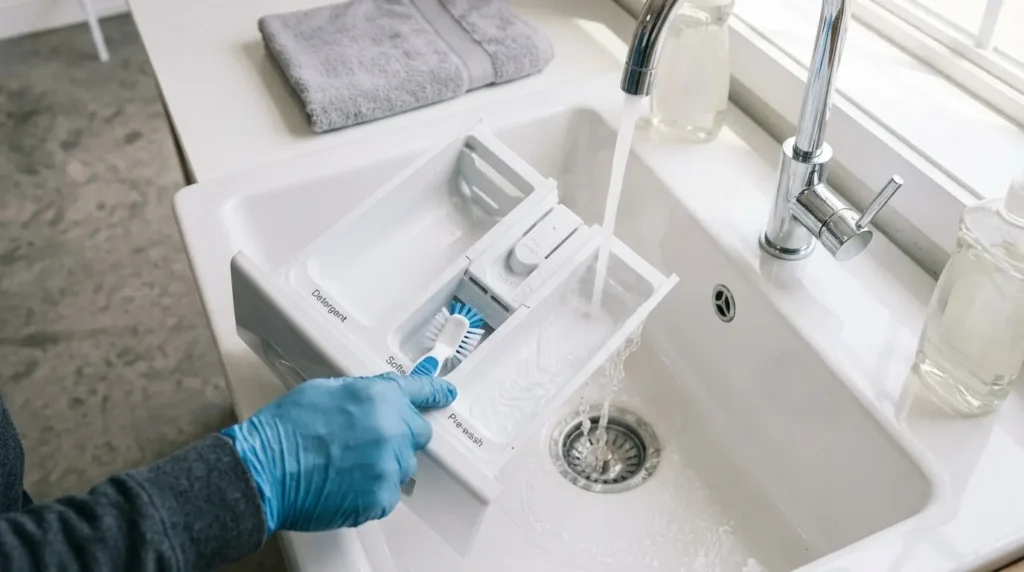
Pull the dispenser drawer out fully (most Frigidaire drawers release with a small tab or by pressing a release point in the compartment; check your manual for the exact spot). Rinse it under warm water and scrub the compartments, especially the fabric softener section, where concentrated softener dries into a gel-like crust. Then look into the empty cavity behind the drawer with a flashlight and wipe out any residue you can reach.
The drain pump filter (coin trap)
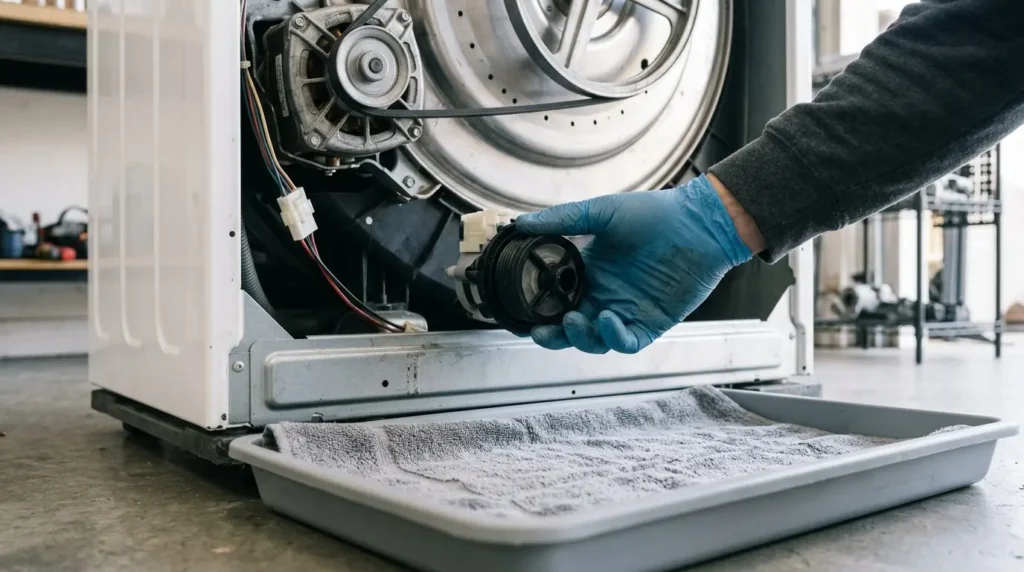
Most Frigidaire front-loaders have a small drain pump filter behind a panel at the bottom front of the machine. Its job is to catch coins, lint, buttons, and hair before they reach the pump. Every three months, open the panel, place a shallow tray and towels underneath, and unscrew the filter slowly so trapped water drains out first. Rinse the filter clean and screw it back in fully.
| INSIDER TIP #2: THE HABIT TECHNICIANS SEE NEGLECTED CONSTANTLY Almost nobody has ever opened this filter. I’ve pulled ones that were packed with lint, sock fibers, and pocket debris that hadn’t been touched since the machine was installed. A clogged filter forces the drain pump to work against resistance, and a pump that runs hard for years costs several times more to replace than the ten minutes this check takes. The sludge in the filter also tells you something. If it’s dark and foul-smelling, your cleaning cycle frequency is too low. |
Every year: hoses, inlet screens, and leveling
Fill hoses
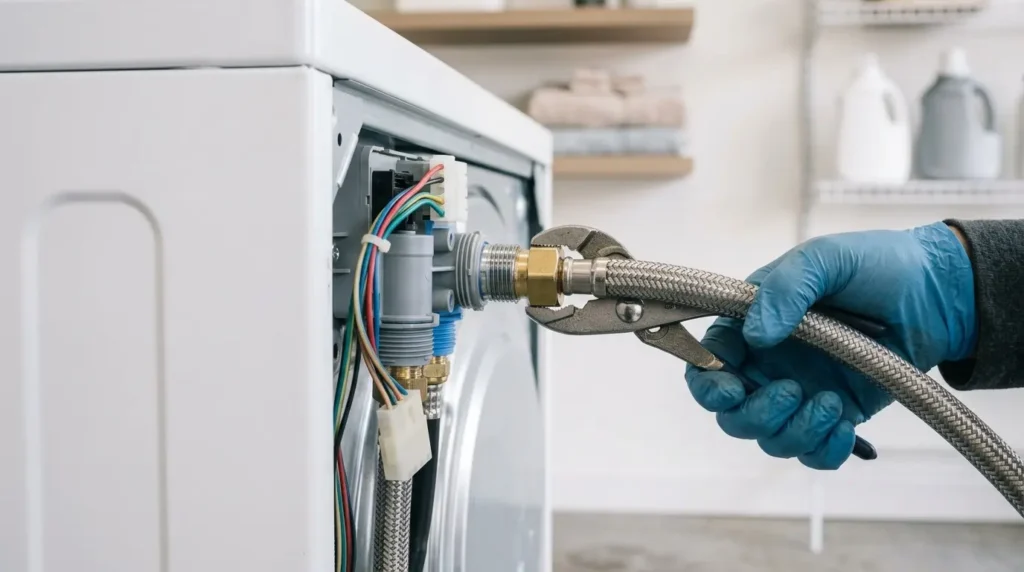
Inspect both water supply hoses once a year. Look for bulging, cracked rubber, rust-colored stains at the fittings, or any dampness around the connections. Rubber hoses degrade quietly from the inside. Many technicians, myself included, recommend replacing standard rubber hoses about every five years as preventive care and swapping to braided stainless steel hoses when you do. They’re more resistant to bursting, which matters because a failed hose can flood a laundry room in minutes.
Hand-tighten the connections at the washer and at the faucet, then a quarter-turn more with pliers if needed. Overtightening cracks the plastic fittings, and that leads straight to what’s covered in [washer leaking water from the back or bottom].
Inlet screens
Where each hose meets the washer, there’s a small mesh screen that filters sediment. Once a year, turn off the water, disconnect the hoses, and rinse the screens under running water. In homes with well water or older plumbing, check them twice a year, because sediment builds fast.
Leveling
Put a level on top of the washer and check side to side and front to back. Adjust the feet until it sits firmly with no rocking. A washer that’s slightly out of level puts extra strain on the suspension, bearings, and door seal every spin cycle. Floors settle over time, so check yearly, and again if you ever move the machine.
Adjusting the schedule for hard water and heavy use
The baseline above works for an average household doing four to six loads a week on moderately hard water. Real homes vary.
- Hard water areas: The mineral scale builds on the heating element, inside the tub, and in the dispenser. Run the tub clean cycle every 3-4 weeks rather than monthly, and consider a water softener if scale keeps recurring.
- Large families (10+ loads a week): Move the drain filter and dispenser checks to every 6-8 weeks. Volume outpaces the standard schedule.
- Households with pets or heavy work clothes: Hair, dirt, and grease reach the filter and gasket faster. Check the drain filter monthly.
- Cold-water-only washing: Cold cycles don’t dissolve detergent or oils as effectively, so residue accumulates faster. Run a hot tub-clean cycle at least monthly.
- Older Frigidaire models (Affinity and similar earlier generations): Their gaskets and dispenser designs are more prone to residue, so lean toward the shorter end of every interval.
| A CLEANING MISTAKE THAT ACTUALLY DAMAGES THE MACHINE Using chlorine bleach in every tub-clean cycle, or stacking bleach and washer-cleaner tablets together. Frequent bleach exposure can dry out and degrade the rubber door gasket over time, and mixing bleach with certain cleaners is a chemical safety risk. Stick to one cleaner per cycle, and follow the product label. |
Frigidaire washer maintenance schedule at a glance
| Frequency | Task | Heavy-use / hard-water adjustment |
| After every load | Leave the door ajar, wipe the gasket, and remove wet clothes. | Same |
| Every load | Use the correct HE detergent amount. | Same |
| Monthly | Run the tub-clean cycle; inspect the gasket fold. | Every 3-4 weeks |
| Every 3 months | Clean the dispenser drawer and cavity. | Every 6-8 weeks |
| Every 3 months | Open and clean drain pump filter. | Monthly for pets or large families |
| Every 6-12 months | Rinse inlet screens. | Every 6 months on well water |
| Yearly | Inspect hoses, check leveling. | Same |
| Every ~5 years | Replace fill hoses preventively. | Sooner if bulging or stained |
FAQ
1. How often should I clean my Frigidaire washer?
Run a tub-clean cycle monthly, and wipe the gasket after each load. Move to every 3-4 weeks if you have hard water or wash cold most of the time.
2. Can I use vinegar and baking soda instead of a washer cleaner?
They can help occasionally, but vinegar is acidic, and repeated use may not be kind to rubber seals over the long term. A purpose-made washer cleaner is formulated for these machines, so it’s the safer routine choice.
3. Should I leave the washer door open all the time?
Leave it ajar between loads so moisture can escape. If you have small children or pets that could climb inside, prop the door only while you’re home and supervising, or shut it after the drum dries completely.
4. Where is the drain pump filter on a Frigidaire washer?
On most front-loaders it’s behind a small access panel at the bottom front corner. Check your model’s manual for the exact location, since panel design varies between series.
5. How often should I replace the washer’s fill hoses?
As a general guideline, about every five years for rubber hoses. Replace them sooner if you see bulging, cracking, or rust stains at the fittings.
6. Does using more detergent get clothes cleaner?
No. Excess detergent doesn’t rinse out fully in an HE washer and leaves residue in the drum, gasket, and drawer. Less detergent is nearly always the better habit.
7. Does a washer need maintenance if it’s still new?
Yes. Residue and moisture problems begin from the first months of use. Starting good habits early is easier than reversing a buildup later.
Final word
The best maintenance schedule is one you’ll actually follow, so pick a day, say the first Sunday of the month, and do the tub clean, gasket check, and a quick look at the filter as a single routine. Print the table above and tape it inside a cabinet door near the machine. Ten minutes a month now saves you a repair bill later, so start with this week’s gasket wipe and go from there.