
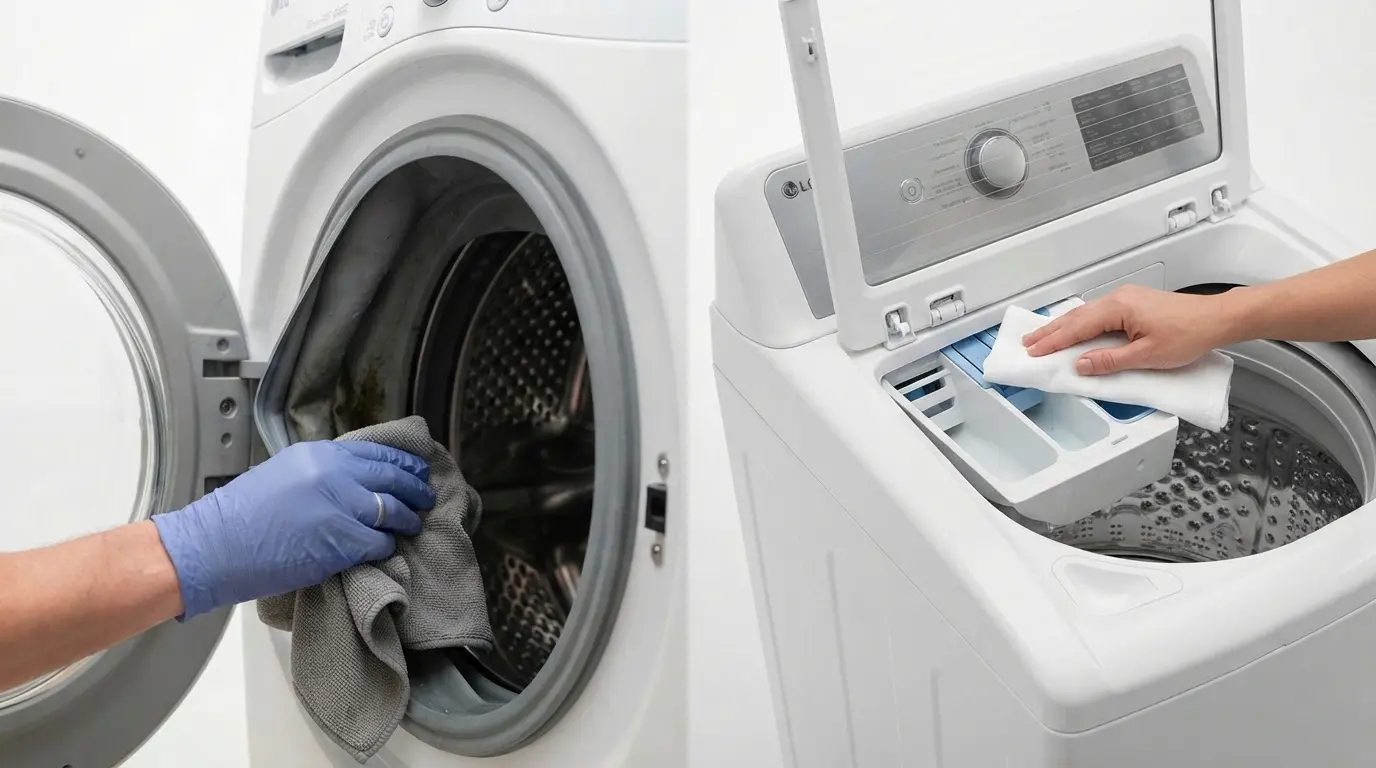
How to Clean LG washing machine: Front & Top Load Step-by-step instructions to remove smells, mold, and buildup from front-load and top-load LG washers and keep your machine’s sensors working correctly.
Mwashers ands don’t think about cleaning their washer until it starts smelling worse than the clothes going into it, by then, mold and biofilm already have a two-week head start.
| Technician’s Insight Most LG owners wait until their clothes smell like sour milk before cleaning their machine. By then, bacteria have already formed a biofilm behind the drum. In 2026, with AI-driven machines, keeping the sensors clean is essential for the machine to weigh your laundry correctly. |
| Before You Start • If your machine has a mechanical fault beyond just being dirty, this cleaning guide won’t fix it. |
Table of Contents
1. Using the LG Tub Clean Feature Correctly
Every modern LG washer has a dedicated tub clean cycle. This isn’t just a regular wash; it uses higher water levels and extreme temperatures to break down detergent scum.
Regular wash cycles run at temperatures your clothes can handle, usually well below what’s needed to kill bacteria. Over weeks, this lets a thin bacterial layer called biofilm form behind the drum, out of sight.
The Tub Clean cycle exists specifically to break through this. It combines much higher water temperatures with an extended cycle time, enough heat and contact time to dissolve biofilm that a normal wash simply can’t touch.
Frequency: Run this cycle once a month, or every 30 wash loads.
- Ensure the drum is completely empty.
- Add your cleaner directly into the drum or the main wash compartment.
- Select ‘Tub Clean’ on the dial and press Start.
| 2026 Update: On newer 2026 LG models, this reminder increasingly arrives as a push notification through the ThinQ app rather than only the TCL code on the display. It’s worth checking your app notifications if you’ve missed the on-machine cue. |
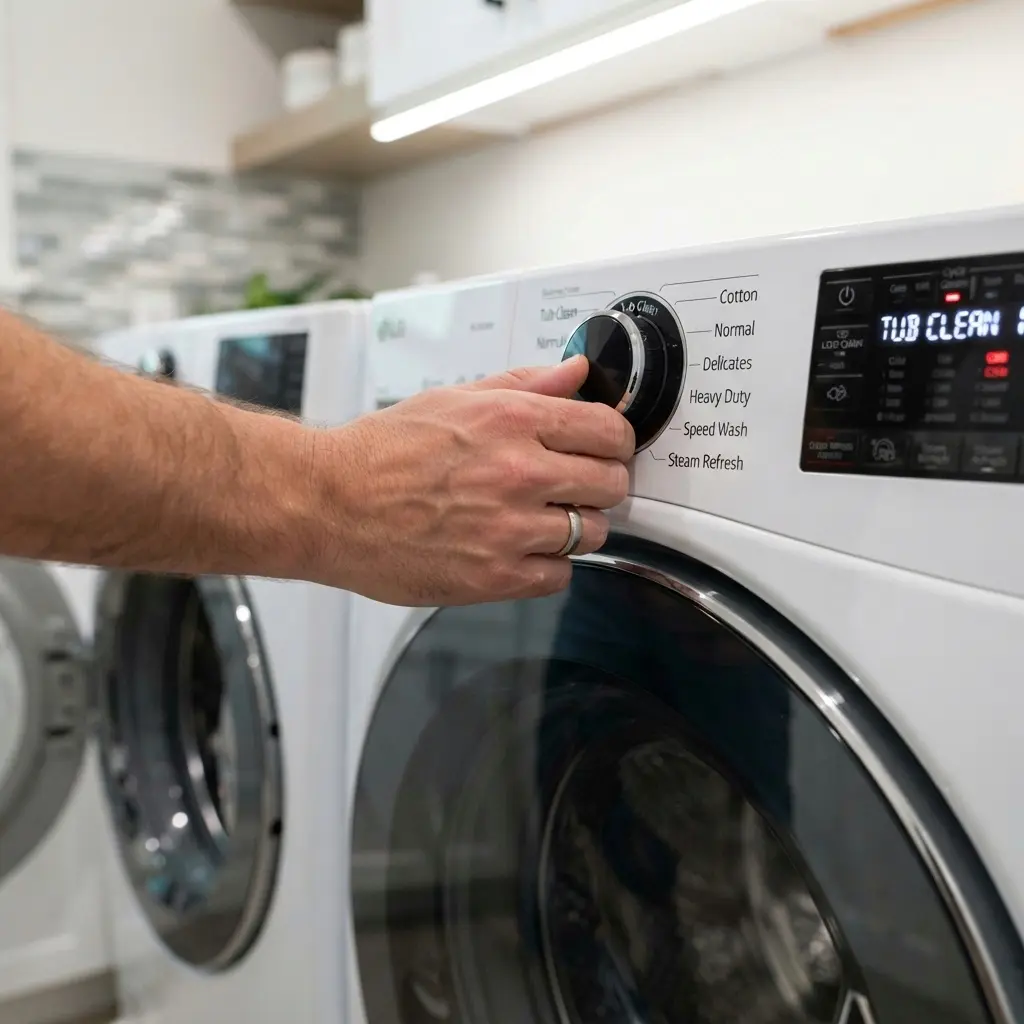
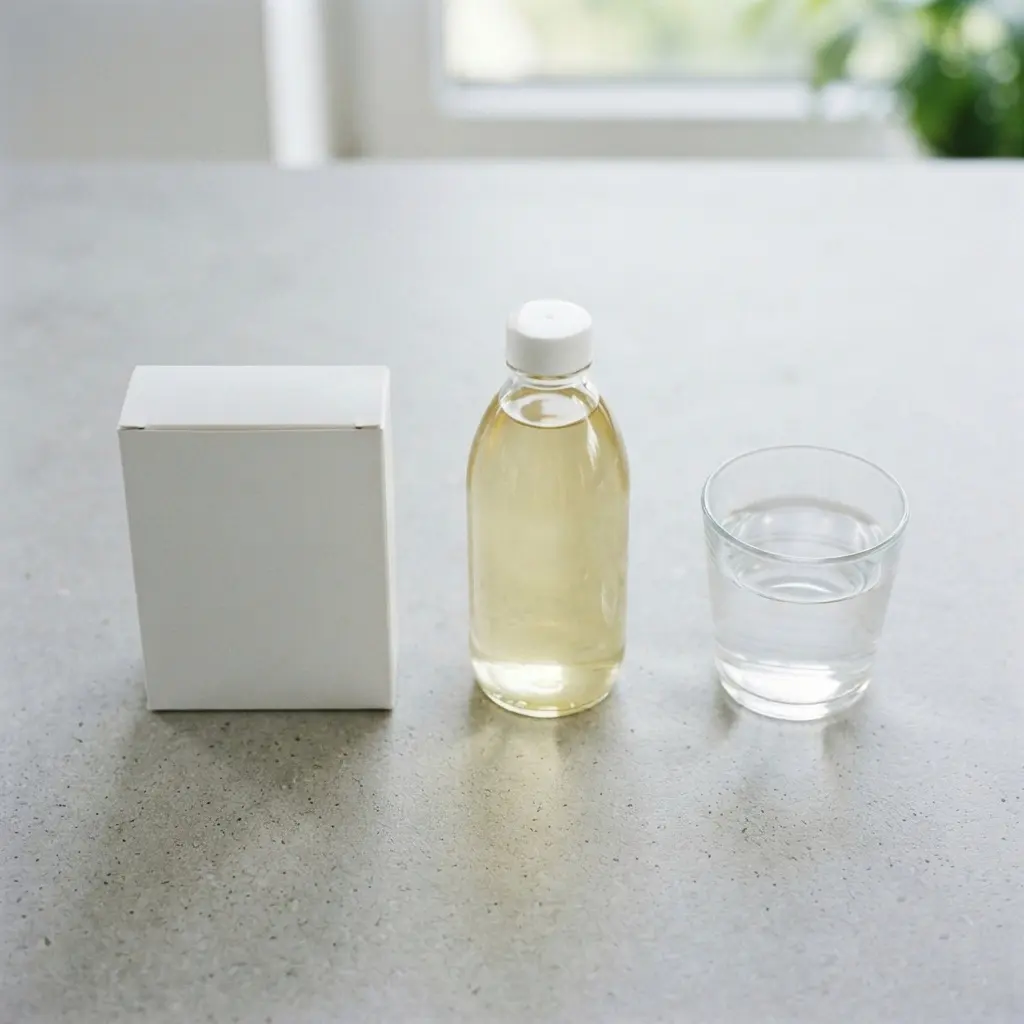
2. Vinegar, Bleach, or Tablets? (The 2026 Verdict)
In 2026, LG’s AI DD technology uses sensitive rubber components. Here is what you should use.
Vinegar is acidic, and repeated exposure to acidic liquids gradually breaks down the specific rubber compound used in LG’s door seals and hose fittings. It won’t damage the seal after one use, but owners who run vinegar monthly for “natural cleaning” often see gasket cracking years earlier than expected.
| Cleaner | Rating | Reason |
| Affresh / LG Tablets | Best | Slow-dissolving; reaches behind the drum. |
| Liquid Bleach | Good | Kills mold and bacteria instantly. |
| White Vinegar | Avoid | Can degrade rubber seals over time. |
| Safety Note • Never mix bleach with vinegar or any acidic cleaner; the combination produces toxic fumes. Use one or the other cleaner; never both in the same session. |
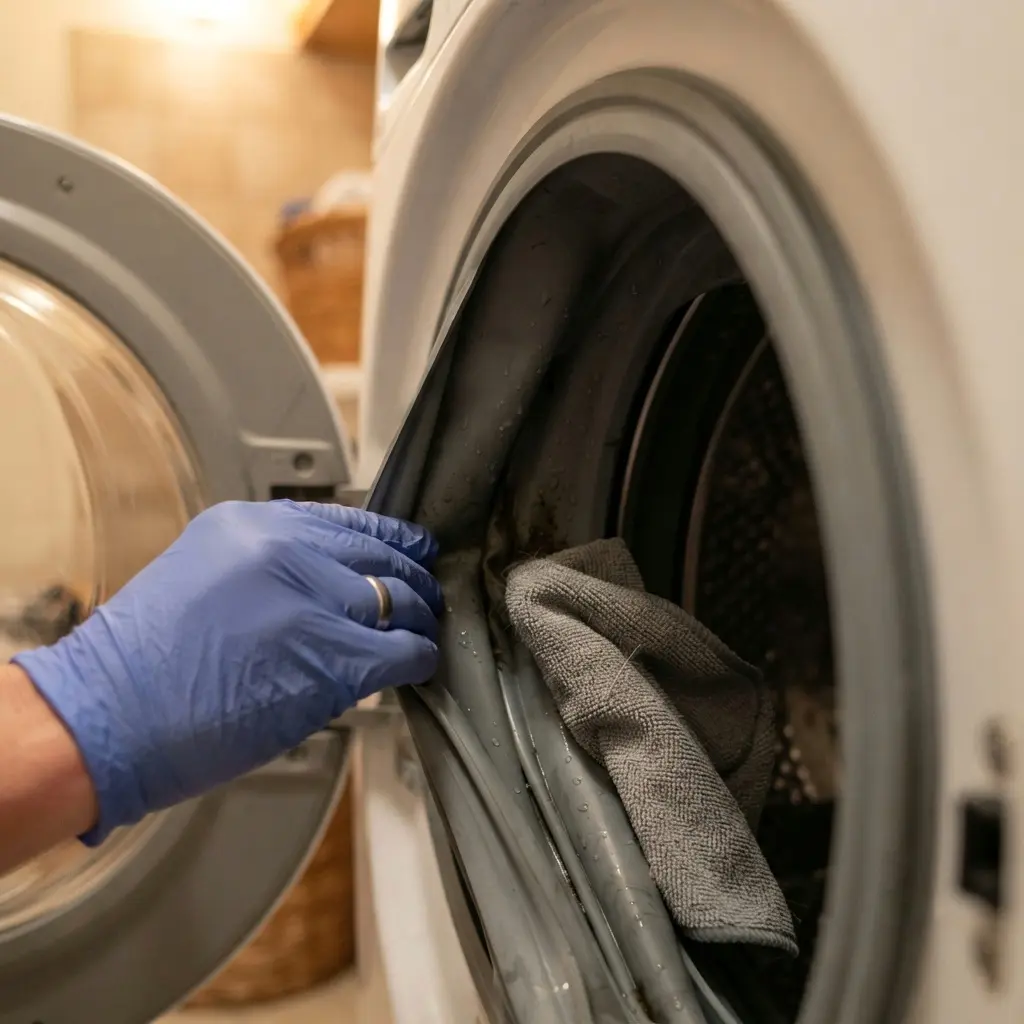
3. The Rubber Gasket: The #1 Source of Odors
If you have an LG front loader, the grey rubber seal (gasket) at the front is where mold lives. Water gets trapped in the folds.
- Mix 1 cup of bleach with 1 quart of warm water.
- Pull back the folds of the rubber seal and wipe inside with a microfiber cloth.
- Use a toothbrush to clear any hair or lint blocking the small drain holes at the bottom of the seal.
- Leave the door open for 2 hours to air dry.
| The Secret Spot The small drain holes at the bottom of the seal are the most commonly missed spot. Clogged holes trap water long after the rest of the gasket looks dry. |
Are you seeing stains on your laundry even after cleaning? You might need a different fix. 👉 [LG Washer Leaves Black Marks on Clothes?]
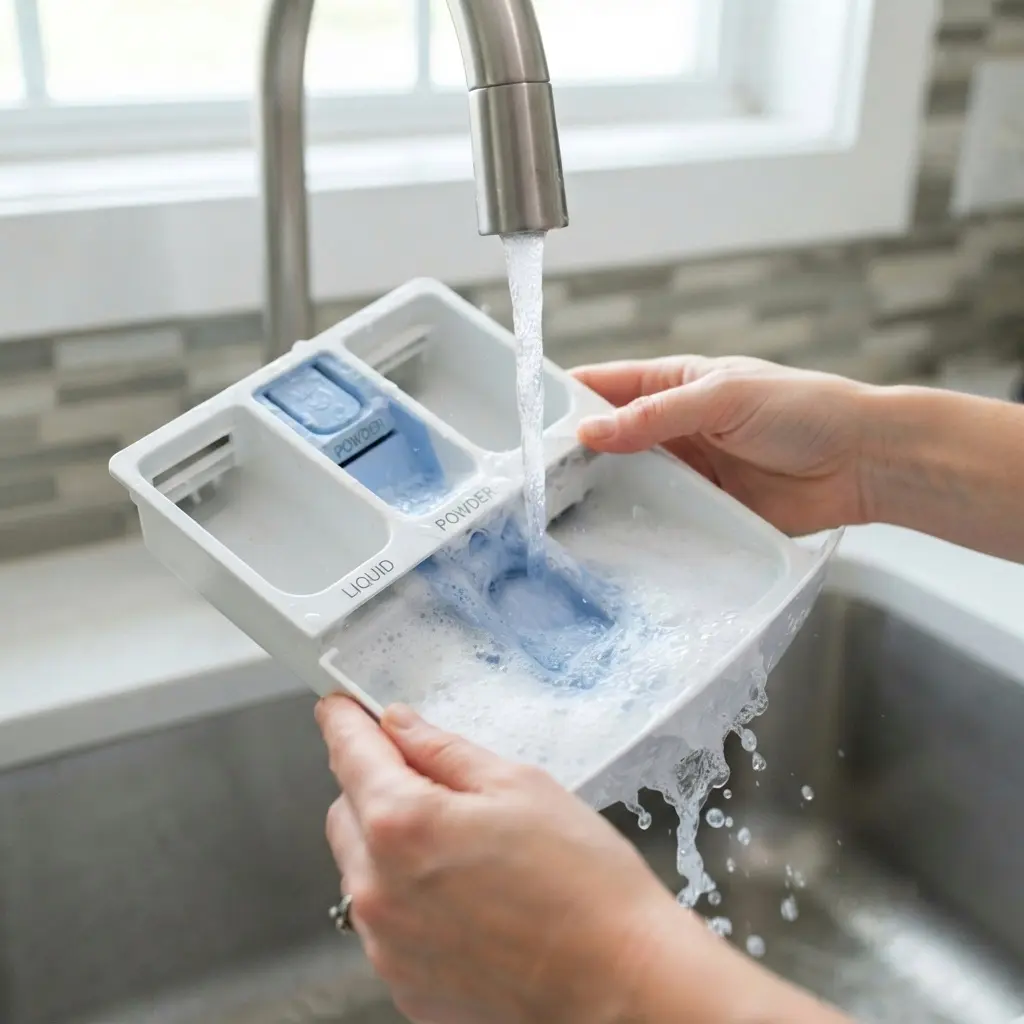
4. Cleaning the ezDispense Drawer
LG’s auto-detergent system can become clogged with gooey old soap. Here’s how to clean it.
- Remove the drawer by pressing the release button in the center.
- Rinse it under warm running water. Do not use harsh chemicals here.
- Wipe the inside of the drawer cavity in the machine; this is a hidden spot for black mold.
5. The Drain Pump Filter: The Odor Source Most Owners Miss
If your LG washer smells like stagnant water even after a tub clean, check the drain pump filter; trapped lint and old wash water sitting in this housing produce a distinct musty smell that’s separate from gasket mold.
| Diagnostic Trick If the smell is strongest near the bottom-front panel rather than at the door, it’s the filter, not the gasket. |
Properly clearing it means safely draining trapped water and removing the filter cap without making a mess. The full step-by-step process, including the safety precautions for handling standing water, is covered in our dedicated repair guide.
👉 [LG Washing Machine OE Error Code: Drain Filter Cleaning & Fix Guide]
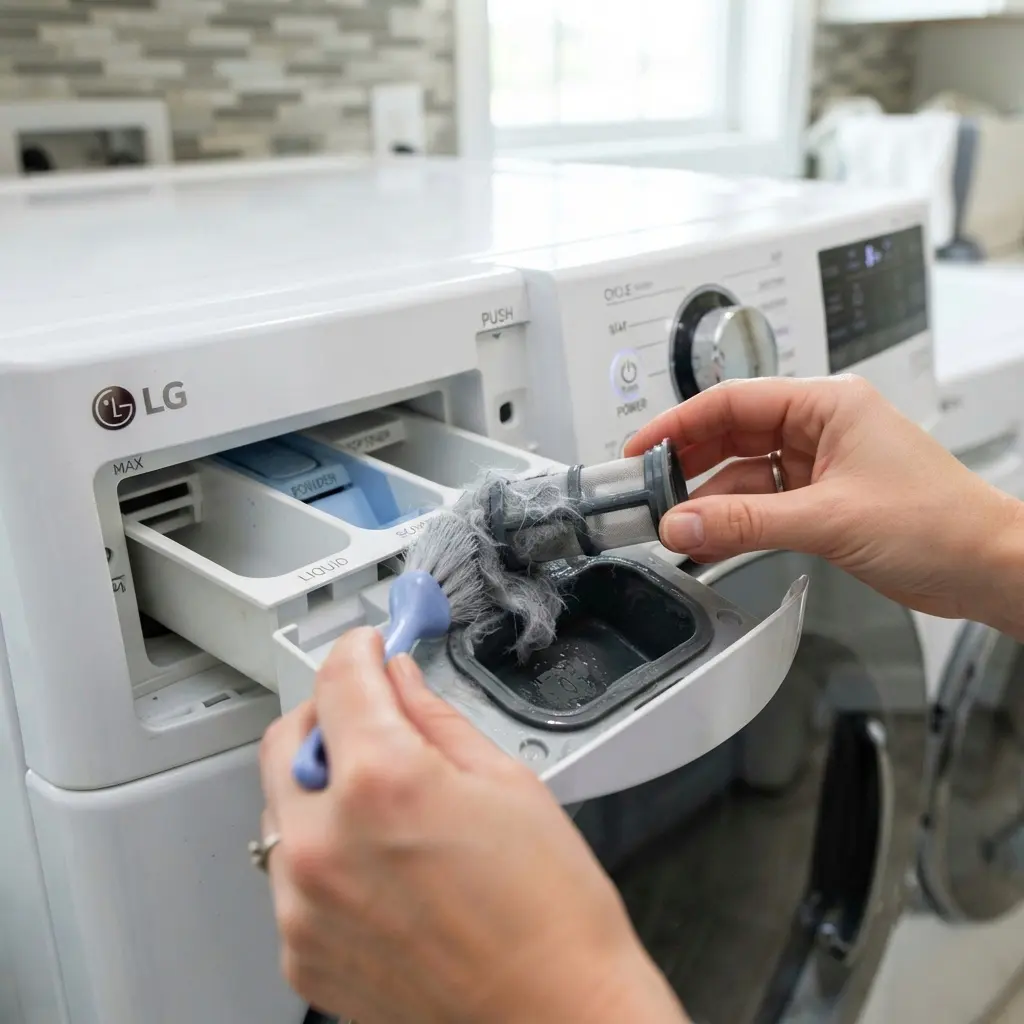
6. Cleaning the 2026 Microplastic Filter
Newer 2026 LG models come with a built-in microplastic filter to protect the environment. Unlike the drain filter, this needs gentle handling.
- Locate the filter cartridge, usually near the water inlet or detergent drawer.
- Pull it out and use a soft brush to remove the fine microfibers.
- Use plain water only; soap is not needed and can clog the fine mesh.
7. Front-Load vs Top-Load: Different Cleaning Priorities
Front-load owners run into gasket mold far more often than top-load owners. The airtight door seal on a front-load LG, like the WM4000HWA, traps residual water against rubber folds after every cycle.
Top-load models such as the WT7900HWA don’t have this seal. Their main odor risk shifts almost entirely to the detergent dispenser drawer instead.
This is why the cleaning priority is different depending on which type you own. Front-load owners should treat the gasket as priority one, while top-load owners get more value from focusing on the dispenser and tub clean cycle.
8. LG Maintenance Master Schedule
To keep your machine running for 10+ years, follow this simple routine.
| Task | Frequency | Benefit |
| Wipe the door gasket | After every wash | Prevents mold & odors |
| Clean detergent drawer | Weekly | Stops clogs |
| Run tub clean cycle | Monthly | Removes biofilm |
| Drain pump filter | Every 3 months | Prevents OE errors |
| Microplastic filter | Every 6 months | Maintains rinse efficiency |
How to Clean an LG Washing Machine: FAQs
Q1: Why does my LG washer still smell after a tub clean?
This usually happens because mold is trapped in the drain pump filter or the rubber door gasket. A Tub Clean cycle cleans the drum, but you must clean the filters and gasket manually.
Q2: Can I use dishwasher tablets to clean my LG washer?
It is not recommended. Dishwasher tablets create too much foam for a washing machine, which can damage the sensors and the motor.
Q3: How do I get rid of the tcL code on my display?
tcL stands for Tub Clean. It is a reminder, not an error. Simply run the Tub Clean cycle with a cleaner, and the code will disappear automatically.
Q4: How long does the Tub Clean cycle actually take?
Most LG models run this cycle for 1.5 to 2 hours, noticeably longer than a regular wash. That extended time is what allows the higher heat to fully break down buildup rather than just rinsing the surface.
Q5: Is my LG washer safe to clean with hard water?
Yes, but hard water can leave mineral scale inside the tub over time, which is a separate issue from mold. If you’re in a hard water area, running a descaling tablet every few months alongside your regular tub clean routine helps prevent buildup on heating elements.
Q6: Do top-load LG washers need the same cleaning routine as front-load models?
Not exactly. Top-load models don’t have a door gasket to worry about, so their main risk area is the detergent dispenser and tub, while front-load models need the gasket treated as a priority zone.
Q7: Why does my LG washer smell fine right after cleaning but return within a week?
This usually means the drain pump filter still has trapped debris even though the tub and gasket are clean. Since the filter sits in constant contact with dirty wash water, it needs its own separate cleaning cycle rather than relying on the tub clean alone.
Boost Your Machine’s Performance
Master your LG washer with these advanced pro-tips.
👉 [LG Washer Performance Optimization & Maintenance Guide]
👉 [LG Washing Machine Repair, 5 Secrets Before Calling a Tech]
Summary: Fresh Clothes, Healthy Machine
Cleaning an LG washer isn’t just about smell. It’s about protecting your investment.
By spending 10 minutes a month on the filters and gasket, you prevent expensive repairs and ensure your AI sensors work perfectly. Keep it dry, keep it clean, and leave that door open.
Cleaned everything here but still smelling something off? The issue might not be dirt at all. 👉 [LG Washing Machine OE Error Code Fix Guide]