
The power goes out, and within the first ten minutes, most people have already opened the fridge at least once just to check, which, ironically, is the exact habit that shortens how long your food actually stays safe. I’ve walked enough customers through outages, both short afternoon blips and multi-day storm situations, to know the real question isn’t just “how long”; it’s “how long and what should I actually be doing while I wait it out?” This article covers both.
Table of Contents
1. The General Timeline: How Long Food Actually Stays Safe
Food safety agencies generally recommend treating a closed refrigerator as safe for roughly four hours during a power outage, as long as the door stays shut. That number isn’t LG-specific; it’s driven by how quickly food in the 32–40°F range climbs into the temperature zone where bacteria multiply quickly, generally above 40°F. LG’s refrigerators don’t hold cold meaningfully longer or shorter than other well-insulated modern fridges in this window; the four-hour guidance applies whether you own an LG, a Samsung, or anything else with a comparable seal and insulation quality.
Where LG’s engineering does matter is what happens after that four-hour mark, which depends heavily on how full the fridge and freezer are, the ambient room temperature, and how many times the door gets opened during the outage, all of which you have more control over than people usually realize in the moment.
2. Why a Full Fridge Holds Cold Longer Than a Half-Empty One
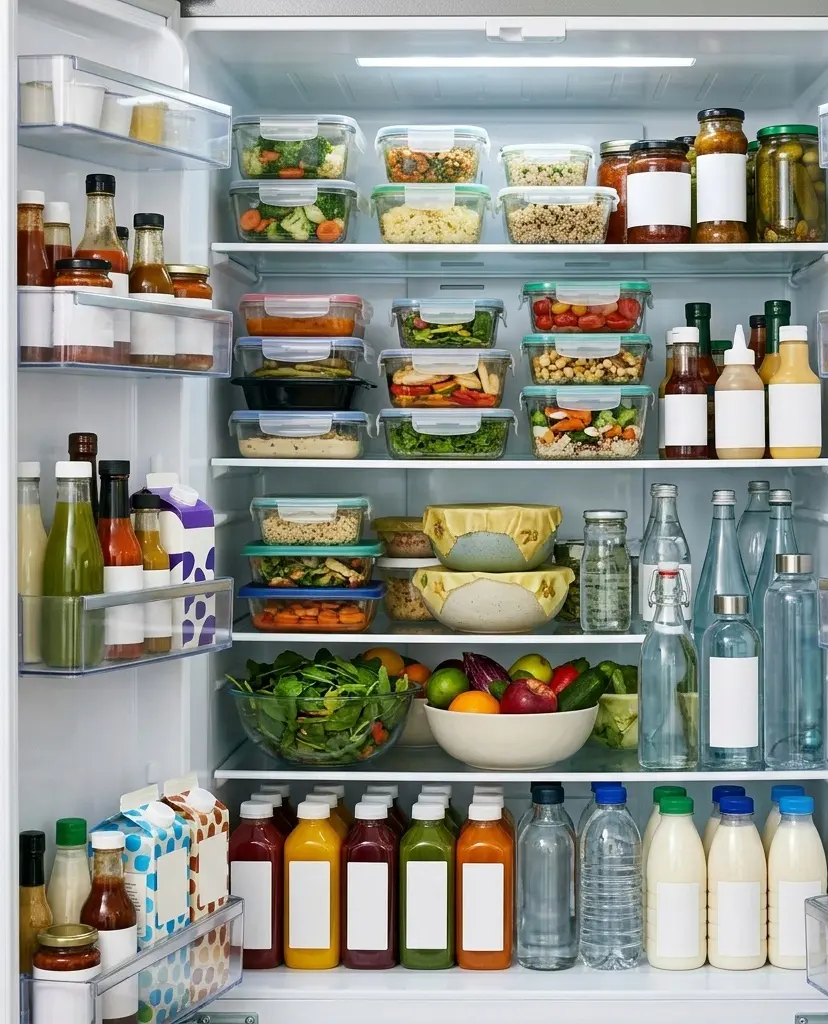
This is the detail that surprises most people: a fuller refrigerator holds its temperature significantly longer than a mostly empty one, because the food and containers themselves act as thermal mass, absorbing and slowly releasing cold rather than letting it escape as fast as air alone would. An empty or lightly stocked fridge contains mostly air, and air loses cold far faster than food does once the compressor stops running.
If you know a storm or planned outage is coming, this is worth acting on ahead of time; filling space with water-filled containers or bottles gives you meaningfully more safe time than an empty shelf would, even if you don’t have much food to store otherwise. It’s a small, low-effort step that consistently gets skipped, and it’s one of the more useful things a knowledgeable technician tells customers before a known outage that most people never think to do on their own.
3. Freezer vs. Refrigerator: Different Rules, Different Timelines
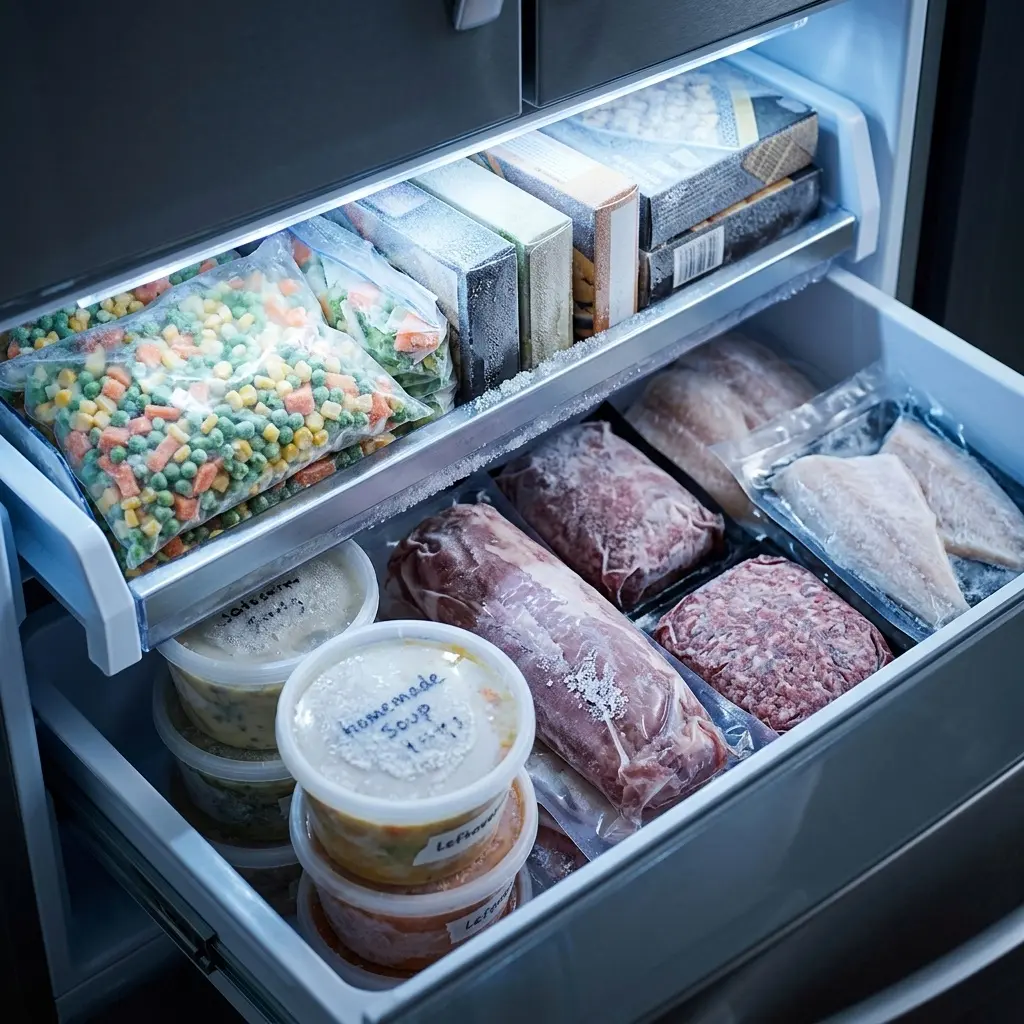
The freezer plays by a very different clock than the fridge. A full freezer generally stays safely cold for around 48 hours if the door remains closed, while a half-full freezer typically holds for closer to 24 hours. This is a substantially longer window than the refrigerator’s roughly four hours, because frozen food acts as its own insulation and needs to actually thaw before it enters the temperature danger zone, not just warm up a few degrees.
| Appliance State | Approx. Safe Time (Door Closed) |
| Refrigerator, closed door | About 4 hours |
| Freezer, full | About 48 hours |
| Freezer, half full | About 24 hours |
| Refrigerator/freezer, door opened repeatedly | Meaningfully shorter than above |
This gap matters practically: if you’re facing a longer outage and have limited cooler space, prioritizing keeping the freezer shut over the fridge buys you the most time, since it degrades far more slowly. Moving perishable fridge items into the freezer temporarily (if they’ll tolerate freezing) or into a cooler is often a better use of your first ten minutes than repeatedly checking the fridge door.
4. What to Do in the First 30 Minutes of an Outage
The instinct to open the door and check on things is almost universal, and it’s the single most common mistake people make, because every open-and-close cycle lets warm air in and resets part of the clock you’re trying to preserve. The most useful first move is the opposite of checking: close both doors, note the time the outage started, and resist opening either one unless you have a specific, planned reason to.
If you have warning of an outage, a scheduled utility shutdown, or an approaching storm, set your fridge and freezer to their coldest settings a few hours ahead of time. This gives your food extra thermal buffer before the compressor stops running, and it’s a step LG’s Smart Diagnosis and app-connected models make slightly easier to verify, since you can confirm the current setting remotely before you even walk into the kitchen.
5. Extending Safe Time During a Longer Outage
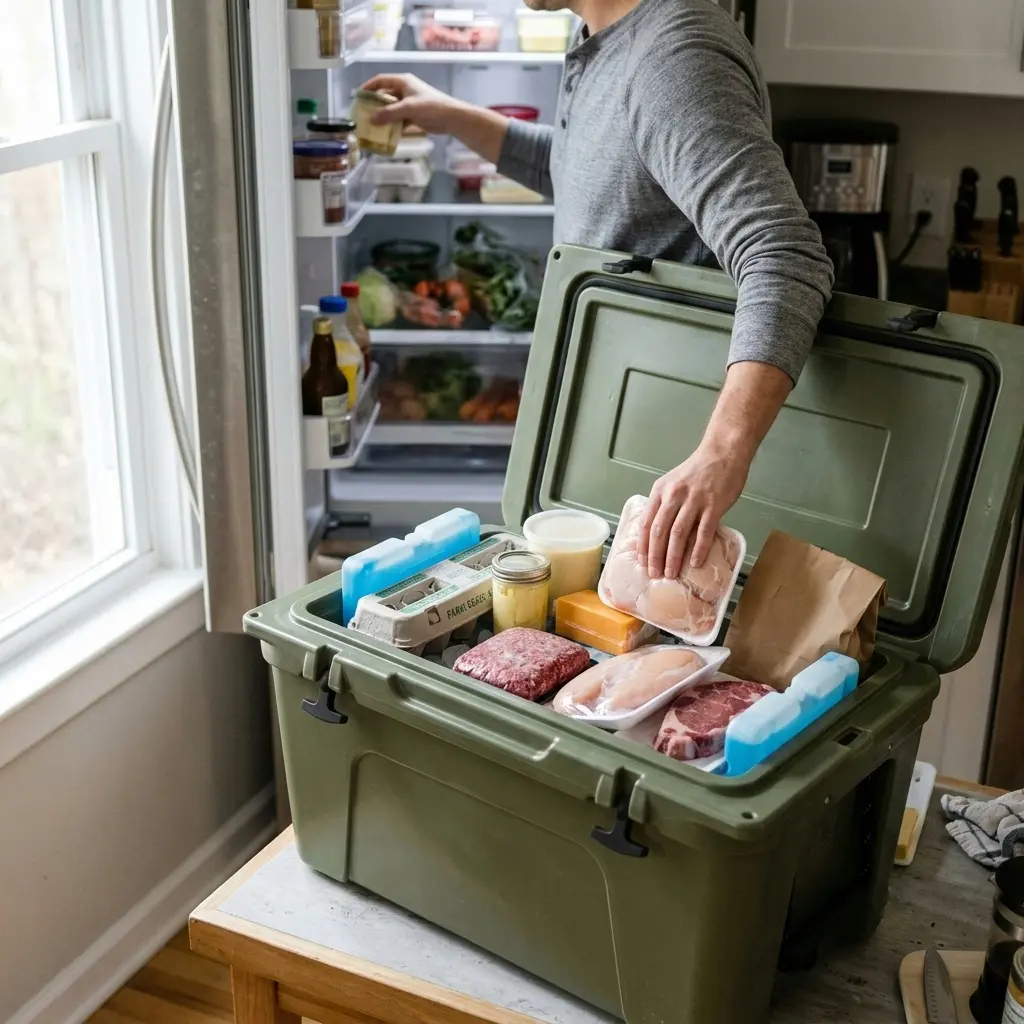
Once an outage stretches past a few hours, ice and coolers become the more realistic strategy rather than relying on the fridge itself. Grouping the most perishable items, dairy, meat, and leftovers, into a cooler packed with ice or reusable ice packs extends their safe window considerably longer than leaving them in a warming fridge, and it also means you can open the cooler without affecting whatever’s left inside the actual refrigerator.
Dry ice is another option for extending freezer safety specifically during outages expected to last more than a day, though it requires careful handling; direct skin contact causes burns, and it should never be used in a completely sealed space without ventilation since it releases carbon dioxide as it sublimates. For most households facing a routine multi-hour outage rather than a multi-day emergency, ice packs and a cooler are simpler and safer than sourcing dry ice on short notice.
6. LG-Specific Features That Help During an Outage
A few LG features genuinely help in this exact scenario, separate from the general food-safety timeline that applies to any brand. Models with LG’s ThinQ app connectivity and battery-backed WiFi modules can sometimes send a notification when the fridge loses power, which is useful if you’re away from home when an outage starts rather than realizing it hours later when you return. This only works if your home’s router and modem also have some form of backup power, since the notification depends on the connection surviving the outage, not just the fridge itself.
LG’s door alarm feature, while designed primarily for everyday use, becomes especially relevant during an outage recovery. After power returns, an alarm sounding because a door wasn’t fully sealed during the chaos of an outage is a useful early warning that your food may have warmed more than expected, even before you check anything manually.
7. How to Judge Food Safety After Power Returns
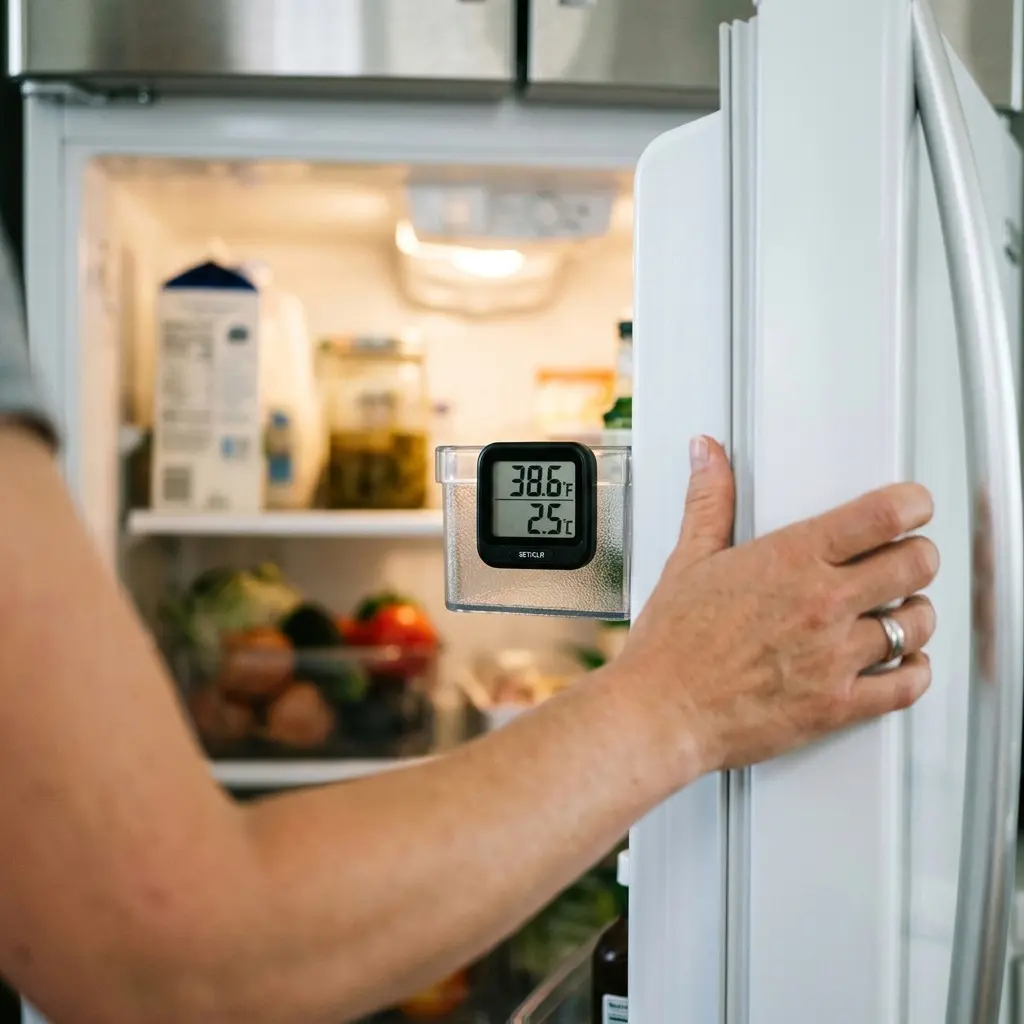
The most reliable method, when available, is a simple appliance thermometer left inside the fridge; if the internal temperature reads at or below 40°F when power returns, food is generally still safe regardless of exactly how long the outage lasted. Without a thermometer, the standard guidance from food safety agencies is to use time as the proxy: discard perishable refrigerated food that’s been above 40°F for more than about two hours total, and evaluate freezer items individually based on whether they still contain ice crystals and remain at or below 40°F, in which case refreezing is generally considered safe.
When in doubt, the practical rule experienced technicians repeat is simple and a little blunt: if there’s any real uncertainty about how long something sat warm, or if it smells, looks, or feels off in any way, it isn’t worth the risk of keeping it. This applies even to food that “seems fine” on casual inspection; appearance and smell aren’t reliable indicators for every type of bacterial growth.
FAQ
1. How long does an LG refrigerator keep food safe during a power outage?
About four hours with the door closed, which matches general food safety guidance for any well-insulated modern refrigerator. This isn’t specific to LG’s engineering; it’s driven by how quickly refrigerated food climbs above the 40°F safety threshold.
2. Does keeping the freezer full actually make a real difference?
Yes, a full freezer typically stays safe for around 48 hours with the door closed, compared to about 24 hours for a half-full one. Frozen food acts as insulation for itself, which is why the freezer holds out so much longer than the refrigerator section.
3. Should I open the fridge to check on food during an outage?
Avoid it unless necessary. Each time the door opens, warm air gets in and shortens the remaining safe time, so it’s better to plan any needed access rather than checking repeatedly out of habit.
4. Can I refreeze food that partially thawed during an outage?
Generally yes, if it still contains ice crystals and has stayed at or below 40°F. If it’s fully thawed and has been above that threshold for an extended period, food safety guidance typically recommends discarding it rather than refreezing.
5. Do LG’s smart features actually help during a real outage?
Some do, specifically models with ThinQ connectivity that can send a power-loss notification, which is useful if you’re not home. That feature depends on your home network having its own backup power, so it isn’t guaranteed to work in every outage.
6. Is dry ice a good option for a home refrigerator during an outage?
It can extend freezer safety for longer outages, but it requires careful handling, avoiding direct skin contact and ensuring ventilation, since it releases carbon dioxide as it sublimates. For most short-to-medium outages, ice packs and a cooler are a simpler, safer choice.
7. What’s the most reliable way to know if food is still safe after the power comes back?
An appliance thermometer left inside the fridge is the most reliable method; if it reads at or below 40°F when power returns, food is generally still safe. Without one, use elapsed time above 40°F as the guide, and when in doubt, don’t risk it.
The Bottom Line
The four-hour and 48-hour numbers matter, but the habits around them matter just as much: resisting the urge to open the door, filling empty fridge space ahead of a known outage, and prioritizing the freezer over the fridge when you’re choosing where to focus your limited ice and cooler space. None of this requires anything LG-specific to execute well, but the ThinQ power-loss notification and door alarm features are genuinely useful extras if your model has them and your home network can stay powered through the outage. Keep a thermometer in the fridge if you don’t already, and when the power does go out, the biggest favor you can do your food is simply leaving both doors alone.