
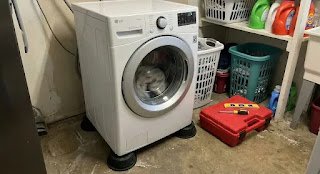
If your LG washer sounds like a jet engine taking off or walks across the laundry room during spin, you don’t need a repair call or a new machine; most of the time, it’s one of six fixable issues. Here’s the exact troubleshooting order I use to quiet a noisy, inefficient LG washer, from a five-minute load rebalance to a genuine floor fix. LG Washer Upgrade Hacks: Noise Dampening & Efficiency Mods hacks know the method and easy hacks
Table of Contents
Safety First, Read Before You Touch Anything
Every fix below involves either power, water, or moving a heavy appliance, so read this before you start on any of them:
- Unplug the washer at the wall outlet itself; don’t just power it off at the control panel. The panel doesn’t fully disconnect internal components from mains power.
- Turn off both the hot and cold water supply valves before disconnecting any hose, even for a “quick” job. Residual pressure in the line can spray water when you disconnect it, not just during the inlet-filter step, where this is most obvious.
- Never lift or tilt the washer alone. It’s heavy and front-loaded, and lifting it off-balance is a common cause of back injury. Use a helper or an appliance dolly.
- Wear gloves when handling removed panels. Cut sheet-metal edges are sharp and often unfinished on the inside.
- Stop and call a licensed appliance technician if: You smell burning, see exposed or frayed wiring, find water pooling that isn’t coming from a hose you disconnected, or find the motor mount bolts won’t tighten because the mount itself is cracked or the threads are stripped. These are signs the problem is beyond a DIY fix.
- If your laundry area isn’t on a GFCI-protected outlet, it’s worth having one installed; it’s a small cost against a real shock risk when working near water and electronics.
Fix Difficulty & Time Overview
| Fix | Difficulty | Time | Typical Cost |
| Anti-vibration pads | Easy | 15-20 min | $10-15 |
| Balance the drum manually. | Easy | 5 min | Free |
| Tighten internal screws/panels. | Moderate | 20-30 min | Free (~$5 if replacing screws) |
| Floor reinforcement | Moderate-Hard | 1-2 hrs | $30-50 |
| Inlet filter install | Easy-Moderate | 15-20 min | $15-20 |
| Drain pump filter cleaning | Easy | 10 min | Free |
| Spin speed adjustment | Easy | 2 min | Free |
| Airflow clearance check | Easy | 5 min | Free |
Noise Dampening Hacks
Symptoms & Diagnostics
Excessive noise usually comes from imbalance, loose screws, or a weak floor. To check:
- Spin the drum by hand. Wobbles or uneven sounds indicate an imbalance.
- Listen for rattling during high-RPM spin cycles.
- Check the floor. A floor that flexes will amplify vibration into noise.
Insider tip most guides skip: before you do anything else, confirm the shipping/transport bolts are actually removed. Every LG washer ships with 3-4 bolts bracing the drum for transit, and it’s shockingly common for a DIY installer (or a mover) to leave one in. A washer with a leftover shipping bolt will vibrate violently no matter how many anti-vibration pads you add underneath it, check this before spending money on pads.
Tools Needed
| Tool | Purpose |
| Flathead screwdriver | Remove panels or covers |
| Phillips screwdriver | Tighten screws |
| Level | Check washer leveling |
| Flashlight | Inspect the drum and internal parts |
A. Install Anti-Vibration Pads
- Unplug the washer.
- Lift the washer slightly with a lever or a helper, never alone (see Safety First).
- Place one anti-vibration pad under each leg.
- Recheck that all legs are firm and level.
Expert Tip: Dense rubber pads noticeably cut vibration transfer to the floor. They’re most worth it on wood or tile subfloors; on solid concrete they mainly help prevent scratching rather than reducing noise, since concrete doesn’t flex much to begin with.

B. Balance the Drum Manually
- Unplug the washer.
- Remove heavy items like blankets or jeans.
- Redistribute clothes evenly.
- Run a small spin cycle to confirm reduced vibration.
Expert Tip: Dense fabrics (towels, jeans, comforters) need smaller loads than mixed lightweight laundry to avoid banging, this is the single most common cause of “sudden” loud spin cycles on an otherwise fine machine.

C. Tighten Internal Screws and Panels
- Unplug the washer.
- Remove the rear or top panel (gloves on, see Safety First).
- Tighten all visible screws, including motor mounts if accessible.
- Run a spin test to check noise reduction.
Expert Tip: Motor mount screws on LG Direct Drive washers loosen gradually over years of vibration. Tighten until snug; don’t over-torque, since stripped threads in the mount itself usually means a technician visit, not a DIY fix.

Floor Reinforcement Mods
Symptoms & Diagnostics
The washer shakes excessively or transmits vibration through the floor:
- Check floor type. Thin plywood may flex; concrete is stable.
- Place a level under each leg to check stability.
Tools Needed
| Tool | Purpose |
| Plywood board | Strengthen weak floors |
| Level | Ensure washer stability |
| Rubber mat | Vibration absorption |

Step-by-Step Instructions
- Unplug the washer.
- Place thick plywood under the washer if the floor is weak.
- Add a rubber mat to absorb vibration.
- Adjust leveling legs for firm placement.
Expert Tip: This is only necessary for genuinely weak floors. Apartment concrete floors typically don’t need reinforcement; pads and leveling legs are usually sufficient, so try those first before spending on materials here.
Efficiency Mods
Symptoms & Diagnostics
Reduced washing performance or longer cycles can point to:
- Low water flow from mineral deposits
- A clogged drain filter
- Incorrect detergent usage
Tools Needed
| Tool | Purpose |
| Screwdriver | Open inlet or filter covers |
| Towel | Catch water |
| Pliers | Remove hose clamps. |
A. Install a High-Quality Inlet Filter
- Turn off the water supply and unplug the washer.
- Remove the inlet hose and install the inline filter.
- Check water pressure to ensure proper flow.
Expert Tip: Clean the filter roughly every 6 months in hard-water areas to prevent mineral buildup and extend the inlet valve’s life.
👉 [Best HE detergents for LG washing machines]
B. Switch to Low-Foam HE Detergent
Reduces motor strain and improves drum movement; this is mandatory for high-efficiency washers, not optional. Standard detergent’s excess suds can trigger sensor errors and leave residue that contributes to odor over time.
C. Clean the Drain Pump Filter Monthly
- Unplug the washer.
- Place a towel under the pump cover.
- Remove and clean debris from the filter.
- Reinstall securely.
Expert Tip: A neglected drain pump filter is one of the most common causes of both spin inefficiency and premature pump motor wear, it’s a five-minute job that prevents a real repair.
👉 [LG washer drain pump filter cleaning guide]
Spin Speed Optimization
Symptoms & Diagnostics
High spin speed causes noise and vibration; too low leaves clothes wet.
Step-by-Step Instructions
- 1200-1400 RPM for towels and blankets.
- 800 RPM for delicate items.
- Reduce spin speed for nighttime loads if you’re in a multi-floor building.
Expert Tip: Only adjust spin speed if you actually need to; dropping it “just in case” mainly means damper clothes and longer dry times for no real noise benefit if your load is already balanced.
Airflow & Cooling
Symptoms & Diagnostics
Overheating motors or electronics can occur if the washer is tightly enclosed.
Step-by-Step Instructions
- Leave 4-6 inches of space behind the washer.
- Ensure a ventilation gap along the sides in under-counter installations.
- Avoid enclosing the washer tightly on all sides.
Expert Tip: This mainly matters for built-in or closet installations, if your washer already has open space around it, this isn’t something you need to act on.
Using Smart LG Features
- Tub Clean: run roughly once a month to reduce mold and odor buildup in the drum.
- Smart Diagnosis: flags performance issues early, often before you’d notice them yourself.
- AI Wash Settings: automatically adjusts water and energy use based on load size and fabric type, newer 2025-2026 LG models have refined this further with improved load-balance sensing, though it still won’t fully replace manually rebalancing a lopsided load.
We won’t repeat the full ThinQ setup here since that’s really its own topic; see the link below if you haven’t paired the app yet.
Frequently Asked Questions: LG washer upgrade hacks
Q: How do I reduce noise on my LG washing machine?
A: Start by confirming the transport bolts are removed, then install anti-vibration pads and check that all four legs are level. Floor reinforcement is rarely needed on concrete floors.
Q: What’s the best way to balance an LG washer drum?
A: Redistribute clothes evenly, avoid mixing one heavy item with a light load, and manually spin the drum by hand before running a cycle to check for wobble.
Q: How can I improve water efficiency on my LG washer?
A: Install an inline inlet filter, switch to low-foam HE detergent, and clean the drain pump filter monthly. Together these keep water flow and drainage running as designed.
Q: Should I reinforce the floor under my LG washer?
A: Only if the floor genuinely flexes under load; solid concrete or a properly joisted floor usually doesn’t need it. Try pads and leveling legs first.
Q: Can I safely adjust the spin speed to improve performance?
A: Yes. Use a higher RPM for heavy fabrics and a lower RPM for delicates, and consider reducing it for nighttime loads in shared-wall or multi-floor buildings.
Q: Do LG’s smart features like AI Wash actually help?
A: Yes, meaningfully, AI Wash adjusts water and energy use to the load, Tub Clean helps prevent odor buildup, and Smart Diagnosis can catch issues early. None of them replace basic load balancing, though.
Q: How often should I clean the drain pump filter?
A: About once a month for regular use. It’s a five-minute check that prevents both spin inefficiency and unnecessary pump wear.
Conclusion
Most “my LG washer is loud” or “my washer isn’t as efficient as it used to be” problems trace back to one of these six fixable issues rather than a failing machine. Work through them in order, check for leftover shipping bolts and rebalance loads first, since those are free and take minutes, before spending on pads or floor reinforcement. Done in the right order, these upgrades add real years to your washer’s life instead of just masking a symptom.
If you’ve worked through all six and the noise or vibration hasn’t improved, that’s usually a sign of a worn motor coupling or suspension spring rather than something pads or tightening can fix; at that point it’s worth getting a technician to take a look before you keep troubleshooting blind.