
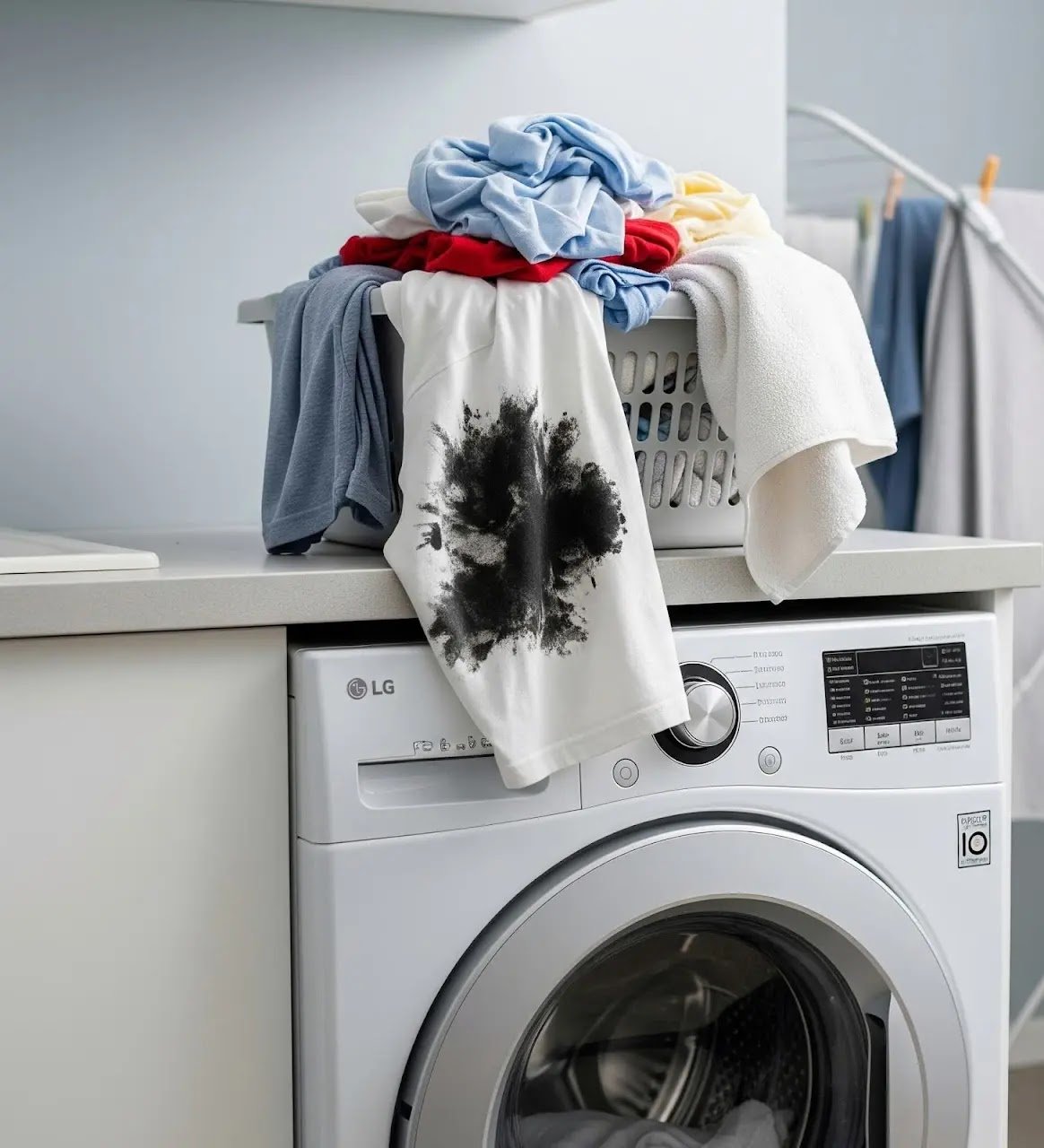
LG Washer Leaves Black Marks on Clothes? Fresh laundry coming out with black marks is frustrating, especially when you have just cleaned the washer. If your LG washing machine is leaving black marks, black spots, or streaks on clothes, this guide helps you work out the likely cause and which cleaning steps LG’s US support pages recommend.
| As an Amazon Associate I earn from qualifying purchases. TechElectronicLive.com may earn a small commission if you buy through links on this page, at no extra cost to you. |
Table of Contents
Why Does My LG Washer Leave Black Marks on Clothes?
Black marks on clothes can have more than one cause. The LG US support pages we checked do not give a single cause, but they do cover residue buildup, gasket mold, and overfilling. LG’s US support pages recommend running Tub Clean regularly and, on front-load washers, leaving the door open so moisture can dry. Common causes include:
- Detergent and fabric softener residue: excess detergent or softener leaves a film that accumulates and rubs off as dark streaks
- Mold around the door gasket (front-load washers): LG’s US support page says that if the door stays closed, moisture cannot dry and mold may form inside the gasket
- Dirty drum: LG’s US top-load maintenance guide says residue can build up in the tub and leave a film of grime on the drum surface
- Oil or grease from internal parts: a technician I spoke to said washer bearings use grease, and if they leak, the machine gets noisy and clothes can get oil-like marks.
- Overloading: crowding the drum increases friction and prevents proper rinsing, causing residue to stick to clothing
Tip: On a front-load washer, inspect the gasket, drum, and detergent drawer first. On a top-load washer, start with the drum and dispenser.
The Smell & Smear Test: Identify the Culprit First
Before you start scrubbing, perform this simple test to identify exactly what’s staining your clothes.
The Smell Test: Sniff the black mark. A musty smell often points to mold or mildew from the gasket. Smell alone cannot tell you the cause, so treat this as a rough check, not a diagnosis.
The Smear Test: Try to rub the mark with a wet cloth. If it flakes off, it may be detergent or softener residue. LG’s US support page says too much detergent can lead to residue buildup. If it smears and leaves a deeper stain, it may be oil or grease. A technician I spoke to said brown or black grease stains are very hard to remove.
Use this as a rough check to decide which section to read first. It is not an LG-published test.
Run the Tub Clean Cycle.
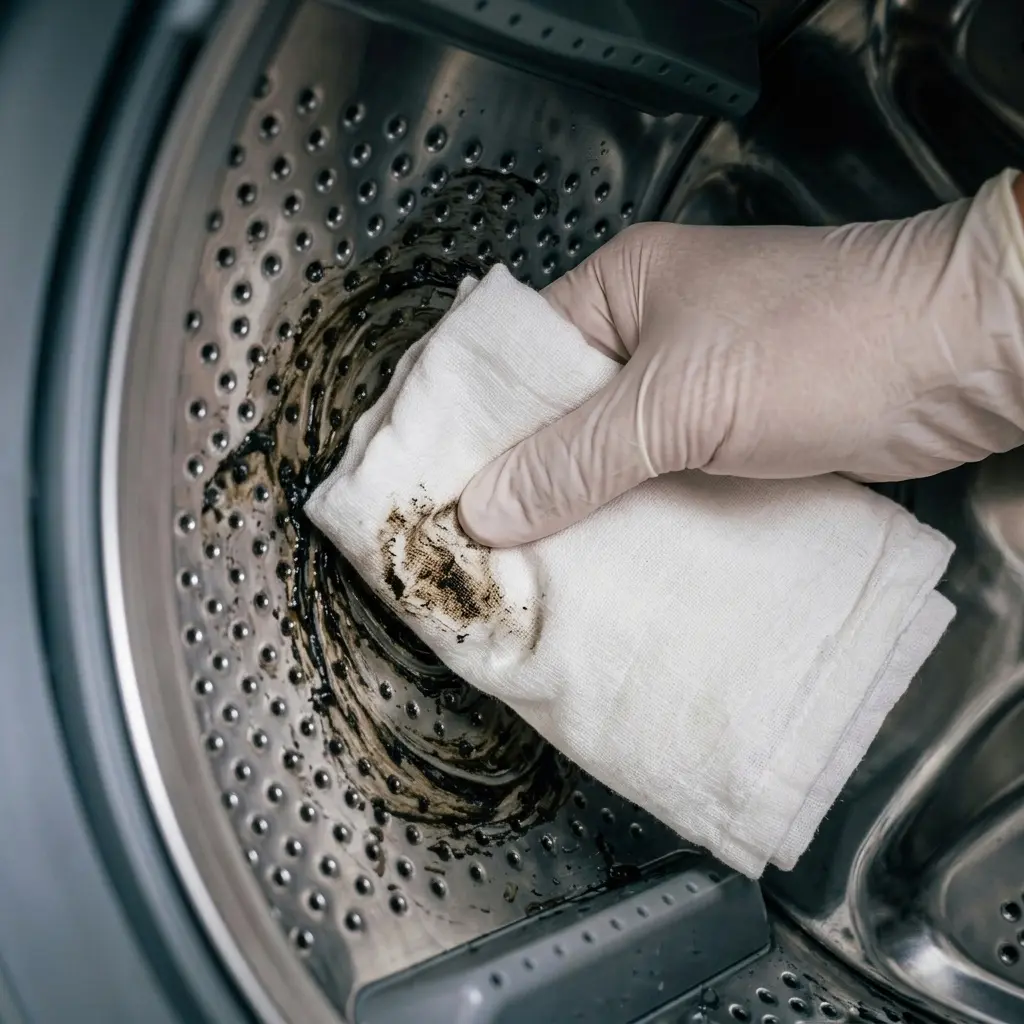
Use the Tub Clean or Drum Clean cycle to remove soap scum, mold, and residue.
- Empty the washer completely
- Add an oxygen-based washing machine cleaner to the drum, following the product’s dosage instructions
- Select the Tub Clean cycle and press Start. On front-load washers, LG’s US support page says Tub Clean uses hot water kept at 60°C (140°F).
- When the cycle ends, remove any laundry, wipe the drum and door seal with a clean cloth, and leave the door ajar so the drum can dry
For front-load washers, LG’s US support page says to run Tub Clean after every 30 uses, or whenever the display shows “tcL.” For top-load washers, LG’s US maintenance guide says to run it monthly. If a musty smell is already present, LG’s US support page says to run Tub Clean once a week for 3 consecutive weeks and to request a repair if the problem persists. LG’s US front-loader page says cleaners that produce excessive foam may cause leaks and that chlorine-based or acidic cleaners can cause discoloration or corrosion inside the machine.
👉 [How to Descale an LG Washing Machine With Citric Acid] is worth checking separately if hard water scale is a factor alongside the residue, since descaling addresses a different buildup than a standard tub clean.
👉 Affresh washing machine cleaner tablets are one commercial option.

- NO. 1 WASHING MACHINE CLEANER TABLET*
- TIME-RELEASE DEEP CLEAN. Affresh tablets are scientifically designed to deliver extended cleaning action throughout the …
- STINKY PET ODOR? Affresh washing machine cleaner helps remove residues that can trap odors from pets, sweat and mildew t…
Clean the Door Gasket and Detergent Drawer
On front-load washers, LG’s US support pages say mold can form in the door gasket when the door stays closed and that detergent residue can build up in and around the dispenser drawer.
- Pull back the gasket and inspect for black spots
- Use a soft brush with warm water and a little mild detergent to scrub mold away, then wipe dry. If your manual allows it, you can use diluted vinegar occasionally, but rinse it off well.
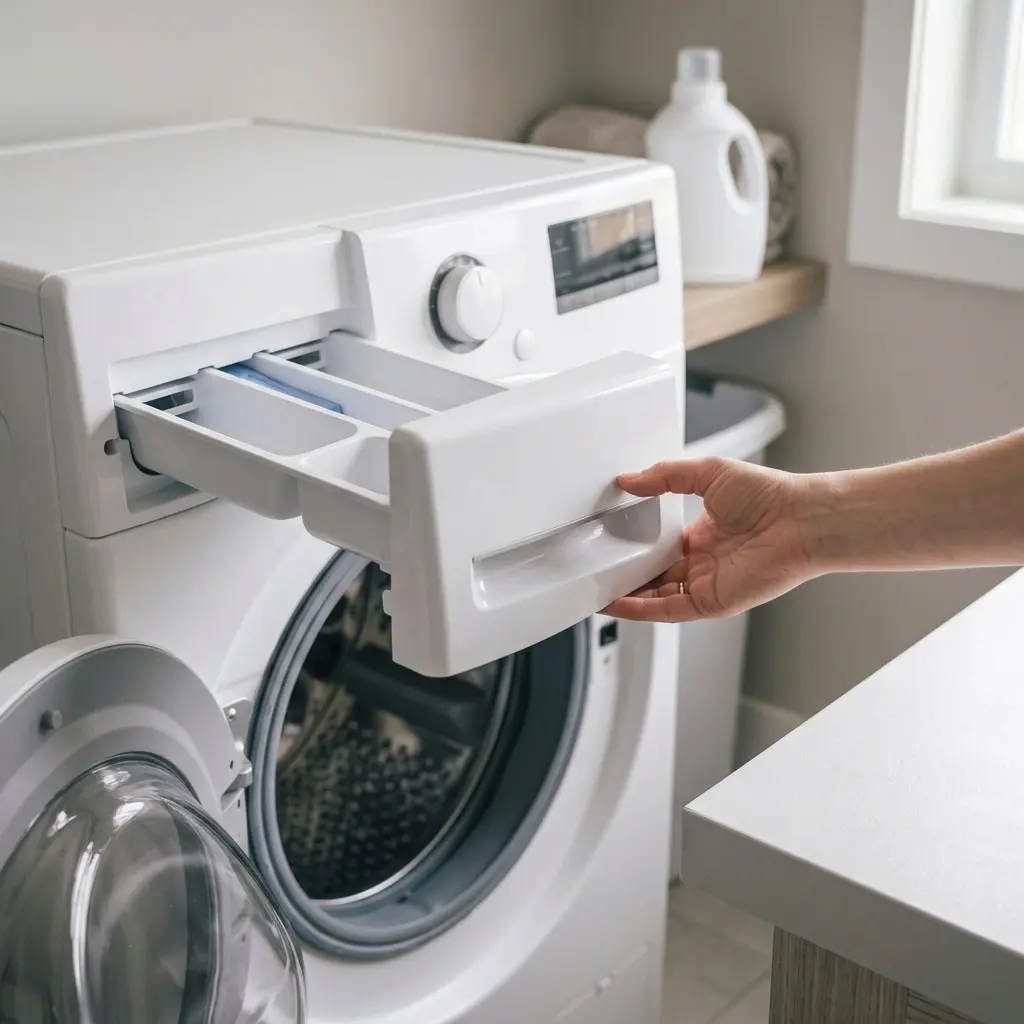
- Remove the detergent drawer, rinse it under warm water to remove buildup, and wipe residue from the drawer cavity, as LG’s US support video describes.
LG’s US support page says mold may form in the gasket when the door stays closed and moisture cannot dry, so leave the door and detergent drawer open after the washer stops. A technician I spoke to also advised cleaning a front loader monthly and leaving the door open afterwards so the drum dries.

- Set includes: Large Brush and Small Brush with Wiper Blade
- Large Brush is great for grout, shower door tracks, stove tops and more
- Small Brush is perfect for fixtures and other tight spaces
Clean the Drain Pump Filter (Front-Load Washers)
Front-load washers have a drain pump filter, usually behind a small panel at the bottom front. LG’s US support page says the drain pump filter collects lost items and lint, is found only on front-load washers and combo units, and should be cleaned monthly. Turn off and unplug the washer, place a shallow tray under the filter, open it slowly so the water drains out, and clear any debris. Rinse the filter and put it back securely.
Grease and Oil Leaks: When It’s Not a Cleaning Problem
If the marks look oily and the washer has also become noisy, a technician I spoke to said leaking bearing grease can cause both. Contact LG support or an authorized technician.
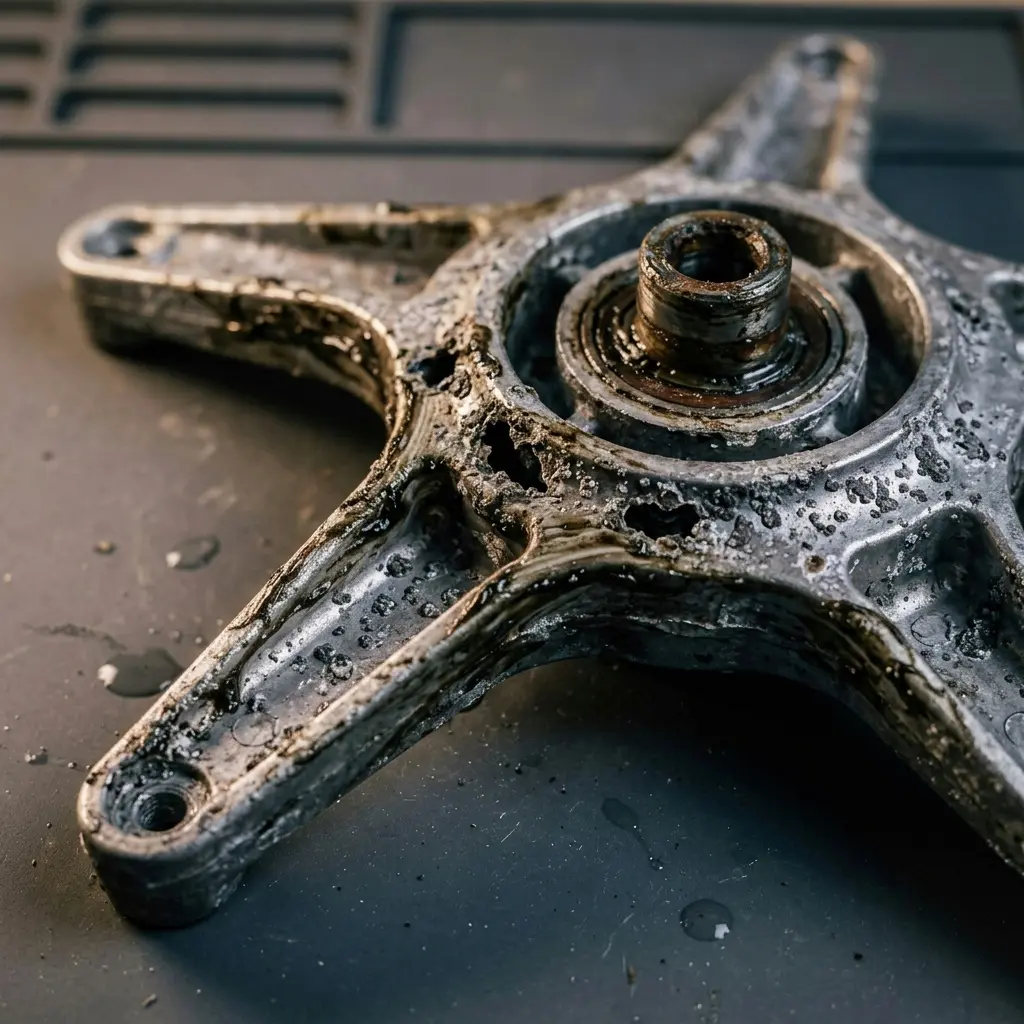
Some front-load washers use an aluminum spider arm to hold the drum, and corrosion can be a problem on some models, which moisture and residue may speed up. If the arm deteriorates or the rear bearing seal fails, grease from the bearing can leak into the wash water.
This can be a serious mechanical problem, not a maintenance issue. Ask an authorized technician for a quote. If you see oily streaks together with new noise, stop using the machine and contact LG support or an authorized technician before running more loads.
What to check:
- Run an empty high-spin cycle and inspect the drum and rear panel for visible grease afterward
- Smudges that resist cleaning even after a thorough tub clean and gasket scrub often mean worn bearings or motor seals, not remaining residue
- Contact an authorized technician for parts inspection; don’t ignore persistent oily stains hoping they’ll resolve on their own
👉 [LG Washing Machine Hums But Won’t Spin: Complete Diagnostic] covers this noise pattern in more depth if it’s showing up alongside the oily marks.
Comparing the Four Mark Types
| Mark Type | Smell | Smear Test Result | Cleaning-Fixable? |
| Mold/mildew | Earthy, musty | Dark spots that do not flake or smear like grease | Yes, gasket cleaning. |
| Detergent scrud | Faint or none | Flakes off in tiny gray pieces | Yes, tub clean and paddle removal. |
| Mechanical grease | Metallic, chemical | Smears like butter, deep stains | No, a technician is required. |
| General residue/overload | Faint detergent smell | Light film wipes off easily. | Yes, dosage and load-size fix. |
Getting Detergent Right Going Forward
LG’s US support video says to use only HE detergent in front-load washers. LG’s US support page says too much detergent can lead to residue buildup.
👉 [Best LG Washing Machine Detergents for Hard Water] is worth checking if you’re also dealing with hard water on top of residue buildup, since mineral interference and detergent residue often compound each other.
Alongside dosage, avoid overfilling the washer. LG’s US support page says that if the washer is too full, items will not wash properly. At home, we sometimes stuff our top-loader until the lid barely closes; when we do, water can overflow and clothes rinse badly.
What Owners Report Online
These are owner reports from public forums, not our own tests, and the experiences differ.
On Whitegoodshelp’s UK forum, one owner of an LG washer reported black track marks on clothes after running a tub clean and clearing the filter. A repairer later found an old sock lodged behind the drum, and the owner said the bearings were fine.
On ProductReview.com.au (Australia), owners of the LG WTG6520 and WTG7520 top-loaders described black material on clothes and floating in the water of an empty cycle. One said LG called it “scrud,” while another thought it looked more like a coating.
On iFixit, an owner of an LG WT6105CW top-loader reported brown flakes after every wash. They said regular Affresh tablet cleaning and bleach did not stop them and asked how to clean behind the agitator.
When to Call a Technician
Call a professional if you find:
- Persistent oily or greasy stains that don’t wash out even after a full cleaning cycle
- Visible oil or grease inside the drum or on the rear panel
- Loud noises, excessive vibration, or fluid leaks, signs of worn bearings or seals
For mechanical issues, contact LG support or a certified appliance technician.
FAQ
1. Can black marks be removed from clothes once they’re already there?
It depends on the cause. A technician I spoke to said brown or black grease stains are very hard to remove. Oily grease stains are harder to remove and sometimes require professional cleaning or discarding the item if deeply stained.
2. How often should I run a tub clean cycle?
For front-load washers, LG’s US support page says to run Tub Clean after every 30 uses, or whenever the display shows “tcL.” For top-load washers, LG’s US maintenance guide says to run it monthly. If a musty smell is already present, LG suggests running it once a week for three weeks.
3. Is it safe to use vinegar and baking soda to clean my washer?
LG recommends using a washing machine tub cleaner, and its support pages suggest an oxygen-based one, rather than a homemade mix. LG warns that cleaners producing excessive foam may cause leaks. Check your manual before using any home remedy.
4. Why do black marks keep coming back even after I clean the drum?
If marks return after a Tub Clean, check the detergent amount, the dispenser drawer, and (on front-load washers) the door gasket, since LG’s US support pages link residue buildup and gasket mold to those. Also run Tub Clean on LG’s schedule: after every 30 uses on front-load washers, monthly on top-load washers.
5. Are black marks more common on certain LG washer types?
Front-load washers have a door gasket, and LG’s US support page says mold may form there when the door stays closed. Top-load LG washers can also build up detergent and softener residue, according to LG’s US maintenance guide.
6. Can I keep using the washer if I suspect a bearing or spider arm issue?
If you suspect a bearing problem, such as new noise together with oily marks, stop using the washer and contact LG support or an authorized technician.
7. Does switching detergent brands fix recurring residue marks?
LG’s US support page says too much detergent can lead to residue buildup, so check the amount first. A technician I spoke to also advised using less detergent. For front-load washers, LG’s US support video says to use only HE detergent.
Final Word
Black marks can come from gasket mold (front-load washers), detergent or softener residue, overfilling, or a mechanical fault such as leaking bearing grease. The rough smell-and-smear check above can point you to a starting place, but it does not diagnose the cause. Work through the tub clean and gasket steps in order (gasket on front-load washers), and if oily streaks show up alongside unusual noise, stop using the washer and contact LG support or an authorized technician.