
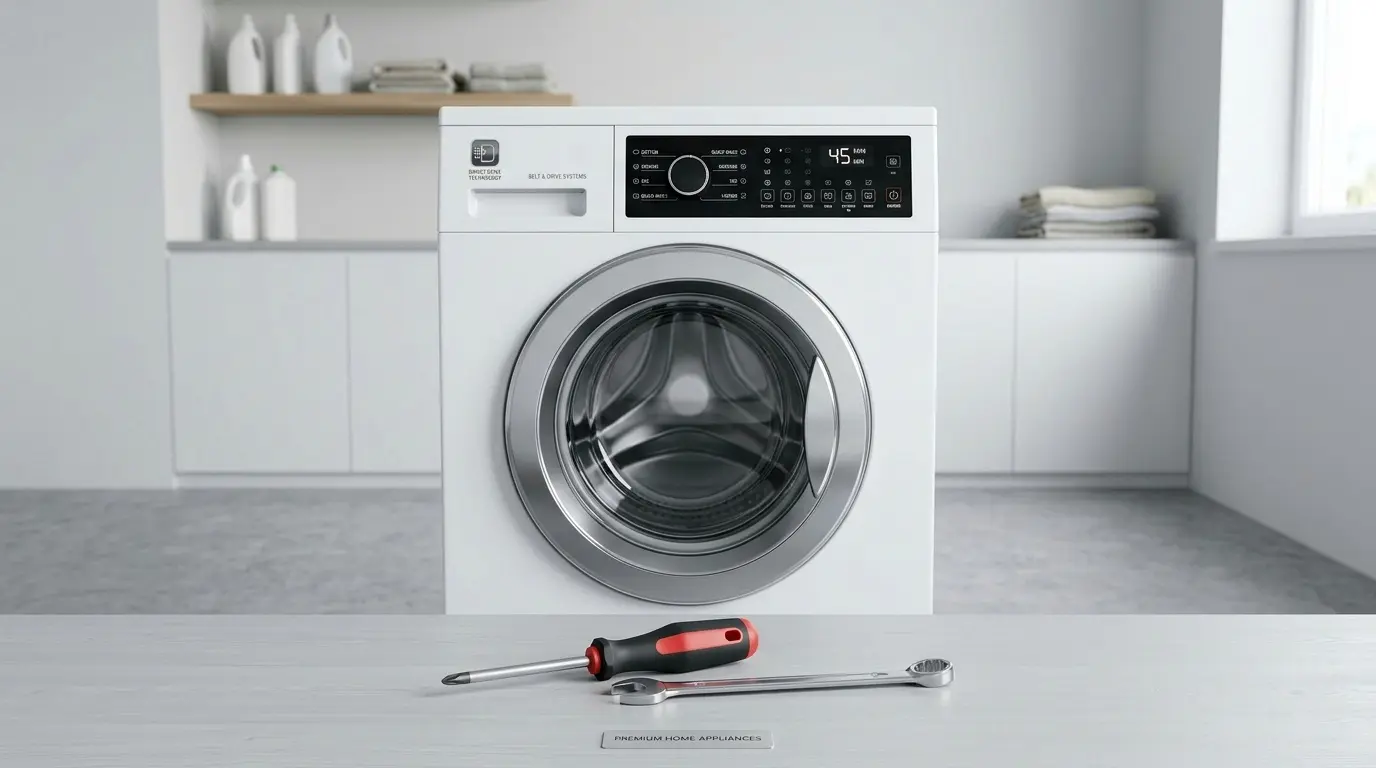
Nothing kills a productive Saturday like a washer that won’t spin, drain, or start. Before you panic and spend $200 on a service call, I am going to show you how to diagnose almost every common GE washing machine problem in under 10 minutes. Most of these “failures” are actually simple sensor glitches or blockages that you can fix with nothing more than a screwdriver and this guide.
Table of Contents
Identifying Your Specific GE Washing Machine Problem
In my 15 years as an engineer, I have seen thousands of units where a GE washing machine problem was actually just a user-fixable error. Modern GE washers are smart, but they are also sensitive. A single coin in the pump or a loose lid switch can mimic a total motor failure. When you encounter a GE washing machine problem, the first step is to stay calm and look for the simplest explanation.
Whether your machine is stuck in a sensing loop or making a loud banging noise, every GE washing machine problem has a logical root cause. General Electric uses a specific diagnostic architecture that allows the machine to “tell” you what is wrong through blink codes or digital displays. By understanding how to read these signs, you can tackle any GE washing machine problem without needing an expensive degree in electronics. Let’s get into the guts of the machine and see how it actually works.
Technical Blueprint: Motor Torque and PCB Intelligence
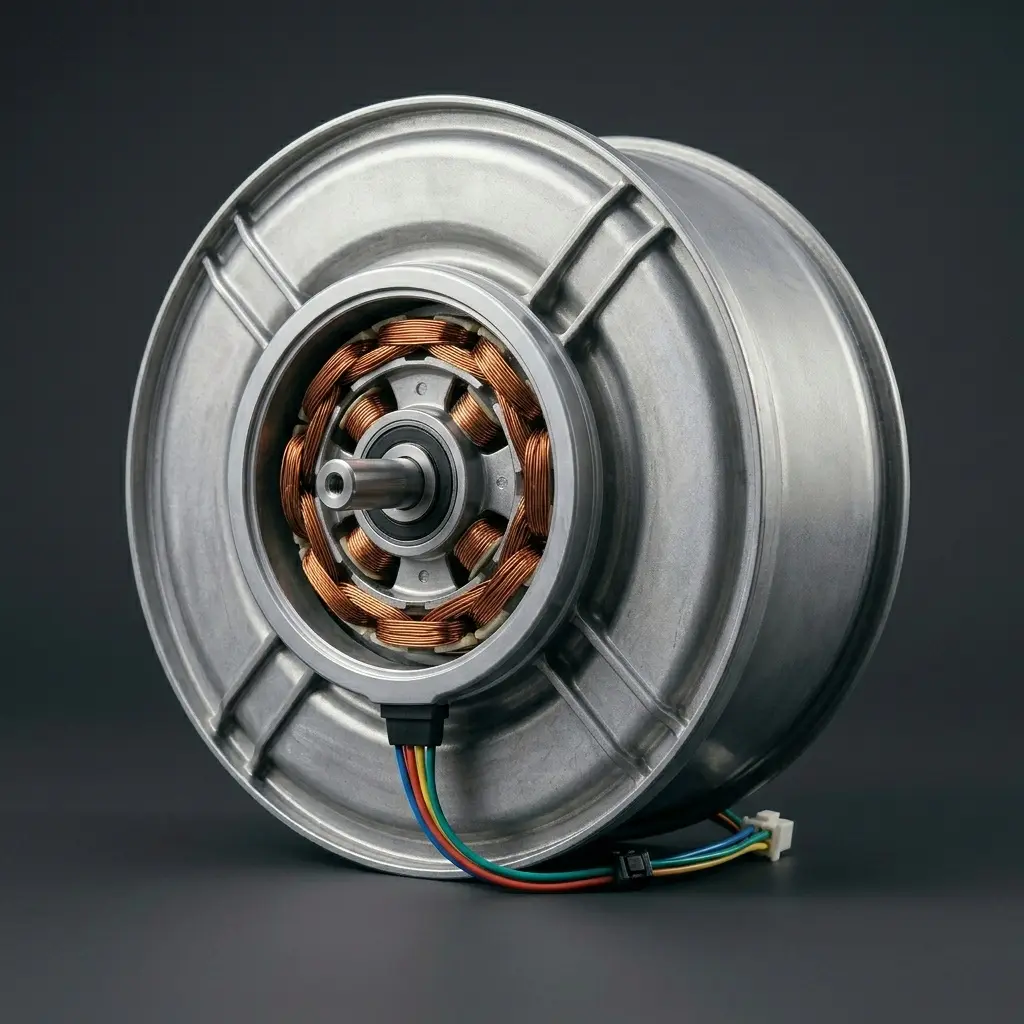
To fix a GE washing machine problem, you have to understand the relationship between the motor and the brain. Most newer GE models utilize a BLDC (Brushless DC) motor. To keep it simple, imagine a BLDC motor as a set of magnets spinning around a fan. Unlike older motors with carbon brushes that friction-wear over time, these use magnetic fields to create rotation. This makes them quieter and more efficient, but it also makes them more reliant on perfect inverter logic.
The PCB (Printed Circuit Board) acts as the air traffic controller for your laundry. It monitors motor torque constantly. If you overload the machine, the PCB sensors detect that the motor needs too much current to turn the drum. This triggers a safety shutdown, which many users misinterpret as a permanent GE washing machine problem. The inverter logic is constantly calculating the “inertia” of your wet clothes to determine the optimal spin speed.
effectWhen a GE washing machine problem occurs during the spin cycle, it is often because the Hall Effect sensor on the motor is sending “dirty” data to the PCB. If the board can’t verify exactly how fast the drum is spinning, it kills the power to prevent a mechanical explosion. Understanding that your GE washing machine problem is often a software-driven safety halt rather than a hardware “death” is the key to DIY success. Most GE boards can be reset by simply discharging the capacitors, effectively “rebooting” the machine’s brain.
GE Washing Machine Problem Diagnostic Table
Use this table to quickly match your symptoms to a component failure. This covers the most frequent GE washing machine problem scenarios I encounter in the field.
| Component | Failure Symptom | DIY Fix for ge washing machine problem |
|---|---|---|
| Lid Switch / Lock | The machine fills with water but refuses to agitate or spin. | Inspect the plastic strike on the lid. Replace the lock assembly if the solenoid click is missing. |
| Drain Pump | Water stays in the tub; a humming sound is coming from the base. | Remove the pump filter or hoses to check for coins, hairpins, or debris. |
| Suspension Rods | Violent shaking and “banging” during high-speed spin. | Check the four spring rods. If the drum bounces more than once when pushed, replace the rods. |
| Inlet Valve | No water enters: “H2O” error or slow-fill ge washing machine problem. | Clean the small mesh screens at the hose connection points. Check for 120V at the solenoid. |
| Speed Sensor | The motor starts for 2 seconds and then stops completely. | Check the wiring harness at the bottom of the motor for loose or corroded pins. |
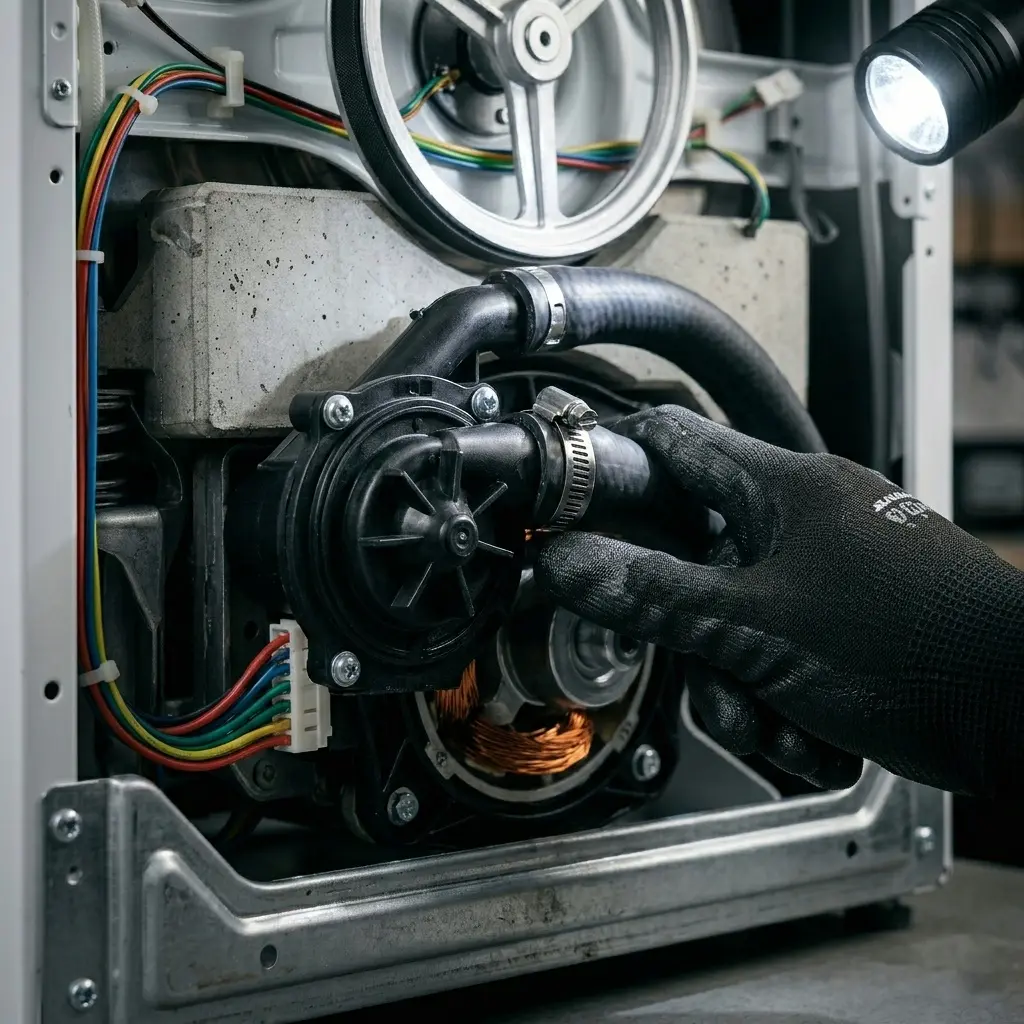
Related Guide: If your machine is full of water and refusing to pump out, follow our step-by-step breakdown to Fix GE Washer Not Draining: A DIY Guide to Save $150! and safely clear the system yourself.
Step-by-Step Fix: The Master Reset and Calibration
If your GE washing machine problem has left the unit unresponsive, you need to clear the logic board’s memory. This is the “secret” fix that tech companies don’t want you to know. Follow these steps exactly to resolve a software-based GE washing machine problem.
- Unplug the machine: Disconnect the power cord from the wall. This is the only way to ensure the PCB capacitors fully drain.
- Wait 60 seconds: You must wait for the residual electricity to dissipate. This resets the inverter logic and clears transient GE washing machine problem codes.
- Plug it back in: Reconnect the power. Immediately focus on the lid.
- The Lid Dance: Within 30 seconds of plugging it in, lift and lower the lid 6 times in a 12-second window. This is the manual signal to the GE board to enter a reset state.
- Enter Service Mode: For digital models, hold the Start button and rotate the dial until all lights flash. This bypasses the standard GE washing machine problem lockout.
- Run a Test Cycle: Select the “Spin” test. If the motor engages, your GE washing machine problem was just a software glitch.
- Check the Pump: If the machine still won’t spin, inspect the drain pump. If the water doesn’t clear in 4 minutes, the board will prevent the spin for safety.

The ‘Good, Bad & Ugly’ Breakdown
Let’s be honest about the reality of modern GE appliances. The “good” is that these machines are incredibly easy to take apart. Unlike some European brands that require specialized star bits and hydraulic presses, a GE can be serviced with a 1/4-inch nut driver and a putty knife. This makes solving a GE washing machine problem very accessible for the average homeowner.
“Bad” is the shift toward plastic. The outer tubs and drive pulleys are often high-density plastic rather than metal. This can lead to a GE washing machine problem where the splines strip out, causing the motor to spin while the agitator stays still. It’s a cost-saving measure that forces more frequent part replacements.
The “ugly” is the sensitivity of the control boards. A minor power surge can create a GE washing machine problem that costs $250 in parts to fix. GE’s reliance on integrated sensors means that if one tiny thermistor fails, the whole machine becomes a paperweight. You must use a high-quality surge protector on your washer to prevent a catastrophic washing machine problem.
Expert Tips: How to Spot a Dishonest Mechanic
If a technician walks in, doesn’t even open the machine, and says “You need a new motor and board,” they are likely trying to “total” your machine so you buy a new one from them. A professional will always check the lid switch and the pump first. A genuine GE washing machine problem with the motor is actually quite rare; it’s almost always a $40 sensor or a clogged hose. Expect to pay $120–$180 for a legitimate repair, including labor.
GE vs. Maytag: Comparing Common Faults
In the world of American washers, GE and Maytag are the heavyweights. A typical GE washing machine problem often involves the electronics or the drainage system. GE pumps are small and prone to clogging if you leave items in your pockets. However, they are much easier to swap out than the integrated pump systems found on many Whirlpool-built Maytag units.
Maytag, on the other hand, is known for bearing failures. While a GE washing machine problem is usually an “fix it in an hour” situation, a Maytag bearing failure often requires a total teardown of the machine. GE uses a more modular design. If you have a GE washing machine problem, you can usually replace just the failing component. With Maytag, you often have to replace the entire rear tub assembly. GE wins on repairability, while Maytag traditionally wins on heavy-duty frame construction.
📊 Deep Comparison
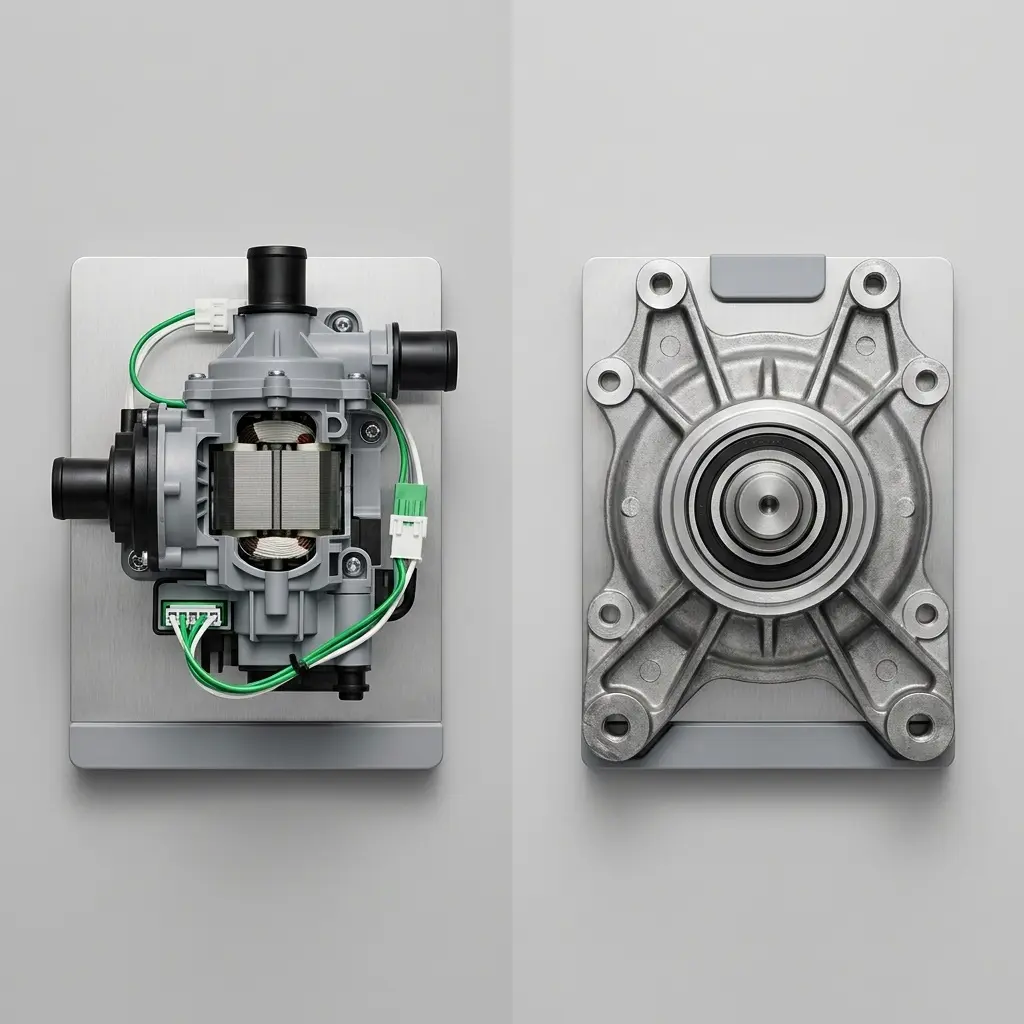
Before making your final choice on which brand’s engineering suits your home long-term, read our updated showroom breakdown: GE vs. Maytag Washers 2026: Don’t Buy Until You Read This!
Detailed FAQs: Real User Search Intent
Why is my GE washer making a loud screeching noise?
This GE washing machine problem is almost always the drive belt or a failing tub bearing. If the noise only happens during the spin, check the belt for glazing. If it happens during agitation, the mode shifter is likely failing to engage properly.
How do I fix a GE washer that stops mid-cycle?
Check the lid lock. If the lock loses contact for even a millisecond due to vibration, the machine will pause. This GE washing machine problem can also be caused by a clogged drain pump that is taking too long to empty the tub, triggering a timeout error.
What does the “E1” or “E2” error code mean?
These codes represent a fill or drain ge washing machine problem. E1 means the machine isn’t getting water fast enough (check your hoses), and E2 means it isn’t draining (check the pump filter). Resetting the machine usually clears the display once the physical blockage is gone.
Can I use HE detergent in an older GE washer?
Yes, but the real GE washing machine problem comes from using too much. HE detergent is highly concentrated. If you see suds during the rinse cycle, you are using too much, which will eventually coat the sensors and cause “SUD” error codes.
Why won’t my GE washer agitate?
If the motor hums but the middle doesn’t move, your GE washing machine problem is likely “agitator dogs” or a stripped drive pulley. These are small plastic parts designed to fail first to protect the expensive motor from snapping.
Is it worth fixing a 10-year-old GE washer?
If the GE washing machine problem is a pump, belt, or lid switch, absolutely. If the main control board or the tub bearings are gone, the cost of parts usually exceeds the value of the machine. I generally recommend a 7-year cutoff for major repairs.
How do I calibrate my GE washer?
After replacing a part to fix a GE washing machine problem, you must calibrate. Empty the drum, enter service mode (Start + rotate dial), and select the “Calibration” cycle. This allows the PCB to learn the weight of the empty drum for accurate sensing.
Why does my GE washer smell like rotten eggs?
This isn’t a mechanical geyser washing machine problem, but a bacterial one. Biofilm builds up between the inner and outer tubs. Run a “Clean Washer” cycle with an oxygen-based cleaner and leave the lid open between washes to dry it out.
Pro-Tip: If standard cleaning cycles aren’t cutting through the odor, read our specialized hack on how to Stop GE Washer Smells: The 6-Cent UltraFresh Secret! and eliminate deep biofilm permanently.
Final Verdict: GE Reliability Score
After 15 years of turning wrenches on these units, here is my professional take. A GE washing machine problem is rarely the end of the world. Because parts are plentiful and the design is straightforward, these machines are a DIYer’s dream. However, you must stay on top of maintenance to avoid the “ugly” side of their electronic sensitivity.
| Metric | Evaluation of GE Performance |
|---|---|
| Repairability | Excellent. Most components are easily accessible from the front or top. |
| Parts Availability | High. You can find GE parts in almost every local hardware store. |
| Tech Longevity | Moderate. PCBs are sensitive to power fluctuations. |
| Final Score | BUY. A solid choice for those who don’t mind a 10-minute DIY fix every few years. |
To conclude, don’t let a ge washing machine problem ruin your day. By checking the lid lock, the pump, and the suspension, you handle 90% of all service calls yourself. Keep your machine level, don’t overload it, and use a surge protector. Follow these rules, and you will get many years of service out of your GE washer without ever needing to call a professional technician.