
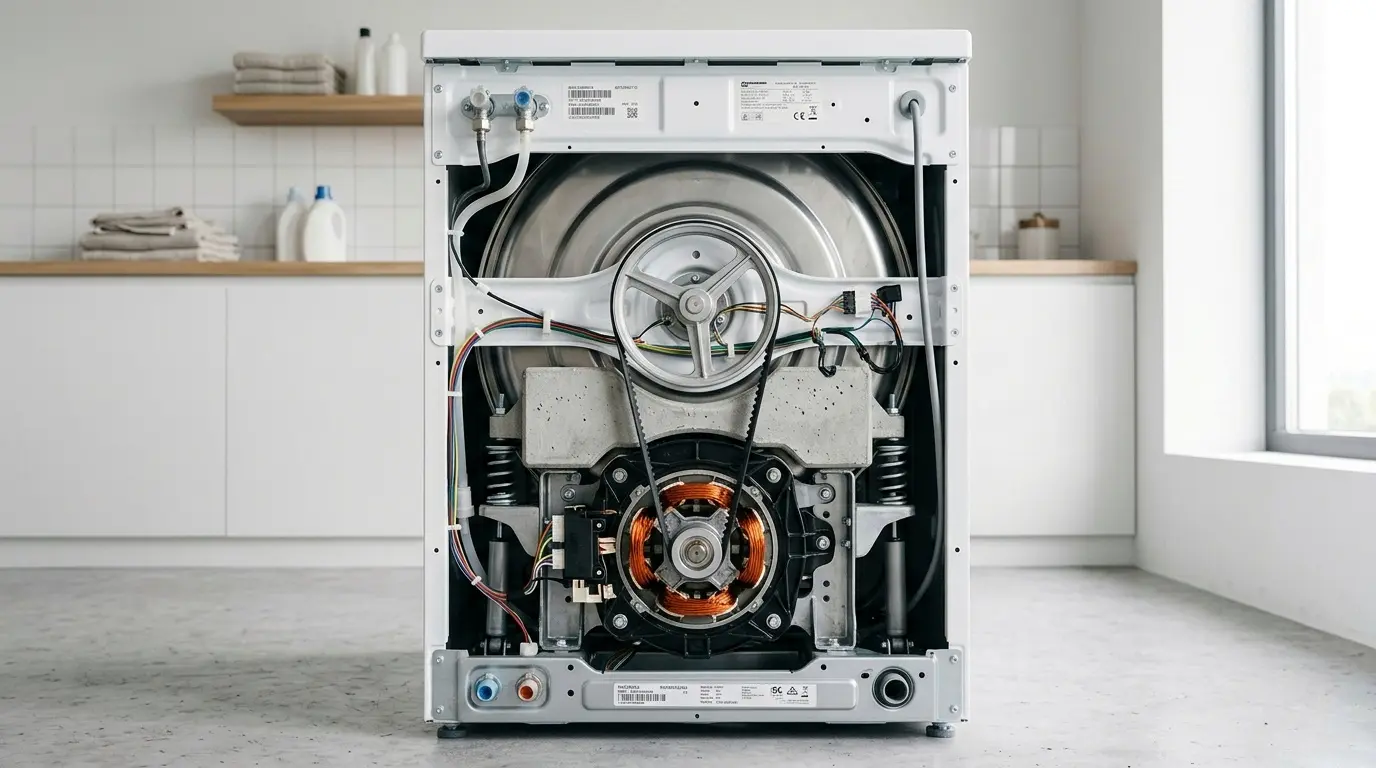
Is your laundry room shaking violently, making a racket that sounds like a jet engine preparing for takeoff at 1400 RPM? You are likely pulling your hair out over repair bills, but diagnosing a Bosch washing machine with an EcoSilence Drive does not have to cost you a small fortune. Give me 10 seconds of your time, and I will show you exactly how to test the electronics yourself, skip the dishonest mechanic fees, and permanently silence the noise.
Table of Contents
The Truth About the Bosch washing machine EcoSilence Drive: A Mechanic’s View
As an appliance engineer with 15 years of grease permanently embedded in my hands, I deal with the same customer complaints weekly. People buy expensive appliances expecting complete silence. They ask me if a Bosch washing machine EcoSilence Drive is genuinely as quiet as the marketing brochures claim.
The short answer is yes, when it is brand new. But the long answer involves understanding what happens under the chassis after three years of daily laundry loads. Let me grab my multimeter, take off the back panel, and give you the raw truth about this hardware.
The Blueprint of a Bosch washing machine EcoSilence Drive Motor
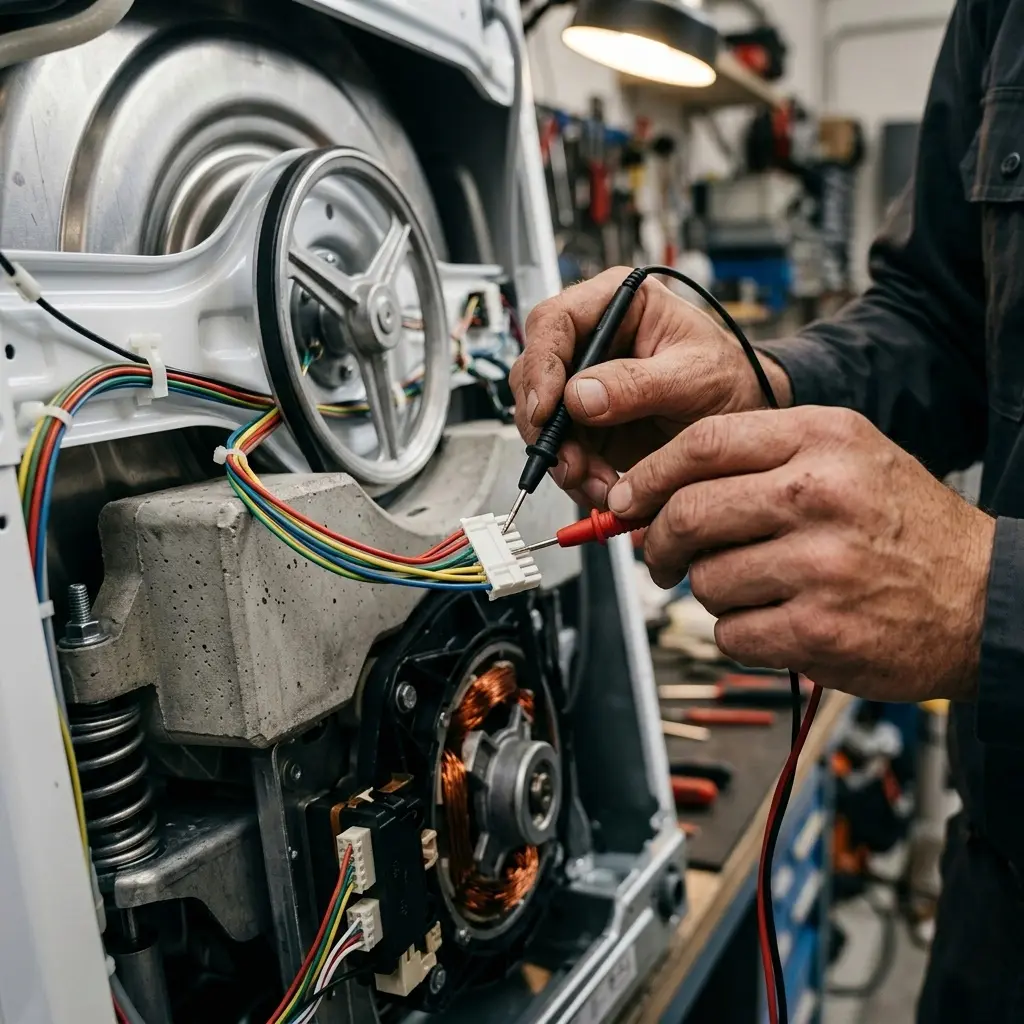
To understand the hype, we have to look at motor torque and inverter logic. A standard, older washer motor relies on carbon brushes. These brushes physically press against a spinning commutator to transfer electricity, creating friction, heat, and a loud whining noise.
Instead of archaic brushes, a Bosch washing machine with an EcoSilence Drive utilizes a highly efficient BLDC (Brushless Direct Current) motor. Think of standard motors like a heavy fan rubbing against a physical contact point. A BLDC motor removes the physical contact entirely.
It operates using heavy-duty permanent magnets on the rotor and a series of copper coil electromagnets on the stator. The inverter logic board sends rapidly alternating electrical pulses to these coils. This precisely pulls and pushes the magnets, forcing the Bosch washing machine’s EcoSilence Drive to spin without any mechanical friction.
The PCB (Printed Circuit Board) sensors are the brains of the operation. They constantly read the tachometer to monitor drum speed and load weight. If you throw in a heavy, unbalanced wet towel, the Bosch washing machine EcoSilence Drive automatically detects the RPM drop. It will briefly slow down, tumble the clothes to redistribute the weight, and smoothly ramp the speed back up.
Bosch washing machine EcoSilence Drive Quick-Fix Diagnostic Table
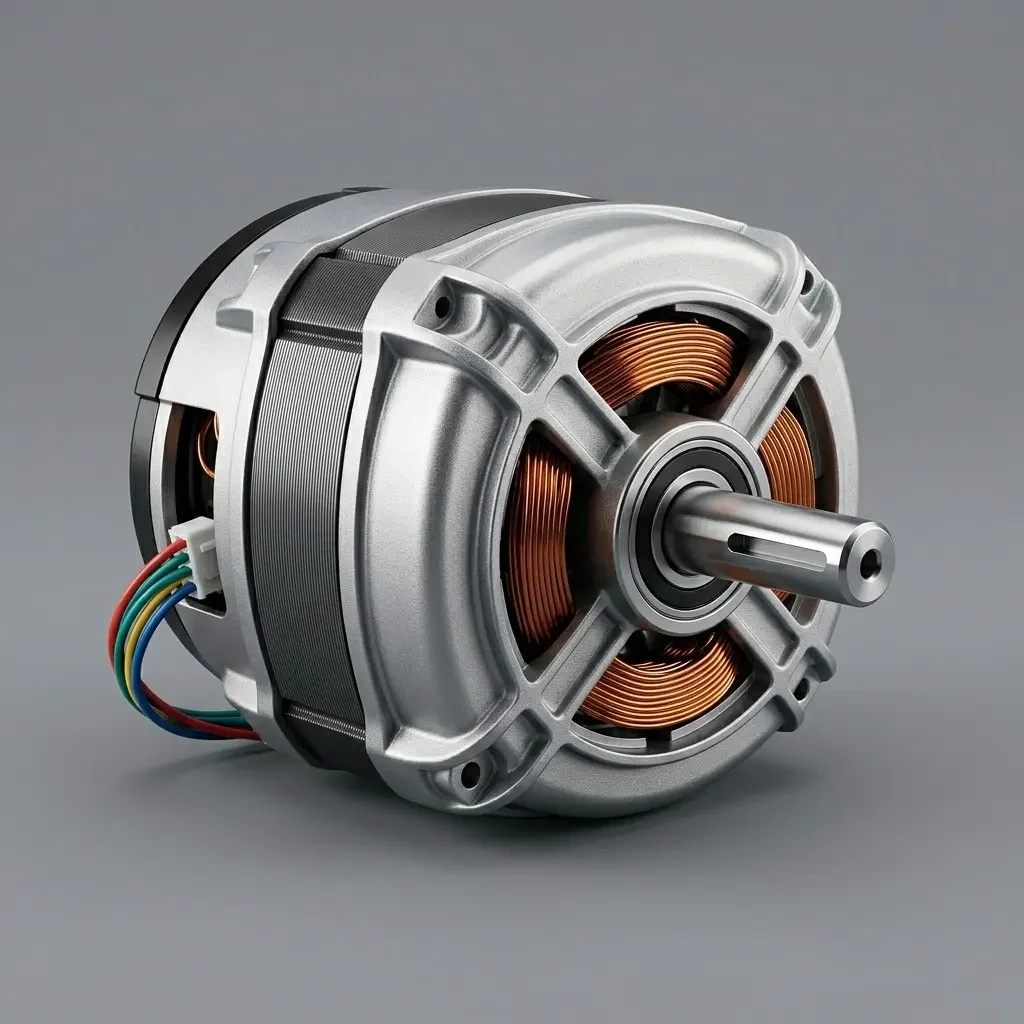
Before you call a service center and pay a $150 diagnostic fee, check this table. Here are the most common faults I see in the field.
| Component | Failure Symptom | DIY Fix & Testing |
|---|---|---|
| Hall Sensor / Tachometer | The drum in your Bosch washing machine with EcoSilence Drive jerks briefly, stops, and throws a motor error code. | Test the sensor coil with a multimeter set to ohms. If it reads open line (OL), replace the $20 sensor. |
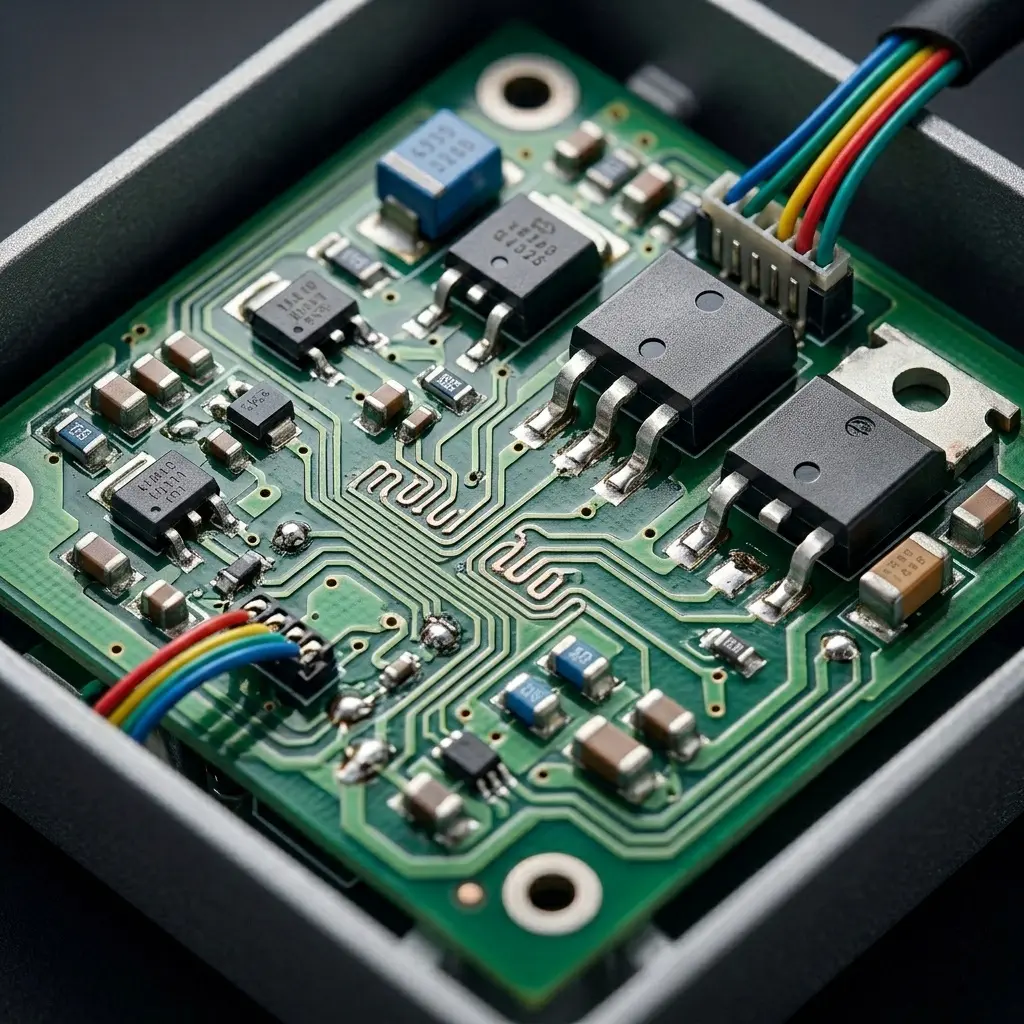
| Inverter PCB Module | Completely dead motor. Machine fills with water but refuses to agitate or spin. | Inspect the control board for scorched relays or blown capacitors. Requires full board replacement. |
| Shock Absorbers | The Bosch washing machine EcoSilence Drive vibrates violently, walking across your laundry room floor. | Remove the top lid. Push down hard on the drum. If it bounces like a basketball, replace all three lower shocks. |

- Versatile Digital Multimeter – Accurately measures AC/DC Current, AC/DC Voltage, Capacitance, Frequency, Duty Cycle, Res…
- Thoughtful Design – Support Data Hold, Large LCD Backlit Screen, Auto Shut-off and Kickstand make the process of measure…
- Suitable For Many Occasions – This Multimeter is a golden partner to help to troubleshoot a variety of automotive and ho…
Expert Tip: 90% of the time, homeowners misdiagnose their appliance. Before you blame the actual Bosch washing machine EcoSilence Drive for a loud roaring noise, check your main tub bearings and ensure your shipping bolts are completely removed.
DIY Fix: Troubleshooting a Noisy Bosch washing machine EcoSilence Drive
If your machine is screaming during the final spin cycle, grab a T20 Torx screwdriver and a flashlight. Follow these exact steps to locate the real issue.

- Sizes laser etched on blade
- Blade-through-handle design for high torque applications
- Tip-Ident sizes marked
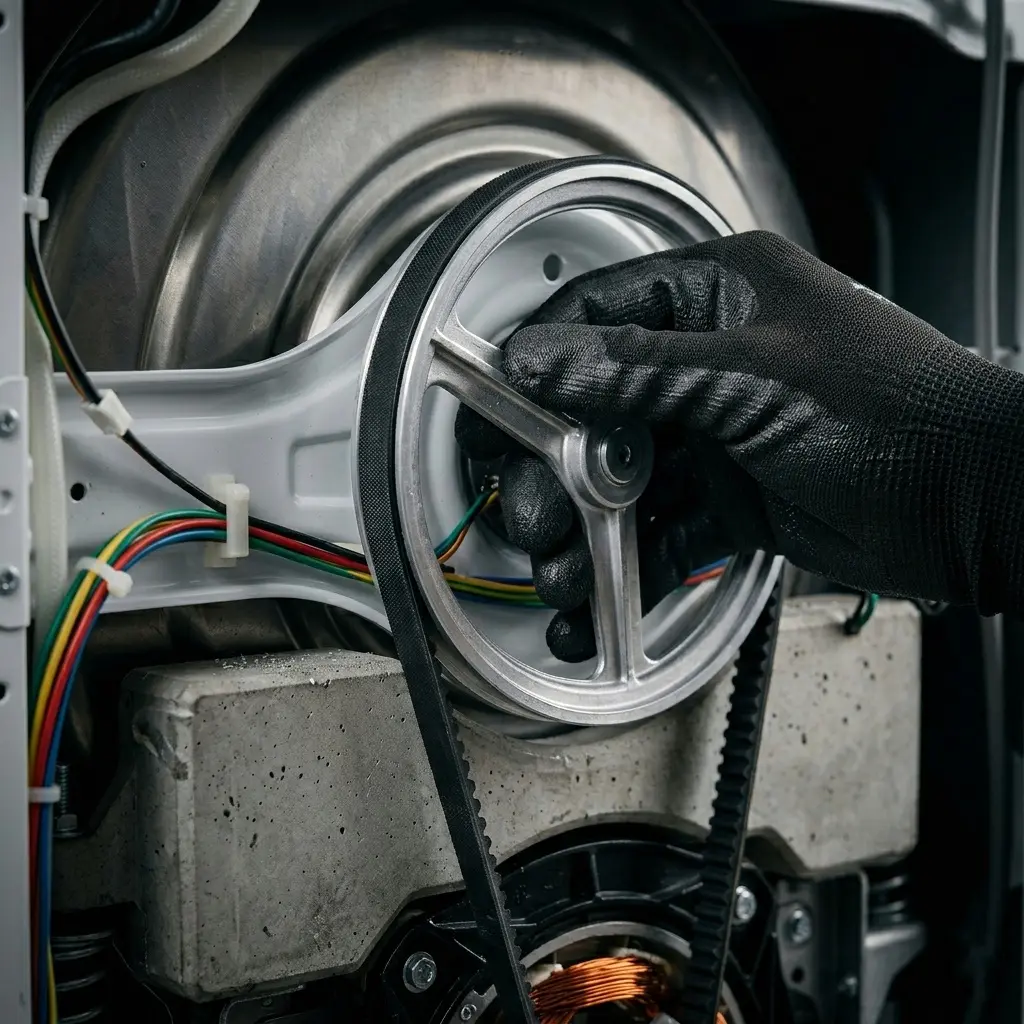
- Step 1: Isolate the source of the noise. Unplug the machine and remove the rear metal access panel. Manually spin the large pulley wheel at the back of the drum. Listen closely to determine if the grinding comes from the Bosch washing machine EcoSilence Drive or the center of the plastic tub.
- Step 2: Inspect the drive belt. A stretched or cracked poly-V belt is slipping against the Bosch washing machine. The EcoSilence Drive motor spindle will create a high-pitched squeal. Look for black rubber dust coating the floor of the chassis. If you see dust, swap the belt.
- Step 3: Check the motor mounting bolts. Over years of heavy vibration, the bolts holding the motor can back out. Even a perfectly balanced Bosch washing machine with an EcoSilence Drive will clatter loudly if it is loose on its mounts. Grab a 10 mm socket wrench and torque them down tight.
- Step 4: The bearing test. Take the drive belt off entirely. Spin the drum from the inside by hand. If it sounds like a skateboard rolling over gravel, your tube bearings are destroyed. This is a massive repair job, but it means your Bosch washing machine’s EcoSilence Drive is actually perfectly fine.
- ⚠️ Critical Noise Warning
- Different brands produce distinct structural sounds when their internal mechanics fail. If your diagnosis doesn’t match a grinding bearing, check out our troubleshooting guide on a Whirlpool washer making a loud noise. 5 Sounds That Mean Danger (2026 Guide) to accurately pinpoint the hazard.

- DirectTorqueTechnology helps prevent rounding of fasteners and provide better grip
- O-ring and retaining pin compatible
- Laser etched markings on sockets for easy identification
The Good, The Bad, and The Ugly of the Bosch washing machine EcoSilence Drive
I do not work for the manufacturer, so I will not sugarcoat the reality of this system. Here is what you get when you spend premium money on this technology.
- The Good: When properly leveled on a solid floor, a new Bosch washing machine with an EcoSilence Drive hits around 47 decibels during a wash cycle. That is quieter than a normal conversation. The lack of carbon brushes also means zero black carbon dust coats the internal electronics over time.
- The Bad: The complex circuitry controlling the Bosch machine’s machine EcoSilence Drive is incredibly vulnerable to power grid fluctuations. A moderate electrical surge that a basic brushed motor would survive will instantly fry a modern inverter control board.
- The Ugly: If that inverter board fails, fixing a Bosch washing machine EcoSilence Drive is painfully expensive. Manufacturers rarely sell the individual burned-out microchips. You are forced to buy the entire pre-programmed motor control module, which often costs as much as half a new machine.
Dishonest Mechanic Red Flags for a Bosch washing machine EcoSilence Drive
The appliance repair industry is full of technicians looking for an easy payday. You need to know how to spot a scam before handing over your credit card.
If a technician walks in, listens to the machine for five seconds, and states the Bosch washing machine EcoSilence Drive is “burnt out,” show them the door. Brushless motors rarely suffer catastrophic coil failure unless the machine was completely submerged in a flood.
A legitimate mechanic will disconnect the wire harness from the Bosch washing machine EcoSilence Drive and use a digital multimeter to measure the resistance across the three-phase windings. They should read around 5 to 15 ohms across each pair. If they do not pull out a meter, they are guessing with your money.
Before letting a technician run diagnostics on your drive system, it pays to understand general motor diagnostics. Read our technician-level breakdown on washing machine repair: Spotting Faulty Motors Before They Fail: Master the exact resistance tests needed to save your money.
Bosch washing machine EcoSilence Drive vs. LG Direct Drive
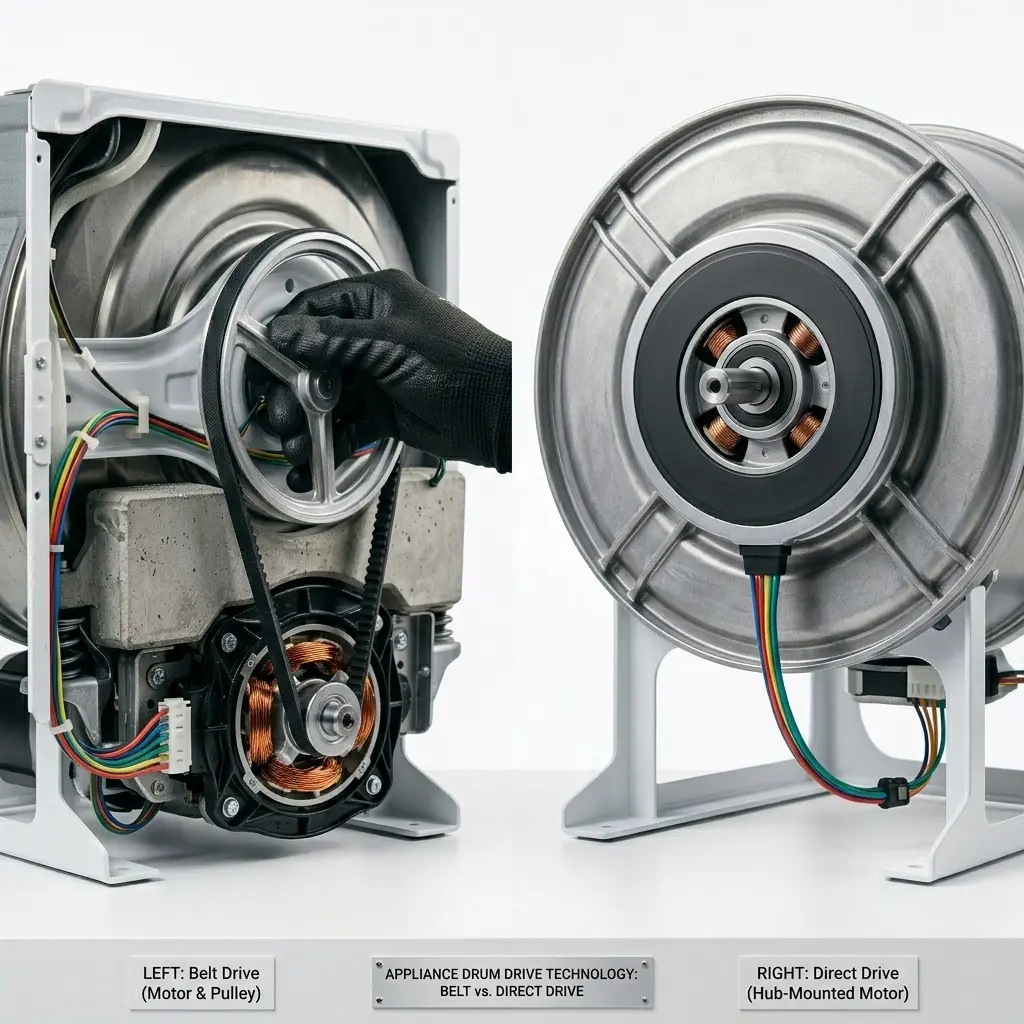
This is the most common matchup on the showroom floor. LG uses a Direct Drive system, bolting a massive flat stator directly to the back of the wash drum.
In contrast, the Bosch washing machine EcoSilence Drive still mounts the motor below the tub and connects it to the drum via a rubber drive belt. Many salespeople will tell you the LG design is vastly superior because it lacks a belt. This is only half the truth.
While eliminating the belt does remove one potential wear point, the traditional suspension setup on a Bosch washing machine, EcoSilence Drive, handles out-of-balance heavy loads much better. A direct drive motor bears the entire weight of a heavy, wet load directly on its central bearing, which can lead to premature mechanical failure.
Reader Note: If you are stuck choosing between brands or already own a direct drive system, don’t miss our comprehensive LG Washing Machine Upgrade Hacks: Noise Dampening & Efficiency Mods (2025 Guide) to maximize your washer’s lifespan.
Bosch washing machine EcoSilence Drive FAQs
1. What is the actual lifespan of a Bosch washing machine EcoSilence Drive?
The mechanical core of the motor is practically bulletproof. You can easily expect 12 to 15 years from the physical motor block. The shock absorbers or the control board will almost always fail before the core motor dies.
2. Why did my Bosch washing machine EcoSilence Drive suddenly get so loud?
Suddenly, aggressive noise is rarely a motor fault. If the noise happens during draining, a coin or screw is jamming the drain pump impeller. If the noise happens during the spin cycle, you have blown drum bearings or a cracked tub spider arm.
3. Do I ever need to replace the brushes on this unit?
No. The BLDC terminology means “Brushless Direct Current.” There are no carbon brushes to wear down, which eliminates the most common maintenance task associated with older washing machines.
4. Is the main inverter circuit board repairable if it breaks?
Technically, yes. A highly skilled electronics repair technician can sometimes map the board, find the shorted triac or blown capacitor, and solder a new surface-mount component. However, 99% of standard appliance mechanics will only perform a complete board swap.
5. What spin RPM setting should I use for daily laundry?
Even though the motor can easily push 1400 RPM, I highly advise against maxing it out daily. Running your spins at 1000 RPM or 1200 RPM saves massive wear and tear on your shock absorbers and tub bearings. Your clothes will take five extra minutes in the dryer, but your washer will last five years longer.
6. Can poor water pressure affect how the motor operates?
Indirectly, yes. If the inlet valves take too long to fill the tub due to low pressure, the logic board will throw a timeout error code before the motor is ever given the command to engage and tumble the clothes.
7. How can I protect the electronics from voltage spikes?
I tell every single one of my customers to plug their modern appliances into a high-quality, single-outlet surge protector. Protecting the delicate microprocessors running the motor is the cheapest insurance policy you can buy.

- The Belkin Difference: Pioneer in technology and innovation for over 35 years.
- Surge Protector Single Power Outlet: The compact and portable size makes this ideal to bring during business trips, vaca…
- Portable Travel Wall Mount Outlet: The small and wall-mountable power bar converts any standard wall outlet into a surge…
The Final Verdict
Should you invest your hard-earned cash in this technology? Let us break down the final scorecard based on years of pulling these units apart.
| The Good | The Bad | The Ugly |
|---|---|---|
| Incredibly quiet operation at 50dB. | Requires a drive belt that eventually stretches. | It’s extremely expensive to fix out-of-warranty logic boards. |
| Zero carbon dust buildup inside the chassis. | Susceptible to power grid surges and brownouts. | Tub bearings still fail, costing $400+ to repair. |
| Excellent torque and load-balancing logic. | Heavier overall machine weight. | Dishonest mechanics will easily misdiagnose it. |
| Final Mechanic Score: 8.5/10. Strong BUY Recommendation. (Just make sure you use a surge protector for the Bosch washing machine EcoSilence Drive electronics. | ||