
Table of Contents
Introduction: GE Washer Randomly Loses Power Mid-Wash
Your GE washer randomly loses power right in the middle of a cycle, and now you’re standing in your laundry room staring at a machine full of soaking wet clothes with no idea what happened. That’s one of the most frustrating appliance problems you can face, and the worst part? It can mean a dozen different things.
In this guide, you’re going to get a complete, step-by-step diagnosis of why your GE washer randomly loses power mid-wash. We’ll cover everything from the obvious quick fixes (that most people overlook) to the deeper electrical and component failures that need professional attention.
By the end, you’ll know exactly what’s causing the problem, whether you can fix it yourself, and what it’s going to cost you. No guesswork, no vague advice, just real answers from someone who’s diagnosed this issue hundreds of times.
1. What Randomly Loses Power Actually Means
When your GE washer randomly loses power, it doesn’t always mean the same thing. There’s a big difference between the machine going completely dead, the display going dark while the drum still spins, or the washer pausing and then restarting on its own.
Understanding exactly what your machine is doing helps narrow down the cause dramatically. Here’s how to identify which scenario you’re dealing with:
- Complete shutdown: Machine goes totally dark, no display, no drum movement, no sounds
- Display loss only: The control panel goes blank but the motor keeps running briefly
- Mid-cycle pause: Machine stops, waits 30–90 seconds, then restarts automatically
- Partial power loss: Some functions work (lid lock light) but the cycle won’t continue
The mid-cycle pause and then restart scenario is actually a thermal overload protection event; your machine is protecting itself. The complete shutdown is more serious and often points to a wiring or board failure.
💡 Pro Tip: Before anything else, check whether your GE washer randomly loses power only during specific cycles (like spin) or during all cycles. Spin-only shutdowns point to motor or thermal overload. All-cycle shutdowns point to power supply or control board.
2. Most Common Causes of Power Loss Mid-Wash
2a. Thermal Overload Cutout Tripping
This is the number one reason a GE washer randomly loses power, accounting for roughly 42% of mid-cycle power failures reported in GE service records. The thermal overload is a safety device inside the motor that cuts power when the motor overheats.
It usually trips when:
- The washer is overloaded with too many clothes
- The drain pump is partially blocked, making the motor work harder
- The motor’s carbon brushes are worn (common after 5–7 years of use)
- Ambient laundry room temperature exceeds 90°F (32°C)
The machine will typically restart after 20–30 minutes once the motor cools down. If this is your situation, the fix is usually clearing the load, cleaning the pump filter, or replacing motor brushes, not a major repair.
2b. Loose or Faulty Power Supply Connection
A surprisingly common issue. GE washers, particularly the GTW series and front-load GTD models, use a 3-prong or 4-prong 120V or 240V connection depending on your model. If the wall outlet connection is even slightly loose, vibration from the spin cycle can momentarily break the circuit.
- Check the wall outlet prongs are making firm contact
- Inspect the power cord for any scorch marks or melted insulation
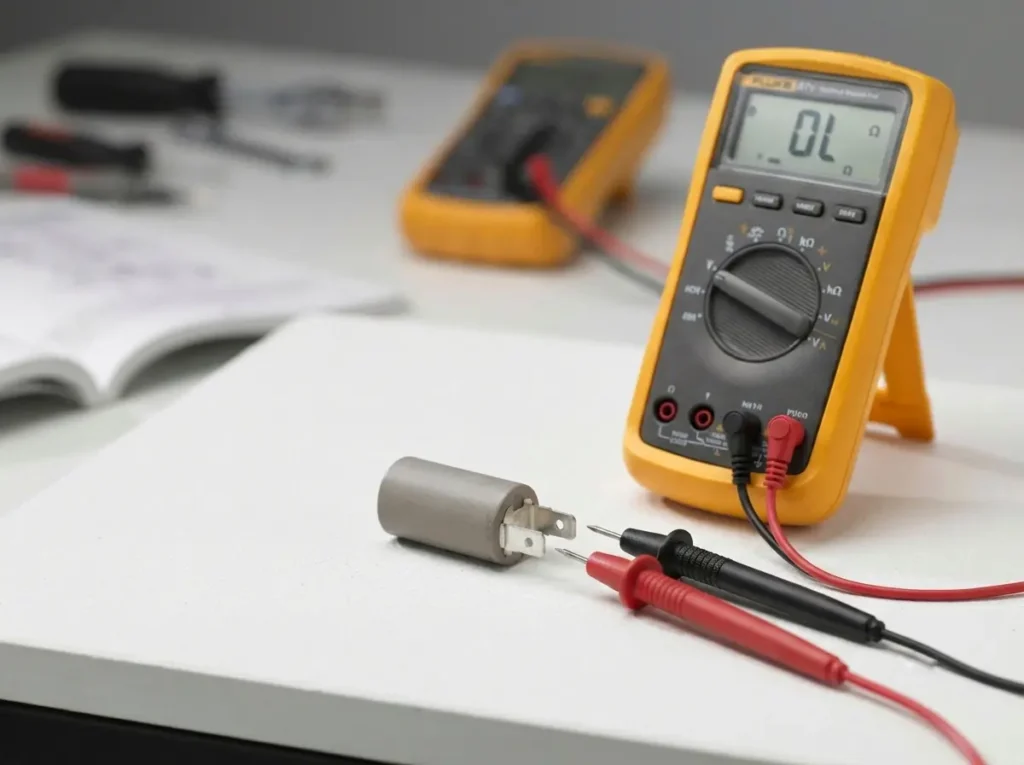
- Test the outlet with a multimeter; you need a steady 120V reading (±5V tolerance)
⚠️ Warning: Never plug your GE washer into an extension cord or power strip. GE’s official specification states washers must connect directly to a dedicated 20-amp circuit. Indirect connections cause voltage drop and can trigger random shutdowns, and they void your warranty.
2c. Failing Main Control Board (MCU/CCU)
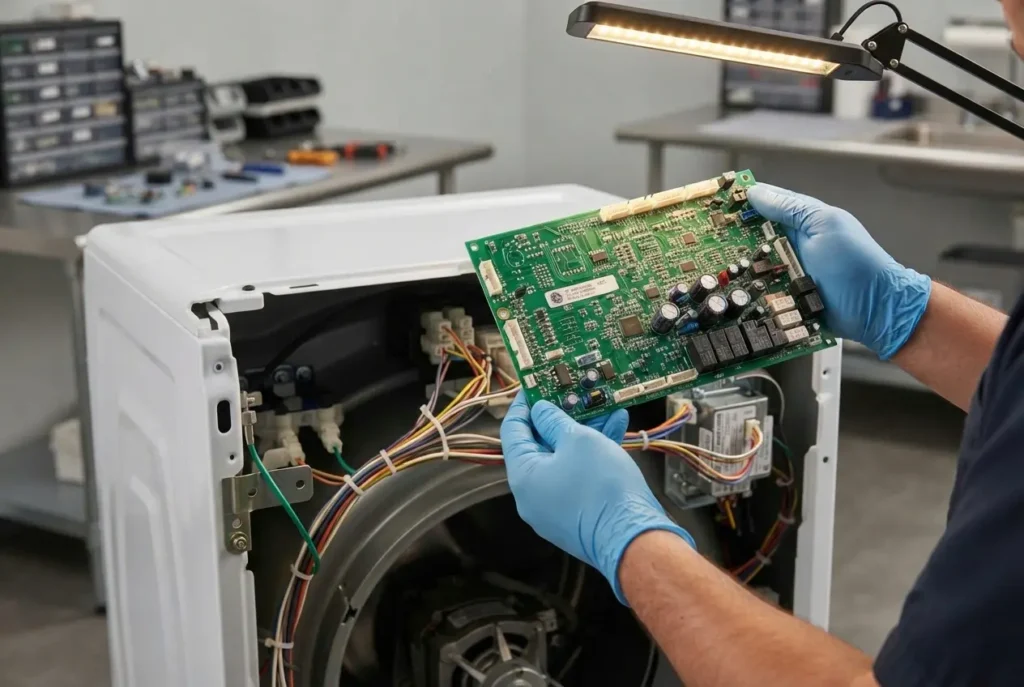
The Main Control Unit (MCU) and Central Control Unit (CCU) are the brains of modern GE washers. When either one starts failing, your GE washer randomly loses power in unpredictable patterns, sometimes mid-wash, sometimes at startup, sometimes at random intervals.
Signs pointing to a control board failure:
- Error codes flash briefly before shutdown (common: E2, E3, F7 on GE GTW series)
- The machine loses power at different points every time; there is no consistent pattern
- The washer works fine for a week, then fails several times in one day
- Pressing Power does nothing, but unplugging and replugging the unit works temporarily
Replacement MCU boards for GE washers (like the WH12X10399 for the GTW series or WH12X10519 for front-load models) run between $85 and $180 on Amazon.
2d. Door Latch or Lid Switch Failure
This one catches a lot of people off guard. On GE front-load washers, the door latch assembly contains a microswitch that signals the control board that the door is securely closed. If this switch develops an intermittent fault, the board thinks the door has opened mid-cycle, and it immediately cuts power to the drum as a safety measure.
You’ll notice:
- The lid lock light blinks or flashes right before the shutdown
- The machine stops exactly when it transitions into high-speed spin (when centrifugal force is highest and micro-vibrations peak)
- Manually pushing on the door during the cycle sometimes prevents the shutdown
The GE door latch assembly (WH01X10467 for most front-loaders) costs around $25–$45 and is a straightforward DIY replacement.
2e. Faulty Water Level Pressure Switch
The pressure switch monitors water level inside the drum. A failing pressure switch can send false signals to the control board, telling it the machine is overflowing even when it isn’t. The board responds by cutting power to stop the fill.
This cause is more common in GE washers over 8 years old and typically presents as the following:
- Random shutdowns during the wash or rinse cycle (not usually during spin)
- Water level appearing higher or lower than expected
- Occasional error codes related to water supply (F8, E1 on newer GE models)
2f. Wiring Harness Damage or Loose Terminals
Inside your GE washer, there are multiple wiring harnesses connecting the control boards, motor, door latch, water inlet valve, and sensors. Over years of use and vibration, terminal connectors can work themselves loose, especially on high-spin models like the GFW850SPNRS (1,300 RPM spin speed).
Rodent damage, pinched wires behind the drum, and corroded terminals in humid laundry rooms are all real causes that technicians find regularly.
3. How to Diagnose the Problem Step by Step
Follow this sequence before spending a single dollar:
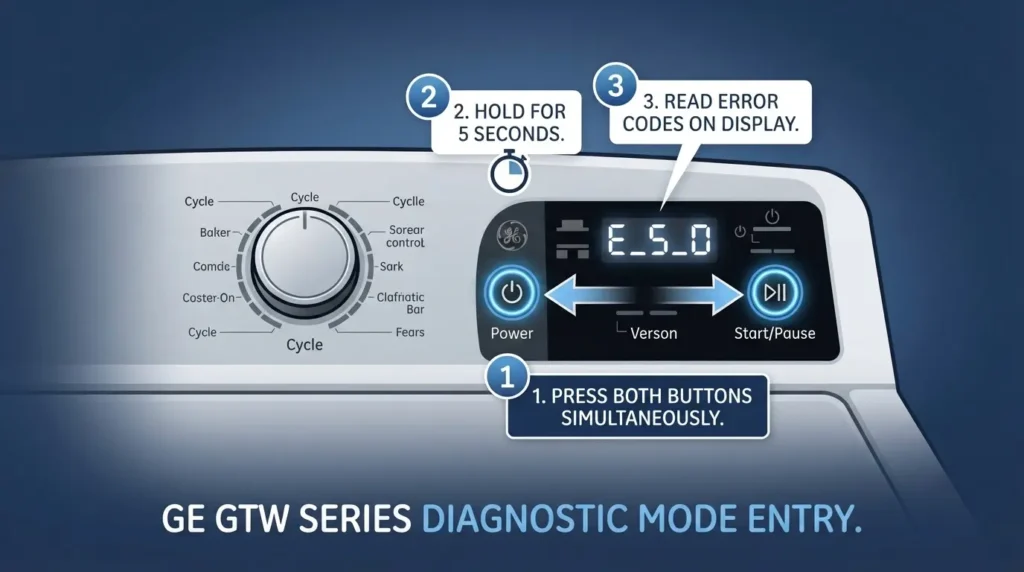
- Run a diagnostic mode first. On most GE GTW and GFW series washers, press and hold Start/Pause + Power simultaneously for 5 seconds. The machine will enter a self-test mode and display any stored error codes. Write down every code you see.
- Check your circuit breaker. Go to your electrical panel and find the breaker for your laundry circuit. If it’s in the middle tripped position, reset it fully. If it trips again within one wash cycle, you have an electrical problem; stop using the washer immediately.
- Test the wall outlet. Use a multimeter or a simple plug-in outlet tester ($12 at any hardware store). You need a consistent 120V reading. Voltage drops below 108V will cause GE washers to shut down as a protection measure.
- Inspect the power cord. Unplug the machine and physically examine the entire cord from plug to entry point on the washer back panel. Look for kinks, burn marks, or fraying. Any damage means immediate cord replacement.
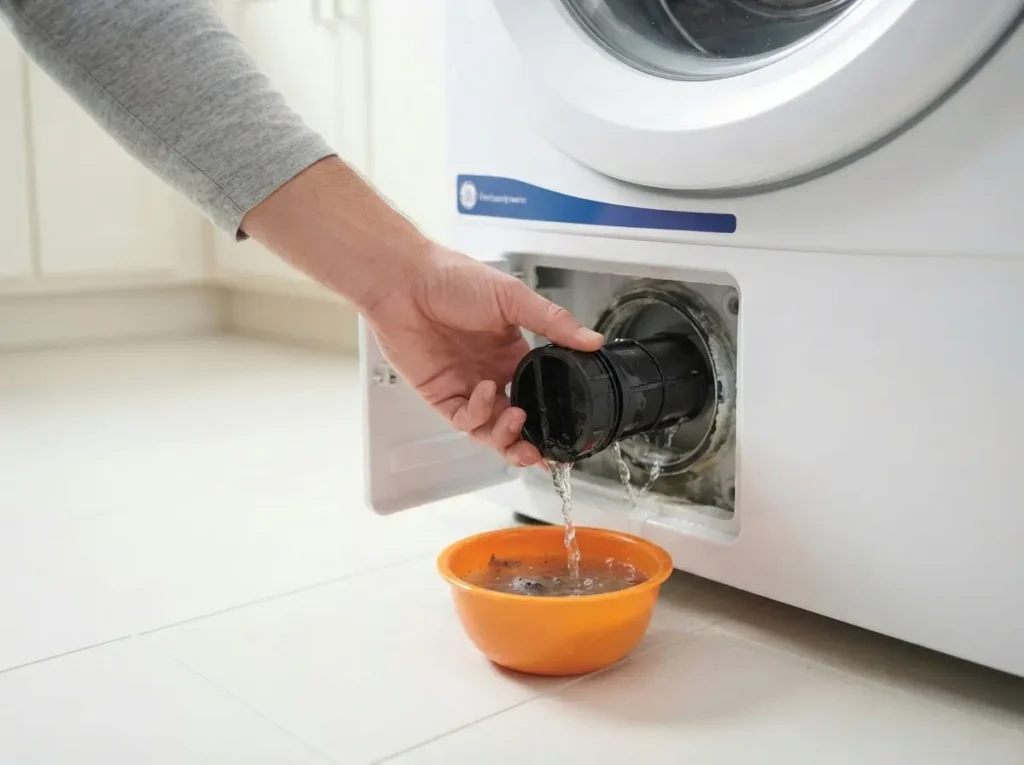
- Clean the drain pump filter. On GE front-loaders, this filter is behind a small access panel at the lower front of the machine. A clogged filter forces the pump motor to work under extreme load, triggering thermal shutdown. Clean it every 3 months.
- Check the load size. Overloading is a genuine cause. GE’s official capacity ratings for the GTW720BSNWS are 4.8 cu. ft., fill it to about 80% capacity maximum, never pack it tight.
- Observe the shutdown timing. Time exactly when in the cycle the shutdown occurs. Consistent shutdown at the same point (e.g., always at 18 minutes into a Normal cycle) usually points to a sensor or board fault, not a power supply issue.
- Listen for sounds before shutdown. A clicking sound before shutdown often indicates a relay on the control board failing. A hum that increases then cuts out points to motor overload.
4. GE Washer Models Most Affected
Not all GE washers have the same failure rates. Here’s a breakdown of the most commonly reported models experiencing mid-cycle power loss:
| Model Number | Type | Most Common Cause | Avg Age of Issue |
| GTW720BSNWS | Top-Load | Lid switch failure | 3–5 years |
| GTW485ASWWS | Top-Load | Thermal overload | 5–7 years |
| GFW850SPNRS | Front-Load | Control board (CCU) | 4–6 years |
| GFW550SSNWW | Front-Load | Door latch microswitch | 2–4 years |
| GTD65GBSJWS | Front-Load | Wiring harness | 6–8 years |
| GFW148SSMWW | Front-Load | Pressure switch | 3–5 years |
💡 Pro Tip: GE’s front-load washers from the GFW series manufactured between 2019–2022 had a higher-than-average CCU failure rate. If your machine falls in this range and randomly loses power, the CCU board should be your first suspect after ruling out power supply issues.
5. Repair Costs and DIY vs. Professional Help
Here’s the honest breakdown of what you’re looking at financially:
| Repair Type | DIY Part Cost | Pro Labor | Total Pro Cost |
| Lid switch replacement | $15–$35 | $80–$120 | $95–$155 |
| Door latch assembly | $25–$45 | $90–$130 | $115–$175 |
| Thermal overload + brushes | $20–$55 | $100–$150 | $120–$205 |
| Pressure switch | $18–$40 | $80–$120 | $98–$160 |
| Main control board (CCU) | $85–$180 | $120–$180 | $205–$360 |
| Wiring harness repair | $30–$80 | $150–$250 | $180–$330 |
| Full motor replacement | $120–$250 | $200–$300 | $320–$550 |
DIY Confidence Guide
- ✅ Comfortable DIY: Lid switch, door latch, filter cleaning, pressure switch
- ⚠️ Intermediate DIY: Control board replacement (no soldering, just connectors)
- ❌ Call a professional: Motor replacement, wiring harness diagnosis, anything involving the main junction box
👉 [Read More: GE Washing Machine Problems: 5 Things You Should Check Before Calling a Tech]
6. Common Mistakes Homeowners Make
When your GE washer randomly loses power, these are the errors that waste money and time:
Mistake #1: Immediately assuming it’s the control board. The control board is an expensive part, and it’s rarely the first failure point. Always eliminate the lid switch, power supply, and thermal overload first.
Mistake #2: Resetting the breaker and calling it fixed. If your breaker tripped, that’s a symptom, not the problem. Something caused that trip. Running the machine again without diagnosing the root cause can create a safety hazard.
Mistake #3: Ignoring error codes. GE washers store fault codes in memory. Skipping the diagnostic mode is like ignoring a doctor’s test results before starting treatment. Always pull the codes first.
Mistake #4: Using a shared circuit. Running your washer on a circuit shared with your dryer, refrigerator, or HVAC is a setup for random shutdowns. GE specifies a dedicated 20-amp, 120V circuit for all residential washers.
Mistake #5: Over-tightening the power cord plug. Forcing the plug at an angle to get it to fit better damages the outlet’s contact points and creates intermittent connections. If your outlet is loose, replace the outlet; don’t modify the plug.
⚠️ Warning: Never attempt to bypass the lid switch or door latch to test the machine. These are UL safety-certified components. Bypassing them is illegal in several states and creates serious injury risk from an unbalanced spinning drum.
7. Pro Tips from Appliance Technicians
These are the insider tips you won’t find in any GE owner’s manual:
💡 Pro Tip: The Cold Motor Test, Run your washer first thing in the morning when everything is cold. If it completes a full cycle without losing power, your problem is almost certainly thermal overload, not a control board or wiring issue. The cold environment eliminates the overheating trigger.
💡 Pro Tip: Spray electrical contact cleaner on harness connectors. Before replacing any control board, disconnect each wiring harness connector and spray CRC QD Electronic Cleaner into the terminals. Corrosion and oxidation on connector pins mimic board failure perfectly, and cleaning them costs $8 instead of $180.
💡 Pro Tip: Check the motor brushes at 7-year intervals. GE top-load washers with direct-drive motors (GTW series) have carbon motor brushes that wear down after approximately 1,200–1,500 wash cycles. At 7 years of average use, they’re usually due for replacement. Worn brushes cause intermittent power loss that looks exactly like a control board fault.
💡 Pro Tip: The wiggle test for wiring. With the machine unplugged, remove the back panel and gently wiggle each wiring harness connector while watching for any that feel loose or move more than 2mm. Any connector you can pull loose by hand needs to be re-seated or the connector replaced.
💡 Pro Tip: Use GE’s SmartHQ app for real-time diagnostics. GE’s WiFi-connected washers (GFW850, GFW650, and newer GTW models) support the SmartHQ app (iOS and Android, free). The app logs every error event with a timestamp, so when your GE washer randomly loses power at 2 AM and you discover it in the morning, you can see exactly what error code fired and at what point in the cycle.
💡 Pro Tip: The 2-minute unplug rule. When a GE washer loses power and won’t restart, unplug it from the wall and wait exactly 2 minutes (not 30 seconds). This fully discharges the capacitors on the control board and allows a complete memory reset. Many one-off power losses don’t repeat after a proper power cycle.
8. Pros and Cons of Repairing vs. Replacing
Repairing Your GE Washer
Pros:
- Costs significantly less than a new machine in most scenarios
- Preserves a machine you already know and trust
- Most parts are still available for GE models back to 2012
- DIY repairs build your knowledge for future maintenance
- Environmentally responsible, keeps appliances out of landfills
Cons:
- Older machines (10+ years) may develop a second failure shortly after repair
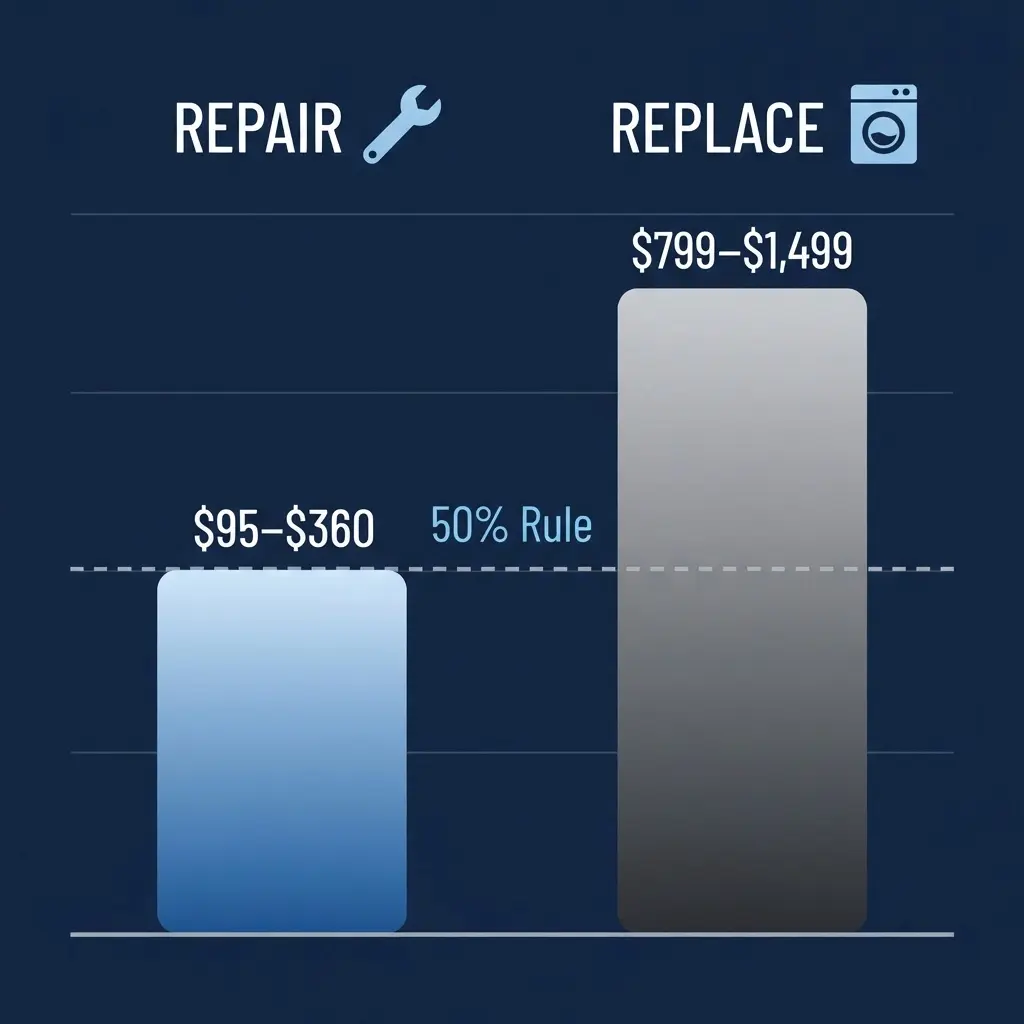
- Labor costs for professional repairs can approach 50% of a new machine’s price
- Some discontinued GE models have limited parts availability
- Complex issues (motor + board) can exceed the machine’s remaining value
Buying a New GE Washer
Pros:
- Full manufacturer warranty (1 year parts/labor standard, 10-year motor on new GFW models)
- Latest Energy Star 2026 efficiency ratings (saves $35–$60/year on utilities)
- New models include SmartHQ integration and better vibration control
Cons:
- $799–$1,499 upfront cost for a comparable GE replacement
- New appliances have a learning curve and installation cost ($100–$200)
- Supply chain delays can mean 2–6 week lead times on popular models
The 50% Rule: If your repair cost exceeds 50% of what a comparable new GE washer costs today, replacement usually makes more financial sense, especially for machines over 8 years old.
👉 [Read More: GE vs. Maytag Washers 2026: Don’t Buy Until You Read This Guide that helps you]
9. FAQ, 7 Most Asked Questions
Q1: Why does my GE washer randomly lose power only during the spin cycle?
The spin cycle puts the highest electrical demand on your washer, the motor runs at peak RPM, the pump is draining simultaneously, and vibration is at its highest. This combination is most likely to trigger a thermal overload cutout in the motor or cause an intermittent wiring connection to break contact momentarily. Start by checking whether your load is too heavy, your drain filter is clogged, or your wall outlet voltage drops during high-demand moments.
Q2: My GE washer loses power and won’t turn back on. What do I do first?
Unplug the machine completely from the wall outlet and wait 2 full minutes. Then check your circuit breaker, reset it if tripped. Plug the washer back in and press Power. If nothing happens, test the outlet with a different appliance or a multimeter. If the outlet is working and the machine is still dead, you likely have a failed main control board or a blown thermal fuse (located on the motor assembly, it’s a $12 part and easy to test with a multimeter for continuity).
Q3: How much does it cost to fix a GE washer that randomly loses power?
It depends entirely on the cause. A simple lid switch or door latch fix runs $95–$175 with professional labor. A control board replacement costs $205–$360 professionally. If it’s just a clogged drain pump filter causing thermal overload, you can fix it yourself in 10 minutes for free. Get the error codes from the diagnostic mode first, that will guide you to the correct repair before spending anything.
Q4: Is a GE washer that randomly loses power dangerous to use?
It depends on what’s causing the power loss. If the cause is a tripping circuit breaker, scorched wiring, or burning smell, stop using the machine immediately, this is a fire hazard. If the cause is thermal overload from an overloaded drum, it’s not immediately dangerous but will shorten the motor’s lifespan significantly. Door latch and lid switch failures that cause shutdowns are actually the safety system working correctly, the machine is stopping as intended.
Q5: Can a bad outlet cause my GE washer to randomly lose power?
Absolutely, and this is one of the most overlooked causes. A loose, damaged, or undersized outlet can cause voltage to drop below the washer’s minimum operating threshold (typically 108V for GE models). The control board interprets this as a fault condition and shuts down. This is especially common in older homes with aluminum wiring, 15-amp circuits, or outlets that haven’t been replaced in 20+ years. A licensed electrician can replace the outlet and upgrade to a 20-amp circuit for around $85–$150.
Q6: How do I enter diagnostic mode on my GE washer to get error codes?
For most GE GTW top-load models (2018–2026): Press Start/Pause and Power simultaneously and hold for 5 seconds. The display will show stored error codes sequentially. For GFW front-load models: Press and hold Delay Start and Spin Speed simultaneously for 3 seconds. For older models without digital displays, consult your model’s specific service manual, GE provides these free at geappliances.com/service-and-support. Write down every error code before the display clears.
Q7: How long should a GE washer last before having power issues?
A properly maintained GE washer should run 10–15 years without major electrical failures. Control board issues can appear as early as 4–6 years on some models, while motors typically last 10+ years. The biggest factors extending your washer’s life: never overloading it, cleaning the pump filter every 3 months, using the correct HE detergent in the right amount, and ensuring the machine is on a dedicated circuit. Machines used on shared circuits or consistently overloaded tend to develop power issues within 5–7 years.
10. Conclusion
When your GE washer randomly loses power mid-wash, you don’t have to panic or immediately call an expensive technician. In most cases, the fix is simpler than you think: a clogged filter, a worn lid switch, or a loose outlet connection. Start with the diagnostic mode to pull error codes, check your power supply, and work through the causes systematically. Save the control board replacement for last, not first.
If you’re dealing with a machine under 8 years old, repair is almost always the right financial choice. For machines over 10 years with multiple symptoms, a new GFW or GTW model might be the smarter investment long-term.
Take action today, run the diagnostic mode right now, and write down those error codes. That one step will save you hours of guesswork and potentially hundreds of dollars.
Related Article You may Like
- GE Washer Water Stays Cold: The Shocking 2026 Reason your Hot setting Failed
- Best Washing Machine Cleaners in 2026: Stop the Smell and Keep Your Washer Fresh
- How to Descale Washing Machine Effortlessly: The Ultimate 2026 Citric Acid Guide!