
Table of Contents
GE Washer Water Stays Cold on Hot Setting
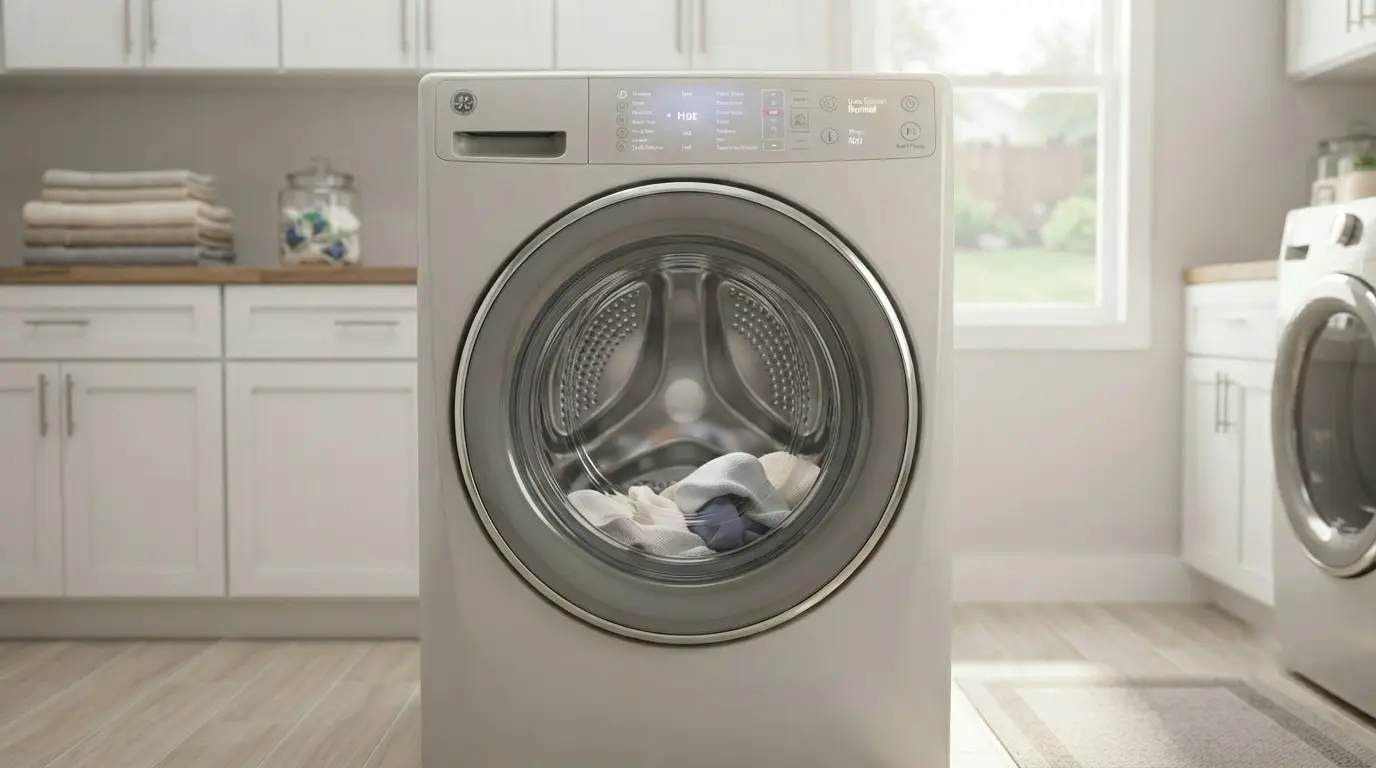
If your GE washer water stays cold even when you select the hot cycle, you’re not imagining things, and you’re definitely not alone. This is one of the most frustrating washing machine problems because your clothes come out looking clean but aren’t actually sanitized the way you need them to be.
In this guide, you’ll learn exactly why your GE washer water stays cold on the hot setting, which specific parts are likely failing, how to test each one yourself, and when it’s time to call a technician. No fluff, just real answers from someone who’s diagnosed this problem dozens of times.
How GE Washers Actually Heat Water
Before you can fix the problem, you need to understand how your machine is supposed to work. GE washers, unlike many European models, do not generate their own heat internally on standard top-loaders. Instead, they pull hot water directly from your home’s hot water supply line.
On GE front-loaders and newer GE Profile and GE UltraFresh models (like the GFW850SPNRS or GFW550SSNWW), there is an internal heater element that can boost water temperature for sanitize cycles. But on most GE top-load washers, the machine is 100% dependent on your home’s hot water heater delivering hot water fast enough.
This distinction matters enormously for troubleshooting. If you own a top-loader, the problem is almost never inside the machine. If you own a front-loader with a sanitize cycle, the internal heater could absolutely be the culprit.
👉 [Read More: GE Washer UltraFresh: Stop Smells, The 6-Cent Secret!]
Why Your GE Washer Water Stays Cold, 7 Real Causes
When your GE washer water stays cold on the hot cycle, one of these seven issues is almost always responsible. Work through them in order, starting with the simplest.
1. Your Hot Water Supply Line Is Connected Wrong
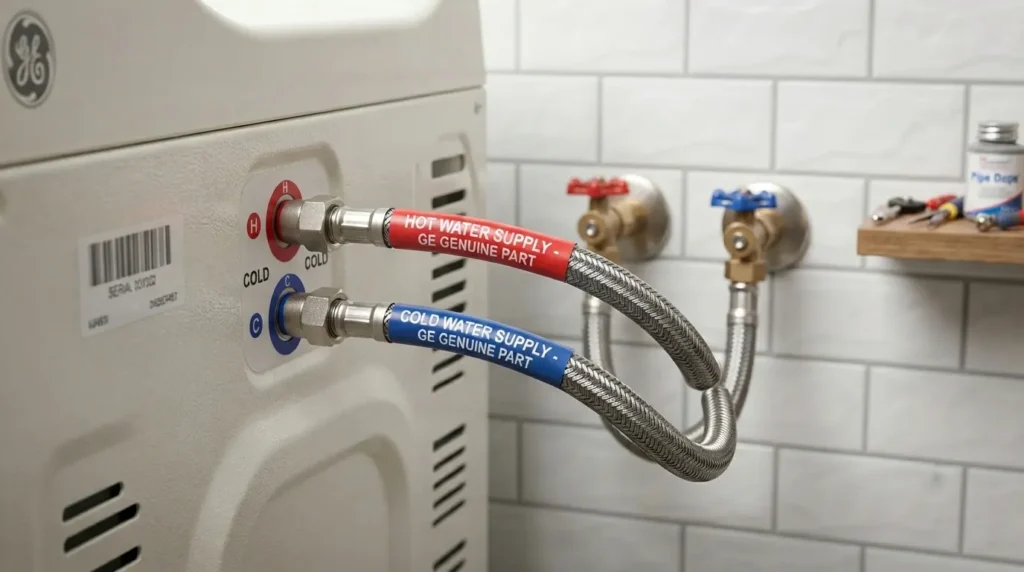
This is the number one cause and the most embarrassing one. It happens more than you think, especially after moving or installing a new machine. The hot water inlet (usually marked in red) must connect to your home’s hot supply pipe.
If the hoses were swapped during installation, cold water fills on every cycle regardless of what temperature you select. Check the back of the machine and confirm red goes to hot, blue goes to cold.
2. The Water Inlet Valve Is Failing
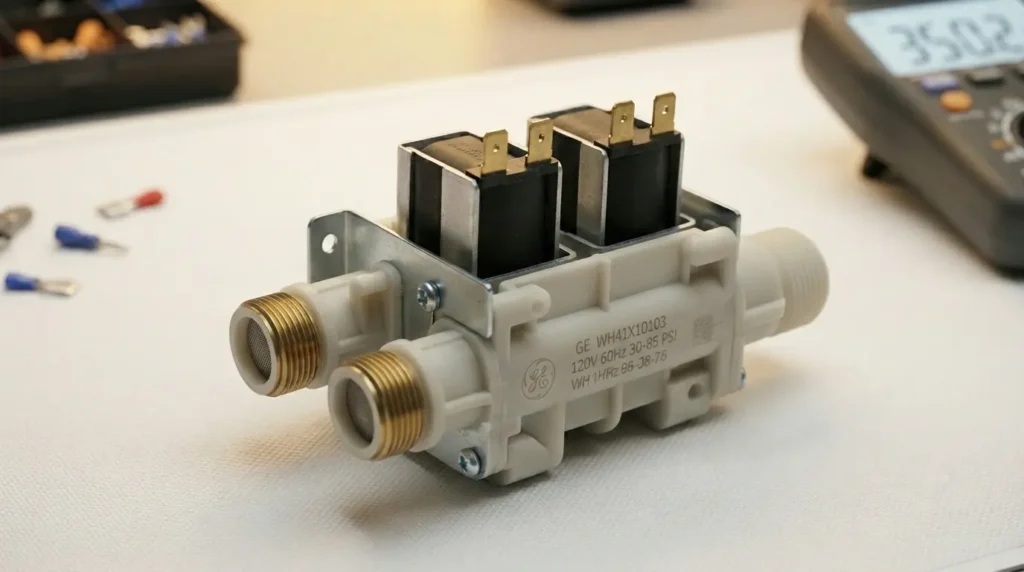
The water inlet valve is a solenoid-controlled valve that opens to allow hot or cold water into the drum. When the hot side of this valve fails, or partially fails, it either lets in no water at all or defaults to cold.
On GE models like the GTW685BSLWS or GTW460ASJWW, the inlet valve assembly costs between $25–$55 and is one of the most commonly replaced parts. A failed hot solenoid in the valve will cause exactly the symptom you’re experiencing.
3. The Water Temperature Selector Switch Is Defective
The temperature selector switch sends a signal to the control board telling it which temperature you’ve selected. When this switch develops an internal fault, it can send the wrong signal, or no signal, resulting in the GE washer water stays cold issue on what should be a hot cycle.
On older GE top-load models, this is a mechanical rotary switch. On newer electronic models, it’s a touch pad or digital selector feeding into the main control board.
4. The Thermistor or Temperature Sensor Has Failed (Front-Loaders)
Front-load GE washers with internal heaters rely on a thermistor to measure water temperature inside the drum. If this sensor fails and reads falsely high, the control board thinks the water is already hot, so it never activates the heating element.
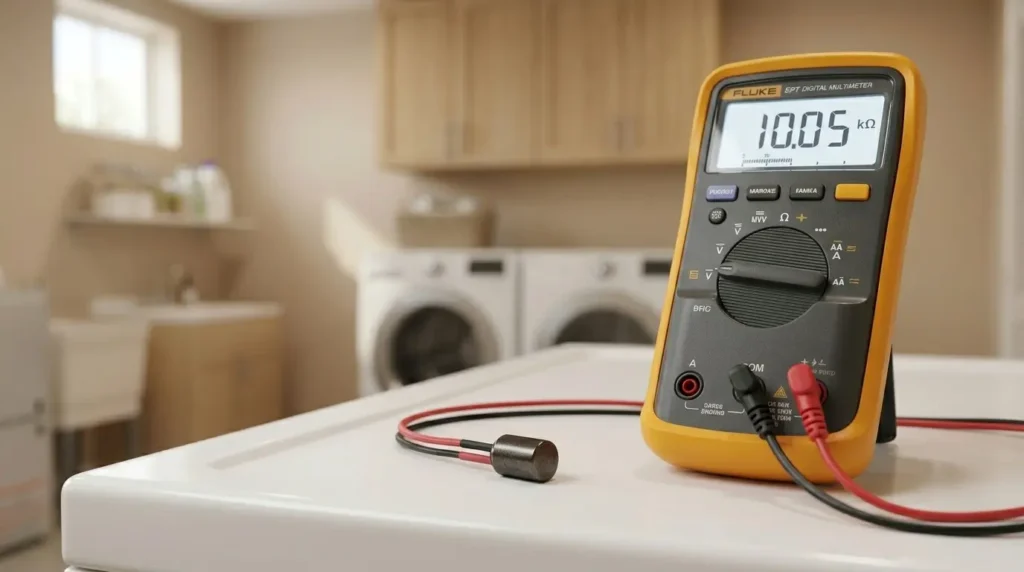
The thermistor on models like the GFW850SPNRS reads resistance values that change with temperature. At room temperature (about 77°F / 25°C), resistance should read approximately 10,000 ohms. A reading wildly outside that range means replacement is needed.
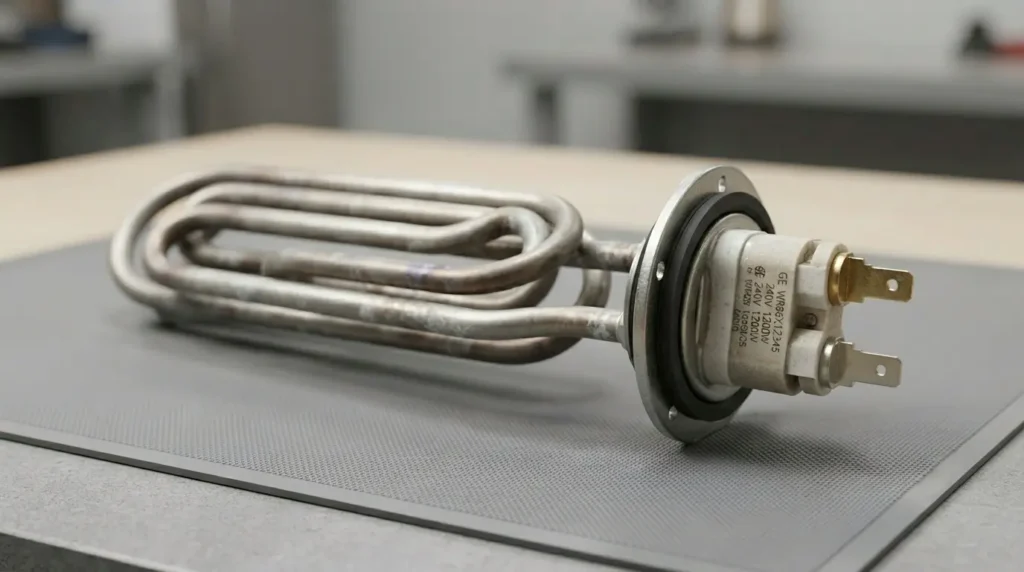
5. The Internal Heating Element Has Burned Out (Front-Loaders Only)
On GE front-loaders, the heating element sits at the bottom of the drum and activates during sanitize and high-temperature cycles. When this element burns out, the machine fills with whatever temperature water comes from the supply line, and if that water cools down en route, your GE washer water stays cold.
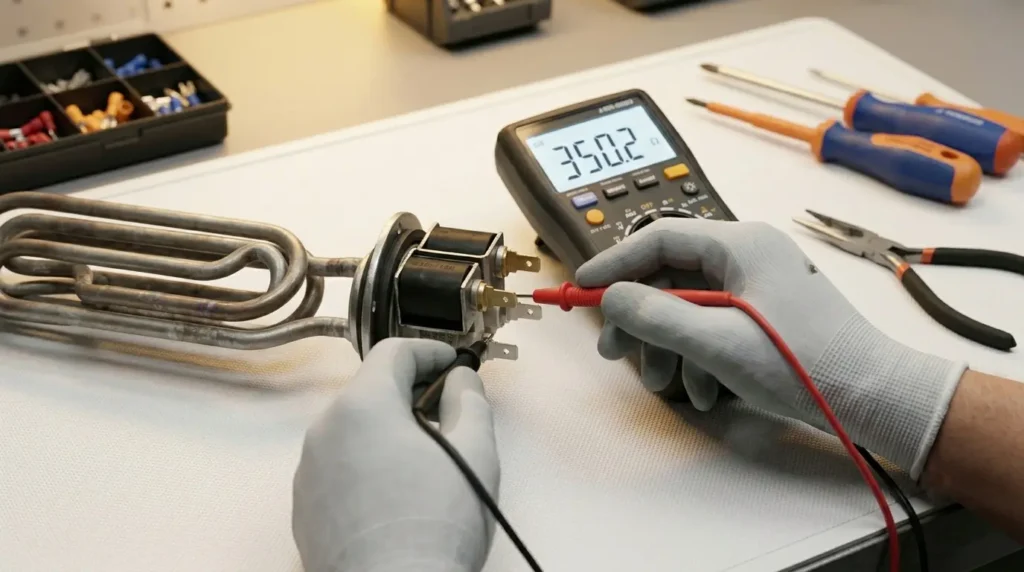
You can test the element with a multimeter. A functioning element typically reads between 20 and 30 ohms of resistance. An open circuit (OL or infinite resistance) means it’s burned out.
6. The Main Control Board Is Sending Wrong Signals
The control board is the brain of the machine. When it malfunctions, it can fail to open the hot water inlet valve solenoid even when you’ve selected a hot cycle. This is more common on machines that have experienced power surges or that are 8–12+ years old.
On GE Profile and GE UltraFresh models, the control board can cost $150–$300 to replace, which makes this the repair you want to rule out last, not first.
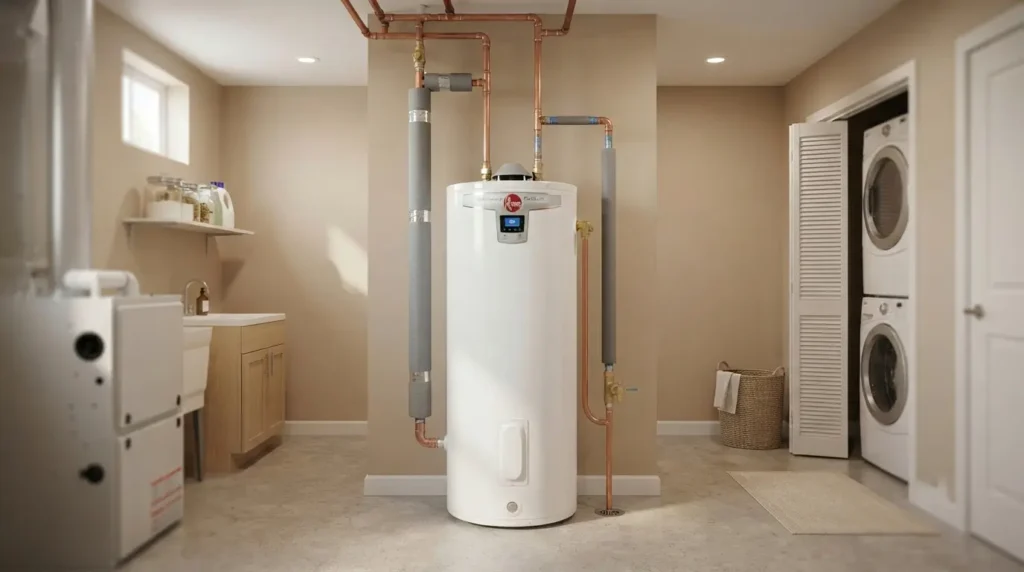
7. Your Home’s Hot Water Heater Is Too Far Away
This one is an infrastructure issue, not a washer issue. If your washing machine is located far from your water heater, in a basement on the opposite end of the house from the utility room, the hot water sitting in the pipes has already cooled by the time it reaches the machine.
A GE washer fills with approximately 14–18 gallons on a normal hot cycle. If the first 8 gallons coming through the pipe are cold (water that cooled overnight in the pipes), your average wash temperature drops significantly.
How to Diagnose the Problem Step by Step
Follow this sequence and you’ll identify the cause without spending money on the wrong part.
- Check the hose connections first. Turn the machine off, unplug it, and inspect the back. Red hose = hot supply. Blue hose = cold supply. Swap if needed.
- Run a hot water test at a nearby sink. Turn on the hot tap closest to the washer. Let it run for 60 seconds. Is it actually hot? If not, your home water heater is the problem, not the washer.
- Run a cycle and catch water from the drum. Start a hot wash cycle, pause it after 2 minutes, and scoop a small amount of water from the drum into a cup. Use a kitchen thermometer to check temperature. Hot water should read at least 110°F–120°F (43°C–49°C).
- Test the water inlet valve. Unplug the washer, remove the hot water valve solenoid connector, and test resistance with a multimeter. Most GE inlet valve solenoids read between 200 and 500 ohms. A reading of OL means it’s failed.
- Test the thermistor (front-loaders). Disconnect the thermistor connector and test resistance at room temperature. Compare to the value in your model’s service manual.
- Check for error codes. On GE front-loaders, run a diagnostic cycle. Error codes like E23 or E24 on some models indicate heating circuit failures. Refer to your specific model’s tech sheet.
- Inspect the control board last. Look for burn marks, swollen capacitors, or corrosion on the board. If visible damage is present, the board needs replacement.
⚠️ Warning: Always unplug the washer before testing any electrical components. Never test with the machine powered on unless specifically instructed by a service manual.
Parts Comparison: Which Component Is Most Likely Failing?
| Component | Top-Load? | Front-Load? | DIY Difficulty | Part Cost | Avg Cost (2026) |
| Water Inlet Valve | ✅ Yes | ✅ Yes | Easy | Low | $25–$55 |
| Temp. Selector Switch | ✅ Yes | ✅ Yes | Easy–Medium | Low | $15–$40 |
| Thermistor / Sensor | ❌ Rarely | ✅ Yes | Medium | Low | $20–$45 |
| Heating Element | ❌ No | ✅ Yes | Medium | Medium | $35–$80 |
| Main Control Board | ✅ Yes | ✅ Yes | Hard | High | $120–$300 |
| Hot Water Supply Hose | ✅ Yes | ✅ Yes | Easy | Very Low | $10–$20 |
GE Washer Temperature Facts at a Glance
| Cycle Setting | Target Water Temp | GE Top-Load Source | GE Front-Load Source | Internal Heater? |
| Cold | 60–75°F (15–24°C) | Supply line only | Supply line only | ❌ No |
| Warm | 90–110°F (32–43°C) | Mixed supply | Mixed + heater | Partial |
| Hot | 110–130°F (43–54°C) | Supply line only | Supply + heater boost | ✅ Yes |
| Sanitize | 140–158°F (60–70°C) | Not available | Internal heater required | ✅ Yes |
| Steam (select models) | 212°F+ (100°C+) | Not available | Steam generator | ✅ Yes |
Common Mistakes People Make When Troubleshooting
When GE washer water stays cold, people tend to reach for the wrong solution first. Here’s what not to do.
Replacing Parts Without Testing First
The most expensive mistake is replacing the control board because it seems like ‘the brain’ of the machine. Most of the time, the actual cause is the $30 inlet valve, but people skip testing and go straight to the big-ticket part.
Always test with a multimeter before ordering anything.
Assuming the Washer Is Broken When the Water Heater Is the Issue
If a technician has told you the washer checks out fine, believe them. In many homes, especially older ones, the hot water supply line to the laundry area runs cold for the first 1–2 minutes. The washer fills before the true hot water arrives.
The fix in this case is to run the hot tap in a nearby sink for 60 seconds before starting the washer. It’s low-tech, but it works.
Confusing Warm Water with Cold Water
Modern GE Energy Star washers are designed to default to lower temperatures even on ‘hot’ settings in some eco modes. Check your settings menu, some GE models have an automatic temperature adjustment feature that overrides your selection to save energy.
On GE UltraFresh Vent System models, this feature is called ‘Adaptive Fill’ and it can make hot cycles feel significantly cooler than expected.
⚠️ Warning: If you disable eco/adaptive modes to get hotter water, your energy costs will increase. Factor this into your decision.
Pro Tips From the Repair Bench
💡 Pro Tip: Flush the hot water line before every hot wash. Run your nearest hot tap for 45–60 seconds before starting. This clears cooled water from the pipes and ensures the machine fills with genuinely hot water from the start.
💡 Pro Tip: Check your water heater temperature setting. Your home water heater should be set to at least 120°F (49°C), ideally 130°F (54°C) if you use sanitize cycles. Many water heaters are factory-set low for safety, which means your ‘hot’ water is barely warm by the time it hits the drum.
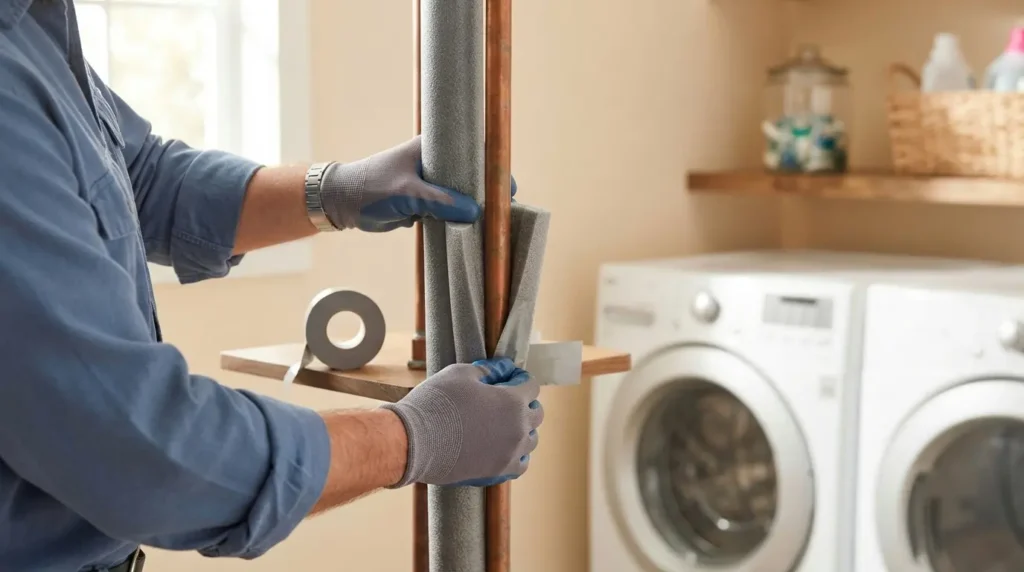
💡 Pro Tip: Insulate your hot water supply pipes. In cold climates, uninsulated pipes lose heat rapidly between the heater and the machine. Foam pipe insulation costs under $15 and can raise your effective wash temperature by 10–15°F.
💡 Pro Tip: Use a GE-certified OEM inlet valve, not a generic. Generic inlet valves often have weaker solenoids that fail within 12–18 months. Genuine GE parts (or certified equivalent) last significantly longer and maintain proper flow rates.
💡 Pro Tip: Check the hot water pressure, not just temperature. If hot water pressure at the washer connection is below 20 PSI, the inlet valve may not open fully, causing a mix of cold and hot water that reads as lukewarm. Normal household pressure should be 40–80 PSI.
When to Repair vs. Replace Your GE Washer
If your GE washer’s water stays cold due to a simple inlet valve or sensor failure, repair is almost always the right call, especially if your machine is under 8 years old.
Here’s how to think about it:
- Under 5 years old: Repair almost always makes financial sense. Even a $200 control board repair is justified on a machine worth $700–$1,100.
- 5–8 years old: Repair if the part costs under $150. If the control board or drum bearing is involved, get a replacement quote before committing.
- Over 10 years old: If the machine needs more than $200 in repairs, compare against a new mid-range GE washer. The GTW685BSLWS retails for around $650–$750 in 2026 and carries a 1-year parts and labor warranty.
👉 [Read more: GE vs. Maytag Washers 2026: Don’t Buy Until You Read This Guide that helps you]
FAQ, 7 Questions Answered
1. Why does my GE washer water stay cold even on the hottest setting?
The most common reasons are a failed water inlet valve (hot solenoid), crossed hot/cold supply hoses, or a home hot water heater that’s set too low or too far from the machine. On front-loaders, a failed heating element or thermistor can also cause this. Start by testing the water temperature at a nearby sink before blaming the washer itself.
2. Does a GE top-load washer have its own internal heater?
Standard GE top-load washers do not have internal heating elements. They rely entirely on your home’s hot water supply. Only GE front-load models, particularly those with sanitize or steam cycles, include an internal heater. Check your model’s spec sheet or look for a ‘Sanitize with Oxi’ cycle option, which confirms heater presence.
3. How hot should the water be in a GE washer on the hot setting?
On a hot cycle, water entering the drum should measure 110–130°F (43–54°C). On a sanitize cycle (front-loaders only), the internal heater boosts this to 140–158°F (60–70°C). If your hot cycle water measures below 100°F (37°C), there is definitely a problem worth investigating.
4. Can I test the water inlet valve myself without a technician?
Yes. Unplug the washer, disconnect the solenoid wire connectors from the inlet valve, and set your multimeter to measure resistance (ohms). Test each solenoid individually. A healthy solenoid reads 200–500 ohms. A reading of OL (open line) means that the solenoid has failed and the valve assembly needs replacement.
5. My GE washer shows no error codes, but water is still cold. Why?
Error codes only trigger when the machine’s internal sensors detect a fault it’s programmed to recognize. If the hot water inlet solenoid is partially degraded, letting in some water but not at full flow or temperature, the machine may not log any error. Similarly, if your home’s hot water supply is the issue, the washer has no way to know and will not generate a code.
6. How much does it cost to fix a GE washer that fills with cold water?
If the issue is the water inlet valve, expect to spend $25–$55 on the part plus 30–45 minutes of your time for a DIY fix. If you hire a technician, labor typically adds $80–$150. A failed control board repair can reach $250–$400, including labor. Supply line and pipe insulation fixes cost under $20 total.
7. Will using cold water instead of hot damage my GE washer?
The washer itself won’t be damaged; it’s designed to handle all temperature inputs. The risk is to your laundry. Cold water is less effective at killing bacteria, removing grease-based stains, and sanitizing items like baby clothes or bed linens. For regular loads, cold is fine. For hygiene-critical loads, the GE washer water-stay-cold problem needs to be fixed before you rely on those cycles.
Conclusion
A GE washer water-stays-cold problem is almost always fixable and usually cheaper than you expect. Start with the obvious: check your hose connections, test your home’s hot water supply, and run a temperature check at the drum before assuming a major component has failed.
Nine times out of ten, the fix is a $35 inlet valve or a water heater setting adjustment. Work through the diagnostic steps in this guide before spending a dollar on parts.
Got a GE front-loader with a sanitize cycle that’s gone cold? Test that thermistor and heating element; they’re your most likely culprits.