
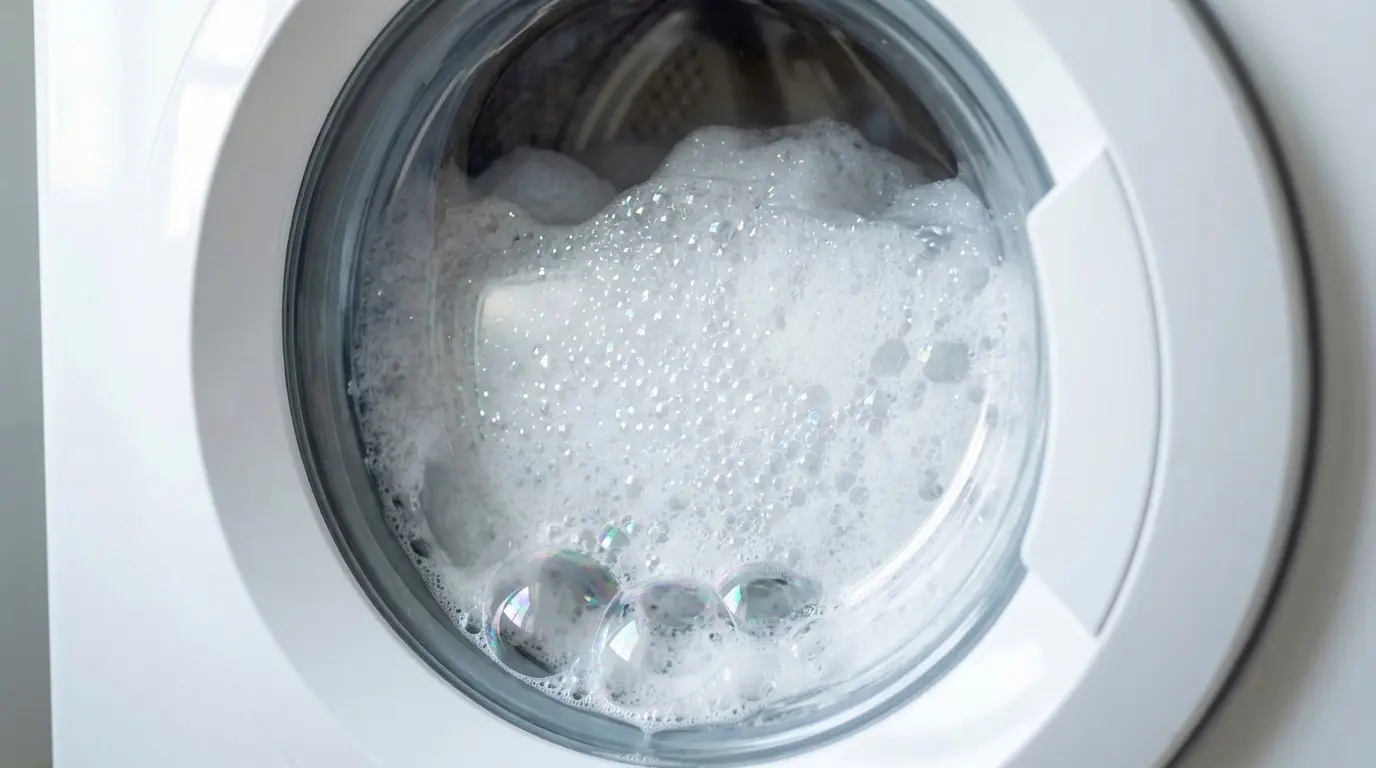
A Kenmore washer that pauses mid-cycle, adds extra rinses on its own, and flashes “Sud” on the display isn’t broken in the way most people assume; it’s actually doing exactly what it’s designed to do when it detects more foam than it can safely rinse away. That doesn’t make it any less annoying when you’re standing there with a load of wet, soapy laundry going nowhere, so this guide walks through the actual physical steps to clear it and stop it from happening again. Fix a Kenmore Washer SUDS Error with 5 Easy Steps
Table of Contents
Safety First
⚠️ SAFETY WARNING: READ BEFORE STARTING
- Unplug the washer and switch off power at the breaker before opening the detergent dispenser housing, accessing the drum, and doing anything beyond simply pressing buttons on the control panel. Most of this repair doesn’t require power to be on, and there’s no reason to risk it.
- Excess suds mean standing water and wet surfaces around the machine and floor. Keep a towel and a shallow basin nearby, and be mindful of slipping, especially if you’re pulling the drum door open manually while it’s still partially full.
- Never force the door open if the door lock is still engaged and showing resistance; on most Kenmore front-load models, forcing it can damage the lock mechanism and the latch striker. If the door won’t release and there’s visible standing water, let the machine attempt to drain on its own first (see Step 1) rather than prying at it.
- If you smell anything unusual (burning, ozone) and notice the control panel behaving erratically beyond the normal Sud error display, stop immediately and unplug the unit. That points toward an electrical issue outside the scope of this repair, and a licensed appliance technician should look at it rather than continuing.
- This repair does not involve any plumbing disconnection, gas lines, and electrical panel work. If at any point you find yourself needing to disconnect the water supply lines and work near the machine’s internal wiring harness to resolve a suds issue, that’s a sign the underlying problem may not actually be suds-related, and it’s worth stopping to consult a technician rather than continuing further into the machine than this guide covers.
Tools and Supplies You’ll Need
| Item | Purpose | Optional and Required |
| Old towels and a shallow basin and bucket | Catching excess suds and water during manual clearing | Required |
| Soft microfiber cloth and sponge | Wiping down the dispenser drawer, gasket, and drum interior | Required |
| Warm water and mild dish soap (non-sudsing) | Loosening dried detergent and fabric softener residue | Required |
| Washing machine tub cleaner tablets | Flushing residue from the drum and internal hoses | Recommended 👉 [AMAZON LINK: Affresh Washing Machine Cleaner] |
| HE (high efficiency) laundry detergent | Preventing recurrence going forward | Required for prevention 👉 [AMAZON LINK: Tide HE Turbo Clean Liquid Laundry Detergent] |
| Small soft-bristle brush (old toothbrush works) | Getting into dispenser housing grooves and gasket folds | Optional but very helpful |
Step 1: Cancel the Cycle and Manually Clear Excess Suds
Start by canceling the current cycle rather than letting the washer keep attempting extra rinses on a loop, since a severe suds overload can cause the machine to cycle through this repeatedly without actually resolving it. With the unit powered off and the cycle canceled, check the drum through the door glass; if you can see a thick layer of foam sitting on top of the water rather than mostly clear water, that confirms the suds overload rather than a separate drainage fault.
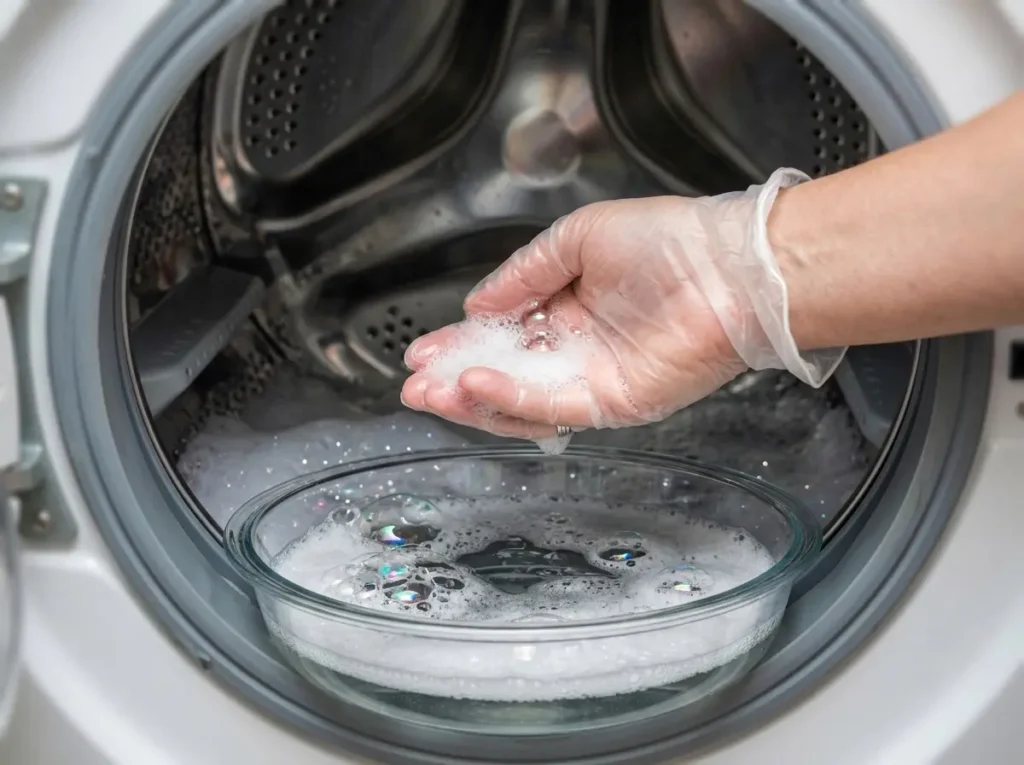
If the door will open safely (no standing water pressure against it, no lock engagement resistance), remove the laundry and set it aside in a basin, then use a cup and small container to manually scoop out as much of the sudsy water as you reasonably can before running an empty rinse-and-spin cycle. This manual step matters more than most guides mention; running a full automated cycle on top of a heavily sudsy load just recreates the same overload the machine already flagged, so reducing the volume by hand first genuinely speeds up getting back to normal operation.
Step 2: Deep-Clean the Detergent Dispenser Drawer and Housing
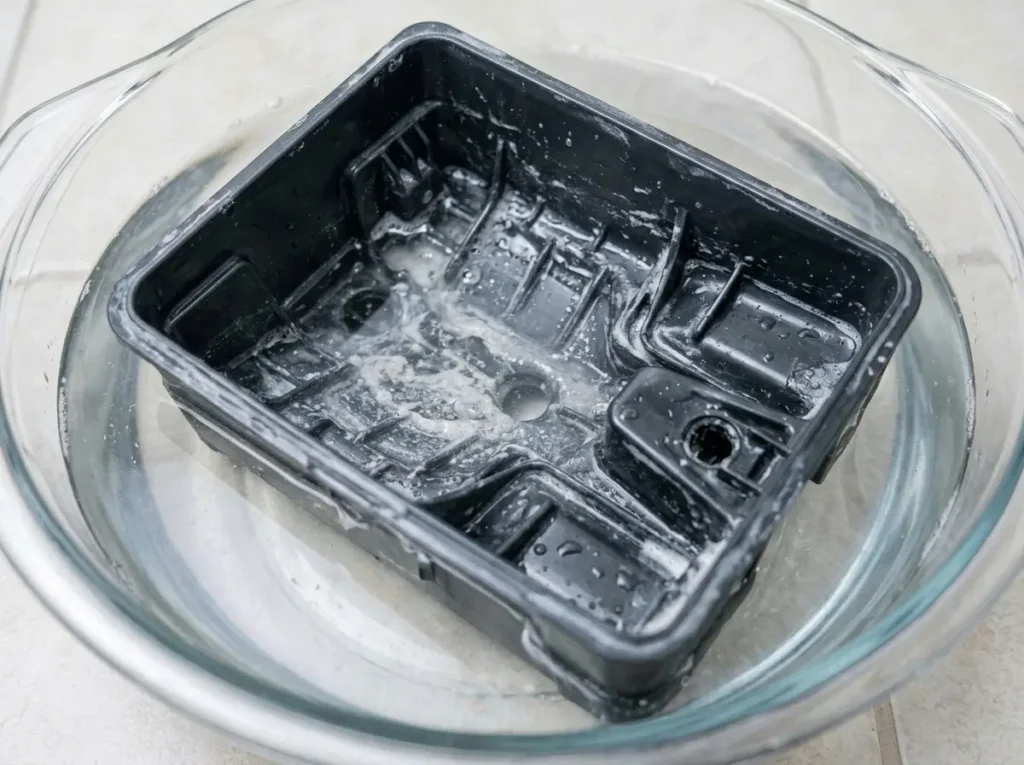
Pull the detergent dispenser drawer fully out; on most Kenmore models, this involves pressing a release tab and lifting slightly while pulling, without needing any tools. Soak the drawer itself in warm water with a small amount of mild dish soap to break down the caked detergent and fabric softener residue that builds up along the drawer’s internal channels over months of use.
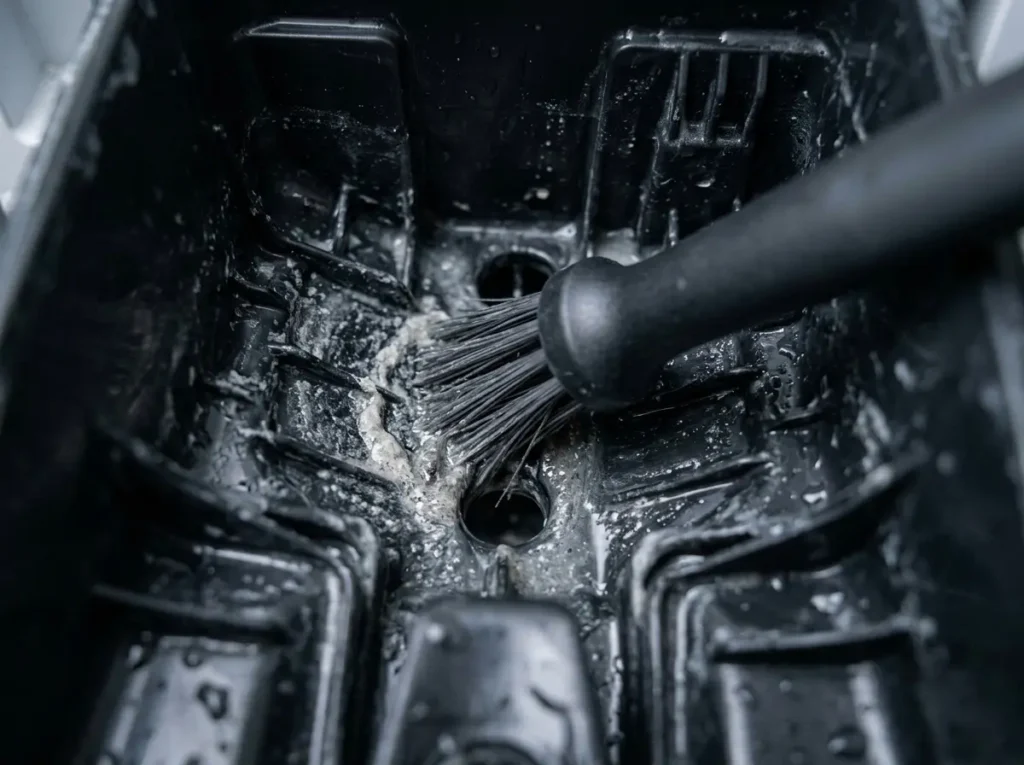
While the drawer soaks, use your brush to clean inside the housing cavity it slides into; this is the part almost everyone skips, and it’s frequently where the heaviest, oldest residue buildup actually lives rather than on the drawer itself. A flashlight helps here, since the housing cavity is dark and easy to under-clean if you’re just wiping blind. Dried, caked detergent residue in this cavity re-dissolves and re-introduces excess suds into future loads even after you’ve addressed everything else, which is why a lot of owners find the Sud error keeps coming back despite switching detergents.
Step 3: Clean the Door Gasket and Drum of Residue Buildup
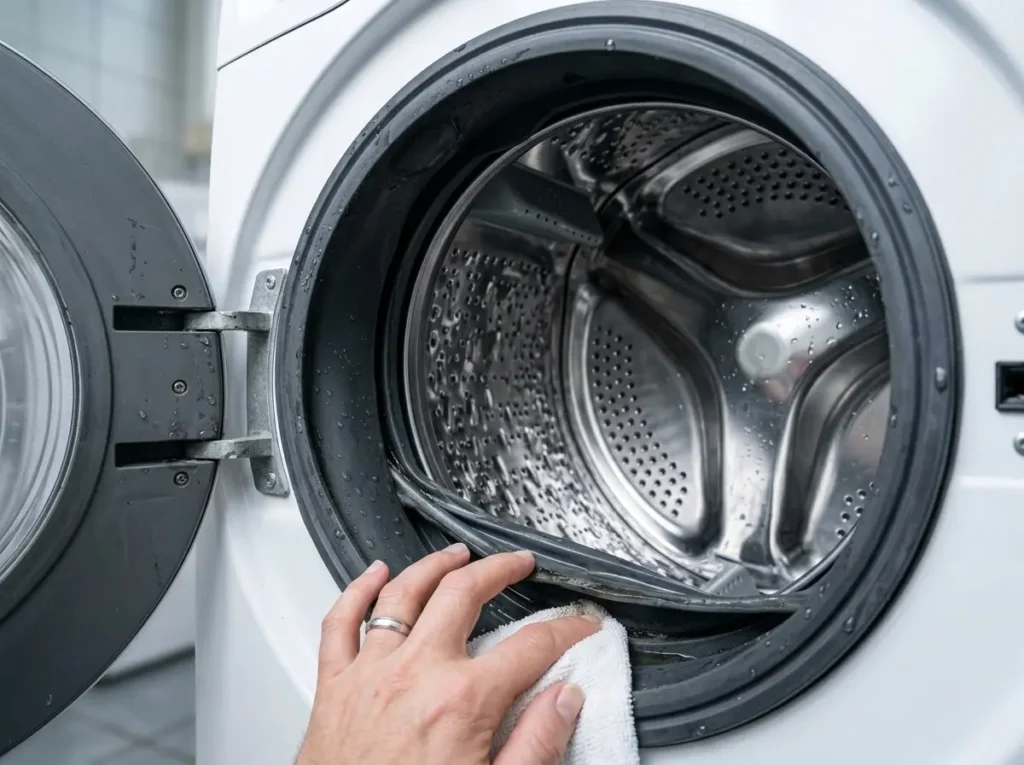
Fold back the rubber door gasket at several points around its circumference and check for residue, lint, and standing moisture trapped in the lower folds; this area holds a surprising amount of leftover detergent film that contributes to suds building up faster than the rinse cycle can clear on subsequent loads. Wipe the entire gasket surface, inside the folds and on the flat contact surface, with your damp cloth.
Wipe down the visible interior of the drum itself as well, paying attention to any perforated holes along the drum wall where residue tends to collect and slowly leach back into the wash water over several cycles. This isn’t a full maintenance deep-clean; it’s specifically targeting the residue that’s actively contributing to the suds problem you’re trying to resolve right now.
If you’re noticing an odor alongside the suds issue rather than just excess foam, that overlaps with a separate but related problem covered in its own guide 👉 [how to remove musty smell from a Kenmore front load washer].
Step 4: Run a Tub-Clean Cycle to Flush Remaining Residue
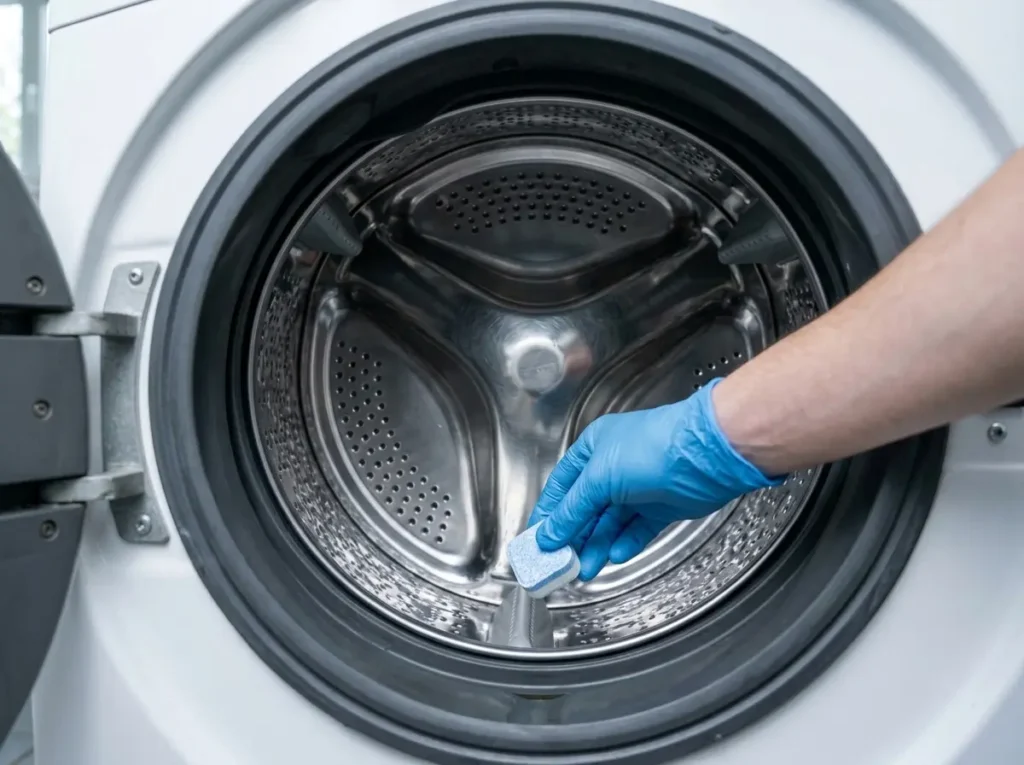
With the dispenser and gasket cleaned, run an empty tub-clean and affresh cycle (most Kenmore front-load models have a dedicated cycle for this, sometimes labeled “Clean Washer” and similar on the control panel) using a washing-machine-specific cleaning tablet rather than regular detergent. This flushes any remaining residue out of the internal hoses and pump pathway that hand-cleaning the visible drum and gasket can’t reach.
Skipping this step is the most common reason the Sud error resolves temporarily and then returns within a few loads; the visible surfaces get cleaned, but residue sitting deeper in the system keeps re-contributing suds until it’s properly flushed through a full empty cycle.
Step 5: Correct Your Detergent Type and Dosing Going Forward
This is the step that actually prevents recurrence rather than just fixing the current episode. Kenmore front-load washers require HE (high efficiency) detergent specifically, which is formulated to produce significantly less foam than standard detergent. Using regular detergent in an HE machine, even in a small amount, is one of the most common root causes of a recurring Kenmore washer Suds error.
Insider point technicians see constantly: even owners who already use HE detergent frequently overdose it, using a cap-fill amount sized for a traditional top-load agitator machine rather than the much smaller amount an HE front-load drum actually needs, since front-load washers use dramatically less water per cycle. Checking the actual dosing line on your specific detergent bottle against your load size, rather than trusting a habitual “fill to here” pour, resolves a large share of repeat kenmore washer Suds errors that owners assume must be a mechanical fault.
When This Isn’t a DIY Fix Anymore
If you’ve completed every step above, cleaned the dispenser and housing, cleaned the gasket and drum, run a tub-clean cycle, and confirmed the correct HE detergent and dosing, and the Kenmore washer Suds error still triggers on subsequent loads with a normal, reasonable amount of detergent, that’s a meaningful signal the issue may not be residue-related at all. A failing suds/pressure sensor that’s misreading normal suds levels as excessive is a distinct possibility at that point, and that’s a diagnostic and component-level repair that goes beyond what this cleaning-focused guide covers.
FAQ
1. Can I just ignore the Kenmore washer Suds error and let the machine keep adding rinse cycles?
You can let it run through its automatic extra rinses in mild cases, but if it’s cycling repeatedly without clearing, that wastes water and time without addressing the underlying residue buildup causing it.
2. How often should I run a tub-clean cycle to prevent this from recurring?
Roughly monthly for average use is a reasonable general guideline, though households doing frequent laundry and using fabric softener regularly may benefit from doing it somewhat more often.
3. Is it safe to use regular detergent occasionally if I run out of HE detergent?
It’s best avoided even occasionally; a single load of regular detergent can produce enough excess suds to trigger the error and leave behind residue that affects several subsequent loads.
4. Does using less detergent than recommended cause any problems?
Using less HE detergent than the recommended dose generally doesn’t harm the machine and is a safer error to make than overdosing when trying to avoid a recurring Kenmore washer Suds error.
5. Will cleaning the gasket and dispenser void my warranty?
No, this is routine, manufacturer-recommended cleaning using no tools and disassembly beyond removing the dispenser drawer as designed, so it doesn’t affect warranty coverage.
6. How do I know if the Kenmore washer Suds error is from a real suds overload versus a sensor problem?
If you can visually confirm heavy foam in the drum when the error triggers, it’s a genuine suds overload; if the drum looks normal with minimal foam and the error still triggers, that points more toward a sensor issue.
7. Can hard water make this problem worse?
Yes, hard water can interact with detergent in ways that increase sudsing and residue buildup, which is part of why dosing guidelines sometimes need slight adjustment based on your local water hardness.
Final Thoughts
A Kenmore washer Suds error is one of the more satisfying fixes in front-load washer ownership precisely because it’s almost never a hardware failure; it’s a cleaning and dosing issue you can fully resolve yourself in under an hour with things you likely already have at home. Work through the cleaning steps in order, correct your detergent going forward, and keep an eye on whether it actually stops recurring before assuming you’re dealing with anything more serious. If it comes back despite doing everything right, the sensor-level troubleshooting guide linked above is your next step.