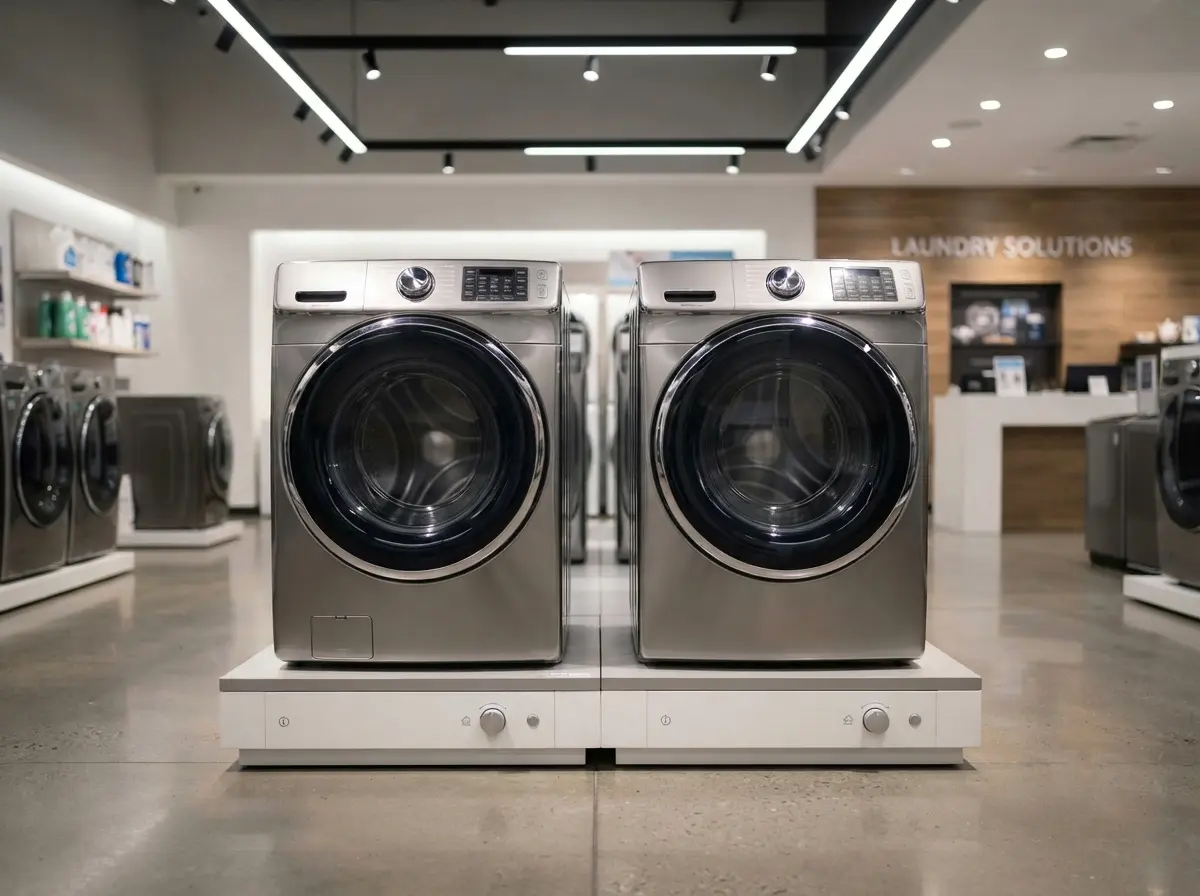
I’ve pulled more failed bearings, cracked tub spiders, and burnt-out motor control boards out of front-load washers than I care to count, and the Bosch-versus-Maytag question is one I get asked constantly by customers standing in a showroom trying to decide where their money is safer. Both brands build genuinely well-engineered machines, but “well-engineered” and “will still be running the same way in year eight” are not always the same thing, and the gap between those two ideas is exactly what this article is about.
I’m not going to tell you which one has the nicer touchscreen and the better app. I’m going to walk through what actually breaks, when it tends to break, what it costs to fix, and which brand’s engineering philosophy tends to age better under real household use.
Table of Contents
Why This Comparison Is Different From a Feature-by-Feature Review
Most Bosch vs Maytag comparisons online spend 80% of their word count on cycle counts, wash times, and app features, then tack on a single sentence like “both are reliable brands” at the end. That’s backwards for anyone actually trying to protect a $900-$1,400 purchase. Reliability isn’t a footnote; it’s the whole reason someone chooses a front-load washer over a cheaper top-load unit in the first place, since front-loaders already carry a reputation for being pickier machines.
So this comparison is built entirely around one question: five, eight, and ten years from now, which brand’s engineering choices are more likely to still have you doing laundry without a service call? Everything else, cycle names, drum capacity in liters, and smart features gets skipped unless it directly touches durability.
Drum and Suspension Design: The Core Difference That Drives Everything Else
This is where the two brands genuinely diverge, and it’s the root cause behind almost every other durability difference in this article.
Bosch machines, including the Serie 6 and Serie 8 lines sold internationally and the 500/800 Series sold in North America, use a spring-and-shock-absorber suspension system holding the drum, similar in concept to what you’d find in higher-end European-engineered appliances generally. The drum itself sits in a relatively compact, tightly toltered tub assembly. This design tends to produce excellent vibration control on hard floors and lower noise at high spin speeds, but it also means there’s less physical clearance around the drum, which matters later when we talk about repair labor.
Maytag, part of the Whirlpool Corporation family, builds its front-load drums with a heavier, more overbuilt tub-and-spider assembly and a suspension geometry that prioritizes raw mechanical toughness over refinement. Maytag has leaned hard into a “built tough” positioning for decades, and in front-load washers specifically, that shows up as thicker stainless steel drum construction and a bearing housing that’s designed to be somewhat more forgiving of an unbalanced load slammed in by someone in a hurry.
| Insider point most spec-comparison sites miss: Drum RPM numbers that look nearly identical on paper (say, 1200 RPM on a Bosch versus 1200 RPM on a Maytag) do not translate to identical real-world stress on the suspension. Bosch’s tighter tolerances mean that RPM is achieved with less physical drum wobble, which is gentler on the bearing over years of cycles, but it also means a Bosch machine is less tolerant of being installed slightly out of level, and a Bosch installed on an uneven floor will show accelerated wear that a Maytag on the same floor might shrug off longer. If you’re on an older wood-frame second floor and an uneven basement pad, that installation sensitivity is a real long-term durability variable, not a nitpick. |
Motor Technology Head-to-Head
| Feature | Bosch (500/800 Series) | Maytag (front-load lineup) |
| Motor type | Brushless DC (inverter) direct drive | Brushless DC (inverter) direct drive |
| Belt and direct drive | Direct drive (no belt) | Direct drive (no belt) |
| Typical motor warranty | 10 years (motor only, varies by model/region) | 10 years (motor only, on most current models) |
| Common failure point | Motor control board more often than motor windings | Motor control board and rotor position sensor |
| Real-world motor lifespan reported | Generally 10+ years before motor-specific failure | Generally 10+ years before motor-specific failure |
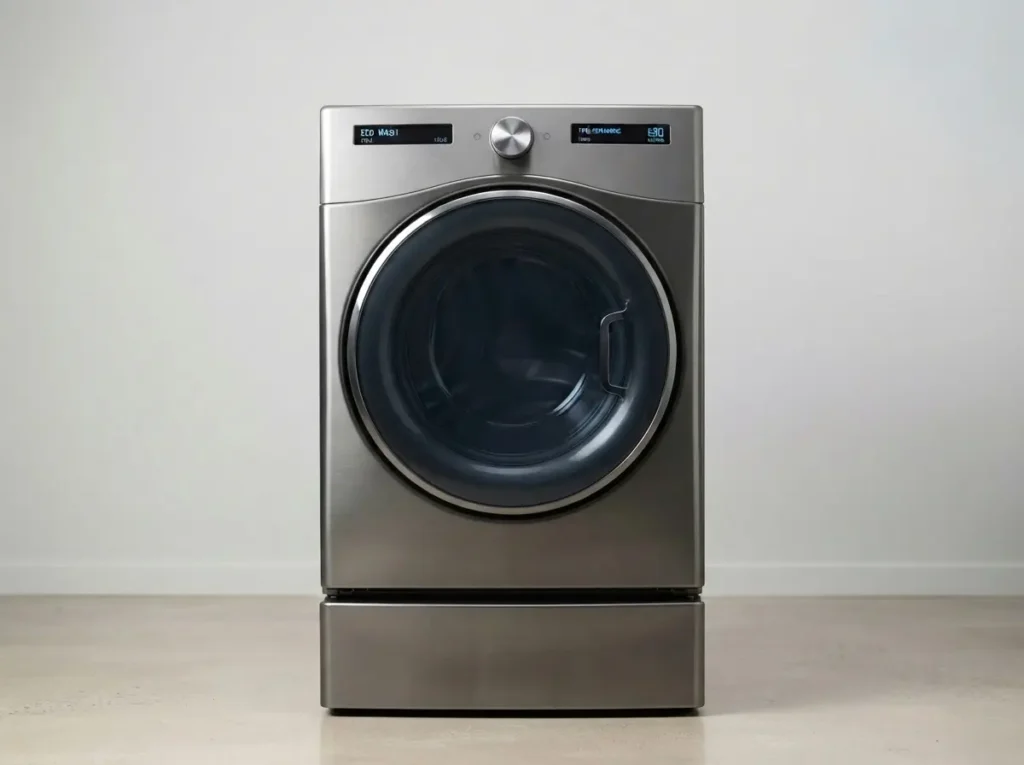
Both brands have converged on essentially the same core motor architecture: brushless DC direct-drive motors, with no belt to wear out and snap. This is genuinely good news for buyers of either brand, because belt failures used to be one of the most common washer repairs a decade ago, and both companies have engineered that failure mode out almost entirely on their current front-load lines.
Where they diverge slightly is in the supporting electronics around the motor rather than the motor itself. Bosch’s motor control logic tends to be tightly integrated with the main control board, which is efficient when everything works but means a control board failure on a Bosch can sometimes take the motor control down with it, requiring a single (often pricier) board replacement rather than isolated component swaps.
Bearing Failures: The Single Biggest Long-Term Risk on Both Brands
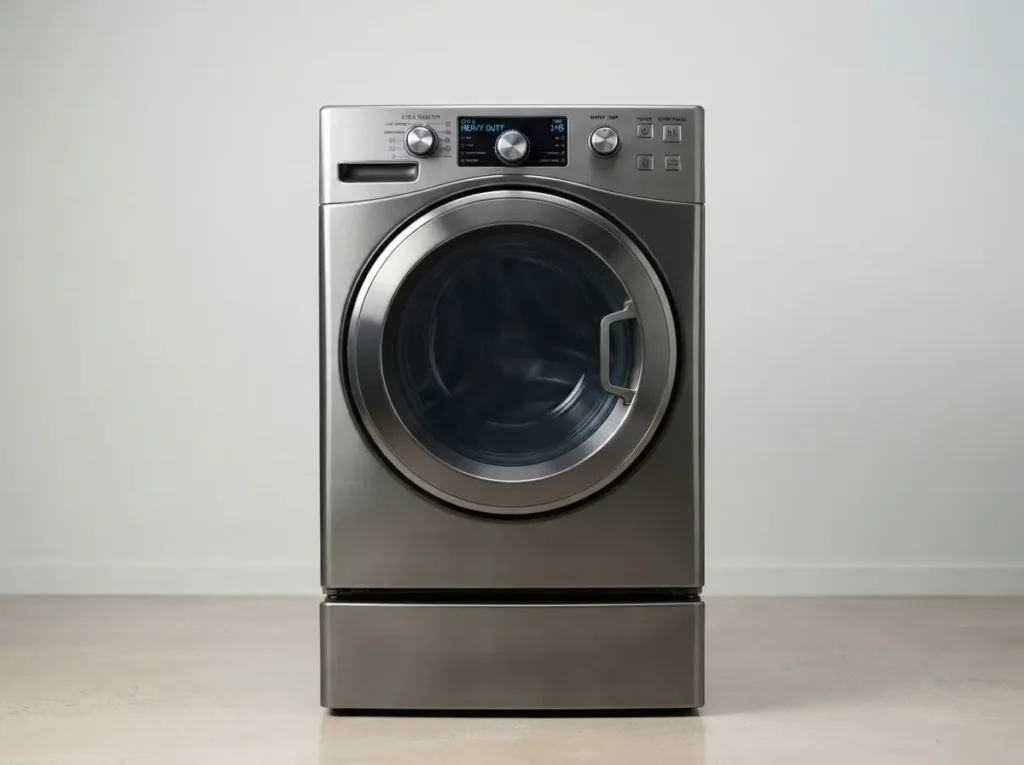
If there’s one repair that defines “front-load washer getting old,” it’s the drum bearing. Both Bosch and Maytag are vulnerable here, but the failure pattern and the fix look different.
On Bosch machines, the bearing is generally sealed into the outer tub half as a single assembly. When it fails, usually announced by a loud grinding and roaring sound that gets worse as the spin cycle ramps up, the repair typically requires replacing the entire rear tub half, not just the bearing, because Bosch doesn’t sell the bearing separately for most consumer models. This is more expensive per repair but the sealed design also means the bearing is protected from water intrusion for longer, which is often the actual root cause of premature bearing failure in the first place.
On Maytag front-loaders, the bearing housing is more commonly serviceable as its own unit or, on some models, pressed into a tub assembly that independent repair techs have more established aftermarket procedures for rebuilding, since Whirlpool-family parts have a longer service history in North America and a much bigger population of technicians who’ve done the repair before.
| Insider point: a bearing that starts making noise at year 6 is not actually a “the brand failed” story on either side; it’s very often a door-seal and drain-pump-filter maintenance failure story that led to water leaking into the bearing housing over months and years. Both brands’ bearings are rated for well over a decade of normal use under proper drainage conditions. The brand difference that actually matters here is repair accessibility and cost once it does fail, not which bearing is “better” in isolation. |
Control Board and Electronics Reliability Over Time
Modern front-load washers from both brands are computers with a drum attached, and the control board is now the single most common non-wear-item failure point industry-wide.
Bosch’s European engineering heritage shows up as densely packed, tightly integrated boards. When they work, they work well and enable smooth, quiet motor ramping. When they fail, most commonly reported around the 6-9 year mark, the whole board is usually swapped rather than a discrete component repaired, and Bosch board replacements tend to sit at the higher end of the price range for either brand.
Maytag’s boards are generally simpler and less densely integrated, which some independent technicians actually prefer because there’s a longer track record of aftermarket refurbished boards and a broader base of shops willing to attempt component-level repair (replacing a single blown capacitor and relay) rather than a full board swap.
Neither brand has a dramatically worse control-board failure rate in independent repair-tracking data than the other; this tends to land in “both experience it, neither is dramatically better” territory, but the cost and repair-path difference is real and worth knowing before you’re staring down a $300+ estimate five years from now.
Door Seal and Gasket Longevity
The rubber door boot is a wear item on every front-load washer regardless of brand, but the two companies approach the material and the mold design differently.
Maytag’s gaskets tend to be slightly thicker and, anecdotally, show fewer reports of cracking at the accordion folds in the 5-7 year range compared to some competitors, though this varies model to model and by how consistently the user runs a hot maintenance cycle.
Bosch’s gaskets are engineered for a tighter door seal (part of why Bosch washers are often quieter and leak less at high spin speeds when new), but that tighter engineering means less material flex over the years, and once a Bosch gasket does start to crack, it’s frequently a full gasket replacement rather than a partial fix, a job that runs meaningfully higher in labor cost than the equivalent Maytag repair because of how tightly the door assembly is packed on Bosch’s more compact chassis.
If you’re dealing with a moldy and degraded gasket right now rather than planning ahead, that’s a maintenance-lane topic we cover in detail elsewhere. 👉 [How to clean and prevent mold on a front-load washer door seal], this article stays focused on the long-term durability comparison itself.
Repair Costs and Parts Availability Compared
| Repair Category | Bosch (Typical Cost Range) | Maytag (Typical Cost Range) | Parts Availability |
| Drum bearing | Higher, full tub-half replacement is common. | Moderate, more serviceable options | Maytag/Whirlpool-family parts are generally easier to source in North America. |
| Control board | Higher, integrated board swap | Moderate; some component-level repair possible | Comparable turnaround on both, Maytag slightly faster in most US/Canada markets |
| Door gasket | Higher labor due to compact chassis | Moderate | Both widely available |
| Drain pump | Moderate | Moderate, often easier physical access | Maytag generally has more room to work in the cabinet. |
| Independent technician familiarity | Lower, fewer techs specialize in Bosch | Higher, the Whirlpool-family service network is deep in the US. | Maytag’s advantage in North America specifically |
This table alone is arguably the most important durability data point in this whole comparison for buyers outside major metro areas: a machine that’s theoretically just as reliable as its competitor but sits in a city with only one authorized Bosch technician isn’t actually more “durable” in the way that matters to a real household, because a two-week wait for a bearing repair functionally means the washer is down for two weeks either way. In the US and Canada specifically, Maytag’s decades-long Whirlpool-family service network gives it a genuine practical durability edge that has nothing to do with the engineering itself.
What Actually Fails After Year 5, Real Pattern Comparison
Based on patterns reported consistently across repair-tracking communities and independent appliance technician forums (not brand marketing), here’s how the failure timeline tends to compare:
| Bosch front-load washers, years 5-10: Most common complaints center on control board failures and door gasket replacement, both of which come with above-average repair bills but relatively rare in terms of frequency. Bosch owners report either “runs flawlessly for a decade” and “one expensive repair around year 7” far more often than a slow accumulation of small issues. |
| Maytag front-load washers, years 5-10: More reports of drain pump and door lock/latch mechanism issues earlier in the timeline (years 4-6), generally cheaper individual fixes, but slightly more frequent overall, a pattern of “several smaller repairs” rather than one big one. |
| The insider question a good salesperson should be asking you here that almost nobody thinks to raise themselves: “Would you rather have one expensive repair once, and a couple of cheaper repairs more often?” That’s genuinely the practical difference in failure philosophy between these two brands, and it should factor into the decision as much as the sticker price does, because it changes your total cost of ownership curve differently depending on how you budget for appliance repairs. |
Which Household Situations Favor Each Brand’s Durability Profile
Even within a strict durability-only lens, household context changes which brand’s failure pattern is less painful to live with.
Favors Bosch’s durability profile: households in a major metro area with an authorized Bosch service center nearby, installed on a solid, perfectly level concrete floor, run consistently rather than in occasional heavy bursts, and where the owner would rather absorb one larger repair bill in exchange for years of near-silent, low-vibration operation in between.
Favors Maytag’s durability profile: households in smaller towns and rural areas where independent appliance repair techs are more likely to have direct experience with Whirlpool-family machines, higher-volume laundry use (large families, frequent bulky loads like bedding), older and less perfectly level installation surfaces, and owners who prioritize faster, cheaper individual repairs over fewer-but-pricier ones.
Neither profile makes one brand objectively “more durable” in a vacuum, the engineering data genuinely supports both as solid long-term performers. The practical durability winner depends heavily on your specific installation conditions and your local repair ecosystem, which is exactly the kind of thing a spec sheet will never tell you.
For a broader look at where either of these brands sits against the rest of the market rather than each other specifically, our full washing machine brand reliability breakdown covers nine major brands side by side.
FAQ
1. Which lasts longer, a Bosch and Maytag front-load washer?
Neither brand shows a dramatic edge in raw lifespan data; both commonly reach 10+ years with normal use. The real difference is in failure pattern (one bigger repair on Bosch vs. a few smaller ones on Maytag) and repair-network accessibility, which affects how “long-lasting” the machine feels in practice.
2. Are Bosch washers harder to repair than Maytag?
Generally yes, in North America specifically, mainly due to fewer independent technicians with deep Bosch experience and a more compact chassis that increases labor time on certain repairs like the door gasket and bearing.
3. Do Bosch vs. Maytag front-load washers have more control board failures?
Both experience control board issues at a broadly similar rate over a 10-year span. Maytag’s boards are somewhat more often repairable at the component level; Bosch’s more integrated boards more often require a full board swap.
4. Is the extra upfront cost of a Bosch justified by better durability?
Not purely on durability grounds, the core engineering reliability is comparable. The premium is more justifiable for noise/vibration performance and build refinement than for a meaningfully longer service life.
5. Which brand’s bearing failure is more expensive to fix?
Bosch bearing repairs tend to run higher because the bearing is typically not sold separately and requires a full tub-half replacement on most consumer models, while Maytag’s design allows more serviceable repair paths on many models.
6. Does the installation surface really affect long-term durability between these brands?
Yes, meaningfully. Bosch’s tighter suspension tolerances make it more sensitive to an uneven and unstable floor over years of use than Maytag’s more forgiving suspension geometry.
7. Are parts easier to find for one brand over the other?
In the US and Canada, Maytag parts are generally easier and faster to source due to the long-established Whirlpool-family parts network. Bosch parts availability has improved but still generally lags in smaller markets.
Final Verdict
If I’m being straight with you the way I would with someone standing in front of me in a showroom, neither of these brands is going to hand you a lemon under normal, reasonably careful use. The engineering on both sides is genuinely solid, and the “durability” question mostly resolves into a question about repair philosophy and your local service ecosystem rather than one machine simply being built better than the other.
If you live somewhere with strong Bosch service support, have a rock-solid level installation, and would rather pay for quiet, refined operation with the acceptance that a repair bill down the road might be a bit steeper, go with the Bosch. If you’re in a smaller market, run heavier and more frequent laundry loads, and would simply rather deal with smaller, cheaper repairs as they come up over a decade instead of one bigger one, the Maytag’s more forgiving, more serviceable design is the safer long-term bet.
Whichever way you lean, don’t buy either one without checking current authorized service coverage in your specific area first; that single factor will do more to determine how “durable” your washer feels in year seven than anything in a spec sheet. Check current pricing and model availability directly with retailers before purchase, since exact configurations shift by region and season.