
Every technician who’s spent real time under the hood of a Samsung front-load washer has a mental shortlist of the five and six complaints that account for most of the service calls, and the frustrating part for owners is that half of those symptoms look nearly identical on the surface while pointing to completely different root causes. This piece walks through what’s actually happening when your Samsung front loader starts acting up, without pretending every strange noise and smell means the same thing.
I’m not handing you a repair manual here; this is the diagnostic layer, the part where you figure out what’s actually wrong before you decide whether it’s a five-minute fix and something worth calling someone in for.
Table of Contents
Samsung Front-Load Washer Won’t Drain and Drains Slowly
This is, by a wide margin, the single most common complaint on Samsung front-load washers, and it’s also the one most frequently misdiagnosed as a “broken pump” when the actual cause is far simpler. Water sitting in the drum at the end of a cycle, and a wash that seems to hang indefinitely on a rinse and spin step, almost always traces back to something physically blocking the drain path rather than a failed motor and pump.
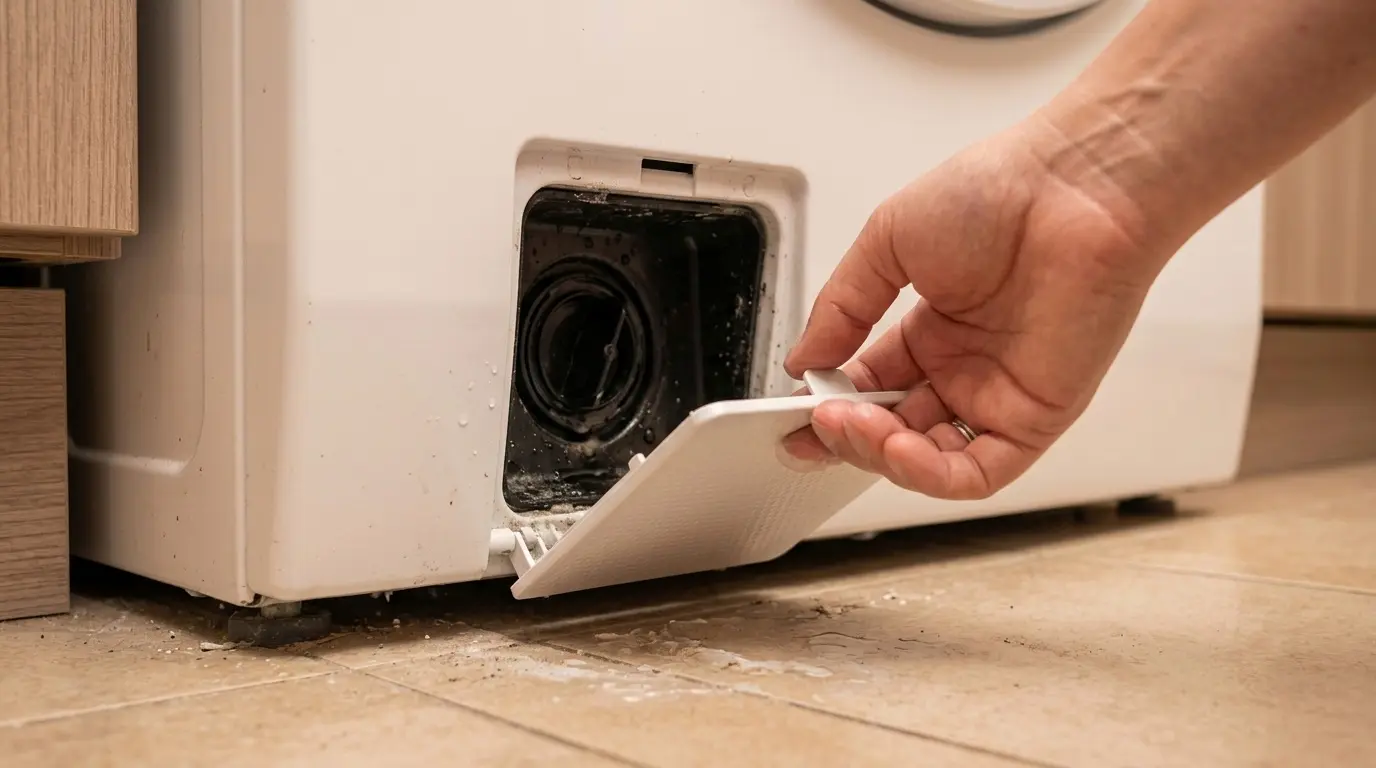
The quick check technicians run first, before touching anything else: the drain pump filter, typically accessed through a small access panel near the bottom-front of the machine. Coins, buttons, bra underwires, and small socks are the usual culprits, and in households that wash a lot of pet-owner laundry, pet hair mats into the filter surprisingly fast and choke flow long before the pump itself is anywhere near failing.
If you’re dealing with this right now, the full step-by-step filter access and cleaning process is covered in the dedicated fix guide rather than here. 👉 [how to clean the drain pump filter on a Samsung front-load washer]. If your display is showing a specific drain-related code rather than just slow draining with no code, that code has its own explanation in the error code reference. 👉 [Samsung washer error code guide].
Excessive Vibration and “Walking” During Spin
A Samsung front loader that shakes hard enough to move across the floor during high-speed spin and that produces a heavy thumping sound gets blamed for a “bad machine” more often than almost any other symptom, but in the overwhelming majority of cases, this comes down to one of two things that have nothing to do with a defective unit: an unlevel installation and shipping bolts that were never removed during setup.
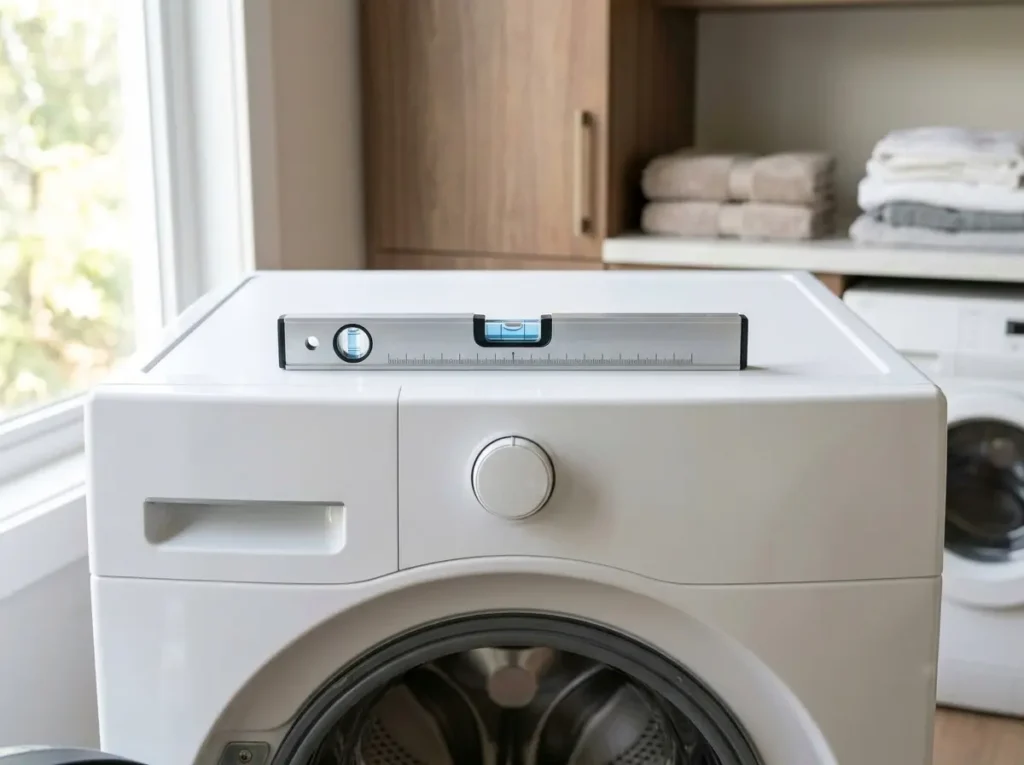
Samsung front loaders ship with transport bolts holding the drum rigid during shipping, and if even one of those bolts wasn’t removed during installation, the machine will vibrate dramatically at spin speed because the suspension system can’t do its job. Beyond that, these machines are genuinely sensitive to floor level; a washer that’s off by even a small amount front-to-back and side-to-side will transfer far more vibration into the floor than most owners expect, especially on upper-floor installations and older wood-frame construction.
| Insider point: most owners don’t check themselves. A technician’s first question on a vibration complaint is almost never about the machine at all; it’s “Did you check with a level, and just eyeball it?” Most people assume a washer sitting flush against the floor is level, when in reality even a slight tilt that’s invisible to the eye is enough to cause a persistent walking and banging problem that looks like a mechanical fault but is purely an installation issue. |
Genuine suspension and shock absorber wear does happen on older units, but it’s far less common than a level and shipping-bolt issue, and it typically shows up as a duller, more constant vibration across the whole cycle rather than a sudden, dramatic bang only at peak spin.
Door Won’t Unlock After a Cycle
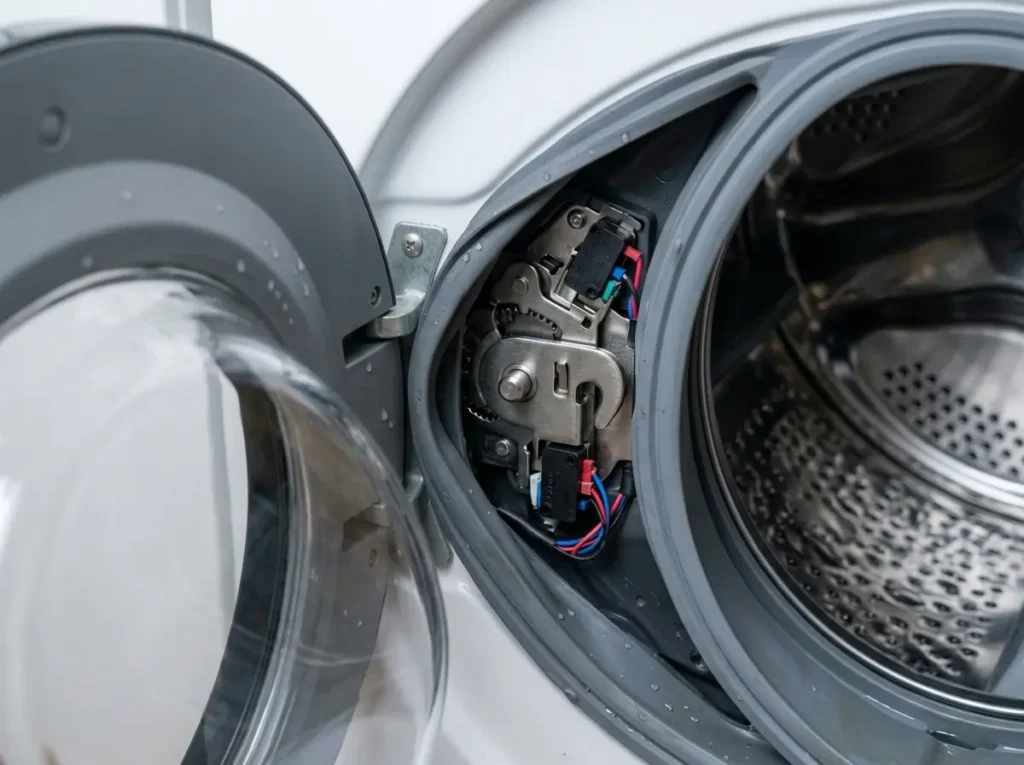
A locked door that won’t release after the cycle finishes is one of the more anxiety-inducing symptoms simply because it traps your laundry inside, but it’s rarely as serious as it feels in the moment. The two most common underlying causes are a water level that hasn’t fully drained (Samsung’s door lock logic often won’t release while it still detects standing water inside the tub as a safety measure) and a door lock switch assembly that’s failed and isn’t sending the correct signal to release.
Distinguishing between these two is usually straightforward: if you can hear and see water still sitting in the drum, the lock is very likely behaving correctly and protecting against an unintended opening, which points back to the same drainage issue discussed above rather than the lock itself being broken. If the drum is fully empty and dry and the door still won’t release, that’s a stronger sign of an actual door lock component issue.
Persistent Musty and Moldy Smell
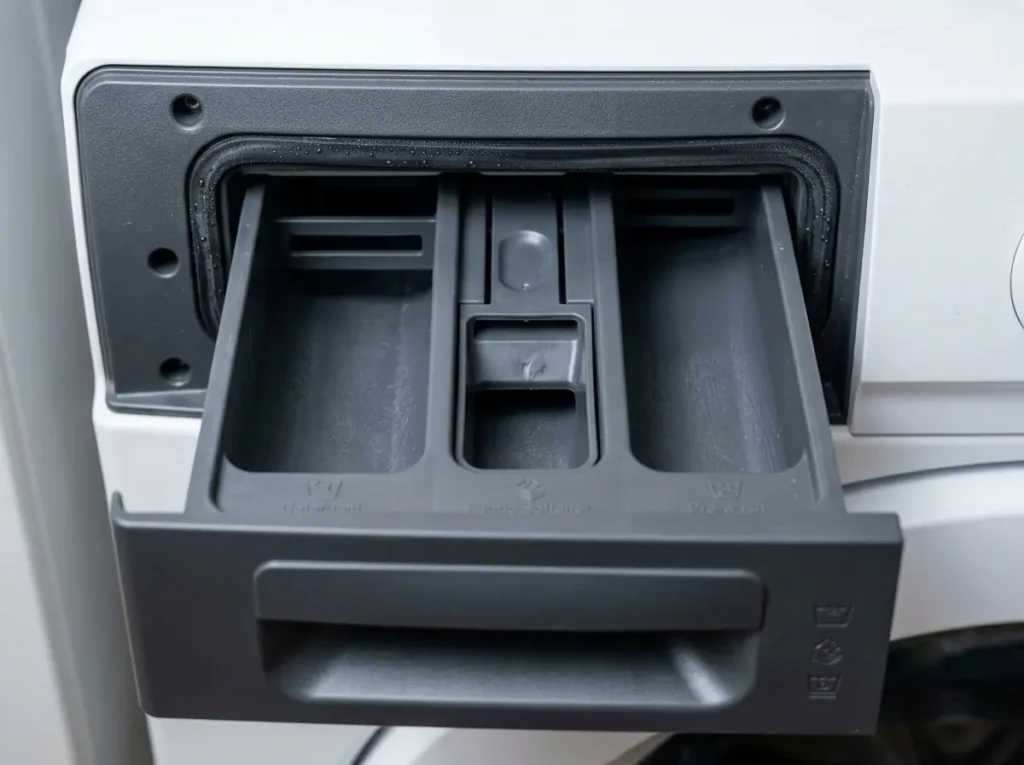
This complaint gets attributed to “mold in the machine” almost universally, and while that’s not wrong exactly, it’s incomplete, the smell is very often coming from a specific, overlooked spot rather than a general mold problem throughout the drum. The detergent drawer and its dispenser housing trap a biofilm buildup from fabric softener and detergent residue that most owners never think to inspect closely, and that buildup can produce a stronger, more persistent odor than the door gasket itself in a lot of real cases.
The rubber door gasket is still a genuine contributor, particularly the lower fold where water and lint collect after every cycle and rarely fully air-dry between loads, especially in households that close the door immediately after finishing rather than leaving it cracked open. Consistent use of regular (non-HE) detergent in an HE-rated front loader is another frequently overlooked contributor, since non-HE detergent produces excess suds that don’t rinse away completely and leave residue behind for mold to feed on over time.
For the full cleaning and prevention process rather than just the diagnostic explanation, that’s covered separately 👉 [how to remove and prevent mold smell in a Samsung front-load washer].
Samsung Front-Load Washer Won’t Spin and Spins Poorly
A washer that finishes its cycle with clothes still soaking wet, rather than reasonably damp, points toward one of a few distinct causes, and figuring out which one matters a lot before deciding what to do next. An unbalanced load that the machine’s sensors repeatedly detect and refuse to spin at full speed for safety reasons is the most common and least serious cause; the machine isn’t broken, it’s doing exactly what it’s designed to do when it senses an uneven weight distribution.
A failed door lock switch can also prevent spin from engaging at all, since most front-load washers require a confirmed door-lock signal before allowing high-speed spin as a safety interlock. Less commonly, a genuine motor and drive component issue is the cause, which tends to show up as a complete absence of spin attempt rather than a spin that starts and then aborts partway through.
Loud Grinding and Banging Noise During Operation
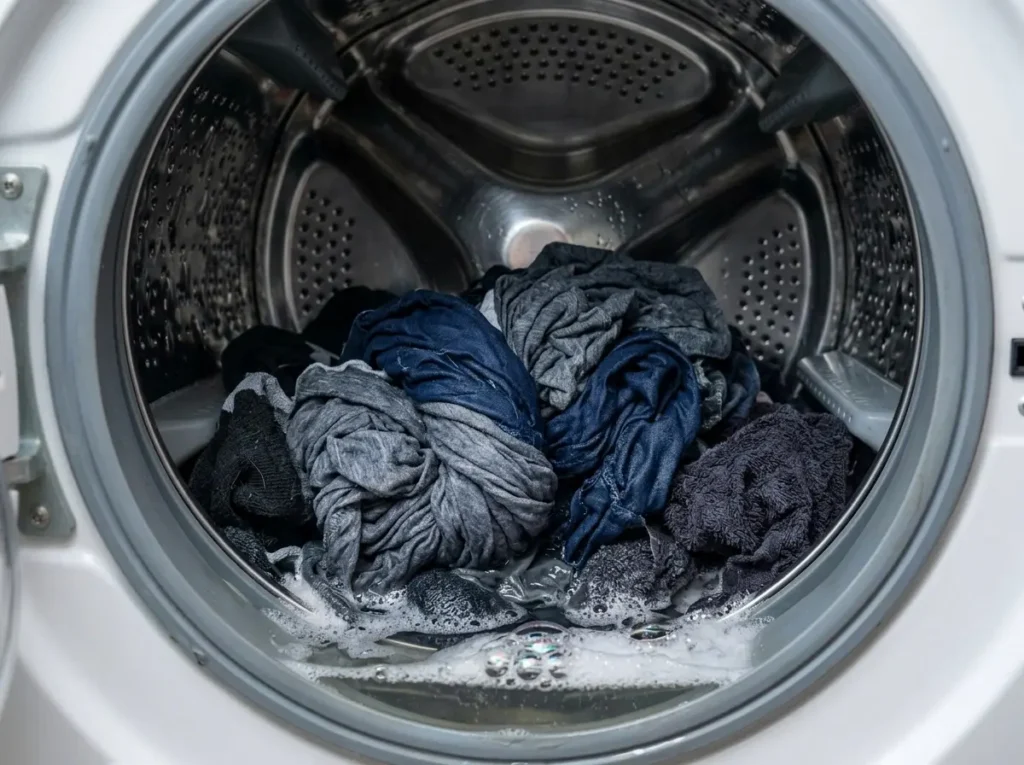
A grinding sound that gets louder and more pronounced as spin speed increases, rather than a one-time bang, is one of the few symptoms in this list that more reliably points toward an actual mechanical wear issue rather than a settings and installation problem, commonly a drum bearing showing early wear, though this typically develops gradually over years rather than appearing suddenly in a machine that was running fine the week before.
A single loud bang at the start of the spin, rather than an escalating grind, is far more often a small hard object (a coin, a button) caught between the outer tub and the drum rather than a bearing issue, and it’s worth ruling that out before assuming the worst about the machine’s mechanical condition.
The washer won’t fill and fills slowly.
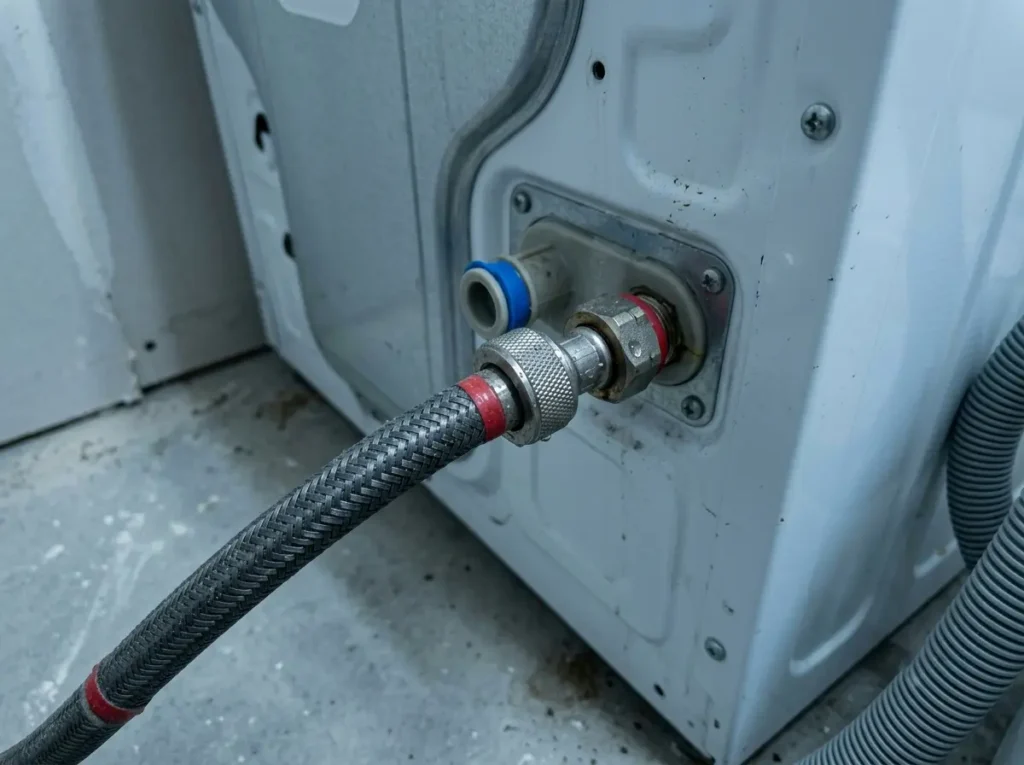
Slow and absent water fill traces back to one of a short list of usual suspects: a partially closed supply valve behind the machine (more common after any recent plumbing work in the house than most people realize), a clogged inlet screen filter where the hoses connect to the back of the washer, and low household water pressure affecting the fill rate specifically at that connection point.
The inlet screen filters are small mesh screens sitting just inside the hose connection ports on the back of the machine, and they catch sediment and mineral buildup over years of use. In hard water areas, these can restrict flow significantly long before anyone suspects them as the cause, since they’re easy to overlook compared to checking the supply valve itself.
FAQ
1. Why does my Samsung front-load washer smell even though I clean it regularly?
Regular cleaning that focuses only on the visible door gasket often misses the detergent drawer housing and dispenser cavity, which can hold onto residue and produce odor independently of gasket cleanliness.
2. Is a vibrating Samsung washer always a sign of a mechanical problem?
No, installation level and unremoved shipping bolts cause the large majority of vibration complaints, and genuine suspension component wear is a comparatively less common cause.
3. Should I be worried if my washer won’t spin at full speed?
Not necessarily; the machine deliberately limits and refuses full-speed spin when it detects an unbalanced load as a safety measure, which is normal behavior rather than a malfunction in most cases.
4. Why does water stay in my washer at the end of the cycle?
This points toward something restricting the drain path, most commonly a clogged drain pump filter, rather than a failed pump motor in the majority of real cases.
5. Is it normal for a Samsung front-load washer to take longer to fill than it used to?
A gradual slowdown in fill time over months and years is common and usually traces to sediment buildup in the inlet screen filters rather than a sudden mechanical failure.
6. Can a locked door mean my washer is broken?
Not usually, a locked door after a cycle most often means the machine still detects water in the drum and is following its normal safety logic rather than experiencing an actual lock failure.
7. What’s the difference between a one-time bang and a grinding noise during spin?
A single bang typically points to a small object caught in the drum, while an escalating grind that worsens with spin speed more reliably points toward a wearing drum bearing.
Final Thoughts
Most of what feels like a serious mechanical failure on a Samsung front-load washer turns out to be one of a handful of simple, well-known causes once you know what to actually check first: a level, a filter, a supply valve, or a shipping bolt. The genuinely mechanical issues exist too, but they’re the minority, not the majority, of what actually walks through a technician’s door.