
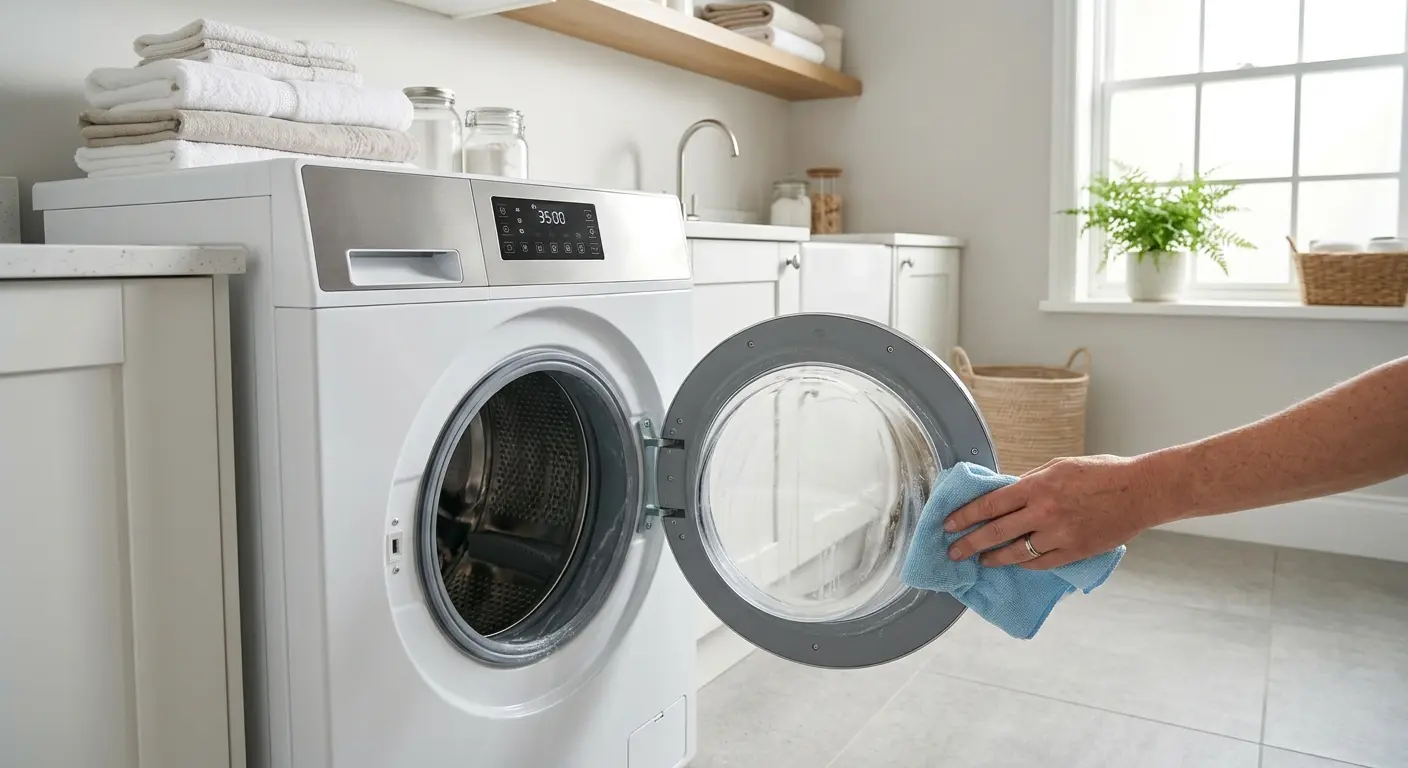
The hard water effect on LG and Samsung washer parts shows up as scale on the heating element, clogged water inlet screens, and detergent residue inside the machine. A monthly cleaning cycle with an empty drum, plus a washer-safe descaler (LG) or Samsung’s vinegar method when residue shows, keeps buildup in check. Hands-on work is brief, while cycle time depends on the model. Samsung’s Self-Clean runs about 1 hour on top-loaders and about 4 hours on front-loaders. Exact cycle names and allowed cleaners can vary by model, so check your washer’s manual if something doesn’t match.
Table of Contents
Why Hard Water Matters
Hard water carries dissolved calcium and magnesium. Inside a washer, those minerals cause four problems:
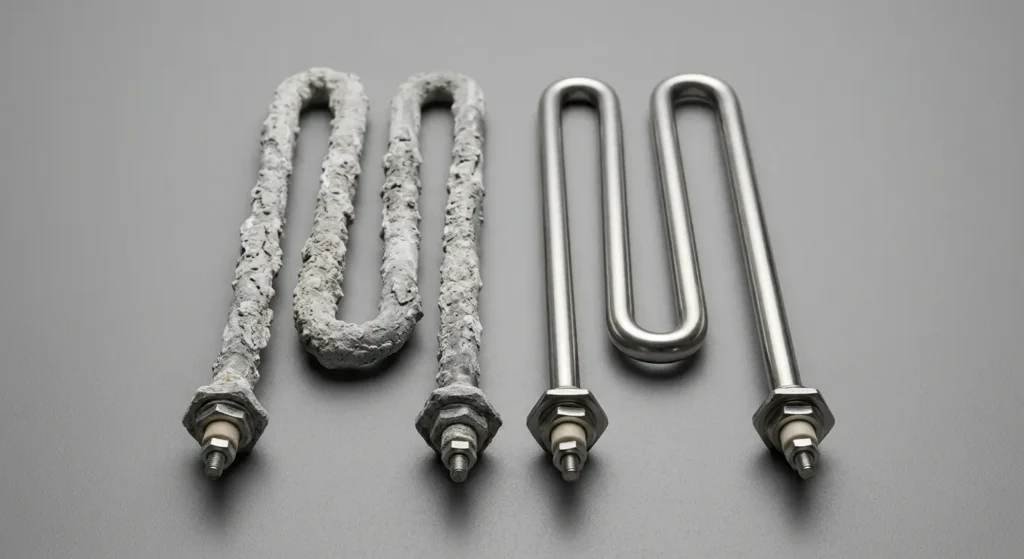
- Scale on the heating element. Scale acts like insulation, so the element works harder to heat water. That raises energy use and can wear the element out early.
- Detergent buildup. Minerals react with detergent and leave a film on the drum, the dispenser, and clothes.
- Smell and mold. Residue holds moisture, and damp residue is where musty odors start.
- Reduced flow. Scale collects on the small screens at the water inlets and slows the fill.
The result is a washer that cleans less well, uses more energy, and wears out sooner.
Supplies
- A washer-safe tub cleaner or descaler
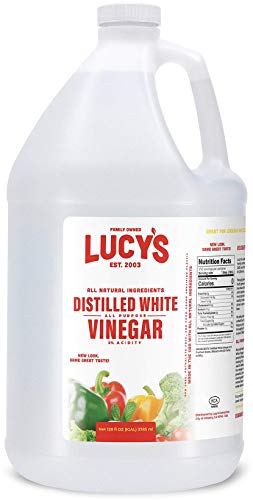
- Distilled white vinegar (Samsung method)
- Liquid chlorine bleach (Samsung odor method only, never combined with vinegar)
- A soft cloth or sponge, such as microfiber cleaning cloths
- Old towels and a shallow tray or basin
- A bowl for soaking filters
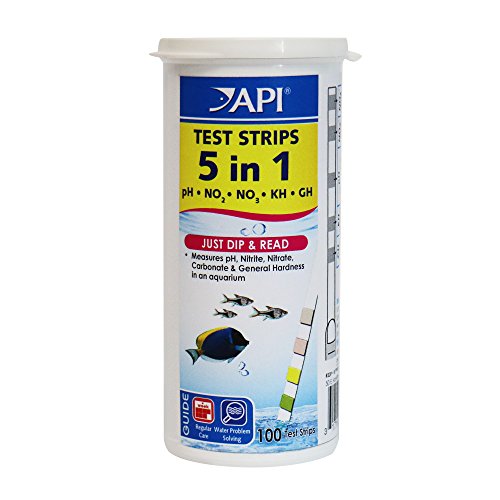
- Optional prevention: hard water test strips and an inline washing machine water filter. Confirm that any filter fits your hoses.
Warning: Use only cleaners labeled safe for washing machines. Never mix bleach with vinegar or ammonia.
As an Amazon Associate, this site earns from qualifying purchases.


Step-by-Step: LG Washers
1. Empty the tub and run Tub Clean.
Remove all laundry, because a cleaning cycle with clothes inside can damage them. Start the tub clean cycle.
What to see: The cycle finishes and the drum drains. If it did not work: If a film or chalky residue remains, run the cycle again before moving on.
2. Descale visible mineral buildup
Where white scale is visible, use a descaler that is labeled safe for washer tubs and follow its label. Then run Tub Clean again before washing any clothes so no descaler stays behind.
What to see: The scale loosens, and the interior looks clear. If it did not work, repeat the descaling and check that the product is intended for washers.
3. Clean the inlet filters.
Warning: Unplug the washer before touching the hoses or inlet screens. Keep towels ready for spills.
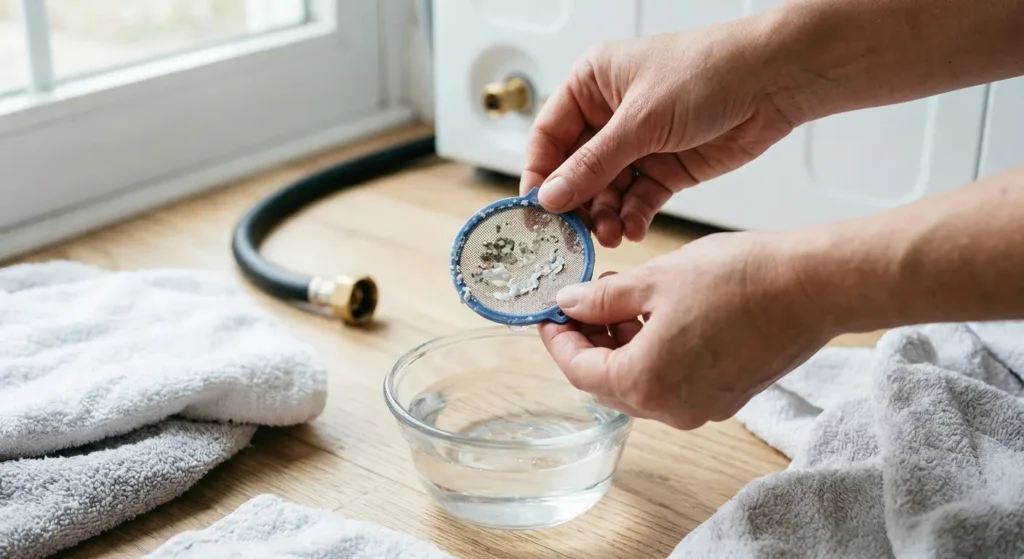
Close the water supply valves and disconnect the hoses. Remove the small screens from the water inlets and soak them in white vinegar or a washer-safe limescale remover. Rinse the screens, reinstall them, and reconnect the hoses.
What to see: Grit or white flakes come off, and water fills at a steady pace. If it did not work: If flow stays weak, contact LG service. Never run the washer without the screens installed.
Step-by-Step: Samsung Washers
1. Run self-clean on a schedule
With the drum empty, start Self Clean, Self Clean+, or Pure Cycle, depending on the model. No added cleaner is needed. A reminder light appears after 20 washes on top-loaders or 40 on front-loaders.
What to see: The cycle completes, and the drum looks clean. If it did not work: If suds or residue remain, run the cycle again.
2. Use the vinegar method for visible white residue.
With the drum empty:
- Pour 4 cups of white vinegar into the tub.
- Run the longest, hottest cycle with no detergent.
- Wipe the interior with a damp sponge.
- Run a second hot-water cycle with no detergent to rinse.
On top-loaders, pause the first cycle halfway to scrub the interior and dispenser with a sponge or toothbrush, then resume.
What to see: Chalky residue wipes away easily. If it did not work: Repeat the sequence once more and check that the tub is fully rinsed.
3. Clean the pump filter (front-loaders).
Warning: Unplug the washer before opening the pump filter. Keep towels ready, because water will come out.
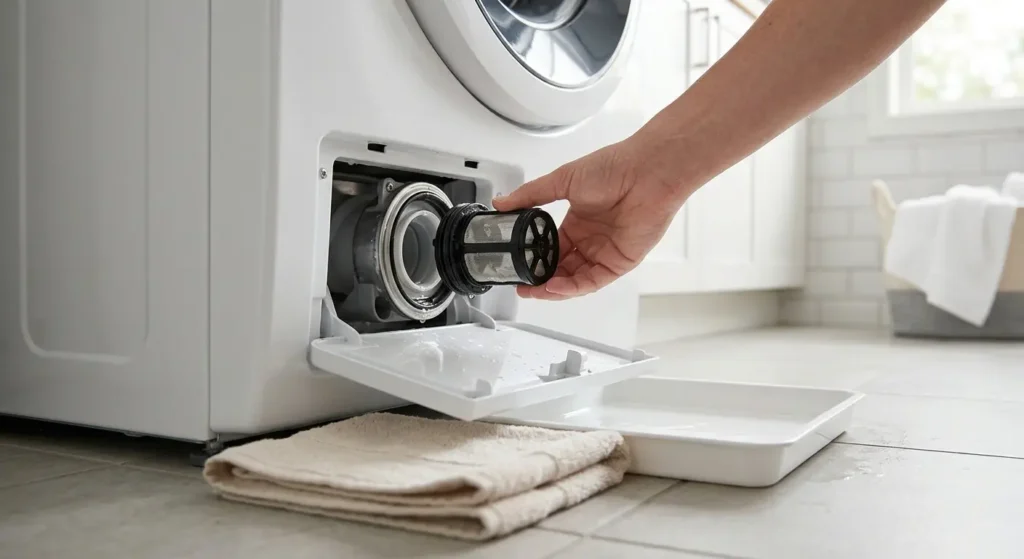
Front-loaders have a pump filter behind a small panel near the bottom front. Place towels and a shallow tray underneath, open the filter slowly, and let the water drain. Clear lint and debris, rinse the filter, and refit it snugly. Top-loaders and some older front-loaders have no removable pump filter.
What to see: Lint and debris come out, and the machine drains normally. If it did not work: If draining problems continue, contact Samsung service.
4. Clean the detergent drawer and exterior.
Pull out the detergent drawer and rinse it. Dry the recess completely before reinserting the drawer. Wipe the exterior surfaces and dry them to remove cleaner or water residue.
What to see: No film or residue in the drawer or recess. If it did not work, soak the drawer briefly and wipe again.
Smell and Mold Fix
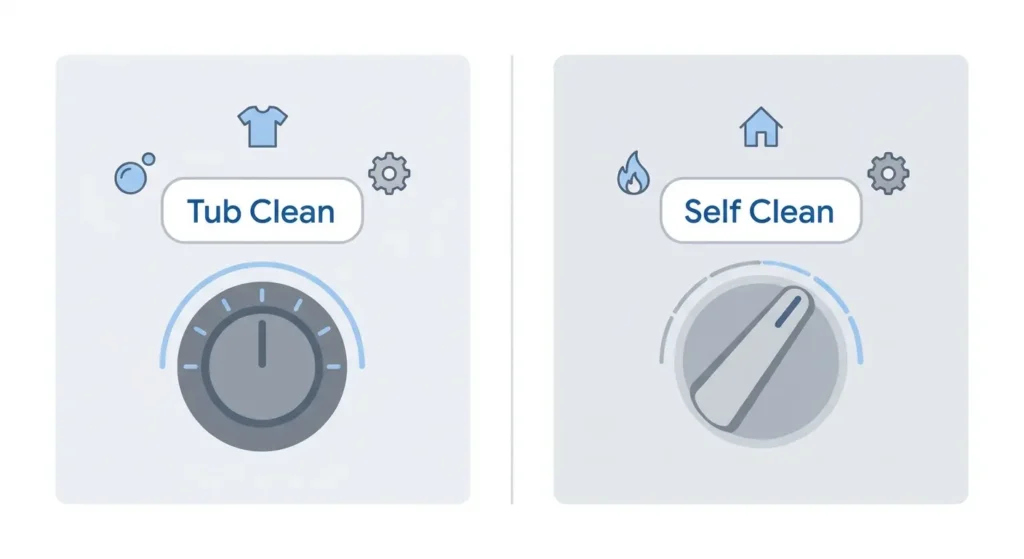
LG: Run Tub Clean using a washer-safe cleaner. If a musty smell is already present, run Tub Clean weekly until the smell clears. Leave the lid or door open between loads so the drum can dry.
Samsung: For odors, add up to 6 cups of distilled white vinegar directly into the tub and run a hot cycle. Repeat if the smell lingers. For stubborn odors or visible mold, run Self Clean+ as a separate cycle with liquid chlorine bleach filled to the MAX line in the main-wash compartment. Do not use the bleach compartment, and start the cycle immediately. Bleach left sitting in the drum can cause rust, so wipe the tub afterward.
Warning: Bleach and vinegar must never go in the same cycle or be mixed. Run them as separate cycles, with a full rinse between.
What to see: The odor fades after one or two cycles. If it did not work: If the smell persists, contact Samsung service.
Cleaning Schedule
| When | What to do |
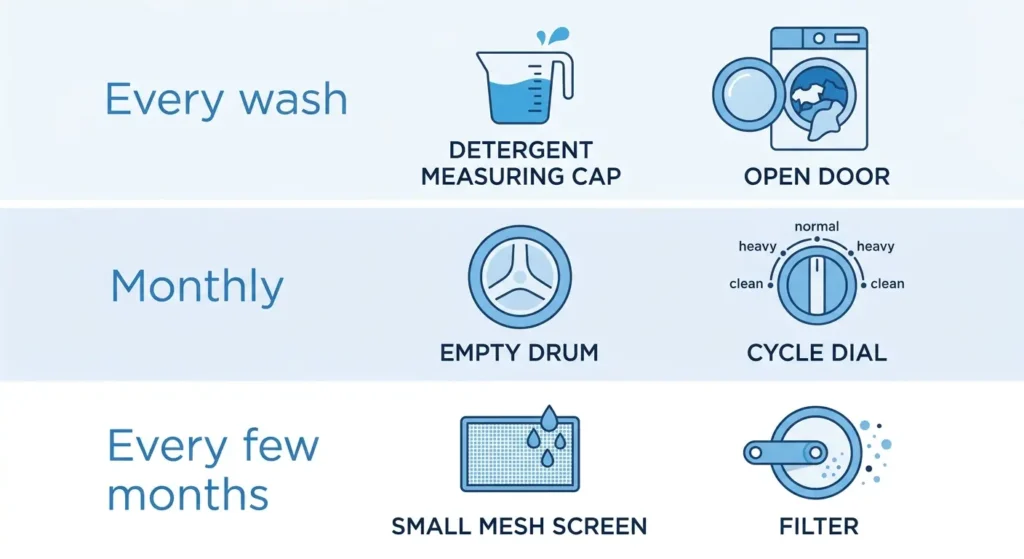
| Every wash | Measure detergent using the pack’s hard water dose. Leave the door or lid open afterward. Remove damp laundry promptly. |
| Monthly | Run the Tub Clean (LG) or Self Clean (Samsung) with an empty drum. Samsung users can follow the reminder light (20 washes top-load, 40 front-load). |
| Every few months, or when water flow weakens | Clean the inlet screens. Clean the pump filter on Samsung front-loaders. Descale visible buildup. |
Daily Habits
- Remove wet laundry as soon as the cycle ends. Damp items left inside cause odors.
- Leave the door or lid open so the drum can dry.
- Follow the detergent pack’s dose for hard water, and do not add extra.
- Use fabric softener sparingly, since it adds to residue.
- Run cleaning cycles only with an empty drum.
Common Mistakes
- Cleaning with laundry inside. This can damage both the clothes and the washer.
- Skipping the second tub clean after descaling (LG). The descaler can stay behind and reach the next load.
- Using a cleaner the manual does not allow. Washer-safe labeling matters.
- Leaving bleach in the drum (Samsung). It can cause rust.
- Mixing bleach with vinegar or ammonia. The combination releases dangerous fumes.
- Adding extra detergent. It leaves residue and feeds odors.
- Running the washer without the inlet screens. Debris can enter the machine.
Checking Your Water Hardness
Before assuming hard water is the cause, confirm it. A local water utility can usually
provide a hardness reading for municipal supplies, and simple test strips are available
for well water or to double-check a municipal reading at home. Chalky buildup on faucets,
showerheads, or kettles in the same home, is a practical sign the supply is hard, even
without a test.
Signs of Hidden Damage
Some problems need a technician. Watch for these:
- Heating element scale. Warm washes feel lukewarm or take longer than before.
- Reduced water flow. The washer fills slowly even after the inlet screens are cleaned.
- White residue. Chalky film returns quickly after cleaning cycles.
- Stiff clothes. Laundry feels rough even at the correct detergent dose.
A technician can inspect the heating element and inlet connections.
FAQs: Hard Water Effect on LG and Samsung Washer
Does hard water damage LG and Samsung washers? What goes first?
Yes, over time. Calcium and magnesium minerals form scale on parts inside the machine, and the heating element is the most exposed part. Scale insulates the element, so it works harder to heat water and can wear out early. Scale can also clog the small screens at the water inlets and leave white residue on the drum. Water softening and a monthly cleaning cycle slow all of this down.
How can I tell hard water is affecting my washer?
Several signs show up without opening the machine. White, chalky residue on the drum, door area, or clothes points to mineral buildup. Towels and clothes that feel stiff or scratchy after washing are another clue, along with a weaker flow of water during fill. Water that seems slow to warm can point to a scaled heating element. Chalky buildup on faucets and kettles in the same home suggests the water supply is hard.
Is vinegar safe to use in LG and Samsung washers?
Samsung allows distilled white vinegar in the tub, using a hot cycle with no detergent, followed by a hot rinse. For LG, the safest choice is a tub cleaner or descaler labeled safe for washers, run through Tub Clean. Vinegar is fine for soaking LG’s inlet screens. Never combine vinegar with bleach or ammonia.
Do I need a water softener in a hard water area?
A softener is the most effective prevention, though it is not the only protection. LG and Samsung both recommend a softener where water is hard, since it’s the best way to stop mineral buildup at the source. Cleaning cycles and correct detergent dosing manage the symptoms, while a softener treats the cause. For renters or tight budgets, regular maintenance is the practical fallback.
How often should I run Tub Clean or Self Clean in a hard water area?
Monthly is the standard interval for both brands: run Tub Clean once a month on LG, and treat Self Clean as the main monthly interior cleaning on Samsung. Samsung also shows a reminder light after 20 washes on top-loaders or 40 on front-loaders, which can come sooner than a month in busy households. If an LG washer already smells musty, run Tub Clean weekly until the smell clears. Run either cycle with an empty drum.
Should I use more detergent in hard water?
Use the amount the detergent pack lists for hard water, and no more. Minerals reduce how well detergent cleans, so soft-water doses can fall short. Extra detergent beyond the printed amount leaves residue in the drum and on clothes, which feeds odor and buildup. Fabric softener adds to the same residue problem. If clothes still feel stiff at the correct dose, a water softener addresses the cause better than extra detergent.
Bottom Line
The hard water effect on an LG or Samsung washer is slow, but it works quietly on parts that cannot be seen. Mineral scale coats the heating element, clogs the inlet screens, and mixes with detergent into residue that causes stiff clothes and odors. The most effective protection is softening the water before it reaches the machine. The next best protection is a steady routine: run Tub Clean on an LG or Self Clean on a Samsung every month, measure detergent for the water’s hardness, and leave the door or lid open so the drum can dry between loads.
Keep the two brands’ methods separate. LG’s route relies on Tub Clean plus a washer-safe descaler followed by another Tub Clean, while Samsung’s route allows distilled white vinegar in a hot cycle or its Self Clean cycle. When residue, weak water flow, or cold washes continue despite regular care, a technician can inspect the heating element and inlet screens.