
Table of Contents
You buy a washing machine to clean your clothes, but who is cleaning the machine itself? If you have ever pulled freshly washed laundry out of your Samsung washer and caught a musty, sour smell, the drum is telling you something. Running the Samsung washing machine’s drum-clean cycle regularly is the single most effective way to fix that problem and keep it from coming back.
This guide covers everything: how the drum clean cycle works, how often to run it, what to use, common mistakes to avoid, and what to do when the smell just will not quit. Let’s get into it.
Why Does a Washing Machine Drum Get Dirty in the First Place?
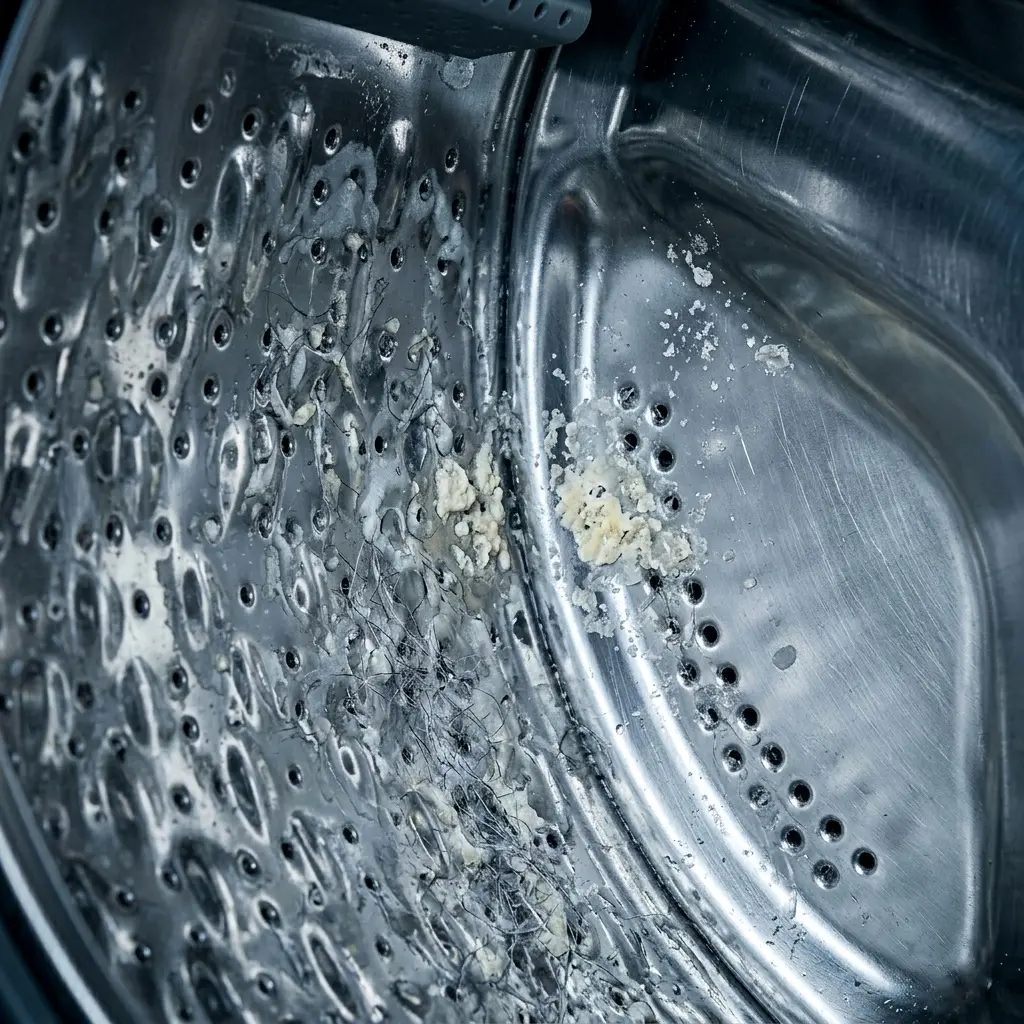
It seems counterintuitive. The drum is full of hot water and detergent every single wash; how does it get dirty? The answer comes down to what gets left behind after every cycle ends.
- Detergent residue: Especially with liquid detergents, a thin film builds up on the drum walls and door seal over time.
- Fabric softener buildup: Fabric softener is one of the worst offenders. It leaves a waxy coating inside the drum that traps bacteria.
- Hard water mineral deposits: Calcium and magnesium from tap water accumulate on drum surfaces and heating elements.
- Lint and debris: Small fibers, hair, and dirt particles settle into crevices and the rubber door gasket.
- Mold and mildew: The warm, damp environment inside a front-load washer is ideal for mold growth, particularly around the door seal.
All of that combines into the source of that unpleasant smell. The Samsung washing machine drum clean cycle is specifically designed to flush it all out using high-temperature water and extended agitation without any laundry inside.
What Is the Samsung Washing Machine Drum Clean Cycle?
The Samsung washing machine drum clean is a dedicated maintenance cycle built into Samsung washers, both front-load and top-load models. It runs at a higher water temperature than regular wash cycles, uses more water, and agitates for longer, specifically to loosen and wash away buildup inside the drum.
Here is what makes it different from a normal hot wash:
- It uses significantly hotter water, up to 95°C on some models.
- The drum spins at higher speeds to force water into every corner.
- It runs without clothes, so nothing absorbs the cleaning action.
- The cycle is optimized to target biofilm, the sticky layer of bacteria and residue that regular cycles miss.
On most Samsung models, the drum clean cycle takes between 60 to 90 minutes to complete. It is not something you run every week, but skipping it for months causes the buildup to compound quickly.
Read more: Samsung Washer Maintenance Guide, Stop the odd smell
How Often Should You Run the Samsung Washing Machine Drum Clean?
Samsung recommends running the Samsung washing machine drum clean cycle once every 40 washes. The machine actually tracks this for you. When 40 cycles have passed since the last drum clean, a reminder appears on the display panel.
That said, here are situations where you should run it more frequently:
- You notice a musty or sour smell on clean laundry.
- You use a lot of fabric softener regularly.
- You live in a hard water area.
- You frequently wash at low temperatures (cold washes leave more residue).
- You have a large household doing 8 to 10 loads per week.
- The drum clean reminder appears on your display before 40 washes.
For most average households doing 4 to 5 loads per week, running the Samsung washing machine drum clean cycle once a month is a solid maintenance habit.
Step-by-Step: How to Run the Samsung Washing Machine Drum Clean Cycle
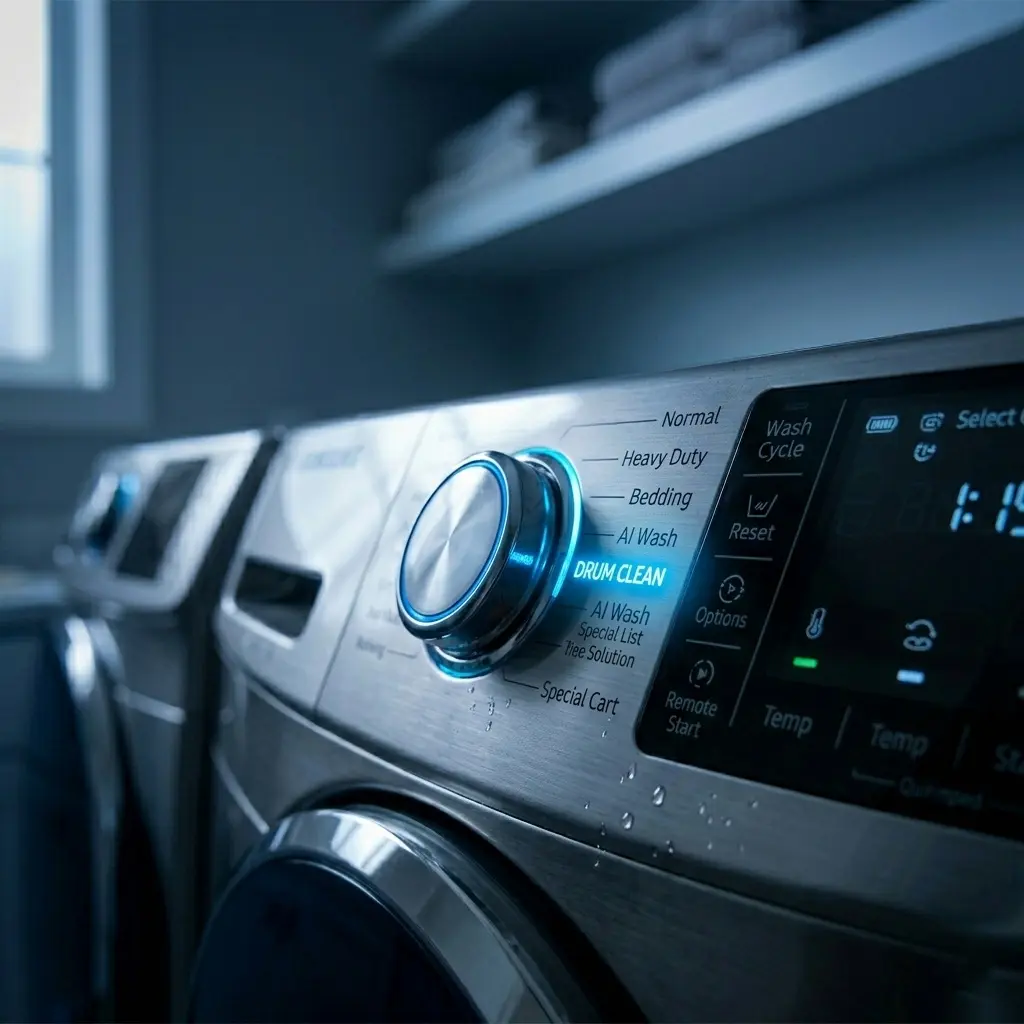
The process is straightforward on both front-load and top-load Samsung models. Follow these steps:
For Samsung Front-Load Washing Machines:
- Make sure the drum is empty. No clothes, no towels, nothing inside.
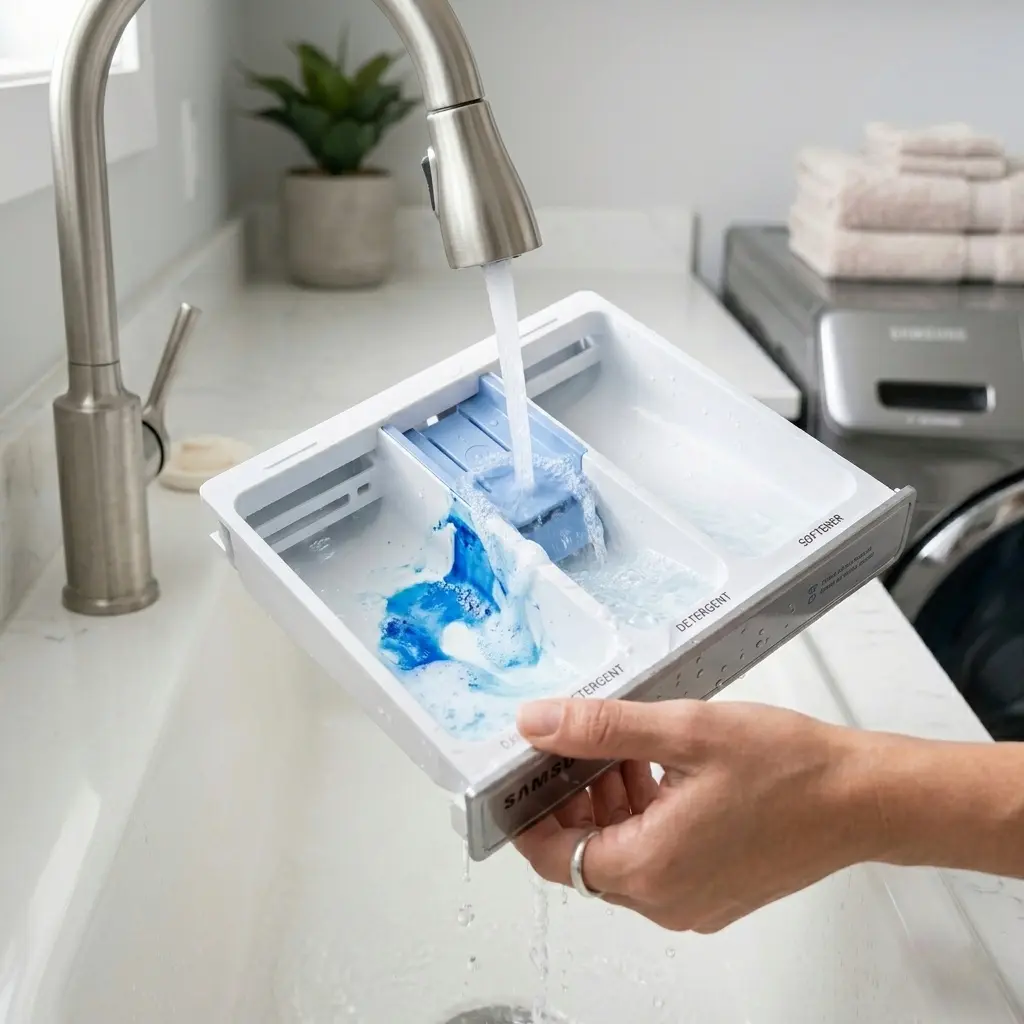
- Clean the detergent drawer before starting. Pull it out, rinse it under warm water, and wipe away any residue. A clogged dryer re-contaminates the drum during the cycle.
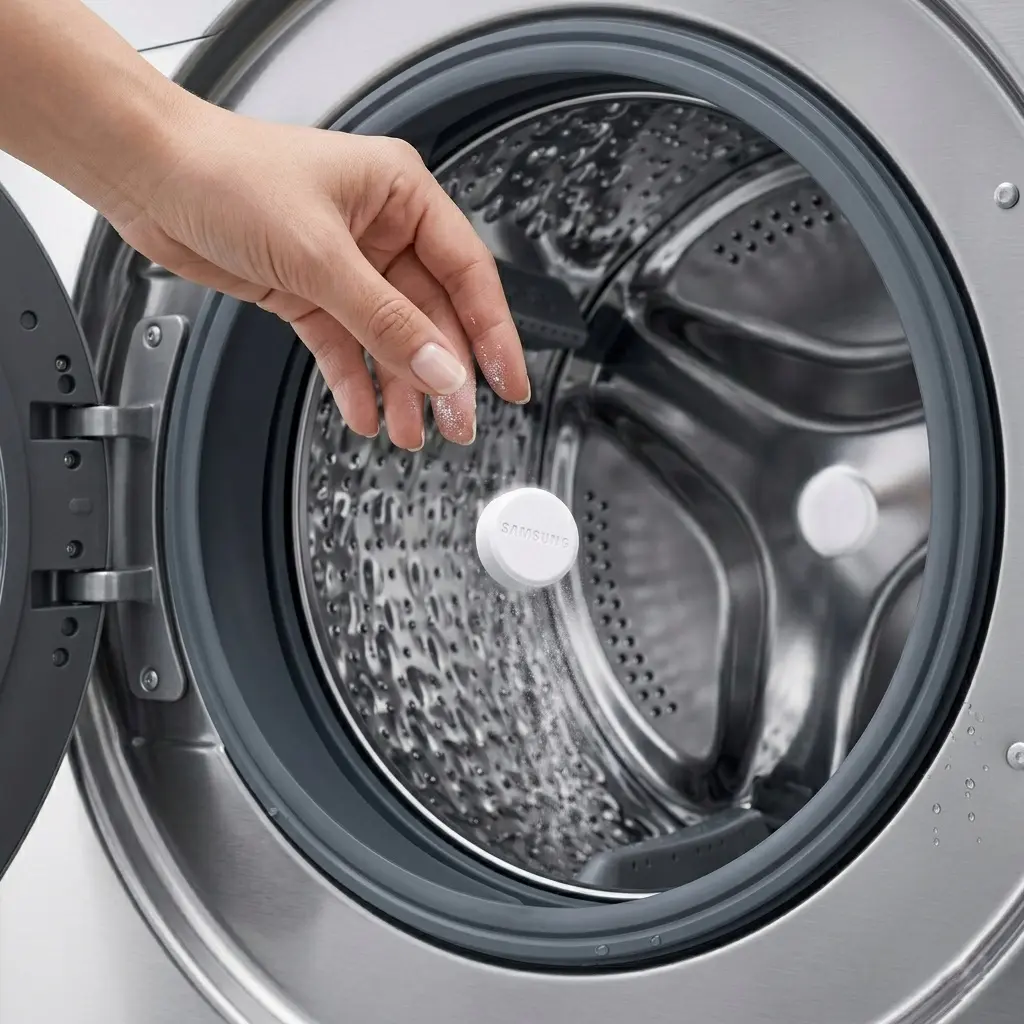
- Add your cleaning agent: either a dedicated drum cleaning tablet directly into the drum or liquid drum cleaner into the detergent compartment. More on what to use in the next section.
- Select the Drum Clean cycle on the control panel. On most Samsung front-loaders, it appears as Drum Clean or Self Clean. Turn the dial or press the cycle button until it is selected.
- Press Start. Do not add any detergent on top of your cleaning agent; the two together create too much foam and can trigger an error.
- When the cycle finishes, wipe down the rubber door gasket with a dry microfiber cloth. Open the door and leave it ajar for at least an hour to let the drum air out.
For Samsung Top-Load Washing Machines:
- Ensure the drum is empty.
- Add a drum cleaning tablet or 2 cups of white vinegar directly into the drum.
- Select Self Clean or Drum Clean from the cycle menu.
- Press Start and let the cycle run to completion.
- Wipe down the drum interior and lid seal with a clean cloth when done.
- Leave the lid open for 30 to 60 minutes to allow moisture to escape.
What Should You Use for the Samsung Washing Machine Drum Clean Cycle?
You have a few solid options depending on what you prefer and what is available to you:
Option 1: Samsung Drum Clean Tablets (Recommended)
Samsung makes its own drum cleaning tablets specifically formulated for the Samsung washing machine drum clean cycle. Drop one tablet directly into the drum before starting. They dissolve completely, leave no residue, and are safe for all Samsung models.
Option 2: Third-Party Washing Machine Cleaners
Products like Affresh, Tide Washing Machine Cleaner, and OxiClean Washing Machine Cleaners all work well. These are widely available at grocery and hardware stores. Follow the product instructions for the correct amount.
Read More: Best Washing Machine Cleaners 2025: A Simple Guide to a Fresh Washer
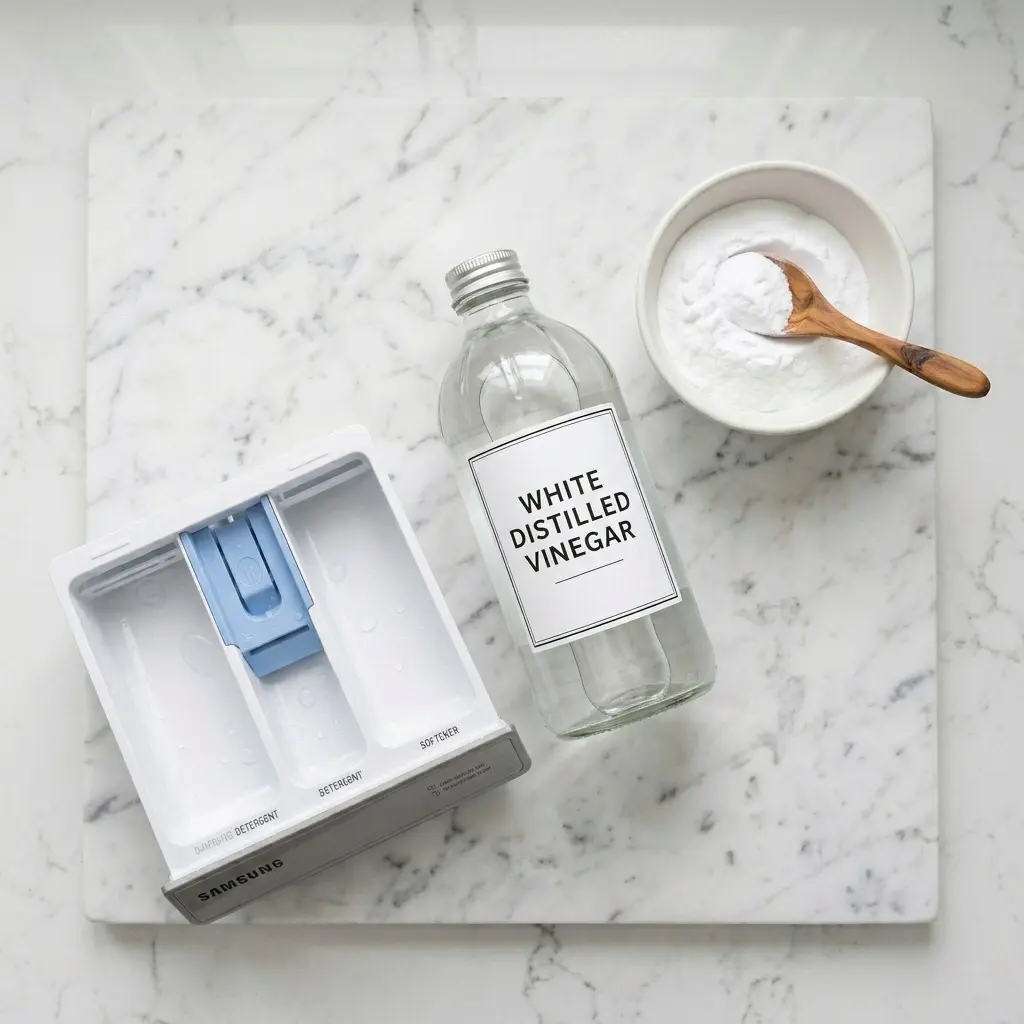
Option 3: White Vinegar and Baking Soda
A natural option that genuinely works for light maintenance cleaning:
- Pour 2 cups of white distilled vinegar into the detergent dispenser.
- Sprinkle half a cup of baking soda directly into the drum.
- Run the Samsung washing machine’s drum-clean cycle on the hottest setting.
Note: Samsung’s official guidance leans toward commercial drum cleaners rather than vinegar for regular use, as vinegar in high concentrations over time can affect rubber seals. Use this method occasionally, not as your primary cleaning approach.
What NOT to Use:
- Bleach: Avoid pouring bleach directly into the drum during drum cleaning. It can damage the stainless steel drum and rubber gasket over time.
- Regular laundry detergent: This creates excessive suds during the high-agitation cycle and can trigger foam error codes.
- Dishwasher tablets: These contain enzymes and chemicals not formulated for washing machine drums and can cause damage.
Cleaning the Door Gasket: The Most Overlooked Step
Running the Samsung washing machine drum clean cycle handles the inside of the drum beautifully. But the rubber door gasket on front-load models is a separate issue that the cycle alone does not fully address.
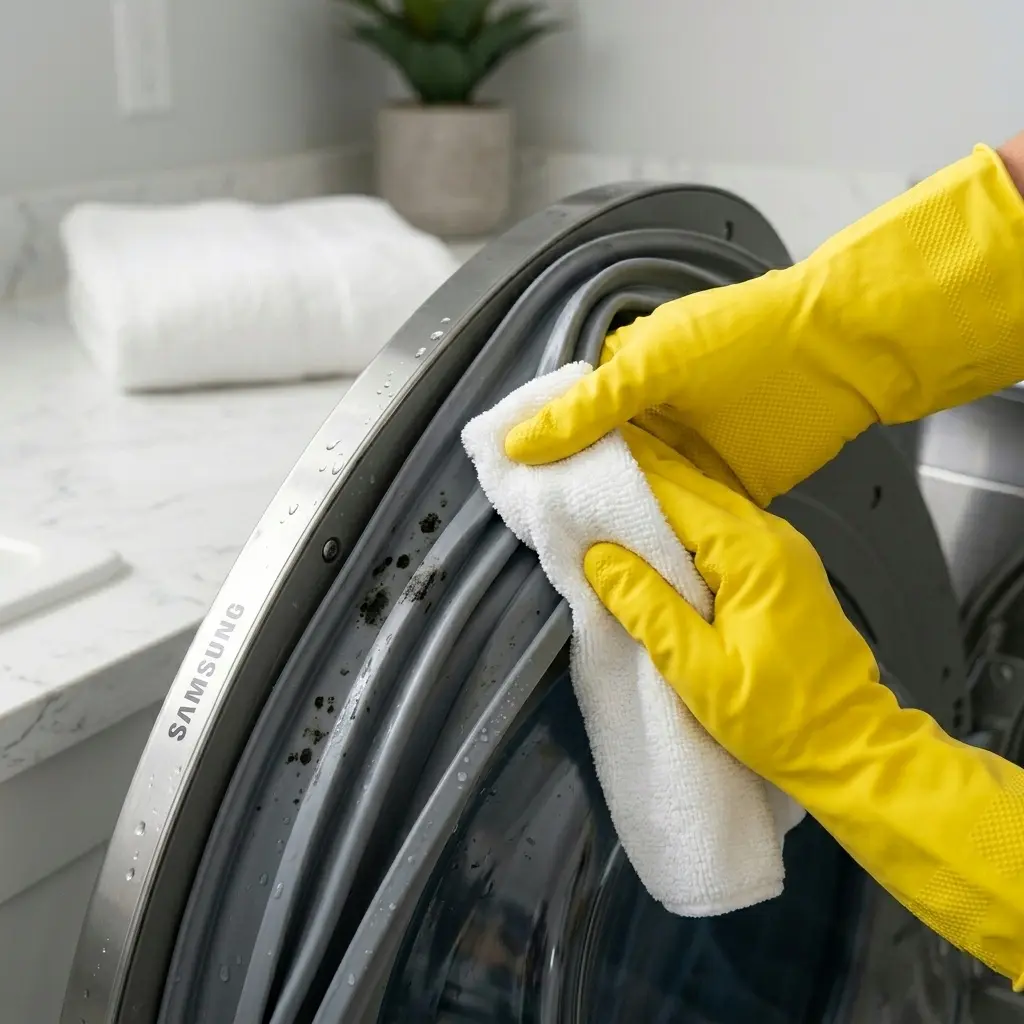
The gasket, that thick rubber seal around the door opening, is the single most common place for mold and mildew to grow. It has folds and crevices that stay wet long after the cycle ends.
How to Clean the Gasket Properly:
- Mix equal parts warm water and white vinegar in a small bowl.
- Dip a microfiber cloth or an old toothbrush into the solution.
- Pull back the gasket folds and scrub thoroughly; black mold spots are common here.
- Wipe dry with a clean cloth.
- For stubborn mold, apply a small amount of baking soda paste (baking soda mixed with just enough water to form a paste) and scrub, then rinse.
Do this gasket cleaning every time you run the drum clean cycle, and you will never deal with serious mold buildup again.
Read more: Washing Machine Gasket Mold? The Bleach Soak & Pro Fix to save your $99
Why Does My Samsung Washer Still Smell After Drum Clean?
If you ran the Samsung washing machine drum clean cycle and the smell is still there, one of these is usually the reason:
- The gasket was not cleaned manually. Drum clean does not reach deep into the gasket folds. Clean it by hand as described above.
- The detergent drawer is moldy. Pull it out completely and soak it in hot, soapy water. Scrub the drawer housing inside the machine, too; mold grows there as well.
- You are using too much detergent. Excess detergent leaves heavy residue that accumulates faster than one drum clean cycle can remove. Run two back-to-back drum clean cycles and then reduce your detergent amount going forward.
- The door is always closed when not in use. A closed door traps moisture and accelerates mold growth. Always leave the door slightly ajar between washes.
- The drain filter is clogged. On front-load Samsung washers, there is a small debris filter at the bottom front of the machine. A clogged filter holds dirty water and is a major source of bad smells. Clean it every 2 to 3 months.
- Read More: Washer Cleaner Not Working? The Biofilm Secret
5 Habits That Prevent Drum Odor Between Cleanings
Running the Samsung washing machine drum clean cycle is your reset button, but these daily habits stop the problem from building up so fast in the first place:
- Always leave the door open after use. Even a 2-inch gap is enough to let the drum dry out between washes.
- Wipe the gasket dry after every wash. Takes 30 seconds and prevents mold from getting a foothold.
- Use the right amount of detergent. More detergent does not mean cleaner clothes; it means more residue. Follow the detergent manufacturer’s guidelines and use High Efficiency (HE) detergent for Samsung front-loaders.
- Remove laundry promptly. Do not leave wet clothes sitting in the drum. Move them to the dryer within an hour of the cycle ending.
- Run a hot wash occasionally. Cold-water washes are great for energy savings, but do nothing to prevent residue buildup. A hot wash once every week or two helps keep the drum cleaner between drum clean cycles.
Frequently Asked Questions
Q: How long does the Samsung washing machine drum clean cycle take?
The Samsung washing machine drum clean cycle typically takes between 60 and 90 minutes, depending on your model. Some newer models with eco-optimization run slightly shorter versions. Do not interrupt the cycle once it starts; let it run completely for the best result.
Q: Can I put clothes in during the drum clean cycle?
No. The drum must be empty during a drum clean cycle. The cycle uses higher temperatures and agitation levels that would damage fabrics. It is also designed to flush out contaminants; you do not want those rinsing through your clothing.
Q: How do I know when my Samsung washer needs a drum clean?
Samsung washers display a drum clean reminder on the control panel after every 40 wash cycles. You will also know it is time when you notice musty smells on clean laundry, visible residue inside the drum, or mold around the door gasket.
Q: Can I use bleach for the Samsung washing machine drum clean cycle?
Samsung does not recommend using chlorine bleach directly in the drum clean cycle. Repeated bleach use can corrode the stainless steel drum surface and degrade the rubber door seal over time. Stick to dedicated drum cleaning tablets or approved washing machine cleaners.
Q: Why does my Samsung front-load washer smell worse than a top-loader?
Front-load washers use less water and have a horizontal drum orientation, which means the door seal and lower drum area stay damp longer after each cycle. This makes them more prone to mold and odor than top-loaders. Running the Samsung washing machine drum clean cycle regularly and leaving the door ajar after every wash solves this completely.
Q: Is the drum clean cycle the same as self-clean on Samsung washers?
Yes: on some Samsung models, it is labeled Drum Clean, and on others, it appears as Self Clean. Both refer to the same dedicated high-temperature maintenance cycle. The function is identical regardless of what your model calls it.
Q: Do I need to use a cleaning product, or can I run a drum clean with just water?
You can run the Samsung washing machine drum clean cycle with just water, and it will help; the high temperature alone does a lot of work. But using a drum cleaning tablet or approved cleaner significantly improves the results, especially if buildup has accumulated over several months. For the best outcome, always use a cleaning agent.
Final Thoughts
The Samsung washing machine drum clean cycle is one of those maintenance steps that feels easy to put off, right up until your freshly washed clothes start smelling like a damp basement. The good news is that once you make it a monthly habit, the problem essentially disappears.
Run the cycle once a month, clean the gasket by hand every time, leave the door open between washes, and use the right amount of HE detergent. Follow those four rules and your Samsung washer will stay fresh, clean, and odor-free for years.
Your clothes deserve a clean machine, and honestly, so do you.