
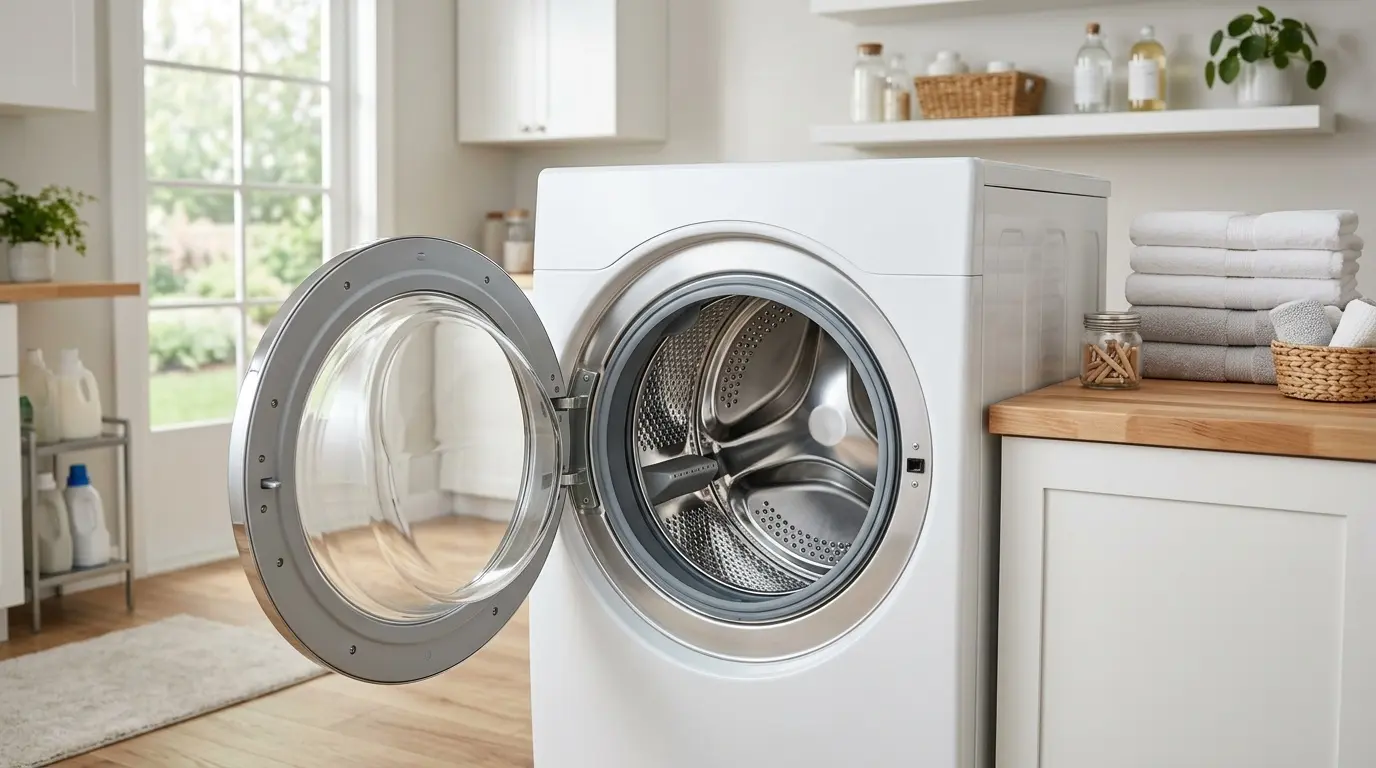
No one thinks about cleaning a washing machine until clean laundry comes out smelling worse than it went in. If you’re seeing musty odors, detergent residue, or black mold spots, the drum needs a real deep clean.
The question is whether a dedicated cleaner like Affresh or a DIY option like citric acid does the job better. This Affresh cleaner vs. DIY washer cleaner breakdown covers the honest pros and cons of both, including which DIY method can wear out your machine over time.
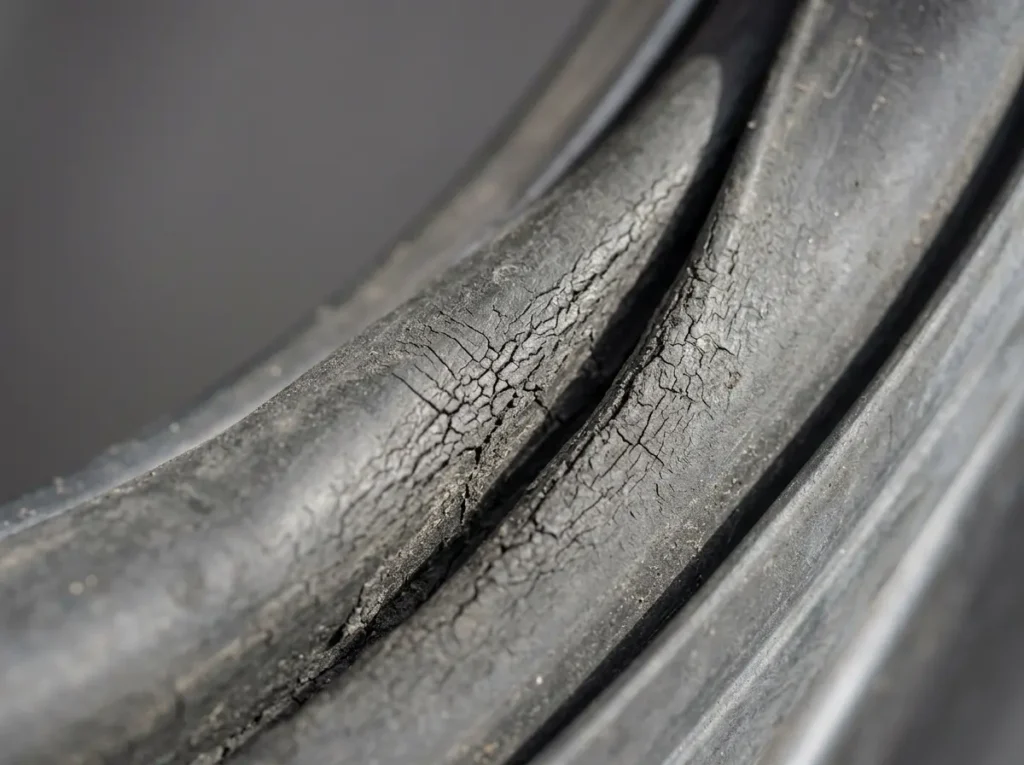
I’ve seen gaskets go stiff and cracked after years of heavy vinegar use, so it’s worth treating modern smart washers with more care. Here’s what works without harming your machine. For the science behind stubborn smells, read [Washing Machine Cleaner Not Working? The Biofilm Secret].
Table of Contents
1. Why Your Washing Machine Needs Cleaning
- Detergent buildup clings to the drum and hoses.
- Hard water minerals leave chalky deposits on internal parts.
- Moisture encourages mold and mildew, especially in front-loaders.
- Dirt and lint from clothes accumulate over time.
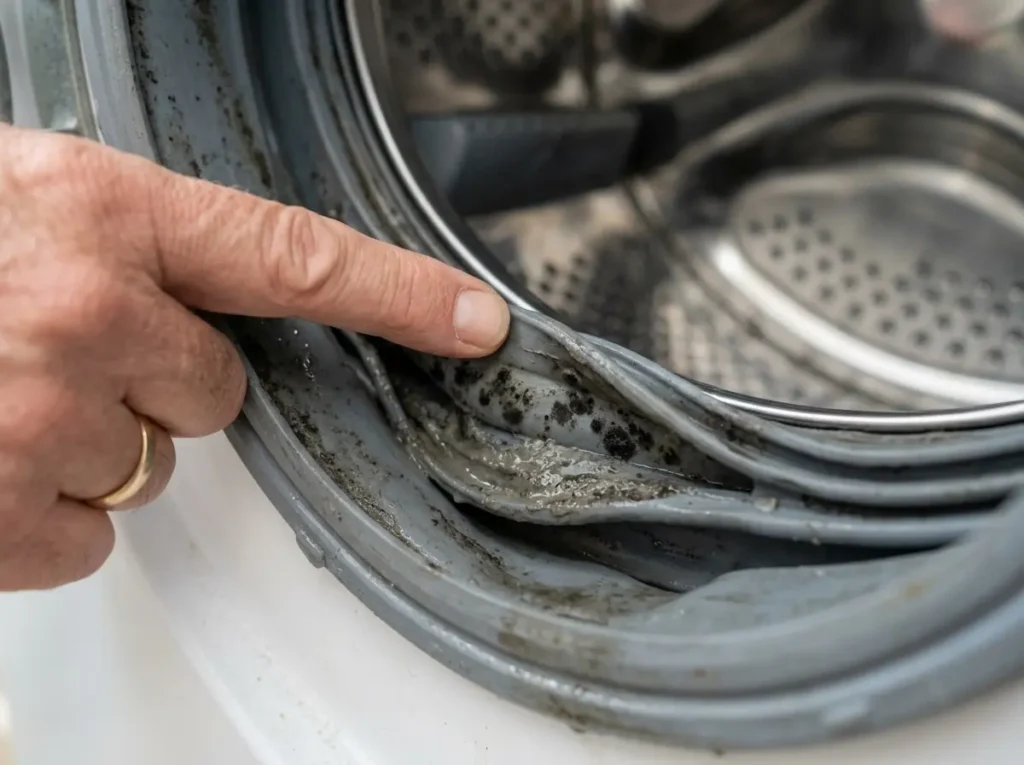
Understanding biofilm (why DIY often falls short). Biofilm is a bacterial slime that lives behind the outer drum. Baking soda mainly neutralizes surface odors, and on its own it doesn’t break the slime down. Dedicated washer cleaners are formulated to work on that residue, and commercial cleaners tend to keep odors away noticeably longer than DIY methods.
If left uncleaned, your washer can smell musty, clean less effectively, and wear out sooner.
2. Affresh Washing Machine Cleaner: Pros and Cons
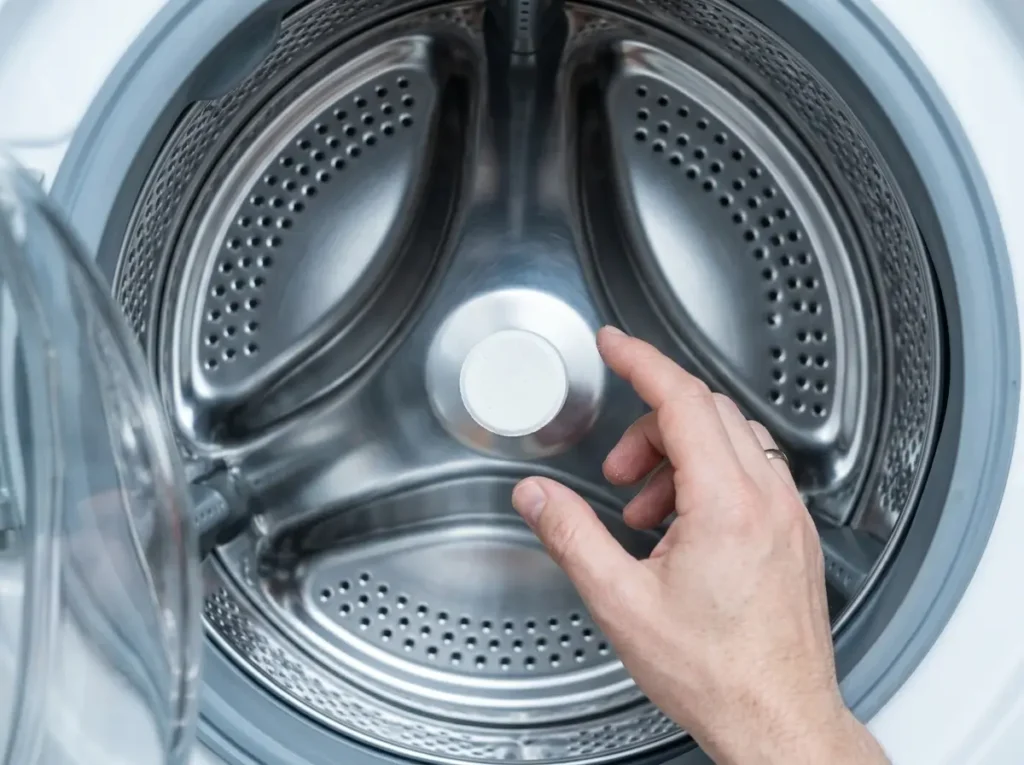
What it is. Affresh is a cleaner made specifically for washing machines, usually sold as tablets. Check the label for the active ingredients rather than relying on any blog’s description, including mine. You can find it on Affresh Washing Machine Cleaner Tablets and at many big-box and appliance stores. It isn’t stocked everywhere, though, so readers outside the US may need a locally sold washer-cleaner tablet instead.
Pros
- Very effective on tough residue and mold
- Targets odor-causing bacteria instead of masking smells
- Designed for HE machines and easy to use, with no measuring or mixing
Cons
- Costs more per clean than DIY options, and prices vary by retailer
- Contains cleaning agents that may not suit people who prefer all-natural products
- Availability varies by country and by store
- Not a fix for the root causes (too much detergent, a closed door), so the smell returns if habits don’t change
My test results. After cleaning my front loader with Affresh, the drum looked brighter and the musty odor disappeared. It stayed gone for about three weeks. Your result will depend on your water, your detergent dose, and how well you air the machine out. For a longer look, see [Affresh Review: Does It Really Work?. My Honest Experience].
3. Getting the Most Out of Any Cleaner
Most “normal” and “quick” cycles aren’t hot enough to make a cleaner work at its best. Use these steps, and follow your manual and the product label where they differ:
- Choose your hottest tub-clean, sanitary, or self-clean cycle. Many machines top out around 60°C to 70°C, and only some models offer 90°C. Don’t force settings your machine doesn’t have. Our [Samsung Washing Machine Drum Clean Cycle: How to Keep It Fresh and Odor-Free] guide covers Samsung’s built-in option.
- Start with a completely empty drum. A stray sock can soak up the solution before it reaches the outer drum.
- Put the tablet directly in the drum, not the dispenser drawer. It needs to dissolve in the main pool of water.
- Pause mid-cycle only if your manual allows it. Some models let you pause for a soak once the water is hot. Never open the door with hot water inside.
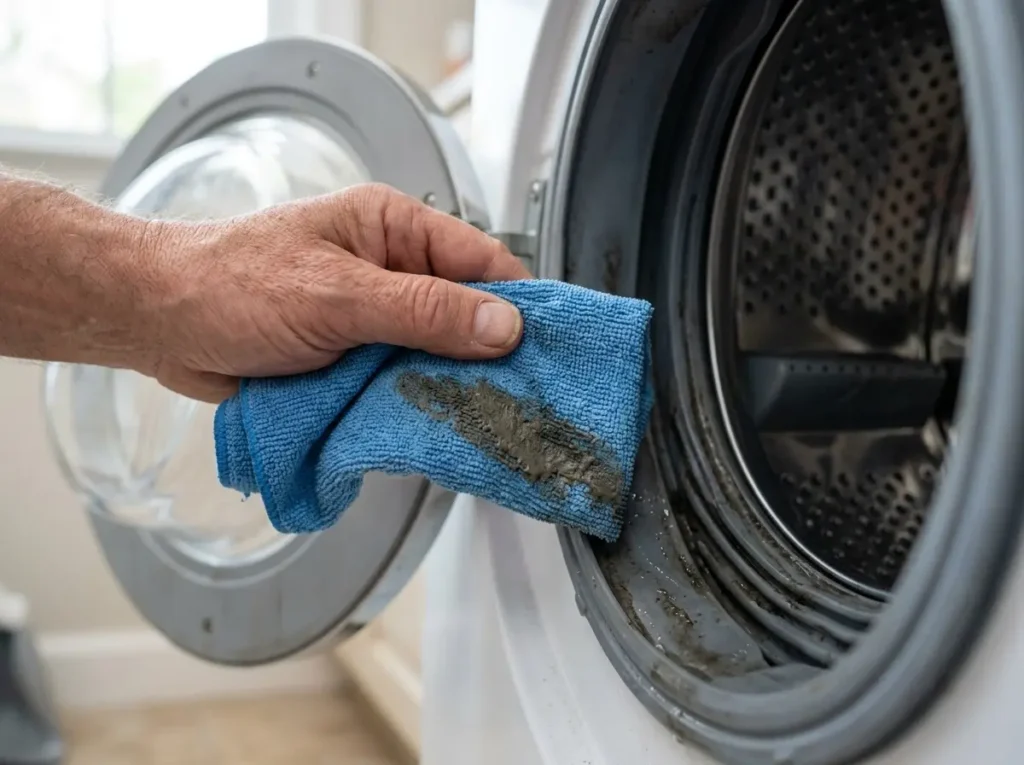
| Insider tip: wipe the gasket by hand afterward. The cleaner loosens grime, but the machine doesn’t always flush all of it. Use a microfiber cloth to wipe inside the rubber gasket fold. You’ll likely find grey sludge the cycle left behind. Removing it is the difference between a washer that smells fresh and one that smells again in a week. |
| Safety warning: never mix bleach with an acidic cleaner. Affresh, citric acid, and vinegar are all acidic (by their label and chemistry), and chlorine bleach plus acid can release toxic chlorine gas. Run each product in its own cycle and finish with a plain rinse in between. |
4. DIY Cleaning: Vinegar vs. Citric Acid
If you prefer DIY, choose your acid based on your machine’s age. The classic vinegar-and-baking-soda method is no longer one-size-fits-all.
Newer models (HE and AI-powered). Manufacturers like Samsung warn that vinegar’s acidity can degrade rubber seals with repeated use, raising the risk of slow leaks. For these machines, use about half a cup of citric acid powder instead. It removes mineral buildup without the same seal risk, but it’s still an acid, so measure it, don’t overdo it, and follow with a rinse. For a full walkthrough, see [How to Descale a Washing Machine: 2026 Citric Acid Guide].
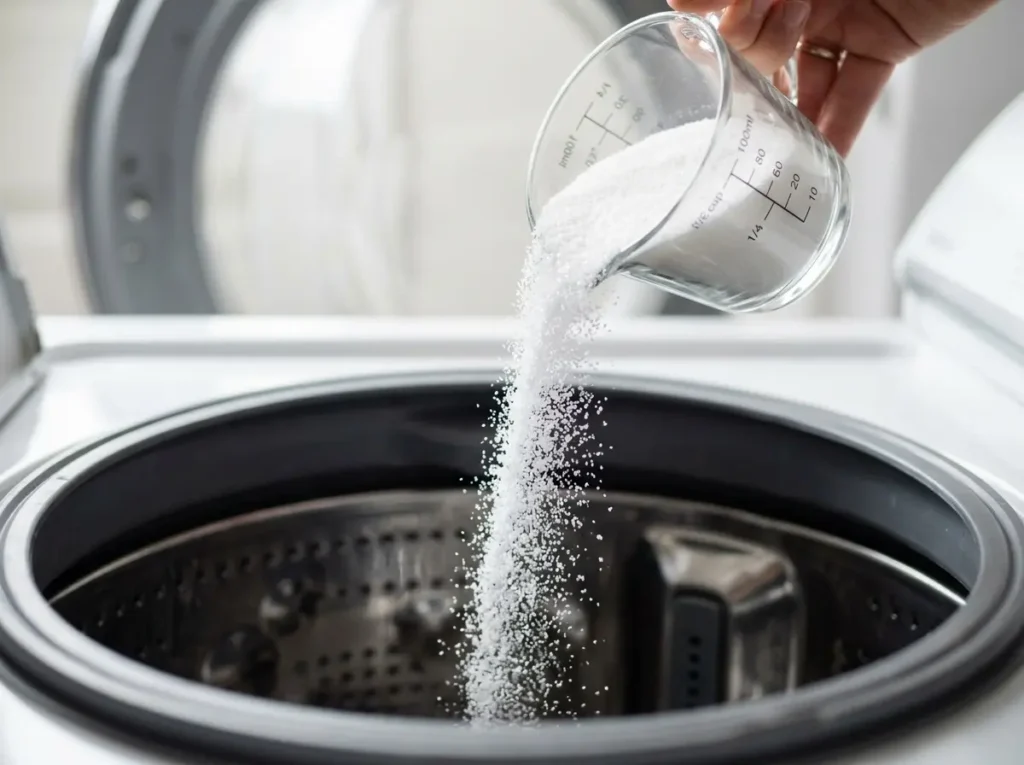
Older models (traditional top-loaders). If you have a 10+ year-old machine with thick, heavy-duty rubber, vinegar can still work for occasional light maintenance. It’s a cheap way to neutralize odors, but it lacks the residue-loosening power of a dedicated cleaner, so it won’t peel heavy biofilm (that grey slime) off the outer tub.
Vinegar and baking soda together? They neutralize each other. The fizz looks impressive, but you get less cleaning than by using them in separate steps.
Verdict for 2026: use citric acid as your primary DIY cleaner. If you still choose vinegar for an older machine, keep the amount modest and always run an extra rinse so no acid sits on the seals.
5. Hard Water Scale: The Buildup DIY Often Misses
In hard-water areas, minerals and detergent combine into a scum that hardens on the outer drum and around the heating element. Light scale responds well to monthly citric acid. Vinegar is often too weak for heavier deposits.
Scale on the heater makes the machine work harder and can slow how quickly water heats up. If deposits keep returning, use a dedicated washer-safe descaler or a dedicated washer cleaner like Affresh, in addition to your monthly citric acid. Ignoring scale is a common reason machines heat slowly and wear out sooner.

6. Affresh Cleaner vs. DIY: Head-to-Head Comparison
| Feature | Affresh | Citric Acid (DIY) | Vinegar (Old DIY) |
| Biofilm (slime) removal | Strong | Moderate | Weak |
| Mineral scale | Moderate to good | Good | Weak on heavy scale |
| Odor control | Strong, lasts longer | Good | Short-lived |
| Gasket safety | Formulated for washers; follow the label. | Gentler than vinegar; still an acid, so dilute and rinse. | Repeated use can degrade seals. |
| Cost per clean | Highest | Low | Very low |
| Effort | Drop in a tablet. | Measure powder. | Measure liquid. |
| Availability | Varies by country | Widely available | Everywhere |
| Best for | Visible mold, front-loaders | Monthly upkeep, hard water | Occasional refresh, older top-loaders |
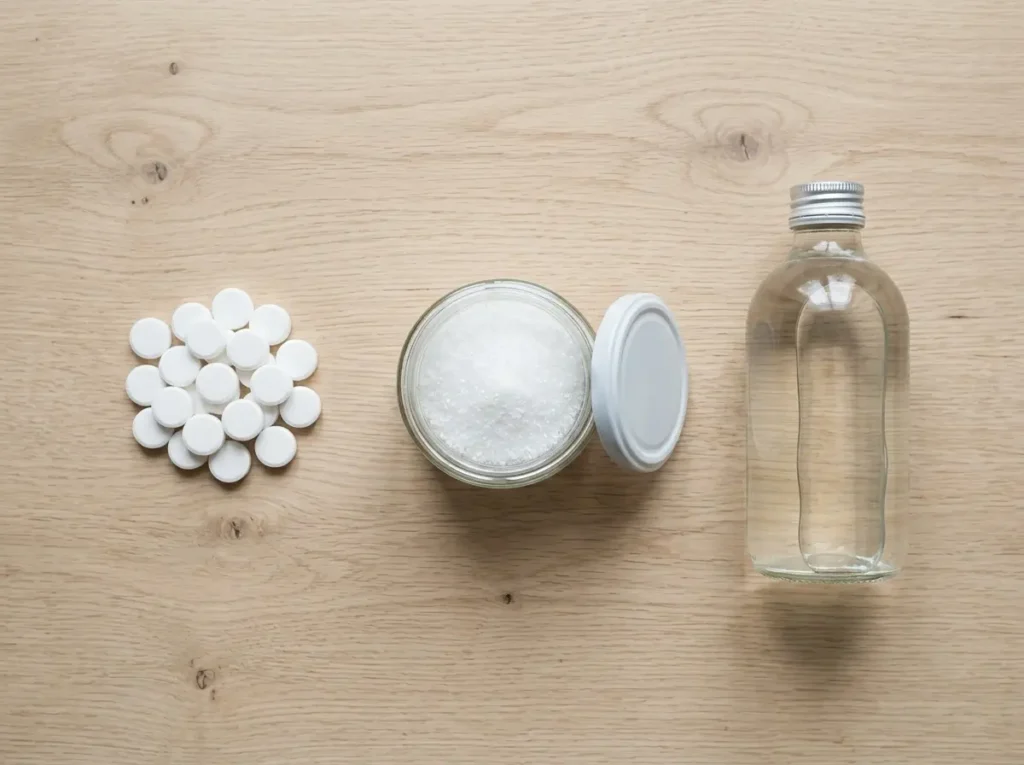
7. Which Should You Choose?
Choose Affresh if you:
- Have visible mold and mildew
- Own a front loader that traps moisture
- Want a reliable clean with minimal effort
- Don’t mind spending a few extra dollars
Choose DIY if you:
- Need a quick, eco-friendly refresh
- Own a top-loader with less mold risk
- Prefer natural cleaning methods
- Clean regularly for light maintenance
Real-world scenarios:
- Black mold in the gasket of a front loader: Affresh first, then wipe the gasket by hand. For more options, see [Stop Buying Affresh! 5 Expert DIY Alternatives That Actually Work].
- Monthly upkeep on a newer Samsung or LG: citric acid plus the built-in tub-clean cycle.
- Hard-water household: monthly citric acid, plus a descaler if scale returns quickly.
- Can’t find Affresh locally: citric acid plus your hottest tub-clean cycle, or a locally sold washer-cleaner tablet.
- Big family or muddy loads: clean more often. Follow your machine’s cleaning reminder if it has one.
8. The Verdict
For most households, use both strategically:
- Use citric acid monthly for maintenance.
- Use Affresh (or a comparable washer-cleaner tablet) every two to three months, or sooner if odor or mold shows up.
Exception: if your washer already has mold and a strong odor, skip DIY and go straight to Affresh. For severe buildup, a diluted bleach cycle can help, but run it completely separately from any acidic cleaner, per your manual.
9. Tips to Keep Your Washer Clean Longer
- Use less detergent. Excess soap causes buildup.
- Clean the detergent tray monthly. A soft detail brush set reaches the nozzles and the filter housing, where residue collects.
- Clean the drain filter every couple of months. It traps residue too. Our [Samsung Washing Machine Maintenance Guide] covers both.
- Leave the door and drawer open between loads so the drum dries.
- Base cleaning frequency on usage, not the calendar. Many smart Samsung and LG models remind you when a tub clean is due. Heavy use means running it more often.
10. Frequently Asked Questions
1. Is Affresh safe for HE and front-load washers?
It’s designed for HE machines, but always check the label and your manual for your specific model.
2. Can I use vinegar and baking soda together?
They neutralize each other, so you get less cleaning than using them in separate steps. Vinegar also carries the seal risk on newer machines.
3. Can I mix Affresh or citric acid with bleach?
No. Chlorine bleach mixed with acid can release toxic gas. Run each product in a separate cycle with a plain rinse between.
4. How often should I use Affresh?
Every two to three months is a sensible routine, or sooner if you notice odor or mold. Follow the package directions.
5. Is citric acid really safer than vinegar for gaskets?
Manufacturers warn specifically about vinegar’s effect on seals, and citric acid is generally the gentler choice. It’s still an acid, so measure it, dilute it and rinse afterward.
6. Where do I put the cleaner tablet?
Directly in the drum, not the dispenser drawer, so it dissolves in the main pool of water.
7. What if Affresh isn’t sold where I live?
Use citric acid with your hottest tub-clean cycle, or find a washer-cleaner tablet sold locally and follow its label.
11. Final Thoughts
My pro tip: use citric acid for monthly maintenance and keep Affresh for the deeper clean every few months. That hybrid approach keeps costs sensible and stops most odors before they start.
| Next step: check your washer’s manual for its tub-clean cycle, buy your cleaner of choice and run it this week. Have you tried either method? Share your experience in the comments. |