
Table of Contents
GE Washer Stops Mid-Cycle Without Warning
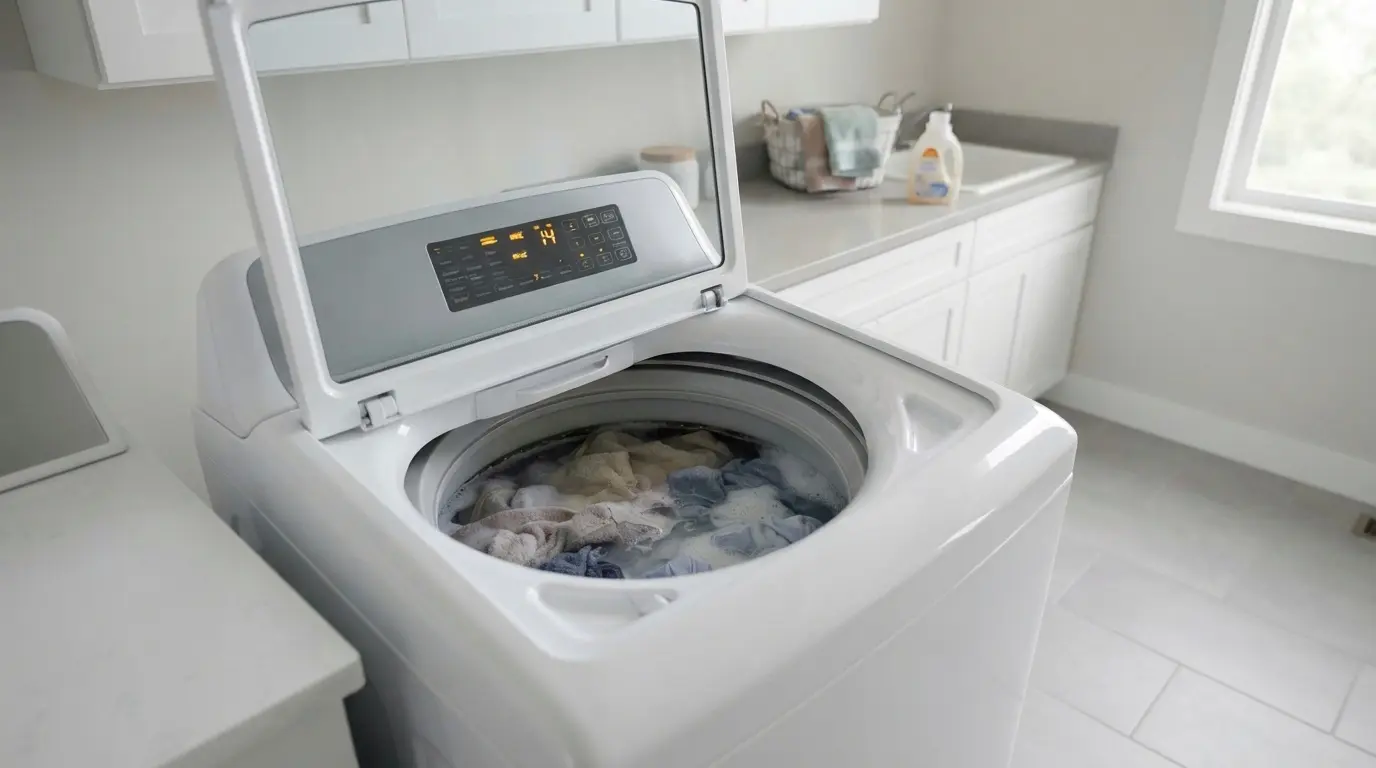
Your GE washer just went silent halfway through a cycle: no beep, no error code, just a dead machine sitting there with your clothes soaking in soapy water. That sudden stop is your washer communicating something specific, and how and when it stopped tells you more than any blinking light would.
The frustrating thing about a GE washer that stops mid-cycle is that it does not always point to one obvious cause. The same symptom, a washer that just quits, can come from six or seven completely different system failures, each with its own pattern, its own timing, and its own accompanying clues that most people miss because they are not looking for them.
This guide is about reading those patterns. Not replacing parts, not decoding error messages, just understanding what the machine is actually telling you when it stops, so you know exactly which system to investigate before you spend a dollar or make a call.
Why Pattern Recognition Matters More Than Error Codes
Here is something most appliance guides skip: a GE washer that stops mid-cycle is not the same problem as a GE washer that shows an error code. Error codes are the machine telling you what it detected. A mid-cycle stop without a code is the machine failing to detect anything at all or detecting something it cannot categorize.
That distinction is critical. When your GE washer stops mid-cycle silently, the drum freezes, the display goes dark or freezes mid-count, and there is no audible alarm, the control board either lost power, hit a component failure it cannot log, or entered a protective shutdown that older models do not display as a code.
The stopping pattern is your diagnostic tool. GE washers from the GTW series (top-load) and GFW series (front-load), including the GTW685BSLWS, GTW720BSNWS, GFW850SPNRS, and GFW550SSNWW, each have characteristic failure signatures that show up consistently in field data when a particular system is failing.
| 💡 TECHNICIAN INSIGHT: In over 15 years of fieldwork, the single most reliable diagnostic step when a GE washer stops mid-cycle is asking, “What was the machine doing in the 30 seconds before it stopped?” Was the drum spinning? Was it filling? Was it draining? The answer narrows the cause by 70% before you touch a single component. |

The 7 Real Reasons a GE Washer Stops Mid-Cycle
These are not guesses. These are the causes that technicians actually find on service calls for GE washers that stop without completing their cycle, ranked roughly by how often they appear in the field.
1. Thermal Overload on the Motor
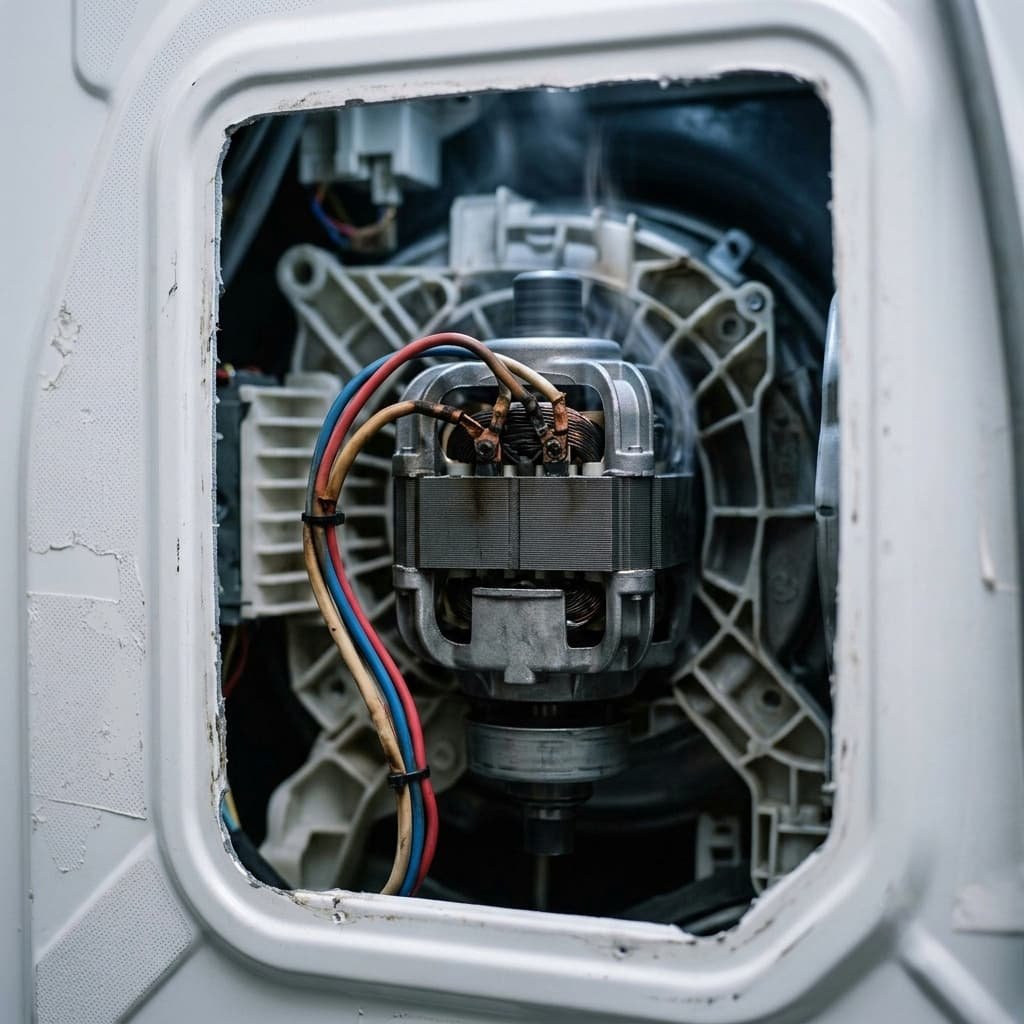
This is the most underappreciated cause of mid-cycle stops on GE top-load washers, particularly the GTW series. The drive motor has a built-in thermal cut-off that activates when the motor overheats, typically after running continuously through a large, unbalanced, or overstuffed load.
The signature: the washer stops during or just after a spin attempt. The drum was turning, then everything simply stopped. The machine may feel warm near the cabinet base. If you leave it alone for 20 to 30 minutes and it starts again normally, thermal overload is almost certainly what happened.
This is not a motor failure, yet. It is the motor protecting itself from becoming one. But repeated thermal trips accelerate wear on the motor windings and can progress to a genuine motor fault over time.
2. Lid Switch or Door Latch Signal Loss
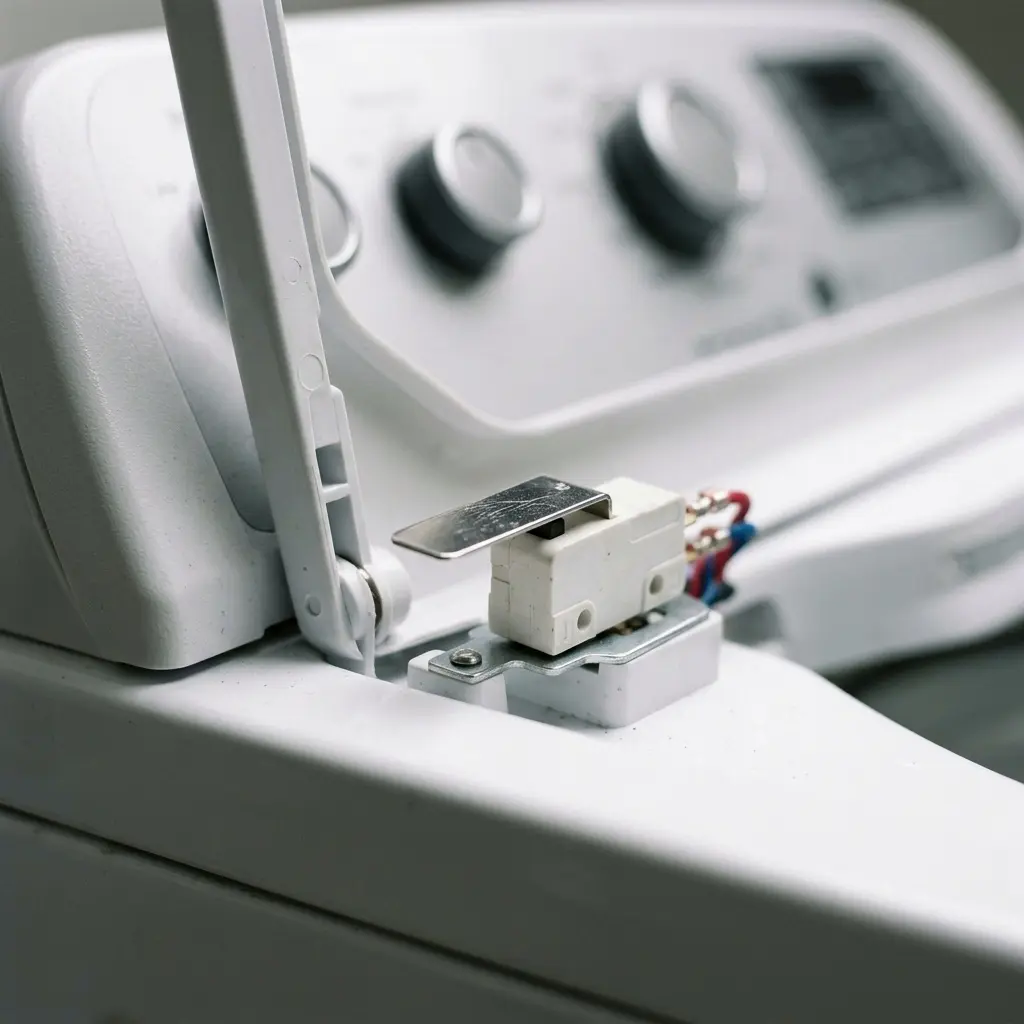
On GE top-load washers, the lid switch does more than just stop the spin when you open the lid, it actively confirms to the control board that the lid is closed throughout the cycle. On front-load GFW models, the door latch lock assembly sends a continuous status signal.
The signature: the washer stops mid-cycle with no obvious trigger. You did not open the lid. The lid looks closed. But the switch inside the lid hinge area, a micro-switch that GE uses across multiple GTW model variants, may have lost contact momentarily due to vibration or wear, and the board interpreted that as a lid-open event and stopped the cycle as required by safety design.
This cause produces an intermittent mid-cycle stop pattern: it does not happen every cycle, and when the machine stops, it sometimes restarts normally if you simply press Start again. That intermittent pattern is the most reliable sign of a switch or latch beginning to fail rather than a power or control board issue.
3. Water Inlet Valve Restriction
GE front-load washers like the GFW series pause the cycle at the beginning of each rinse segment to refill water. If the water inlet valve is partially clogged with sediment in hard-water areas, the fill takes longer than the control board expects, and the board times out, stopping the cycle.
The signature: the washer stops specifically during a transition between wash and rinse or at the very start of a rinse segment. The drum is stationary, and the machine is quiet. In many GFW models, this stop happens at the same point in the cycle every single time, which is the key tell; consistent timing of the stop almost always points to a fill, drain, or transition problem rather than a motor or board issue.
4. Drain Pump Restriction or Failure
If the washer cannot drain within its programmed time window, it stops the cycle to prevent overflow and motor damage. A partially blocked drain pump, caused by accumulated lint; a small garment item like a sock getting past the drum; or a failing pump motor is one of the most common reasons a GE washer stops mid-cycle, specifically during the drain or spin phase.
The signature: the washer is full of water when it stops, or the drum is noticeably heavy when you try to turn it by hand after the stop. On GFW front-load models, you can often hear the drain pump struggling, a humming or grinding sound before the cycle stops, which distinguishes a pump restriction from a pump motor failure, where the sound simply disappears.
| ⚠️ IMPORTANT: A GE washer that stops mid-cycle with standing water in the drum should not be forced through another cycle attempt by pressing Start repeatedly. The pump protection timeout exists to prevent the motor from running dry or overheating against a blockage. Address the drain restriction first. |
5. Control Board Brownout Response
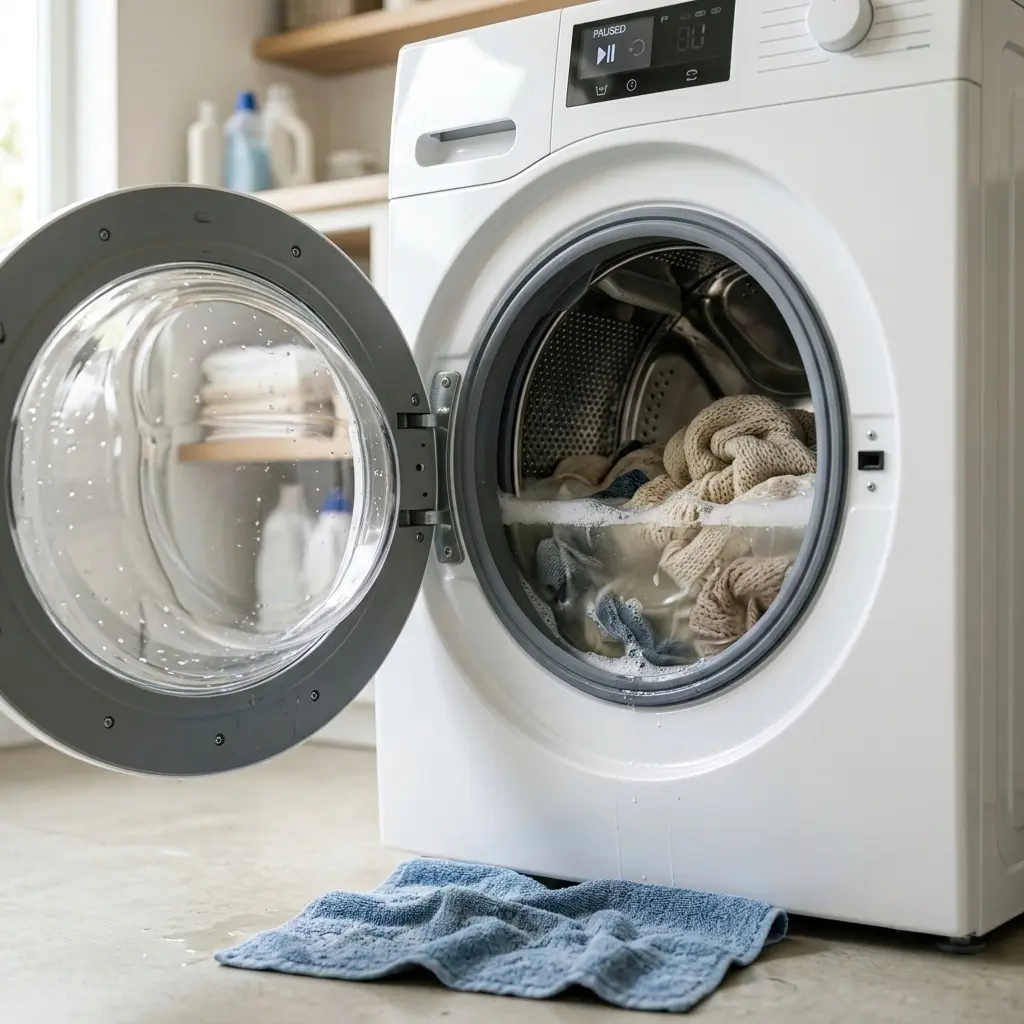
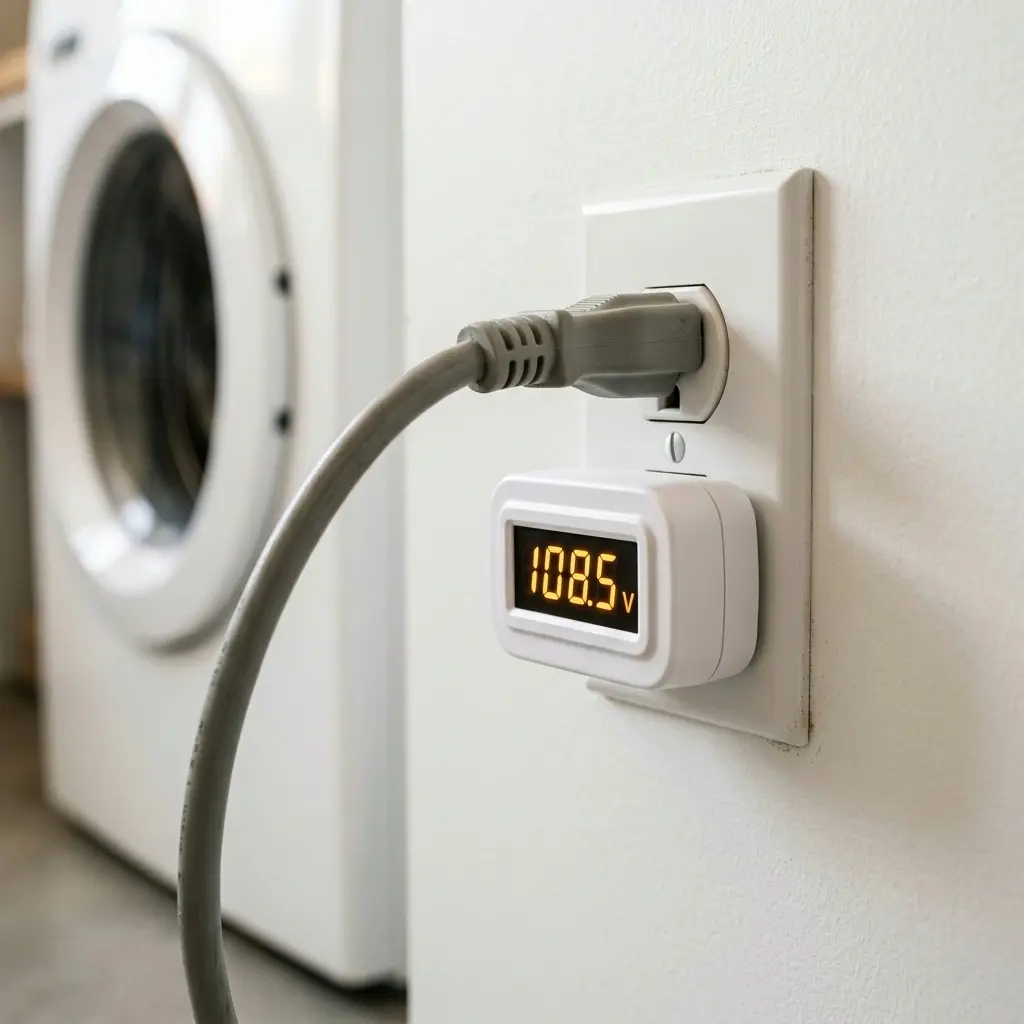
GE washers, particularly the more recent GFW850 and GFW550 front-load series with electronic control boards, are sensitive to household voltage fluctuations. A voltage sag below approximately 108 volts AC (GE’s specified minimum operating voltage is 120V ±10%) causes the control board to pause or completely reset mid-cycle as a protective measure.
The signature: the mid-cycle stop happens suddenly with no pattern related to cycle stage; it can happen during fill, wash, rinse, or spin. The display either goes completely dark and restarts or freezes on whatever cycle stage was active. Other appliances in your home may also have been behaving inconsistently (lights dimming, microwave clock resetting), which confirms the cause is electrical supply rather than the washer itself.
This is particularly common in homes with older wiring, during peak evening electricity demand hours, or when large appliances like HVAC systems cycle on and draw sudden current.
6. Imbalance Detection Shutdown
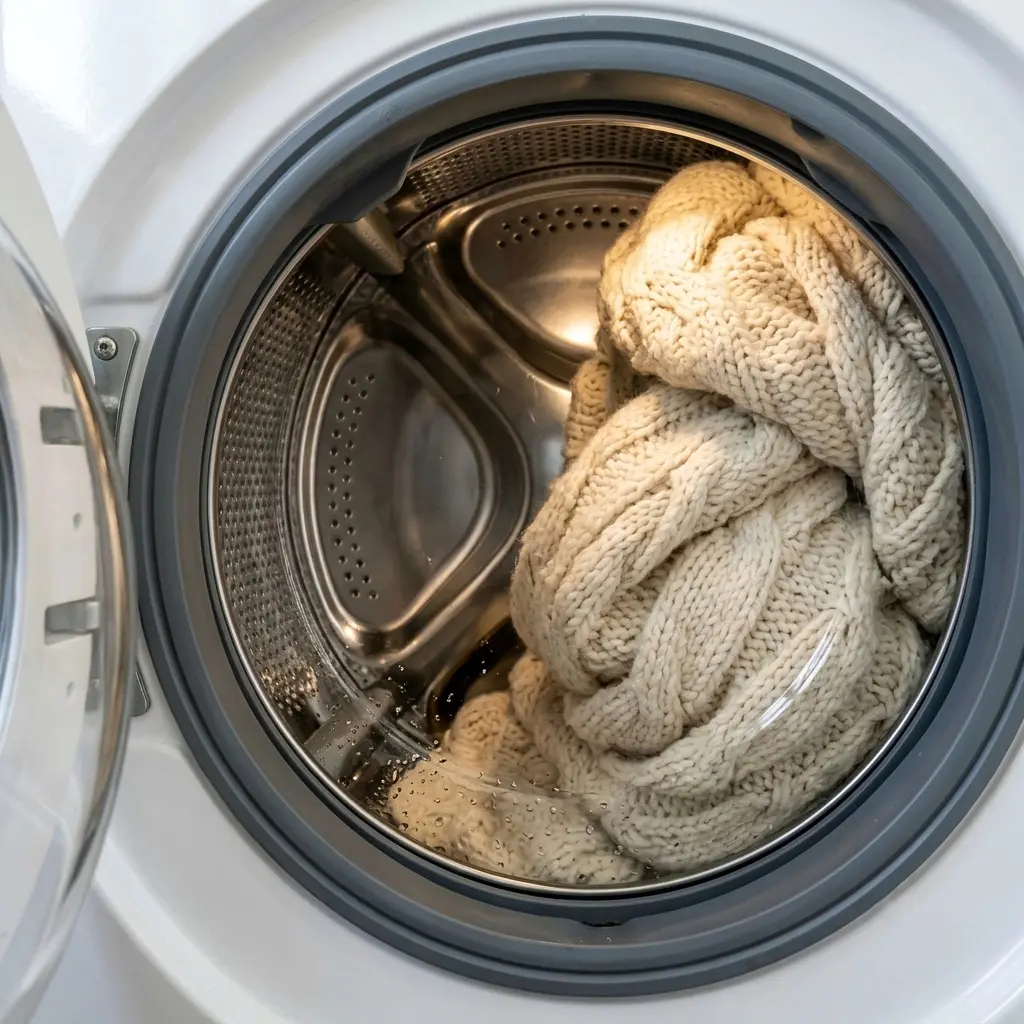
Every GE washer, both the GTW top-load and GFW front-load lines, has an automatic load balance detection system. During the spin ramp-up phase, the machine checks whether the load is distributed evenly enough to safely proceed to high-speed spin. If it detects excessive vibration beyond the threshold, it stops the spin, drops back to a low-speed tumble to redistribute the load, and tries again.
The signature: the washer stops specifically during the early phase of spin, usually when you can hear the drum beginning to accelerate. The machine may sound normal during the wash phase but consistently fails to complete the spin. On GTW top-load models, you may hear a loud thump or knock just before the stop as the unbalanced load shifts.
What makes this tricky is that the machine does not always restart automatically; on older models, it stops, sits, and waits. Many people interpret this as a complete failure when the machine is actually in a retry pause.
7. Control Board Intermittent Fault
This is the least common but the most difficult to diagnose through symptoms alone: a failing main control board that loses function intermittently. On GE washers, control board failures often present as random mid-cycle stops with no consistent pattern; the machine stops at different points in the cycle, at different cycle stages, with no relationship to load size, water supply, or drain.
The signature: completely random timing of the stop across multiple different cycle types (quick wash, normal, heavy duty), with no other consistent symptom, no water in the drum, no unusual sounds, and no thermal event. If you have ruled out every other cause on this list and the machine continues stopping unpredictably, the control board becomes the leading candidate.
How to Read the Stopping Pattern on Your GE Washer
Before you investigate any component, answer these four questions. They narrow the cause down significantly before you touch anything.
Question 1: At What Point in the Cycle Does It Stop?
- During fill or after a fill pause → Water inlet valve, water pressure, or control board timing issue
- During the wash agitation phase → Motor overload, control board fault, or brownout response
- During the drain phase → Drain pump restriction or pump motor failure
- During early spin ramp-up → Imbalance detection shutdown or lid/door switch signal loss
- During high-speed spin → Thermal overload on motor, or control board brownout response
- At a random point, no pattern → Control board intermittent fault
Question 2: What Does the Display Show When It Stops?
- Display goes completely dark → Power interruption, brownout, or main control board fault
- Display freezes mid-count → Control board fault or voltage brownout
- Display stays lit but drum stops → Motor, pump, or sensor fault, board is functional
- The display shows any code → The stop is documented; that code is your primary diagnostic
Question 3: Is There Water in the Drum?
- Drum full of water when stopped → Drain pump restriction or pump motor failure
- Drum partially filled → Fill timeout, water inlet valve or pressure issue
- Drum empty → Thermal overload, motor fault, imbalance shutdown, or board fault
Question 4: Does It Happen Every Cycle or Randomly?
- Every cycle, same point → Fill, drain, or imbalance issue, consistent and reproducible
- Every cycle, random point → Control board fault
- Some cycles, not others → Lid/door switch intermittent fault, thermal overload under heavy loads, or brownout during peak demand hours
GE Washer Mid-Cycle Stop: What Each Stage Tells You
| Stage When Stopped | Drum Status | Most Likely Cause | Second Most Likely |
| Fill / soak phase | Empty or partly filled | Water inlet valve restriction | Low household water pressure |
| Wash agitation | Tumbling then stops | Motor thermal overload | Control board brownout |
| Transition (wash→rinse) | Stationary, water present | Drain pump restriction | Fill valve timeout on rinse |
| Drain phase | Heavy, water-filled drum | Drain pump blockage or failure | Drain hose kink or restriction |
| Early spin ramp-up | Trying to spin, then stops | Imbalance detection shutdown | Lid/door switch signal loss |
| High-speed spin | Was spinning fast, then stops | Motor thermal overload | Voltage brownout |
| Any phase, no pattern | Varies | Control board intermittent fault | Lid switch intermittent contact |
👉 [Fix GE Washer Not Draining: A DIY Guide to Save $150!]
When the GE Washer Stops With No Code and No Sound, What That Actually Means
A silent stop with no display code is the one that confuses people most, because modern appliances are supposed to tell you what went wrong. When a GE washer stops with the display dark and no alarm, one of three things has happened.
First possibility: the control board lost power completely, either from a household brownout, a tripped internal thermal fuse on the board itself, or a loose power connection at the terminal block behind the machine. This is the only scenario where the display goes completely dark and unresponsive, because the board has no power to display anything.
Second possibility: the control board experienced a fault it cannot categorize and performed a silent reset. On GFW series front-load models, this sometimes presents as the display freezing on the cycle indicator, then going dark for 10 to 15 seconds before restarting the cycle from the beginning, as if you just pressed Start fresh.
Third possibility: the lid switch on GTW top-load models interrupted the circuit so briefly, a fraction of a second, that the board registered a lid-open event, stopped the cycle, and returned to a ready state without logging any code. This is the most common ‘no code, no sound’ scenario on top-load GE washers built between 2019 and 2026.
| 💡 FIELD EXPERIENCE: When a GE washer stops silently with no code and restarts normally with no changes, but the same thing happens again two or three cycles later, the lid switch is almost always the cause on top-load models. The intermittent pattern is a textbook lid switch signature and is often misdiagnosed as a control board issue because it is so hard to reproduce on demand. |
Common Misdiagnoses That Waste Time and Money
Because a GE washer stopping mid-cycle can have multiple causes, certain wrong assumptions are extremely common. Each of these misdiagnoses results in replacing a functional part.
Misdiagnosis 1: Blaming the Control Board Immediately
The control board is expensive, $150 to $300 for GFW series boards, and it gets blamed first because it controls everything. But in reality, a genuine control board failure accounts for less than 15% of mid-cycle stop cases on GE washers. The lid switch alone accounts for a larger share of cases on GTW models. Replacing the board first, without confirming the symptom pattern points specifically to random, untriggered stops, is the most expensive diagnostic mistake you can make.
Misdiagnosis 2: Assuming a Stopped Drain Means a Bad Pump
When the washer stops with water in the drum, the drain pump gets blamed immediately. But a kinked drain hose, a clogged coin trap filter, or a blocked drain standpipe produces the identical symptom: water in the drum, cycle stopped, machine not responding. Always check the drain path physically before concluding the pump motor itself has failed.
Misdiagnosis 3: Ignoring Load Size and Balance
A washer that only stops mid-cycle during certain loads, large bedding, bulky items, or maximum-capacity loads is almost certainly stopping due to imbalance detection or motor thermal protection, not a component failure. Many people call a technician for what is functionally a usage pattern problem rather than a hardware fault.
Misdiagnosis 4: Missing the Voltage Connection
If your GE washer stops mid-cycle only during evenings, only during summer months when AC usage is highest, or only after other large appliances start up, the cause is voltage sag from your home electrical supply, not anything wrong with the washer. A dedicated 20-amp circuit for a large front-load washer is not just a recommendation; on GFW series models specifically, GE’s installation specs require it.
Pro Tips: What Technicians Notice First
| 💡 TIP 1: The first thing a field technician does when a GE washer stops mid-cycle is run a diagnostic test cycle, not a normal wash cycle. GE washers have a built-in service diagnostic mode (the specific button sequence varies by model; check your tech sheet inside the console lid or rear panel). The diagnostic cycle tests each subsystem in isolation and makes a pattern-based stop far easier to reproduce and isolate than waiting for a normal cycle to fail. |
| 💡 TIP 2: If your GE top-load GTW washer stops during spin but completes the wash phase every time, stand next to the machine during the next spin attempt and listen for the specific moment the drum starts to accelerate. A thump or knock just before the stop means the load shifted, causing an imbalance shutdown. Silence right up to the stop, with no mechanical noise change, points toward the lid switch or motor thermal protection. |
| 💡 TIP 3: Plug your washer into a simple outlet voltage monitor during the next several wash cycles. These cost $12 to $20 and log voltage readings over time. If you see any reading below 108V during the period when the washer stops, your stopping problem is a household electrical issue, and no washer repair will fix it. |
| 💡 TIP 4: A GE washer that stopped mid-cycle and has been sitting with wet clothes inside for more than 2 hours should be run on a spin. Only cycled, not restarted from the beginning of the wash cycle. Running the full cycle again adds heat and agitation to clothes that have already been washed and may be starting to develop mildew from sitting. Spin Only drains and spins without further washing. |
FAQ: GE Washer Stops Mid-Cycle
1. My GE washer stops mid-cycle but has no error code at all. Is that normal?
It is more common than you might think, especially on GE top-load GTW series washers. Several fault conditions, including a brief lid switch contact loss and certain motor thermal events, cause the machine to stop without logging a code because the board interprets them as user-caused interruptions rather than machine faults. The lid switch losing contact for even a fraction of a second looks identical to a user opening the lid, which the board does not code as an error.
2. Why does my GE washer always stop at the same point in the cycle?
Consistent timing is your most valuable clue. A stop that happens at the exact same point every cycle points to a repeatable system trigger, most commonly a fill timeout (water inlet valve or supply pressure), a drain timeout (pump or drain path restriction), or a transition event between cycle phases where the board times out waiting for a sensor confirmation. Random timing points elsewhere.
3. Can overloading cause a GE washer to stop mid-cycle permanently?
Overloading will not cause permanent damage in a single event; the thermal overload protection is specifically designed to prevent that. But if overloading triggers a thermal event repeatedly (multiple times per week over months), the repeated heat cycles accelerate wear on the motor windings. GE’s published maximum load capacity on GTW series models ranges from 4.5 to 5.0 cubic feet, and the actual usable capacity for dense or heavy items like jeans or towels is about 75% of that rated maximum.
4. My GE front-load washer stops mid-cycle, and the drum is full of water. What should I do immediately?
Do not attempt to open the door while the drum has standing water; the door lock on GFW series front-load washers is designed to prevent opening when water is detected in the drum, and forcing it risks water flooding onto the floor. Use the Drain/Spin cycle to attempt draining before investigating. If the machine will not respond to the Drain/Spin command, you can access the emergency drain hose behind the small access panel at the base of most GFW models to manually drain the water first.
5. My GE washer stops mid-cycle only on certain load types. Does that mean the washer is broken?
Not necessarily. If the stopping only happens with large, bulky, or maximum-capacity loads, the machine may be functioning exactly as designed; its imbalance detection or thermal protection is activating appropriately. Try the same load type but with about 25% less fill, or rearrange the items in the drum more evenly before starting the spin. If the stopping disappears with a smaller or better-balanced load, the machine itself is not at fault.
6. How do I access a GE washer’s built-in diagnostic mode?
The button sequence varies by model series. On most GTW top-load models (2019 to 2026), hold the Start button for 3 seconds while the lid is closed to enter a mini diagnostic cycle. On GFW front-load models, the sequence typically involves pressing Power + Delay Wash + Extra Rinse in sequence. Check the tech sheet inside the top of the control console (remove two screws to access) for your specific model’s exact combination. The tech sheet is the most reliable source since GE has used different sequences across model generations.
7. Should I call a technician or try to diagnose it myself first?
Use the stopping pattern framework in this guide first. If the pattern points clearly to a load-balance or overloading issue, a drain path physical check, or a voltage supply problem, handle those yourself before calling anyone. If the pattern is completely random with no correlation to cycle stage, load type, or time of day and persists after those checks, the control board becomes a serious candidate, and a technician call makes sense at that point, since board replacement on GFW series models involves calibration steps that benefit from proper diagnostic equipment.
Conclusion
A GE washer that stops mid-cycle without warning is frustrating, but it is rarely mysterious once you know what to look for. The stopping point, the drum state, the display behavior, and the load conditions all tell a specific story, and reading that story correctly is the difference between a targeted fix and an expensive guessing game.
Use the pattern framework in this guide to narrow your cause before you do anything else. And check out our related GE washer articles below for the next step once you know what you are dealing with.
👉 [GE Washer Randomly Loses Power Mid-Wash: Complete Diagnosis 2026 Guide]
👉 [GE Washing Machine Problems: 5 Things You Should Check Before Calling a Tech]