
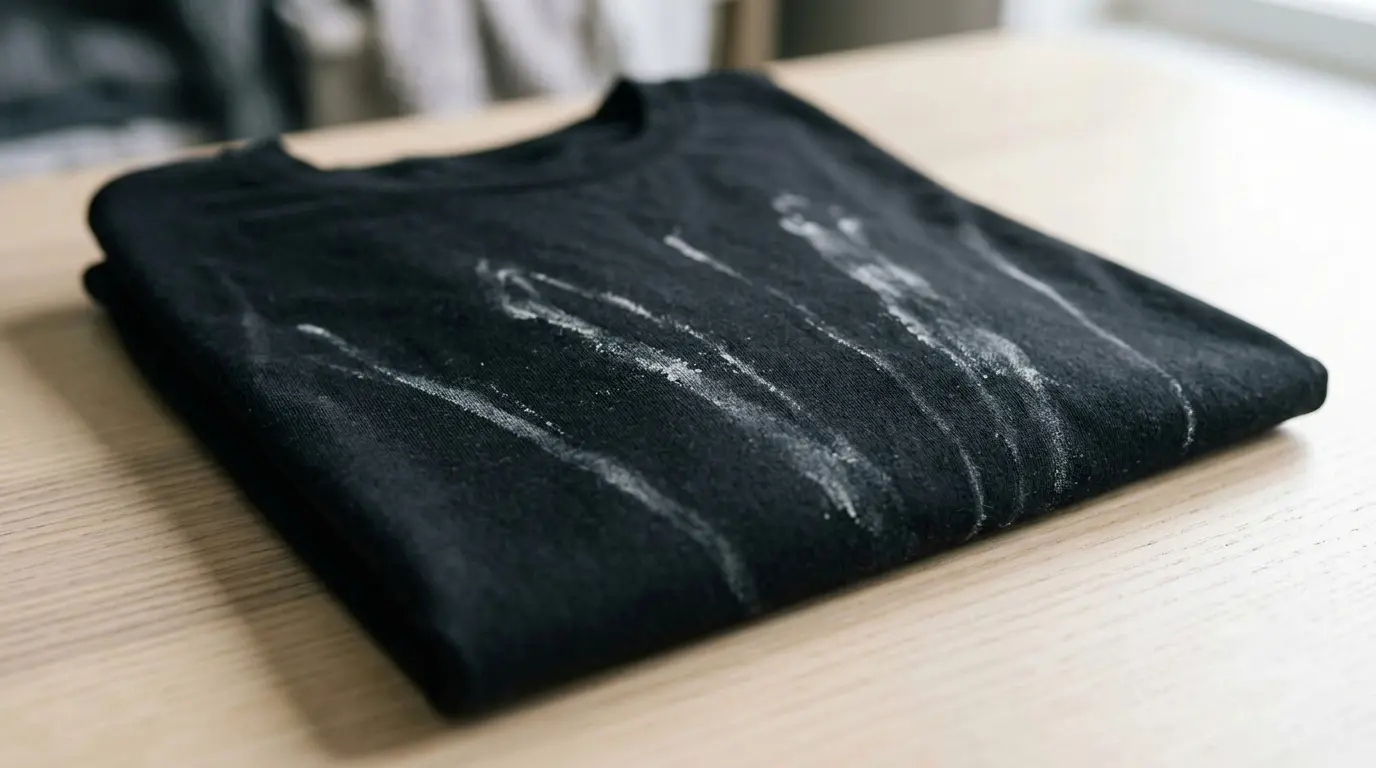
Pull a black shirt out of the wash expecting it to be clean and instead find it dusted with pale streaks, and your first instinct is probably that something’s broken. Most of the time it isn’t, but figuring out which of five very different culprits is actually responsible is where most people get stuck.
Table of Contents
Why Dark Fabric Shows This Problem First
Every one of the causes below happens on light-colored laundry too; you just don’t see it. White residue on a white shirt is invisible. On black or navy fabric, the same amount of residue shows up as a chalky film, faint streaking, or a dusty texture the moment the fabric dries.
That’s actually useful diagnostically. If you’re only noticing this on darks and never on lights, it doesn’t mean the problem is happening less on lights; it means you’ve had a blind spot the whole time, and dark laundry is the canary that finally told you.
Detergent Overdosing and White Residue Buildup
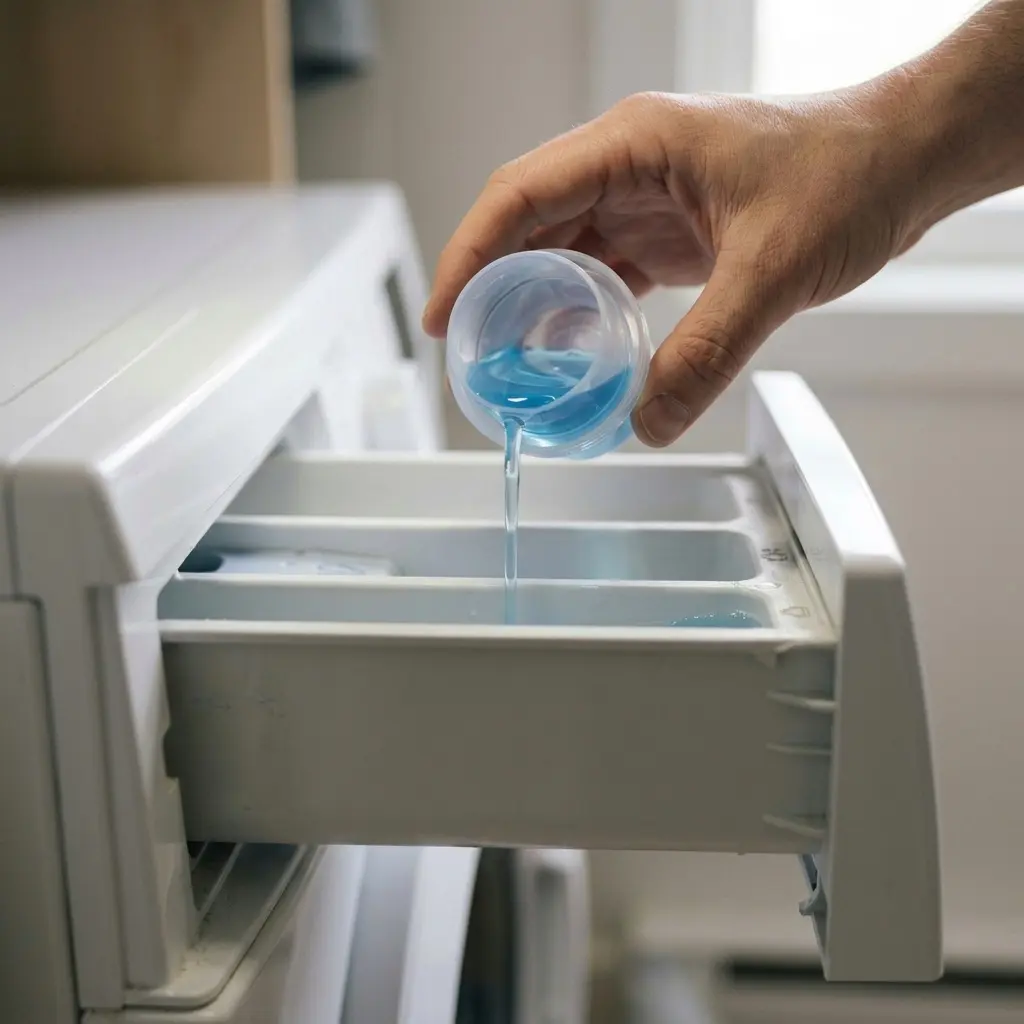
This is the single most common cause, and it’s rarely about using “bad” detergent; it’s about using too much of a good one. High-efficiency LG washers use significantly less water per cycle than older top-load machines, and HE detergent is formulated to be low-sudsing specifically because of that. Pour in a regular-cap amount of detergent the way you might for an old-style washer, and there simply isn’t enough water to fully rinse it out of the fabric.
Quick check: if you fill the cap to the “max” line out of habit rather than checking the actual load-size guide, or if you’re using a non-HE detergent in an HE machine, this is almost certainly your answer.
Hard Water Mineral Deposits
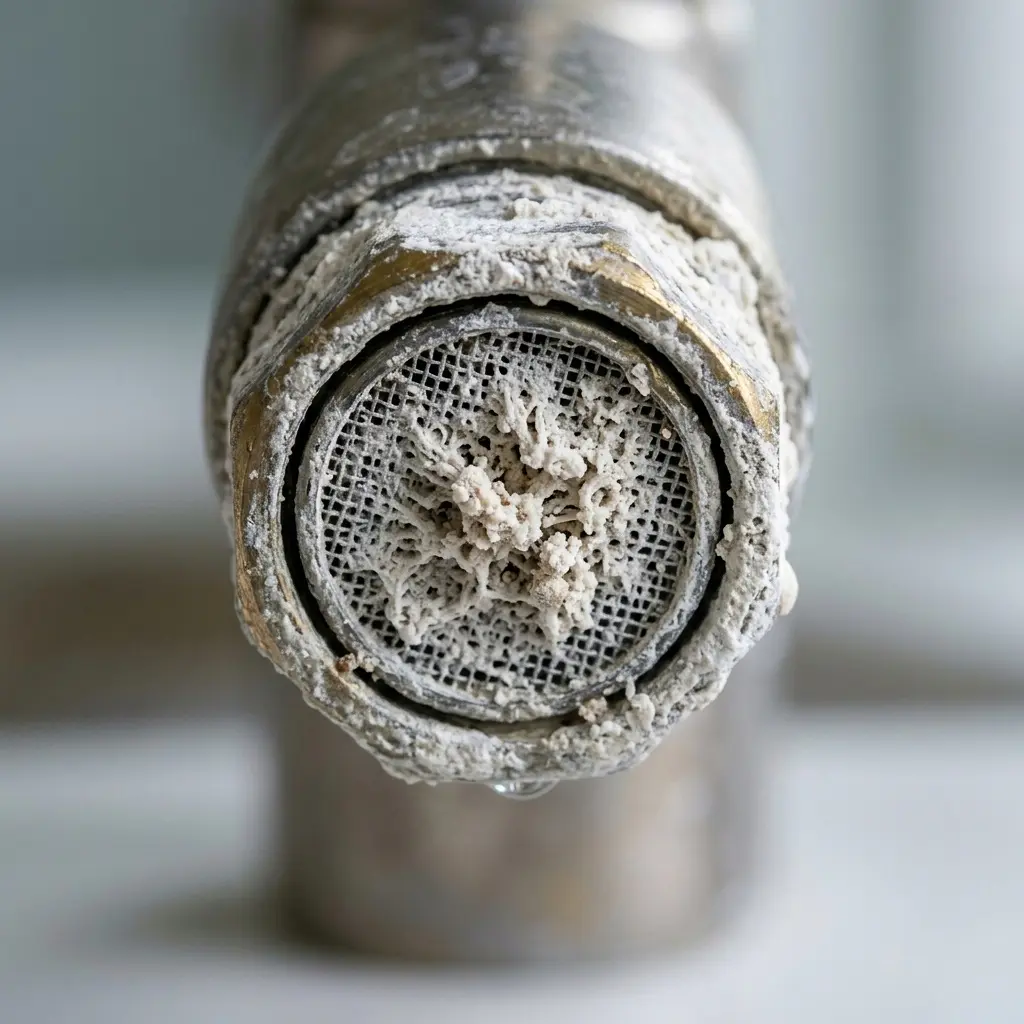
If you’ve ruled out overdosing and the white residue keeps showing up, hard water is the next most likely cause. Calcium and magnesium in hard water react with detergent to form an insoluble film, the same chemistry behind soap scum on a shower door, and that film clings to fabric fibers instead of rinsing away cleanly.
Quick check: run your finger along a faucet aerator or check your showerhead for a chalky white crust. If it’s there, your water supply is hard enough to be a contributing factor, and it’s affecting every load, not just dark ones. White Residue from hard water also tends to feel stiff or slightly gritty on the fabric, which is a different texture than the powdery look detergent overdosing usually leaves.
Cold Wash Cycles Not Fully Dissolving Detergent
Detergent, powder in particular, but some liquid formulations too, dissolves less completely in cold water. When the wash cycle is set to cold and the machine doesn’t have a pre-mix step, undissolved detergent particles can end up trapped against the fabric instead of fully dispersing into the wash water.
Quick check: this cause specifically points to cold-cycle loads. If the White residue only shows up on cold washes and disappears on warm or hot loads with the same detergent, this is your answer, not overdosing or hard water. Switching to liquid detergent or a cold-water-formulated powder typically resolves it.
A Clogged or Dirty Detergent Dispenser Drawer
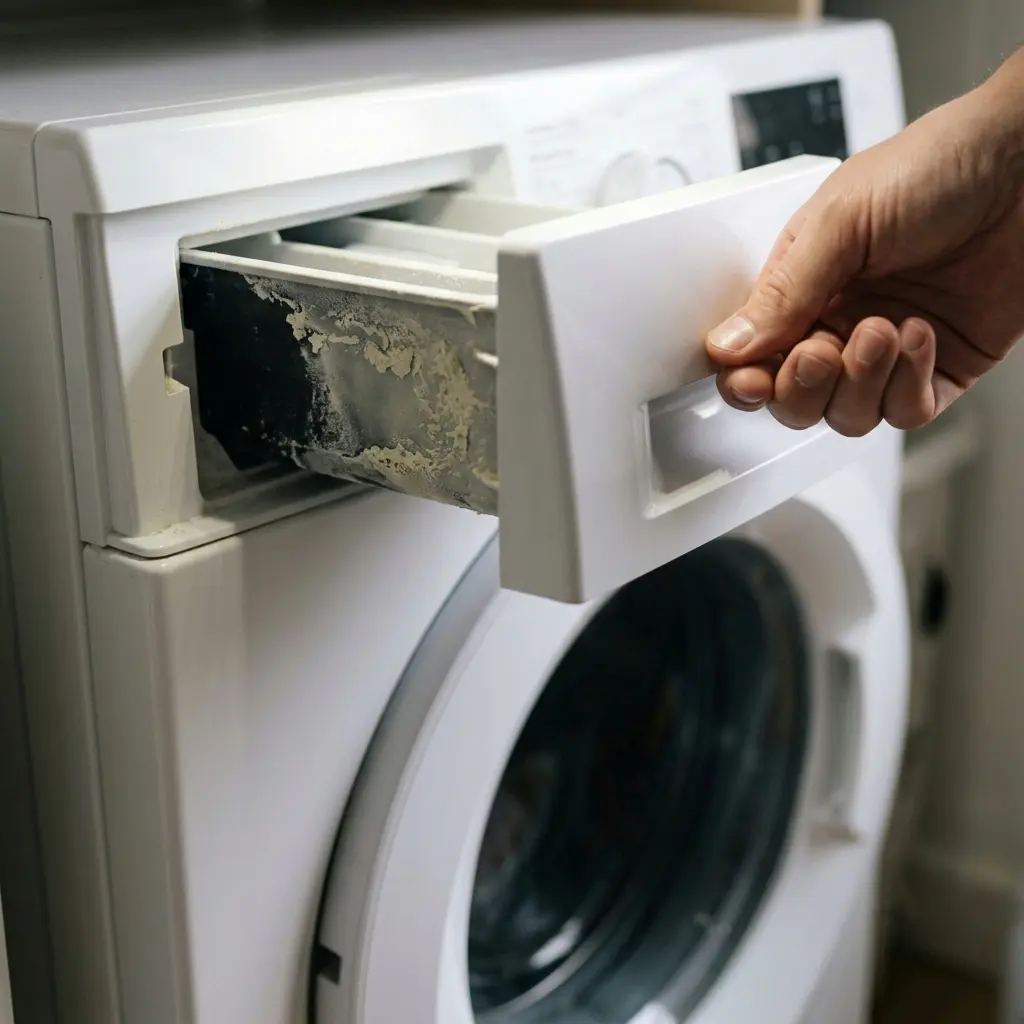
The dispenser drawer on LG washers uses a siphon system that pulls detergent into the wash tub as water flows through. Over months of use, dried detergent residue, fabric softener buildup, and mineral scale can partially clog the small channels inside the drawer housing not the drawer tray itself, but the compartment behind it that most people never look at.
When that happens, detergent doesn’t flow into the tub in the timed, diluted way it’s supposed to. Instead, it can release in a delayed clump, which sometimes lands directly on fabric before it’s had a chance to dissolve properly. Insider-level detail most people miss: a technician checking this doesn’t just glance at the drawer; they pull the entire dispenser assembly out and check behind it with a flashlight, because the buildup that actually causes clumping is almost never visible from the front.
Quick check: pull the drawer out fully (most LG dispenser trays release with a small tab press) and look for a chalky or gel-like buildup in the recessed compartment behind where the drawer sits. If it’s there, this is very likely at least part of your problem.
Overloading the Drum
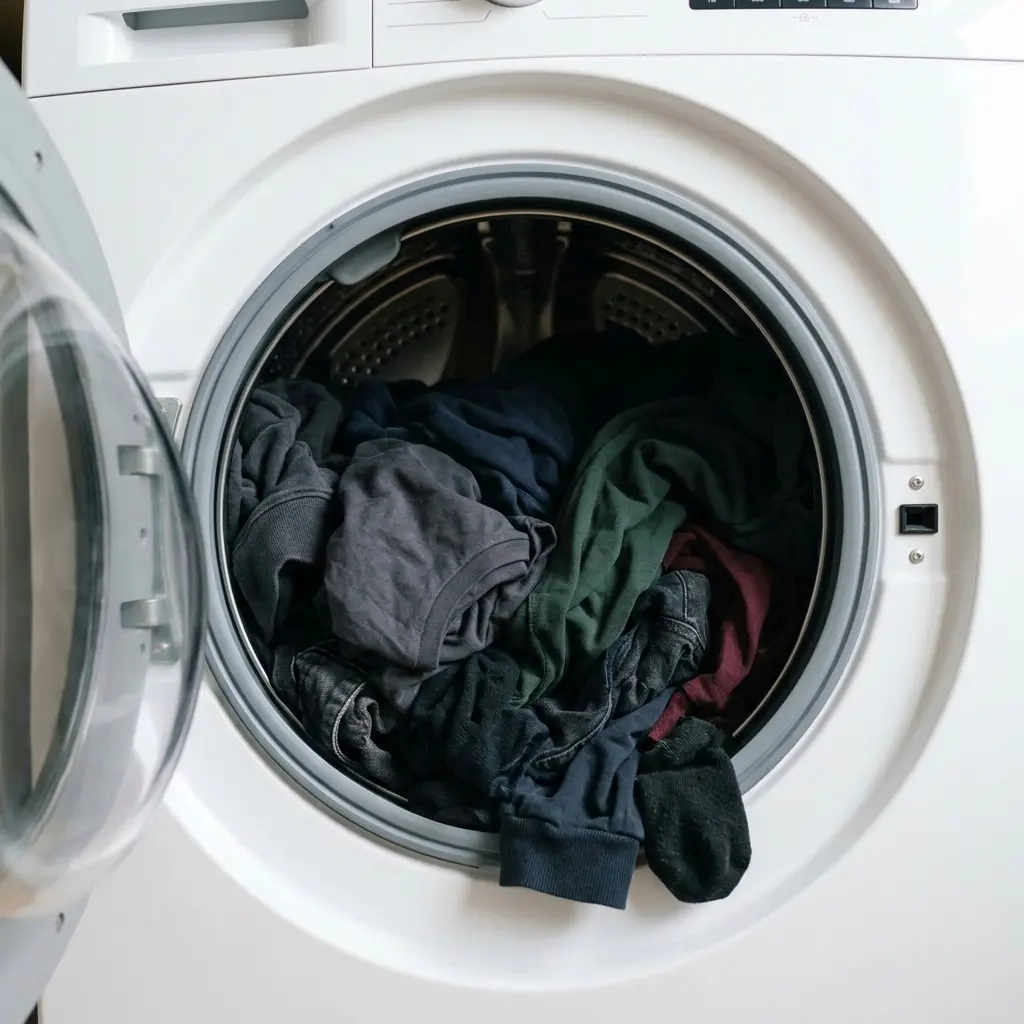
This cause gets overlooked because it feels unrelated to detergent chemistry, but it’s mechanical rather than chemical. Overloading a washer restricts water circulation, which means individual garments get less contact with moving wash water relative to how much detergent is in the tub. Fabric pressed against the drum wall or bunched at the center of an overstuffed load can end up with concentrated detergent contact in some spots and almost none in others.
Quick check: does the residue only show up on large loads, particularly loads where the drum was packed tight enough that clothes couldn’t move freely when you started the cycle? If reducing load size to about three-quarters of drum capacity eliminates the issue, overloading was the actual cause, not the detergent or water hardness. A technician’s rule of thumb: you should be able to fit a flat hand, palm down, between the top of a loaded drum and the door glass; if you can’t, the load’s too big for that cycle.
Quick Comparison: Matching the Pattern to the Cause
| Cause | When It Shows Up | White Residue Texture |
| Detergent overdosing | Every load is worse with more detergent used | Powdery, film-like |
| Hard water minerals | Every load, consistent regardless of detergent amount | Stiff, slightly gritty |
| Cold cycle not dissolving the detergent. | Cold washes only, not warm/hot | Small The cold cycle is specks or streaks |
| Clogged dispenser drawer | Random loads, sometimes clumped in one area of fabric | Concentrated patches rather than even coating |
| Overloaded drum | Large loads only, not smaller ones | Uneven, worse near where clothes were compressed |

LG Washer Leaving White Residue FAQ
1. Is white residue on dark clothes from my LG washer actually damaging the fabric?
Not typically; it’s almost always a cosmetic issue from detergent or mineral residue sitting on the fiber surface, not a chemical reaction that degrades the fabric itself, though repeated buildup over time can make fabric feel stiffer.
2. Will running an extra rinse cycle fix this permanently?
It can mask the symptom on that one load, but it doesn’t address the underlying cause; if it’s detergent overdosing, hard water, or a clogged dispenser, the residue will keep coming back until the actual cause is addressed.
3. Does this happen more with LG front-load washers than top-load models?
It can, specifically because front-load HE machines use less water per cycle, which leaves less margin for error with detergent amount and water hardness than a traditional top-load machine with a full water fill.
4. Can using pods instead of liquid or powder detergent solve this?
Pods eliminate measuring error, which removes the overdosing cause specifically, but they won’t fix a hard water or clogged dispenser problem, since those are unrelated to how the detergent is measured.
5. Why does the residue seem worse on shirts specifically and not on jeans or towels?
Lighter, more tightly woven fabric like a cotton t-shirt shows surface residue more visibly than thicker or textured fabric like denim or terrycloth, which tends to trap and hide the same amount of residue within its texture.
6. Should I switch detergent brands if this keeps happening?
Only after ruling out amount, water hardness, and dispenser buildup, most residue problems are about how much detergent is used and how well it dissolves, not which specific brand is used.
7. How often should I actually clean the detergent dispenser drawer to prevent this?
A monthly check is a reasonable baseline for most households, though homes with hard water or households doing frequent large loads may need to check more often since buildup accumulates faster under those conditions.
Bottom Line
White residue on dark laundry almost always traces back to one of five causes, and the fastest way to solve it is ruling them out in order, starting with how much detergent you’re actually using before assuming something’s broken. Match the pattern in the comparison table above to what you’re actually seeing, and you’ll know which fix to go after instead of guessing.