
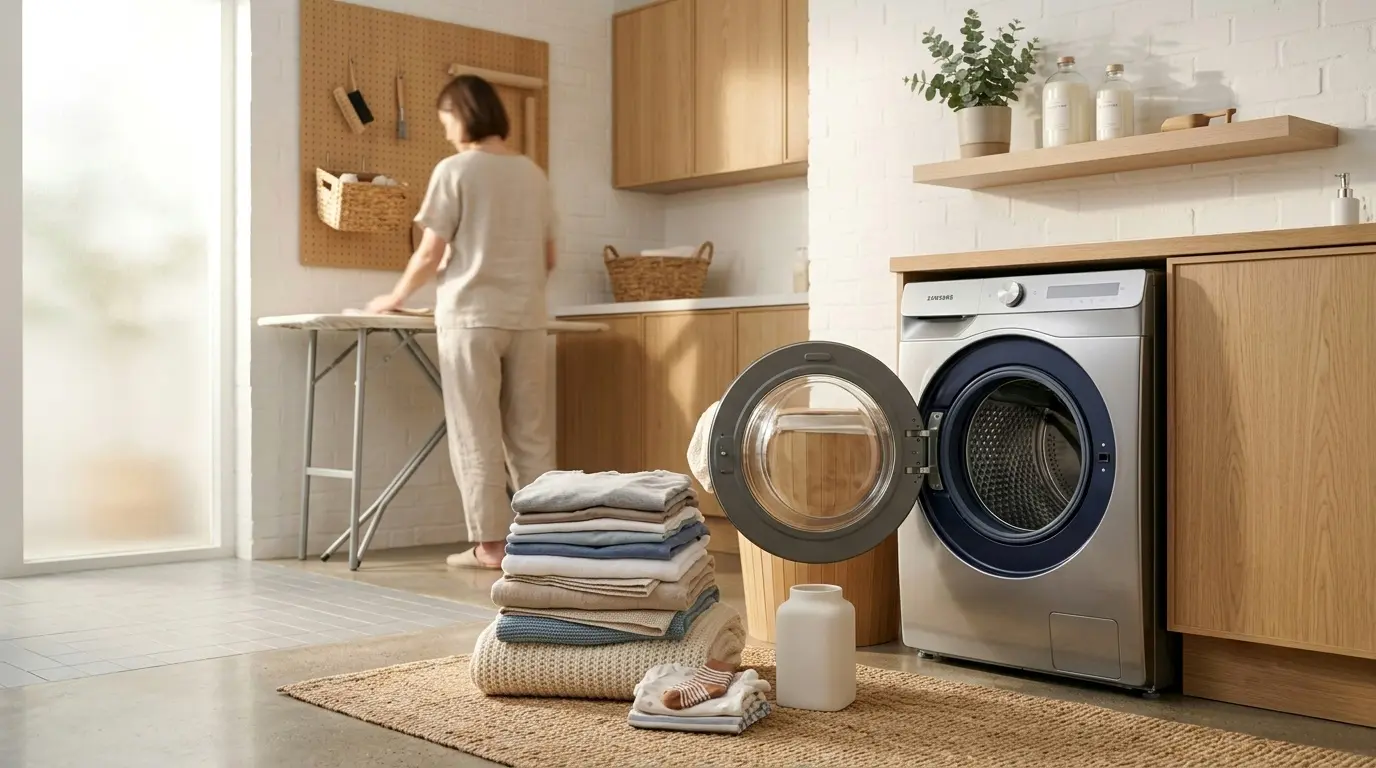
Buy too small, and you’ll be running double loads every laundry day for the next decade. Buy too big, and you’re paying for water and power to wash three towels at a time. Getting the kg number right is the one decision on a Samsung washer spec sheet that actually changes your daily life, and it’s also the one most shoppers guess at instead of calculate. In this guide we will discuss Samsung washing machine capacity to make your life easier.
Table of Contents
Why “Kg” on a Washer Label Doesn’t Mean What You Think
When Samsung lists a machine as “8kg,” that number refers to the maximum dry weight of clothing the drum can hold per cycle, not the weight of wet laundry, and not the volume the drum physically occupies. This distinction trips up more buyers than any other spec on the label.
An 8 kg rating means 8 kilograms of dry, unwashed clothes stuffed to the machine’s tested maximum. In real households, nobody loads a washer to its absolute engineering limit every single time. Manufacturers test this figure under lab conditions with mixed cotton garments folded to a specific density; real bedsheets, real jeans, and real towels don’t compress the same way.
| ✅ Tip: Load to about 80% of rated capacity for routine cycles. Reserve the full maximum for occasional heavy loads like bedding. |
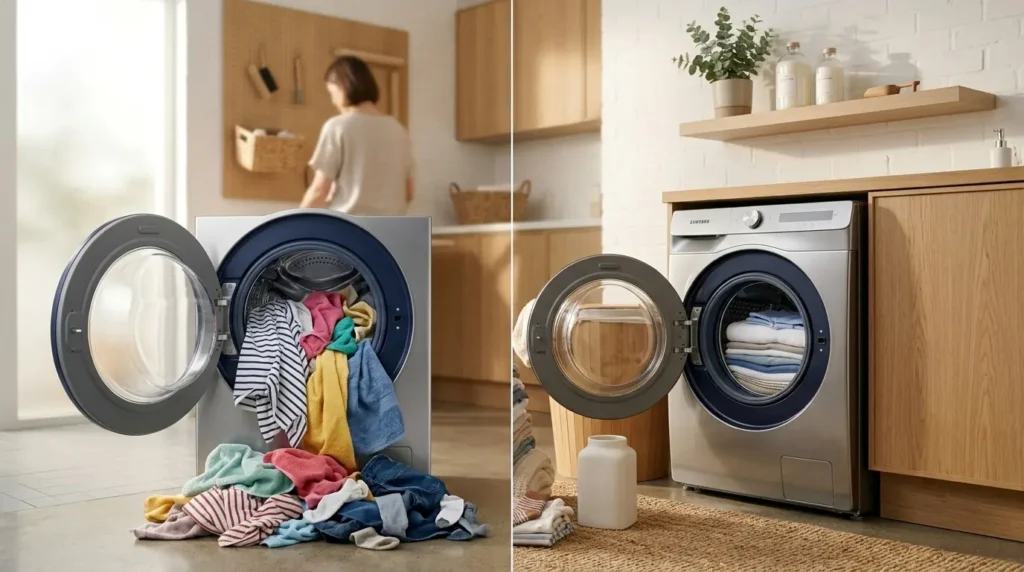
This is why technicians in the field consistently recommend loading a machine to about 80% of its rated capacity for day-to-day cycles. Push it past that regularly and you’ll see poor rinse performance, detergent residue on dark fabrics, and, over years, extra strain on the motor bearings and suspension rods. Samsung’s own drum loading guidance in the user manual for most EcoBubble and AddWash models echoes this: a maximum rated load is for occasional heavy cycles like bedding, not routine washing.
How Samsung Actually Rates Capacity (Dry Weight vs Real Load)
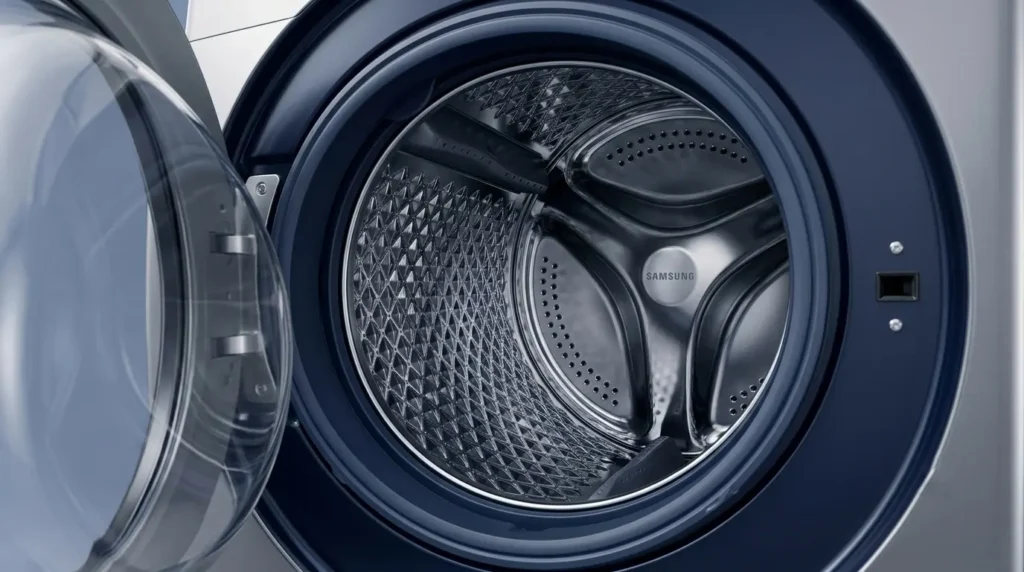
Samsung uses IEC 60456 as its baseline testing standard for most global markets, which standardizes how manufacturers measure drum capacity so numbers are at least comparable across brands. But comparable doesn’t mean identical in real-world feel; drum diameter, drum depth, and drum shape (Samsung’s diamond-to-pattern drums versus a flat-to-pattern competitor) all affect how much “genuinely fits” versus how much is theoretical.
A helpful way to picture it: an 8 kg Samsung front loader has a drum volume around 61 liters, while a 10 kg model typically steps up to roughly 65 to 71 liters depending on the exact series. That’s not a linear jump; you’re not getting 25% more physical space for 25% more rated kg, because larger capacity drums are also engineered with more aggressive water extraction and drum paddle geometry to move bigger loads efficiently.
This matters practically because two households doing “the same amount of laundry” by kg might need genuinely different drum sizes if one household washes mostly bulky items (comforters, hoodies, towels) and the other washes mostly lightweight items (t-shirts, work uniforms, baby clothes). Bulky fabric fills volume long before it hits the weight limit, which is the single biggest reason people feel like their “correctly sized” washer is always cramped.

Capacity by Household Size, A Practical Breakdown
Here’s the sizing logic technicians actually use when a customer asks, “What size do I need?” based on typical laundry frequency (once every 2 to 3 days) rather than daily washing:
1 to 2 people, no kids: 6 to 7 kg is usually sufficient. This covers roughly 30 to 35 T-shirts or 3 to 4 sets of bedding or adjacent items per load. If you wash bulky gym gear or bedding frequently, size up to a 7 kg minimum.
Small family, 3 to 4 people: 8 kg is the sweet spot for most households in this bracket, and it’s also Samsung’s highest-volume seller globally for a reason; it balances daily t-shirt and jeans loads with occasional bedding washes without forcing you into double cycles.
Larger families, 5+ people, or households with young kids: 9 to 10.5 kg gives you the headroom for near-daily loads without constant double washing, and the extra volume genuinely helps with bulky kids’ bedding and towels that pile up faster in bigger households.
Households that wash comforters, king-size bedding, or heavy winter coats regularly: 11 kg and above (up to Samsung’s 25 kg commercial-to-adjacent residential models in some markets) exist specifically for this. A queen- or king-size comforter alone can weigh 2.5 to 4 kg dry, and it needs drum volume, not just weight allowance, to tumble and rinse properly.
Samsung’s Capacity Lineup: 6 kg to 25kg Compared
| Capacity | Typical Series Examples | Best For | Approx. Weekly Loads (family of 4) |
| 6 to 6.5kg | WW60 series | Singles, couples, small apartments | 6 to 8 loads |
| 7 to 8 kg | WW70/WW80 EcoBubble | Small to to to mid-sized families | 4 to 5 loads |
| 9 to 10kg | WW90/WW10 AddWash | Mid- to to to large families | 3 to 4 loads |
| 10.5 to 11kg | WWII Bespoke AI series | Larger families, frequent bedding washes | 2 to 3 loads |
| 12kg+ (select markets) | Bespoke AI Combo, commercial to adjacent | Very large households, guesthouses | 2 loads |
Note that exact model numbers and availability vary by region. Samsung’s lineup naming (WW to series prefixes) differs slightly between markets like the US, UK, India, and the Middle East, so always confirm the specific model’s rated capacity on the region-specific spec sheet rather than assuming a WW80-style name means identical capacity everywhere.
Front Load vs Top Load: Does Capacity Behave Differently?
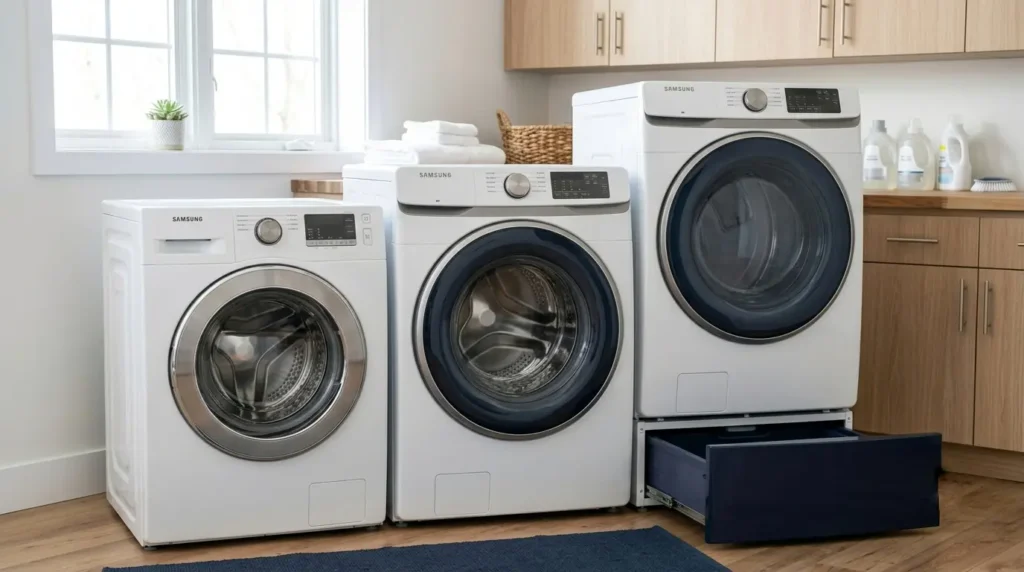
Yes, and this is another place shoppers get misled. A Samsung top loader rated at 8kg and a Samsung front loader rated at 8kg are not interchangeable in real usable space. Top loaders generally allow slightly more forgiving loading because gravity does more of the work distributing clothes, while front loaders rely on the drum’s tumbling action and are more sensitive to overloading because an unbalanced load can trigger excessive vibration or a UB-style imbalance stop.
In practice, technicians tend to advise slightly sizing up when moving from a top loader to a front loader for the same household; if you were comfortable with a 7kg top loader, a 7.5 to 8kg front loader will usually feel equivalent in daily use rather than identical numbers meaning identical experience.
Common Sizing Mistakes That Cost Money in the Long to Term
The most expensive mistake isn’t buying too small; it’s buying based on today’s household size and ignoring where it’s headed. Growing families, an elderly parent moving in, or simply accumulating more bedding and towels over time all push actual laundry volume upward. A machine that’s fine for 12 months of the year but constantly overloaded means constantly higher energy and water use per cycle, plus more frequent detergent overdosing to compensate for poor rinse cycles, both of which add real cost over an 8- to 10-year appliance lifespan.
| ⚠ Warning: Sizing by headcount alone is the most common and most expensive mistake; always factor in actual lifestyle laundry volume. |
The second most common mistake is sizing purely by number of people and ignoring lifestyle. A household of two people with large dogs, heavy gym routines, and weekly bedding washes will out-laundry a household of four with lighter, more spread-out washing habits. Capacity decisions should follow actual laundry volume, not headcount alone.
How to Measure Your Actual Laundry Volume Before You Buy
Before choosing a capacity, technicians suggest a simple week-long test: weigh (or estimate by typical garment weights; a t-shirt is roughly 200 g, jeans roughly 700 g, a bath towel roughly 500 g, and a queen comforter roughly 2.5 to 3.5 kg) your actual laundry pile at each usual wash point for one full week. Add it up and divide by your expected weekly wash frequency to get your real per-load target weight.
If that number consistently lands near or above 80% of a given model’s rated capacity, size up. This single exercise resolves more “Which Samsung washer should I buy?” indecision than any spec sheet comparison because it grounds the decision in your actual household instead of an average family’s laundry habits.
👉 [Read More: 5 Best Samsung Washing Machines of 2026: Quiet: Large]
👉 [Read More: Front-load vs. top-load Samsung washers compared
Samsung Washing Machine Capacity: FAQ
1. Is a bigger kg capacity always better for saving on utility bills?
No. A larger drum run on small, infrequent loads often uses more water and energy per garment than a correctly sized smaller machine run at 70 to 80% capacity because larger models are calibrated for larger loads to reach efficient wash performance.
2. Can I mix capacity ratings, for example, use a 6 kg to 8 kg rated cycle on an 8 kg machine?
Yes, most Samsung models let you select a lighter cycle, or the machine auto-senses load weight via its sensor system, adjusting water and time accordingly so you’re not locked into always washing at maximum rated capacity.
3. Does capacity affect spin speed or drying performance in Samsung’s washer-to-dryer combos?
Indirectly, yes. Combo units typically have a lower rated capacity for the drying function than the washing function (for example, a 10.5kg wash / 7kg dry combo), because drying requires more airflow space per garment than washing does.
4. How much does drum capacity affect noise and vibration?
Larger-capacity drums, when properly loaded and balanced, aren’t inherently noisier, but an overloaded drum of any size will vibrate more and can trigger imbalance error stops, since the counterweight and suspension system are calibrated to the machine’s rated maximum.
5. Is it worth buying a bigger capacity “for future proofing” even if I don’t need it now?
Only if you have a specific reason to expect growth (family size increasing, moving to a bigger house). Buying oversized just in case usually means years of running an inefficient, half-empty drum, which costs more than upgrading later would.
6. Do Samsung’s capacity ratings differ between markets like the US and UK?
The kg rating itself is consistent since it’s a weight measurement, but specific model availability and naming conventions vary by region, so always check the local spec sheet for your exact model number rather than assuming.
7. What’s the biggest capacity Samsung makes for residential use?
Samsung offers residential models up to around 25 kg in select markets (notably combo and commercial to adjacent lines), though the practical range most households shop within is 6 kg to 11 kg.
Conclusion
The right Samsung washing machine capacity isn’t about buying the biggest number you can afford; it’s about matching drum size to your household’s actual, honest laundry volume, including the bulky items that fill space faster than they add weight. Run the week-long laundry weight test before you shop; use the household breakdown above as your starting range, and you’ll land on a machine that fits your routine instead of fighting it for the next decade.