TechElectronicLive.com, Appliance Buying Guides: Whirlpool Smart vs. Regular Washer
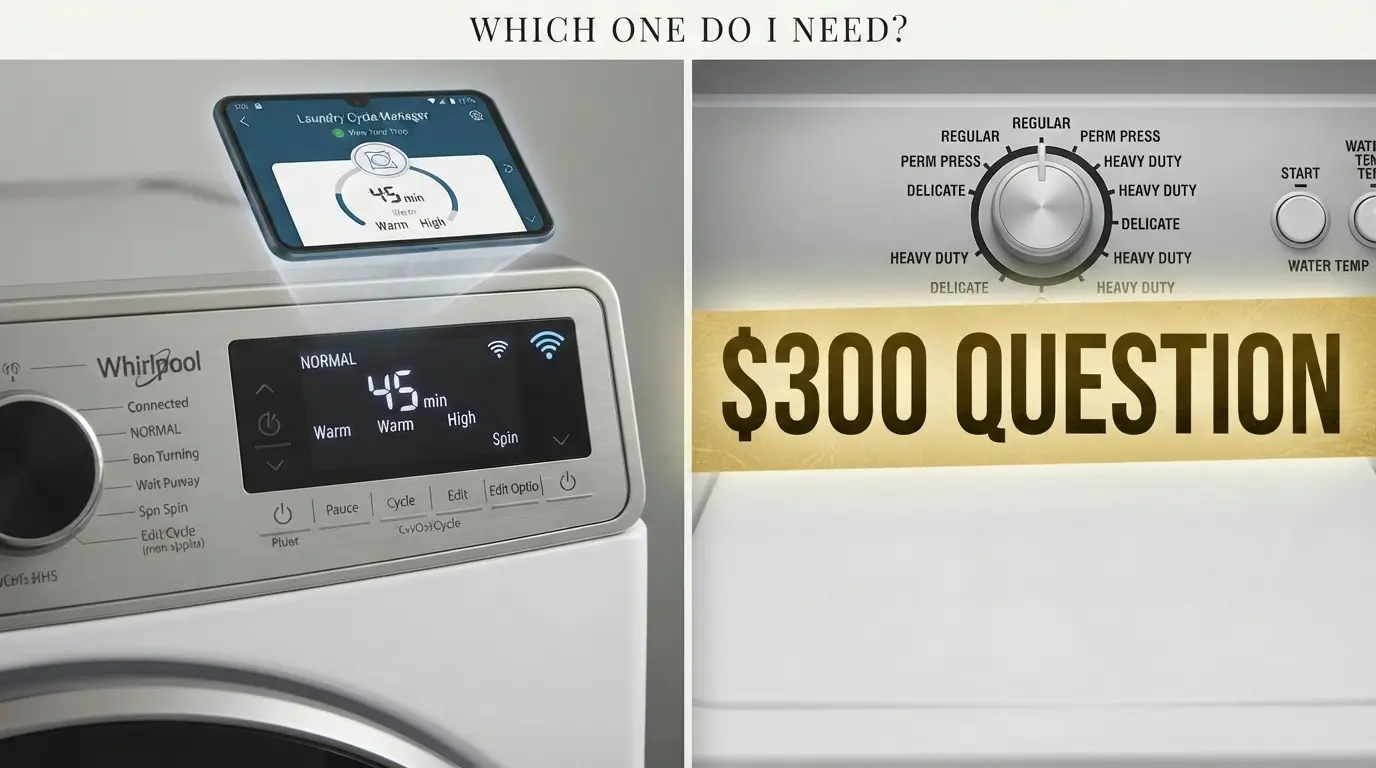
I’ve installed more Whirlpool washers than I can count, and the question I get standing in someone’s laundry room almost every week is the same: “Is the smart version actually worth the extra money, or is it just an app nobody uses after week two?” Let’s settle this with real numbers instead of marketing copy.
Table of Contents
What “Smart” Actually Means on a Whirlpool Washer
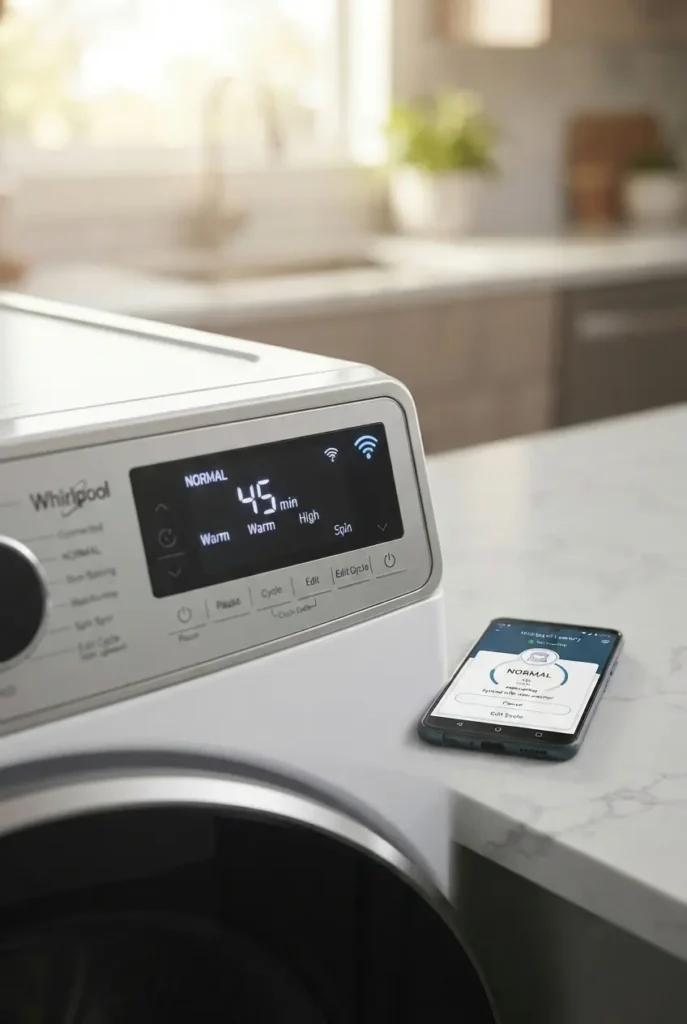
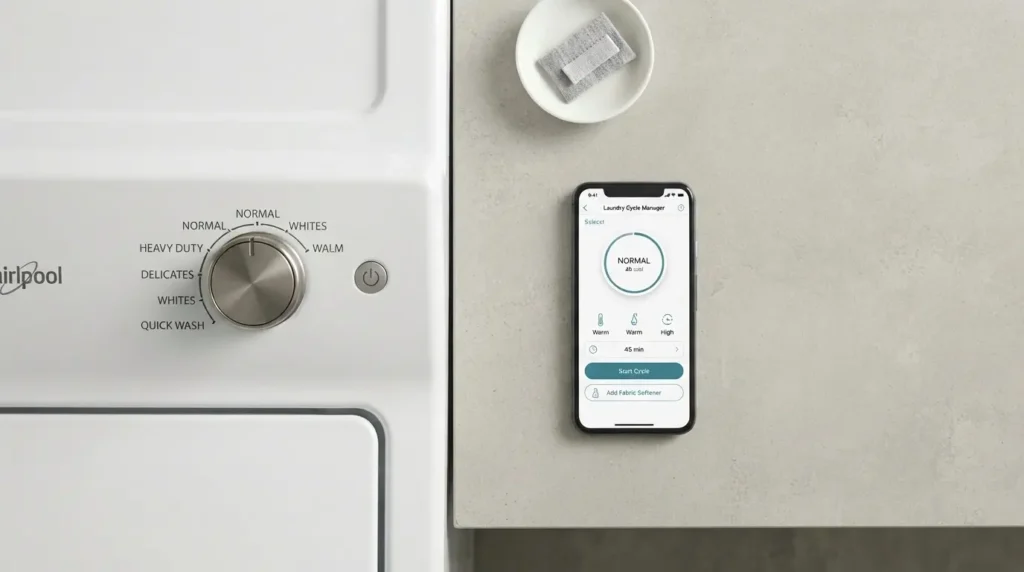
Before comparing costs, it’s worth being precise about what you’re actually buying, because “smart” gets used loosely in appliance marketing. On Whirlpool washers, the smart designation typically means Wi-Fi connectivity through the Whirlpool app, allowing remote start/stop, cycle notifications, downloadable specialty cycles, and in some models, integration with voice assistants like Amazon Alexa or Google Assistant.
It does not usually mean a different wash mechanism, a stronger motor, or better cleaning performance. In most Whirlpool lineups, the smart and non-smart versions of the same washer share an identical drum, motor, and wash system; the smart model just bolts on a Wi-Fi module and companion app. That distinction matters enormously for a cost-benefit analysis, because you’re not paying for better laundry results. You’re paying for connectivity and convenience features layered on top of the same core machine.
👉 Read More: Whirlpool vs. Mini Washers: 2026 Laundry Tech Audit.
Upfront Price Gap: What You’re Really Paying For
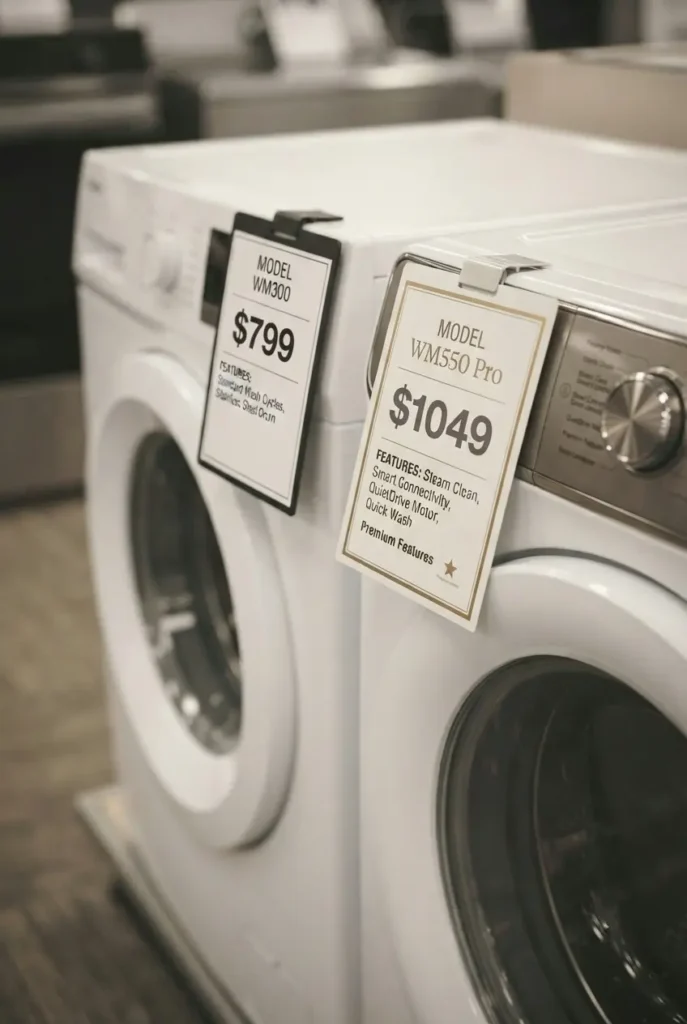
In my experience quoting installs and helping clients shop, the smart-enabled version of a given Whirlpool washer model typically runs $150 to $350 more than its non-connected counterpart, depending on the tier. Entry-level top-load washers see a smaller gap, often $100–$150, while mid-range and high-efficiency front-load models can carry a $250 to $350 premium for the connected version.
Here’s the part that surprises people: that markup isn’t just “the Wi-Fi chip.” It’s bundled with a slightly upgraded control panel, sometimes a larger digital display, and access to downloadable cycle updates that the base model’s simpler controller can’t receive. So you’re paying for a chip, a panel, and a subscription-free software layer, not a better wash.
If you’re comparing two washers side by side in a showroom and the only difference listed is “Wi-Fi connectivity,” that premium is buying you exactly one thing: remote and app-based control. It’s not buying you faster spin speeds, better stain removal, or a longer warranty in most cases; always check the spec sheet, because Whirlpool does occasionally bundle a slightly longer warranty with smart models as a promotional incentive.
Energy and Water Cost Differences Over Time
This is where I have to be blunt with clients who assume “smart” automatically means “more efficient.” It doesn’t, at least not directly. The smart module itself doesn’t reduce water or energy consumption; the underlying wash mechanism does that, and it’s typically identical across smart and non-smart versions of the same model.
Where smart washers can save you money is through app-guided cycle selection and load-size optimization reminders, which nudge users toward more efficient cycle choices they might otherwise skip. In practice, this saves a modest amount, I’d estimate $10–$25 per year for an average household, mostly from people actually using eco or quick-wash cycles they wouldn’t have bothered navigating to on a basic dial-and-button panel.
Some smart Whirlpool models also support scheduled washing during off-peak utility hours if your area has time-of-use electricity pricing. For households in regions with meaningful peak/off-peak rate differences, this can add real savings, but for flat-rate utility customers, it’s a non-factor. Don’t let a salesperson tell you the smart version is inherently more energy-efficient unless the spec sheet’s Energy Guide numbers actually differ; sometimes they do, sometimes they’re identical.
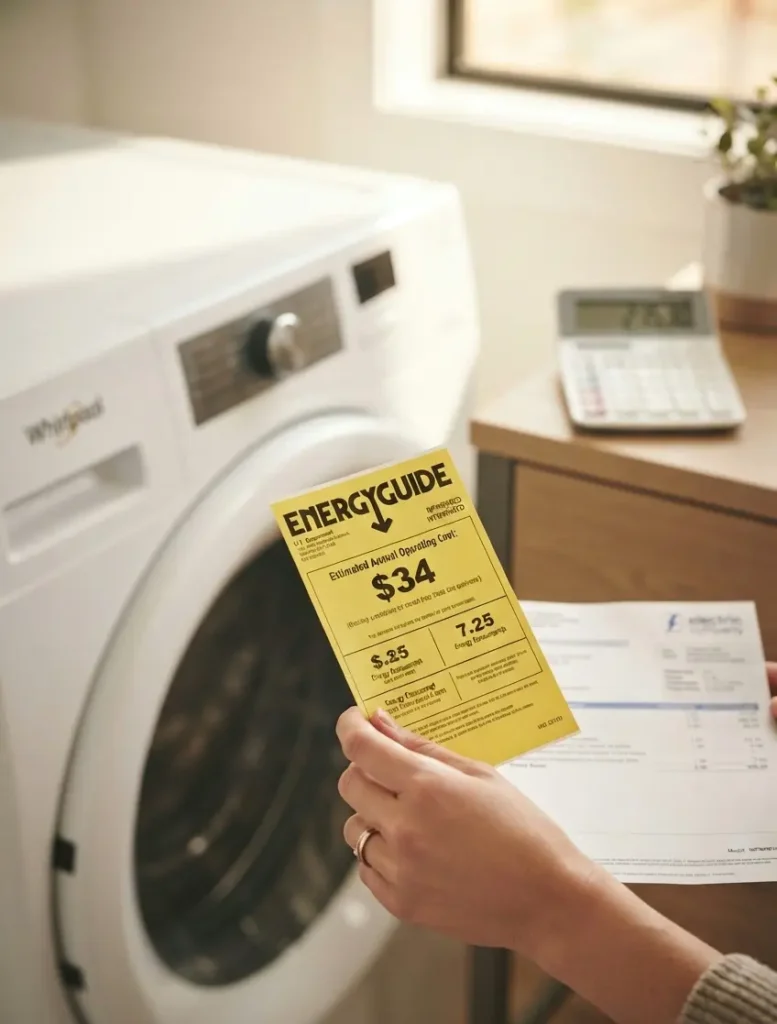
The Convenience Value Nobody Puts a Dollar Sign On
Here’s my honest technician take: The real value of a smart Whirlpool washer isn’t financial; it’s behavioral. Getting a push notification when a load is done means fewer forgotten loads sitting damp in the drum, which means fewer re-wash cycles and less musty-smell buildup requiring an extra cleaning cycle. Remote start means you can time a load to finish right before you get home, avoiding wrinkle set from clothes sitting too long.
If I try to put a rough dollar value on this, it’s mostly in avoided re-washes and slightly extended fabric life from fewer over-drying or musty re-wash cycles, maybe $15 to $30 a year in water, energy, and detergent for a typical family that actually uses the notifications. For someone who won’t download the app or bothers to check it, that value is zero. I’ve been in plenty of homes where the smart washer’s app hadn’t been opened since installation day.

Resale and Longevity: Does Smart Tech Age Well?
This is a genuine consideration people overlook. Wi-Fi modules and control boards are electronic components with their own failure modes, separate from the mechanical parts of the washer. In my field experience, the connectivity module itself is rarely the point of failure, but when it does fail, replacing a smart control board tends to cost more than replacing a standard one, sometimes by $100 to $200, because it’s a more complex part with fewer stocking distributors.
On resale value, connected appliances have started to command a small premium in the used appliance market, particularly among younger buyers who expect smart features as standard. It’s not dramatic, maybe $30 to $60 more on a private resale of an otherwise identical used washer, but it’s not nothing if you plan to sell or upgrade within 5 to 7 years.
Longevity-wise, I haven’t seen convincing field evidence that smart Whirlpool washers fail more or less often than their non-smart counterparts when the core wash mechanism is identical. The extra electronics are a manageable added risk, not a dealbreaker.
Whirlpool Smart vs. Regular Washer: Cost Comparison Table
| Factor | Smart Whirlpool Washer | Regular Whirlpool Washer |
| Typical upfront premium | +$150 to $350 | Baseline |
| Wash performance | Same as non-smart counterpart | Same as smart counterpart |
| Annual energy/water savings | ~$10 to $25 (behavior-dependent) | $0 (no app guidance) |
| Repair cost if control board fails | Higher (+$100 to $200) | Lower (simpler board) |
| Resale premium (private sale) | +$30 to $60 | Baseline |
| Remote start / monitoring | Yes | No |
| Time-of-use utility scheduling | Yes (where supported) | No |
| Realistic 5-year payback | Often does not fully offset premium unless the app is used consistently | N/A |
Who Should Buy Smart, and Who’s Wasting Their Money
Based on what I’ve seen installing and servicing both versions, the smart premium makes financial sense for a specific type of household: people with unpredictable schedules who genuinely want remote start/stop, households in time-of-use utility markets, and anyone who wants proactive maintenance alerts (many smart Whirlpool washers will flag things like an unbalanced load or a clogged drain hose location in the app before it becomes a service call).
It’s a weaker financial case for someone who just wants a washer that gets clothes clean and won’t think twice about opening an app. If that’s you, the regular version does the identical wash job for less money, with a simpler, arguably more repair-friendly control board.
My honest rule of thumb when clients ask me directly: if you already leave your phone’s notifications on for everything and you’re the type who’ll actually use a “cycle finished” alert, the smart version usually earns back its premium in convenience within a couple of years. If you already ignore half your phone notifications, save the $200 to $300 and buy the regular model; put that money toward a better detergent or an extended warranty instead.
FAQ
1. Does the smart Whirlpool washer clean clothes better than the regular version?
No. In nearly all cases, the wash mechanism, motor, and drum are identical between smart and non-smart versions of the same model; the smart features don’t change cleaning performance.
2. Is the Whirlpool app subscription-based?
No, the core Whirlpool app functionality for remote start, notifications, and cycle downloads doesn’t require a paid subscription in current models.
3. Will a smart washer lower my electric bill?
Only modestly, and only if you actively use eco-cycle recommendations or off-peak scheduling. The connectivity itself doesn’t reduce energy use.
4. Can I add smart features to a regular Whirlpool washer later?
No. The Wi-Fi module and compatible control board are built in at manufacturing; there’s no official retrofit kit for standard models.
5. Is the smart control board more likely to break?
Field experience doesn’t show meaningfully higher failure rates, but repair costs are typically higher if the more complex board does need replacing.
6. Do smart Whirlpool washers work if my Wi-Fi goes down?
Yes, all core wash functions operate normally without an internet connection; you simply lose remote monitoring and app-based scheduling until connectivity returns.
7. Is the resale value difference worth chasing?
Not on its own. A $30–$60 resale bump rarely justifies a $250+ upfront premium by itself; it’s a secondary benefit, not a primary reason to buy smart.
Conclusion
The honest verdict from someone who’s installed both versions in dozens of homes: Whirlpool smart washers are a convenience purchase, not a performance or efficiency upgrade. If remote monitoring and notifications genuinely fit how you live, the premium can pay for itself in avoided re-washes and fewer forgotten loads. If you’d never open the app, keep your money and buy the regular model; it’ll wash just as well. Weigh your own habits against the numbers above before you let a showroom associate upsell you on “smart” as if it’s automatically better. It isn’t; it’s just different.