
Techelectroniclive: Whirlpool Washer skips Rinse
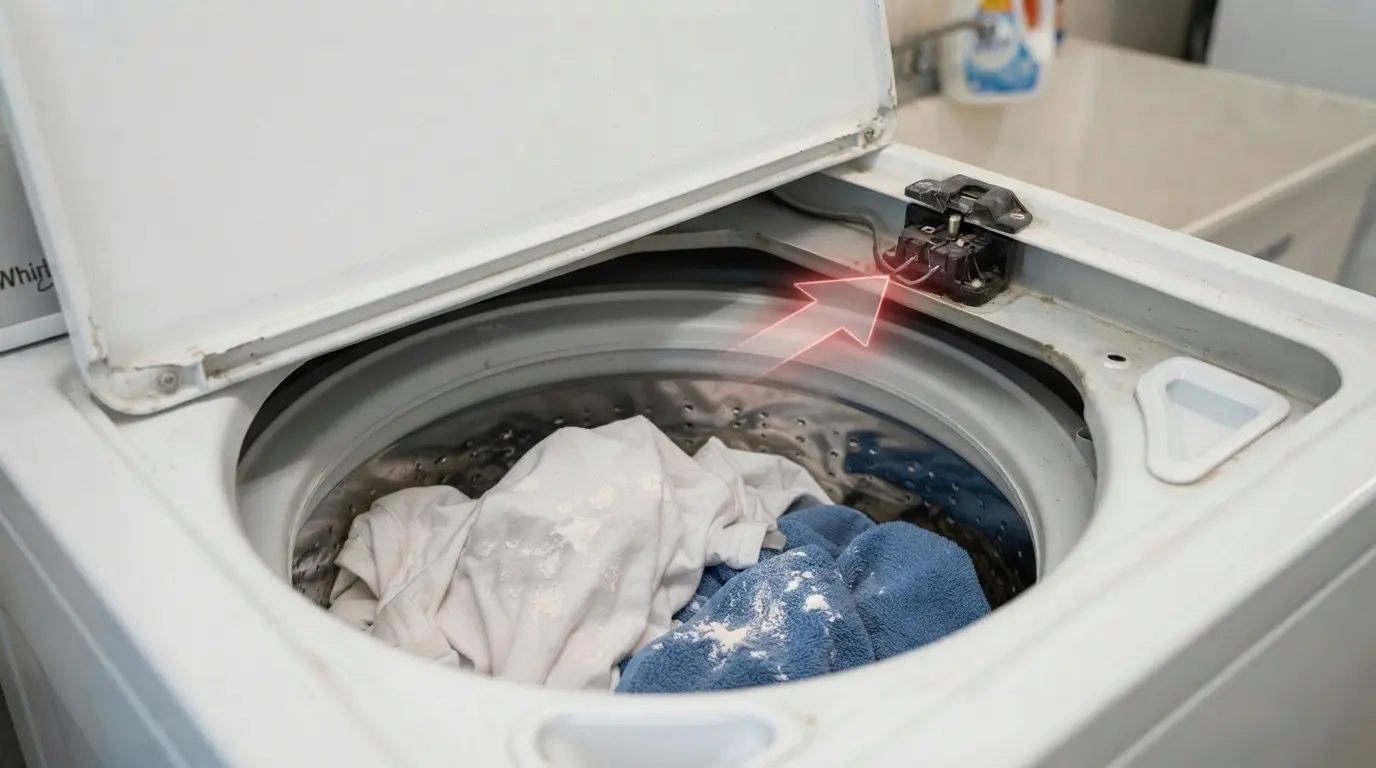
You pull your clothes out of the Whirlpool expecting them fresh and detergent-free, and instead you’re greeted with stiff fabric, a lingering soap smell, or a visible ring of residue in the drum. Something in that cycle got skipped, and most people assume it’s random. It’s not. A skipped rinse almost always traces back to one of five very specific mechanical or sensor-level causes, and after 15 years pulling these machines apart, I can usually tell which one it is before I even open the cabinet.
This article walks through exactly what’s happening inside the machine when the rinse gets bypassed, so you can pinpoint your cause before calling anyone out.
Table of Contents
What Skipping the Rinse Actually Means
Before diagnosing anything, it’s worth being precise about the symptom, because “skips rinse” actually covers three different behaviors, and technicians treat them differently:
- True skip: the machine goes straight from wash to spin; no rinse water enters at all.
- Partial rinse: water enters briefly but drains almost immediately, without a full rinse-and-agitate cycle.
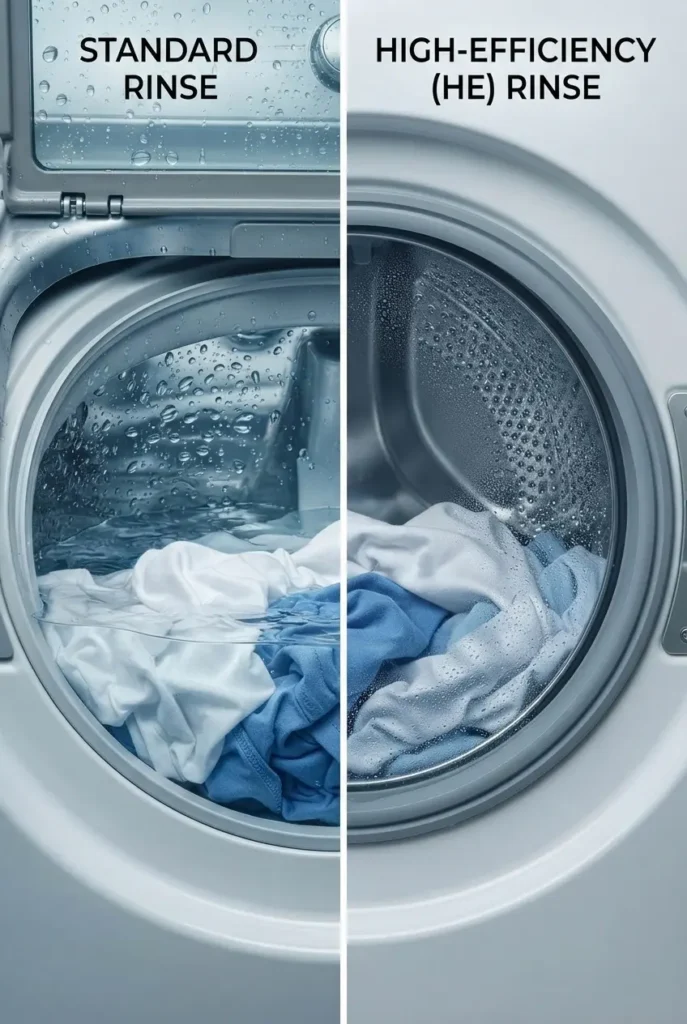
- Silent rinse: the machine appears to skip because there’s no visible water fill, but it’s actually doing a low-water or steam-assisted rinse (common on newer HE models like the Whirlpool Cabrio and WTW8127LC series, which use less visible water by design).
If you’re on a high-efficiency top-load or front-load model, step one is ruling out that third option; it’s not a malfunction, it’s a feature people mistake for a fault. Everything past this section assumes you’ve confirmed it’s a genuine true or partial skip.
The Lid/Door Switch Connection Nobody Talks About
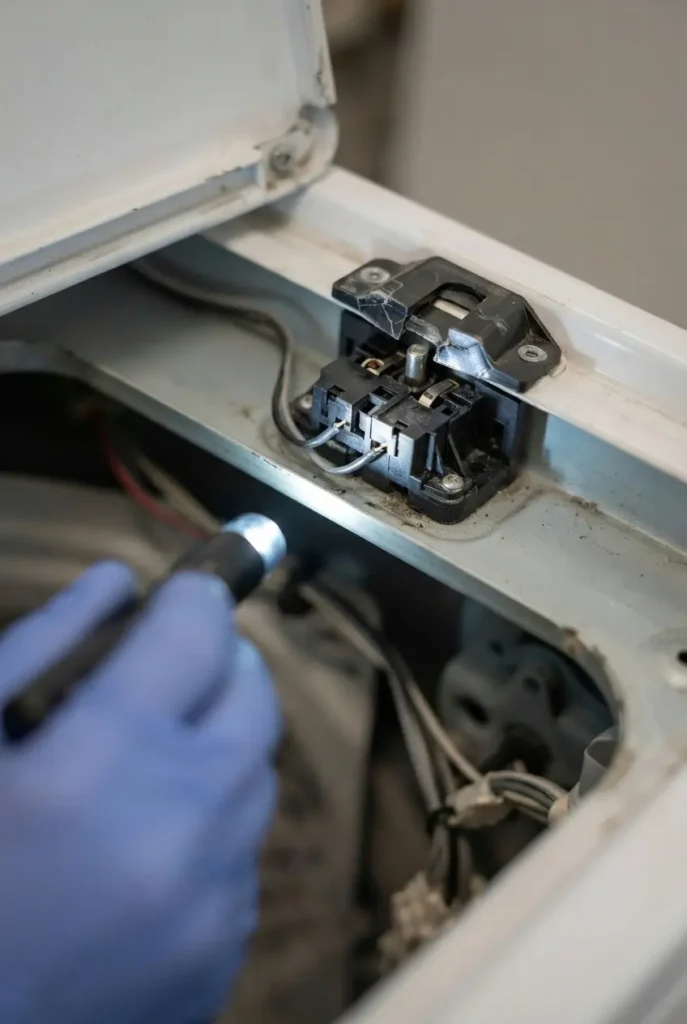
This is the cause I find most often on service calls, and it’s rarely the first thing owners suspect. Whirlpool’s control logic is built around a strict rule: if the lid or door switch signal drops out mid-cycle, even for a fraction of a second, the machine can jump straight to drain and spin instead of completing rinse. It’s not a bug; it’s a safety default.
What causes that dropout:
- A worn or slightly misaligned lid strike (common after 5+ years on top-loaders)
- A door switch/lock assembly on front-loaders that’s intermittently failing, not fully dead
- Vibration during spin that jostles a loose switch connector
The giveaway here is inconsistency; the rinse skips sometimes, not every single load, and it’s more likely to happen on unbalanced or heavy loads where the cabinet vibrates more. If your skips are random rather than constant, this switch is my top suspect.
Water Level Pressure Switch Confusion
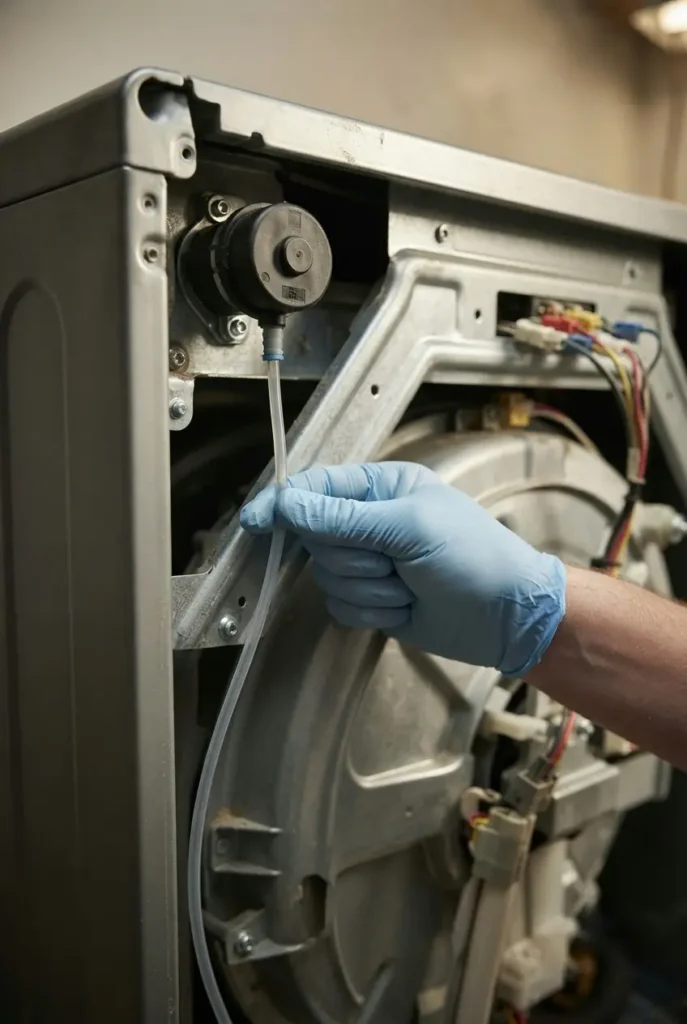
The pressure switch (sometimes called the water level switch) reads air pressure in a hose connected to the tub to tell the control board how full the tub is. When this switch reads incorrectly, usually because of a kinked or clogged pressure hose or a switch that’s drifted out of calibration, the control board can think the tub is already at the correct rinse water level when it’s actually empty, and it skips straight past the fill step.
This is mechanically different from the lid switch issue above in one key way: it tends to be consistent, not random. If your machine skips rinse on nearly every load regardless of size or balance, a miscalibrated or clogged pressure switch is more likely than an intermittent lid switch.
A quick tell: if your machine also seems to underfill during the wash cycle (clothes not fully submerged), that’s a strong secondary sign pointing at the pressure switch rather than the lid switch, since both symptoms stem from the same misread.
Drain Pump Timing That Mimics a Skipped Rinse
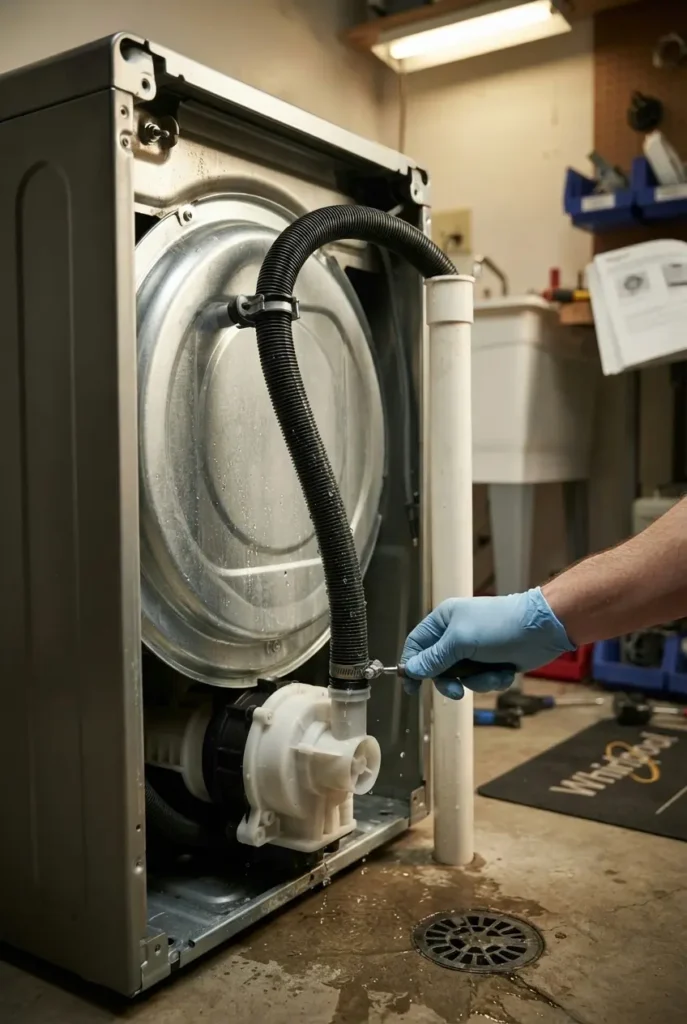
Here’s one that fools a lot of owners: the rinse isn’t actually being skipped; it’s happening, but the drain pump is either running too early or too continuously, so the rinse water drains out almost as fast as it fills. Visually, this looks identical to a skipped rinse because you never see standing water, but the cause is completely different; it’s a drain-side timing issue, not a fill-side skip.
This typically shows up when:
- The drain pump has a partially stuck check valve, letting water siphon out during fill
- The drain hose is installed too low relative to the standpipe height Whirlpool specifies (should be at least 34 inches off the floor on most models), creating a constant siphon effect
- A worn pump seal lets water bypass even when the pump isn’t actively running
If you’ve ever caught the machine making pump noise during what should be a still, water-filling rinse phase, that’s a strong indicator this is your cause rather than a true skip.
Control Board Logic and Cycle Selection Mistakes
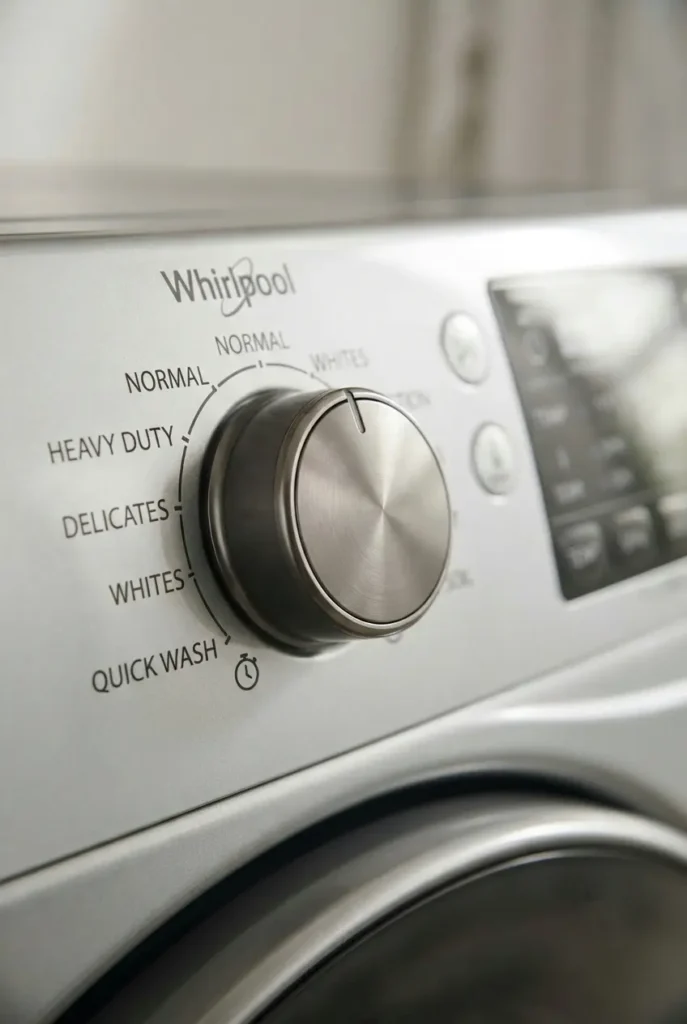
Sometimes the machine isn’t malfunctioning at all, the cycle selected genuinely doesn’t include a full rinse the way the owner expects. Whirlpool’s control boards run different rinse logic depending on the cycle:
- Quick Wash / Speed cycles on many models (including the WTW5000DW) intentionally shorten or single-pass the rinse to cut total cycle time.
- Bulky/Bedding cycles sometimes prioritize extra spin over a second rinse pass.
- Eco cycles on newer inverter models reduce rinse water volume as part of their efficiency profile.
I’ve had more than one service call where the “problem” resolved itself the moment we switched from quick wash to normal. Before assuming a fault, it’s worth checking whether the selected cycle is designed to run an abbreviated rinse by default; this is genuinely one of the most common non-mechanical explanations for the symptom.
When It’s Your Water Supply, Not the Machine
Occasionally the machine is doing exactly what it’s told, but the water supply itself is the limiting factor. Low household water pressure, below roughly 20 PSI, can cause the machine’s fill sensor to time out before it reaches the rinse fill threshold, and the control board interprets that timeout as “proceed to next step” rather than holding and retrying.
This is worth ruling out early because it’s the cheapest possible explanation: check whether other fixtures in the house (showers, other faucets) are also running weaker than normal. If so, the washer is a symptom of a house-wide pressure issue, not the cause.
How to Confirm Which Cause Whirlpool Washer Skips Rinse
Here’s a comparison to help you match your specific pattern to the likely cause before you go any further:
| Pattern You’re Seeing | Most Likely Cause |
| Skips happen randomly, worse on unbalanced loads | Lid/door switch dropout |
| Skips happen on nearly every load; wash also underfills | Water level pressure switch |
| You hear pump activity during what should be a still fill phase | Drain pump/siphon timing issue |
| Skip only happens on Quick Wash, Speed, or Eco cycles | Cycle logic, not a fault |
| Other faucets in the house are also weak | Household water pressure |
| The machine is a newer HE/Cabrio model with little visible water generally | Not actually skipping, low-water rinse by design |
This table is a diagnostic starting point, not a final answer, but matching your pattern to a row here will tell you which system to focus your attention on and whether this is even a repair situation at all.
FAQ
1. Does a skipped rinse mean my washer is broken?
Not necessarily; on HE and inverter models, a low-visibility rinse is often intentional. Check your cycle type before assuming a fault.
2. Can hard water cause a rinse to be skipped?
Not directly. Hard water can cause detergent residue that looks like a rinse problem, but it doesn’t affect whether the rinse fill actually occurs.
3. Why does my Whirlpool only skip rinse on heavy loads?
Heavy, unbalanced loads vibrate the cabinet more, which is the classic pattern for an intermittent lid or door switch issue.
4. Is this covered by warranty?
Sensor and switch issues are typically covered if the machine is still under Whirlpool’s standard one-year parts warranty; check your specific model’s coverage before assuming out-of-pocket costs.
5. Could a software or firmware issue cause this on newer models?
On Wi-Fi-enabled Whirlpool models, yes, control board logic errors have occasionally been linked to firmware, and Whirlpool has issued updates for some units.
6. Does adding extra detergent make the rinse skip more likely?
Indirectly, excess suds can trigger a foam sensor response on some models, altering rinse timing as the machine tries to manage suds levels.
7. Should I try a different detergent before assuming it’s mechanical?
It’s a reasonable first step, especially if you’re using more detergent than the load size calls for, since suds-related rinse changes are a known non-mechanical cause.
Final Word
A skipped rinse isn’t random; it’s your machine telling you something specific about a switch, a sensor, a pump, or even just a cycle setting you didn’t realize was shortening things. Matching your exact pattern to the table above is the fastest way to know whether you’re dealing with a five-minute cycle change or something that needs real diagnostic work.