
TechElectronicLive.com, Whirlpool Washer Clothes Sticky
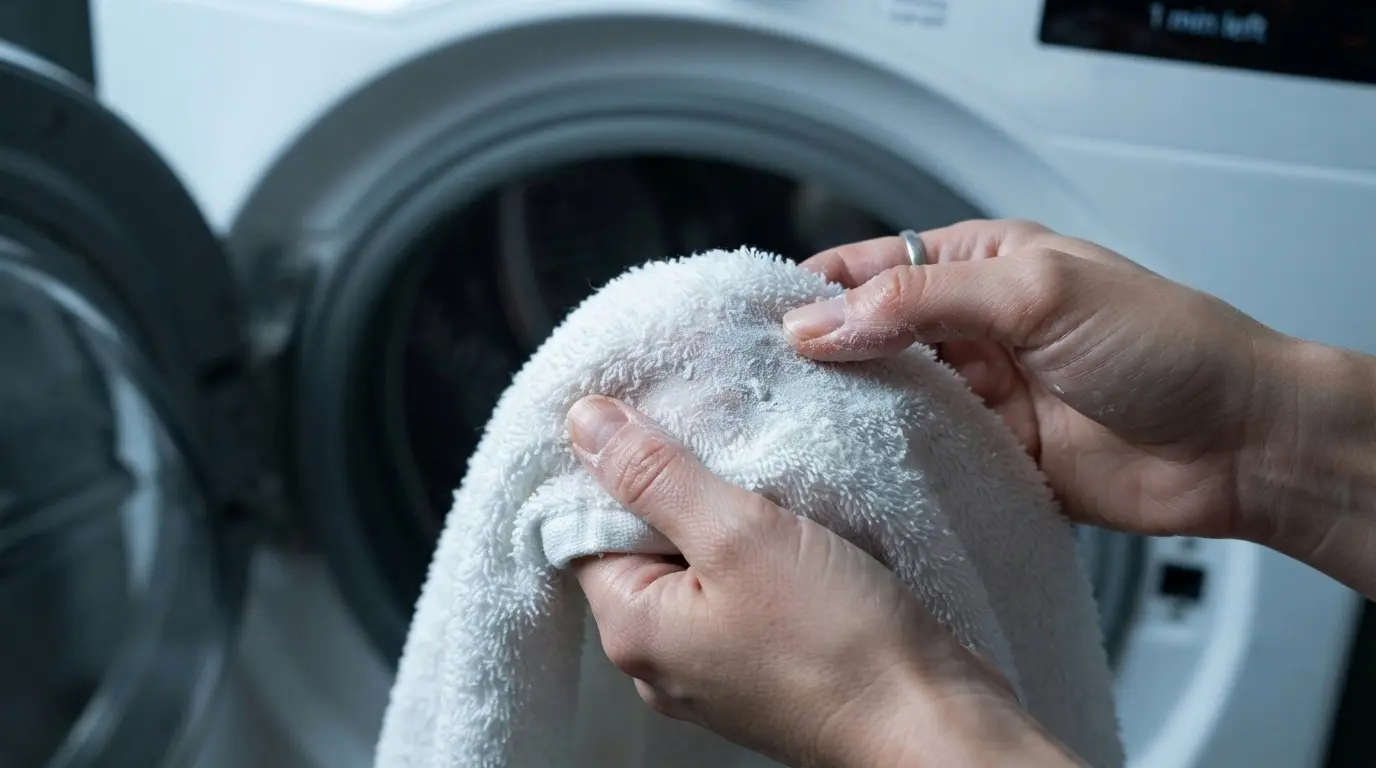
Pull a load of towels out of your Whirlpool washer expecting soft, clean fabric, and instead your hands stick slightly to the cotton like it’s been through a science experiment. If that’s happened to you, you’re not imagining it, and you’re not doing laundry wrong. There’s almost always a specific, identifiable cause, and in fifteen-plus years of servicing washers, I’ve seen this exact complaint come from a small, repeatable list of culprits.
This article breaks down exactly why Whirlpool washers leave clothes feeling sticky, tacky, or filmy and the mechanical and chemical reasons behind it, not the fix itself.
Table of Contents
What “Sticky Laundry” Actually Means (Chemically)
Before pointing fingers at any single cause, it helps to understand what’s physically happening. That tacky feeling on fabric is residue, a thin film left behind on fibers that wasn’t fully rinsed away or fully dissolved in the first place. It’s not one substance; it’s usually one of three things: undissolved detergent, fabric softener that’s polymerized on the fiber surface, or a soap-and-mineral compound (a soft version of soap scum) that bonds to cotton and synthetic blends alike.
Whirlpool washers, top-load and front-load alike, are engineered around specific water levels, wash temperatures, and spin/rinse combinations. When any one of those variables shifts (often due to user settings, water hardness, or detergent choice), the rinse cycle doesn’t have enough mechanical action or clean water volume to fully carry residue out of the fabric. That residue dries into what feels sticky.
This matters because the feeling is the same across causes, but the fix is completely different depending on which one is actually happening in your machine, which is why diagnosing the right cause first is worth the five minutes it takes.
Cause #1: Detergent Overdosing
This is, by a wide margin, the most common cause I see in service calls, and it’s almost never intentional carelessness; it’s usually a scoop-size misunderstanding.
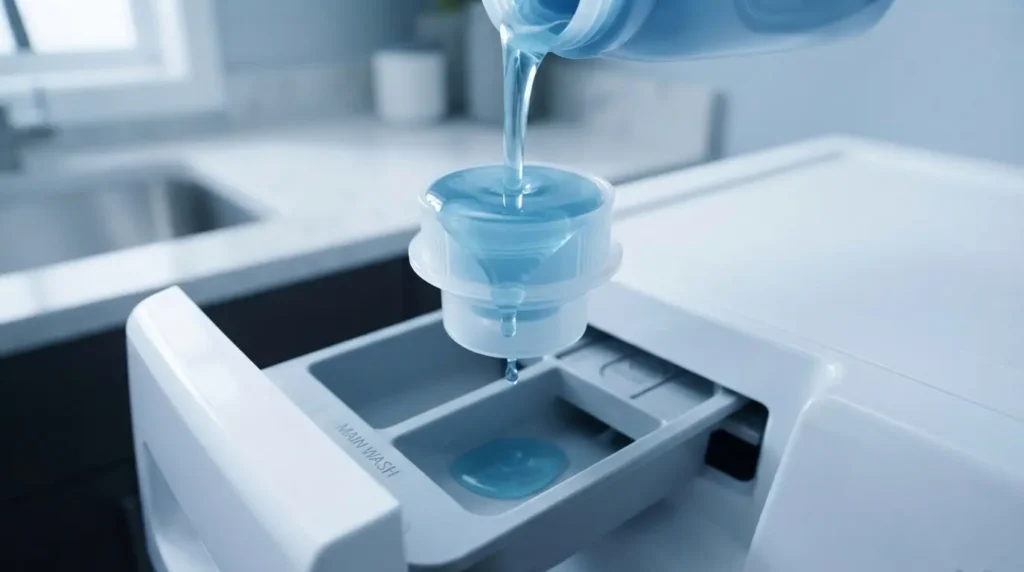
Whirlpool’s HE (High Efficiency) machines, which make up the majority of their current top-load and front-load lineup, use significantly less water per cycle than older standard washers. That’s the entire point of HE: water and energy savings. But it means the detergent-to-water ratio is far more sensitive. A cap-fill that felt “normal” on an old top-loader is often 2-3x too much for an HE Whirlpool.
When you overdose detergent, the rinse cycle simply doesn’t have enough clean water passing through the load to carry all of it away. Some of it re-deposits onto fabric during the spin cycle as the water extracts. The result: stiff, sticky, sometimes faintly soapy-smelling laundry, even though you used a name-brand detergent correctly by old-machine standards.
Cause #2: Cold Water Cycles and Undissolved Detergent
Whirlpool’s cold-wash-friendly cycles (Whirlpool markets several models with an “Eco” or “Cold Wash” setting) are great for energy bills and fabric longevity, but they create a specific chemistry problem: many detergent formulations, especially powder detergents and even some liquid concentrates, don’t fully dissolve in water below roughly 65°F (18°C).
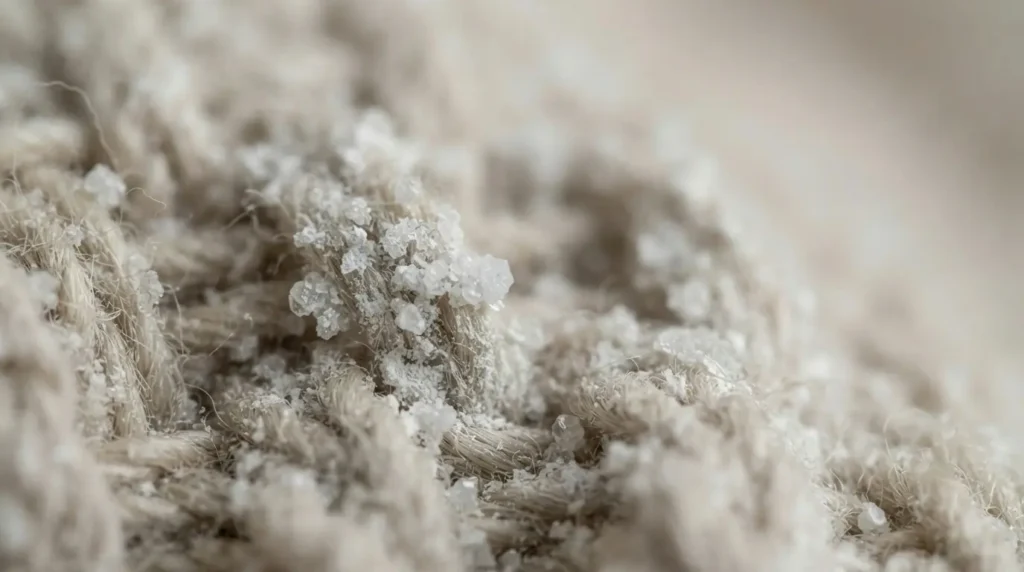
Undissolved detergent doesn’t rinse away cleanly; it clings to fabric in small granules or a filmy coating, which is exactly the sticky sensation people report. This is more common in colder climates, unheated laundry rooms, or homes where the incoming cold water line runs noticeably cold in winter months.
I’ve diagnosed this on multiple Whirlpool Cabrio and Duet models during winter service calls where the customer swore nothing about their routine had changed, and nothing had, except outdoor temperature dropping the incoming water supply by 15-20 degrees.
Cause #3: Hard Water Mineral-Detergent Bonding
If you’re on well water or live in a hard water region (much of the central and southwestern US, parts of the UK, and large areas of Australia, for example), this is worth serious consideration.
Hard water contains dissolved calcium and magnesium. When detergent, which is chemically a surfactant, mixes with these minerals, it can form an insoluble compound, essentially a mild version of the “soap scum” you see on shower tile. This compound doesn’t fully rinse out of fabric. Instead, it deposits into the weave of the fibers, drying into a texture that feels waxy or sticky rather than soft.
This is a genuinely different mechanism than overdosing or undissolved detergent; you can use the exact correct amount of detergent in warm water and still get sticky laundry if your water hardness is high enough, because the chemical reaction happens regardless of dosage precision.
Cause #4: Fabric Softener Buildup vs. Detergent Buildup
Here’s a distinction most articles blur together, and it matters: fabric softener residue and detergent residue feel similar but come from different sources and build up differently over time.
Liquid fabric softener works by coating fibers with a waxy, cationic compound designed to reduce static and add softness. Used correctly, this is thin and invisible. Used too generously, or poured directly onto fabric rather than into the dispenser drawer, it creates a thicker waxy layer that doesn’t fully release in the rinse, leaving clothes (especially towels) with a greasy, tacky feel rather than a “soapy” one.
The tell: detergent residue tends to feel gritty or filmy and often comes with a mild soap smell. Softener residue tends to feel greasy or waxy, and towels specifically lose absorbency (they bead water instead of soaking it up), a very specific symptom that only points to softener, not detergent.
Cause #5: Biofilm and Drum Residue Transfer
This cause surprises most homeowners: the washer itself, not the detergent or water, is the source of the residue.
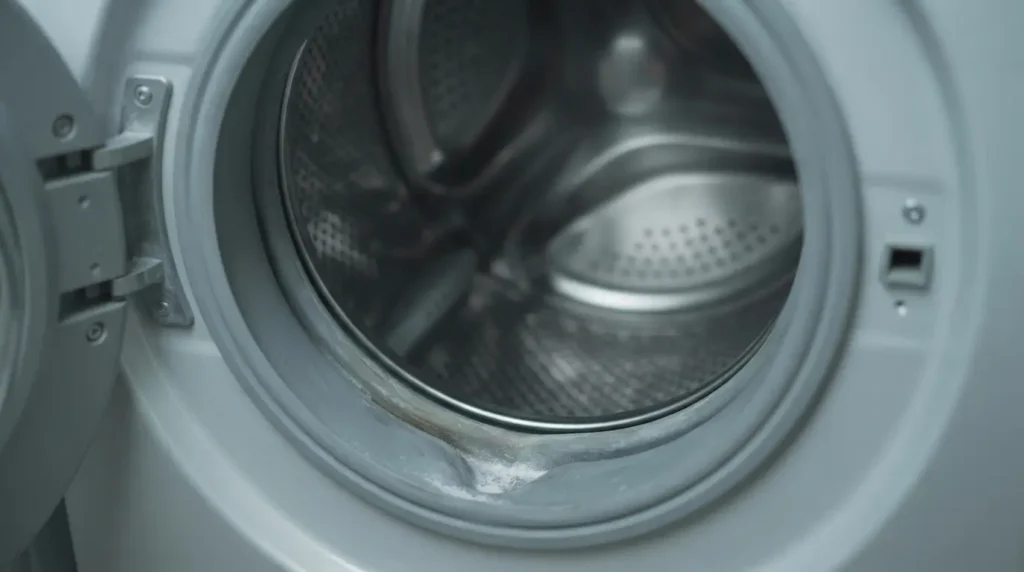
Front-load Whirlpool washers (Duet, Front Load, and newer WFW series models) run cooler cycles and have rubber door gaskets and recessed dispenser trays, both prime environments for biofilm buildup, which is a combination of trapped detergent residue, fabric softener residue, and moisture that never fully dries between cycles. Over weeks or months, this biofilm coats the interior drum surface and gasket.
During the next wash, that residue transfers onto clean laundry directly from the drum surface, independent of how much detergent you used this time. This is often accompanied by a musty smell in the machine itself, which is your biggest diagnostic clue that the washer, not your routine, is the source.
Cause #6: HE Detergent Misuse in Whirlpool Machines
Every current Whirlpool washer that carries the HE badge (this is nearly all Whirlpool machines manufactured in the last decade) is engineered specifically for low-sudsing HE-formulated detergents. Regular, non-HE detergent produces excessive suds in a low-water HE cycle, and those suds physically interfere with the rinse process; the machine’s sensors can even shorten or adjust cycles in response to excess suds, reducing rinse effectiveness further.
The result is a compounding problem: too many suds, not enough clean rinse water reaching the fabric, and detergent residue left behind, even at a “correct” dosage for a standard detergent used in the wrong machine type.
Quick Diagnostic Table: Match Your Symptom to Your Cause
| Symptom | Most Likely Cause |
| Gritty or filmy texture, mild soap smell | Detergent overdosing |
| Small granules visible on dark fabrics | Cold water + undissolved powder detergent |
| Waxy texture, worse on towels; fabric feels stiff | Hard water mineral bonding |
| Towels bead water instead of absorbing it | Fabric softener buildup |
| A sticky feel plus musty odor from the machine | Biofilm/drum residue transfer |
| Excess suds visible during the wash, and a sticky residue after | Non-HE detergent in an HE machine |
FAQ: Whirlpool Washer Clothes Sticky
1. Is sticky residue on my clothes from a Whirlpool washer harmful to skin?
For most people, no, it’s typically just leftover surfactant or mineral residue, not a bacterial hazard. However, people with sensitive skin or eczema can experience irritation from detergent film left on fabric, which is worth noting if a family member’s skin symptoms line up with laundry changes.
2. Does this happen more with Whirlpool specifically, or all HE washers?
It happens across all HE brands, but Whirlpool’s high market share means it shows up frequently in search and service calls. The underlying cause, low water volume relative to detergent, is a universal HE characteristic, not a Whirlpool-specific defect.
3. Can hard water really cause sticky laundry even with the right detergent amount?
Yes. This is one of the more misunderstood causes, since people assume dosage is the only variable. Mineral bonding happens independent of how carefully you measure detergent.
4. Why does this only happen with towels and not other laundry?
Towel loops (the terrycloth pile) have far more surface area than flat-woven fabric, so they trap residue more visibly and more physically. The same residue level on a t-shirt may be undetectable by touch.
5. Does using less detergent always fix sticky residue?
Only if overdosing is the actual cause. If your issue stems from hard water or biofilm, reducing detergent alone won’t resolve it, which is exactly why cause identification matters before troubleshooting.
6. Can old or expired detergent cause this?
Yes, in some cases. Detergent that’s separated, thickened, or past its effective shelf life may not dissolve or activate properly, leaving more undissolved residue behind, similar to the cold-water mechanism.
7. Is this the same issue as clothes smelling musty after washing?
Related but distinct. Musty smell points specifically toward biofilm/drum buildup, while sticky texture can come from several separate causes listed above. They frequently occur together but aren’t automatically the same root problem.
Final Word
Sticky laundry from a Whirlpool washer almost always traces back to one of these six mechanisms, and correctly identifying which one you’re dealing with is what separates a five-minute adjustment from months of ongoing frustration. Pay attention to where the residue shows up, what it feels like, and whether your machine itself smells off; those details are your best diagnostic clues.
If you’ve identified your cause and are ready for the actual fix, we’ve got you covered with the exact steps for each scenario.