
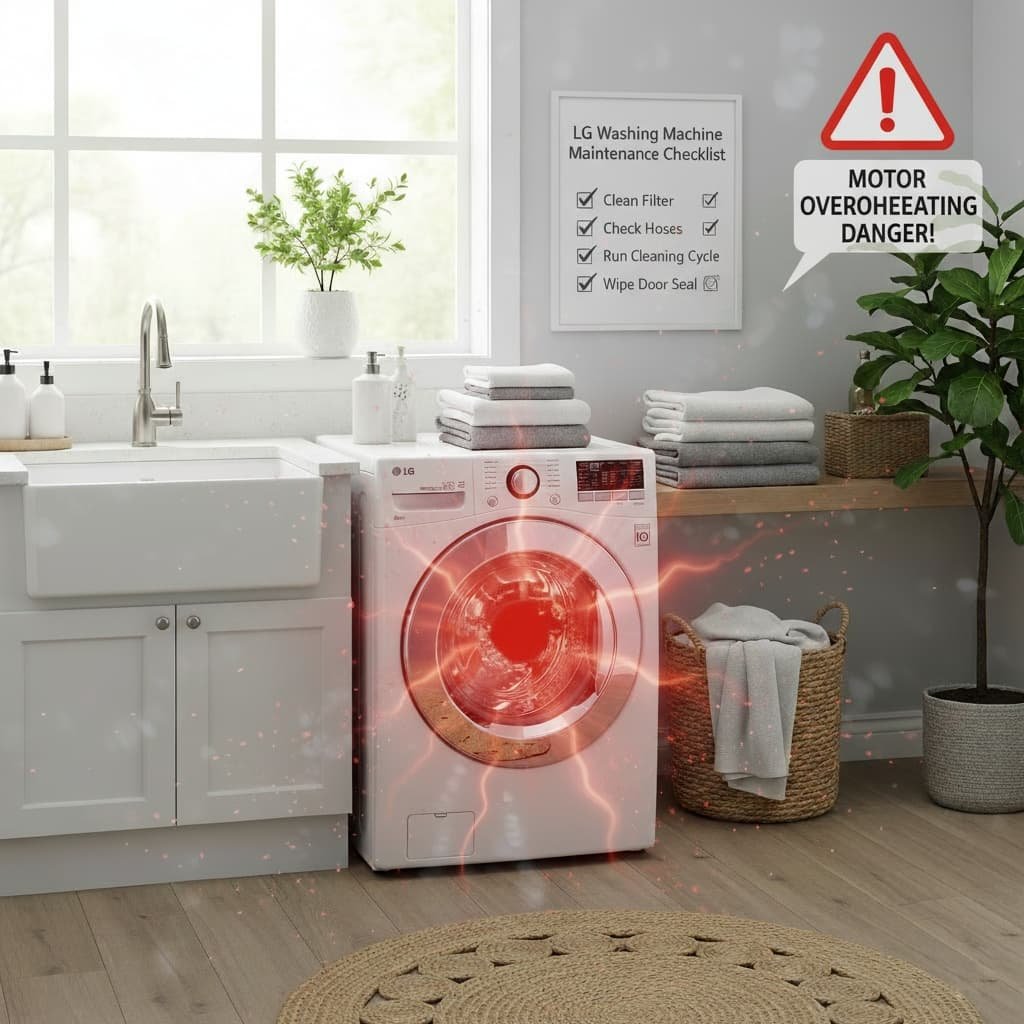
A burning smell mid-cycle, a washer that just stops on its own, and clothes coming out soaked instead of spun, these are the three most common ways an overheating LG motor announces itself, and each one points to a slightly different cause. Here’s how to tell them apart before you decide whether this is a $0 fix or a service call.
Table of Contents
Signs of LG washing machine Motor Overheating
Catching this early is what keeps it a cheap fix instead of an expensive one. Watch for:
- Burning smell during or right after a cycle
- Grinding or humming noises while the drum spins
- A hot back panel, noticeably warmer than normal to the touch
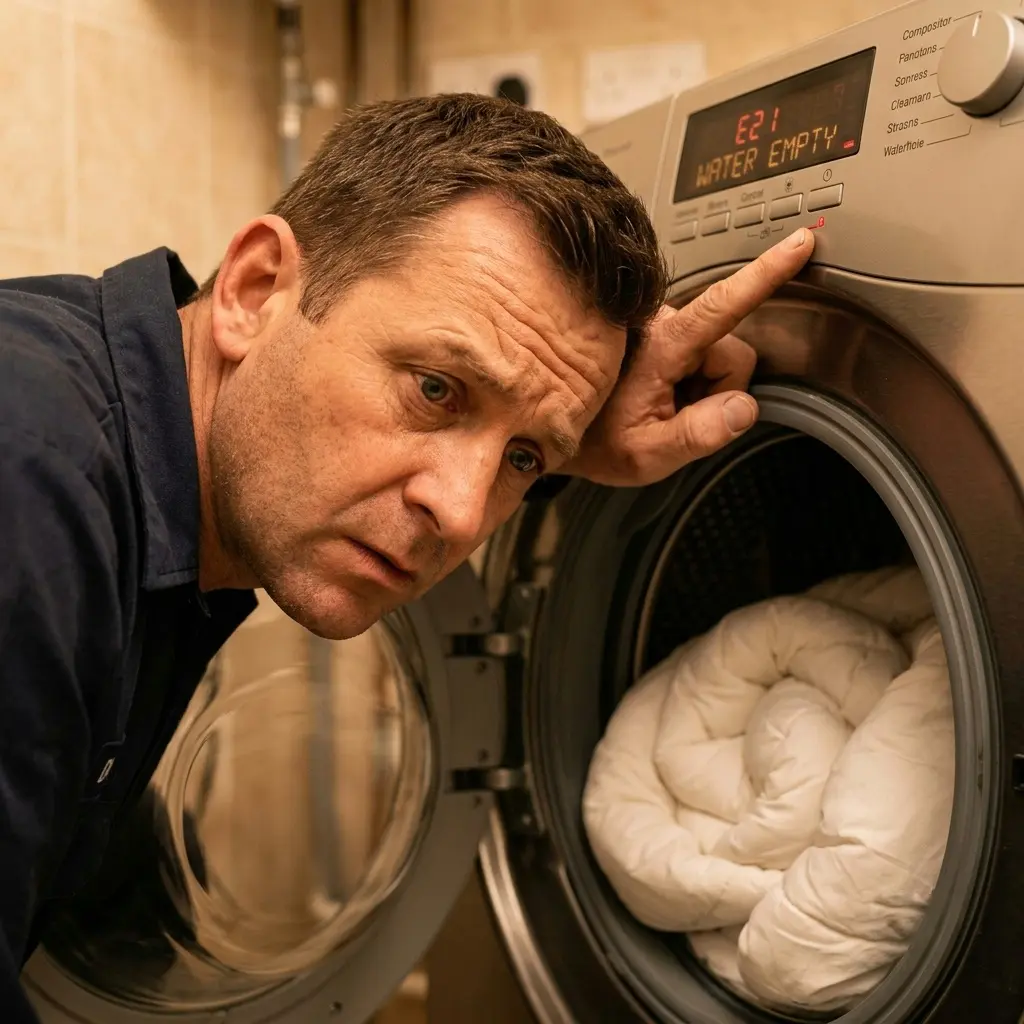
- Mid-cycle shutdowns as the washer’s thermal protection kicks in to cool down
- Weak spin, wet clothes at the end of the cycle
Sign-to-Cause Quick Reference
| Sign | Most Likely Cause | Urgency |
| Rubbery/friction smell | Worn belt or motor mount | Moderate, schedule soon |
| Sharp electrical/plastic smell | Motor winding insulation breaking down | High, stop using it |
| Grinding noise, no smell | Worn bearings | Moderate |
| Mid-cycle shutdown, no smell/noise | Overloading or poor ventilation | Low, try a smaller load first |
| Hot panel + voltage flicker elsewhere in the house | Electrical supply issue | High, check wiring/outlet |
What’s Actually Causing It
Overloading the drum.
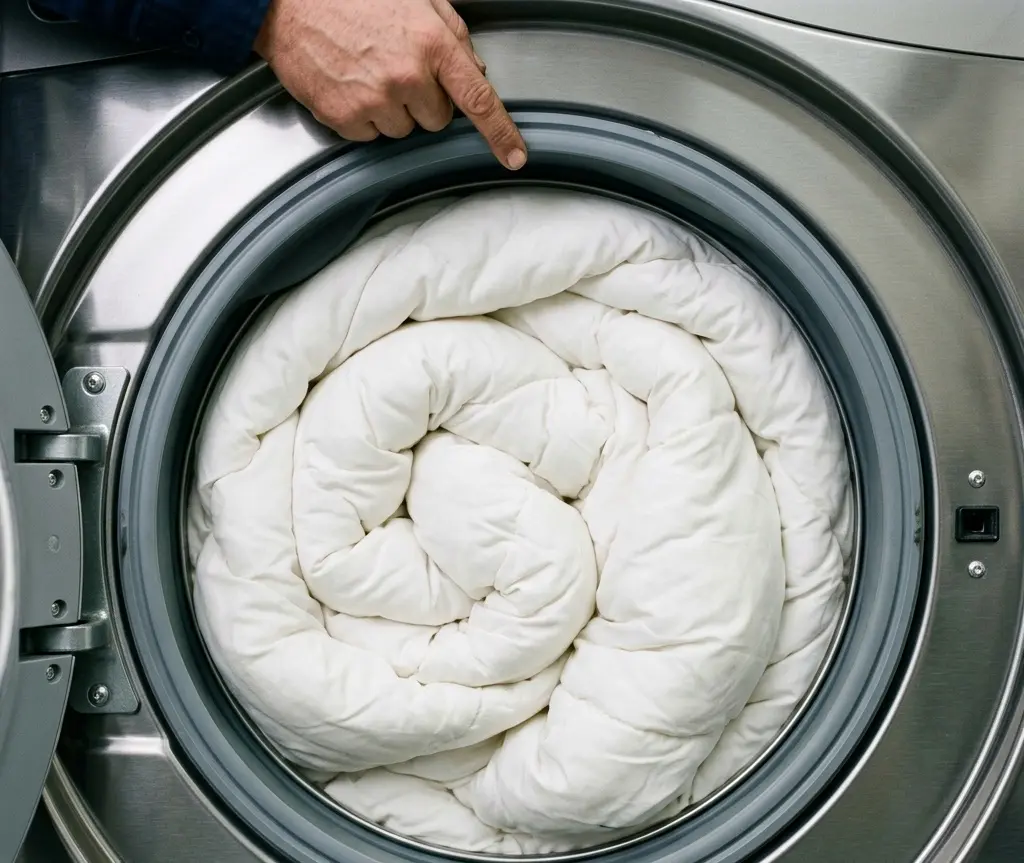
Heavy loads force the motor to work harder than it’s rated for, and the strain builds heat faster than the motor can shed it. Consumer Reports has noted overloading can cut motor efficiency by close to 20%, which is part of why an overloaded machine both overheats and spins weaker at the same time.
Worn bearings or a loose belt.
Once a bearing wears down, the drum no longer spins as freely, so the motor has to push through extra resistance on every rotation; that resistance becomes heat.
Poor ventilation.
Dust and blocked vents trap the heat the motor is already generating instead of letting it dissipate, so a motor running at a normal load can still overheat purely from airflow being restricted.
Electrical issues.
Voltage fluctuations or weak household wiring, more common in older homes, force the motor to draw inconsistent current, which generates extra heat even during a normal cycle.
Motor age.
Washer motors typically last around 10–12 years with proper care (per Energy Star), and efficiency drops gradually as internal components wear, so an older motor overheats under loads it used to handle fine.
Direct Drive vs. Belt-Driven Motors: Why It Changes the Diagnosis
Most current LG front-load washers use a direct-drive motor; the drum is mounted straight onto the motor shaft with no belt in between, which LG has marketed for years as a durability feature. Older LG top-load models and a handful of budget lines still use a belt-driven motor instead. This distinction actually matters for overheating, not just for repair cost:
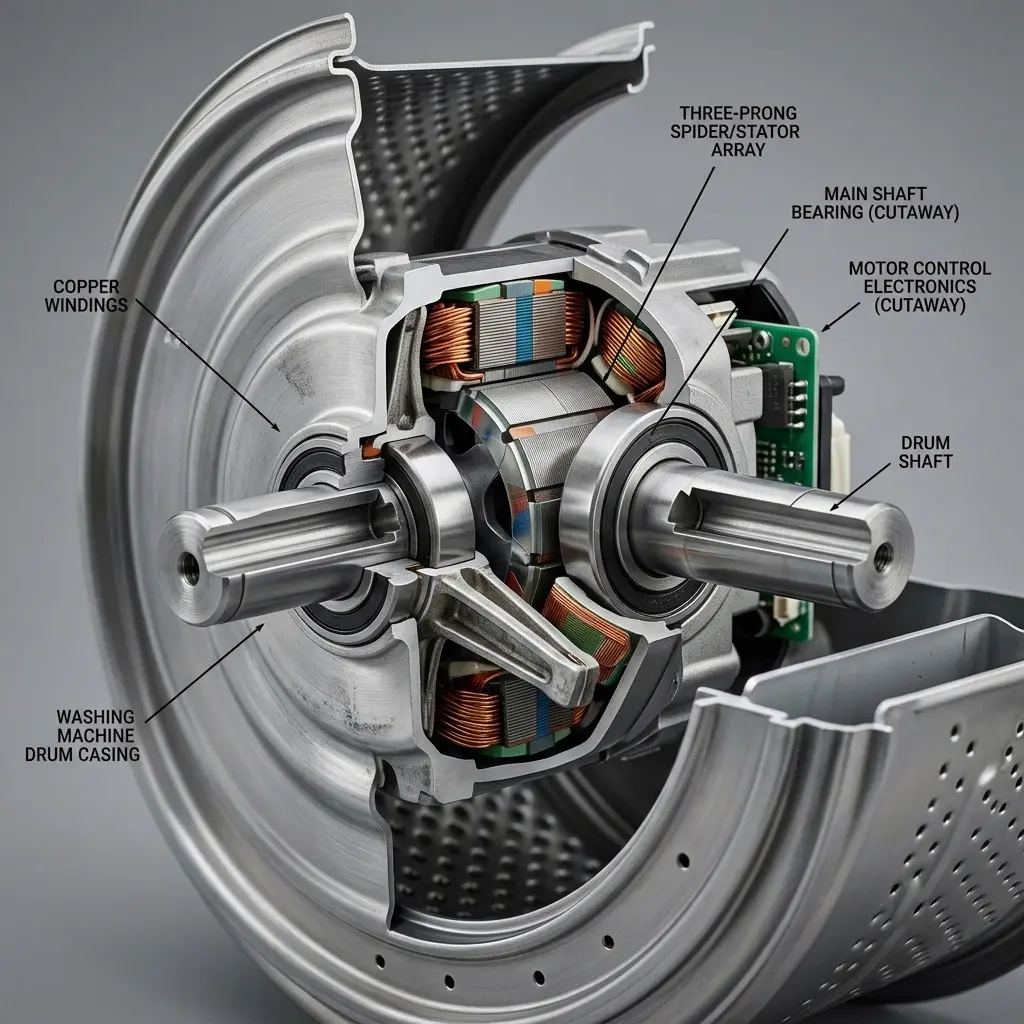
- On Direct Drive models, there’s no belt to wear out or slip, so a “rubbery burning smell” is less likely to mean a belt problem; it’s more often the motor mount bushings or, less commonly, the stator windings themselves running hot. Direct drive motors also carry more built-in thermal protection sensors, which is why these models tend to shut down mid-cycle sooner and more consistently than older belt-driven units; the motor is designed to protect itself rather than push through the heat.
- On belt-driven models, a loose or glazed belt is one of the single most common causes of both overheating and a burning smell, because a slipping belt generates friction heat on top of whatever the motor itself is producing. Belt tension and condition should be the first thing checked on these models before assuming a motor fault.
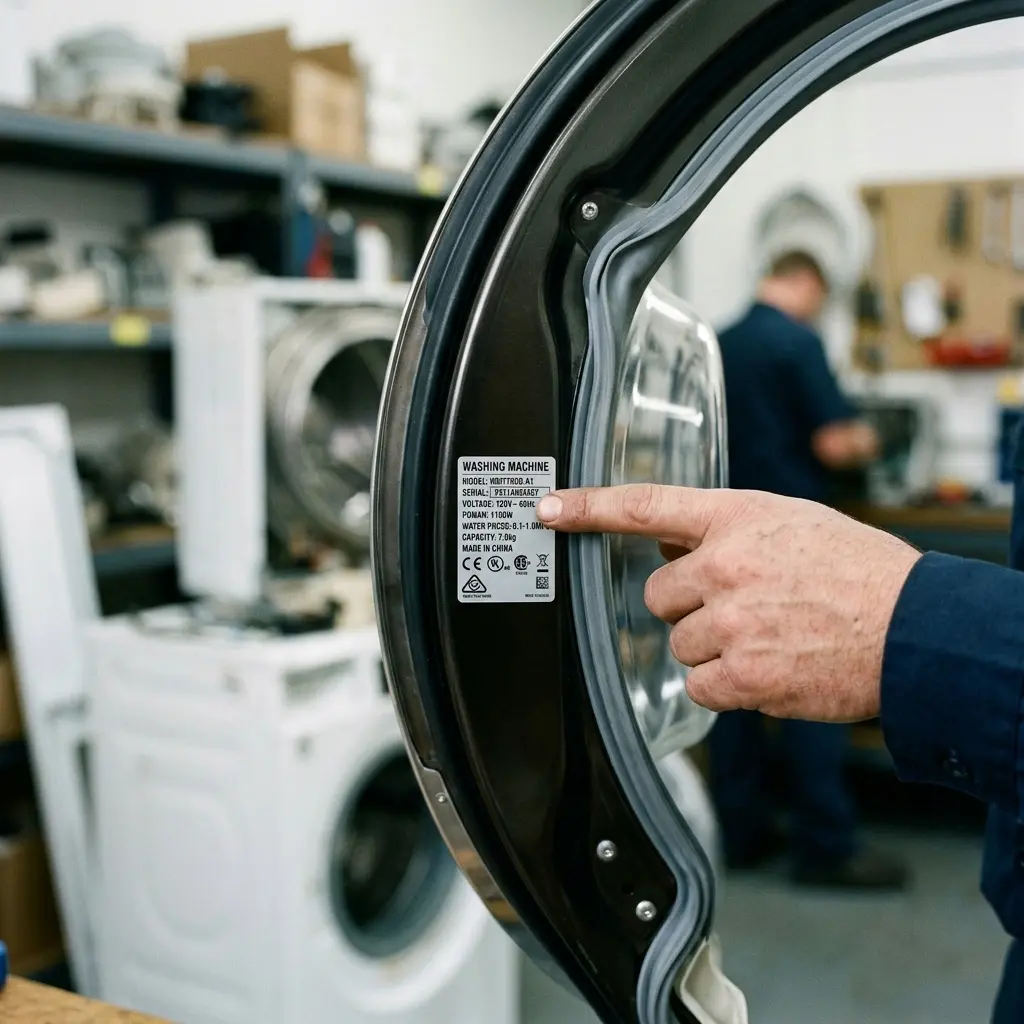
If you’re not sure which type your washer has, it’s usually printed on the model/spec sticker inside the door frame, or you can look up your exact model number; the diagnosis path genuinely differs depending on which one you own.
The Diagnostic Detail Most People Miss
Not every burning smell means the same thing, and this is where a lot of people either panic unnecessarily or ignore something serious. A rubbery, friction-type smell usually points to a belt or motor mount, an inexpensive fix. A sharper, electrical or plastic-type smell is a different situation: that’s often the motor winding insulation breaking down, and running the machine further at that point risks a full motor failure or, in rare cases, an electrical hazard. If you can’t tell which smell you’re dealing with, that uncertainty itself is the signal to stop the cycle and get it looked at rather than guessing.
👉 [LG Washing Machine Error Codes and ThinQ App Alerts Explained]
If your machine is Wi-Fi connected through LG’s ThinQ app, it’s also worth checking the app itself, connected models can sometimes push a fault notification before you’d notice anything physically, which is a faster way to catch this than waiting for a smell or a shutdown.
DIY Fix or Call a Technician?
Whether this is a weekend fix or a service call depends on the cause:
Usually safe to handle yourself: reducing load size, clearing dust from vents, giving the machine 2–3 inches of clearance, and simply running smaller loads for a while to see if symptoms stop.
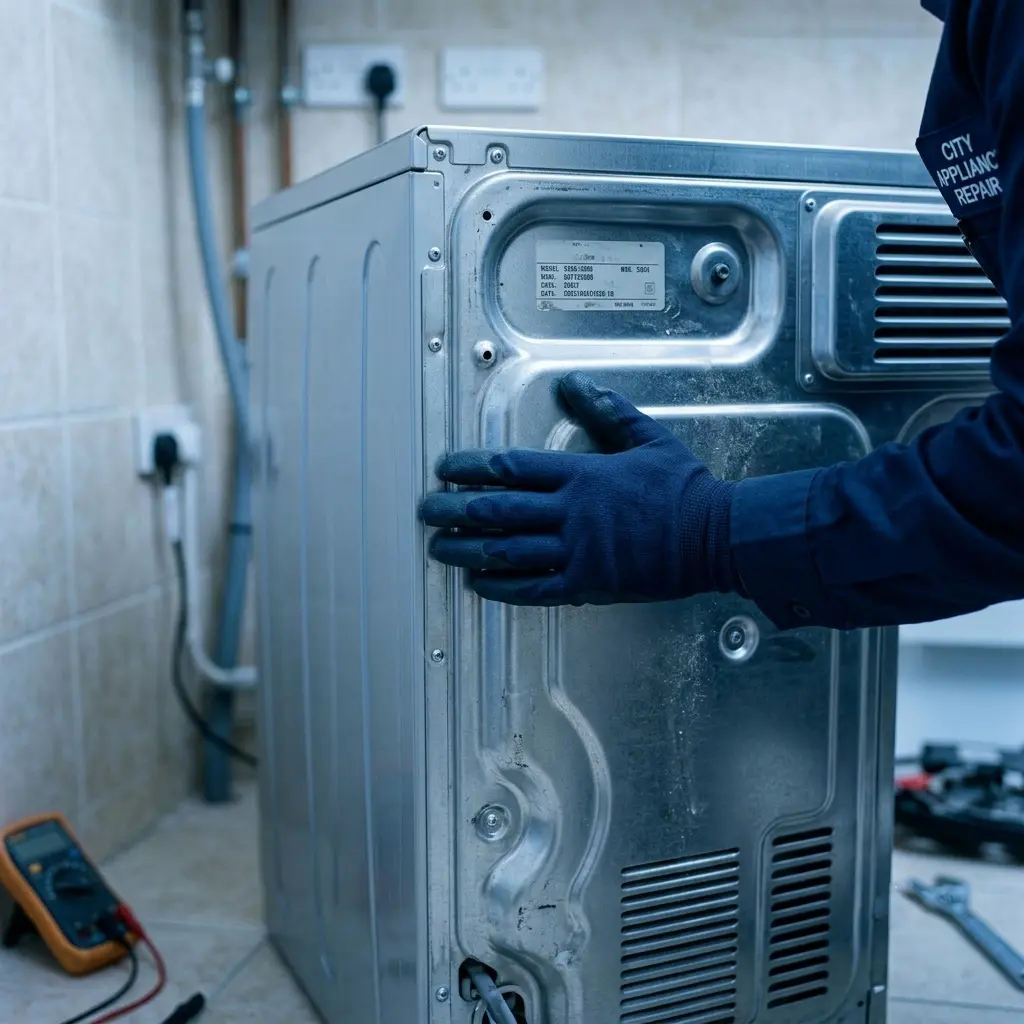
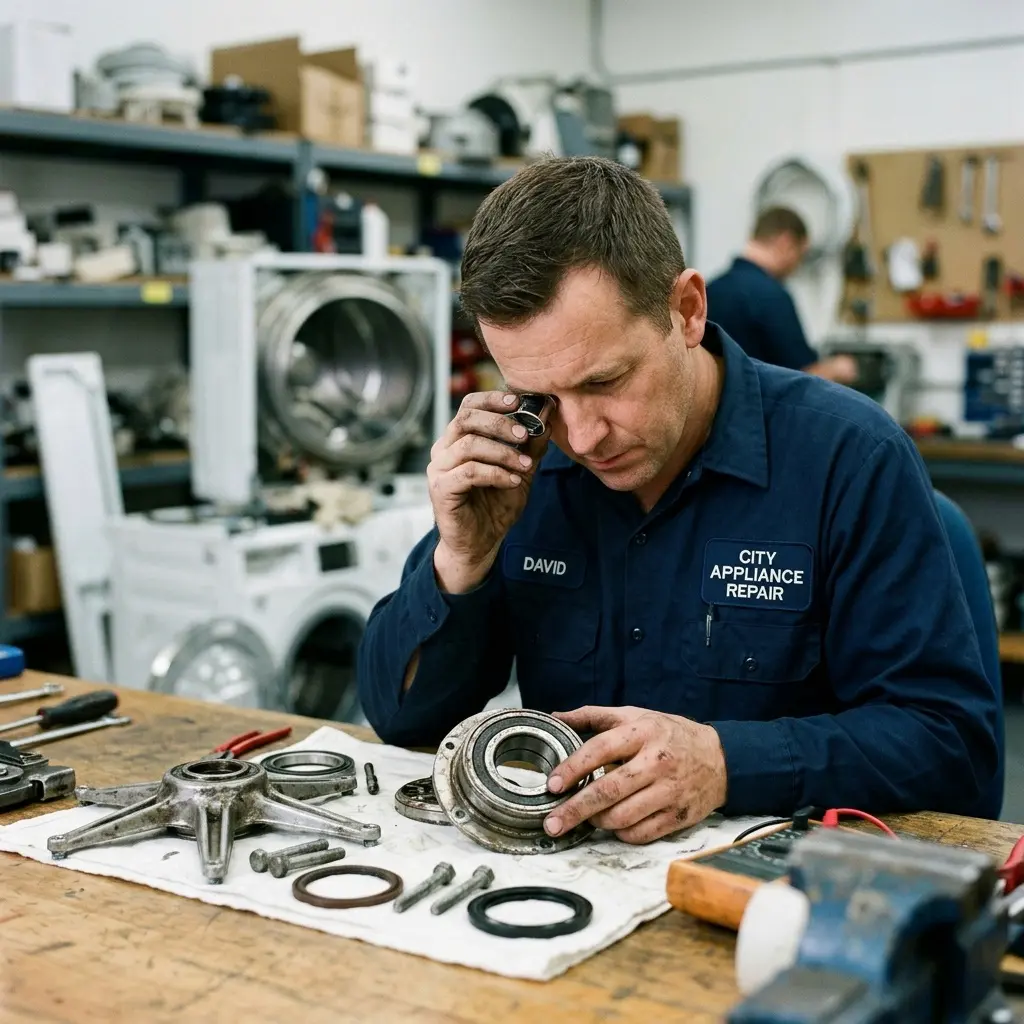
Better left to a technician: bearing or belt replacement (requires disassembly, and the wrong torque can damage the drum), anything involving the electrical winding, or persistent overheating after you’ve ruled out load size and ventilation.
Pros of the DIY route: no service call cost, and you rule out the simple causes fast. Cons: bearing/belt work needs real tools and know-how, and a wrong diagnosis here can turn a $40 belt into a $300+ motor replacement if you keep running it.
One judgment call worth knowing: on direct drive models, a technician will usually check the motor’s thermal sensor and mount bushings before assuming the motor itself has failed, because those parts are far cheaper to replace and fail more often than the motor windings do. It’s worth asking directly whether a quote is for the full motor or for these smaller components; a “motor replacement” quote that skipped this check is worth a second opinion.
👉 [LG Washing Machine Panel Gets Hot: Common Causes and Safety Signs to Watch For (2026)]
Preventing It Going Forward
A few habits go a long way toward avoiding a repeat of this: using the correct detergent amount (excess suds add strain), distributing loads evenly, and keeping a light maintenance routine on the machine itself.
👉 [LG Washing Machine Maintenance & Cleaning Schedule]
Real-World Examples
Front-load model, shared household laundry: Overheating showed up as mid-cycle shutdowns only on large comforter loads. No smell, no noise; the fix was simply splitting the load, and the shutdowns stopped.
8-year-old top-load model: Grinding noise plus a warm back panel on every cycle. Bearings were worn from years of unbalanced loads. This one needed a technician, since bearing replacement on that model requires partial drum disassembly.
Newer ThinQ-connected model, older home wiring: No physical symptoms at first; the ThinQ app flagged a fault before the owner noticed anything by touch or smell. An electrician traced it to voltage fluctuation from aging home wiring, not the washer itself.
LG washing machine motor overheating FAQ
1. Why does my LG washing machine stop mid-cycle?
Most often the motor’s thermal protection is shutting it down to cool off, usually triggered by an oversized load or blocked ventilation.
2. How can I tell if it’s a cheap fix or a serious one?
Smell is the fastest clue: a rubbery smell usually means a belt or mount, while a sharp electrical smell means stop using it and get it checked.
3. Do I need a technician to fix overheating?
For load size, ventilation, or detergent-related causes, no. For bearings, belts, or anything electrical, yes, those involve disassembly or wiring risk. On direct drive models specifically, motor mount bushing replacement is also usually a technician job, since it requires removing the drum to access the mount properly.
4. How long should an LG washing machine motor last?
Around 10–12 years with normal care, per Energy Star, though heavy overloading or poor ventilation can shorten that. Direct-drive motors are generally rated for a similar or slightly longer lifespan than older belt-driven designs since there’s no belt to wear out separately, but that only holds if the unit isn’t regularly overloaded or run with blocked ventilation.
5. Is it normal for the back panel to feel warm?
Slightly warm after a heavy cycle is normal; noticeably hot to the touch, especially paired with a smell, is not. As a rough gut check, if you can comfortably rest your hand on the panel for a few seconds after a cycle, that’s typically within normal range; if you need to pull your hand away quickly, that’s worth investigating.
6. Can overloading really damage the motor long-term, not just overheat it once?
Yes, repeated overloading accelerates bearing wear and winding stress over time, which is why occasional overheating can turn into a permanent motor issue if the habit continues.
7. Will my LG app tell me if the motor is overheating?
On Wi-Fi connected ThinQ models, sometimes, it can flag a fault before you’d notice physically, though this isn’t guaranteed on every model or every type of fault.
Conclusion
LG washing machine motor overheating almost always traces back to one of five causes: load size, worn bearings, ventilation, electrical supply, or motor age, and the smell or noise you’re noticing is usually enough to point you toward one of them. Catch it at the “mid-cycle shutdown” stage, and it’s often a free fix; ignore a sharp electrical smell, and it can become a full motor replacement. If you’re not confident about which category you’re in, the [Complete DIY Repair Guide] above walks through the hands-on steps; otherwise, it’s worth the service call.