
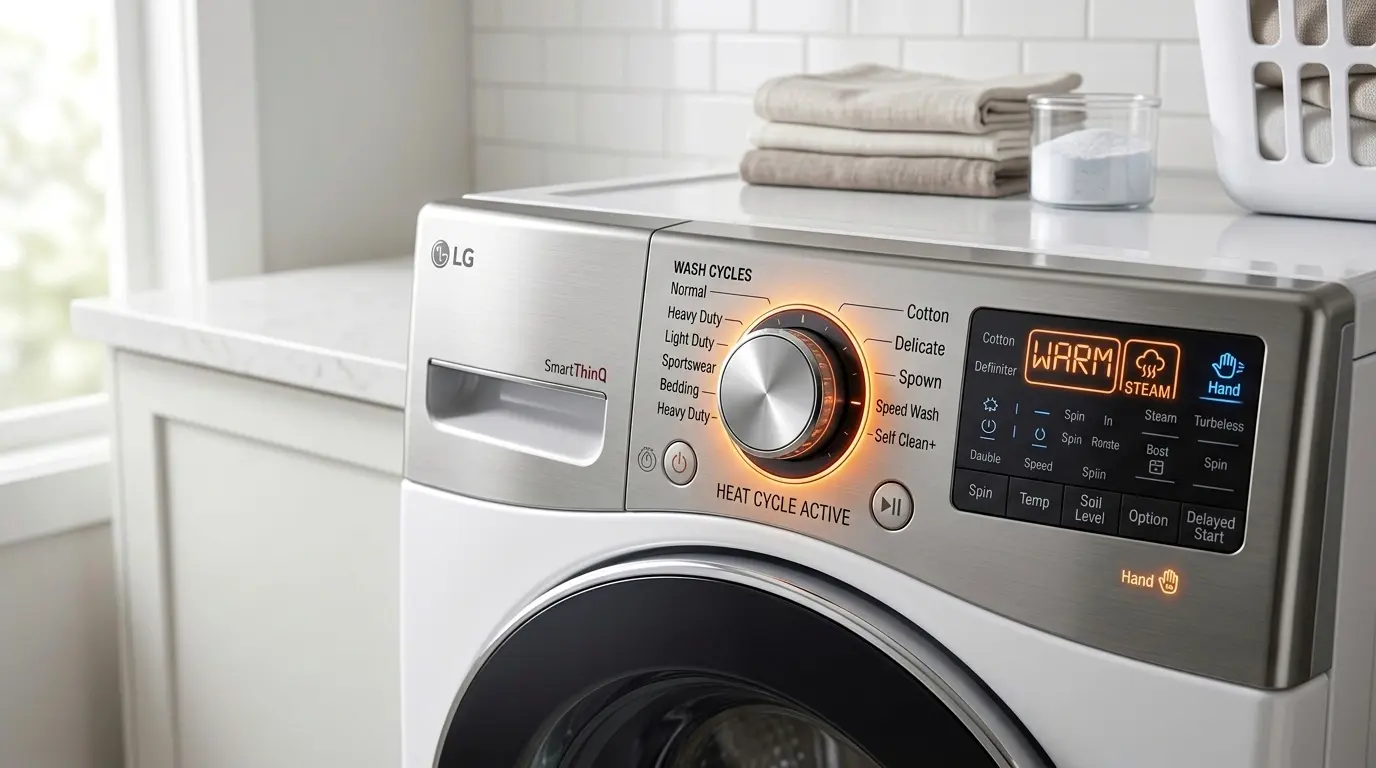
You’re walking past your LG washer mid-cycle, you brush your hand against the control panel, and it’s noticeably warm, maybe even uncomfortably hot. Your first thought is probably, Is this normal, or is my washer about to die on me? I’ve gotten this exact call more times than I can count, and the answer isn’t always simple. The LG washing machine panel gets hot. Know the exact causes and safety signs.
Table of Contents
1. Is a Warm LG Washer Panel Actually Normal?
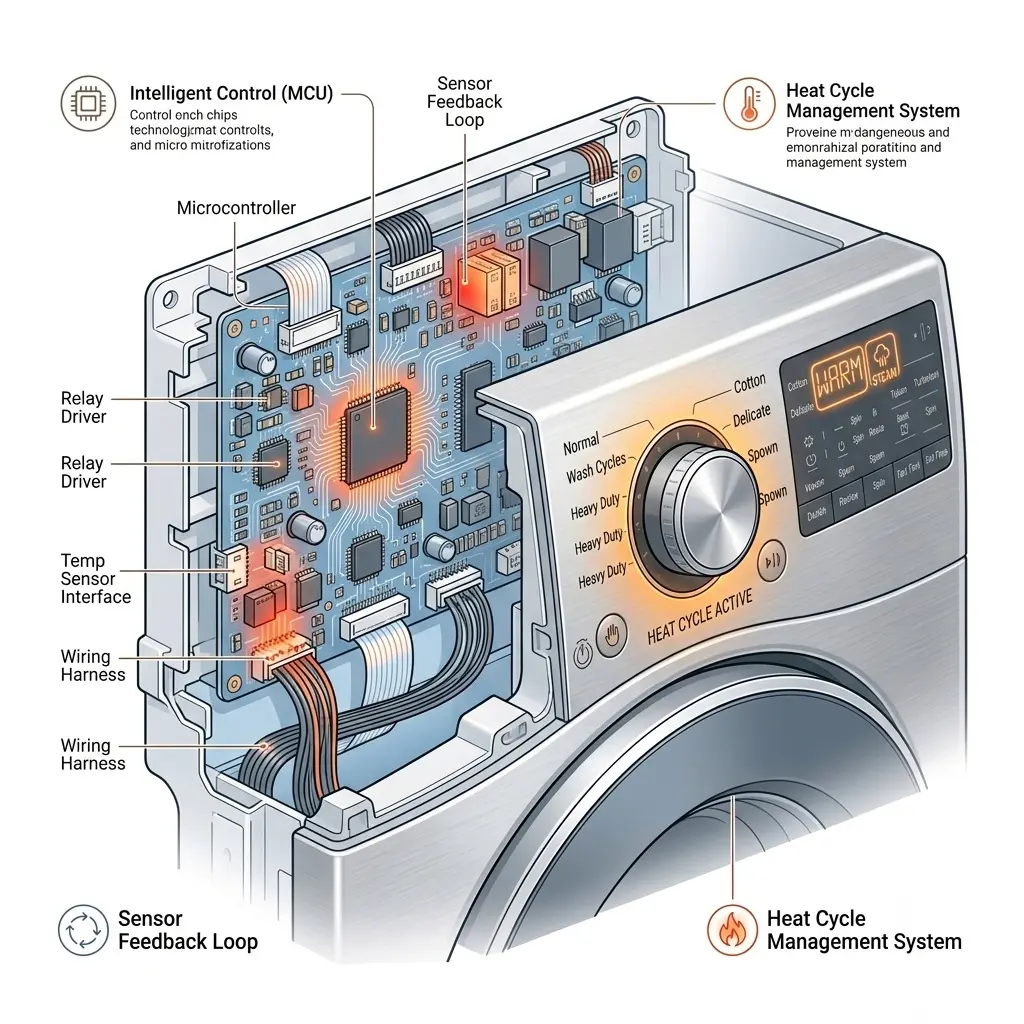
Here’s the honest answer: mild warmth on your LG control panel during or after a long wash cycle is completely normal. The panel houses electronic components, a small display board, and wiring that naturally generates some heat during operation, especially on longer cycles like Heavy Duty, Sanitize, or Bedding.
What’s not normal is heat you can’t comfortably rest your hand on for more than a couple of seconds, a burning smell, or any visible discoloration around the panel housing. There’s a real difference between “warm electronics doing their job” and “something is wrong here,” and most owners can feel that difference the moment they touch it.
👉 [Are LG Washing Machines Reliable in 2026?]
2. Common Causes behind Panel Overheating
In my experience inspecting these units, panel heat almost always traces back to one of these patterns:
- Back-to-back heavy cycles: running multiple loads consecutively without any rest period keeps the electronics under continuous load, and heat compounds over each cycle. A single Sanitize cycle running hot water at 60°C+ generates far more sustained board heat than three quick cold washes in a row.
- Poor ventilation around the unit: washers crammed into tight laundry closets or stacked setups with insufficient clearance trap heat with nowhere to dissipate. Manufacturer specs typically call for a few inches of clearance on all sides; most apartment installs give it none.
- Overloading the drum: bulky items like comforters or heavy blankets force the motor and control board to work harder, which increases electrical draw and, in turn, heat.
- Unstable household voltage: homes with frequent voltage spikes or fluctuations put extra stress on the panel’s internal electronics, generating more heat than a stable power supply would. This is common in older homes and multi-unit buildings sharing a single transformer.
- Aging internal components: over years of use, components like capacitors and control boards naturally degrade, and degraded components tend to run hotter than they did when new.
Insider tip: if you want an objective read instead of relying on “does this feel too hot,” a cheap infrared thermometer takes the guesswork out; point it at the panel surface and compare readings over a few cycles instead of trusting your hand each time.
3. Warning Signs That Mean It’s NOT Normal
This is the section that actually matters for your safety. Mild warmth is fine; these signs are not:
- The panel is too hot to touch comfortably, even briefly
- You notice a burning smell near the panel or control area
- You see smoke, even faint wisps, coming from the panel area
- The heat persists or worsens even after a short, light cycle
- The panel feels hot even when the washer hasn’t been used recently
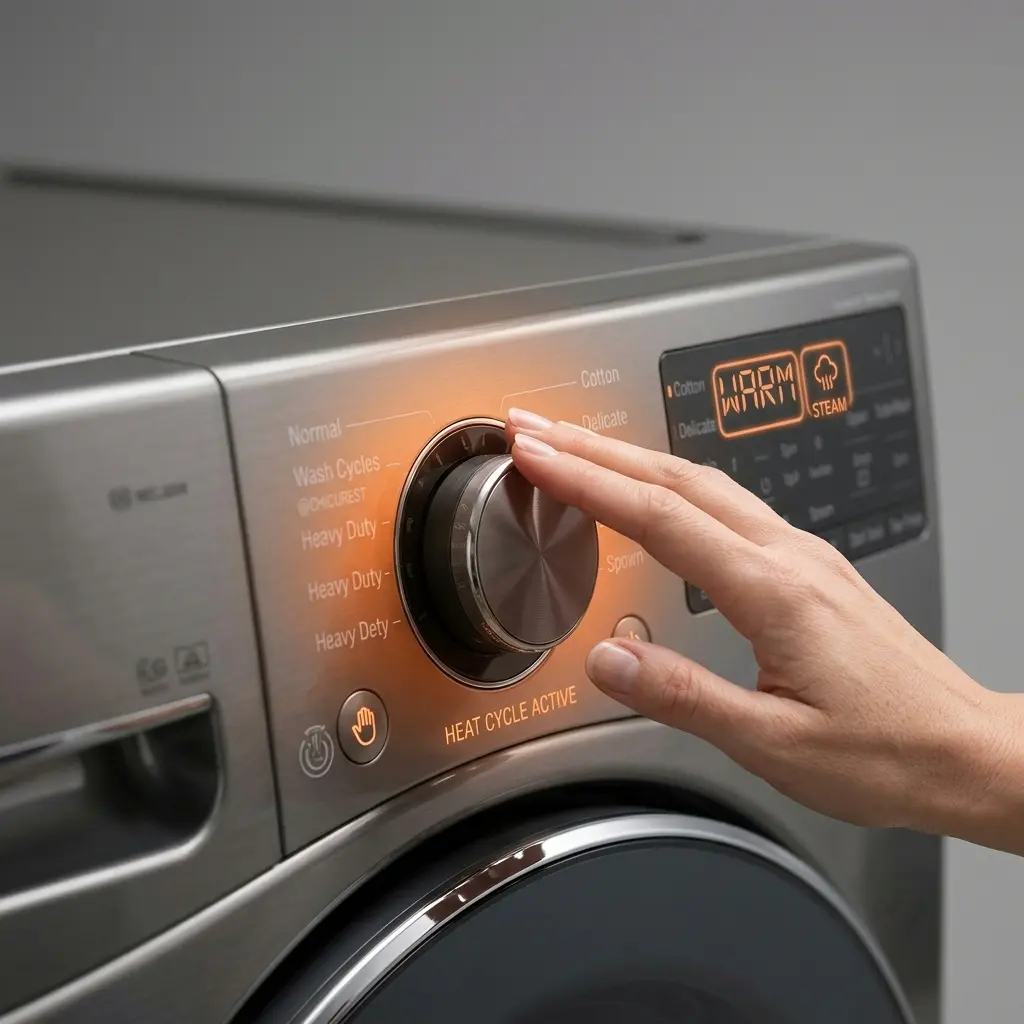
If you notice any of these, the safest move is to turn the washer off, unplug it (or shut off the breaker), and let it cool completely before touching it again or running another cycle.
A technician’s actual threshold: we don’t just go by “uncomfortable.” If you can’t hold your palm flat against the panel for a slow count of three, that’s the real cutoff, not a vague feeling.
4. Why This Happens More in Certain Homes
Not every household sees this issue equally, and the pattern is usually environmental rather than random bad luck.
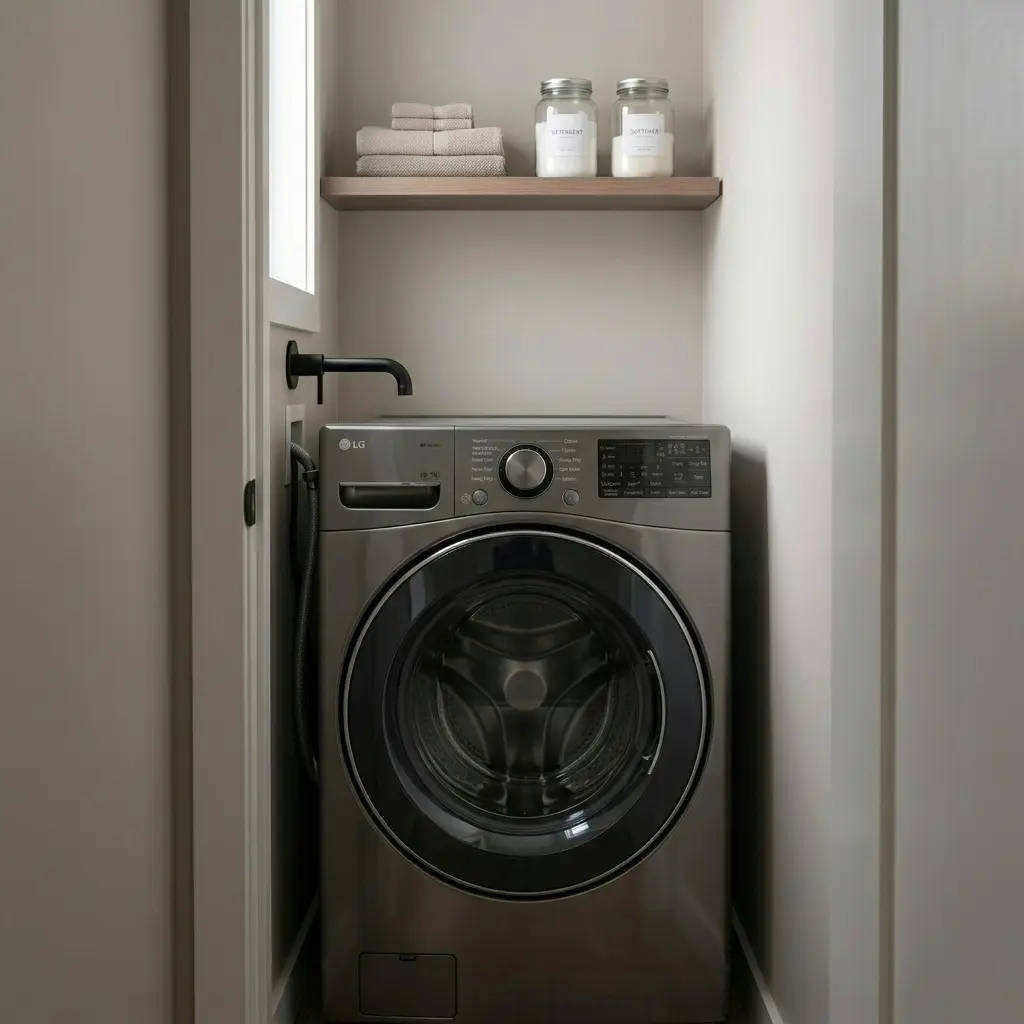
Apartments and condo laundry closets are the most common culprits I see in the field. These spaces are often built tight, with minimal airflow clearance behind and above the machine, and heat from the panel and motor has nowhere to go. Homes running older electrical wiring or sharing circuits with other large appliances also see this more often, since voltage isn’t as stable under shared load.
Climate matters too; homes in consistently hot regions or laundry rooms without any ventilation or cooling naturally run warmer to begin with, which gives the panel a head start before it even turns on. In practice, the worst combination I’ve seen in the field is a stacked unit in an un-vented closet, in a hot-climate apartment, run on back-to-back Sanitize loads; that’s a near-guarantee of noticeable panel heat even on a perfectly healthy machine.
If voltage instability is a likely factor in your home (flickering lights, other appliances resetting), a simple surge protector on the washer’s circuit is a cheap first move before assuming the machine itself is at fault. 👉 [Are LG Washing Machines Worth Repairing?]
5. How Often This Shows Up by LG Model Type
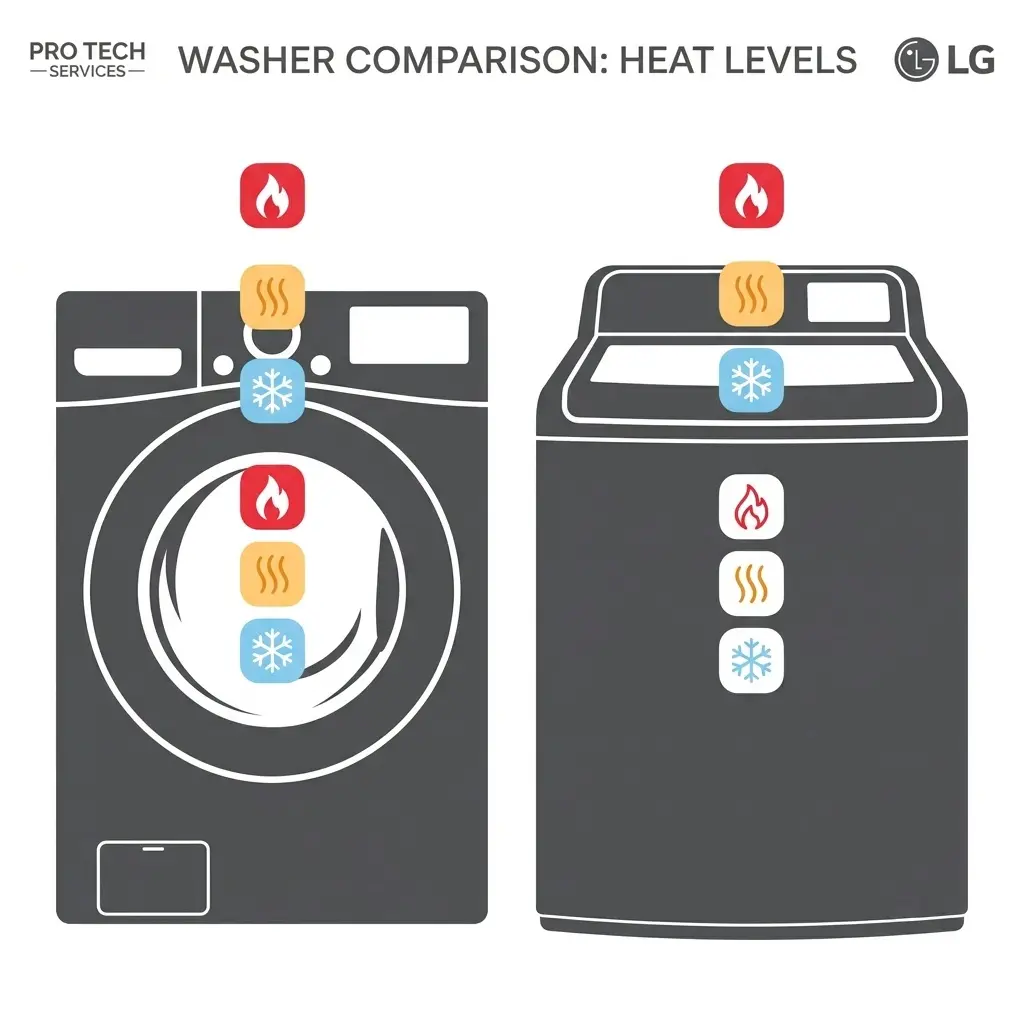
Some LG washer categories are more prone to noticeable panel warmth simply due to design and placement of components.
| LG Washer Type | Panel Heat Tendency | Likely Reason | Ventilation Need |
| Front Load (standard) | Moderate | Panel positioned above drum, near heating element | Standard clearance |
| Front Load (stackable) | Higher | Reduced airflow when stacked with dryer | Extra clearance recommended |
| Top Load (standard) | Lower | The panel sits further from heat-generating components. | Standard clearance |
| High-capacity/commercial-grade | Higher | Longer cycle times, more sustained electrical draw | Extra clearance recommended |
| Compact/apartment-size units | Higher | Tighter internal component spacing | Extra clearance is essential. |
If you’re in a stacked or compact setup and ventilation genuinely can’t be improved, a small clip fan aimed at the gap behind the unit makes a measurable difference over a laundry season. 👉 [LG Washing Machine Motor Overheating?]
6. When This Symptom Signals a Bigger Problem
A warm panel on its own usually isn’t an emergency. But context matters; if the heat shows up alongside other symptoms, it’s worth paying closer attention rather than dismissing it.
Pay attention if the panel heat is paired with the washer tripping your circuit breaker repeatedly, the display flickering or behaving erratically, the machine shutting down mid-cycle without explanation, or any error codes appearing on screen. None of these mean you need to diagnose the exact internal cause yourself, but they do mean it’s time to stop running cycles and have it looked at, rather than continuing to use the machine as-is.
2026 update: newer LG models (2024+) have moved away from short error codes alone and now scroll full-length error messages with brief guidance directly on the display. If your washer is ThinQ-connected, the app receives that same alert and, through Smart Diagnosis, adds context a bare code can’t, when the fault first appeared and how many cycles have run since. If your panel is warm and the app is also flagging something, don’t wait it out.
👉 [LG Washing Machine Error Codes Explained] 👉 [How to Reset LG Washing Machine Control Board]
Repair-vs.-replace judgment call: a warm panel plus one of the symptoms above, on a machine under 5 years old, is almost always a straightforward board or ventilation fix. The same combination on an 8+ year old unit is where I start asking customers whether they want to sink another repair bill into it; degraded capacitors on an older board are a symptom of general age, not an isolated fault.
7. FAQs
Is it normal for the LG washing machine panel to feel warm after a cycle?
Yes. Mild warmth during or right after a long cycle is expected; the display board and wiring are still dissipating heat generated during the wash. It’s only a concern if it’s uncomfortably hot, accompanied by a smell, or doesn’t cool down within 15–20 minutes of the cycle ending.
Does running my dryer next to my washer make the panel hotter?
It can. Stacked units, or units placed right next to a running dryer, share ambient heat in the shared closet or alcove, which can make the washer’s panel feel warmer than it would standing alone, especially if the dryer vents into the same enclosed space rather than outdoors.
Can an overloaded washer cause the panel to overheat?
Yes. Overloading forces the motor and electronics to work harder to maintain balance and spin speed, which increases electrical draw and, with it, heat output at the control panel.
Is a hot panel a fire risk?
In most cases, no, mild warmth poses no risk. But persistent excessive heat, burning smells, or visible smoke should always be treated seriously: unplug the machine immediately and don’t run it again until it’s been inspected.
Why does my panel feel hotter in summer than winter?
Ambient room temperature directly affects how warm the panel feels to the touch. A laundry room that’s already 85°F+ gives the electronics far less room to dissipate heat efficiently than a 65°F room would, even during an identical cycle.
Does an old LG washer run hotter than a newer one?
Often yes. As components like capacitors and control boards age, they tend to generate more heat than they did when new, even under identical usage patterns. This is normal electronic aging, not necessarily a sign of imminent failure on its own.
Should I stop using my washer if the panel is warm but not hot?
No, mild warmth doesn’t require you to stop using the machine. Continue normal use, but stay alert if the warmth ever escalates to true heat, is joined by a smell, or coincides with breaker trips or error messages.
8. Final Thoughts
A warm control panel is one of those symptoms that’s easy to panic over, and most of the time, it simply doesn’t deserve that panic. Your LG washer’s electronics are doing exactly what electronics do under load. The real skill is knowing where the line sits between “this is just how it works” and “this needs attention now.”
If you’ve read through this and you’re still unsure whether what you’re feeling crosses that line, trust your gut, and trust the palm test over a guess. A hot panel that worries you is worth a second look, so check your ThinQ app’s error history if you’re connected, and if anything looks off, book a service call rather than keep running loads on it.