
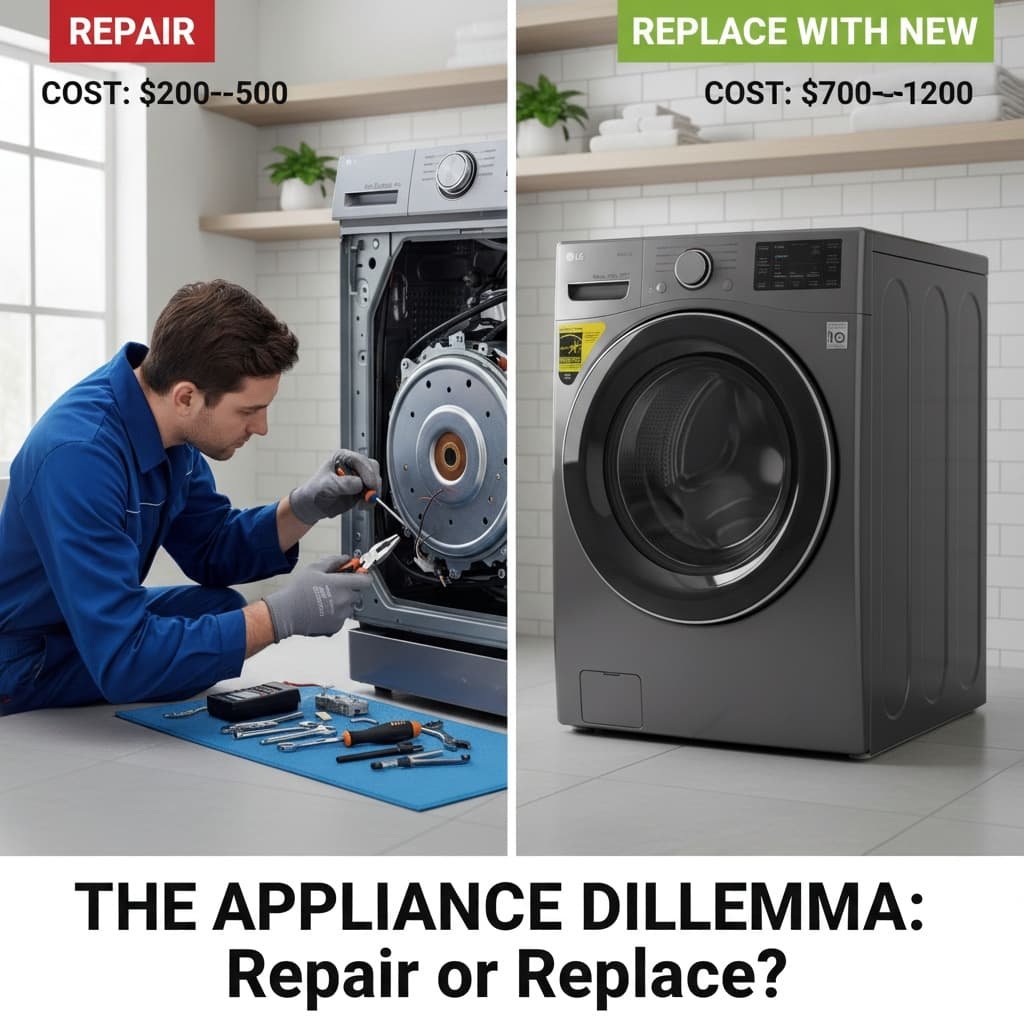
Your LG washer just quit mid-cycle, and the repair quote makes you wince. Is it worth fixing, or should that money go toward a new machine instead?
This 2026 cost analysis breaks down your lg washing machine worth reparing throught real LG repair prices, the exact math to compare repair vs. replacement, and the specific situations where each choice actually pays off so you’re not guessing with your budget.
Table of Contents
Common Problems That Trigger Repairs
Some LG washer issues are cheap fixes; others are budget-breakers. Knowing which is which before you call a technician saves you from paying for a diagnostic visit on a problem you could’ve predicted. The most common LG washer repair cost complaints trace back to a handful of recurring faults:
- Water leaks around the door seal or hose connections.
- The washer doesn’t spin or drain correctly.
- Loud grinding or humming from the motor during cycles.
- Error codes on the display that repeat cycle after cycle.
👉 [Read More: LG Washing Machine’s Common Problems and Easy Solutions, DIY Fixes]

Average Repair Costs
Repair costs vary by part, your local labor rates, and whether the technician is independent or LG-authorized. According to Consumer Reports, average washer repairs range between $180 and $450. High-end parts like motors or control boards push costs toward the top of that range or beyond.
Typical LG Repair Price Ranges
| Repair | Estimated Cost |
|---|---|
| Motor replacement | $250 to $400 |
| Drum repair or replacement | $300 to $500 |
| Water pump replacement | $180 to $250 |
| Control board replacement | $300 to $450 |
| Door seal or hose repairs | $120 to $220 |
Front-load vs. top-load note: Front-load LG models (like the WM series) generally cost more to repair than top-load models because the door seal, drum bearing, and suspension system are more complex and labor-intensive to access. If you’re comparing a quote against these ranges, expect front-load repairs to land toward the higher end.

Key Factors to Decide Repair vs Replace
Use three simple rules to decide, and don’t skip the “why” behind each one; it’s what keeps you from repairing a machine that’s about to fail again anyway.
- Age: Under 5 years, repair is usually the right call; the rest of the machine’s components still have years of life left, so you’re not just delaying the inevitable. Between 6 and 10 years, compare the repair cost to half the replacement price; past that window, a second failure within a year or two becomes increasingly likely because the drum bearings, suspension, and motor bushings wear together, not in isolation.
- Repair cost: If the repair is less than 50% of a new washer’s price, repair usually wins financially. If it exceeds that, you’re often better off putting the money toward a machine with a full warranty instead of an aging one with none.
- Energy savings: New washers use up to 25% less energy than older models, according to Energy Star. On a machine used several times a week, that efficiency gap compounds into real savings over a few years, which is worth factoring in even when a repair looks cheap upfront.
Repair vs Replacement Comparison
| Situation | Best Option | Why |
|---|---|---|
| Minor leak or pump issue | Repair | Low cost, adds years of use |
| Motor or drum failure on an 8-year-old washer | Replace | High repair cost, nearing end of life |
| Control board failure under warranty | Repair | The warranty covers the expense |
| Second major repair within 18 months | Replace | A pattern signals systemic wear, not an isolated fault |
| The repair quote exceeds 50% of a comparable new unit | Replace | Better long-term value in a warrantied machine |

Pros and Cons of Repairing an LG Washer
Pros
- Lower upfront cost than buying new.
- Less electronic waste is a greener choice.
- Keeps a familiar model and settings you already know.
Cons
- Older machines may fail again soon after a repair.
- Parts for older models can be scarce or pricier to source.
- New washers offer better energy efficiency and smart features.
Brand Comparison and Long-Term Value
LG competes well against Samsung and Whirlpool. Samsung often leads on digital controls and AI-driven cycle features. Whirlpool has a reputation for rugged, lower-cost-to-maintain models.
If a major LG repair costs more than a comparable new model in your area, it’s worth pricing out other brands before committing. Sometimes switching brands, not just switching machines, delivers the better long-term value.
👉 [Read More: LG Washing Machine vs Samsung: Which One Holds Up Better Over Time?]
Personal Suggestion
If you’re a renter or student, repairing usually saves money short-term and avoids sinking cash into a machine you won’t keep long-term. If you’re managing a family household with heavy weekly laundry loads, leaning toward replacement makes more sense for the energy savings and reliability alone.
How to Lower Future Repair Bills
A few habits go a long way toward avoiding the next repair bill entirely:
- Run a monthly cleaning cycle with a trusted washer cleaner.
- Avoid overloading the drum; it stresses the motor and bearings.
- Check hoses and seals yearly, and replace them if they feel brittle.
👉 [Read More: Best Washing Machine Cleaners of 2026: Full Maintenance Guide]

When Repair Makes Clear Financial Sense
Repair usually makes sense when your LG washer is under 7 years old. Minor faults that cost less than half the price of a new washer typically justify repair, especially single, isolated issues like a door seal or pump rather than a pattern of repeated breakdowns.
When Replacement Is Smarter
Replace the washer if it’s over 10 years old or if repair costs exceed $500–$600. Also replace it when you want newer features like improved energy efficiency, quieter motors, or smart connectivity, features that older LG models simply weren’t built with.

Conclusion
Is an LG washing machine worth repairing in 2026? It depends on three things: age, repair cost relative to replacement price, and how much energy efficiency matters to your household. Repair newer machines for minor, isolated faults. Replace machines that are very old or where repairs would cost more than half of a new unit.
Still not sure which way to go for your specific model?
FAQs
1. How long do LG washing machines typically last?
Most washers last about 10 to 12 years with proper maintenance, per Energy Star guidance. Machines that get monthly cleaning cycles and aren’t routinely overloaded tend to land at the higher end of that range.
2. Is motor replacement worth it?
If the washer is under seven years old, motor repair often makes sense; the rest of the machine’s components typically still have plenty of life left. For older units, replacement is usually the better financial call, since a new motor on a decade-old washer just shifts the next failure to a different part.
3. Can I get affordable parts for older LG models?
Parts are often available, but some older parts, particularly for discontinued model lines, can be costly or hard to source. If your model is more than 8-10 years old, it’s worth checking part availability before committing to a repair quote.
4. Is it worth repairing an LG washer that’s out of warranty?
Yes, if the repair is isolated (a single part failure) and costs less than half the price of a comparable new unit. Out-of-warranty repairs make less sense when the machine has already needed more than one repair in the past year or two.
5. Are front-load LG washers more expensive to repair than top-load models?
Generally yes. Front-load models have more complex door seals, drum suspension, and bearing assemblies, which typically means higher labor costs for the same type of repair compared to a top-load machine.
6. Does a repaired LG washer affect resale or home value if I’m moving soon?
A working washer, repaired or not, is generally viewed the same by buyers or renters as long as it functions reliably. If you’re moving within a year or two, a low-cost repair is usually more sensible than replacing the unit for resale purposes alone.
7. Should I repair a leaking door seal, or is that a sign to replace the whole washer?
A leaking door seal on its own is almost always a repair, not a replacement situation; it’s one of the cheaper fixes on this list ($120–$220) and doesn’t indicate a broader mechanical problem unless it’s paired with other symptoms like drum noise or spin failure.
Related articles for Deeper Guidance: