
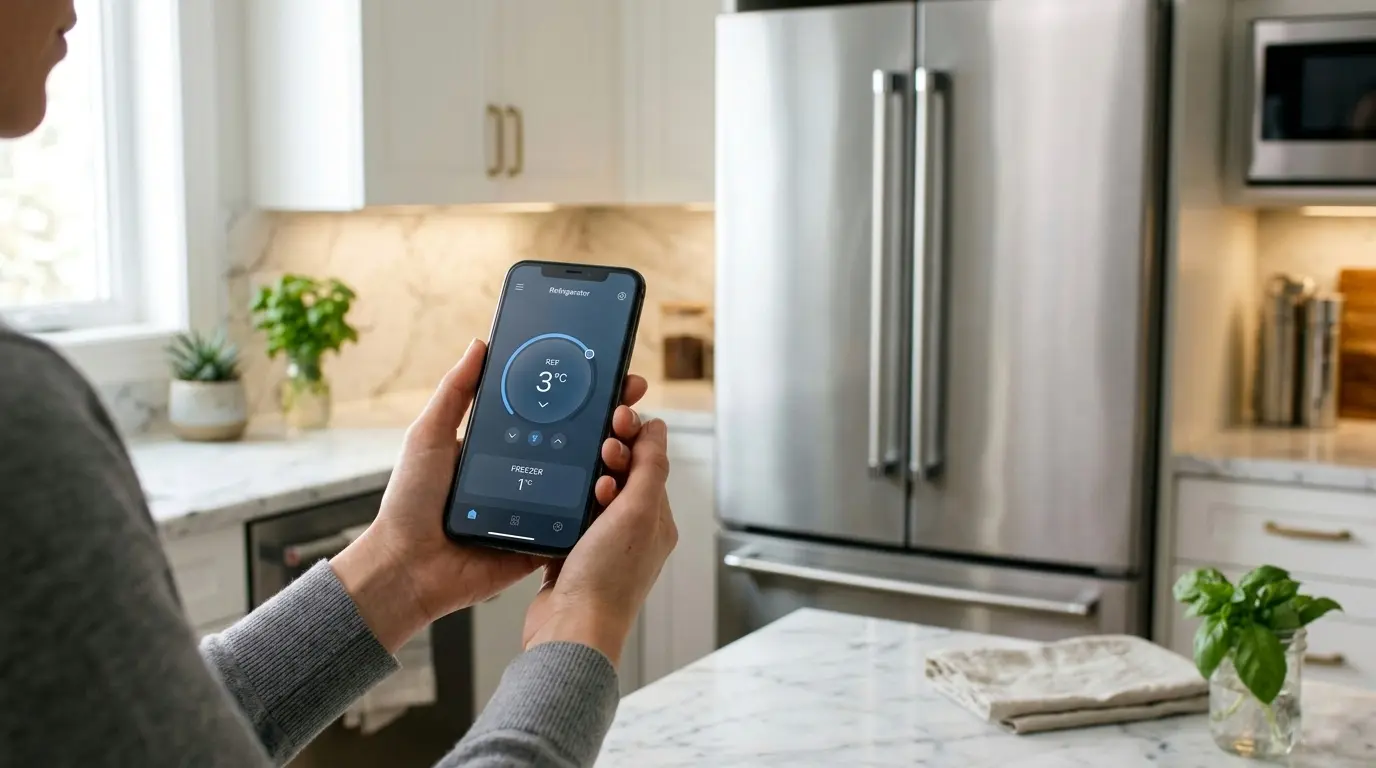
You just got a new LG refrigerator, or you realized your existing one has Wi-Fi and you have never set it up. Either way, the LG ThinQ app is sitting on the app store waiting for you, and once you connect it, your fridge goes from a regular appliance to something genuinely useful.
The LG ThinQ app lets you monitor and control your refrigerator from your phone, change temperatures, get door-open alerts, check energy usage, run diagnostics, and even get ahead of potential problems before they become expensive repairs. In 2026, LG has expanded ThinQ AI to predict maintenance needs and send smart usage insights.
The setup process is straightforward, but there are a few steps where people commonly get stuck, especially around Wi-Fi band settings and the initial pairing mode. This guide walks you through every step clearly, covers the best features to use once you are connected, and tells you exactly what to do when something does not work.
Table of Contents
What Is the LG ThinQ App, and What Can It Actually Do?
The LG ThinQ app is LG’s central smart home platform available on iOS and Android. For refrigerators specifically, it turns your phone into a remote control and monitoring dashboard for your appliance, anywhere you have internet access.
Launched originally as SmartThinQ, LG rebranded and significantly upgraded the platform to ThinQ starting in 2019. By 2026, the app supports over 200 LG appliance models and integrates with Google Home, Amazon Alexa, Apple HomeKit (on select 2024–2026 models), and LG’s own ThinQ AI system.
For refrigerators, the app is more than just a novelty. It gives you real, useful control over an appliance that runs 24 hours a day, 365 days a year.
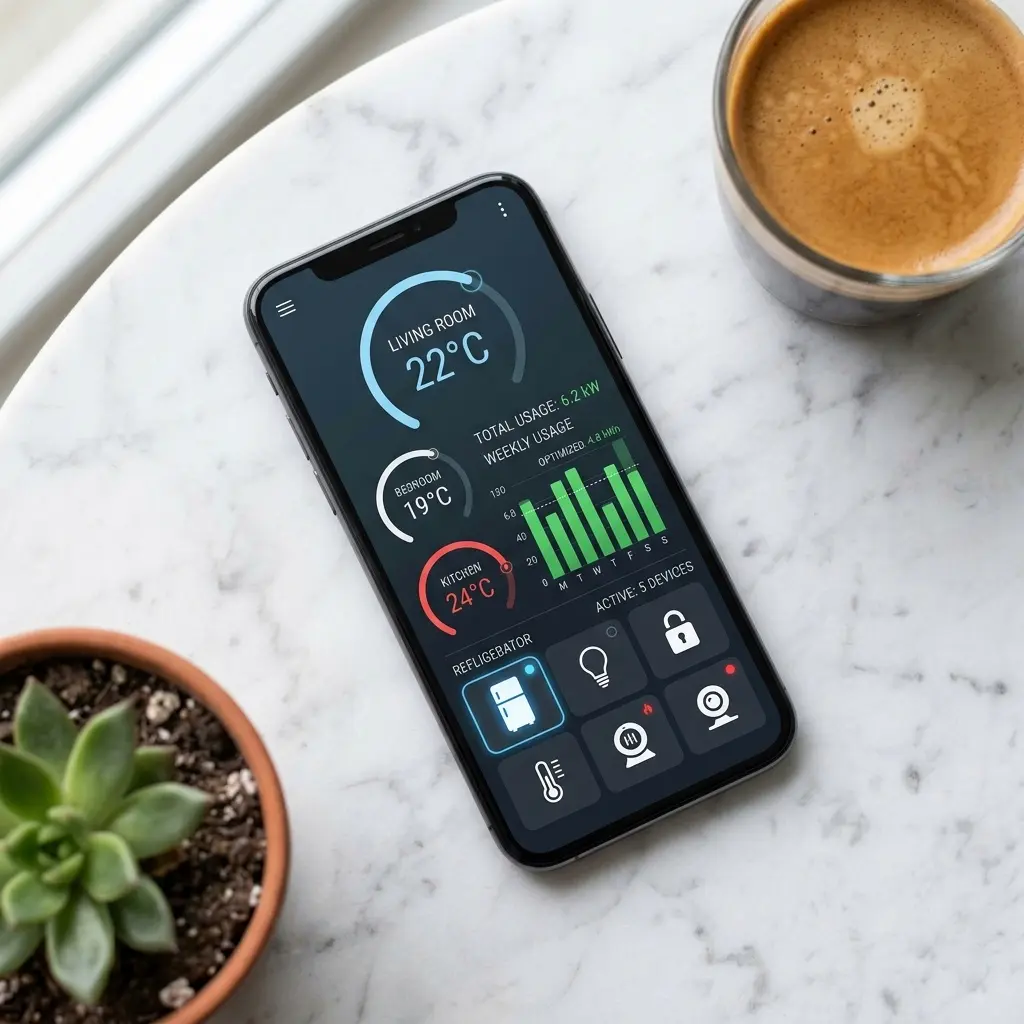
What You Can Do With ThinQ on Your Refrigerator
- Set and adjust freezer and refrigerator temperatures remotely
- Activate Express Freeze and Express Cool modes from your phone
- Receive real-time alerts if the fridge or freezer door is left open
- Monitor energy consumption daily, weekly, and monthly
- Run Smart Diagnosis, a remote diagnostic scan that identifies faults
- Get filter replacement reminders with one-tap reorder links
- Enable Sabbath Mode, Lock Control, or vacation settings remotely
- View ThinQ AI usage insights and personalized tips based on how you use the fridge
- Receive proactive maintenance alerts before components fail
LG ThinQ App, Key Specifications and Platform Facts (2026)
| Specification | Details |
| App name | LG ThinQ (formerly SmartThinQ) |
| Platform availability | iOS 15+ and Android 9.0+ |
| App size | Approximately 85MB (iOS) / 72MB (Android) |
| Wi-Fi requirement | 2.4 GHz band only (most models); select 2025–2026 models support 5 GHz |
| Router compatibility | WPA2 and WPA3 security protocols supported |
| Smart home integrations | Google Home, Amazon Alexa, Apple HomeKit (2024+ models), IFTTT |
| ThinQ AI features | Predictive maintenance, usage insights, energy optimization suggestions |
| Smart Diagnosis | Remote diagnostic scan via app, no technician visit needed |
| Filter reminder | Automatic alert at 200 gallons / 6 months; one-tap reorder |
| Maximum connected devices | Up to 50 LG appliances per ThinQ account |
Compatible LG Refrigerator Models: Is Yours on the List?
Before downloading the app, confirm your refrigerator actually has Wi-Fi built in. Not every LG fridge is ThinQ-compatible; budget and entry-level models often skip the Wi-Fi module entirely.
The easiest way to check: look for the ThinQ logo (a red square with ‘ThinQ’ text) on the front of your refrigerator, usually near the display panel or on the door handle badge. You can also check your model number on LG’s official compatibility page at lg.com/us/thinq.
ThinQ-Compatible LG Refrigerator Series, 2024 to 2026
| Model Series | Type | ThinQ Version | HomeKit Support |
| LRMVS3006S, LRMVC2306S | French Door (InstaView) | ThinQ AI 3.0 | Yes (2025 firmware) |
| LRFXS2503S, LRFXC2416S | French Door | ThinQ AI 2.5 | No |
| LRSXS2706S, LRSXS2306S | Side-by-Side | ThinQ AI 2.5 | No |
| LTCS24223S, LTCS20020S | Top Freezer | ThinQ Basic | No |
| LBNC15221V, LBNC10551V | Bottom Freezer | ThinQ Basic | No |
| LUPXC2386N (Craft Ice) | French Door | ThinQ AI 3.0 | Yes (2025 firmware) |
| LRFOC2606S (Column) | Built-in Column | ThinQ AI 3.0 | Yes |
| ⚠️ NOTE: ThinQ Basic models support remote temperature control and Smart Diagnosis but do not support ThinQ AI features like predictive maintenance or energy insights. Check LG’s official app listing for the complete 2026 compatibility list. |
Step-by-Step Setup: Connect Your LG Refrigerator to the ThinQ App
Before You Start, Checklist
- Your LG refrigerator is plugged in and powered on
- Your home Wi-Fi router is broadcasting a 2.4 GHz network (check your router settings)
- Your phone and refrigerator are within 10 feet of your router during initial setup
- You have your Wi-Fi password ready
- The LG ThinQ app is downloaded and ready to install
| 💡 PRO TIP: Most LG refrigerators only connect to 2.4 GHz Wi-Fi, not 5 GHz. If your router broadcasts a combined network (e.g., ‘HomeNet’ for both bands), you may need to temporarily split them in your router settings and connect to the 2.4 GHz band specifically during setup. |
Step 1: Download and Create Your LG ThinQ Account
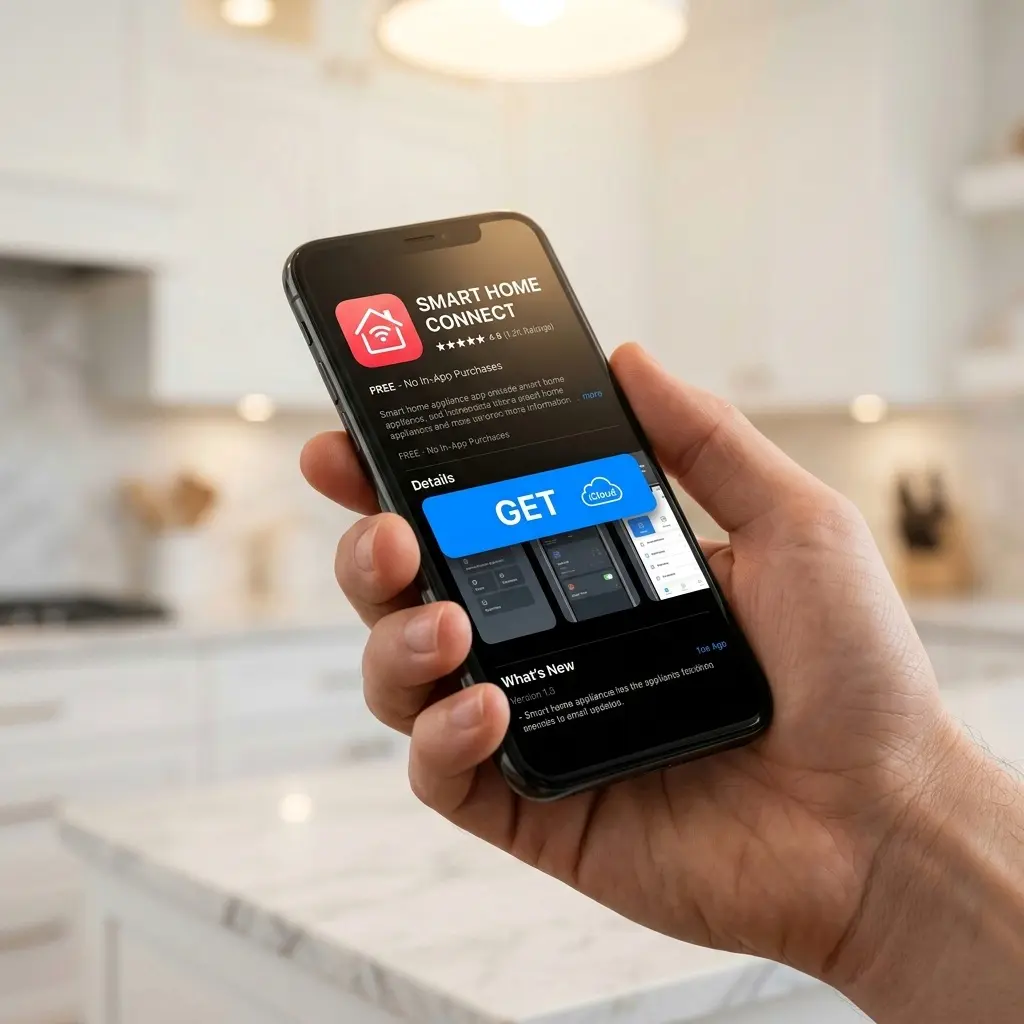
- Open the App Store (iOS) or Google Play Store (Android) and search for ‘LG ThinQ.’.
- Download and install the app. It is free with no subscription required.
- Open the app and tap ‘Create Account.’ Enter your email address, create a password (minimum 8 characters including one number and one symbol), and enter your region.
- Verify your email address by clicking the link LG sends. Return to the app and sign in.
Step 2: Add Your Refrigerator to the App
- On the ThinQ home screen, tap the ‘+’ icon in the top right corner.
- Select ‘Add Device,’ then choose ‘Refrigerator’ from the appliance category list.
- The app will display a list of connection methods. Select ‘Connect via Wi-Fi (Home Network)’.
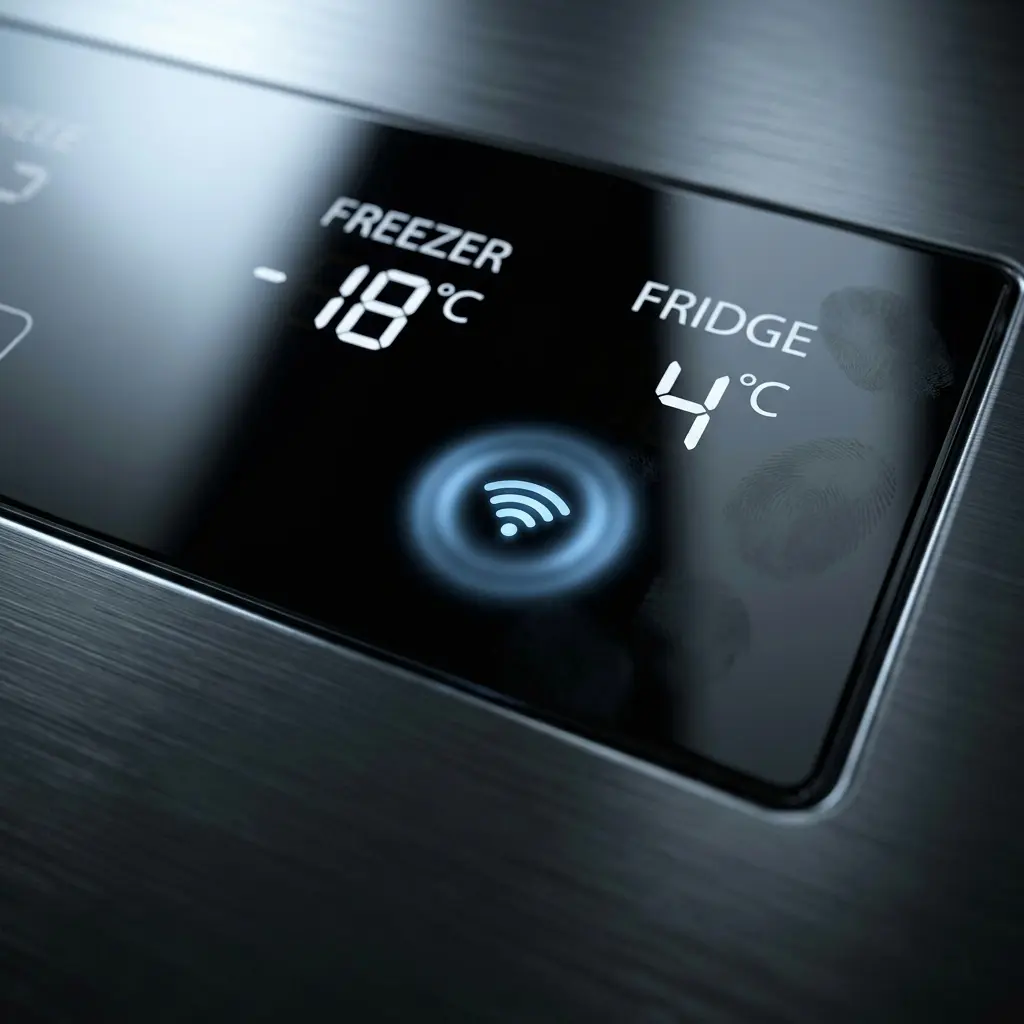
- Follow the on-screen prompt: open your refrigerator’s settings menu on the display panel and navigate to Wi-Fi or network settings. Select ‘Wi-Fi Setup’ or ‘ThinQ Setup’ (wording varies by model).
- On models with a dedicated ThinQ button on the control panel (common on InstaView models like the LRMVS3006S), press and hold the ThinQ button for 3 seconds until the Wi-Fi indicator blinks.
- Back in the app, tap ‘Next.’ The app will scan for your refrigerator’s temporary network.
Step 3: Connect to Your Home Wi-Fi
- The app will ask you to select your home Wi-Fi network from a list. Choose your 2.4 GHz network.
- Enter your Wi-Fi password. Double-check it; incorrect passwords are the most common setup failure point.
- Tap ‘Connect’. The app will send the Wi-Fi credentials to your refrigerator. This takes 20–60 seconds.
- When the refrigerator successfully connects, the Wi-Fi indicator on the fridge display panel will stop blinking and show a solid Wi-Fi icon. The app will display a green confirmation screen.
- Assign a name to your refrigerator in the app (e.g., ‘Kitchen Fridge’) and tap ‘Done.’
| ⚠️ WARNING: Do not close the ThinQ app or lock your phone screen during the pairing process. Some Android phones suspend background activity, which can interrupt the handshake and cause a failed pairing. Keep the app in the foreground until you see the confirmation screen. |
Step 4: Configure Voice Assistants (Optional but Recommended)
- In the ThinQ app, go to Settings (gear icon) → ‘Connected Services’.
- Select your preferred voice assistant: Google Home, Amazon Alexa, or Apple HomeKit.
- For Google Home: tap ‘Link with Google’ and sign in to your Google account. Your LG fridge will appear as a device in the Google Home app within 60 seconds.
- For Alexa: tap ‘Link with Alexa,’ sign in to your Amazon account, and enable the ‘LG ThinQ’ skill. Say ‘Alexa, discover devices’ and your fridge will appear.
- For Apple HomeKit (2024–2026 InstaView and Column models only): tap ‘Add to HomeKit,’ then scan the HomeKit QR code found on the sticker inside the fresh-food compartment.
Best ThinQ Features to Use After Setup
Smart Diagnosis, Your Technician in Your Pocket
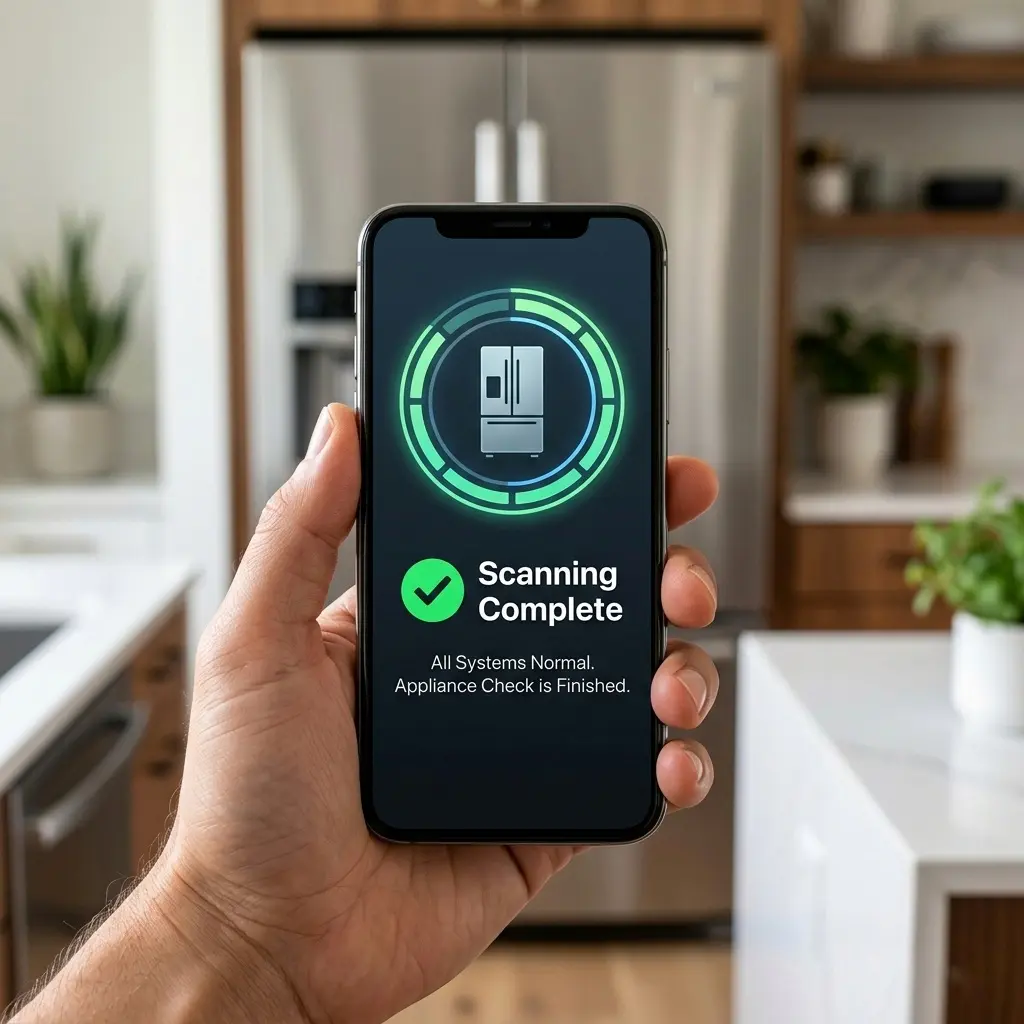
This is genuinely one of the most underused features in the app. When something seems off with your fridge, like unusual noises, temperature inconsistencies, error codes on the display, or open ThinQ, go to your refrigerator and tap ‘Smart Diagnosis.’
The app runs a full remote diagnostic scan, analyzes the results against LG’s fault database, and tells you what is wrong in plain language. In many cases it tells you exactly which component is causing the issue and whether it is something you can fix yourself. This can save you $80–$150 in diagnostic service call fees.
Energy Monitoring, See Where Your Money Is Going
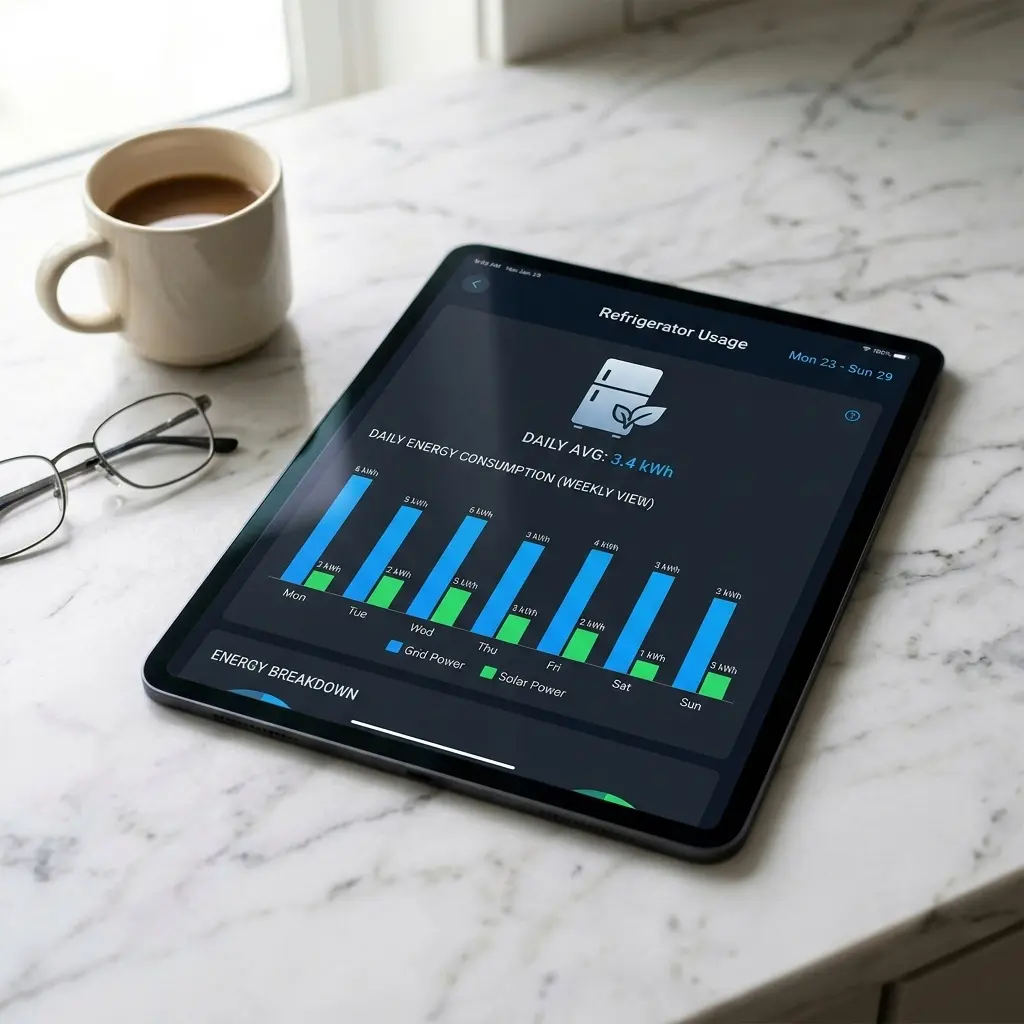
LG ThinQ tracks your refrigerator’s energy consumption in real time and displays it in daily, weekly, and monthly views. The average LG French door refrigerator uses 1.5–2.0 kWh per day. If your fridge suddenly spikes to 3.0+ kWh, the app flags it, often before you even notice a problem.
The 2026 ThinQ AI update added personalized energy tips based on your actual usage patterns. If you open the freezer door frequently between 6 and 9 PM (common during dinner prep), the app may suggest keeping a cooler nearby for frequently accessed items to reduce compressor load.
Door Open Alerts: Prevent Spoilage Silently
Enable door-open alerts in ThinQ settings, and you will get a push notification if your fridge or freezer door has been left open for more than 2 minutes. This is genuinely useful if you have kids, or if your fridge is in a garage where you might not hear the built-in alarm.
| 💡 PRO TIP: Set your door alert threshold to 2 minutes rather than the default. 5. A door that is slightly ajar, not fully open, will not trigger the in-fridge alarm but will still cause the compressor to work significantly harder. The app catches this; the fridge alarm often does not. |
👉 Read More: [LG refrigerator not cooling, causes and fixes]
LG ThinQ vs. Older SmartThinQ: What Changed in 2026?
If you set up your LG refrigerator before 2021 using the SmartThinQ app, you may have noticed LG migrated everything to the ThinQ app several years ago. But 2026 brought the most significant update to the platform since the rebrand.
| Feature | SmartThinQ (Legacy) | ThinQ (2026) |
| App interface | Basic appliance list | Unified smart home dashboard |
| AI features | None | ThinQ AI 3.0, predictive maintenance + insights |
| Voice assistant support | Google only | Google, Alexa, HomeKit (2024+ models) |
| Energy monitoring | Not available | Real-time daily/weekly/monthly tracking |
| Smart Diagnosis | Basic (in-home only) | Full remote diagnosis via app |
| Filter reminders | Manual only | Automatic with one-tap reorder |
| Proactive alerts | Door open only | Door, temperature, energy spike, filter, maintenance |
| 5 GHz Wi-Fi support | No | Yes (2025–2026 models only) |
| Apple HomeKit | No | Yes (select 2024–2026 models) |
Common LG ThinQ Setup Problems and How to Fix Them
Problem 1: App Cannot Find the Refrigerator During Pairing
Cause: Almost always a 5 GHz / 2.4 GHz Wi-Fi band issue. The app is scanning for the fridge on 2.4 GHz, but your phone is connected to 5 GHz, or your router broadcasts a combined band that the fridge cannot read properly.
Fix: Log into your router admin panel (usually at 192.168.1.1 or 192.168.0.1). Find the wireless settings and separate the 2.4 GHz and 5 GHz networks into two distinct SSIDs, for example, ‘HomeNet_2G’ and ‘HomeNet_5G.’. Connect your phone to ‘HomeNet_2G’ and retry the setup process.
Problem 2: Refrigerator Connects but Drops Off the App After a Few Hours
Cause: Router DHCP lease expiration or router firmware blocking the fridge’s MAC address after inactivity.
Fix: Log into your router and assign a static IP address (DHCP reservation) to your refrigerator’s MAC address. Find the MAC address in the ThinQ app under Device Info. With a static IP, the fridge will always reconnect after power fluctuations or router restarts.
Problem 3: ThinQ App Shows Offline Even Though Fridge Is Connected
Cause: LG’s cloud servers occasionally have regional outages. This is not a problem with your fridge or your network.
Fix: Check LG’s service status at status.lg.com. If the servers are online, force-close the app and reopen it. If the problem persists, go to app Settings → Device → ‘Reconnect Device’ and re-enter your Wi-Fi credentials.
Problem 4: Smart Diagnosis Says ‘Unable to Complete Scan’
Cause: The refrigerator’s Wi-Fi signal is weak due to distance from the router, or there is interference from other 2.4 GHz devices (microwaves, baby monitors, or cordless phones).
Fix: Move your router closer to the kitchen temporarily, or add a Wi-Fi extender. The Smart Diagnosis function requires a stable connection to complete the data handshake with LG’s diagnostic servers.
| ⚠️ WARNING: Never share your ThinQ account credentials with anyone outside your household. The app has full remote control over your refrigerator’s temperature settings. An unauthorized temperature change to the freezer could spoil food without any visible warning. |
Pro Tips from Appliance and Smart Home Experts
| 💡 TIP 1: Enable ThinQ AI notifications in the app settings even if you do not plan to use the feature actively. In 2026, ThinQ AI monitors compressor cycle patterns and will alert you if it detects abnormal behavior, often 2–4 weeks before a compressor failure becomes obvious. That warning window is enough time to schedule a warranty repair before the food spoils. |
| 💡 TIP 2: Use the ThinQ app’s Express Freeze mode the evening before a grocery run. Dropping the freezer to its lowest point for 2–3 hours before loading new groceries significantly reduces the temperature spike that happens when you add room-temperature food. It also reduces the compressor’s recovery time by up to 40%. |
| 💡 TIP 3: If you have multiple LG appliances, set up ThinQ routines. For example, when the washing machine cycle ends, send a push notification to your phone. Or when you activate ‘Away Mode’ on the app before a vacation, it automatically adjusts the fridge to energy-saving temperatures while keeping it cold enough for condiments and beverages. |
| 💡 TIP 4: LG releases firmware updates for ThinQ-connected refrigerators silently through the app. These updates sometimes fix known bugs, improve Wi-Fi stability, or add new features. Check for firmware updates manually every 3–4 months in the app: go to your fridge device → Settings → Software Update. |
| 💡 TIP 5: On LG InstaView models (LRMVS3006S and similar), the knock-to-see feature can be toggled through the ThinQ app. If the panel is not illuminating when you knock, check ThinQ settings first before calling a technician; it is often simply disabled in the app. |
Pros and Cons of the LG ThinQ App for Refrigerators
| Pros | Cons |
| Free app, no subscription or fees | Requires 2.4 GHz Wi-Fi (most models); 5 GHz is limited to 2025–2026 fridges |
| Smart Diagnosis saves $80–$150 in service calls | Initial setup can be confusing with dual-band routers |
| Real-time energy monitoring | ThinQ AI 3.0 features limited to newer model series |
| Door-open alerts prevent food spoilage | The app occasionally shows ‘offline’ during LG server maintenance |
| Apple HomeKit, Google Home, and Alexa support | HomeKit support restricted to select 2024–2026 models |
| Firmware updates delivered automatically | No local control; app requires internet connection |
| ThinQ AI proactive maintenance alerts | Android users on older OS versions may experience lag |
FAQ, LG ThinQ App Setup for Refrigerators
1. Is the LG ThinQ app free to use?
Yes, completely free. Download it from the App Store or Google Play at no cost, create an account with your email address, and there will be no subscription or monthly fee. LG has confirmed the core ThinQ features, remote control, Smart Diagnosis, energy monitoring, and alerts will remain free for all connected LG appliances. Some advanced ThinQ AI coaching features were briefly trialed as a paid tier in 2024, but LG reversed that decision and kept everything free as of 2025.
2. My LG refrigerator does not have a ThinQ logo. Can I still use the app?
If your refrigerator does not have the ThinQ logo or any Wi-Fi indicator on the display panel, it almost certainly does not have the Wi-Fi hardware built in. Check your model number on LG’s compatibility checker at lg.com/us/thinq before assuming it is compatible. The absence of the logo is a reliable indicator; LG always marks ThinQ-capable appliances visibly. There is no external Wi-Fi adapter available for LG refrigerators to add ThinQ capability after purchase.
3. Why does my LG fridge only work on 2.4 GHz Wi-Fi and not 5 GHz?
The 2.4 GHz Wi-Fi chip is smaller, less power-hungry, and has significantly longer range through walls, which makes it ideal for appliances. Refrigerators do not transfer large amounts of data (they send small status updates and receive commands), so the slower 2.4 GHz bandwidth is more than sufficient. LG began adding 5 GHz support on its premium InstaView and Column models starting in mid-2025, but for models made before that, 2.4 GHz is the only option.
4. Can I control my LG refrigerator with Google Home or Alexa through ThinQ?
Yes. Once your refrigerator is connected to the ThinQ app, you can link it to Google Home or Amazon Alexa in the ThinQ Connected Services settings. After linking, you can say things like, ‘Hey Google, set my LG fridge to 37 degrees’ or ‘Alexa, activate Express Freeze on my LG refrigerator. Select 2024–2026 models also support Apple HomeKit, allowing Siri control and integration into Apple Home automations. Voice control works for temperature adjustments, mode activations, and basic status queries.
5. What is LG Smart Diagnosis, and how accurate is it?
Smart Diagnosis is LG’s remote fault analysis feature built into the ThinQ app. When you run it, the app communicates with LG’s diagnostic servers, which analyze your refrigerator’s real-time operating data against thousands of known fault signatures. In 2026, LG reports Smart Diagnosis accuracy at approximately 87% for identifying the primary fault component on the first scan. It is most accurate for common faults like compressor issues, defrost system failures, fan motor problems, and sensor errors. For intermittent or multi-component faults, a follow-up technician visit is sometimes still needed.
6. Will the LG ThinQ app work if my internet goes down?
Partially. When your internet connection is down, the ThinQ app cannot reach LG’s servers, so remote control, Smart Diagnosis, and cloud-based alerts stop working. However, the refrigerator itself continues to operate normally using its last stored settings. Your temperature settings, active modes, and ice maker settings are all stored locally on the refrigerator’s control board. When your internet returns, the app reconnects automatically without needing to re-pair the device.
7. How do I add my LG refrigerator to Apple HomeKit through ThinQ?
Apple HomeKit support is available on select LG InstaView and Column refrigerator models from 2024–2026 (check the compatibility table in this guide). To add it, open the ThinQ app, go to your refrigerator device, tap Settings, and select ‘Connected Services → Apple HomeKit.’ The app will display a QR code prompt; scan the HomeKit pairing QR code found on a sticker inside your refrigerator’s fresh food compartment (usually on the left wall). The fridge will appear in your Apple Home app within 30 seconds. Once added, you can control it via Siri, include it in HomeKit automations, and view its status on your Apple Watch.
Conclusion
Setting up the LG ThinQ app on your refrigerator takes about 10 minutes, and once it is done, you genuinely get something useful back. The smart diagnosis alone can save you a service call. The energy monitoring shows you things about your fridge’s behavior you would never notice otherwise. And the alerts? They are the kind of thing you think you will never need until the day your freezer door was left ajar for three hours while you were at work.
If you hit a snag during setup, the 2.4 GHz router issue catches most people. Fix that first, and the rest of the process is smooth. Check out our related articles below for more on getting the most from your LG refrigerator in 2026.