
TechElectronicLive.com, Whirlpool Top-Load vs Front-Load Washer
Standing in the appliance aisle staring at two Whirlpool washers that cost roughly the same amount, most people assume the choice comes down to price or brand loyalty. It doesn’t. After installing and servicing both types in hundreds of homes, I can tell you the right choice almost always comes down to three things that have nothing to do with the price tag: your laundry room layout, your water situation, and your physical habits doing laundry.
This article is a straight, practical comparison to help you decide between a Whirlpool Top-Load vs. front-load washer for your specific home, not a repair guide, not a problems list, just the decision itself.
Table of Contents
The Core Mechanical Difference (and Why It Matters)
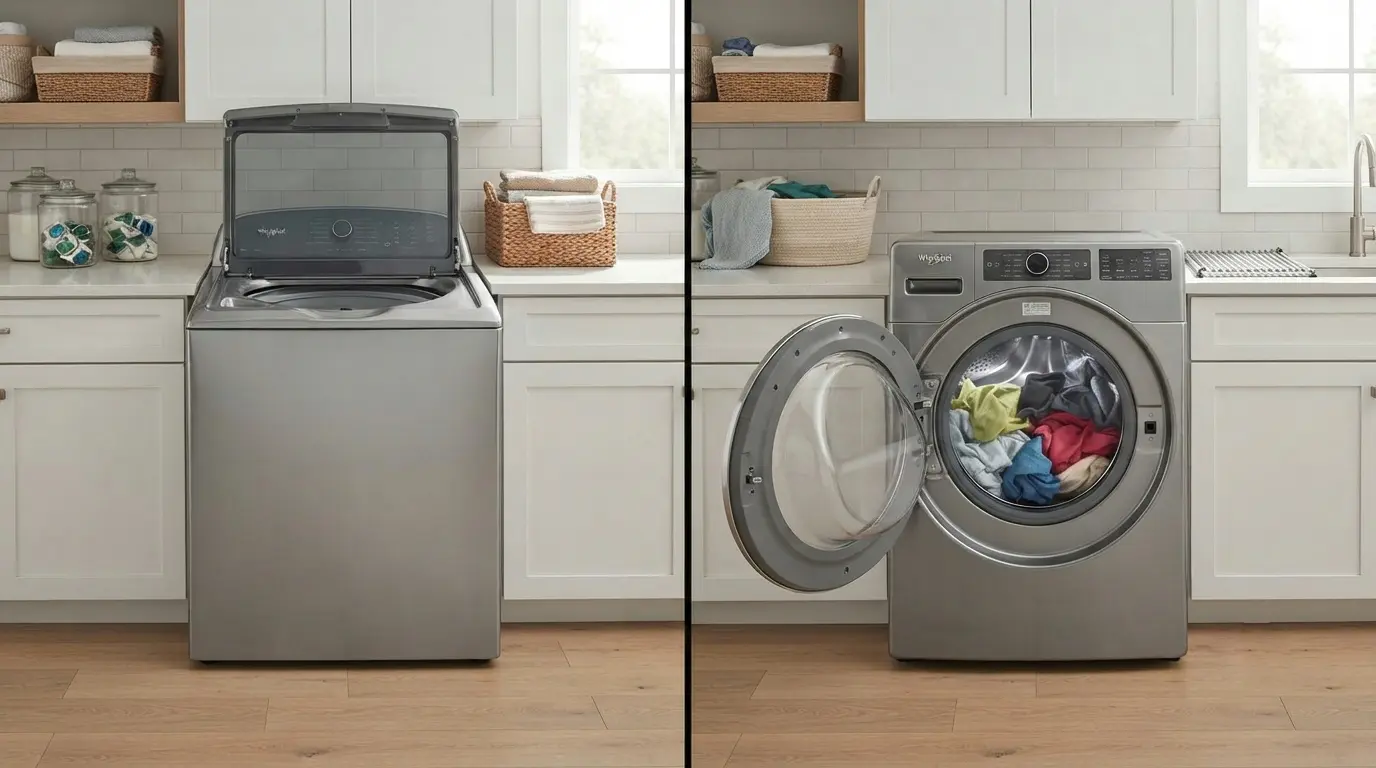
A Whirlpool top-load washer typically uses a vertical agitator or impeller system, spinning the drum on a vertical axis, while a Whirlpool front-load washer uses a horizontal drum that tumbles clothes through a small pool of water at the bottom, similar to a dryer’s motion. This isn’t just a design preference; it changes almost everything downstream: how much water the machine needs, how gentle it is on fabric, how it handles unbalanced loads, and even how it needs to be installed.
Front-load Whirlpool machines (the Duet and WFW series, for example) rely on gravity and tumbling rather than an agitator, which is the mechanical reason they use significantly less water per cycle. Top-load Whirlpool machines, particularly impeller-based models like the Cabrio series, still use a low-water HE design but retain the vertical drum orientation, which affects loading height and ergonomics more than efficiency at this point in Whirlpool’s current lineup.
Space and Installation Requirements
This is the first practical filter, and it eliminates one option for a lot of households immediately.
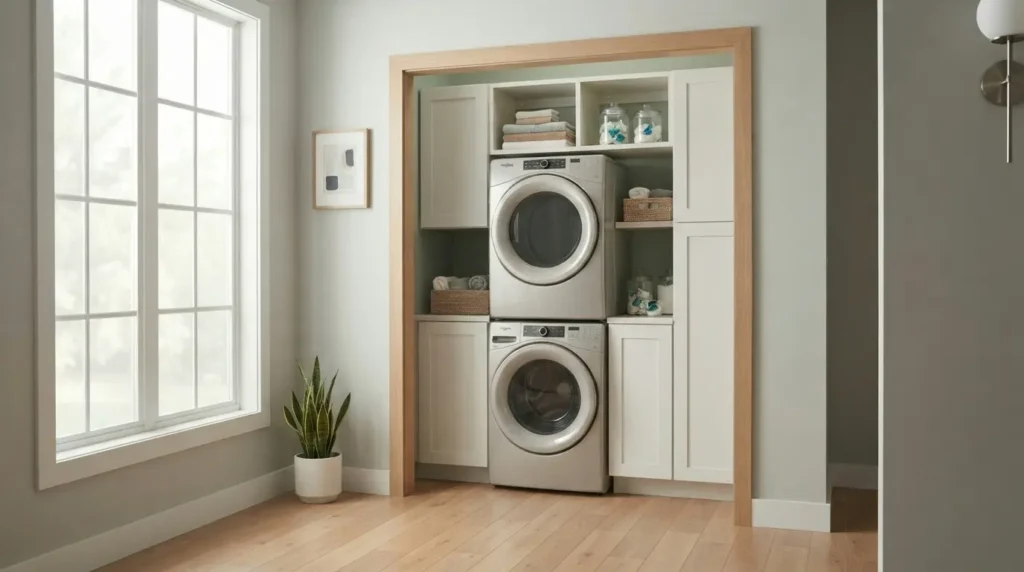
Front-load Whirlpool washers are stackable with a matching dryer, which makes them the only realistic option for tight laundry closets, apartments, or homes where floor space is limited. A stacked Whirlpool front-load and dryer combo can fit in a footprint as small as roughly 27 inches wide, freeing up significant floor space compared to a side-by-side top-load setup.
Top-load Whirlpool washers cannot be stacked and require a side-by-side layout with the dryer, meaning you need roughly double the floor width. However, top-load machines don’t require bending down to load or unload, which matters more than people expect if you have back issues, mobility limitations, or simply dislike crouching to pull out wet laundry every load.
Water and Energy Efficiency Compared
If your utility bill or water usage genuinely matters to you (not just as a nice-to-have but as a real monthly cost concern), this section is where the decision usually gets made.
Front-load Whirlpool washers use meaningfully less water per cycle because they only fill the bottom portion of the drum, using tumbling action rather than submersion to move water through the load. Because they use less water, they also use less energy to heat that water, which compounds the savings over a billing cycle, especially for households doing frequent warm or hot washes.
Top-load Whirlpool HE machines have closed the gap significantly compared to older agitator-style top-loaders, but they still generally use somewhat more water per cycle than a comparable front-load model, since the vertical drum design requires more water volume to adequately move and saturate the load without an agitator doing extra mechanical work.
Wash Performance and Fabric Care
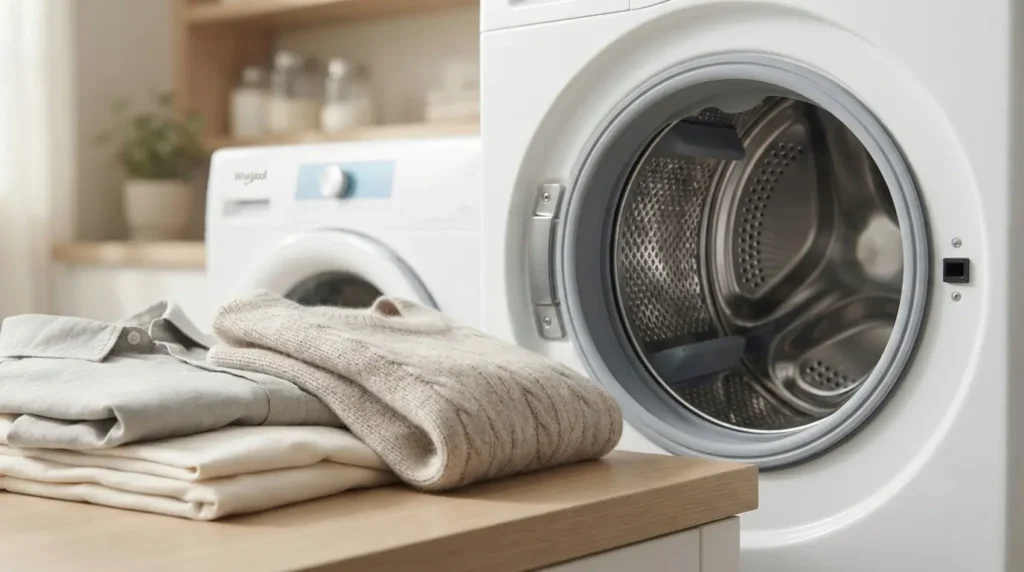
Here’s something I tell customers directly, because it surprises people: front-load Whirlpool washers are gentler on fabric, full stop. The tumbling motion causes less mechanical stress on fibers compared to the twisting, pulling action of a vertical agitator or impeller. If you regularly wash delicates, activewear, or anything you want to last years rather than seasons, this is a real, measurable difference over time, not marketing language.
That said, front-load washers historically had a reputation for needing more attention to prevent odor and residue buildup around the door gasket, since they use less water and run cooler cycles by design. Top-load Whirlpool washers, particularly impeller models, generally clean heavily soiled items (like work clothes or bedding) slightly more aggressively due to the mechanical action, though this comes at a small cost to fabric longevity over hundreds of wash cycles.
Noise, Vibration, and Apartment Living
If you live in an apartment, a condo, or a home with laundry near bedrooms, this section may outweigh every other factor.
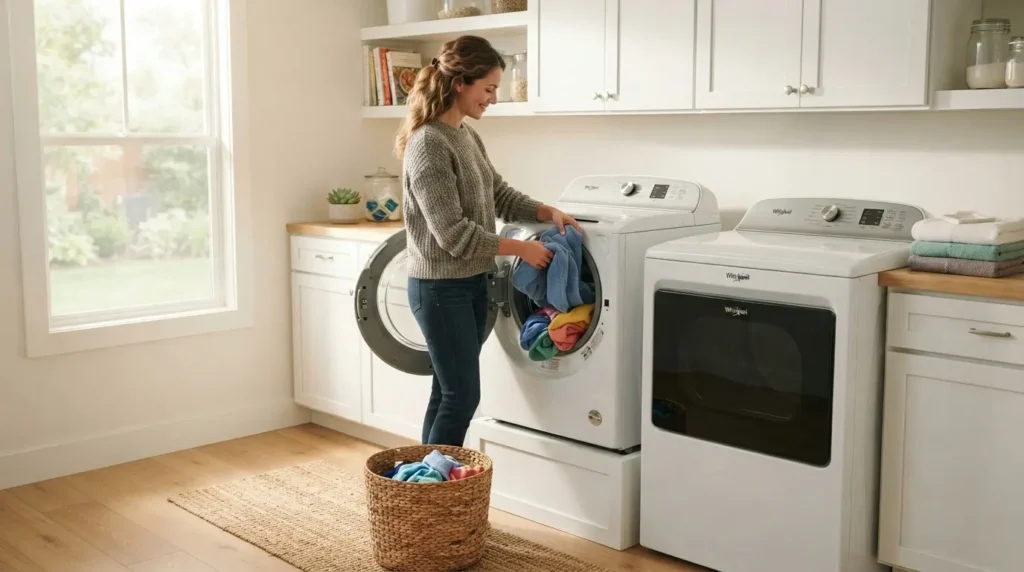
Front-load Whirlpool washers spin at significantly higher RPMs during the spin cycle (often 1,000-1,200 RPM on mid-to-high-end models) to extract more water and reduce dryer time. Higher spin speed can mean more vibration and noise during the spin phase, though Whirlpool’s better-isolated models (typically their mid-tier and above front-load units) manage this well with reinforced suspension systems.
Top-load Whirlpool washers generally spin at lower RPMs and produce less vibration overall, making them a quieter choice in homes where laundry room walls are shared with living spaces. This is a genuinely underrated factor; I’ve had multiple service calls where the “problem” reported was actually just spin-cycle vibration transmitting through shared flooring, not a mechanical fault.
Cost Comparison: Upfront and Long-Term
Upfront pricing between comparable Whirlpool top-load and front-load models is closer than most people assume; mid-range units in both categories often land in a similar price bracket. The real cost difference shows up over time through water and energy bills and in one specific front-load-only cost: pedestal drawers.
Front-load washers are frequently installed with an optional pedestal (a raised base with storage), which adds meaningful cost if you want to avoid bending down to load and unload, something top-load owners get for free by design. Factor this into your real total cost if ergonomics matter to you but you’re leaning toward front-loading for space or efficiency reasons.
Which One Fits Which Household
Based on what I actually see in the field, the decision tends to sort itself by household type more than by brand feature comparison:
- Small apartments or tight laundry closets: Front-load, largely because stacking is often the only way to fit both washer and dryer.
- Households with back or mobility concerns: Top-load, purely for loading height and ergonomics.
- Water/energy-conscious households on utility-metered plans: Front-load, for the efficiency margin.
- Households prioritizing fast, simple cycles for heavy soiling (work clothes, farm/trade households): Top-load, especially impeller models.
- Shared-wall living situations (condos, upstairs laundry rooms): Top-load, for lower vibration and noise.
- Fabric-conscious households (activewear, delicates, frequent dry-clean-adjacent items): Front-load for gentler mechanical action.
Side-by-Side Comparison Table
| Factor | Whirlpool Top-Load | Whirlpool Front-Load |
| Stackable with dryer | No | Yes |
| Typical water usage per cycle | Moderate | Lower |
| Fabric gentleness | Moderate | Higher |
| Loading ergonomics | Easier (no bending) | Requires bending, or pedestal add-on |
| Spin speed / vibration | Lower RPM, quieter | Higher RPM, more vibration |
| Best for heavy soiling | Strong performance | Good, slightly less aggressive |
| Typical upfront cost (mid-range) | Comparable | Comparable |
FAQ: Whirlpool Top-Load vs Front-Load Washer
1. Is a Whirlpool front-load washer objectively better than top-load?
No, “better” depends entirely on your priorities. Front-load wins on efficiency and fabric care; top-load wins on ergonomics and simplicity. Neither is a universally correct choice.
2. Do front-load Whirlpool washers really need more maintenance than top-load?
They benefit from occasional gasket wiping and leaving the door cracked between loads due to lower water/cooler cycles, but this is routine upkeep, not a defect, and it’s a separate topic from performance or fit.
3. Can I stack a Whirlpool top-load washer and dryer?
No. Top-load washers are not designed or rated for stacking; only front-load models support a stacked configuration with a matching dryer.
4. Which type is faster for a full wash-and-dry cycle?
Cycle times vary by specific model and settings rather than purely by top-load vs. front-load design, so this isn’t a reliable deciding factor on its own.
5. Is the impeller top-load the same as the old-style agitator top-load?
No. Impeller models (like Whirlpool’s Cabrio line) use a low-profile spinning disc instead of a center post agitator, giving more usable drum space and gentler action than older agitator designs, while still retaining the vertical top-load format.
6. Do front-load washers really save that much on utility bills?
The savings are real but modest per load, the difference becomes more noticeable over a full year of regular use, particularly for larger households doing frequent laundry.
7. Which type is better for large families with heavy laundry volume?
Both come in high-capacity configurations, so capacity alone shouldn’t be the deciding factor between the two types, look at your specific model’s cubic footage rather than assuming one type is inherently larger.
Final Word
There’s no universally “better” Whirlpool washer type, there’s only the one that matches your laundry room, your water situation, and how your household actually does laundry day to day. If space and efficiency matter most, front-load wins. If ergonomics and simplicity matter most, top-load wins. Match the machine to your home, not the other way around.
Ready to narrow it down to specific models within your chosen type?