
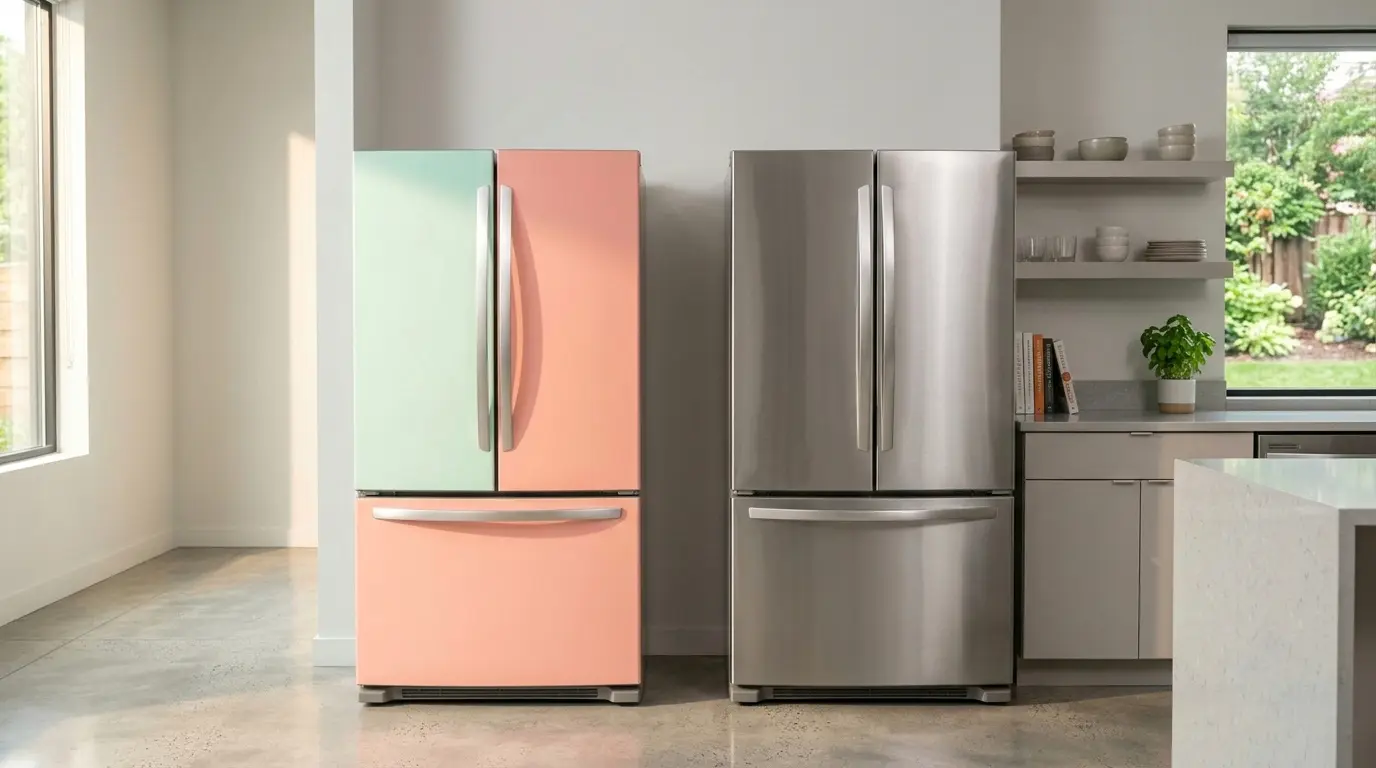
I’ve watched customers fall in love with a Bespoke panel color in the showroom and completely forget to ask a single question about compressor reliability, and I’ve watched just as many walk right past Whirlpool’s understated design without realizing it often outperforms flashier competitors where it actually counts. This comparison exists because those two experiences keep happening, and the gap between “what looks impressive on the floor” and “what you’ll be happy with in year four” is exactly where this decision lives.
Samsung Bespoke vs. Whirlpool represents two genuinely different approaches to what a refrigerator should be, and neither one is objectively better across the board; they’re just optimized for different priorities, which is exactly what this comparison breaks down.
Table of Contents
Two Very Different Refrigerator Philosophies
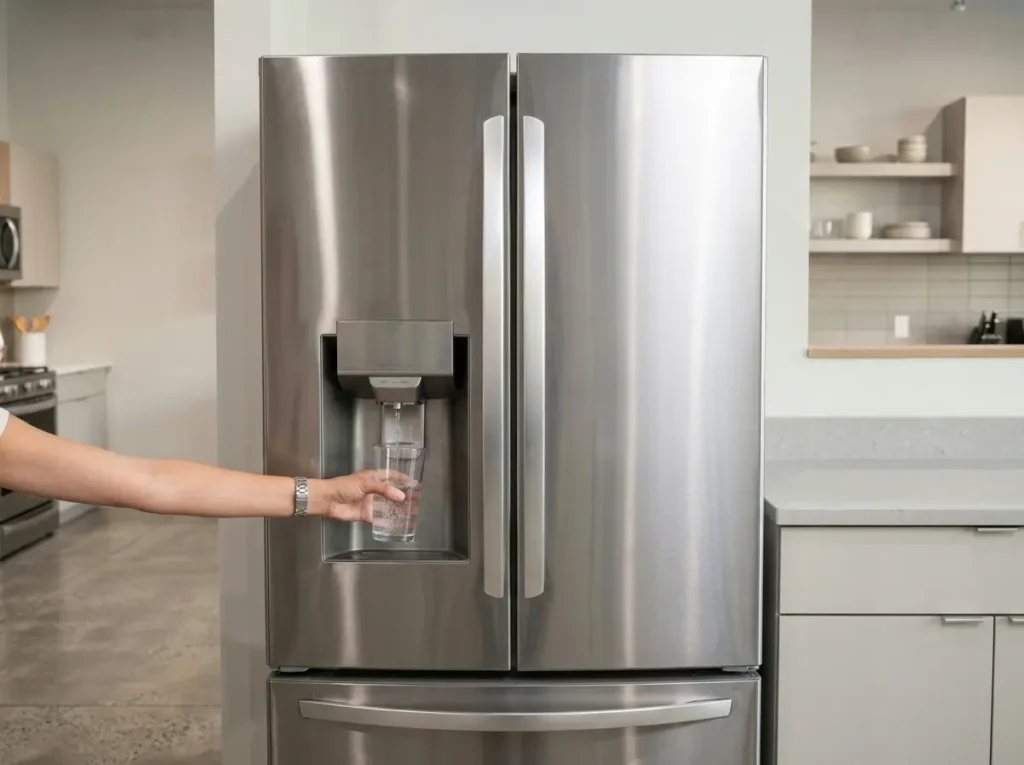
Samsung’s Bespoke line is built around visible customization as the core selling point, swappable colored panels, a modular design intended to match or change with your kitchen’s aesthetic, and features like the Beverage Center designed to feel more like a lifestyle appliance than a purely functional one. Models like the Bespoke 4-Door Flex RF29BB8600QL exemplify this approach directly, letting owners choose flexible column configurations alongside the customizable exterior.
Whirlpool takes a more traditionally functional approach: fewer flashy customization options, but a consistent focus on straightforward layouts, dependable cooling performance, and mechanical simplicity that tends to translate into fewer points of failure over time. A model like the Whirlpool WRF767SDHZ French door refrigerator represents that philosophy well: spacious, straightforward, and built around getting the fundamentals right rather than chasing a design trend.
Customization and Design: Samsung Bespoke vs. Whirlpool’s Practical Approach
Bespoke’s panel-swap system is genuinely unique in the market; you can order colored panels separately and change your refrigerator’s appearance without replacing the whole unit, which is a real selling point for anyone renovating or simply wanting a refresh down the line.
Insider point that showroom staff rarely volunteer: panel colorways get discontinued or replaced over time as Samsung refreshes its lineup, and customers who bought a bespoke fridge specifically for the panel-swap flexibility sometimes find, two or three years later, that their originally available color option is no longer sold, which defeats a meaningful part of why they chose the line in the first place. If the panel-swap feature is a major part of your decision, it’s worth asking specifically about panel longevity and replacement availability rather than assuming today’s color catalog will still be available whenever you actually want to swap.
👉 Samsung Bespoke AI Refrigerator 2026: Better Than a French Door?
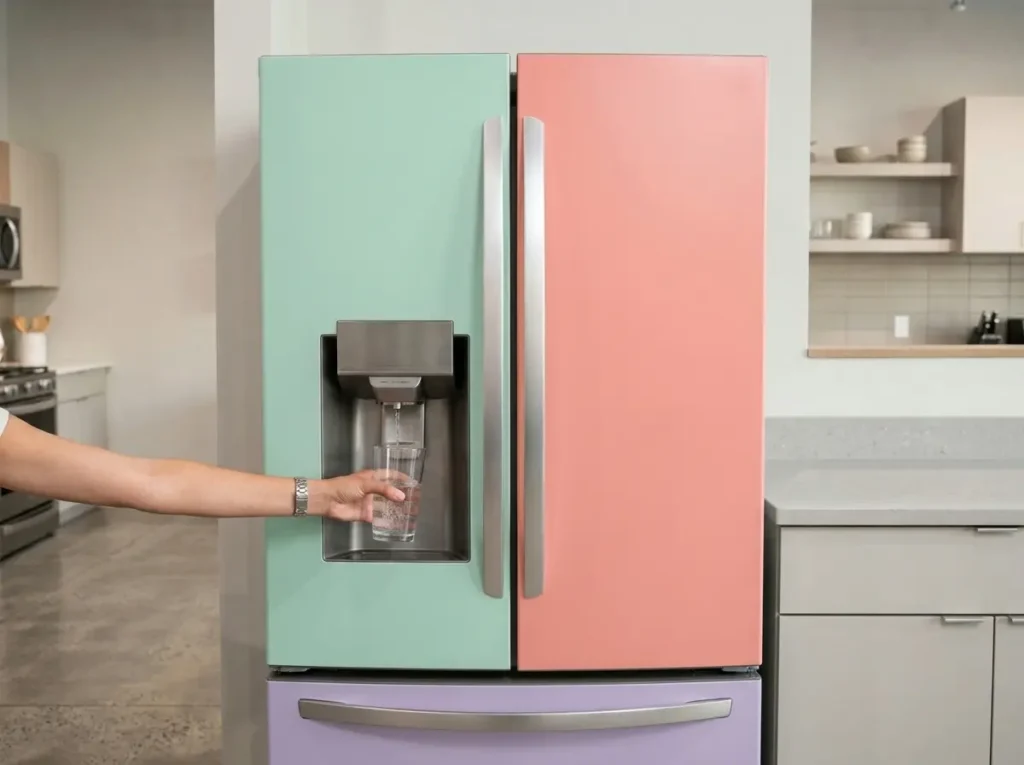
Whirlpool doesn’t offer anything comparable to panel customization; you get the finish you buy, in stainless steel, black stainless, or white, depending on the model, and that’s it for the life of the appliance. What Whirlpool does offer instead is a more consistent, predictable door and handle design across its lineup, which matters more than it sounds like for anyone who’s ever tried to find a replacement door bin or handle for an older model with a design that’s since been discontinued.
👉 Whirlpool’s Newest Refrigerator Models 2026: What’s Actually New
Capacity and Storage Layout Compared
| Model | Brand | Total Capacity | Configuration | Notable Trait |
| Bespoke 4-Door Flex RF29BB8600QL | Samsung | ~29 cu. ft. | 4-door flex, convertible column | Panel customization, flexible fridge/freezer column |
| Bespoke 3-Door French Door RF23BB8600AC | Samsung | ~23 cu. ft. | French door, bottom freezer | Beverage Center, panel customization |
| Whirlpool WRF767SDHZ | Whirlpool | ~27 cu. ft. | French door, bottom freezer | Spacious deli drawer, straightforward layout |
| Whirlpool WRS588FIHZ | Whirlpool | ~28 cu. ft. | Side-by-side | Simple ice/water dispenser, budget-friendlier tier |
Bespoke’s 4-Door Flex configuration genuinely offers more storage flexibility than a standard French door layout, letting you convert a column between fridge and freezer temperature depending on seasonal needs, a feature that sounds like a gimmick but is actually one of the more practically useful things in the line for households whose freezer needs shift meaningfully (holiday entertaining, bulk-buying seasons).
Whirlpool’s approach to capacity leans toward maximizing straightforward usable space rather than modular flexibility, deeper, more consistently shaped shelving and drawers that don’t require any reconfiguration decision-making, which tends to suit households who just want to load groceries in without thinking about column settings.
Cooling Performance and Temperature Consistency
Both brands use variable-speed compressor technology on their current mid-to-upper-tier models, which generally means more consistent internal temperatures and less compressor cycling noise than older single-speed compressor designs. Samsung’s Bespoke lineup and Whirlpool’s comparable French door and side-by-side models perform similarly well in independent temperature-consistency testing at this tier; this is genuinely not a category where one brand has a dramatic, measurable edge over the other on paper.
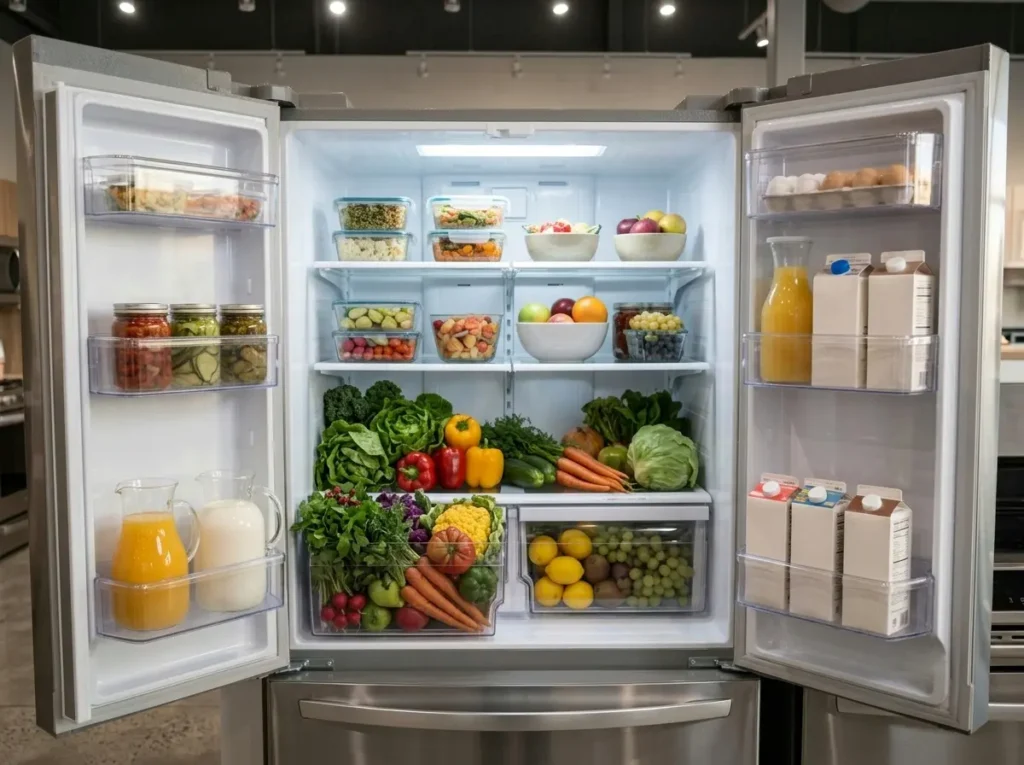
Where a real difference shows up is in humidity and crisper drawer performance rather than raw temperature stability. Bespoke’s crisper drawers on the French door models tend to run slightly more humid by design, which favors leafy greens and produce that wilts quickly, while Whirlpool’s crisper controls trend toward a drier setting that favors firmer produce like apples and root vegetables. Neither is “better” outright, but the difference matters if your household leans heavily toward one type of produce over the other.
Smart Features and Connectivity
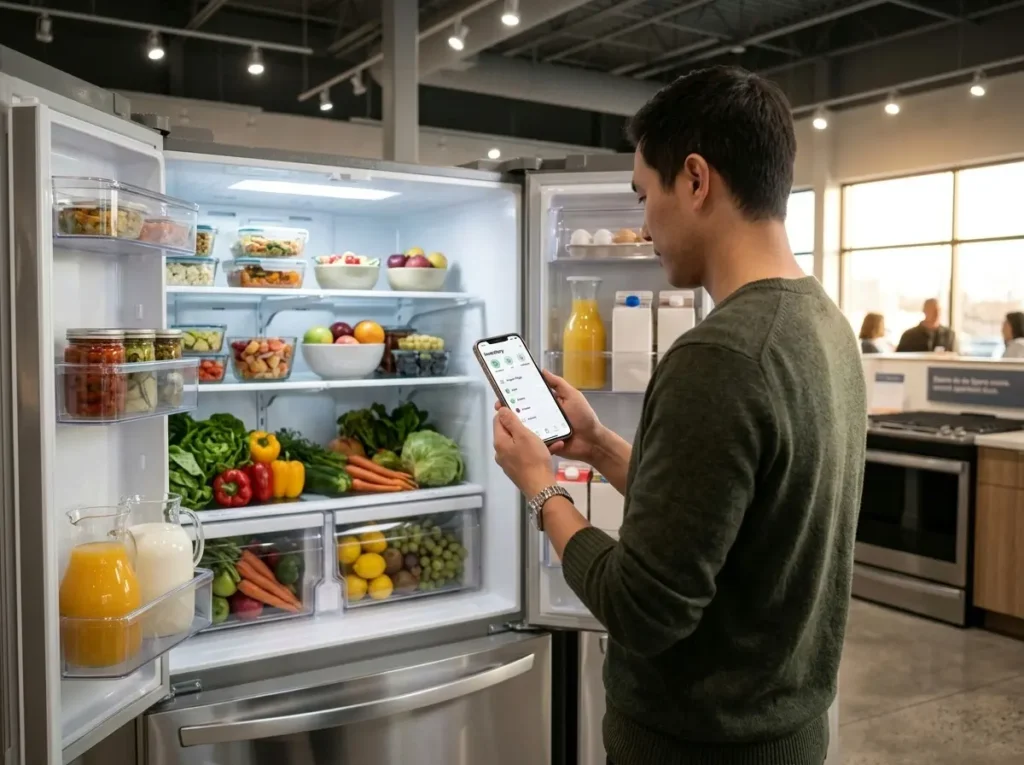
Samsung’s SmartThings integration on Bespoke models is generally more full-featured than Whirlpool’s app ecosystem, with camera-equipped interior views on some models, more granular temperature and mode control through the app, and tighter integration if you’re already using other Samsung smart home devices.
A question a knowledgeable salesperson should ask before recommending either one is that most buyers never think to raise themselves: “Do you actually use smart home features on your other appliances, or would this just be a novelty you check twice and forget about?” Smart connectivity is consistently one of the most oversold features in this comparison; it looks impressive during a showroom demo, but a large share of owners on both brands report rarely opening the companion app after the first few weeks of ownership, which makes it a genuinely poor reason to choose one brand over the other unless you’re already invested in that ecosystem.
Whirlpool’s app functionality is comparatively basic, with status alerts, temperature adjustment, and filter reminders, which is less impressive on a spec sheet but also less likely to become a frustration point if the app’s server-side features are ever discontinued or degraded down the line, since the refrigerator’s core cooling function doesn’t depend on the app working at all.
Noise Levels and Real-World Kitchen Experience
Both brands’ variable-speed compressor models run quietly during normal operation, but Bespoke’s Beverage Center, the built-in dispenser and carbonation feature on select models, introduces its own occasional operational sounds (carbonation cycling, dispensing mechanisms) that Whirlpool’s simpler ice-and-water dispenser doesn’t produce, since Whirlpool doesn’t currently offer an equivalent built-in beverage system.
Insider point on a feature that photographs better than it performs: the Beverage Center is one of Bespoke’s most marketed features, but a meaningful number of owners report using it heavily for the first month or two and then largely reverting to a standard water pitcher or filter, in part because the sparkling water cartridge replacement becomes an ongoing cost and errand that a plain water dispenser doesn’t require. It’s a genuinely fun feature in a showroom demo, but it’s worth being honest with yourself about how long that novelty typically lasts before deciding it’s a deciding factor in your purchase.
Reliability and Repair Costs Compared
| Repair Category | Samsung Bespoke (Typical) | Whirlpool (Typical) |
| Ice maker issues | More frequent reports, particularly on French door models with a single in-door ice maker | Fewer reports; simpler ice maker design on most models |
| Compressor | Comparable failure rates at this price tier | Comparable failure rates at this price tier |
| Panel/door hardware | Panel-specific parts availability shrinks over time as colorways are discontinued. | Standard hardware is more consistently available long-term. |
| Control board/electronics | More features generally mean more potential points of failure. | Simpler electronics, fewer failure points overall |
| Independent technician familiarity | Growing but still less established than Whirlpool’s long service history | Deep, well-established service network in North America |
Samsung’s more feature-dense refrigerators, Bespoke included, have a somewhat more consistent reputation across independent repair-tracking sources for in-door ice maker issues specifically than Whirlpool’s simpler designs. This doesn’t mean every Bespoke unit will have ice maker problems, but it’s a documented pattern worth knowing going in rather than discovering after the fact. If you’re already dealing with an optical water/ice issue on a Samsung model, that’s covered separately in its own diagnostic breakdown. 👉 [Samsung refrigerator ice maker not making ice troubleshooting].
Whirlpool’s simpler mechanical approach across most of its lineup generally translates into fewer overall failure points and a genuinely long-established independent repair network in North America, which matters practically when you need a same-week repair rather than waiting for a specialized technician.
Price Positioning and Total Cost of Ownership
Bespoke’s customization and premium features generally place it at a higher upfront price point than a comparably sized Whirlpool model, and that gap widens further if you factor in the cost of additional panel colors purchased separately from the base unit, plus recurring costs like carbonation cartridges if the beverage center gets regular use.
Whirlpool models tend to sit in a more moderate-to-budget-friendly price bracket for comparable capacity, and the lower feature density generally means fewer recurring costs beyond normal water filter replacement.
Exact current pricing varies significantly by region, retailer, and ongoing promotions, so treat any price positioning here as relative guidance rather than a fixed number; always confirm current pricing directly with the retailer before purchasing.
Which Household Fits Which Brand
A household that genuinely plans to update their kitchen’s look over time, wants a flexible fridge/freezer column configuration, and is comfortable with a higher upfront cost and the possibility of replacing panels down the line is well served by Bespoke; the RF29BB8600QL in particular suits larger households wanting that column flexibility.
A household prioritizing dependable, no-fuss cooling performance, simpler long-term repair access, and a lower total cost of ownership is generally better served by Whirlpool. The WRF767SDHZ offers a genuinely spacious, straightforward French door layout without the added complexity or cost of customization features many owners don’t end up using long-term.
Households in areas with limited access to Samsung-certified appliance technicians should weigh that service access consideration seriously, since Whirlpool’s broader, more established independent repair network in North America specifically is a real practical advantage that has nothing to do with either brand’s raw engineering quality.
FAQ
1. Are Samsung Bespoke refrigerators more prone to breaking down than Whirlpool?
Core compressor reliability is broadly comparable between the two brands at similar price tiers; Bespoke’s more feature-dense models simply carry more individual components (ice maker, beverage center, smart features) that each represent an additional potential point of failure.
2. Can I put bespoke panels on any Samsung refrigerator?
No, panel compatibility is specific to the Bespoke line and particular model generations, and panels aren’t interchangeable with Samsung’s standard (non-Bespoke) refrigerator lineup.
3. Does Whirlpool offer any customizable exterior options at all?
Not comparable to Bespoke’s panel-swap system, Whirlpool’s finish options are fixed at the time of purchase (typically stainless, black stainless, or white) without a swappable panel system.
4. Which brand has better ice maker reliability?
Whirlpool’s simpler ice maker designs generally show fewer reported issues than Samsung’s in-door ice makers on comparable French door models, based on independent repair-tracking patterns rather than either brand’s own marketing claims.
5. Is the Bespoke Beverage Center worth the added cost?
It depends heavily on how much a household will actually use built-in sparkling water and dispensing features long-term; a meaningful share of owners report reduced use after the first few months, making it worth honestly assessing before treating it as a deciding factor.
6. Which brand is easier to get repaired quickly?
Whirlpool generally has a more established, widespread independent technician network in North America specifically, which often means faster repair turnaround compared to Samsung’s growing but less universally established service coverage.
7. Does Whirlpool have any equivalent to Samsung’s SmartThings app ecosystem?
Whirlpool’s app offers more basic functionality, status alerts, temperature control, and filter reminders, without the more granular control or smart-home ecosystem depth Samsung’s SmartThings integration provides.
Final Verdict
If design flexibility, column customization, and a more feature-rich, connected kitchen experience matter enough to you to accept a higher price and somewhat more potential points of failure, Samsung Bespoke is a genuinely well-built line that delivers on those specific priorities. If you’d rather have dependable, straightforward cooling performance, easier long-term repair access, and a lower total cost of ownership without paying for features you may not use in a year, Whirlpool remains one of the more consistently sensible choices in the refrigerator market.
Neither brand is the wrong answer here; they’re built around different priorities, and the right choice comes down to being honest about which of those priorities you’ll actually care about in year three, not just in the showroom. Compare current model availability and configurations directly before buying, since exact lineups shift by region and season.