
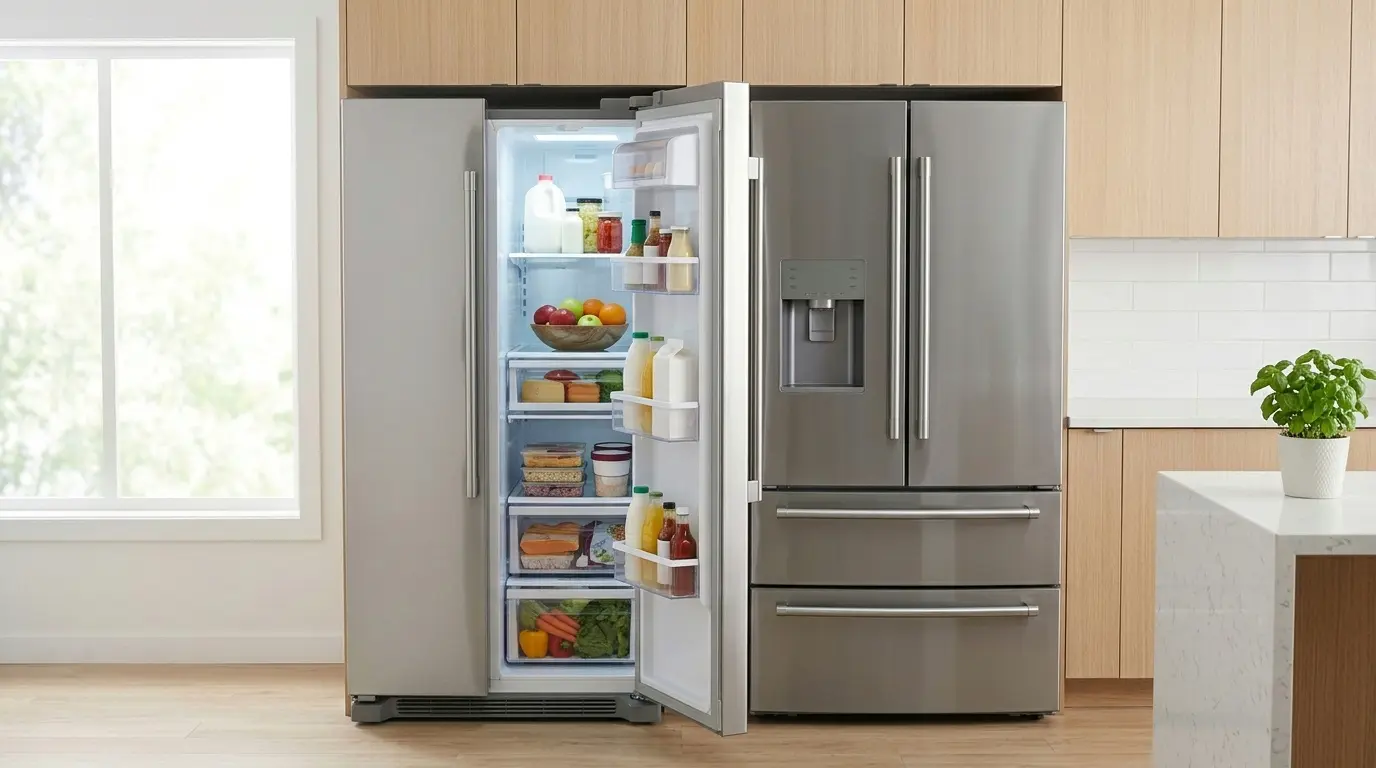
I’ve had customers stand in front of both layouts in a showroom, spec sheets in hand, completely stuck, not because either refrigerator was bad, but because nobody had ever walked them through the actual, practical questions that decide this for real households. The layout question isn’t really about which one looks nicer. It’s about your kitchen’s door clearance, what you actually buy at the grocery store, and how you use a freezer day to day, and, increasingly, what independent reliability data actually shows once the showroom shine wears off.
This guide walks through exactly those decision points as they apply specifically to GE side-by-side vs. French door lineups, using real current model numbers, specs, and reliability findings rather than generic guesswork, so you’re choosing based on how you’ll actually live with the fridge.
Table of Contents
Why Layout Matters More Than Most Buyers Realize
Most refrigerator shopping conversations jump straight to capacity and ice maker features, but layout is actually the decision that determines whether you’ll be happy with the fridge in six months, because it dictates things that don’t show up on a spec sheet at all, how far the doors swing open, whether your everyday items sit at eye level or require bending, and whether a sheet cake pan or a large pizza box actually fits.
GE sells both layouts across multiple price tiers, from entry-level side-by-side units running roughly 25 cubic feet to profile-tier French door models pushing close to 28 cubic feet with door-in-door storage and built-in WiFi, which means the layout decision and the budget decision are genuinely separate choices rather than one dictating the other.
Kitchen Space and Door Clearance: The First Decision Filter
Side-by-side refrigerators, with two narrower doors that swing independently, need meaningfully less total clearance to open fully than a French door model’s wider single doors, which makes them the more practical choice in narrow galley kitchens or installations where the fridge sits close to a wall or island on one side. A model like the GE GSS25GYPFS, at roughly 36 inches wide by 33 inches deep, keeps each individual door swing narrow even though the unit itself isn’t small.
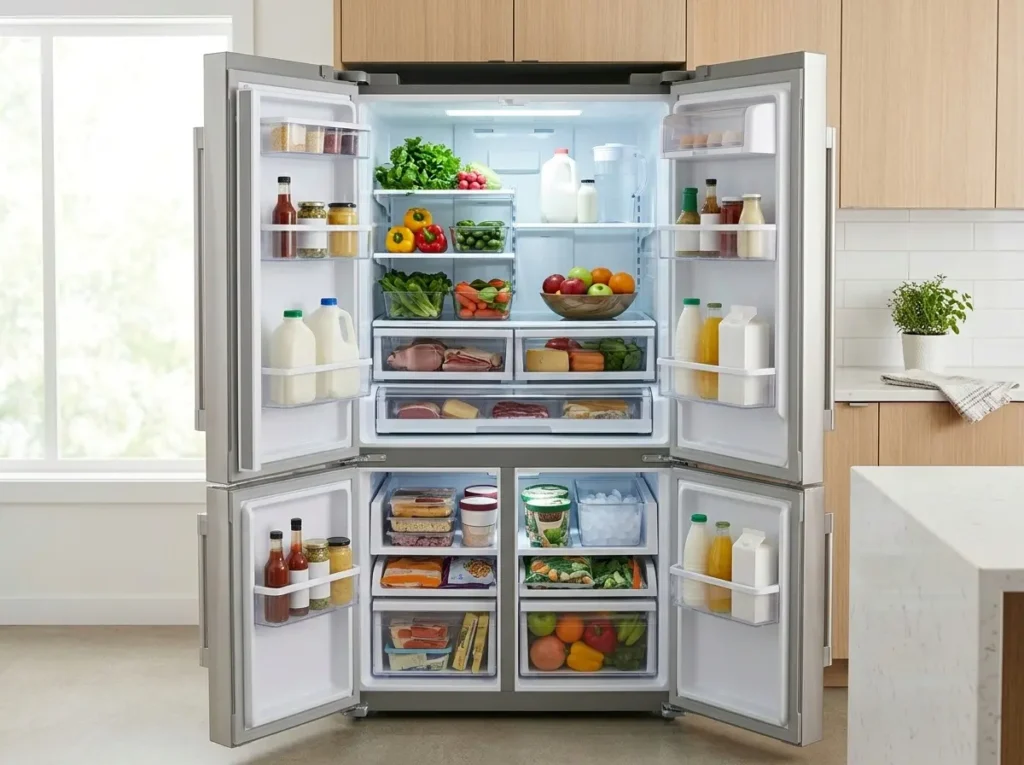
French door models need more swing clearance on the top doors specifically. The GE Profile PVD28BYNFS, for example, lists a depth of just under 37 inches with the door closed but needs nearly 48 inches of clearance with the doors fully open, a number worth measuring against your actual kitchen layout before assuming it will fit the way the showroom floor plan suggested. Measuring actual door swing clearance in your specific kitchen, not just the refrigerator’s width, is the step most buyers skip and the one that causes the most post-purchase regret when a door can’t open past 90 degrees against a nearby wall or counter edge.
If you’re also weighing counter-depth versus built-in models within either layout, that’s a related but separate decision covered in its own guide 👉 [Built-In vs Counter-Depth Refrigerators: 6 Major Differences].
Real GE Side-by-Side vs. French Door Models by Budget Tier and Layout
Rather than talking about “entry, mid, and premium” in the abstract, here’s what those tiers actually look like in GE’s current lineup as of this writing, with real capacities and street-price ranges pulled from major retailers rather than list price alone.
| Budget Tier | GE Side-by-Side Model | Real Specs | Typical Street Price | GE French Door Model | Real Specs | Typical Street Price |
| Entry | GE GSS25GYPFS | 25.3 cu. ft., external dispenser, humidity-adjustable crispers | Roughly $1,700–$1,900 | GE GNE25JYKFS | 24.7 cu. ft., internal dispenser, ENERGY STAR certified | Roughly $1,700–$2,000 |
| Mid | GE GSE25GGPBB | 25.3 cu. ft., LED interior lighting, adjustable door bins | Roughly $2,000–$2,400 | GE GNE27JYMFS | 27 cu. ft., internal dispenser, ENERGY STAR certified | Roughly $1,800–$2,600 |
| Premium (Profile) | GE Profile PSS28KYHFS | 28.2 cu. ft., Arctica icemaker, Quick Ice (up to 50% faster), Turbo Cool setting | Roughly $2,400–$3,100 | GE Profile PVD28BYNFS | 27.9 cu. ft., door-in-door storage, adjustable temperature drawer, built-in WiFi, twin Chill dual evaporators, hands-free autofill dispenser | Roughly $2,600–$3,800 depending on retailer and active rebates |
A few real patterns worth noting from this table: French door models consistently carry a wider price spread than side-by-side models at the same tier, largely because features like door-in-door storage and an adjustable temperature drawer are increasingly reserved for the Profile tier rather than trickling down to entry-level French door units. Side-by-side pricing, by contrast, stays comparatively tighter across tiers since the core mechanical layout doesn’t change as dramatically between an entry unit and a Profile-tier one; the upgrades are mostly in the icemaker (Arctica vs. standard) and interior lighting rather than the fundamental storage design.
Household Size and Grocery Habits: Which Layout Actually Serves You Better
Side-by-side refrigerators split fridge and freezer space vertically down the middle, which means both compartments are narrower but full-height, and this genuinely suits households that buy groceries more frequently in smaller quantities rather than doing large bulk shopping trips, since narrower shelves handle a steady stream of everyday items better than they handle wide, bulky purchases.
French door refrigerators put the full-width fridge compartment up top and a separate freezer drawer below, and that wide, uninterrupted fridge shelf space genuinely benefits households that buy in bulk, host regularly, or need to fit wide platters and large take-out containers without rearranging shelves every time. A larger household doing a weekly big-box grocery run consistently reports fewer storage frustrations with the wide French door layout than with a side-by-side’s narrower compartments, and models like the PVD28BYNFS take this further with an adjustable temperature drawer that can convert between a beverage center and extra refrigerator space depending on the week’s needs.

What Reliability Data and Owner Reviews Actually Show
This is the section most buying guides skip entirely, and it’s arguably the most important one. Rather than relying on general brand reputation, here’s what independently gathered reliability data actually says about GE’s two layouts specifically.
| Reliability Metric | Side-by-Side (GE) | French Door (GE) |
| J.D. Power 2025 Appliance Study | GE recorded the lowest reported problem rate among side-by-side refrigerators in the study. | Not GE’s top-scoring category in the same study |
| Yale Appliance first-year service rate (GE/GE Profile, recent reporting) | Reported in the high single digits to low double digits depending on the specific year and model mix | Similar range, though French door units as a category tend to run slightly higher industry-wide due to added moving parts. |
| Puls U.S. Appliance Repair study | GE ranks as the fourth most reliable refrigerator brand overall for repair rates and servicing. | The same brand-wide ranking applies across GE’s layouts. |
| Most common reported issue (all brands, per Consumer Reports member surveys) | Icemaker and water/ice dispenser problems | Icemaker and water/ice dispenser problems, plus door seal wear specific to the French door design |
Two real, specific patterns are worth calling out here rather than just citing the general brand score. First, appliance repair sources tracking GE-specific complaints in a 2026 report that side-by-side GE models, while generally the brand’s most reliable style, still develop two recurring issues often enough to be worth knowing upfront: a fridge compartment that runs slightly warmer than the freezer side and slow or stopped water flow at the external dispenser.
Second, French door models carry their own well-documented wear point that side-by-side units simply don’t have: the flexible door seal (“mullion” or French door flap) that closes the gap between the two top doors is a known long-term wear component, and a worn one is a frequently overlooked cause of rising energy bills, since it lets cold air leak out along that center seam without necessarily triggering an obvious symptom like visible frost.
Reviewer sentiment gathered across major retailer review sections for GE’s current French door lineup tends to praise the layout’s spaciousness and the convenience of features like WiFi monitoring and hands-free autofill, while a recurring theme in critical reviews across the broader French door category (not unique to GE) centers on the in-door ice maker and dispenser mechanism being the first thing to act up after a couple of years of regular use, which lines up closely with what the Consumer Reports member survey data shows industry-wide.
Storage Habits: Bulky Items vs. Everyday Grab-and-Go
Insider point: most buyers never think to ask themselves before choosing what’s the single largest or widest item they regularly need to fit, a sheet cake, a large pizza box, a wide serving platter, or a rectangular casserole dish? Side-by-side compartments, however generously rated in cubic feet, are narrower by design, and a genuinely common post-purchase regret is discovering that a regularly used large item simply doesn’t fit without diagonal wedging, something that never comes up during a showroom visit because nobody brings their sheet cake pan along to test it.

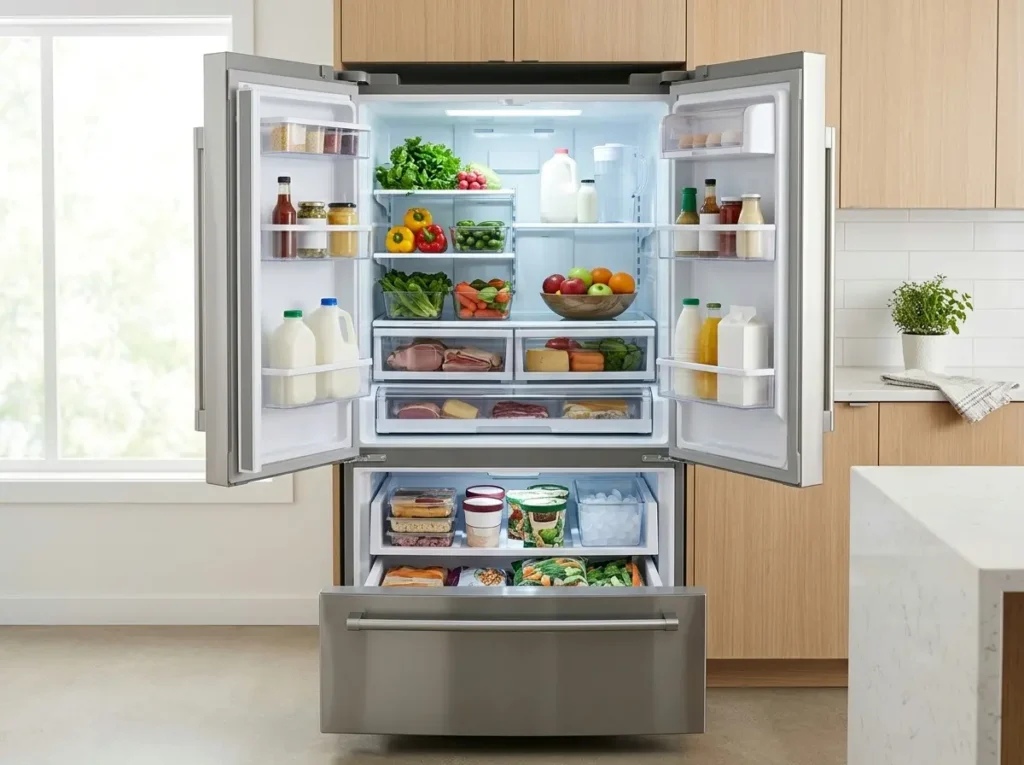
French door models solve that specific problem well on the fridge side but introduce their own version of the same consideration on the freezer side, since the freezer is now a drawer rather than a full-height compartment; very tall frozen items (a large frozen turkey box, tall ice cream containers) can be more awkward to store upright than in a side-by-side’s taller, narrower freezer column. Models with a convertible drawer, like the PVD28BYNFS’s adjustable temperature compartment, add some flexibility here but don’t fully eliminate the tall-item tradeoff in the main freezer drawer itself.
Ice and Water Dispenser Expectations by Layout
Side-by-side models generally offer a larger external dispenser footprint in the door itself. GE’s Profile-tier side-by-side units, like the PSS28KYHFS, use what GE brands as an Arctica icemaker capable of holding around 10 pounds of ice with a Quick Ice setting that GE states can produce ice up to 50% faster than the standard setting, a genuinely useful feature for entertaining, though “50% faster” only matters if your household actually runs through ice quickly enough to notice the difference day to day.
French door dispensers draw ice from a bin mounted in the door or fresh food compartment depending on the specific model, and models like the PVD28BYNFS pair this with a hands-free autofill feature that uses sensors to stop water flow automatically once a container is full. Available ice storage capacity can run somewhat smaller than a comparable side-by-side simply due to available space constraints in the design.
If ice production volume for entertaining or a large household is a genuine priority, it’s worth checking the specific ice storage capacity number on your shortlisted models rather than assuming both layouts perform equally here. If you’re already dealing with a dispenser or ice maker issue on an existing GE unit, that’s covered separately. 👉 [GE refrigerator ice maker not dispensing troubleshooting].
Long-Term Repair and Parts Considerations by Layout Type
Side-by-side ice makers, particularly the door-mounted dispenser mechanism, have more moving parts routed through a hinge point than a top-freezer or even most French door configurations, and that added mechanical complexity shows up in the same reliability data cited above as a recurring, if not brand-breaking, service pattern.
French door refrigerators introduce their own long-term consideration beyond the door seal issue already mentioned: the freezer drawer’s slide mechanism and seal is a wear component that a side-by-side’s simpler swinging freezer door doesn’t have, and a freezer drawer that no longer seals tightly along its full perimeter can lead to frost buildup issues that are more involved to diagnose than a simple door gasket check on a side-by-side. On the positive side, GE’s broad market presence and long-established service network, a factor Yale Appliance’s reporting specifically calls out as a genuine practical advantage, means finding a technician or replacement part tends to be faster for GE than for less common brands, regardless of which layout you choose.
Common Regrets Buyers Report After Choosing the Wrong Layout
The single most common regret from side-by-side owners is underestimating how narrow the compartments feel in daily use once cubic footage numbers translate into actual grocery-loading reality. Buyers who upgraded from an older top-freezer model are sometimes surprised the side-by-side doesn’t feel as spacious as the capacity rating suggested, precisely because that capacity is split into two narrower columns rather than one wide compartment.
The most common regret from French door owners centers on the freezer drawer position; households with young kids or anyone who accesses the freezer frequently throughout the day report more bending and digging through a drawer than they anticipated, compared to a side-by-side’s eye-level freezer column that doesn’t require crouching to see what’s inside.

Quick Decision Guide: Which Household Profile Fits Which Layout
A single person or couple in a narrower kitchen, doing frequent smaller grocery trips, with limited door-swing clearance on one side, generally fits better with a side-by-side layout like the GE GSS25GYPFS
A larger family doing bulk grocery shopping, hosting regularly, and prioritizing wide fresh-food shelf space over freezer accessibility generally fits better with a French door layout like the GE GNE27JYMFS
A household wanting smart connectivity, faster ice production, and more premium interior configuration options, regardless of layout preference, should look at the Profile tier in whichever layout otherwise fits their kitchen and habits.
FAQ
1. Is a French-door refrigerator always more expensive than a side-by-side?
Generally yes at comparable feature tiers, current pricing puts entry-level GE French door and side-by-side models in a similar range, but the gap widens noticeably at the Profile tier, where French door models with door-in-door storage and WiFi run several hundred dollars higher than a comparably tiered side-by-side.
2. Which layout is better for small kitchens?
Side-by-side layouts generally need less total door-swing clearance per door, which often makes them the more practical fit in narrower galley kitchens or tight installation spots; a French door model can need close to four feet of open-door clearance depending on the model.
3. Do side-by-side refrigerators really hold less usable space than French door models of the same rated capacity?
The rated cubic footage can be similar, but side-by-side compartments are narrower by design, which affects how wide or bulky items fit even when the total volume number looks comparable to a French door model.
4. What’s the most common repair issue across both layouts?
Icemaker and water/ice dispenser problems consistently rank as the most frequently reported issue across both layouts and across refrigerator brands generally, according to Consumer Reports’ own member survey data.
5. Are French door freezer drawers harder to organize than a side-by-side freezer column?
Many owners find drawer organization requires more intentional bins and dividers to avoid items getting buried at the bottom, whereas a vertical freezer column allows more natural shelf-based organization.
6. Does GE’s reliability reputation actually differ between the two layouts?
Slightly, recent industry studies have specifically credited GE’s side-by-side lineup with the lowest reported problem rate in that category, while French door units, as a category across all brands, tend to show marginally more reported issues industry-wide due to the added door seal and drawer mechanisms.
7. Is a worn door seal on a French door model something to worry about?
It’s worth checking periodically, since a worn center door seal is a documented, commonly overlooked contributor to higher energy bills on French door models specifically. It’s not usually an urgent safety issue, but it’s worth addressing once noticed.
Final Thoughts
If there’s one piece of advice that consistently helps customers make this decision well, it’s this: don’t choose based on the showroom floor model; choose based on your actual kitchen’s clearance, your actual grocery habits, and what the reliability data actually says rather than which finish caught your eye first.
Measure your door swing space, think honestly about how often you dig through a freezer during the day, and weigh GE’s genuinely strong side-by-side reliability numbers against the wider, more flexible storage a French door layout offers. Get that part right, and either the GE layout will serve you well for years, or get it wrong, and even the nicest fridge on the floor will feel like the wrong choice within the first few months.