

Your Frigidaire fills until the glass looks like a small aquarium, or it stops at a puddle, and the cycle just sits there. A Frigidaire washer water level sensor error is behind both stories surprisingly often, and the culprit is usually a thin plastic tube rather than an expensive part. This article explains how the level-sensing system works, which symptoms point to it, and which look-alike problems waste the most money.
Table of Contents
1. How Your Washer Knows How Much Water Is in the Tub
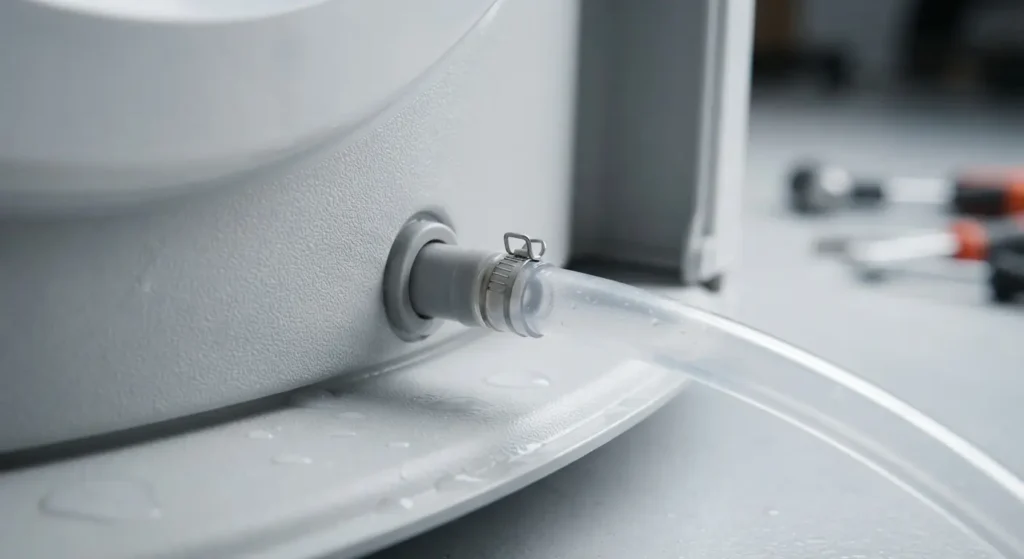
A washer has no floating ruler inside the tub. Instead, a small port near the bottom of the tub (often called the air dome or pressure dome) connects to a hose, and that hose runs up to a sensor mounted behind the control area. As water rises in the tub, it squeezes the trapped column of air in that tube, and the sensor reads that pressure.
The amounts involved are tiny. The pressure difference between an empty tub and a full one is roughly the weight of a few centimeters to a couple of dozen centimeters of water, so the system is sensitive to anything that changes the air column: a kink, a pinhole, a plug of detergent gel, or water that has crept up into the hose.
The control board uses that signal to decide when to close the fill valve, how much water the load needs, and when the tub is empty enough to move to spin. When the signal is wrong, the board makes confident decisions on bad information. That is why this one system can produce symptoms as opposite as overfilling and refusing to fill.
2. Symptoms That Point to the Level-Sensing Circuit
Not every fill problem comes from the sensor, but a few patterns lean that way. The table below separates what the sensing circuit may be doing from the other suspects to rule out first.
| Symptom | What the sensing circuit may be doing | Rule out first |
| Overfills toward the top of the drum | Reports “low water” no matter how full the tub gets | Inlet valve leaking through |
| Stops filling early, cycle stalls | Reports “full” almost immediately | Low household water pressure |
| Fills, then drains, then fills again | Reads inconsistently as water moves | Drain hose siphoning |
| Cycle time jumps or loads feel too small for the water used. | Misjudges load size from pressure readings | Unbalanced or tiny loads |
| The display shows a fill or level-related fault. | The signal is out of range or missing. | Loose connector at the board |
| Washes with almost no water | Thinks the tub is already full | Both fill hoses are attached correctly. |
A level-related code on a front loader may come up on a digital display, while older or simpler panels may signal faults with a pattern of lights.
3. The Air Tube: The Cheapest Part With the Biggest Impact
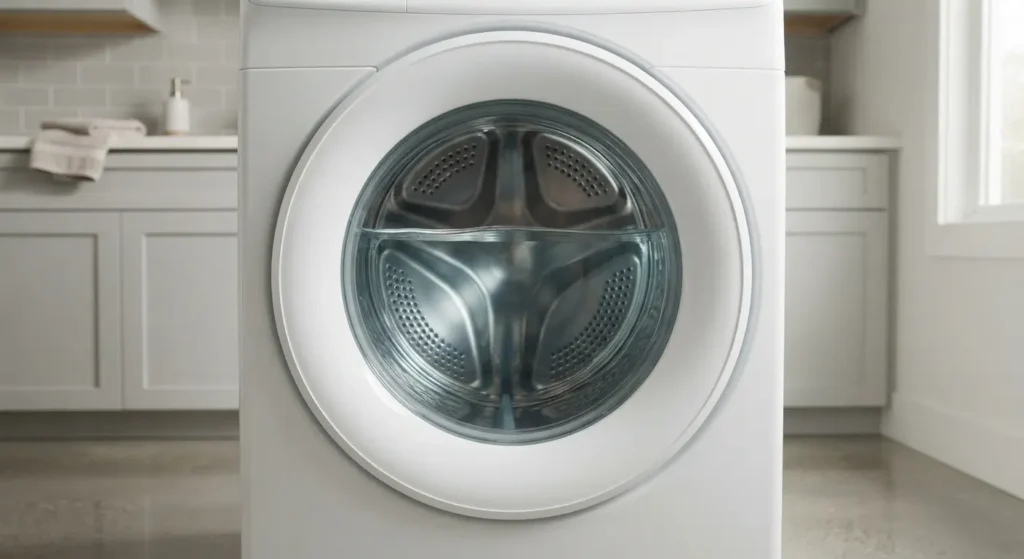
If a technician had to bet on one component in this system, it would be the air tube. It is a thin, flexible hose with a dozen ways to go wrong, and almost all of them are cheap.
Clogs. Detergent residue, fabric softener film, and lint can build into a gel plug at the tub end of the tube or inside the dome. A plug blocks the pressure signal, so the sensor never sees the water rise.
Kinks and pinches. The tube passes through tight cabinet space. A bend from a previous repair, or a pinch under a panel or wire bundle, can flatten it just enough to dampen the signal.
Loose or cracked connections. If the tube leaks air at either end, the pressure reading collapses. A tube that has hardened with age can crack at the clamp point even though it looks fine from a distance.
Water in the tube. After repeated overfills or a washer that was moved on its side, water can sit in the line and distort readings.

4. Pressure Switch vs. Electronic Sensor: Two Designs, Two Failure Patterns
Frigidaire washers have used more than one kind of level sensor, and the failure style differs.
Mechanical pressure switch. A diaphragm moves with air pressure and flips electrical contacts at set thresholds, often one for each fill level. Failures tend to be binary: the contacts stick, or the diaphragm tears and stops responding. The result is usually a washer that behaves in one extreme, such as never reaching the “full” signal.
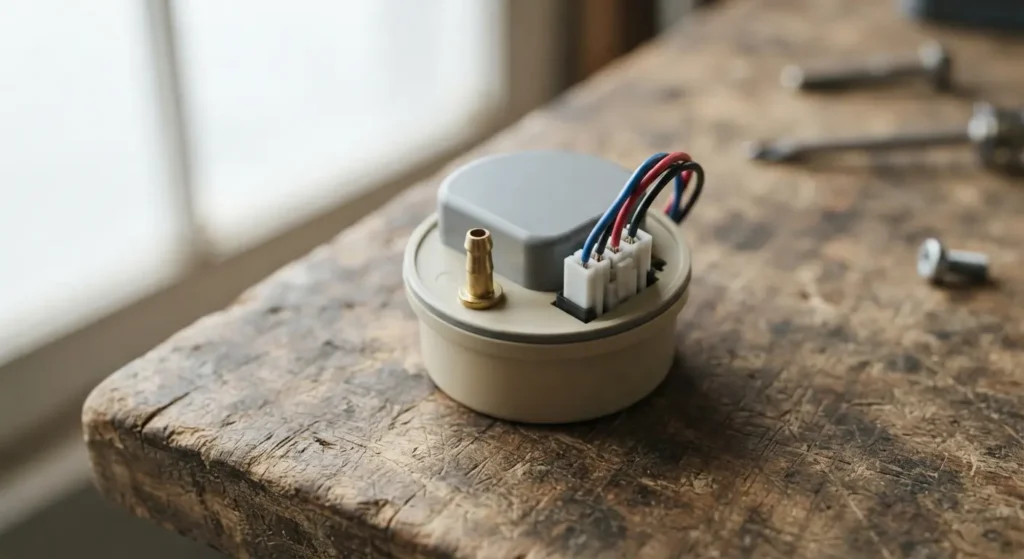
Electronic pressure sensor. Newer designs typically send a changing electrical signal (commonly a variable frequency) to the control board, which interprets it as a water level. These can drift or send a signal outside the expected range, and the board may then flag a fault instead of simply overfilling. A loose or corroded connector can mimic a sensor failure here, which is why the wiring harness deserves a look before a new part is ordered.
The tell between them is how the washer fails. A switch tends to fail abruptly and consistently, while an electronic sensor is more likely to throw intermittent or range-related faults. To know which design your washer has, check the parts diagram for your full model number, since similar-looking washers can use different sensors.
5. The Look-Alikes That Get Blamed on the Sensor
The most commonly misdiagnosed problem in this lane is overfilling that is actually the inlet valve. A failing fill valve can leak water slowly even when the board says “off,” so the tub keeps creeping upward long after the sensor says “full.” A perfectly good pressure switch gets replaced, and the washer overfills again. The giveaway is water entering when the machine isn’t asking for any, such as after the cycle ends or with the power off.
Here are the other usual impostors:
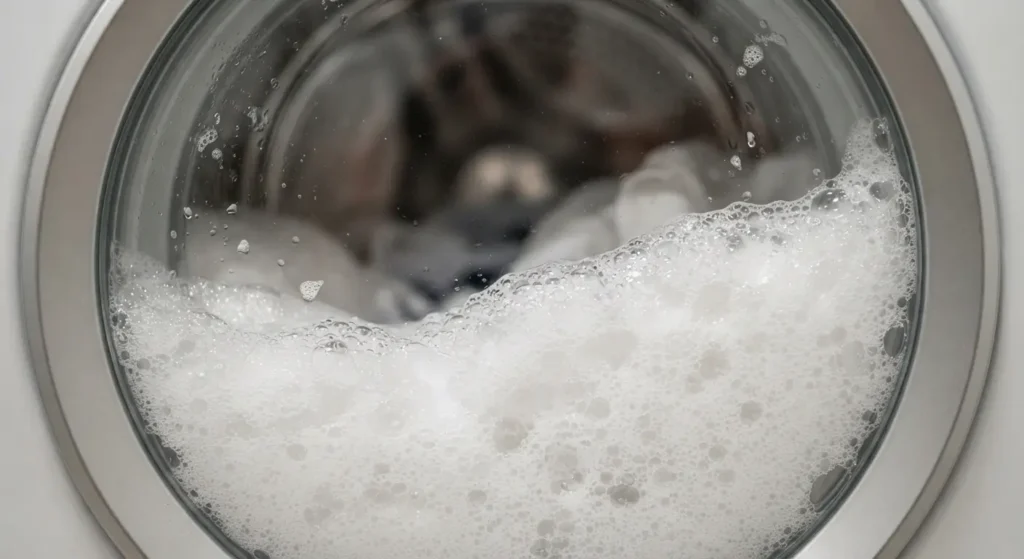
- Oversudsing. Too much detergent builds a thick foam layer that the sensing system reads as water. The machine may think it has more water than it does, stop filling early, or stall mid-cycle. If you see suds climbing the glass, the sensor may be innocent. 👉 [Correct Detergent Dosing for Washer HE Cycles 6 Easy Dosing Methods]
- Low household water pressure. A weak supply can make fill look like a stalled or slow cycle, and some boards flag a fill fault when the tub doesn’t gain level in the expected time. Test another tap in the house before blaming the washer.
- Reversed or kinked fill hoses. A pinched supply hose reduces flow and mimics a level problem.
- A weak or failing fill valve with a clogged inlet screen. Reduced inflow can delay the level signal and trip a time-based fault.
The pattern across all of these is that the sensor is judged by what it reports, not by what is actually happening in the tub. Compare what you see in the drum with what the machine seems to believe.
6. Questions a Technician Asks Before Condemning the Sensor
Most homeowners start with “Which part do I order?” A technician starts with questions, and the answers narrow the problem faster than any parts list.
- Does water keep entering when the machine isn’t running a fill? If yes, suspect the inlet valve first.
- How much detergent do you use, and is it labeled HE? Heavy dosing is a repeat offender, and oversudsing can imitate a sensor fault.
- Was the washer moved, tipped, or recently serviced? Tubes get kinked, pulled loose, or filled with water during moves.
- Is it consistent or random? A sensor that fails the same way every cycle points to a switch or tube. An error that comes and goes leans toward a connector, a drifting electronic sensor, or board communication.
- Does it fail at a particular point in the cycle? A stall at the start of fill suggests the tub isn’t registering water. A stall at the end suggests it isn’t registering empty, which may involve the drain instead. 👉 [Frigidaire Washer Maintenance Schedule: 5 Easy Cleaning Tips]
- How old is the machine, and has the same problem happened before? A repeat of the same fault after a new part often means the real cause was never addressed.
| Insider favorite: question 2 Many households discover that the “failed sensor” had been fighting a residue problem the whole time, and a new sensor on a gummed-up tube only buys a few weeks. |
7. Is It Worth Fixing? What Tips the Decision
On a washer with otherwise healthy bearings and a solid cabinet, a level sensor problem is usually a modest-cost repair, because the tube and switch are small parts compared with the cost of a new machine. That makes this a favorable fault to chase when the washer is otherwise sound.
The small detail that tips the decision is the cause of the failure. If the tube clogged from years of overdosing detergent, the repair will hold only if the dosing habit changes. If the failure came from a one-time kink after moving the machine, the fix is more likely permanent.
Be cautious if the diagnosis keeps drifting toward the control board, since a board replacement on an older machine can approach the price of replacing the washer. Moisture damage, burned traces, or repeated faults across unrelated functions are the signs to weigh that decision honestly rather than keep buying parts.
8. FAQ
1. What does a Frigidaire washer water level sensor error mean?
It means the control board isn’t receiving a believable water level signal from the pressure switch or sensor, or the signal doesn’t match what the cycle expects. The cause can be the tube, the sensor, the wiring, or a look-alike problem such as suds or a leaking inlet valve.
2. Can a clogged air tube cause overfilling?
Yes. If the tube is blocked, the sensor never sees the pressure rise, so the washer keeps adding water. That is one of the most common causes of overfill that isn’t the inlet valve.
3. How do I tell a bad pressure switch from a bad inlet valve?
If water keeps entering when the machine isn’t asking for any, the inlet valve is the stronger suspect. If the tub fills in a controlled way but to the wrong level, the sensing system is more likely.
4. Can too much detergent trigger a level error?
It can. Heavy suds change what the sensing system reads and may stall a cycle or cut fill short, so reducing the dose is worth testing before buying parts.
5. Does a level sensor error always mean a bad part?
No. Kinked tubes, loose connectors, and low water pressure can all create the same symptoms. Part replacement is the last step, not the first.
6. Will the error disappear if I restart the washer?
Sometimes, because a restart clears a temporary stall. If it returns, the underlying cause is still there and usually needs a closer look at the tube, connector, or sensor.
7. Is this a problem I should fix myself or call a technician about?
The diagnosis here is safe to do by looking and thinking. The physical repair is a separate job with its own safety steps, and you should call a licensed technician if wiring looks damaged or you aren’t comfortable opening the machine.
9. Conclusion
A washer that misjudges its own water level is rarely broken in the dramatic way people fear. More often, a plugged tube, a leaking valve, or a heavy hand with the detergent is feeding the control board bad information.