
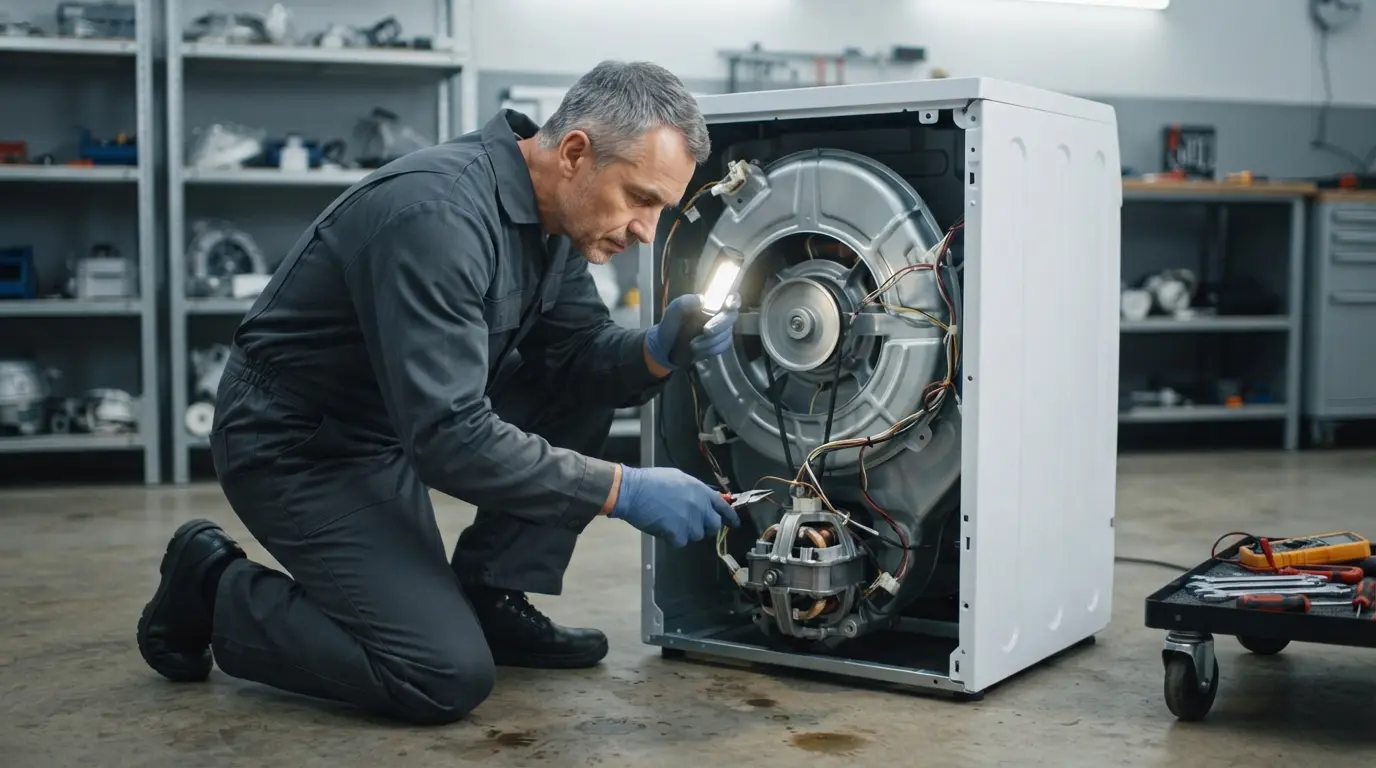
A drum that refuses to turn makes almost everyone reach the same verdict: dead motor. Half the time the motor is perfectly healthy and the board that tells it what to do has quit, and swapping the wrong part is an expensive way to learn the difference. This article helps you sort a Frigidaire washer motor error into motor-side or board-side before you spend money on either.
Table of Contents
1. How the Drive System Splits the Work Between Motor and Board
Think of the motor as the muscle and the control board as the brain with a very fast reflex. The main control board decides what the cycle should do, such as a slow tumble, a reversal, or a high-speed spin. On many Frigidaire front-loaders a separate motor control board (sometimes called an inverter or motor control unit) turns that instruction into precisely timed power for the motor. On other platforms, the main board handles that job itself.
The motor also talks back. Most designs include a speed or position sensor, often a tachometer or hall-effect device, that reports how fast the rotor is actually turning. The board compares what it asked for with what it hears. If the two disagree for too long, it stops the cycle and flags a fault, even though the motor may be mechanically sound.
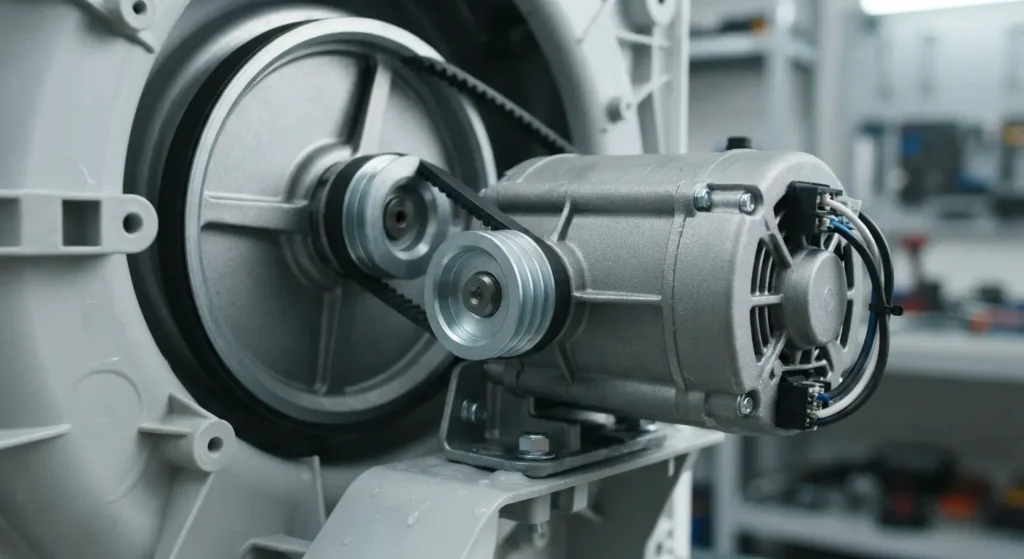
That feedback loop is why a “motor error” is a misleading label. The fault can live in the motor windings, the speed sensor, the wiring between them, the board’s power stage, or the mechanical load the motor is dragging. Three layouts are common in the field:
- Belt-driven motor on a separate bracket, turning the drum through a belt.
- Direct-drive motor mounted at the back of the tub, with no belt at all.
- Integrated or separate drive electronics, which changes how many boards could be involved.
The only reliable way to know which one you own is the parts diagram for your full model number, so check that before you order anything.
2. Symptoms That Lean Toward the Motor
The motor-side faults tend to be physical, and they usually announce themselves with sound, heat, or smell.
A hum with no rotation. When the machine energizes the motor and you hear a low buzz while the drum stays put, the motor is receiving power but not turning. That can mean a seized or very stiff drum, a failed start component on designs that use one, or windings that have degraded. It does not by itself prove the motor is bad, because a jammed drum produces the same sound.
A burning smell during spin. Overheated windings and a slipping belt both smell hot. A sharp, electrical, varnish-like odor leans toward the motor, while a rubbery smell points at the belt.
Stops mid-cycle, resumes later. Motors have a thermal protector buried in the windings. A motor that works for a while, quits, and runs again after a long rest is often tripping that protector from heat. Heat comes from either a tired motor or a motor forced to work too hard by a heavy mechanical load.
Runs weakly or struggles to reach spin speed. Worn windings or a drifting speed sensor can leave the drum sluggish, especially with a wet, heavy load.
3. Symptoms That Lean Toward the Motor Control Board
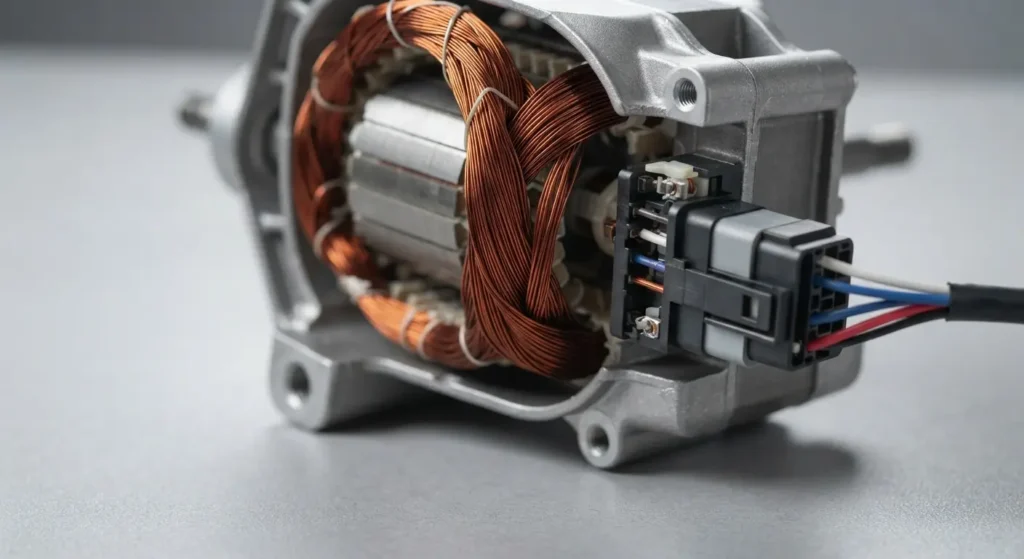
Board-side faults are more electronic in character. They tend to be silent, random, or oddly specific.
No sound at all from the motor. The panel responds, the door locks, and water may even fill, but the moment the cycle reaches the point where the drum should move, nothing happens. A silent motor with a lit display suggests the board never sent power, though a broken connector can look identical.
The fault repeats at the same point. If the washer fails the same way at the start of every spin, the pattern points toward the board’s power stage or its speed-feedback input rather than a worn motor.
Intermittent behavior with no mechanical clue. The drum turns by hand without drag, the belt looks fine, yet the machine works one load and not the next. Heat-sensitive solder joints and failing power components on the board can behave this way.
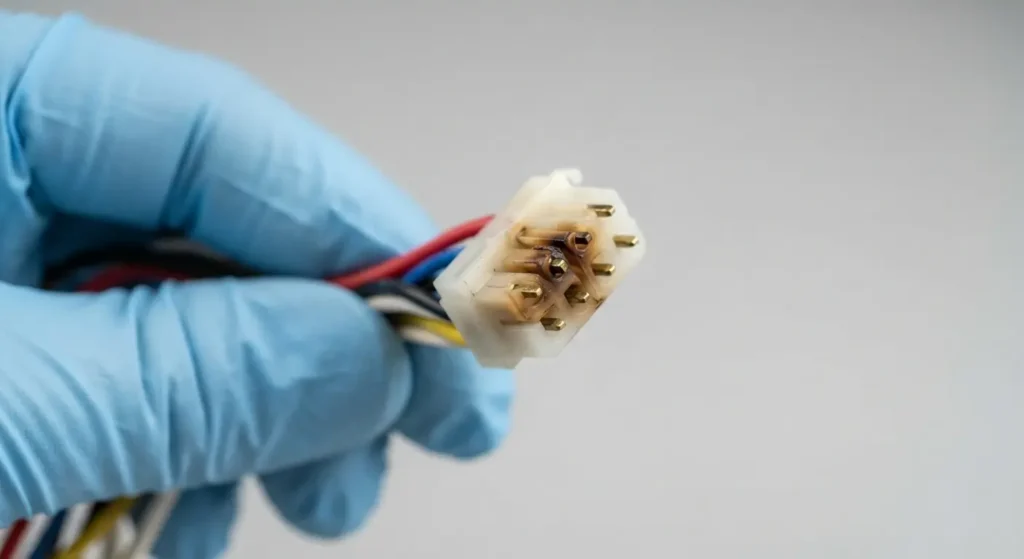
Visible damage on the board. Darkened or burnt areas, a swollen component, or corrosion on a connector all raise suspicion. Moisture is a frequent culprit, since a motor control board sits low in many cabinets where a slow leak can reach it.
Other electronic oddities are appearing alongside. A washer that also shows unresponsive buttons or random resets may have a board or power supply problem that isn’t motor-specific.
4. Side-by-Side Diagnosis Table
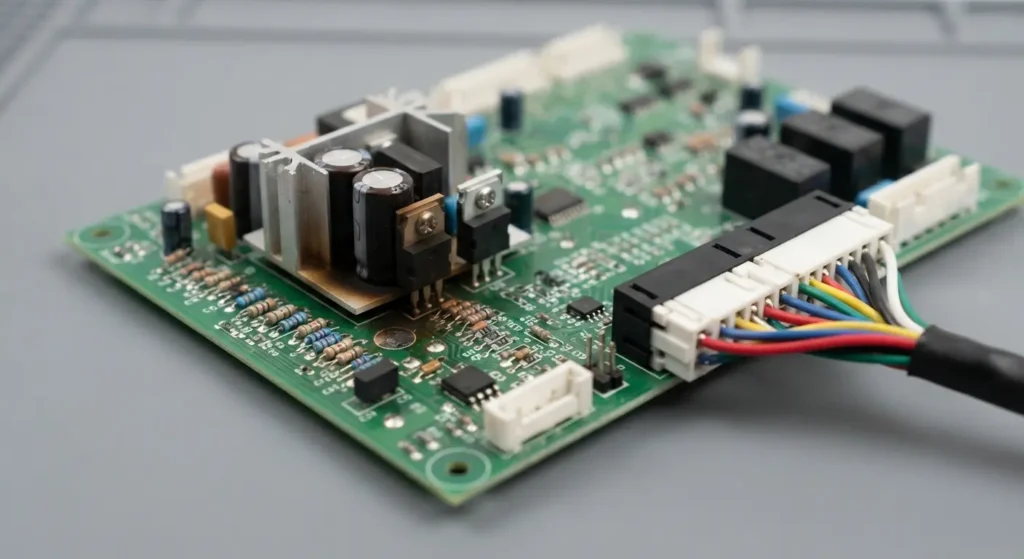
Use this as a sorting aid rather than a verdict. Each symptom has a most likely owner and a look-alike worth ruling out first.
| Symptom | Leans toward the motor | Leans toward the motor control board | Rule out first. |
| Hum, the drum doesn’t turn. | Windings or start component | Rare | Jammed drum or seized bearing |
| Complete silence at spin | Open winding or broken connection | Board not sending power | Loose motor connector |
| Burning smell | Overheated windings | Rare | Slipping or glazed belt |
| Stops mid-cycle, restarts after resting | Thermal protector tripping | Overheating board | Overloaded or unbalanced load |
| Fails at the same step every cycle | Less likely | Power stage or feedback input fault | Door lock or lid switch issue |
| Random, intermittent fault | Loose wiring | Heat-sensitive board faults | Corroded connectors |
| The motor runs, and the drum stays still. | Not the motor | Not the board | Broken or off-track belt, loose coupling |
The last row matters more than it looks. A motor that spins freely while the drum sits still has already told you the electronics and windings work. The fault is in how the motor’s turning reaches the drum.
5. The Look-Alikes: Belt, Bearing, Overload, and Unbalanced Loads
Mechanical drag is the biggest source of false “motor error” diagnoses. A motor and board can both be healthy and still fail the moment something makes the drum hard to turn, because the board reads the struggle as a fault.
The belt. A belt that has glazed, stretched, or slipped off lets the motor run while the drum barely moves, and the speed mismatch can set off a fault.
The tub bearing. A failing bearing makes the drum hard to rotate and often announces itself with a deep rumble or grinding during spin. A motor forced to drag a rough bearing will overheat and trip its protector, and it will look like a bad motor.
An overloaded or soaked load. A comforter or a drum stuffed beyond its capacity can pull enough current to push a healthy motor into thermal protection. If the fault shows up only with big loads, that is a strong hint.
Unbalanced loads. Lopsided laundry makes the machine pause or slow its spin to redistribute. The delay looks like a stall, but it’s a protective behavior.
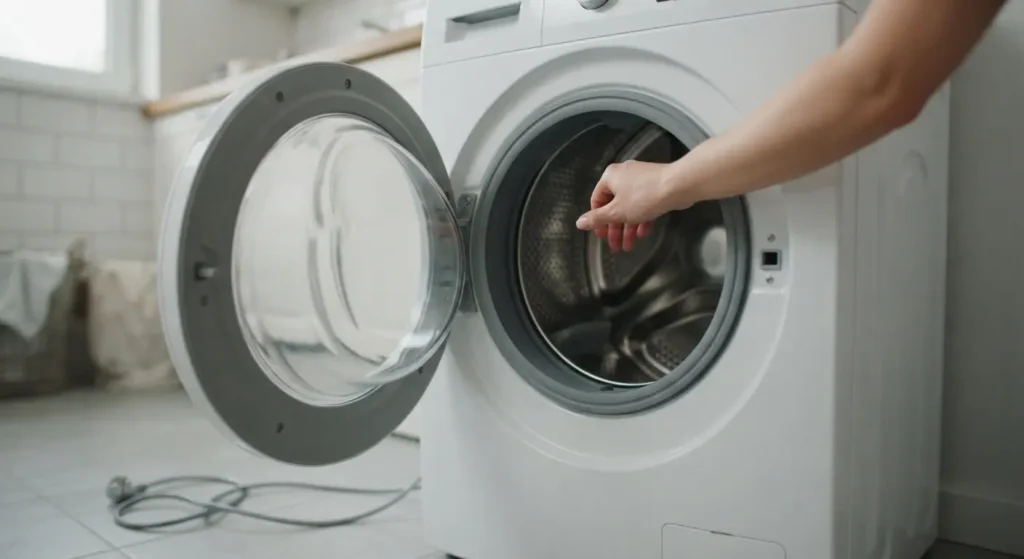
| A truth test any homeowner can do With the machine unplugged, does the empty drum turn smoothly by hand, or does it feel gritty, stiff, or notchy? Smooth rotation shifts suspicion toward the electronics, while a rough feel shifts it toward the bearing or a mechanical jam. |
6. What a Technician Checks First
Before opening any wiring, a technician usually looks for the cheapest explanations in a specific order, and the order itself is the insider knowledge.
- Hand rotation of the drum. It takes seconds and separates mechanical drag from an electrical fault.
- The belt, if the model has one. It confirms whether the motor’s motion is reaching the drum.
- Connectors at the motor and at the board. A connector that has loosened, overheated, or corroded can mimic a failed part. The telltale sign is brown or melted plastic around the pins.
- Resistance of the motor windings against the spec for that model. A winding reading far outside the expected range, or a short to the motor housing, condemns the motor. A normal reading shifts attention to the board and sensor.
- The speed sensor signal path. A motor that spins but reports no speed can trigger a fault just as readily as one that doesn’t spin.
The question technicians ask that homeowners rarely consider is “Did anything leak, or did the machine get unusually wet or moved recently?” Water that reached the board or a connector explains a surprising number of faults that otherwise look like dying motors.
7. The Trap: Why a Replacement Board Sometimes Fails Again
Here’s the experience-based warning that generic guides skip. A motor with a shorted or damaged winding can pull abnormal current, and the control board’s power stage is the part that pays for it. Replace the board without testing the motor, and the new board can inherit the same overload and fail soon after, sometimes on its first heavy load.
The same logic applies in reverse. A motor swapped in when the real fault was a damaged board will not fix anything, and it leaves you holding a part you didn’t need.
| The practical rule When the board looks burned, test the motor before installing a new board. If both parts are suspect, the repair may need to address both together. A board that shows heat damage near the motor output terminals is especially suspicious, because that is where an overloaded motor leaves its mark. |
8. Is It Worth Fixing?
The economics depend on which part is actually bad and how old the washer is. A drive belt or a loose connector is cheap. A single motor or board is a moderate cost. Both parts together, on a machine that is many years old, can approach the price of a new washer.
Three details usually tip the decision:
- The condition of the bearing. If the tub bearing is the real cause of the motor strain, a new motor only delays the problem, and the bearing repair itself is a major job.
- Signs of water damage. Corrosion on the board, connectors, or cabinet base suggests more failures are coming.
- Whether the fault is isolated. A single clean fault on an otherwise solid machine is worth fixing. A washer with several unrelated problems is a candidate for replacement.
If the diagnosis lands cleanly on one component, the repair is often worth it.
Frigidaire Washer Maintenance Schedule: 5 Easy Cleaning Tips
9. FAQ: Frigidaire washer motor error
1. What does a Frigidaire washer motor error usually mean?
It means the control board isn’t seeing the motor behave the way it expects, either because the motor didn’t turn, turned at the wrong speed, or failed to report its speed. The cause can be the motor, the board, the wiring, or mechanical drag on the drum.
2. How can I tell a bad motor from a bad motor control board?
A motor that hums without turning, smells hot, or overheats and recovers points toward the motor. A completely silent motor, a fault at the same step every cycle, or visible burn marks on the board point toward the board. Rough drum rotation by hand points to the mechanics instead.
3. Can a bad belt cause a motor error?
Yes. If the motor spins but the drum lags behind, the speed mismatch can be read as a fault. Check the belt before blaming the electronics on belt-driven models.
4. Why does my washer work for a while and then stop mid-cycle?
A thermal protector in the motor may be tripping from heat, and it resets after the motor cools. The heat can come from a tired motor, a heavy load, or a failing bearing making the motor work too hard.
5. Can a failing bearing damage the motor?
It can stress it. A rough bearing forces the motor to pull more current, which raises its temperature and can eventually damage the windings or the board that feeds them.
6. Should I replace the control board or the motor first?
Neither one should be replaced on a guess. Testing the motor windings before installing a new board prevents the new board from being damaged by an existing motor fault.
7. Is this safe to diagnose at home?
Observation is safe: listening, smelling, noting when the fault occurs, and turning the unplugged empty drum by hand. Opening panels and testing electrical parts requires unplugging the machine and care around live components, so call a licensed technician if you are unsure or see burned wiring.
10. Conclusion
A Frigidaire washer motor error is a symptom that points at a system, not a verdict on one part. Listen to what the machine does, note when it fails, rule out the belt and the bearing, and let the pattern tell you which side of the drive system to suspect.
Before you spend on a part, write down your symptom, match it against the table above, and decide whether the fix is worth it for your machine’s age. When you’re ready to act on the diagnosis, follow the repair walkthrough, then browse the rest of TechElectronicLive.com for more washer and refrigerator guides, and share this one with anyone who has already bought the wrong part.