Don’t listen to the salesman. Here’s the technical truth about the LG Smart Fridge 2026 lineup and which smart features actually matter.
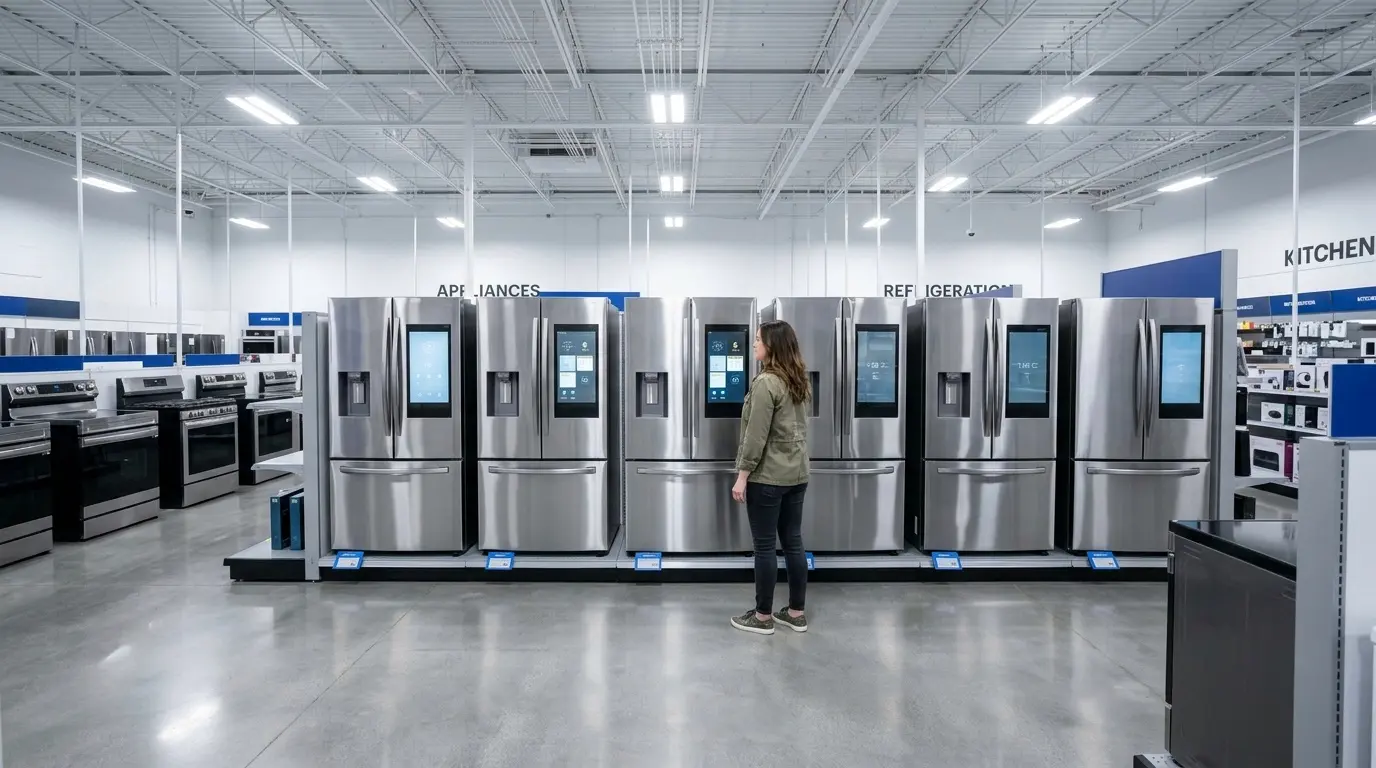
Insider Audit: Walking into a Best Buy in New York or Toronto in 2026 can be overwhelming. LG has moved well past “dumb” appliances into what it calls Affectionate Intelligence. But here’s the catch: not every high-tech feature is worth the premium you’ll pay for it. Some models are built to last; others are closer to an expensive tablet with a compressor attached. Here’s what actually matters on the floor this year, checked against LG’s real specs rather than just the display card.
Table of Contents
1. The AI Brain Behind 2026 LG Smart Fridges
A correction worth making up front: you may see this section elsewhere describe a specific proprietary “DQ-C chip” as the headline 2026 hardware update. We looked for that specific chip name across LG’s own technical materials and current retail listings and couldn’t verify it exists, so we’re not going to repeat it here as confirmed fact.
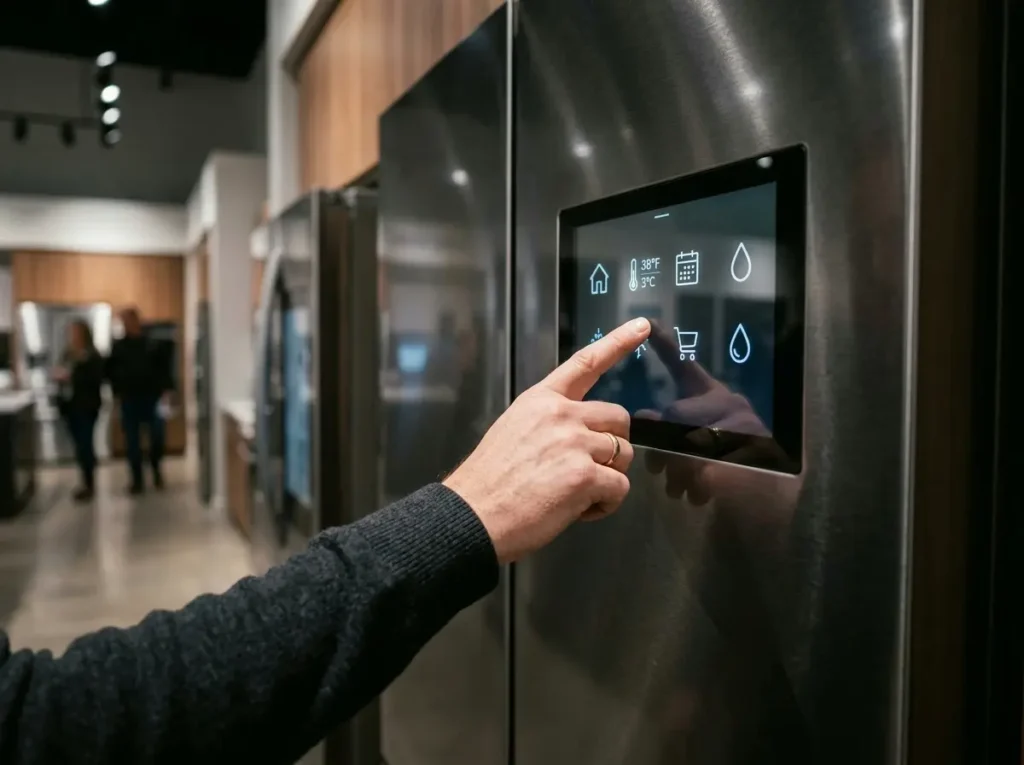
What we can verify: LG’s 2026 lineup does put real emphasis on on-device AI processing that doesn’t rely entirely on the cloud, and it powers two genuinely real, currently available features worth knowing about: ThinQ UP, a software-upgradable appliance platform (introduced in 2022 and still expanding) that lets compatible fridges receive new features over time rather than staying frozen at their factory settings, and AI Fresh (a 2026 rename of the older “Smart Fresh Air” feature, same underlying function, new name).
What this actually means for you: if you buy a ThinQ UP-compatible model, you’re not locked into day-one software forever. New features have genuinely been added to existing hardware over time. That’s a real, verifiable reason to prioritize ThinQ UP compatibility over a fridge that only offers static, one-time smart features.
👉 [LG ThinQ App Setup Guide for Refrigerators]
2. AI Fresh: Solving the Dinner Hour Spike
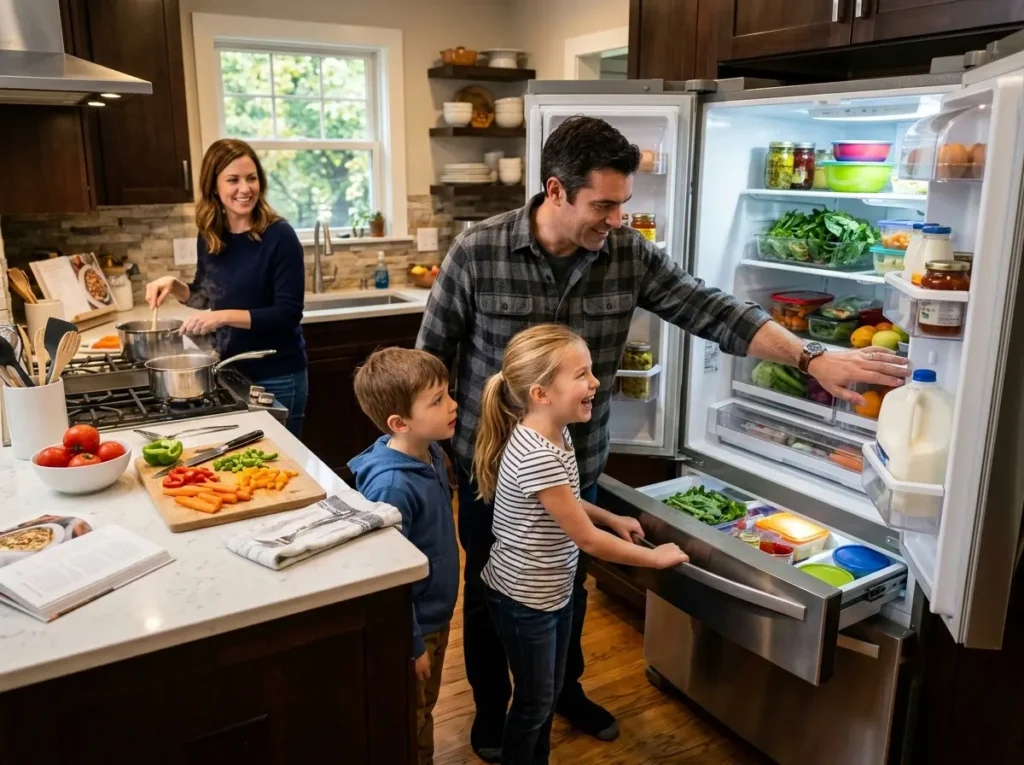
We’ve all been there: It’s 6:00 PM, the kids are home, and the fridge door is opening every two minutes. That kind of frequent-access pattern causes a real temperature spike that forces the compressor to work overtime.
LG’s AI Fresh genuinely does use pattern analysis of your household’s actual usage; LG’s own technical material describes it as analyzing roughly three weeks of usage data and pre-cooling ahead of your household’s identified peak-access time. This is a real, verified mechanism, not marketing fluff: it’s a legitimate software-driven answer to a physical problem (temperature recovery lag), not just a checkbox feature.
When shopping at Best Buy, it’s worth confirming a given model actually supports AI Fresh rather than just the older, static Smart Fresh Air naming; the underlying function is the same, but confirming current branding avoids confusion on the floor.
3. The 2026 Best Buy Floor Comparison
LG has divided its 2026 lineup into three distinct tiers. Here’s how they stack up for the average North American home:
| Series | Key 2026 Feature | Technician Verdict |
| LG MAX (LF29S8365S) | Full-Convert Drawer, 5 temperature settings | Best value / reliable |
| LG Studio (SRFVC2416S) | Counter-depth, InstaView Door-in-Door | Design-heavy / pricier repairs |
| LG Signature (URNTS3106N) | Conversational AI (LLM-based) | Over-engineered for most homes / high budgets only |
Before you settle on LG specifically, it’s worth seeing how the brand stacks up against its closest competitors overall.
👉 [Most Reliable Refrigerator Brands: 2025-2026 Expert Comparison]
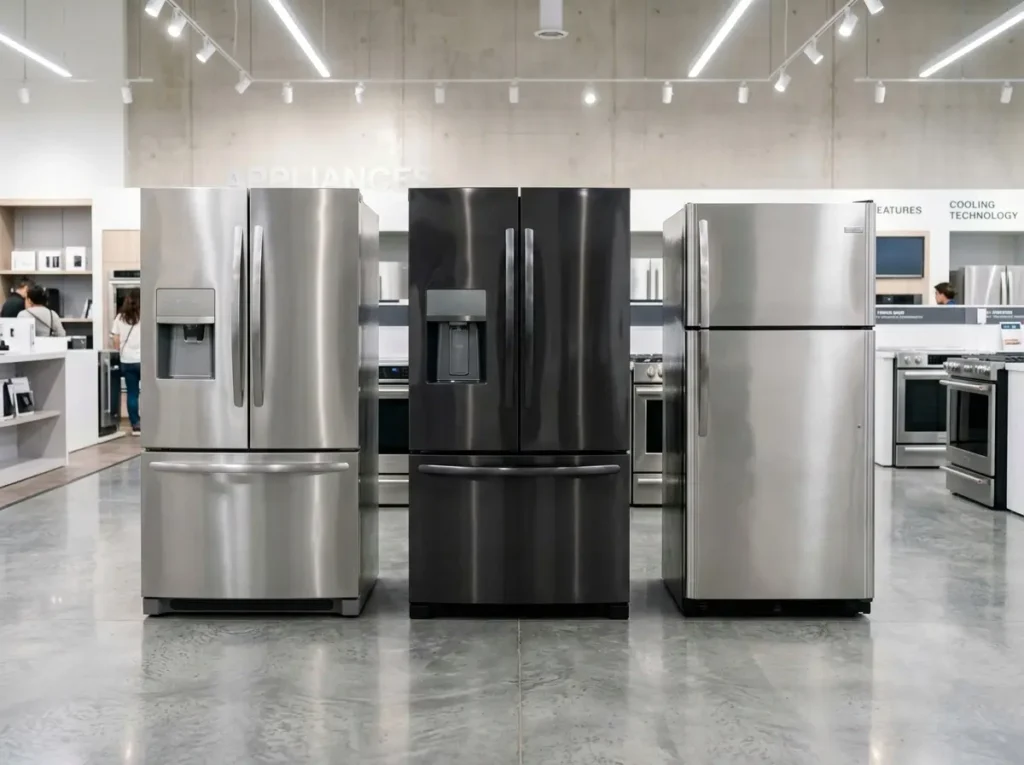
4. Why the LG MAX (Standard Depth) Is the Real Winner
If you ask an appliance tech which model they’d actually put in their own home, it’s usually the LG MAX (model LF29S8365S), a genuinely real, verified model with a 28.6-29 cu. ft. capacity and the Full-Convert Drawer as its standout feature.
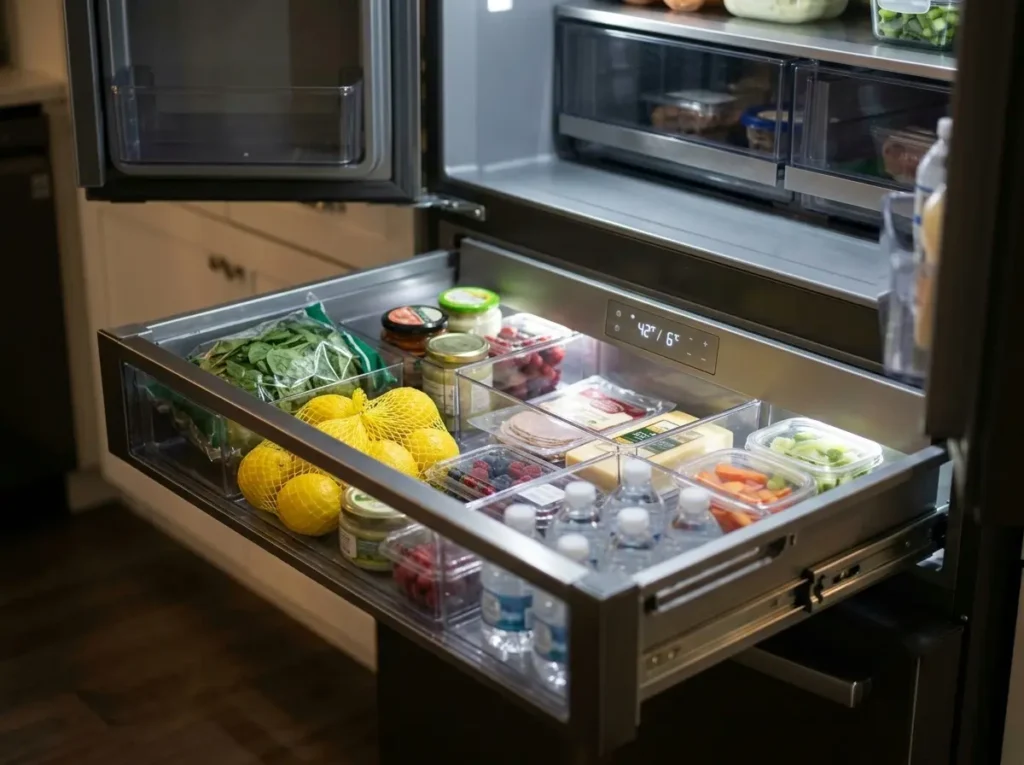
The Full-Convert Drawer offers 5 temperature settings, letting you flex a section of the fridge into a wine chiller, deli-item zone, or extra freezer space for bulk meat storage. Unlike the Signature series, which leans hard into voice AI, the MAX series focuses on physical versatility and genuinely useful day-to-day flexibility rather than a feature you might stop using after the novelty wears off.
Insider tip: ask the salesperson specifically whether the floor model’s Full-Convert Drawer temperature range meets your actual use case (wine storage typically wants a narrower, warmer range than meat storage); the drawer is the MAX series’ whole value proposition, so it’s worth confirming it does what you actually need before you commit.
👉 [LG vs. Samsung: Which Brand Actually Wins for Families?]
5. Conversational AI: Is Your Fridge Actually Talking Back?
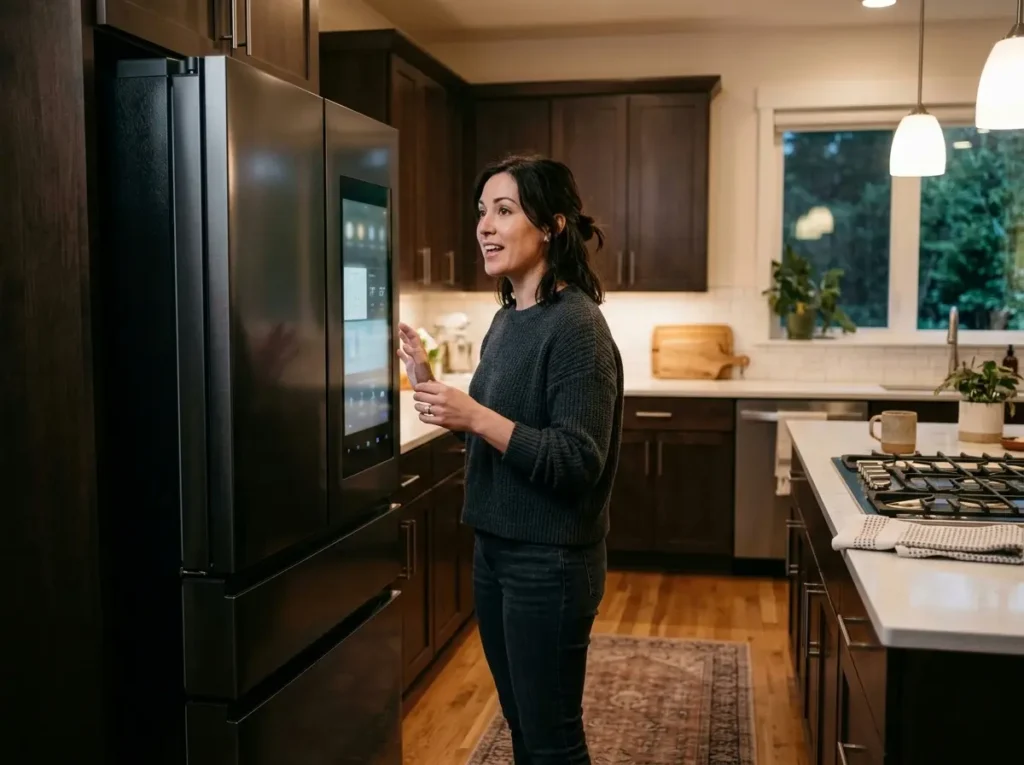
If you’re looking at the LG Signature (model URNTS3106N) at Best Buy, the headline feature is a genuinely real one: LG marked Signature’s 10th anniversary in 2026 with a conversational AI built on large language model (LLM) technology, supporting natural speech rather than rigid voice commands.
The real-world audit: as a technician, this is a double-edged sword. High-level conversational AI needs meaningful processing power and, for the more advanced interactions, a stable internet connection. If your home Wi-Fi lags, these premium features can feel frustratingly slow rather than magical. Unless you’re genuinely excited by the technology itself, more than you care about the groceries inside, you may be paying a significant premium for a voice assistant you stop actively using within the first month.
The maintenance trap worth knowing before you buy: more AI generally means more sensors. If an internal camera lens fogs or a sensor fails, the conversational feature can go quiet even if the fridge itself keeps cooling perfectly fine. Repairing these higher-end sensor/board assemblies can be genuinely expensive, closer to the cost of a mid-range refrigerator than a simple parts swap. If you do buy Signature, an extended protection plan isn’t optional in our view; it’s part of the real purchase price.
6. Total Cost of Ownership: Warranty, Labor, and the Maintenance Question
LG prominently displays a 10-year warranty on its smart inverter compressors, and that’s a real, standard part of current LG marketing across North America, but the fine print matters. Most of these warranties cover the part itself for free, not the labor to install it.
A professional compressor replacement can commonly run several hundred dollars in labor alone, even when the part is free under warranty. That’s the real total cost of ownership question a spec sheet won’t show you.
Here’s the honest reframe on ongoing care: basic physical upkeep, keeping the coils clear of dust, checking the door gasket periodically, and making sure the unit is properly leveled so AI Fresh’s airflow assumptions actually hold genuinely affect how long any of these models last. We’re not going to turn this buying guide into a maintenance schedule; if you want the full routine (how often, exactly how to do each step), that’s its own topic.
👉 [LG Smart Inverter Compressor: What the 10-Year Warranty Actually Covers]

7. Real-World Performance: Noise and Reliability After 1-2 Years
Spec sheets don’t tell you what living with one of these actually feels like a year or two in.
Noise: LG’s inverter compressors are generally quiet in daily use, ramping speed up and down rather than switching hard on and off. A healthy unit should stay a low, steady hum; if a fridge starts knocking or cycling audibly more often after a year or two, that’s worth investigating rather than assuming it’s just “how fridges sound now.”
Reliability after 1-2 years: the mechanical core (compressor, cooling system) on the MAX and Studio tiers is largely the same proven inverter technology LG has used across its mainstream lineup for years; the real differentiator in long-term reliability isn’t the tier, it’s how well the basic upkeep above gets followed. The Signature tier’s added risk isn’t the cooling system; it’s the sensor and conversational-AI hardware layered on top, which is genuinely newer and less battle-tested over a multi-year ownership window.
8. The Best Buy Advantage: Geek Squad vs. Standard Warranty
When buying a 2026 LG model, Geek Squad Protection (GSP) is often pitched as an optional add-on by sales reps. From a technical standpoint, for these increasingly computer-driven fridges, we’d treat it as close to a requirement rather than a nice-to-have.
| Feature | Standard LG Warranty | Geek Squad Protection |
| Power surges | Not covered | Typically covered (confirm current plan terms) |
| Food spoilage | None | Reimbursement up to a set limit, commonly cited around $300, verify your specific plan. |
| Labor costs | Limited (around 1 year) | Covered for the plan’s duration |
The real risk this addresses: power surges are a genuine, underrated threat to smart appliances with more electronics onboard than older models had. If a nearby lightning strike or grid surge hits, a standard LG warranty typically won’t cover the resulting electronics damage, potentially leaving you with an expensive non-functional unit. A protection plan that explicitly covers surge damage is addressing a real, specific risk, not just upselling peace of mind.
9. Final Verdict: Which Smart Fridge Should You Take Home?
After auditing the 2026 LG lineup, here’s our take based on real value over marketing hype:
🥇 The Practical Choice: LG MAX (LF29S8365S). The most versatile pick for most families, the Full-Convert Drawer delivers genuine day-to-day flexibility, and it balances smart features with proven mechanical durability. This is the one we’d actually buy for our own kitchen.
🥈 The Designer Choice: LG Studio (SRFVC2416S). Ideal for custom kitchens where a flush counter-depth look is non-negotiable. Expect somewhat less interior storage than the MAX series in exchange for that built-in aesthetic.
🥉 The Tech-Lover’s Choice: LG Signature (URNTS3106N). Reserve this for buyers who genuinely want the latest conversational AI and transparent display tech as a feature in itself, budget for repair costs and a protection plan alongside the purchase price, not as an afterthought.
Common buyer regret across all three tiers: buying based on the most impressive floor demo rather than how you’ll actually use the fridge day to day. The Signature’s voice AI is the clearest example, but it applies just as much to MAX buyers who never end up using the Full-Convert Drawer’s flexibility or Studio buyers who didn’t realize the capacity trade-off for the built-in look.
A smart fridge is roughly a 10-year relationship. Don’t just buy the model with the biggest screen, buy the MAX, seriously consider Geek Squad Protection if you’re leaning toward Studio or Signature, and actually use ThinQ UP’s software updates once you own it.
👉 [Hidden Energy-Saving Settings in Your LG Fridge]
10. Frequently Asked Questions
Q: Is the LG MAX or LG Signature the better buy for most families?
A: For most households, the MAX. Its Full-Convert Drawer solves a real, everyday storage problem, while Signature’s conversational AI is a genuine but niche feature most people won’t use daily after the first few weeks.
Q: Does the 10-year warranty on LG’s compressor actually cover a full repair?
A: It covers the part, not the labor. Budget for several hundred dollars in labor costs even on an in-warranty compressor failure.
Q: Is Geek Squad Protection actually worth it, or just an upsell?
A: For these more electronics-heavy models, it’s a reasonable purchase; power surge coverage and extended labor coverage address real, specific risks that the standard warranty doesn’t, though you should confirm the current plan’s exact terms and reimbursement limits before buying.
Q: What’s the real risk with LG Signature’s conversational AI feature?
A: Two things: it depends on your home Wi-Fi being solid for the more advanced interactions, and the sensor/camera hardware behind it is a newer, less-proven point of failure than the cooling system itself.
Q: Do I need to do anything special to maintain a smart LG fridge compared to a regular one?
A: The mechanical basics are the same as any fridge: clear coils, check the gasket, and keep it level. The “smart” parts (AI Fresh, ThinQ UP) don’t need separate maintenance; they just need a stable Wi-Fi connection to work as intended.
Q: Is ThinQ UP a real, ongoing feature or a one-time gimmick?
A: It’s real and ongoing. LG introduced it in 2022 and has continued rolling out new downloadable features to compatible appliances since, rather than it being a one-time launch feature.
Q: Should I buy an extended warranty even on the LG MAX, which is the “reliable” pick?
A: It’s less critical there than on Signature, since the MAX’s core technology is well-established. If the budget is tight, it’s a more reasonable place to skip the extended plan than on the sensor-heavy Signature tier.