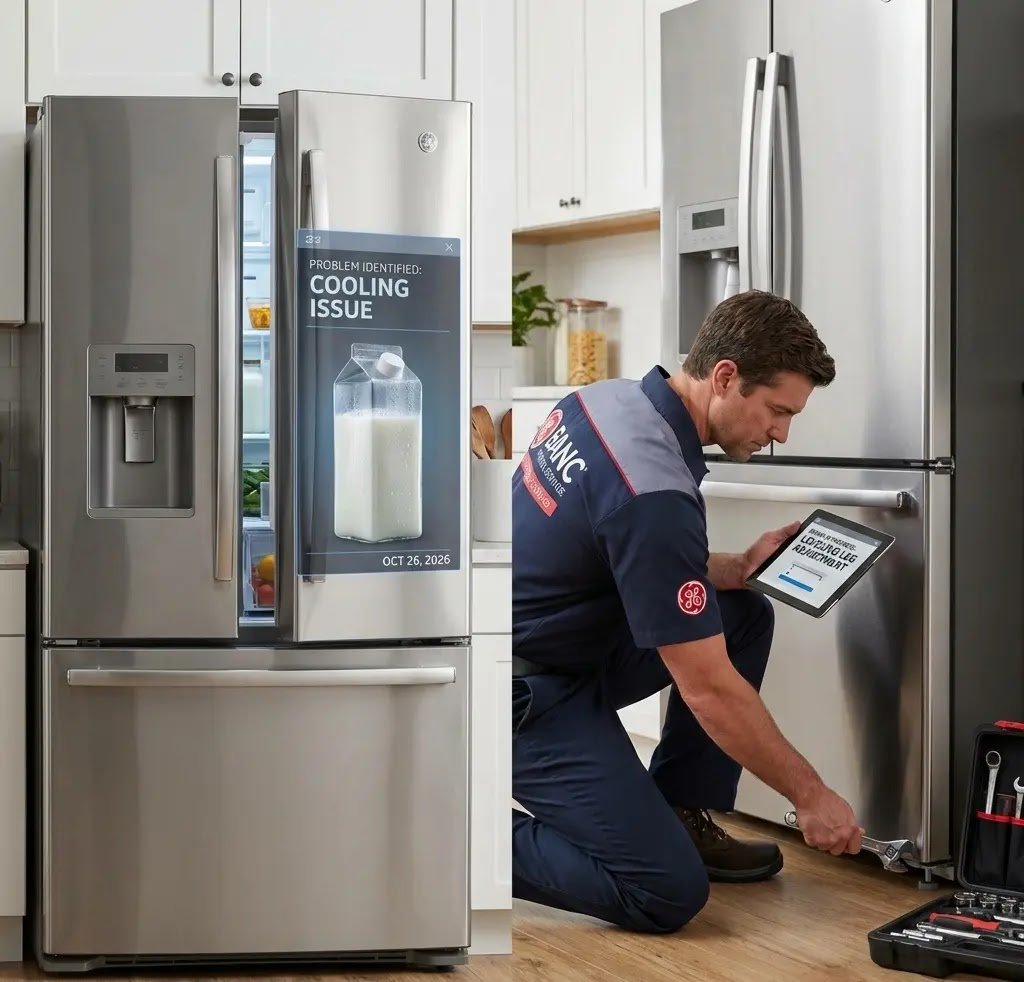
⚡ The 3-Second Fix: Most GE Fridge Door not Closing properly because the Fridge Is Too Flat. Tilt the fridge back by adjusting the front legs 0.5 inches higher than the back. This uses gravity to pull the door shut automatically.
Look, I get it. It’s incredibly frustrating to close the door, walk away, and return 10 minutes later to find it popped open, your milk sweating, and your electricity bill climbing. This “ghost door” phenomenon is more than an annoyance; it’s a silent killer for your compressor.
A bad seal or a misaligned door is often the hidden reason behind a [GE refrigerator not cooling properly 👉 “GE Refrigerator Not Cooling? 7 Causes and Fixes”]. Before you call a repairman and drop $200 on a service fee, listen to me: most GE door issues take 5 minutes and $0 to fix.
Table of Contents
⚠️ Safety First: Read This Before You Start
This is a low-risk repair, but “low-risk” doesn’t mean “no-risk.” Take 30 seconds to read this before you grab a wrench:
- Unplug the fridge before removing the base grille, working on the bottom hinge, or handling the door closure cam. You’re working right next to the compressor’s power leads and, on French door and bottom-freezer models, the icemaker wiring harness.
- Keep the hairdryer away from water. Never use the hairdryer trick on the gasket if there’s standing water on the floor, and never point it at the water line or icemaker tubing behind the door.
- Get help with heavy doors. A full-size GE French door or profile door with shelving and bins loaded can weigh 60–80+ lbs. If you’re removing the door itself (not just adjusting legs), have a second person support it; don’t let it swing on one hinge.
- Watch for sharp edges. A cracked plastic door cam can leave sharp, brittle edges. Wear gloves when pulling the old one out.
- Know when to stop. If the hinge pin is sheared, the door frame is visibly warped, or the door is misaligned vertically by more than about 1/4 inch even after leveling, this has moved beyond a DIY fix; see the Call a Pro section below.
The Honest Mechanic Tool List
You don’t need a heavy toolbox. Grab these household items before we start:
| Tool | Needed For | Have One Already? |
| Spirit level (or phone leveling app) | Fix #1, Tilt | Usually yes. |
| Adjustable wrench | Adjusting the legs | Usually yes. |
| Hairdryer | Fix #2, Gasket | Usually yes. |
| Mild soap & warm water | Cleaning the gasket | Usually yes. |
| 1/4″ nut driver | Only if replacing the door cam | Sometimes |
| Food-grade silicone lubricant | Fix #5, Hinges | Food-grade silicone lubricant spray |
| Digital leveling tool (optional but faster) | Fix #1, precision tilt | Digital Angle Finder / Level |
How to fix a GE fridge door not closing and that won’t stay shut using leveling legs
1. Why Does My GE Fridge Door Not Close Properly? (The Lazy Tilt)
GE refrigerators are not designed to sit 100% level with the floor. If your fridge is perfectly flat, the door has no momentum to stay closed. This is the most common mistake homeowners make.
The Fix: The Self-Closing Tilt
- Remove the base grille at the bottom (it usually snaps off).
- Use a wrench to rotate the leveling legs clockwise to raise the front.
- Aim for a slight backward tilt, about 0.5 inches higher in the front than the back.
- Test it: open the door halfway and let go. It should swing shut on its own.
Insider tip: Don’t eyeball this. A 0.5-inch tilt over a ~28-inch-wide fridge is roughly a 1-degree angle, small enough that “looks about right” is usually wrong in one direction or the other. A $10 digital angle finder on top of the fridge cabinet takes the guesswork out and takes 20 seconds.

2. Is the Gasket the Culprit? (The Hairdryer Trick)
The gasket is the magnetic rubber seal. Over time, it gets hard, flat, or dirty, losing its grip. If the seal feels stiff, it won’t pull the door into the frame.
The Pro-Hack: Use a hairdryer on a low heat setting. Run it along the folded or crushed areas of the rubber. This softens the material, making it flexible enough to stretch and grab the magnetic strip again.
⚠️ Pro-Tip: Never use sharp objects to clean the gasket. A tiny puncture ruins the vacuum seal, and you’ll be forced to buy a $100+ replacement part.
The Dollar Bill Test
Close the door on a dollar bill. If you can pull the bill out with zero resistance, your seal is dead. If it’s dirty, scrub it with warm, soapy water. Dried juice spills are like glue that forces the door back open.
A dirty gasket isn’t just about sticking; it’s a mold magnet. If your seal is covered in black spots, use our specialized [👉 “How to Clean & Restore a Moldy Refrigerator Gasket”] guide to kill the bacteria safely.

3. Stop Overloading the Door Bins
If you own a GE Profile or Cafe model, those door bins are huge. But just because you can fit two gallons of milk in the door doesn’t mean you should.
The Reality: Constant heavy weight causes the hinges to sag or bend over the years. If your door looks crooked compared to the freezer door, move the heavy jugs to the main shelves. This immediately relieves pressure on the alignment pins.
4. The Hidden Plastic Part: The Door Closure Cam
Does your door make a “khat” sound (if you hear this, your plastic cam follower is almost certainly cracked) or a clicking sound when it opens? Does it feel like it’s dropping slightly? Inside the bottom hinge of most GE models is a small plastic part called a closing cam.
These are designed to wear out so your expensive metal hinges don’t. If the plastic is cracked, the door won’t ride up and lock into place. These parts typically cost under $15 and are a 10-minute DIY swap; remember to unplug the fridge first (see Safety First).
Insider tip: Before you order a replacement cam, do the “lift test”: with the fridge unplugged and the door closed, grip the top outer corner of the door and gently lift. If you feel more than a few millimeters of vertical play, it’s the cam, not the gasket; this test alone saves a lot of people from buying the wrong part.

Quick Diagnostic (The Cheat Sheet)
| What You See/Hear | The Likely Cause | The 5-Minute Fix |
| The door bounces back open. | Leveling is too flat. | Raise front legs 0.5 inches. |
| Clicking/popping sound | Broken door cam | Replace the plastic cam follower. |
| Visible gaps in the rubber | Stiff/warped gasket | Hairdryer and soap cleaning |
| The door sits lower than the others. | Hinge sag | Redistribute weight to the main shelves. |
5. Dirty Hinges & Debris
Sometimes, the fix is just basic hygiene. Old grease mixed with dust creates a sludge in the hinge. Clean the top and bottom hinges with a damp cloth and apply a small amount of food-grade silicone lubricant. Avoid WD-40, as it can degrade the plastic cams over time.
2025 vs. 2026 GE Models: The SmartHQ Difference
If you have a 2026 GE model, you likely have SmartHQ integration. These newer fridges have magnetic sensors that can detect a very small gap and send a “Door Ajar” notification to your phone. If the app says the door is open, but it looks closed, check the leveling legs first before assuming the sensor is broken; a physically misaligned door is the #1 cause of false Door Ajar alerts. For a full breakdown of what each SmartHQ alert means, see our [👉 “SmartHQ App Alerts and Notifications Explained“].
Parts & Compatibility
| Model Series | Common Part Needed | Difficulty |
| GE Standard Top-Freezer | Leveling leg | Very Easy |
| GE Profile / Cafe | Door cam | Moderate |
| GE French Door | Gasket | Easy |
A note on part numbers: Part numbers for these components can change between production runs, and GE has been known to supersede older part numbers with updated equivalents. Rather than list a specific part number here that could be outdated or wrong for your exact model by the time you read this, always confirm the correct part number against your fridge’s model/serial tag (usually inside the fridge on the left wall) before ordering. This avoids the single most common return reason: “wrong part for my model.”
Summary: When to Call a Pro?
If you’ve leveled the fridge, fixed the gasket, and replaced the cam, but the door still won’t shut, the frame itself might be warped, or the hinge pin might be sheared off. In these rare cases, it’s time to call GE Factory Service; this is beyond a DIY fix and typically requires a frame replacement.
Frequently Asked Questions
Q: Why does my fridge door pop open when I close the freezer?
A: This is called the bellows effect. When you slam the freezer, air is pushed through the vents and pops the fridge door open. If your fridge is tilted 0.5 inches back (Fix #1), gravity will pull it right back shut.
Q: Can I use WD-40 on my fridge hinges?
A: No. WD-40 can attract dust and eventually gunk up the hinge, and it can also damage the rubber seal over time. Stick to pure petroleum jelly or food-grade silicone lubricant.
Q: Is it okay if the seal feels hot to the touch?
A: Usually, yes. Most GE fridges run a thin heater wire behind the seal to prevent moisture buildup and condensation. However, if it’s uncomfortably hot rather than just warm, check and clean your condenser coils, that’s often a sign of restricted airflow, not a seal problem.
Q: How do I know if I need a new gasket or just a cleaning?
A: Use the Dollar Bill Test. If the bill stays tight when you pull it, your gasket is fine, just clean it with soapy water. If it slides out like butter, it’s time to replace it.
Q: Will tilting the fridge back affect the icemaker or water dispenser?
A: A 0.5-inch tilt is well within GE’s normal installation tolerance and won’t affect icemaker function. If you notice ice quality changes, it’s more likely a water line or filter issue, unrelated to the leveling adjustment.
Q: My door is closing fine on one side but sagging on the other; is that the same fix?
A: Not exactly. Uneven sagging on one side specifically (rather than the whole door drooping) usually points to a worn top hinge bushing rather than the leveling legs or the bottom cam. It’s still a DIY-level fix on most GE models, but it’s a different part than the ones covered here.
Q: How often should I clean and re-lubricate the hinges as preventive maintenance?
A: There’s no universal GE-published interval for this, so treat it as needed rather than on a fixed schedule. If you’re hearing new clicking or popping sounds, or the door feels stiffer to open than it used to, that’s your cue.
Conclusion
Most GE door problems are caused by simple gravity or a dirty seal, and by spending 5 minutes on leveling and cleaning, you can save your food and your wallet. If these DIY fixes don’t resolve it, it’s time to call an authorized GE technician rather than force it further.