
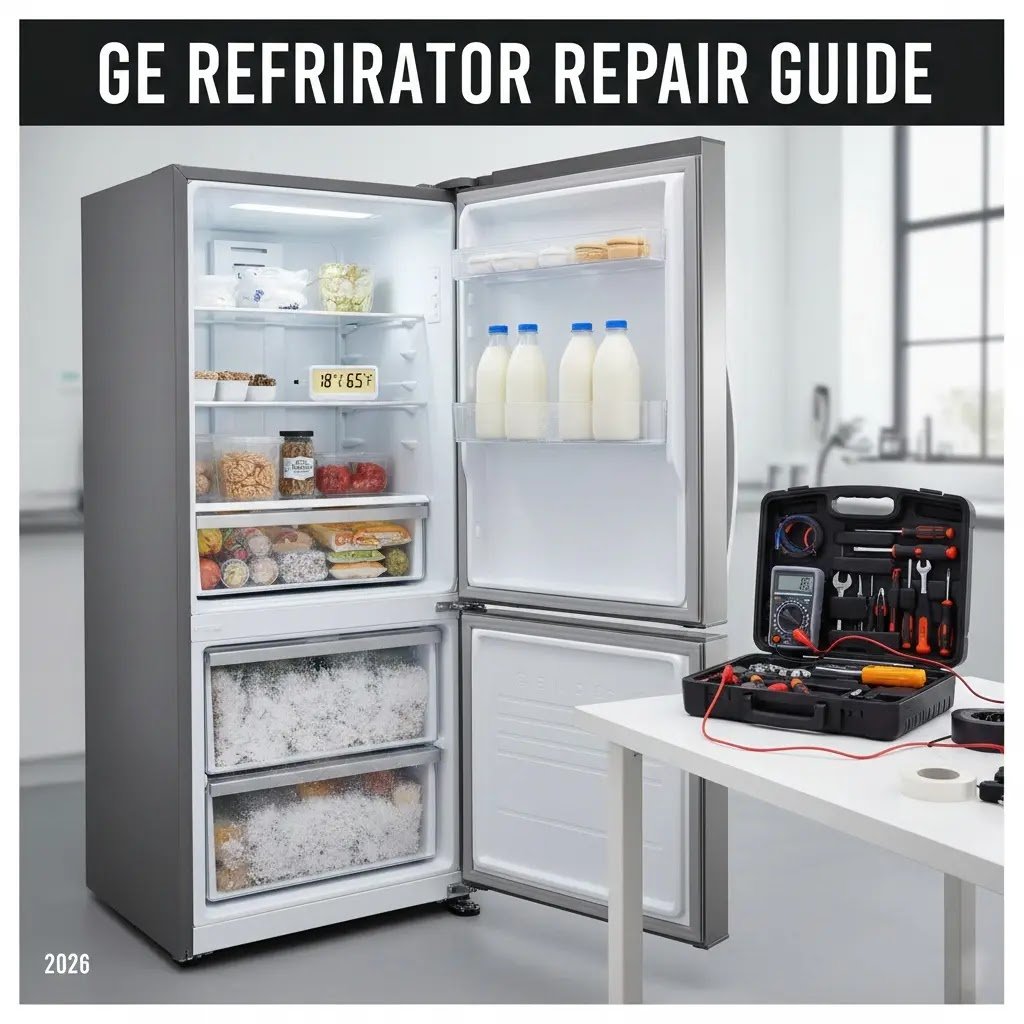
GE Fridge Warm, but Freezer Cold? If your freezer is a tundra but your milk is lukewarm, you don’t need a new fridge. You probably just have a blocked damper or a dusty coil. Let’s get our hands dirty and fix this before your GE fridge turns into an expensive cupboard for spoiled eggs.
Table of Contents
Why Your Freezer Is Cold But the GE Fridge Warm
Here’s a secret: many GE refrigerators make their cold air in one place, the freezer, and the fridge section simply borrows it. (Dual-evaporator models, such as some GE Café units, have a second cooling source for the fresh food side.)
A small fan blows cold air through a vent (the damper) into the fresh food section. If your GE refrigerator isn’t cooling but the freezer is cold, it means the cold air is being made, but it’s stuck behind a wall somewhere between the two compartments.
Quick Fix Summary: If your GE freezer is cold but the fridge is warm, check these three things first:
- Is the air vent blocked by food?
- Is the evaporator fan humming?
- Is there ice buildup on the back wall?
⚠️ Safety Before You Start
- Always unplug your refrigerator before touching any wires or moving fans, this applies to every step below, not just the ones that explicitly repeat it.
- If you use a hairdryer to melt ice on the coils, keep the refrigerator unplugged the entire time, use the lowest heat setting, and keep the dryer moving. Never hold it close to plastic parts, which can warp or melt. Use towels to catch meltwater. The safest method is to unplug the fridge, leave the doors open, and let the ice melt naturally for several hours.
- Watch for sharp edges around the back panel and coil housing when removing panels to inspect the fan or coils.
- Never test live electrical components with a multimeter while the unit is plugged in; unplug first, then follow the specific test in the defrost thermostat section below.
- Stop and call a licensed technician if the compressor itself seems to be the failure point, or if you’re not confident interpreting a multimeter reading; misdiagnosing an electrical fault and proceeding anyway risks further damage.
Culprit #1: The Evaporator Fan Birdie Test
The Diagnostic: Open your freezer door. Do you hear a faint humming? If not, the fan might be dead. In many GE GNE and GFE series, this fan is located behind the back panel of the freezer.
The Fix: A chirping, clicking, or grinding sound from the freezer can be an early warning that the fan motor is wearing out. It can also mean ice is rubbing against the blades, so check for frost first. If the fan area is clear and the noise continues, the motor may be failing. You’ll need to replace the motor to get that air moving again; check your specific model’s parts lookup for the correct part number rather than assuming a single number applies universally across all GE freezer generations.

Culprit #2: Frozen Evaporator Coils
The Science: Your fridge has a defrost cycle that melts ice off the cooling coils on a schedule. If the heater or timer breaks, ice builds up instead of clearing. This ice barrier blocks all airflow to the fridge compartment, which is exactly why the freezer can stay cold (it’s right next to the coils) while the fridge section starves for circulation.
The DIY Test: Remove the back panel inside the freezer. Do you see a mountain of frost? That’s your problem.
The Fix: The Fix: Unplug the refrigerator and let the ice melt completely (several hours with the doors open is safest). If you are in a hurry, use a hairdryer on low heat as described in the safety notes above. Either way, this is a temporary fix. If the ice returns, the defrost heater, defrost thermostat, or control board likely needs attention.
👉 [How to Clean Refrigerator Coils in 5 Easy Steps (2026 Guide)]

- Complete 3-Pack Vacuum Brush: Tackle tough lint and debris with our full set of specialized brushes. This comprehensive …
- Extra-Long 7.7ft Reach: Effortlessly clean deep into vents and ducts. The flexible, interlocking rods navigate twists an…
- Multi-Surface & Appliance Use: Clean more than just your dryer. The variety of brush heads perfectly cleans narrow gaps …
Culprit #3: The Damper Control (The Gatekeeper)
The Issue: The damper is a small motorized door. It opens and closes to let cold air into the fridge. On some GE models, including certain Profile units, this small door can get stuck in the closed position.
How to Check: Locate the vent between the fridge and freezer. Feel for airflow. If the freezer is running but no air is coming out of the vent, the damper is likely broken. You can usually pop the cover off and see if the plastic flap is snapped shut.

Culprit #4: The Defrost Thermostat
The Fix: This is a small clip-on sensor on the coils. If it thinks the coils are already hot, it won’t let the heater turn on at all, which means frost just keeps accumulating unchecked.
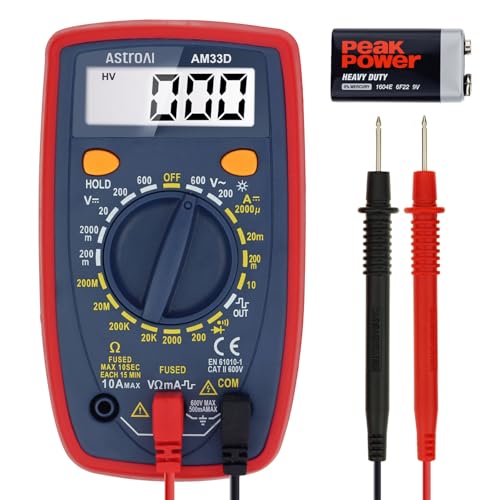
- Additional Tips – The following incorrect operations may cause the multimeter not to show results: Firstly, the plugs of…
- Versatile Digital Multimeter – Accurately measures AC/DC Voltage, DC Current, Resistance, and Diode. This Multimeter is …
- Troubleshooting with Accuracy – This Multimeter has a sampling speed of 2 times per second; Built-in a backlight LCD dis…
Technical Detail: If you have a multimeter, check it for continuity with the unit unplugged. A defrost thermostat should normally show continuity when it is cold. If it shows none, it has likely failed. Replace it with the exact part listed for your model number. It is usually an inexpensive part and can save you from replacing a refrigerator that is otherwise fine.

Culprit #5: The Dollar Bill Seal Test
The Rookie Mistake: Sometimes the fridge is fine, but the cold air is escaping. Check the rubber gasket around your door.
The Hack: Put a dollar bill in the door and close it. Pull it out. If it slides out with no resistance, your seal is weak. Clean the rubber with warm, soapy water, or replace it if cleaning doesn’t restore resistance.
If the dollar bill slides out without any resistance, don’t rush to buy a new gasket yet. Often, the door hinges just need a few minutes of leveling.
👉 [GE Refrigerator Door Not Closing Properly, Easy Alignment Fixes] covers whether a simple hinge adjustment can restore your airtight seal for free, before you spend money on a new gasket.
Is your fridge also leaking water while you’re troubleshooting cooling? Many GE owners face drip issues at the same time due to air in the lines or frozen valves.
👉 [GE Refrigerator Water Dispenser Leaking, Quick DIY Fix Guide] covers that separately if puddles are showing up alongside the cooling issue.
3 Things to Do Before Calling a Pro
- The Hard Reset: The Hard Reset: Unplug the GE fridge for about 10 minutes, then plug it back in. This can clear temporary glitches. If the problem returns, move on to the checks above.
- Clear the Vents: Did a box of pizza block the air vent? Move groceries a couple of inches away from the back wall to restore proper circulation.
- Check the Light: If the fridge light stays on when the door is closed, the heat from the bulb will actively work against your cooling, so this is worth ruling out before assuming a mechanical fault.
An appliance thermometer is worth keeping in the fridge permanently, since relying on the dial setting alone rather than an actual measured reading is one of the most common reasons people misdiagnose a cooling issue in the first place.

- The temperature range: -4°F to 122°F (-20°C to 50° C)
- Big Digits LCD Screen, Centigrade and Fahrenheit switch, easy to read.
- Magnetic back, stand and hook for hanging, easy to use.
2026 GE Model Comparison
Newer models handle cooling differently. Here’s how they stack up:
| Series | Cooling Type | Common Fail Point | DIY Difficulty |
| GE Café | Dual Evaporator | Control board glitches | Moderate |
| GE Profile | Single/Twin Chill | Damper motor failure | Easy–Moderate |
| GE GNE/GSE | Standard single | Evaporator fan ice-up | Easy |
This table is a general guide only. Common failure points and repair difficulty vary by model and production year.
Pro Tip: Dual evaporator models (like the Café series) have two separate cooling systems. If one side fails, the other usually keeps working, which means a Café model showing this symptom is more likely to have a damper or fan problem on one side than a total system failure, though the exact cause varies by model, a useful thing to know before assuming the worst.
FAQ
1. Why is my freezer fine, but the fridge is around 50 degrees?
This is usually a blocked vent or a broken air damper. Cold air is being produced correctly in the freezer but isn’t physically reaching the fridge compartment.
2. How can I tell if the compressor is failing?
Listen for a clicking sound every 2 to 5 minutes. If you hear repeated clicking but never the low hum of the compressor running, the start relay or compressor may be failing. This is a job for a licensed technician.
3. Does the SmartHQ app help with cooling issues?
On supported models, GE’s SmartHQ app can send alerts if the temperature rises and may show diagnostic information. What it shows varies by model, so check your manual before opening any panels, which is worth checking before opening any panels if your model supports it.
4. How long should I wait after a fix before checking if it worked?
Give it at least 24 hours after any of these fixes; the fridge compartment needs time to fully re-stabilize once airflow or the defrost cycle is restored.
5. Can overloading the fridge cause this same symptom?
Yes, blocking the vent with food has the identical end result as a broken damper, just with a completely free fix, which is why checking vent clearance is always the first thing to rule out.
6. Is it normal for this to happen more in summer?
Somewhat, higher ambient kitchen temperatures and more frequent door openings during warmer months put more demand on the damper and fan system, so a marginal component is more likely to show symptoms during summer than winter.
7. Should I replace the whole cooling system if the fridge section stays warm after all these fixes?
No, work through the fan, coils, damper, thermostat, and gasket individually first, since a full cooling system replacement is rarely the actual fix even when several of these smaller components are involved.
Final Word
If your GE refrigerator is warm while the freezer stays cold, don’t panic. Start with the hard reset, check your vents, and run the Birdie fan test. Most of these fixes cost far less than a service call, let alone a new fridge. Still warm after working through all five culprits? That’s your signal to bring in a technician rather than keep guessing.