
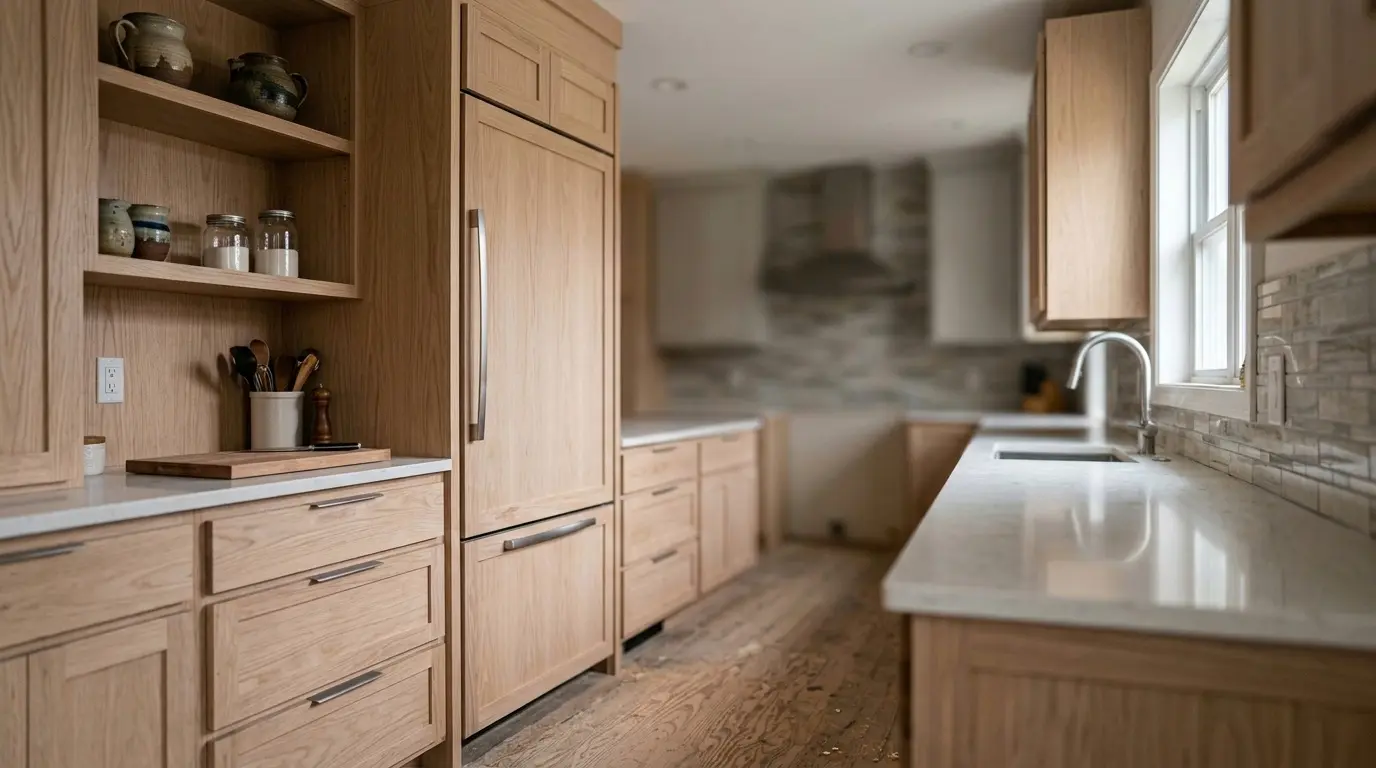
A customer once brought me photos of her kitchen on her phone, convinced she wanted a built-in refrigerator because it looked “custom” in a magazine spread. Twenty minutes and a tape measure later, she left with a counter-depth model instead and a written note explaining exactly why the built-in would have cost her three extra inches of cabinet depth she didn’t have to give up. That gap between what people think they want and what their kitchen can actually support is the entire reason this comparison exists.
Built-in and counter-depth refrigerators get lumped together constantly because they both sit flush-ish with your cabinets instead of jutting out like a standard-depth fridge. But they are built differently, cost differently, and solve different problems. Confusing them leads to either an expensive renovation surprise or a fridge that never quite disappears into the kitchen the way you pictured.
Table of Contents
What Actually Separates a Built-In From a Counter-Depth Refrigerator
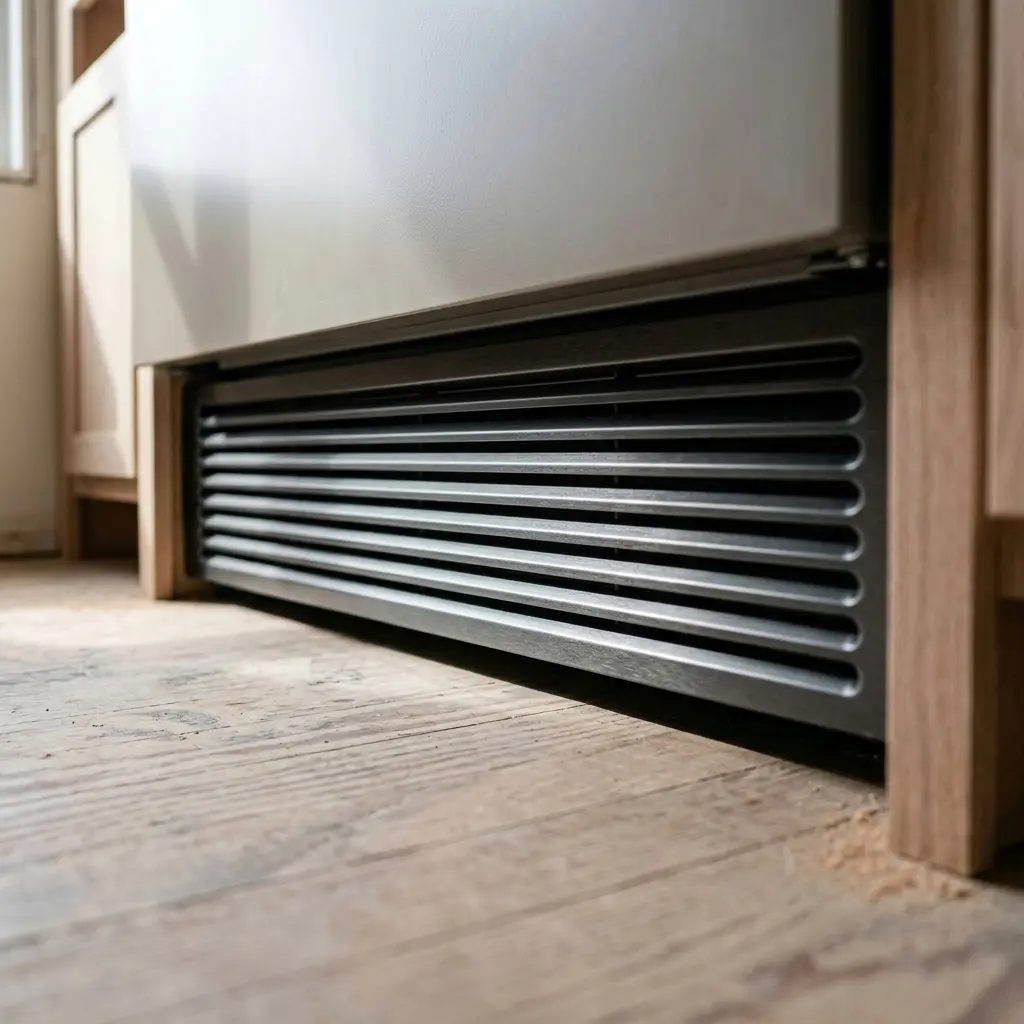
A true built-in refrigerator is designed to be installed flush with your cabinetry on all sides, the front, the top, and both edges, using custom or semi-custom cabinet panels. It’s typically shallower than even a counter-depth unit, ventilates from the front through a kick-plate grille instead of the back or top, and is engineered to run for 20+ years because it’s assumed you won’t be replacing it without also redoing the surrounding cabinetry. Panel-ready built-ins take custom door fronts that match your cabinets, so from across the room you may not even register it as an appliance.
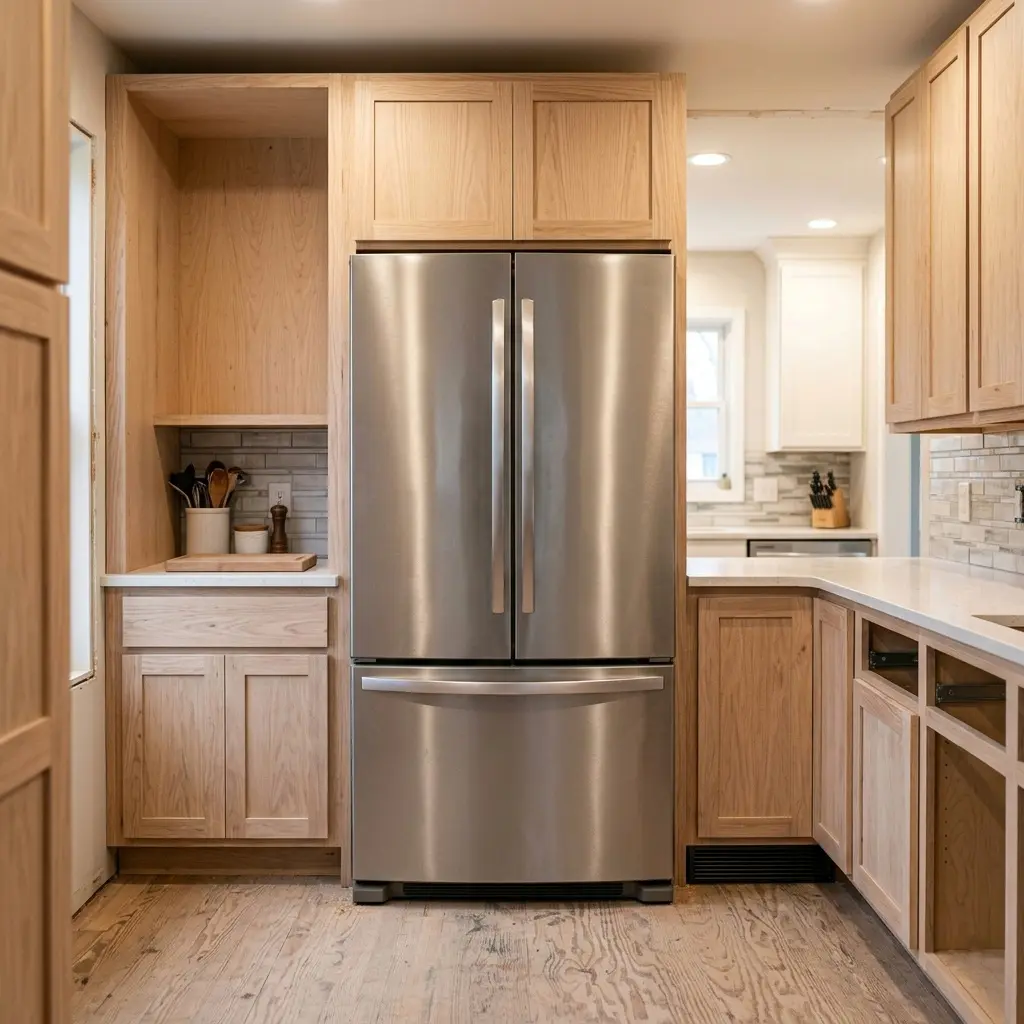
A counter-depth refrigerator is a standard freestanding or slide-in unit built shallower than a typical full-depth fridge (which usually runs 30-34 inches deep) so the front face sits closer to flush with your counter edge, usually within an inch or two, not perfectly flush. It still ventilates from the top or back like a normal refrigerator, still comes with a factory-finished door (usually stainless, black stainless, or a matching-finish panel option on higher-end models), and is meant to be replaceable on a normal 10-15-year appliance cycle without touching your cabinets at all.
Depth, Width, and Height: The Numbers That Matter
This is where most kitchen measuring mistakes happen, so it’s worth being precise rather than approximate.
| Measurement | Built-In Refrigerator | Counter-Depth Refrigerator | Standard Depth (for reference) |
| Depth (cabinet to door face) | 24–25 inches | 27–30 inches | 30–34 inches |
| Width | 30, 36, 42, or 48 inches (modular) | 30–36 inches (fixed increments) | 30–36 inches |
| Height | Floor-to-ceiling custom fit, often 84 inches+ | 68–70 inches standard | 66–70 inches |
| Depth flush with counter | Yes, true flush | Close, not perfectly flush (protrudes ~2–4 in) | No, protrudes 4–8 in |
| Handle/door clearance needed | Minimal, custom panels absorb it | Standard swing clearance | Standard swing clearance |
The number that trips people up is the height. A counter-depth refrigerator is a fixed appliance height, meaning if your upper cabinets sit lower than the fridge, you’ll have a visible gap above it, or you’ll need a filler panel. A built-in is designed around your ceiling height from the start, so that gap simply doesn’t exist by design. If you’re shopping counter-depth and your kitchen has 8-foot or taller upper cabinets, measure that vertical gap before you fall in love with a model, because it’s the single most common “why does my new fridge look weird” complaint I hear from customers after installation.

Installation and Cabinetry: What Your Kitchen Needs to Support Each
Counter-depth installation is close to plug-and-play. You need a standard water line if it’s an ice/water door model, a dedicated outlet, and enough side clearance for the doors to swing open past 90 degrees for shelf and drawer access. Most counter-depth units are designed as direct replacements for a standard-depth opening, so if you’re upgrading an existing fridge, you’re usually not touching cabinets at all; you may just lose a small amount of counter overhang clearance.
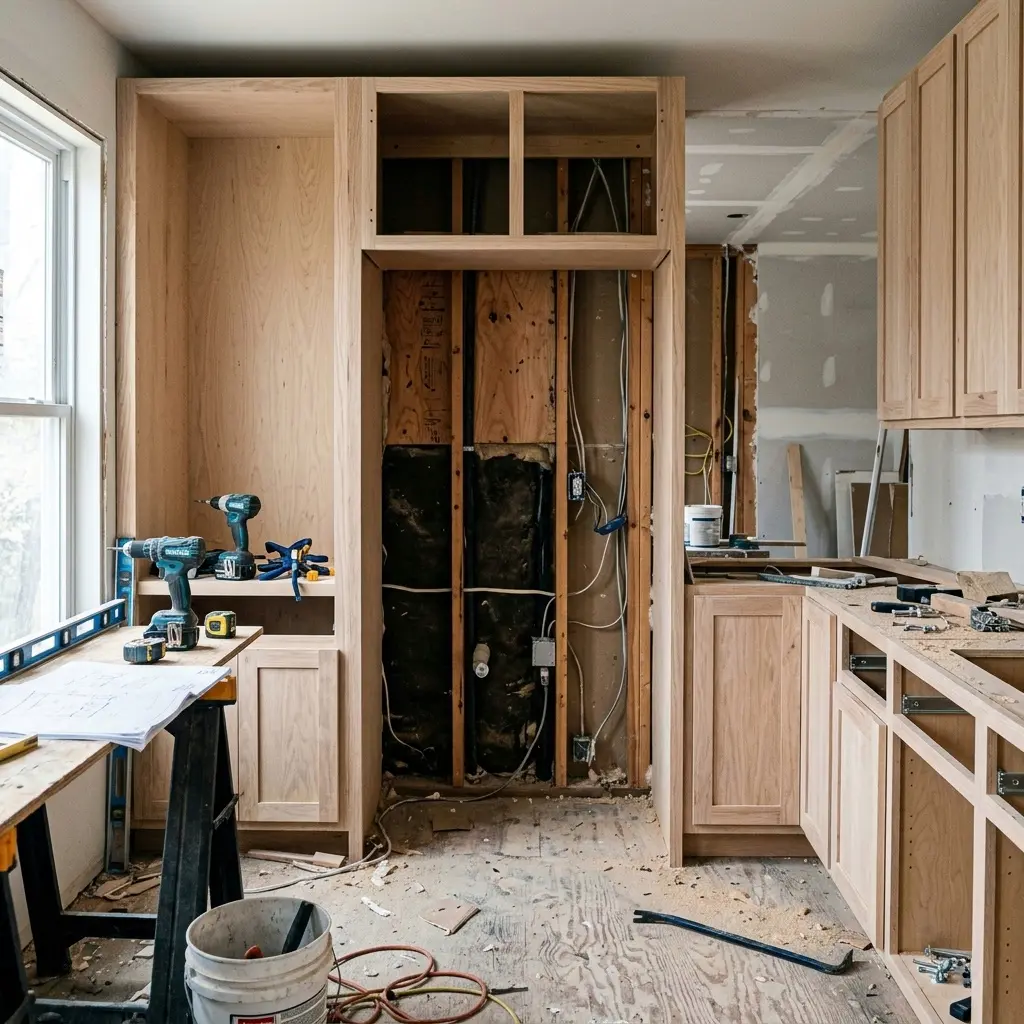
Built-in installation is a different project entirely. It requires a dedicated cabinet opening built (or rebuilt) to the exact width, depth, and height of the unit, front ventilation clearance at the base (usually a minimum air gap behind the kick plate for the compressor to breathe), and in most cases custom panel fronts ordered separately from your cabinet maker to match your kitchen.
This is why built-in refrigerators are almost always installed during a kitchen remodel or new build rather than as a standalone swap; retrofitting one into an existing kitchen usually means demolition and rebuilding the surrounding cabinetry, which can add thousands to the project before you’ve even paid for the appliance itself.
One thing a knowledgeable salesperson should ask before recommending either option: “Is this replacing an existing fridge in the same footprint, or is this part of a full kitchen renovation?” That single question determines almost the entire decision, and most buyers never think to volunteer it upfront.
Capacity Trade-Offs: How Much Storage You Actually Lose
Both formats sacrifice interior capacity compared to a standard-depth refrigerator of the same width, because you’re removing several inches of depth from the box. What surprises people is how much narrower that margin actually is between built-in and counter-depth once you account for wall thickness on a true built-in.
A 36-inch wide standard-depth refrigerator typically offers somewhere around 25-27 cubic feet. The same width in counter-depth usually drops to roughly 20-22 cubic feet. A comparable built-in, despite looking sleeker, often lands in a similar 19-22 cubic feet range for a 36-inch width, because built-in units compensate for lost depth by extending height (floor to ceiling) rather than width, which is why built-ins are more commonly sold in wider 42- or 48-inch configurations to claw back usable interior volume.
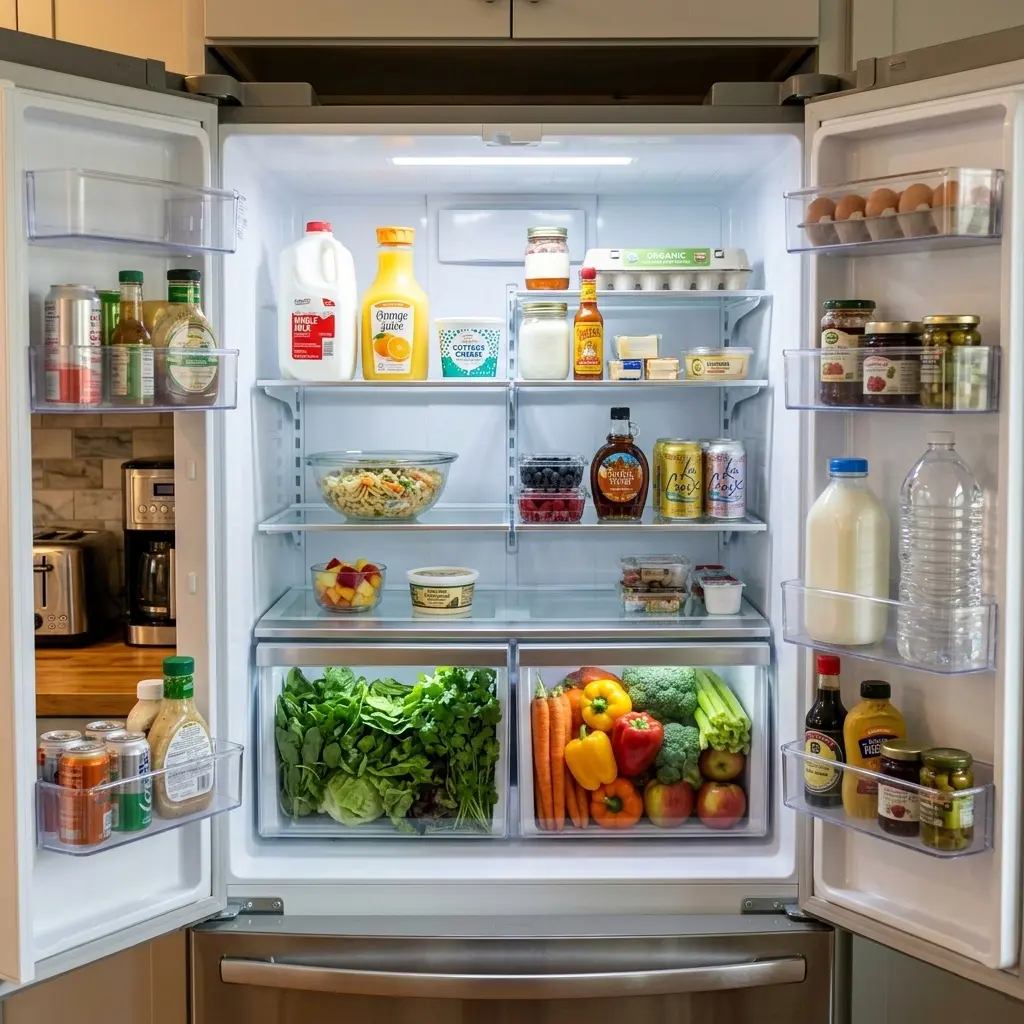
The insider detail worth knowing here: two refrigerators can list nearly identical “cubic feet” on the spec sheet and still feel very different in daily use, because that number includes door bins, deli drawers, and irregular shelf zones that don’t stack groceries efficiently. A 21 cu ft counter-depth unit with awkward door-bin geometry can feel more cramped than a 20 cu ft model with a smarter shelf layout. Don’t shop capacity numbers alone; open the doors in the showroom and picture a real grocery trip.
Price Comparison: Upfront Cost and Total Cost of Ownership
This is the widest gap between the two categories, and it’s not close.
| Cost Factor | Built-In Refrigerator | Counter-Depth Refrigerator |
| Appliance price positioning | Premium to ultra-premium tier | Mid-range to upper-mid tier |
| Custom panel fronts | Often required, separate cost | Not applicable; factory finish included |
| Installation complexity | High, often requires cabinetry work | Low-standard appliance install |
| Typical replacement cycle | 15–20+ years | 10–15 years |
| DIY-friendly install | Rarely | Usually yes |
Built-in units sit in a premium price bracket compared to counter-depth models, often by a wide margin once you add panel-ready door fronts (which are frequently sold separately from the appliance itself) and any cabinetry modification needed to fit it.
Counter-depth models span a much wider range, from accessible mid-range options up through higher-end finishes with smart features, but they remain dramatically more affordable to purchase and install than a true built-in in almost every case. Exact pricing shifts often and varies by retailer and region, so treat these as relative positioning rather than fixed numbers; check current pricing directly before budgeting.
The total cost of ownership story matters more than the sticker price. Built-in refrigerators are designed for a much longer service life and are typically serviced by specialized technicians, which means repair calls, when they happen, tend to cost more per visit but happen less often over the appliance’s lifetime. Counter-depth models use more mainstream, widely available parts, so repairs are usually cheaper and faster to schedule, but you’re more likely to be shopping for a full replacement within 10-15 years rather than repairing your way to 20.
Ventilation, Cooling Performance, and Long-Term Reliability
Ventilation design is the most technical difference between these two categories, and it directly affects long-term reliability. Built-in refrigerators vent through the front, at the base, because the top and sides are boxed in by cabinetry with no airflow path. This requires the compressor and condenser to work in a more confined space, which is part of why built-in units use more sophisticated (and expensive) cooling systems designed specifically for front-ventilation efficiency.
Counter-depth refrigerators generally vent from the top or back like any standard fridge, which is simpler and more forgiving of installation imperfections; a slightly tight side clearance won’t choke airflow the way a poorly built front vent gap can on a built-in.
Here’s what tends to go wrong after a couple years of real use in each category. Counter-depth models with ice makers are the single most common repair call; the water line filter clogs, dispenser doors freeze up, or the ice maker itself fails, none of which is specific to counter-depth but disproportionately affects it because so many counter-depth models are sold with ice/water dispensers as a headline feature.
Leaning toward built-in units, by contrast, they tend to develop issues around door seal wear and hinge alignment over time, since the flush-fit design has tighter tolerances than a standard fridge door; a seal that’s off by a few millimeters is more noticeable on a built-in because the whole design promise is a perfect flush fit. 👉 The refrigerator ice maker is not working: a troubleshooting guide is worth bookmarking if you’re leaning toward a counter-depth with a dispenser model.
Don’t. This is a category where the two paths diverge sharply in terms of what’s actually on the market. True built-in refrigerators are made almost exclusively by premium and luxury appliance brands; think Sub-Zero, Thermador, Viking, and premium lines from GE (Monogram) and KitchenAid. because the engineering and customization required don’t fit a mass-market price point.
Brand and Model Availability: Who Actually Makes What
Upgrades, counter-depth, on the other hand, is where the mainstream brands most people actually shop compete heavily. LG, Samsung, Whirlpool, Bosch, Kenmore, GE, and Frigidaire all sell multiple counter-depth lines spanning a wide range of finishes and features, which is exactly why counter-depth has become the more popular “flush-looking” option for everyday kitchen upgrades; you get a sleeker profile without leaving the price and service ecosystem of a mainstream brand.
Resale Value and Kitchen Remodel Considerations
Built-in refrigerators are tied to your kitchen’s design in a way that affects resale differently than most appliances. A well-executed built-in in a high-end kitchen genuinely adds to a home’s perceived value and can be a selling point in listings, but only if the rest of the kitchen is at a comparable finish level. A luxury built-in in a mid-range kitchen can actually look mismatched to buyers and inspectors, and if it ever fails, replacing it means matching both the appliance specs and the custom panel work, which limits your options and can complicate a sale timeline.
Counter-depth refrigerators are far more neutral from a resale standpoint. They read as “nice appliance upgrade” without being tied to structural kitchen decisions; they’re replaceable by any future owner without touching cabinetry, and because the mainstream brand ecosystem is so broad, buyers rarely see a counter-depth fridge as a limiting factor either way.
If you’re renovating a kitchen you plan to sell within the next several years, this is worth weighing seriously; a built-in is a bet on the whole kitchen’s finish level staying relevant, while a counter-depth is a much safer, more liquid appliance decision.
Which One Fits Your Kitchen: Scenario-by-Scenario Breakdown
You’re mid-renovation with cabinets not yet installed.
This is genuinely the only ideal window for a built-in, since the cabinetry can be designed around the unit’s exact dimensions from the start. Outside a renovation, retrofitting a built-in is expensive and disruptive enough that most homeowners regret the decision within the first year.
You’re replacing an existing fridge in an unchanged kitchen.
Counter-depth is almost always the right call here. It drops into a standard opening, needs no cabinet work, and gets you most of the visual “flush” benefit built-ins are known for, at a fraction of the cost and disruption.
You have a smaller kitchen, and every inch of walking space matters.
Both formats help here versus a standard-depth fridge, but counter-depth delivers nearly the same footprint reduction for meaningfully less money, which usually makes it the more practical choice unless you’re already committed to a full remodel.
You’re building a high-end kitchen, and budget isn’t the primary constraint.
This is the scenario where built-in genuinely earns its premium; the completely flush, custom-panel look is something counter depth can approximate but never fully replicate.
You rely heavily on ice and water dispensers.
Counter-depth models offer far more dispenser options across mainstream brands; built-in units with dispensers exist but are a narrower, pricier subset of an already premium category.
FAQ
1. Is a counter-depth refrigerator the same thing as a built-in refrigerator?
No. Counter-depth refers to a shallower-than-standard freestanding or slide-in fridge that still ventilates like a normal appliance. “Built-in” refers to a unit custom-installed flush into cabinetry with front-only ventilation, designed as a permanent kitchen fixture rather than a swappable appliance.
2. Can I convert my existing cabinet opening to fit a built-in refrigerator?
Usually yes, but it typically requires rebuilding the surrounding cabinetry to the correct depth, width, and ventilation clearance, plus ordering matching panel fronts, which is why it’s almost always done as part of a larger renovation rather than a standalone swap.
3. Do counter-depth refrigerators cost more to run than standard-depth models?
Not meaningfully. Energy consumption is driven mainly by insulation quality, compressor type, and cubic footage, not depth category, so a counter-depth and standard-depth model of similar capacity and efficiency rating will cost roughly the same to operate.
4. Why do built-in refrigerators cost so much more than counter-depth models?
The premium comes from custom engineering for front-only ventilation, higher-end compressor systems built for confined airflow, panel-ready construction, and the fact that built-ins are made almost exclusively by luxury appliance brands rather than mainstream manufacturers.
5. Will a counter-depth refrigerator actually look flush with my counters?
Close, but not perfectly. Most counter-depth models still protrude an inch or two past standard counter depth, which is enough to reduce the “sticking out” look dramatically compared to a standard-depth fridge without the true flush fit of a built-in.
6. Which option is easier to repair if something breaks?
Counter-depth models, by a wide margin. They use more widely available parts and are serviced by a much broader network of technicians, while built-in units often require specialized service technicians familiar with the specific brand’s front-ventilation systems.
7. If I’m not renovating, should I even consider a built-in refrigerator?
For most homeowners not mid-renovation, no. The cabinetry work required to retrofit a built-in into an existing kitchen usually costs more than the appliance itself, and a counter-depth model gets you close to the same visual benefit for a fraction of the cost and disruption.
Final Verdict
For the overwhelming majority of people asking this question, counter-depth is the right answer; it delivers most of the visual payoff of a built-in, drops into an existing kitchen without construction, and keeps you in a mainstream brand ecosystem with better parts availability and lower repair costs over the life of the appliance. Built-in only makes sense as a deliberate design choice during a full kitchen renovation, where the cabinetry, budget, and long-term commitment to a premium brand all align from the start.