
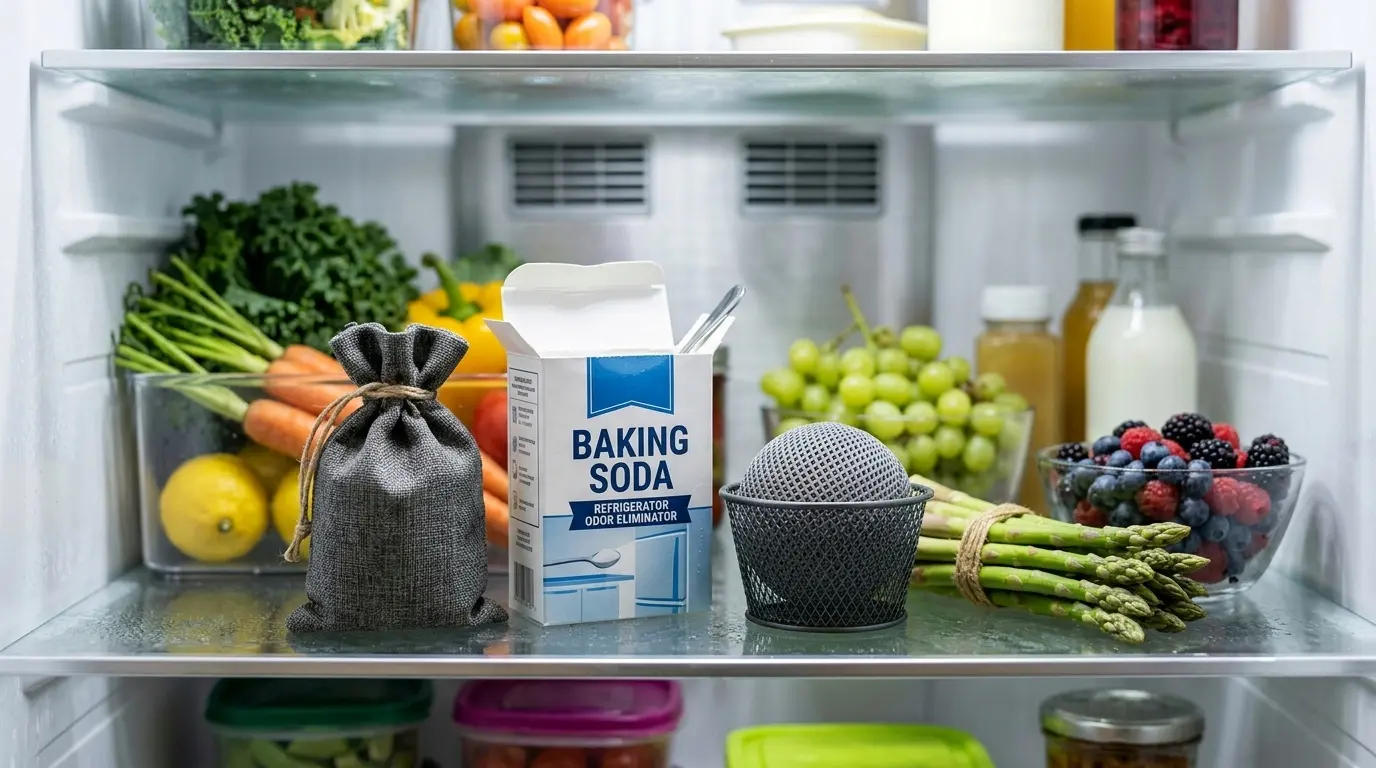
That open box of baking soda sitting on your shelf has been quietly doing less than you think for months. It’s cheap; it’s the default advice everyone repeats; and in a lot of fridges it’s simply overwhelmed, especially in larger LG and Samsung models with multiple compartments, humidity-controlled drawers, and airflow patterns that don’t move air evenly past a single open box tucked in a back corner. If you’ve replaced the box on schedule and the smell keeps coming back, the product isn’t broken; it’s just the wrong tool for the job in a lot of real kitchens.
This roundup covers the odor absorbers that actually outperform baking soda in day-to-day use, where each one makes the most sense, and a few honest limitations nobody selling them will mention upfront.
Table of Contents
1. Why Baking Soda Falls Short in Modern Fridges
Baking soda works through a slow chemical reaction; it neutralizes acidic odor compounds through direct surface contact. That’s genuinely effective in a small, sealed space with low airflow, which is why it’s stayed the default recommendation for decades. The problem is that today’s LG and Samsung refrigerators are built very differently from the fridges that reputation was earned on. Multi-airflow systems, larger overall volumes, and independently controlled crisper drawers mean odor-causing air doesn’t reliably pass over one open box sitting on a single shelf. A smell trapped in a sealed produce drawer, for example, never reaches the baking soda at all.
None of this means baking soda is useless; it’s a reasonable low-cost baseline, especially in smaller single-door units or as a supplement to something stronger. But if you’re dealing with a persistent smell, particularly after storing fish, onions, or something that went bad before you caught it, baking soda alone is rarely enough to fully clear it.
2. Activated Charcoal Filters and Bags
Activated charcoal absorbs odor through physical adsorption; the porous surface traps odor molecules rather than reacting with them chemically, which makes it noticeably more effective against a broader range of smells, including strong ones like fish, garlic, and spoiled dairy that baking soda struggles with. Charcoal bags and pucks designed specifically for fridge use are widely available and tend to outperform baking soda within the first week of use, based on how quickly strong odors visibly fade in side-by-side comparisons.
The honest downside: charcoal needs occasional recharging. Most bag-style products recommend setting them in direct sunlight periodically to release trapped moisture and odor compounds, which resets their absorption capacity. Skip that step, and a charcoal bag that worked well in month one will quietly stop pulling its weight by month three while still sitting there looking like it’s doing its job.
3. Zeolite-Based Absorbers
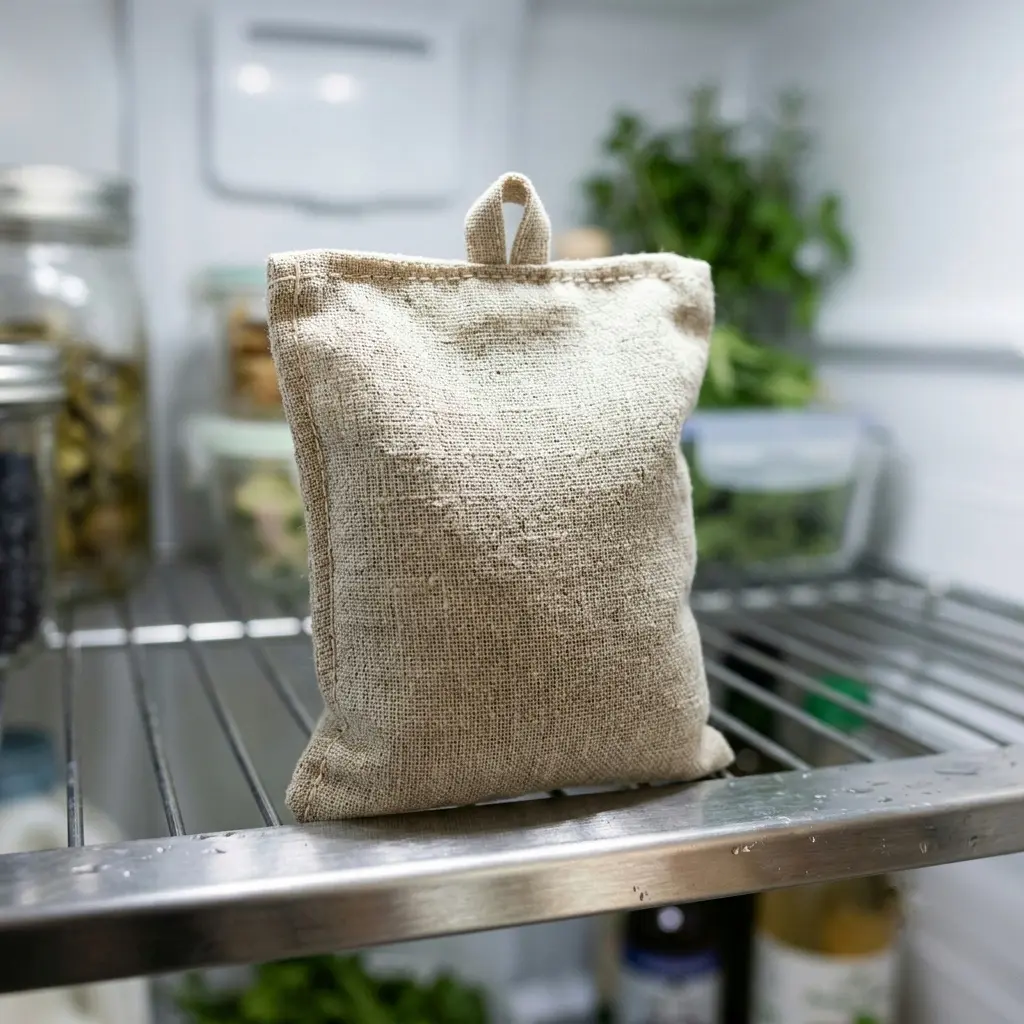
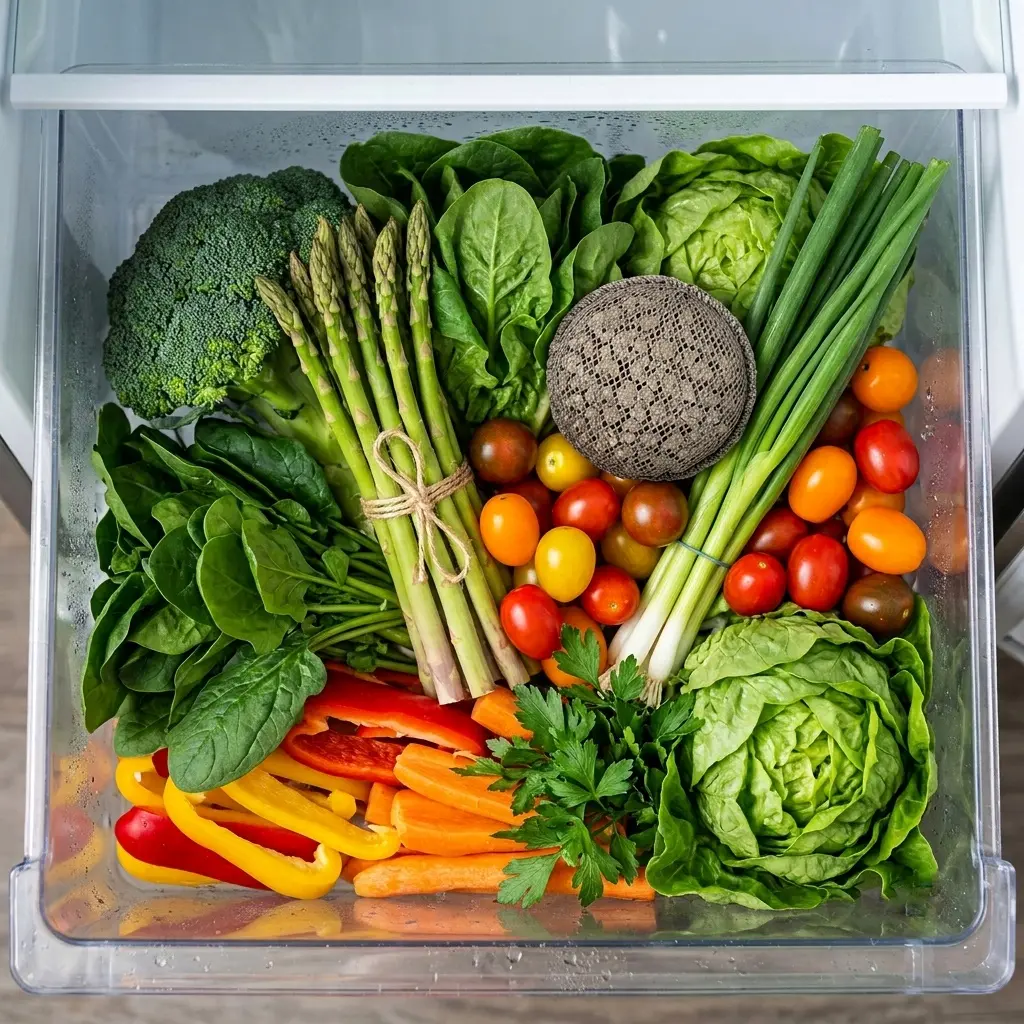
Zeolite is a mineral with a highly porous structure similar in function to charcoal, but with a different absorption profile; it tends to perform especially well against ethylene gas, the compound that produces as it ripens, which accelerates spoilage of everything else nearby. If your recurring odor problem traces back to a crisper drawer full of fruit and vegetables going soft faster than expected, a zeolite absorber placed specifically in that drawer often solves two problems at once: the smell and the produce spoiling early.
Zeolite products are usually reusable in the same way as charcoal; periodic sun exposure or a low-heat oven cycle restores their capacity, but they’re less effective than charcoal against general food odors like meat or dairy. Treat it as a targeted tool for produce drawers rather than a whole-fridge solution.
4. Fridge-Specific Air Purifier Modules
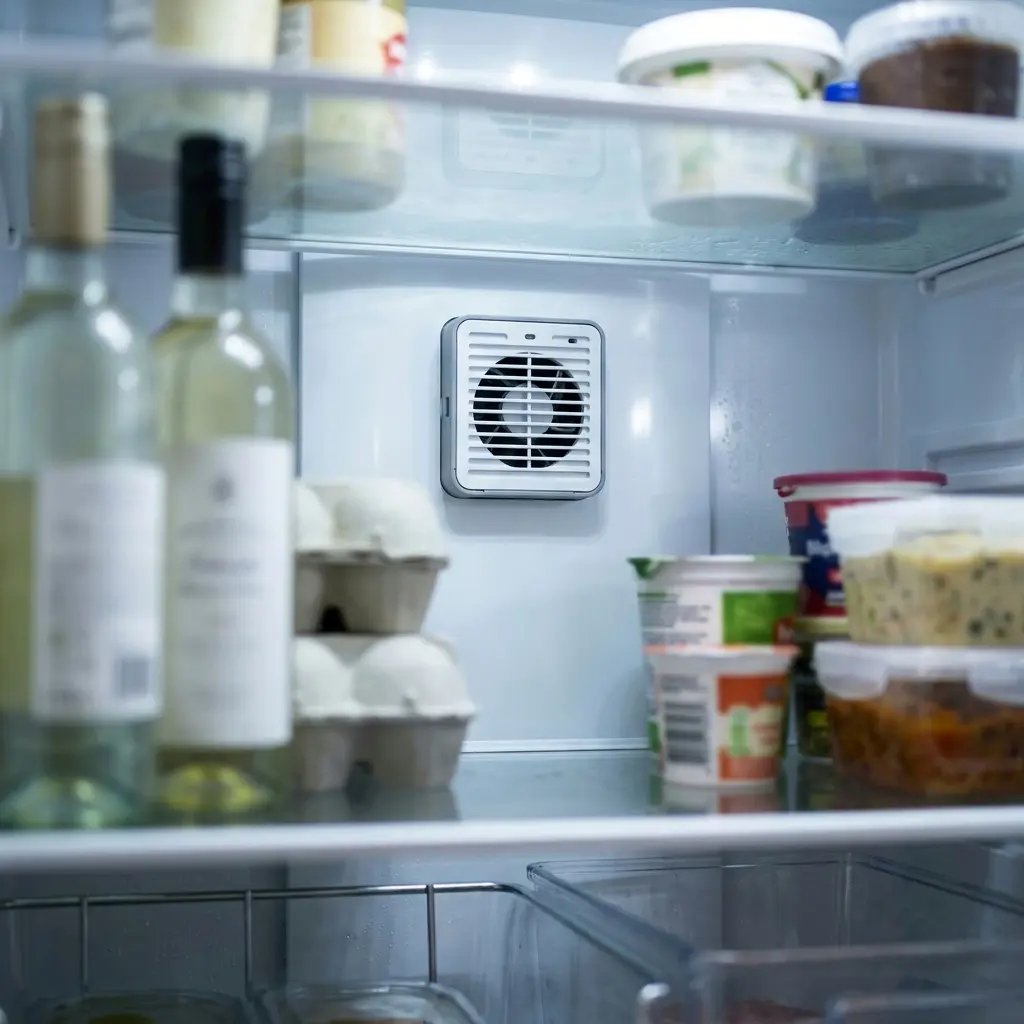
Both LG and Samsung sell built-in or add-on air purification systems for some refrigerator models, typically a small fan-and-filter unit mounted inside the fridge cavity that actively circulates air through a filter rather than relying on passive absorption. When these are available and compatible with your specific model, they’re the most effective option on this list simply because active airflow reaches corners and drawers that a passive absorber sitting on one shelf never will.
The catch, and it’s an important one: compatibility is model-specific, not universal. Not every LG or Samsung refrigerator has a cavity or power connection designed for these modules, and a purifier built for one model line will not necessarily fit or function in another. Confirm compatibility with your exact model number before buying; this is one accessory category where “works with LG fridges” as a blanket claim on a listing page should be treated skeptically until you’ve checked the specific fitment yourself.
5. Coffee Grounds and Other DIY Options
Dried, used coffee grounds work on a similar principle to charcoal: a porous surface and physical adsorption, and they’re genuinely effective as a free, no-cost option if you already have them on hand. The trade-off is that coffee grounds need to be fully dried before use (wet grounds grow mold instead of absorbing odor, which makes the problem worse), and they need replacing more frequently than charcoal or zeolite, typically every one to two weeks rather than every one to two months.
Other DIY options circulating online, dryer sheets, cotton balls with vanilla extract, and newspaper, range from marginally helpful to essentially cosmetic, masking a smell rather than absorbing it. If you’re dealing with a genuine spoilage odor rather than general fridge staleness, skip the masking approaches entirely and go straight to charcoal or zeolite; covering a spoilage smell without addressing its source is one of the more common mistakes I see people make.
Comparison Table: Odor Absorber Options at a Glance
| Product Type | Best For | Reusable? | Typical Replacement Interval |
| Baking soda | Mild, general staleness in small fridges | No | 30 days |
| Activated charcoal | Strong odors (fish, spoiled food) | Yes, with sun recharging | 2-3 months |
| Zeolite absorbers | Produce drawers, ethylene-related spoilage | Yes, with sun/oven recharging | 2-3 months |
| Fridge air purifier module | Whole-fridge active circulation (model-dependent) | Filter replacement varies | Check model manual |
| Dried coffee grounds | Free, temporary fix | No | 1-2 weeks |
6. Which Odor Absorber Fits Your Situation
If you’re dealing with mild, general fridge staleness and have a smaller single-door unit, baking soda paired with a regular cleaning schedule is genuinely enough, there’s no need to spend more. If you’re fighting a strong, specific odor from fish, dairy, or something that spoiled before you noticed, activated charcoal is the more reliable choice and worth the modest extra cost. Households dealing mainly with produce going soft too fast, particularly in humid climates, get the most value from a zeolite absorber placed directly in the crisper drawer rather than a general-purpose one on the main shelf.
For anyone with a larger, multi-drawer LG or Samsung model, and especially households running a full fridge most of the time, where airflow has more surface area of food to pass, a compatible air purifier module is worth the investment if your specific model supports one, since passive absorbers genuinely struggle to keep up with that volume of stored food.
7. Common Mistakes That Undo Any Odor Absorber
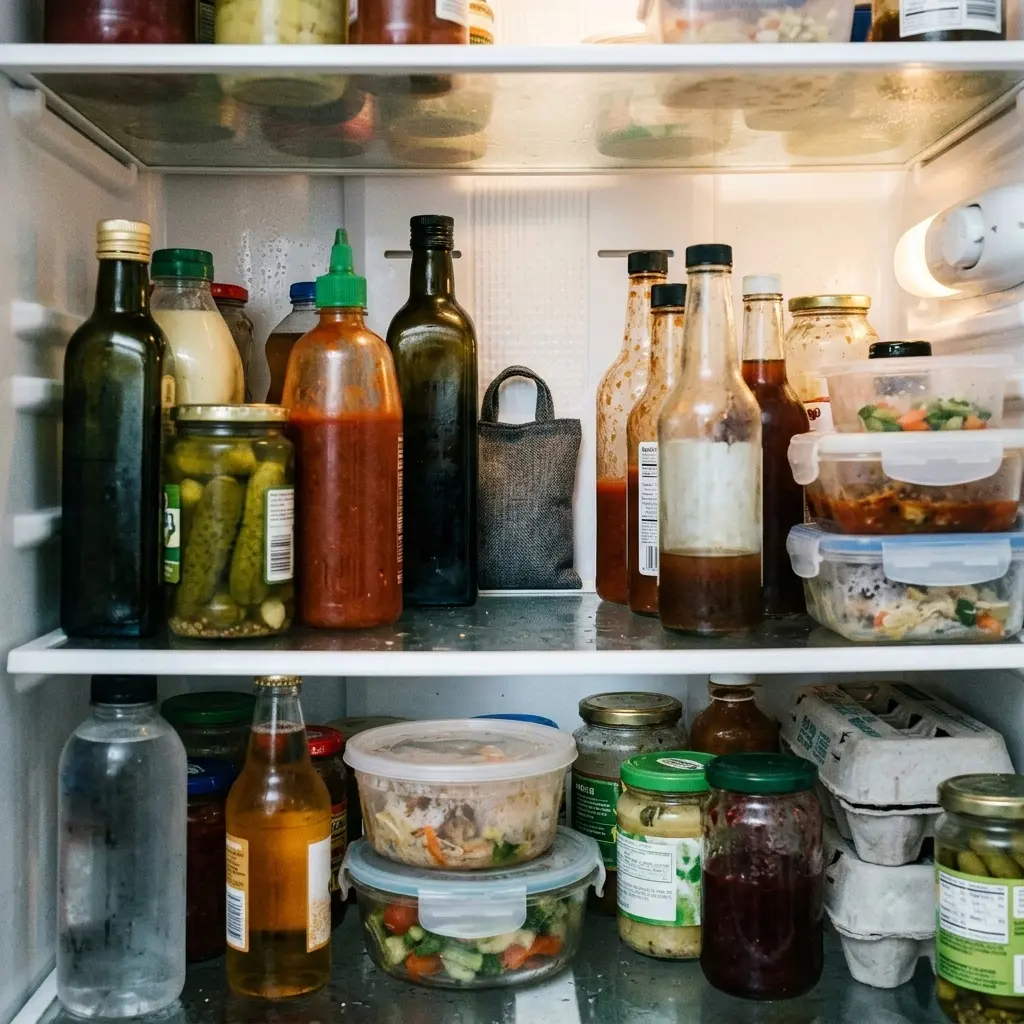
The single most common mistake isn’t choosing the wrong product; it’s placement. An absorber tucked behind tall bottles or buried under shelving barely contacts the air moving through the fridge, no matter how good the product itself is. Odor absorbers work through air contact, so placement in an open, central spot (or directly in the specific drawer causing the problem) matters more than which brand you buy.
The second common mistake is treating an odor absorber as a substitute for cleaning rather than a supplement to it. Spilled liquids, expired containers pushed to the back, and door seals that have started collecting grime will keep generating odor faster than any absorber can neutralize it. If you’ve tried multiple absorber types and the smell keeps returning within days rather than weeks, the actual source is very likely a spill or seal issue rather than a product choice problem;
FAQ
1. Do odor absorbers work the same way in LG and Samsung refrigerators?
Yes, for passive options like charcoal, zeolite, and baking soda, they work on general air chemistry, not brand-specific hardware. Active air purifier modules are the exception, since those depend on model-specific compatibility.
2. How long does activated charcoal actually last before it needs replacing?
Most charcoal bags last two to three months with periodic sun recharging every few weeks. Without recharging, effectiveness noticeably drops within four to six weeks even though the bag still looks and smells the same.
3. Can I just use more baking soda instead of buying a different product?
Adding a second box helps marginally in larger fridges, but it doesn’t solve the airflow problem, a stronger passive absorber like charcoal or a properly placed unit in each problem drawer usually performs better than doubling up on baking soda.
4. Is it safe to use scented odor absorbers near food?
Most fridge-specific charcoal and zeolite products are unscented by design, since scented options can transfer flavor to open food like butter or milk. If you’re considering a scented product, keep it away from uncovered food and dairy specifically.
5. Will an odor absorber fix a smell caused by mold?
No, odor absorbers manage smell, they don’t address an active mold source. If cleaning the affected area doesn’t resolve the odor within a few days, that points to mold or a drain-related issue rather than something an absorber can fix.
6. Do refrigerator air purifier modules need regular maintenance?
Yes, most require periodic filter replacement, similar to a water filter schedule. Check your specific model’s manual, since intervals vary and generic third-party filters don’t always fit properly.
7. How do I know if my crisper drawer smell is produce-related or something else?
If the odor is concentrated specifically in the produce drawer and correlates with fruit or vegetables going soft faster than expected, it’s very likely ethylene-related, and a zeolite absorber placed in that drawer specifically is the more targeted fix than a general fridge deodorizer.
Final Recommendation
If I had to pick one starting point for most households, it’s activated charcoal; it handles a wider range of odors than baking soda, costs relatively little more, and the recharging routine is a minor habit once you build it in. Layer in a zeolite absorber specifically for the produce drawer if that’s a recurring problem area, and only consider an air purifier module once you’ve confirmed it’s actually compatible with your exact model. Whatever you choose, remember that the product is only doing half the job; a quick check of spills, expired containers, and door seals will get you further than switching products ever will if the smell keeps coming back.