
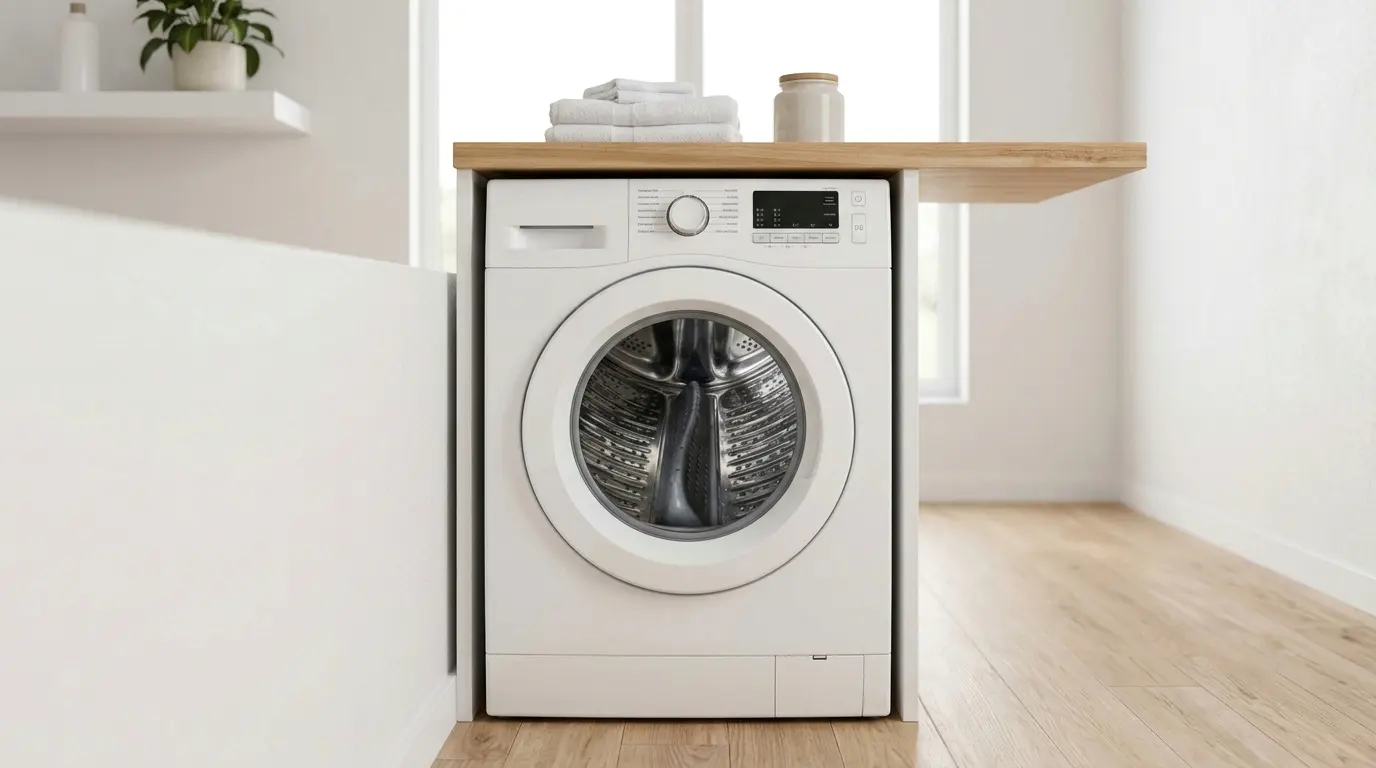
Three years ago I put a WM4000 in my own laundry room specifically so I’d stop giving customers secondhand answers about how it holds up past the return window. That machine is still running, and the notes I’ve kept on it, plus every service call and customer conversation tied to this exact series since, are the backbone of this review.
If you’re looking at the LG WM4000 series front-load washer and trying to figure out whether it’s actually worth the money or just another mid-tier SKU with a good marketing page, here’s everything that matters, including the parts LG’s own spec sheet won’t tell you.
Table of Contents
What the LG WM4000 Series Actually Is
The LG WM4000 series sits in LG’s mid-range front-load lineup, above their entry-level WM3400/WM3500 machines but below the higher-end WM6000 and WM8000 series, which add features like TurboWash 360 and larger 5.0+ cubic foot drums. Depending on the exact model number in the series (WM4000HWA, WM4000HBA, and regional variants), you’re typically looking at a 4.5 cubic foot stainless steel drum, 6Motion or similar drum-motion technology, and a spin speed in the 1,300 RPM range.
This positioning matters because it defines what the WM4000 is actually competing against. It’s not trying to be a premium flagship, and it’s not a stripped-down budget unit either; it’s LG’s answer for someone who wants dependable mid-range performance without paying for features they won’t use.
👉 [LG WM4000 vs. WM3900: What’s actually different]
Wash Performance: Real Loads, Not Lab Numbers
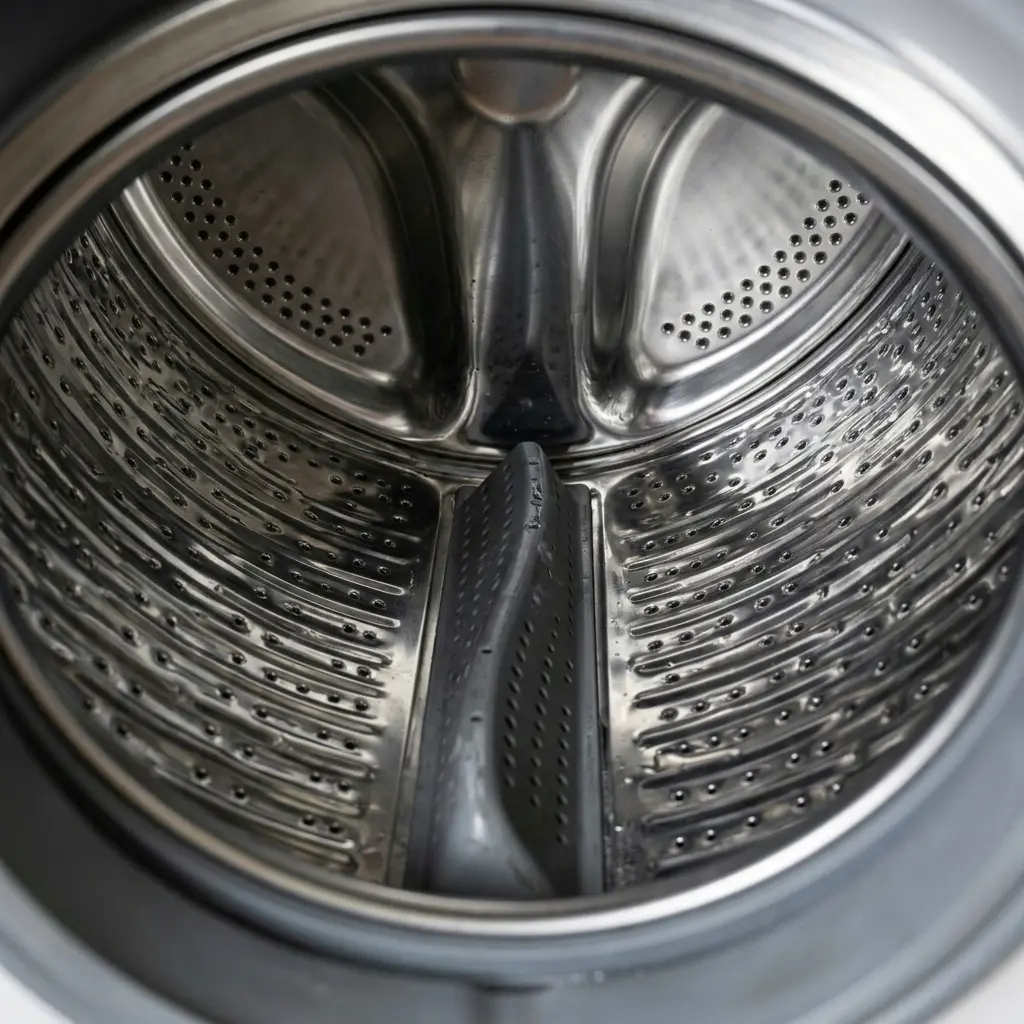
On everyday mixed loads, towels, work clothes, and bedsheets, the WM4000 cleans consistently well without needing extended cycles for normal soil levels. The 6Motion drum technology genuinely does what LG claims: it varies tumbling patterns (rolling, swing, filtration, step, scrub, tumble) throughout a cycle rather than repeating one motion, which noticeably reduces tangling on sheets and hoodies compared to older single-motion LG models I’ve serviced.
Where it earns its keep is on the Heavy Duty and Sanitary cycles, both of which run hot enough and long enough to make a visible difference on genuinely soiled loads, not just a marketing checkbox. Where it’s average at best: the Quick Wash cycle. It cleans lightly soiled items fine but shouldn’t be trusted for anything with real stains, despite how it’s often marketed as a general-purpose fast option.
Cycle Options and Which Ones You’ll Actually Use
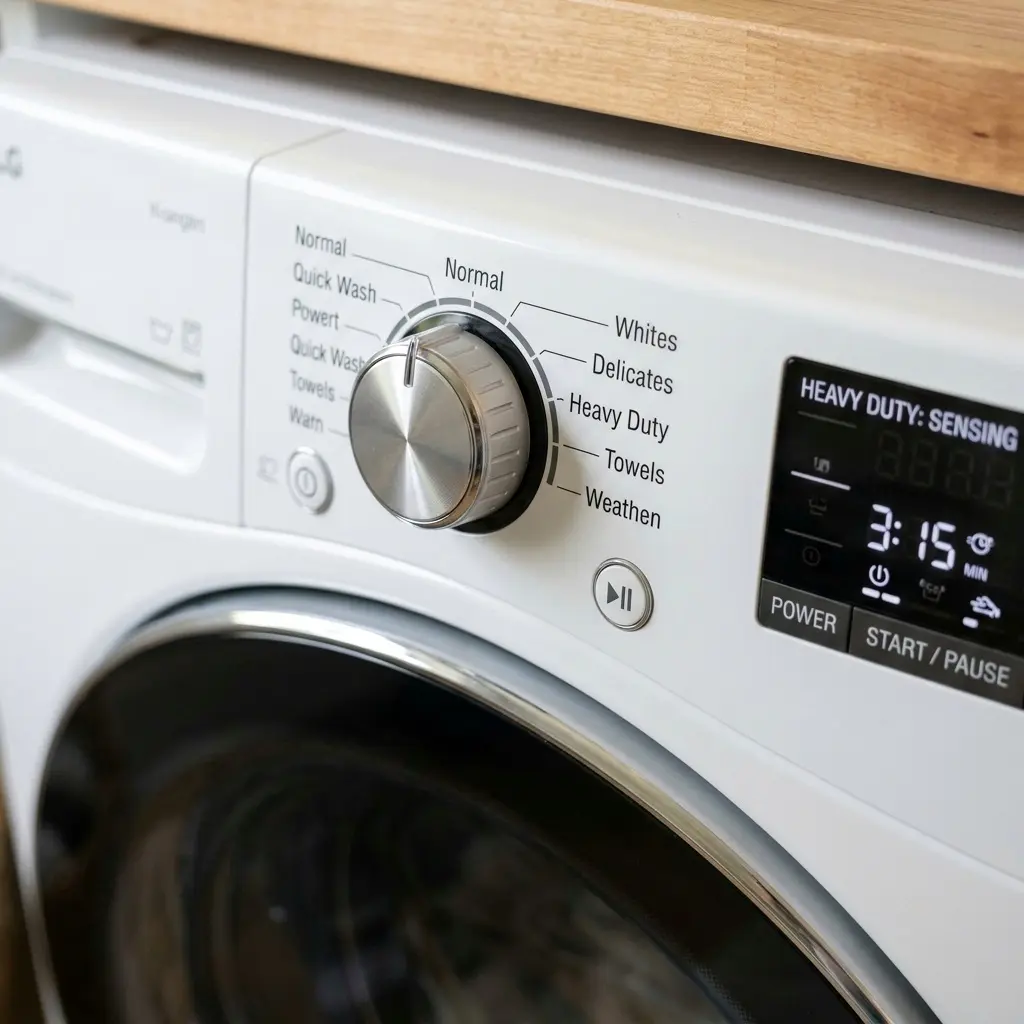
The WM4000 ships with a long list of cycle options, but in three years of using one myself and fielding customer questions about this exact model, the same five or six get used repeatedly while the rest sit untouched.
| Cycle | How Often Real Users Rely On It | Notes |
| Normal | Daily use, primary cycle | Balances time and cleaning well for most loads |
| Heavy Duty | Weekly, for workwear/bedding | Genuinely more effective, not just longer |
| Delicates | Occasional, for specific fabrics | Gentle enough for activewear and thin knits |
| Sanitary | Occasional, illness/allergy season | Runs hot; effective but adds significant time |
| Quick Wash | Frequent, for convenience | Fine for lightly soiled items only |
| Bulky/Bedding | Occasional, comforters and pillows | Handles large items without excessive tangling |
| Tub Clean | Monthly, required maintenance | Not optional, skipping this causes odor issues |
💡 Personal Tip: Tub Clean isn’t a “nice to have” cycle LG added for marketing completeness. On every WM4000 I’ve serviced where a customer reported a musty smell, skipping this monthly cycle was the root cause in nearly every case, not a mechanical defect.
Capacity and Load Size in Practice
At roughly 4.5 cubic feet, the WM4000 comfortably handles a queen-size comforter or a full load of towels for a family of four without needing to split loads. Where people tend to overestimate capacity is with bulky bedding sets; a king comforter plus a full pillow set is genuinely too much for this drum size and will wash unevenly, even though the door opening looks like it should fit everything.
For a single person or couple, this capacity is generously oversized for daily laundry, and running smaller loads on a machine this size is one of the quieter ways people undercut the efficiency gains they’re paying for; the machine still uses a baseline amount of water and energy regardless of how full the drum actually is.
Noise and Vibration During Daily Use
This is one of the areas where real-world experience diverges most from spec-sheet numbers. The WM4000’s spin cycle at full 1,300 RPM is noticeably louder than its wash cycle, which is normal for front-load machines generally, but the difference is more pronounced on this series than on LG’s higher-end lines with additional vibration dampening.
The detail almost nobody mentions upfront: installation surface matters enormously here. On a solid concrete slab, the WM4000 runs quietly and predictably. On a wood-frame upper floor or older subfloor, the same machine can produce noticeable rattling and walking during high-speed spin, and in my experience, at least half of the “this machine is too loud” complaints I’ve heard about this exact model traced back to leveling or subfloor issues, not the machine itself.
💡 Personal Tip: a customer once installed a WM4000 in a second-floor laundry closet of an older home and reported the unit “walking” several inches across the floor during spin cycles. The washer itself tested completely normal; the actual cause was a combination of an unlevel floor and shipping bolts that hadn’t been fully removed during installation, both easy to miss and neither showing up as an error code. Anyone installing this model above ground level should double-check both before assuming a mechanical problem.
👉 [how to properly level an LG front load washer to reduce noise]
Smart Features: What’s Useful and What’s Gimmick
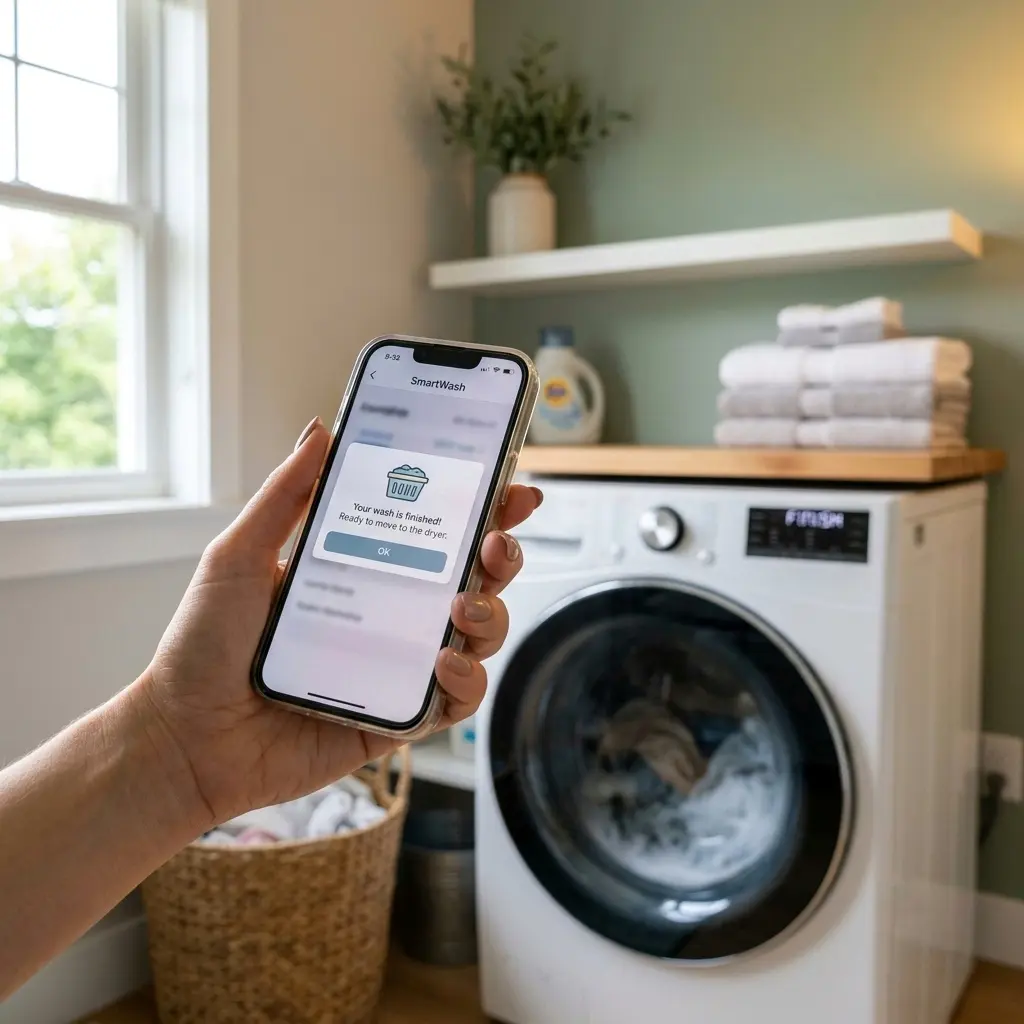
The LG WM4000 series includes LG’s ThinQ smart connectivity, allowing remote cycle monitoring, end-of-cycle notifications, and diagnostic alerts through LG’s app. In daily use, the end-of-cycle notification is genuinely useful; it’s the one smart feature people keep using months after setup since it saves the classic problem of forgotten wet laundry sitting in a closed drum.
Remote cycle start, by contrast, is a feature that sounds impressive in the showroom but rarely gets used in practice, since most people are near the machine when they’re ready to start a load anyway. The Smart Diagnosis feature, which lets a technician read error data through the app during a support call, is more useful than it sounds; it can save a truck-roll visit for straightforward error codes, though it won’t diagnose anything requiring a physical inspection.
Build Quality and Reliability After 1-2 Years
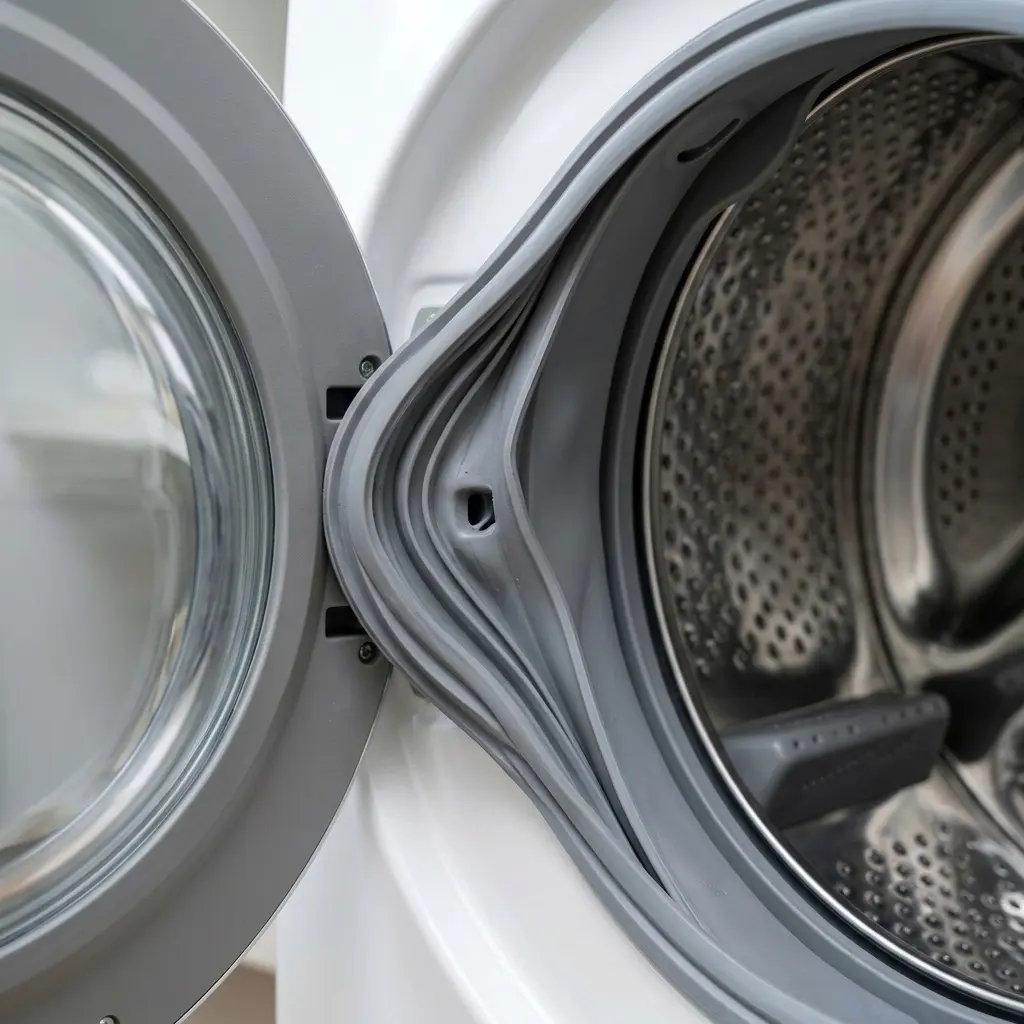
This is where a review needs to go beyond the unboxing experience, since that’s exactly where most coverage of this model stops. After 1-2 years of consistent use, the most common issues I see on WM4000 units are door gasket odor buildup (almost always tied to skipped Tub Clean cycles and using non-HE detergent) and occasional drain pump clogs from coins, buttons, or small items that make it past pockets.
Genuine mechanical failures, control board issues, motor problems, are relatively uncommon in this window based on what I’ve serviced, which tracks with the WM4000’s mid-range-but-solid reputation. Where owners do run into frustration is with the door boot seal: it requires more deliberate maintenance than a top-load washer ever would, and owners who treat it like a “set and forget” appliance are the ones who end up with the odor complaints that get (incorrectly) blamed on the machine being defective.
There’s also a slower, less-discussed wear pattern worth knowing about: the drum bearing. On front-load washers generally, bearing wear shows up gradually as a low grinding or rumbling sound during spin, and it tends to appear closer to the 5-7 year mark under normal use rather than the 1-2 year window this section otherwise focuses on. It’s not common on the WM4000 within the first couple of years, but it’s the kind of repair that, when it does eventually happen, is expensive enough relative to the machine’s value that it’s worth knowing about upfront rather than being surprised by a repair quote years down the line.
👉 [washer door seal mold cleaning guide]
A spec number worth flagging here: the RPM rating. A 1,300 RPM spin speed on the WM4000 sounds similar to spin speeds advertised on competing brands’ machines, but real-world spin effectiveness depends heavily on load balancing sensors and motor torque, not just the peak number, which is why two machines with identical advertised RPM can leave noticeably different amounts of residual moisture in clothes after the same cycle.
Parts availability is worth understanding before you’re several years into ownership rather than after something breaks. Because the LG WM4000 series has been sold across multiple model years with only incremental changes, common wear parts, door boot seals, drain pumps, and control knobs tend to stay available longer than they would on a series that gets redesigned annually. That said, exact control board assemblies are still model-year specific, so if a board-level issue comes up on an older WM4000 unit, expect a technician to need the precise model number rather than a generic “WM4000” part, and expect a longer wait if that specific board has been phased out of production.
Energy and Water Efficiency in Real Bills
The LG WM4000 series is ENERGY STAR certified, and in practice the water and energy savings compared to a standard top-load washer are real and measurable over a year of regular use, but they’re gradual, not dramatic month to month. Households doing 4-6 loads weekly typically notice the difference more in a year-over-year utility bill comparison than in any single month’s statement
One hidden cost worth budgeting for: HE detergent runs slightly more per load than standard detergent, and the WM4000’s dispenser drawer is calibrated for HE formulations specifically; using standard detergent isn’t just against the manual’s recommendation, it measurably increases the odor and residue issues discussed above.
Common Complaints and How Serious They Are
| Complaint | How Common | How Serious |
| Musty odor after several months | Fairly common | Low severity, almost always fixable with Tub Clean routine and correct detergent |
| Excessive noise/vibration during spin | Common on upper floors | Low-to-moderate, usually an installation/leveling issue, not a defect |
| Longer cycle times than expected | Very common | Not a defect, inherent to HE washing, most noticeable to first-time HE owners |
| Drain pump clog / error code | Occasional | Moderate, user-clearable in most cases, doesn’t require a technician |
| Control board or motor failure | Uncommon | High severity when it happens, but rare within the first several years |
Final Verdict: Who Should Actually Buy This
The LG WM4000 series front-load washer earns its place as a genuinely solid mid-range machine, not a compromise pick. It cleans reliably across realistic household soil levels, the 6Motion drum tech measurably reduces tangling compared to older single-motion designs, and the ThinQ notification feature is one of the rare smart-home laundry additions that actually gets used long-term rather than forgotten after week one.
It’s the right choice for a household doing regular, moderately soiled laundry that wants dependable performance without paying for flagship-tier features like TurboWash 360 or extra-large drum capacity they don’t need. It’s not the right choice for anyone expecting a fully silent spin cycle on an upper-floor installation or for households that will skip the monthly maintenance routine an HE front-load machine genuinely requires to stay odor-free.
If your laundry room has a solid installation surface, your household runs a handful of loads a week, and you’re comfortable running a proper HE detergent and maintenance routine, the WM4000 is a dependable, well-earned recommendation rather than a “good enough” middle-of-the-road pick.
Frequently Asked Questions
1. How long does the LG WM4000 series typically last with normal use?
Based on service patterns for this model, a well-maintained WM4000, meaning regular Tub Clean cycles and correct HE detergent use, typically runs reliably for 8-12 years before major component wear becomes a real concern, though individual results vary with usage frequency and water hardness.
2. Is the WM4000 too loud for an apartment or upstairs laundry closet?
Not inherently, but installation surface matters enormously. On a properly leveled, solid subfloor it runs reasonably quietly; on an upper-floor wood-frame installation, spin-cycle noise and vibration can be noticeably more pronounced.
3. Does the WM4000 require special detergent?
Yes, it requires HE-labeled detergent. Using standard detergent can cause excess suds, residue buildup, and increased odor issues over time.
4. How does the WM4000 compare to LG’s WM3900 in real-world use?
Both are solid mid-range performers, but the WM4000’s exact feature set (including 6Motion drum technology and cycle options) can vary by model year and region, so it’s worth comparing current specs side by side rather than assuming the naming convention alone tells the full story.
5. What’s the most common reason WM4000 owners report a bad odor?
In the vast majority of cases I’ve seen, it traces back to skipping the monthly tub clean cycle, leaving the door closed between loads, or using non-HE detergent, not a manufacturing defect.
6. Is the ThinQ smart connectivity worth using on this model?
The end-of-cycle notification feature sees genuine long-term daily use for most owners. Remote start and some of the deeper app features are less essential day to day but don’t add meaningful downsides if you don’t use them.
7. Can the WM4000 handle a king-size comforter?
It can handle a king comforter alone reasonably well, but pairing it with a full pillow set in the same load typically overloads the drum’s effective capacity and leads to uneven washing.