
Your refrigerator runs 24/7 to keep your food fresh, but how often do you actually maintain it? With just a little regular care, you can extend your fridge’s life by 5–10 years and avoid costly repairs.
In this guide, we’ll walk through 10 practical refrigerator maintenance tips to help you save energy, reduce food waste, and prevent breakdowns, whether you own a French door, top freezer, side-by-side, or compact model.
Table of Contents
1. Keep It Clean: Inside and Out
Clean the Interior Monthly
- Wipe down shelves and drawers with warm water and mild soap
- Use a baking soda solution (1 tbsp per quart of water) to neutralise odours
- Deep-clean every 3–6 months by unplugging the fridge and cleaning crevices, trays, and gasket folds
Why it matters: food residue in produce drawers and door bins is a well-documented source of bacterial buildup in home refrigerators. Regular cleaning is one of the simplest ways to reduce that risk; no need for a scary specific statistic to justify wiping down your crisper drawer monthly.
Clean the Exterior & Coils
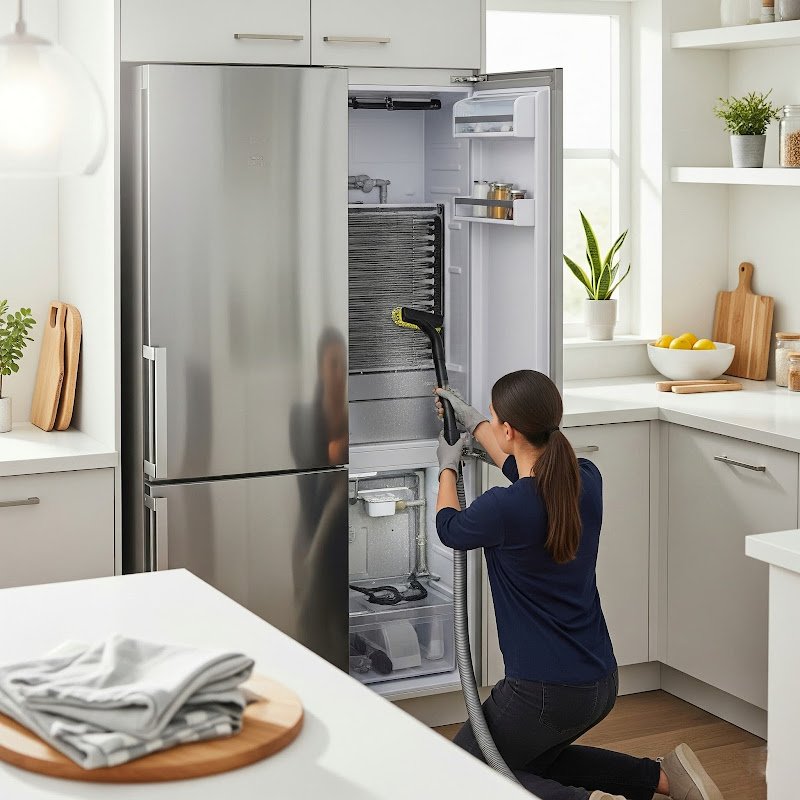
- Vacuum condenser coils every 6 months
- Use a soft cloth to wipe down vents and control panels
- Clean behind and underneath the fridge; dust buildup means more heat retention, which means more power used
Safety note: unplug the fridge before vacuuming or brushing the coils, especially if they’re located underneath and require tilting the unit.
Dust-insulated coils make the compressor work harder to release heat, which measurably increases energy use over time. The exact percentage varies by model and how neglected the coils are, so treat any specific number you see online with some skepticism and just keep them clean on a regular schedule instead.

2. Set the Right Temperature
- Refrigerator: 37°F (3°C)
- Freezer: 0°F (-18°C)
Use a standalone thermometer to double-check your fridge’s actual temperature rather than trusting the dial alone; the built-in setting doesn’t always match the true internal temperature. If it’s too cold, you’re wasting energy; if it’s too warm, food spoils faster and bacteria grow more easily.

3. Check the Door Seals
A broken door gasket lets cold air leak out, forcing the compressor to run longer. Test it with a dollar bill:
- Close the door with the bill halfway in
- If you can pull it out with little resistance, the seal is worn
Fix it:
- Clean the gasket with warm, soapy water
- Apply a thin layer of petroleum jelly to keep it flexible
- Replace if cracked, warped, or permanently compressed
Insider note: gaskets tend to fail faster in humid climates and in kitchens near a stove or dishwasher, where repeated heat and moisture cycles break down the rubber faster than normal wear alone would suggest. If you’re replacing a gasket sooner than expected, that environmental factor, not a defective part, is often the real cause.
👉 [How to replace a refrigerator door gasket step by step]
4. Defrost When Needed
Manual Defrost Models
Defrost every 3–6 months, or sooner if frost buildup exceeds about ¼ inch.
Frost-Free Models
It’s still worth a yearly check even though they self-defrost; remove drawers and inspect the rear vents for hidden ice buildup, which can quietly restrict airflow without an obvious symptom.

5. Organise Food for Airflow
- Leave gaps between items instead of packing shelves tightly
- Don’t block the rear air vents
- Keep liquids sealed to reduce internal humidity
A tightly packed fridge with blocked vents forces the compressor to run longer to reach every corner evenly; this is one of the most common, easily fixable causes of a fridge that seems to run more than it should.

6. Replace the Water Filter
If your fridge dispenses water or ice:
- Replace the filter roughly every 6 months, or per the manufacturer’s guidance for your specific model
- A clogged filter reduces flow and, over time, becomes less effective at filtering out what it’s designed to catch

7. Don’t Ignore Noises or Leaks
- Buzzing or grinding: often a fan or compressor issue
- Water pooling under or inside the fridge: check for a blocked defrost drain
- Rattling or vibration: may just need levelling
Catching these early is almost always cheaper than waiting; a blocked defrost drain, for example, is a five-minute fix if caught early but can lead to water damage or frozen-over evaporator coils if ignored for months.
8. Keep Your Fridge Level
- Use a bubble level to check
- Adjust the front levelling legs if needed
Insider note: an unevenly leveled fridge doesn’t just cause noise; it can subtly pull the door seal away from full contact on one side, causing the exact “cold air leak” symptom in Step 3, even with a perfectly good gasket. If you’ve replaced a gasket and the seal test still fails, check leveling before buying another gasket.
An uneven fridge can also lead to compressor strain and poor condensate drainage over time.

9. During Power Outages
- Don’t open the doors unnecessarily
- A full freezer generally stays cold for up to 48 hours; a half-full one, closer to 24
- Use ice packs or frozen water bottles in the fridge compartment to help hold temperature longer
Tip: Keep a thermometer inside so you can check the actual temperature once power returns, rather than guessing whether food is still safe.

10. Know When to Call a Professional
Call for help if:
- The fridge keeps cycling on and off constantly
- The freezer is cold but the fridge is warm (or vice versa)
- There’s excessive frost buildup in a frost-free unit
- You hear a new grinding or clicking noise that doesn’t go away after basic checks
If your fridge is connected to a manufacturer app, it’s worth checking there too; many newer models now surface filter-life alerts, door-ajar warnings, or temperature drift notifications directly through the app, which can flag a developing issue before it becomes an obvious symptom. This varies by brand and model, so treat it as a helpful first check rather than a replacement for the steps above.
👉 [Refrigerator running constantly, common causes and fixes]
Bonus Tips
- Let hot food cool before placing it in the fridge; hot items raise internal temperature and force the compressor to work harder
- Keep your fridge 2–3 inches away from the wall for proper airflow
- Label leftovers with dates to reduce waste and cut down on odours
Action Plan for Refrigerator Maintenance
| Task | How Often |
| Clean condenser coils | Every 6 months |
| Check door seals | Monthly |
| Replace water filter | Every 6 months |
| Defrost manual freezer | Every 3–6 months |
| Deep-clean interior | Every 3–6 months |
| Check the temperature. | Monthly |
| Call a technician | As needed, when symptoms appear |
Refrigerator maintenance Tips: FAQ
1. Can I use vinegar to clean my fridge?
Yes. A mix of equal parts vinegar and water works well as a natural, food-safe way to wipe down shelves, bins, and gaskets without leaving chemical residue near food.
2. Why is my fridge running nonstop?
The most common causes are dirty coils, a worn door seal, or a fridge packed too tightly for proper airflow. If none of those are the issue, it’s worth a closer look at the fan motors or thermostat.
3. How do I know if my fridge needs professional service?
Persistent unusual noises, warm spots despite correct settings, visible water leaks, or a fridge that never cycles off are all signs it’s time to call a technician rather than keep troubleshooting yourself.
4. How often should I actually clean the condenser coils?
Every 6 months is a reasonable baseline for most households. If you have pets that shed, or the fridge sits on carpet, closer to every 3–4 months keeps dust from building up as quickly.
5. Does an empty freezer really use more energy than a full one?
Generally yes, a fuller freezer holds cold better and requires less frequent cycling. If yours often runs low, keeping a few frozen water bottles inside as filler is a simple, cheap fix.
6. Is it normal for a new refrigerator to run more often than my old one?
Yes, in many cases. Some newer energy-efficient compressors cycle more frequently but at lower intensity rather than running in long, infrequent bursts like older models. This isn’t automatically a problem; check if the temperature is actually holding steady before assuming something’s wrong.
7. How long can refrigerator maintenance realistically extend my fridge’s life?
There’s no guaranteed number, but appliances that receive regular coil cleaning, seal checks, and prompt attention to small issues tend to reach the upper end of their expected lifespan rather than failing early from preventable strain.
Final Thoughts: Refrigerator Maintenance = Longer Life + Savings
Following these steps consistently can help your refrigerator reach the upper end of its expected lifespan instead of failing early from preventable wear. Along the way, you’ll also:
- Cut down on energy bills
- Avoid expensive emergency repairs
- Keep food fresher and safer
With about 15 minutes a month, you protect both your appliance and your wallet. And while regular maintenance prevents most issues, technical faults can still happen; bookmark our guide to common refrigerator error codes across major brands so you’re not starting from zero if something does go wrong.
👉 [refrigerator error codes explained]