
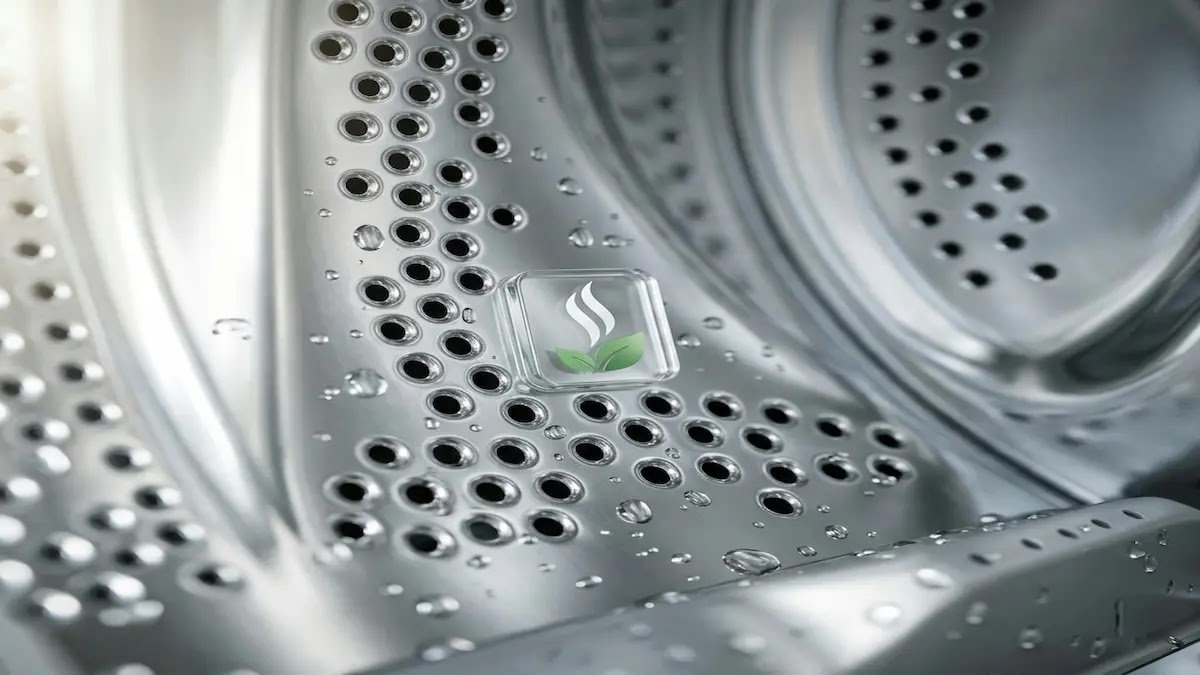
The Technician’s Warning: Most homeowners assume that because a washing machine uses detergent, it’s self-cleaning. In reality, modern High Efficiency (HE) washers are breeding grounds for biofilm, a slimy layer of bacteria and undisclosed soap. In my 12 years of appliance repair, I’ve seen 4-year-old machines scrapped because of spider arm corrosion caused by detergent rot. If your clothes smell musty even after a wash, your machine isn’t just dirty; it’s technically compromised. This guide shows you how to clean washing machine properly, including the parts you can’t see.
Table of Contents
1. The Invisible Enemies: Biofilm vs. Lime Scale
Beyond the surface: understanding biofilm, limescale, and mechanical decay.
To clean a washing machine effectively, you must fight two different battles. Most guides treat all buildup the same; that’s why the smell keeps coming back.
- Biofilm (organic waste): a mix of skin cells, body oils, and detergent residue that clings to the outer drum (the part you can’t see) and smells like rotten eggs. You need alkaline cleaners, oxygen bleach, or sodium percarbonate to break it down.
- Limescale (mineral buildup): if you’re in a hard water area, calcium and magnesium deposits coat the heating element and the drum’s bearing, forcing the motor to work harder. Acidic cleaners, vinegar, or citric acid dissolve these minerals.
If you’ve tried every store cleaner and the smell persists, you’re likely dealing with buildup that’s already hardened into deep layers. 👉 [Why Your Washing Machine Still Smells After Cleaning, The Biofilm Secret]
2. The Professional Sequential Cleaning Matrix
Never mix vinegar and bleach; it produces toxic chlorine gas. Run these as three separate, sequential cycles instead.
| Step | Agent Used | Target Issue | Result |
| Cycle 1: Decalcify | 2 cups distilled white vinegar | Limescale & mineral buildup | Dissolves hard-water crust |
| Cycle 2: Sanitize | 1 cup oxygen bleach or baking soda | Mold, yeast, bacteria | Kills biofilm, neutralizes odor |
| Cycle 3: Rinse | Hot water only | Chemical residue | Flushes the outer tub clean |
If you’re in a hard-water region, run Cycle 1 twice a month rather than once; the mineral crust reforms faster and is the single biggest reason “clean” machines still smell.
You don’t need expensive tabs to do this well. 👉 [DIY Washer Cleaner Alternatives That Cost Pennies]
3. The Gasket Anatomy: Where Mold Truly Hides
Front-loading machines (LG, Samsung, and Whirlpool) seal the door with a thick rubber gasket (bellows). Most users wipe the outside; the mold actually hides in the secondary fold, the hidden lip behind the visible ring.
⚡ Pro Tip: The Drainage Hole Audit Inside the seal are 3–4 small drainage holes. Hair and lint clog these over time. When they’re blocked, stagnant water sits in the seal 24/7, breeding black mold that smells like sewage. The fix: clear these holes with a cotton swab monthly. If they’re blocked, even a full bleach cycle won’t remove the smell; the water has nowhere to drain from.
If mold has already stained the rubber black, wiping won’t restore it. 👉 [Bleach Soak & Gasket Pro Fix]

4. Cleaning the Dispenser Housing (The Siphon Logic)
Modern washers use a siphon system to pull detergent and softener into the drum. Thick fabric softeners gum up the siphon, leaving water sitting in the drawer after the cycle ends, the exact condition that grows Serratia marcescens, the pink slimy mold you’ve probably seen.
- Removal: most drawers release with a push lever. Pull the entire tray out.
- The housing roof: look inside the cavity where the drawer sat. The roof is usually coated in black mold spray. Scrub it with an old toothbrush and a vinegar-soaked cloth.
Households that run heavy loads daily (large families, cloth diapers, gym towels) should pull and inspect this drawer every two weeks, not monthly; the softener residue accumulates roughly twice as fast.

5. Spider Arm Corrosion: The Silent Machine Killer
Behind the drum of every front-load washer sits a three-pronged aluminum bracket called the spider arm (flange assembly). When undissolved detergent and softener sit in the outer tub, they form a corrosive sludge that eats away at that aluminum over time.
What to watch for: grey, sandy grit collecting in the door seal is a sign that sludge has been sitting against the bracket. This isn’t something to diagnose or repair yourself from the outside; it’s a signal to act on prevention now and to know what the repair path looks like if it’s already underway.
The prevention: running a 90°C (194°F) sanitize cycle with a descaler once a month keeps this sludge from hardening in the first place.

6. The Drain Pump Filter: The Coin Trap Audit
On the bottom front of most LG, Samsung, and Whirlpool washers is a small access door hiding the drain pump filter. A clogged filter leaves stagnant water in the pump housing, one of the most common sources of a sewage-like smell.
⚠️ Before You Open It: The Emergency Hose Locate the small black emergency drain hose behind the access door. Pull the plug and drain the excess water into a bowl first. Skip this step and you’ll flood the floor with close to half a gallon of grey water.
Once the filter is out, give the opening a visual check for lint or a coin, then reseat the filter firmly. If water still won’t drain properly after cleaning the filter, the impeller behind it may be obstructed or failing; that’s a repair-lane issue, not a cleaning one. 👉 [Washing Machine Not Draining? Pump & Impeller Troubleshooting]

7. Leveraging Your Machine’s Self-Clean Algorithm (2026 Update)
Manufacturers build specific cleaning logic into the control board. A regular quick-wash cycle with vinegar poured in won’t trigger it; you need the dedicated cycle.
| Brand | Feature Name | What It Does Differently |
| LG | Tub Clean | Higher water level plus high-speed pulsing to scrub the outer tub |
| Samsung | Eco Tub Clean | Extended high-heat soak cycles to dissolve biofilm |
| Whirlpool | Clean Washer with Affresh | Optimized for slow-dissolving oxygenated tablets |
One correction for 2026: don’t run plain chlorine bleach through a Tub Clean cycle. Manufacturer guidance now specifically warns that chlorine-based or acidic cleaners run through the dispenser system can cause discoloration or corrosion inside the machine; use an oxygen-based cleaner or drum cleaner instead, and save straight bleach for the door seal wipe-down.
What’s actually new: you no longer have to guess when 30 days have passed. LG’s ThinQ app includes a Tub Clean Coach that tracks cycles since your last clean and lets you start one remotely, and Samsung’s connected washers surface an Eco Tub Clean reminder automatically (roughly every 1–3 months depending on cycle count). If your machine is app-connected, let it track the schedule instead of relying on memory.
Whirlpool owners dealing with a specific drainage-related smell should start here: 👉 [Deep Clean a Whirlpool Washer to Eliminate Odor]
8. Expert Frequently Asked Questions
Q1: Can I use dishwasher tablets to clean my washing machine?
They break down grease well, but they’re highly concentrated for a dishwasher’s sealed system. In washers, they can cause excessive foaming (oversudsing), and that foam can work its way into the electronic control board. Stick to a purpose-made washer cleaner or descaler.
Q2: Why does my washer still smell even after I clean the drum?
Often it’s not the drum at all; it’s the drain hose connection at the wall standpipe. If that connection isn’t right, sewer gas can be pulled back into the machine no matter how clean the drum is. 👉 [Washer Still Smells After Cleaning?]
Q3: How often should I actually run a deep clean, not just a tub clean cycle?
Once a month for average households (2–3 loads a week). Twice a month if you’re in a hard-water area, run 5+ loads a week, or regularly use liquid fabric softener, all three accelerate buildup independently.
Q4: Is it safe to leave the washer door closed between loads?
No, this is one of the most common mistakes we see. A closed door traps humidity against the gasket and dispenser housing, which is exactly the environment biofilm needs. Leave the door and detergent drawer cracked open between loads.
Q5: My clothes come out with white residue after a deep clean cycle. What happened?
This is almost always undissolved oxygen bleach or descaler powder that didn’t fully dissolve in cold or lukewarm water. Run cleaning cycles on the hottest available setting, and if your machine allows it, add a short extra rinse afterward.
Q6: Do top-load washers need the same cleaning routine as front-loaders?
The chemistry is identical; biofilm and limescale don’t care about drum orientation, but top-loaders don’t have a gasket fold to worry about. Focus your extra attention on the dispenser drawer and, on HE top-loaders, the underside of the lid.
Q7: Will cleaning my washing machine actually extend its lifespan, or is that overstated?
It’s not overstated. The spider arm and heating element are the two most expensive components to replace, and both fail primarily from chemical corrosion, not mechanical wear. A washer that’s cleaned monthly routinely outlasts a neglected one by years.
Protecting Your Investment
A clean washing machine isn’t about aesthetics; it’s about preventing galvanic corrosion and biofilm proliferation before they become a repair bill.
The 2026 maintenance blueprint:
- Run a sequential clean (vinegar cycle, then oxygen-based sanitize cycle) monthly, twice monthly in hard-water areas.
- Clean the drain pump filter every 30 days, using the emergency hose first.
- Wipe the hidden gasket folds and leave the door ajar between loads.
- Cut back on liquid fabric softener; it’s the primary food source for mold.
- If your washer is app-connected, let the Tub Clean Coach or Eco Tub Clean reminder track your schedule instead of guessing.
Proper sanitation can extend your washer’s realistic lifespan by years, not months. Run your next Tub Clean cycle this week; your drum and your utility bill will thank you.