Ask ten appliance technicians which washing machine brand is “best” and you’ll get ten different answers depending on what broke on their last service call. LG is one of the most talked-about names in the category right now, but how does it actually hold up against Samsung, Whirlpool, Bosch, Electrolux, Maytag, GE, Haier, and Frigidaire once the showroom shine wears off? In this guide we discuss the LG vs. other washing machine brands comparison
Table of Contents
Why Brand Comparison Actually Matters
A washing machine is a long-term investment, typically ten years and more if you take care of it. Choosing the wrong brand for your actual household, not the brand with the flashiest showroom demo, is what leads to higher repair bills, more frequent service calls, and laundry that doesn’t come out the way you expected. Comparing real-world performance, not just spec sheets, is what actually protects that investment.
Brand Comparison At-a-Glance
| Brand | Innovation Edge | Build Philosophy | Best For |
| LG | AI DD™ fabric sensing, ThinQ® app | Direct Drive Motor, few moving parts | Daily reliability & quiet operation |
| Samsung | Bespoke design, AI Ecobubble | Software-driven, feature-dense | Tech enthusiasts & design-forward buyers |
| Bosch | Anti-vibration side-wall design | German engineering, compact-friendly | Small spaces & quiet apartments |
| Whirlpool | 6th Sense-style load sensing | Mechanically simple, belt-driven | Large families & DIY-friendly repairs |
| Electrolux | Gentle fabric-care cycles | Scandinavian-influenced design | Delicate garments & mixed-fabric loads |
| Maytag | PowerWash-style heavy cycles | Reinforced, heavy-duty components | Bulky loads & frequent heavy use |
| GE | Wi-Fi monitoring, familiar UI | Straightforward, widely serviced | Buyers who want an easy nationwide service network |
| Haier | Budget-friendly smart connectivity | Compact, value-first engineering | Apartments & first-time smart-appliance buyers |
| Frigidaire | Simple, no-frills controls | Basic mechanical reliability | Rentals & buyers who want to spend less upfront |

What Makes LG a Top Choice in 2026
Smart features with LG ThinQ®: the ThinQ app lets you control cycles remotely, download custom wash programs, get maintenance alerts, and run Smart Diagnosis™ for quick troubleshooting before you even call a technician.
Cycle speed, TurboWash vs. SuperSpeed: Samsung’s SuperSpeed cycle is genuinely fast for a full load, and LG’s TurboWash 360™ is built more around fabric protection than raw speed, the multi-nozzle spray system is designed so the mechanical action doesn’t chew through delicate fibers even at higher spin speeds. If your priority is “done in under half an hour,” Samsung is usually the faster pick; if it’s “done fast without wearing out my clothes,” LG’s approach tends to hold up better over time.
Model range: LG covers top-load, front-load, washer-dryer combos, and stacked WashTower™ units. Many models use an Inverter Direct Drive motor, which reduces noise and typically comes with an extended parts warranty on the motor specifically. Check the exact warranty terms for your specific model and region, since these vary and have changed over different product generations.
Design: minimalist panels, LED displays, and generally quiet operation across the lineup, which is a real factor if your laundry area is near a living space and upstairs bedroom.
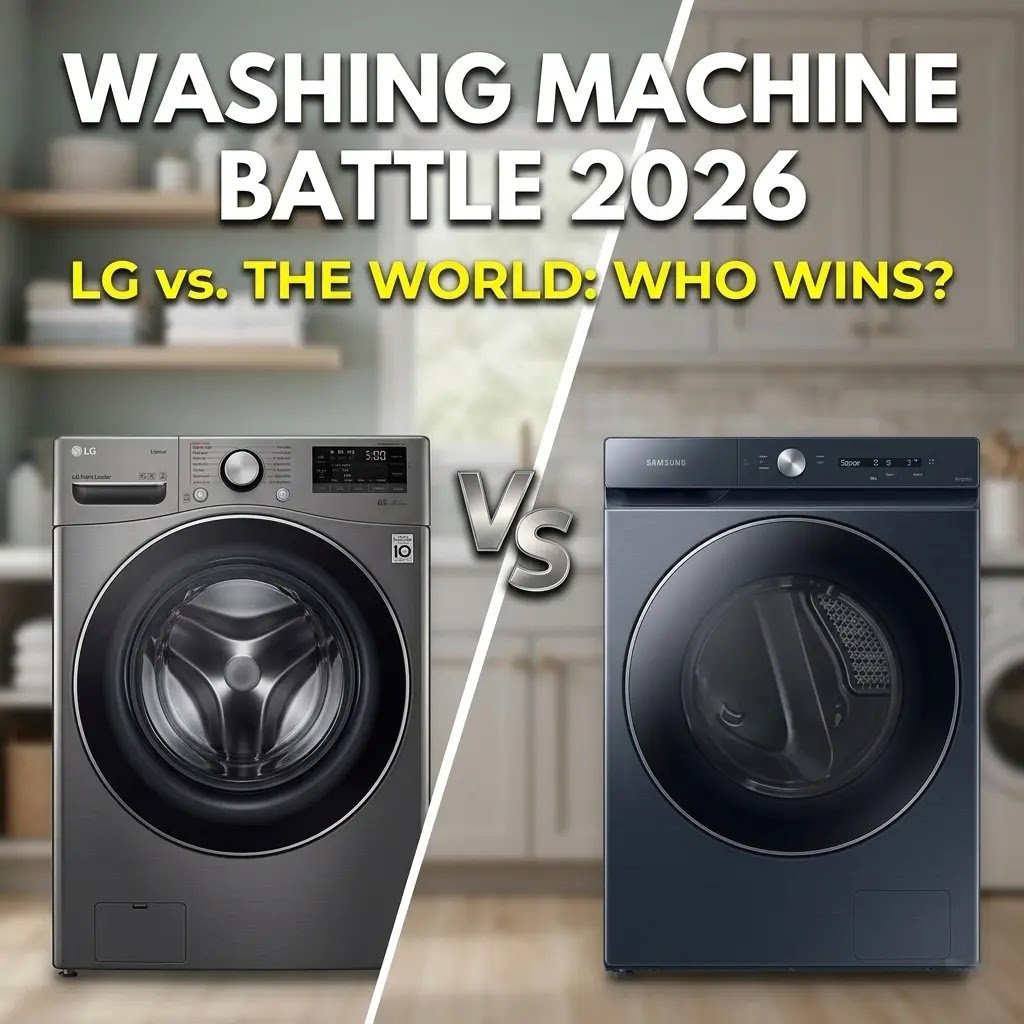
LG vs. Samsung: The Smart Technology Battle
Both brands compete hard in the smart-appliance space, but they’ve taken different paths. Samsung has leaned into the premium “Bespoke” lifestyle positioning, customizable panel colors, sleek displays, and heavy emphasis on aesthetics alongside function. LG has focused more on making its Inverter Direct Drive technology available across a wider range of price points, which tends to make it the stronger pick for buyers who want solid performance without paying entirely for design.
- Samsung wins on raw cycle speed, design customization, and SmartThings ecosystem integration if you already own other Samsung smart-home devices.
- LG wins on typically quieter long-term operation and fabric-protective wash mechanics, per repair-industry experience with both platforms.
.jpg)
LG vs. Whirlpool: Innovation vs. Simplicity
Whirlpool is the budget-friendly, mechanically simple option in this comparison, and that simplicity is a genuine feature, not just a lack of one. Fewer electronic components generally means fewer expensive failure points and easier, cheaper repairs.
LG generally outperforms on smart features, energy efficiency, and fabric care. But Whirlpool machines are known for developing mechanical noises as they age, with belts, suspension components, and bearings wearing over years of use. If yours is starting to sound off, our [👉 Whirlpool Washing Machine Making Loud Noise] guide walks through what each sound usually means.
.jpg)
LG vs. Bosch: The Quiet Performance Showdown
This is genuinely the closest matchup on this list. Bosch uses a vibration-dampening side-wall design that absorbs sound physically, while LG uses VRT Plus™ (Vibration Reduction Technology), which relies on smart sensors and internal balancing to counteract heavy, uneven loads digitally rather than through cabinet construction alone. For upper-floor laundry rooms specifically, LG’s digital balancing approach is often more effective at reducing floor vibration transfer than Bosch’s physical dampening, though both are meaningfully quieter than most budget machines.
Want to squeeze more quiet performance out of an LG you already own? Our [👉 LG Washing Machine Upgrade Hacks] covers practical noise-dampening and efficiency tips.
LG vs. Electrolux: Fabric Care Focus
Electrolux has built its reputation specifically around gentle, delicate-garment care; its wash motion and cycle tuning are noticeably conservative compared to most mainstream brands, which matters if your laundry regularly includes wool, silk, and other delicate fabrics. LG offers solid fabric care too, but it’s tuned more for everyday family versatility (mixed loads, faster turnaround) than Electrolux’s narrower, gentler focus.
- Choose Electrolux if delicate-fabric care is your top priority and you’re willing to trade some speed and load capacity for it.
- Choose LG if you want strong all-around fabric care that still keeps up with a busy household’s laundry volume.
LG vs. Maytag: The Durability Test
Maytag has built its brand identity around heavy-duty, reinforced construction and components sized for large, frequent, heavy loads (think bulky bedding and a large family’s weekly laundry volume) without excessive wear. It’s a more mechanically focused approach than LG’s, closer in spirit to Whirlpool’s simplicity philosophy but with a heavier-duty build.
LG combines that kind of durability with modern smart technology and fabric care; you’re less likely to find a Maytag with app control and AI-adjusted cycles, but you’re also less likely to find a machine built to shrug off years of oversized, heavy loads quite the way Maytag’s are.
LG vs. GE: Everyday Value
GE’s washing machine lineup emphasizes straightforward operation and a genuinely wide, easy-to-access service network across the US in particular; if minimizing hassle when something eventually needs a repair technician matters to you, that nationwide familiarity is a real practical advantage. GE’s smart features (Wi-Fi monitoring, app alerts) are solid but generally less deep than LG’s ThinQ ecosystem and Samsung’s SmartThings integration.
LG tends to edge out GE on fabric-care sophistication and overall quietness, while GE tends to edge out LG on how easy it is to find a local technician who already knows the platform well.
LG vs. Haier: Budget Smart Features
Haier has positioned itself as the budget entry point into smart-connected laundry, Wi-Fi control, and basic app features at a price point well below LG’s smart lineup. It’s a reasonable choice for apartments and first-time smart-appliance buyers who want the convenience without the premium price tag.
LG’s smart features go considerably deeper (Smart Diagnosis, custom downloadable cycles, and a more mature app ecosystem), and LG’s build quality is generally considered a step up. If budget is the deciding factor and smart features are a “nice to have” rather than a requirement, Haier is worth a look; if you’ll actually use the deeper smart features regularly, LG tends to justify the price difference.
LG vs. Frigidaire: Straightforward Basics
Frigidaire sits at the simple, no-frills end of the spectrum, with dial and basic button controls, minimal smart connectivity, and a lower upfront price that makes it common in rental properties and budget-focused households. It’s not trying to compete with LG on technology, and that’s fairly deliberate.
If you want a washer that just washes clothes reliably without an app, a touchscreen, and a learning curve, Frigidaire is a legitimate choice. LG makes more sense once you actually want to use smart features, better fabric care, and quieter long-term operation, none of which Frigidaire is really built to prioritize.
Total Cost of Ownership: A Closer Look
Purchase price is only the starting point. Over a typical 8–10 year ownership window, three other costs matter more than most buyers expect:
- Energy and water use: inverter-motor and sensor-based machines (LG, Samsung, Bosch) tend to use less water and electricity per load than simpler mechanical designs, which adds up over years of regular use, though the exact savings depend heavily on your local utility rates and how many loads you run per week.
- Repair frequency and cost: Simpler, mechanically driven machines (Whirlpool, Maytag, Frigidaire) tend to have fewer expensive electronic failure points, while smart, sensor-heavy machines (LG, Samsung) can face pricier repairs if a control board and sensor fail once the warranty ends.
- Detergent and water-hardness costs: HE (high-efficiency) detergent (👉 AMAZON LINK: “HE Liquid Laundry Detergent”) is required across virtually all modern front-load machines regardless of brand, and using regular detergent instead is a common, avoidable cause of suds-lock-related repairs.
Treat the “Innovation Edge” column in the table above as roughly correlated with “more to potentially go wrong after the warranty,” not a hard rule, but a genuine trade-off worth budgeting for either way.
Repair & Parts Availability by Brand
This is one of the most overlooked factors in a brand comparison, and it varies more than most buyers expect:
- Whirlpool and GE generally have the widest network of independent repair technicians and the most readily available parts in most regions, since both brands have been in the market longest with the most mechanically standardized designs.
- LG and Samsung parts are widely available but often need to be ordered rather than picked up locally, and technicians familiar with their specific electronics can be harder to find outside major cities.
- Bosch and Electrolux parts availability varies more by region, strong in areas with a larger installed base, thinner in others.
- Maytag benefits from shared parts compatibility with some Whirlpool-family components in certain product lines, which can help with availability.
- Haier and Frigidaire, as generally lower-cost brands, sometimes make a straight replacement more economical than an out-of-warranty repair, simply because the unit’s original price was lower to begin with.
If your LG ever throws a drainage-related error, our [👉 LG Washing Machine OE Error Code: What It Means and How to Fix It] walks through handling it yourself before booking a service call. Samsung owners dealing with a code can check our [👉 Samsung Washing Machine Error Codes Explained]
Common Buyer Regrets by Brand
- LG and Samsung owners most often report frustration when a sensor and control board issue appears a year and two after the warranty ends, the most common regret being “I wish I’d bought the extended warranty.”
- Whirlpool and Maytag owners occasionally regret the lack of smart features once they see what friends with LG and Samsung machines can do remotely, though few report regretting the mechanical reliability itself.
- Bosch owners in larger households sometimes find capacity smaller than expected relative to price, since Bosch’s compact-friendly design trades some drum size for its quiet, small-footprint build.
- Budget-brand buyers (Haier, Frigidaire) most commonly report regret around noise and vibration on hard flooring, which pricier inverter-motor machines are generally built to handle better.
Key Buying Factors Before You Choose
- Household size and laundry frequency: heavier, more frequent use rewards durability-focused builds (Maytag, Whirlpool, LG) over lighter-duty budget models.
- Fabric care needs: delicate garments favor Electrolux and LG; everyday mixed loads are fine on nearly any mainstream brand.
- Smart connectivity preferences, genuinely useful if you’ll use it (remote start, diagnostics); largely irrelevant if you won’t.
- Design and installation requirements, check stacking compatibility, door-swing clearance, and available space before finalizing a size.
- Warranty and after-sales support weigh not just warranty length but also how easy it actually is to get a technician for that brand in your specific area.
My Expert Take: Beyond the Marketing Specs
In hands-on experience with these machines, a brand’s real value isn’t found in the brochure; it’s found in how the machine handles a heavy load of towels on a Tuesday night, three years after you bought it.
Samsung often wins the showroom test with its sleek displays and SmartThings integration. LG tends to win the long-term ownership test; its Inverter Direct Drive system generally maintains its balance noticeably better after 3–4 years of regular use compared to the belt-driven systems found in many mid-range Whirlpool and Maytag units.
There’s a real trade-off, though. Bosch units, despite fewer smart gimmicks, tend to have noticeably stronger physical build quality, particularly the drum bearings, for repeated high-heat cycles. A knowledgeable salesperson would ask you this before recommending anything: how often do you actually run hot water and sanitize cycles? If the answer is “often,” that single detail matters more to long-term durability than almost any smart feature on the spec sheet.
Professional advice: if you live in an apartment where noise is your biggest enemy, LG is a strong pick. If you want something that feels like a heavy-duty industrial tool and don’t care about a mobile app, Bosch is worth a serious look. A smart feature is only as smart as the mechanical hardware underneath it stays solid; that’s the one rule worth remembering across every brand on this list.
Frequently Asked Questions: LG vs. Other Washing Machines
Q: Is LG better than Samsung in 2026?
A: Both are strong, but they optimize for different things. LG leans toward long-term reliability and quieter, gentler wash mechanics; Samsung leans toward speed, design, and ecosystem integration if you already use other Samsung smart-home products. Neither is a wrong choice; it depends on what you’ll actually use.
Q: Which washing machine brand lasts the longest?
A: LG and Maytag are both commonly rated well for durability, though for different reasons. LG’s Inverter Direct Drive motor design has fewer moving parts to wear out, while Maytag’s reinforced components are built for sustained heavy use. Warranty length and terms vary by specific model and region, so it’s worth checking the current terms for whichever model you’re considering rather than relying on older figures.
Q: Are LG washing machines good for large families?
A: Yes, LG’s high-capacity front-load and top-load models are built to handle frequent, heavy loads with solid cleaning performance and fabric care, which is exactly the profile a large family generates.
Q: Do LG washing machines really save electricity and water compared to simpler brands?
A: Generally, yes, inverter technology and load-sensing cycles reduce water and energy use versus older, non-sensored designs. The exact savings depend on your usage patterns and local utility rates, so treat any specific dollar-savings figure as an estimate rather than a guarantee for your household.
Q: Is LG worth the higher price compared to Whirlpool?
A: If smart features, quieter operation, and more advanced fabric care matter to you, yes. If you want a straightforward, no-frills machine that’s simple and cheap to repair, Whirlpool remains a genuinely solid choice; “worth it” here depends entirely on which features you’ll actually use.
Q: How much should I budget for repairs over a washing machine’s lifetime, regardless of brand?
A: This varies a lot by brand and usage, but as a general rule of thumb, budget for at least one moderate repair (a pump, a belt, a suspension component, and a sensor) somewhere in years 5–8 of ownership on any machine used regularly; simpler mechanical brands tend toward cheaper individual repairs, while smart/sensor-heavy brands tend toward less frequent but pricier ones.
Q: Does a higher price always mean a more reliable washing machine?
A: Not necessarily. Price often reflects features and design more than raw mechanical reliability; a simpler, cheaper Whirlpool and Frigidaire can outlast a feature-rich machine if what eventually fails is electronics rather than the core mechanics. Reliability and feature richness are related but separate questions.
Final Verdict: Which Washing Machine Brand Wins in 2026?
For most households, LG offers the strongest overall balance of smart technology, energy efficiency, quiet operation, and long-term durability among the mainstream brands compared here. It isn’t the cheapest option, and it isn’t automatically the right choice for everyone. Whirlpool and Frigidaire remain genuinely better fits for buyers who prioritize simplicity and repair cost over features, Maytag for the heaviest-duty use cases, and Bosch for the tightest, quietest spaces.
Best choice for smart-home users, families with frequent laundry needs, and anyone who values quiet, efficient, fabric-gentle performance.
Who should skip LG: buyers on a strict budget, anyone who strongly prefers fully manual controls, and households that will never use the smart features they’d be paying for.
Next step: match your household’s actual laundry habits, not the showroom demo, against the brand strengths above before you decide. If you already own an LG and want to get more out of it, our [👉 “How to Clean a Washing Machine: Easy Guide”] and [👉 “LG Washing Machine Reviews from Real Users”] are good next reads.
Have you used LG alongside another brand? Share your experience in the comments; we read and respond to everyone.